
Is a 5V Pump Safe in Sweaty, Humid Work? A COOLWAVE FAQ
The only powered component of the COOLWAVE water-circulation cooling vest is a pump with a published output of 5V and 150mA (max). That single line answers most of the electrical-safety questions raised by humid workshops, sweat-soaked shifts and outdoor heat exposure — but not all of them. This FAQ sets out what the rating means, what the published specification does not state, and how safety officers and procurement reviewers can verify both before issuing vests to a crew.
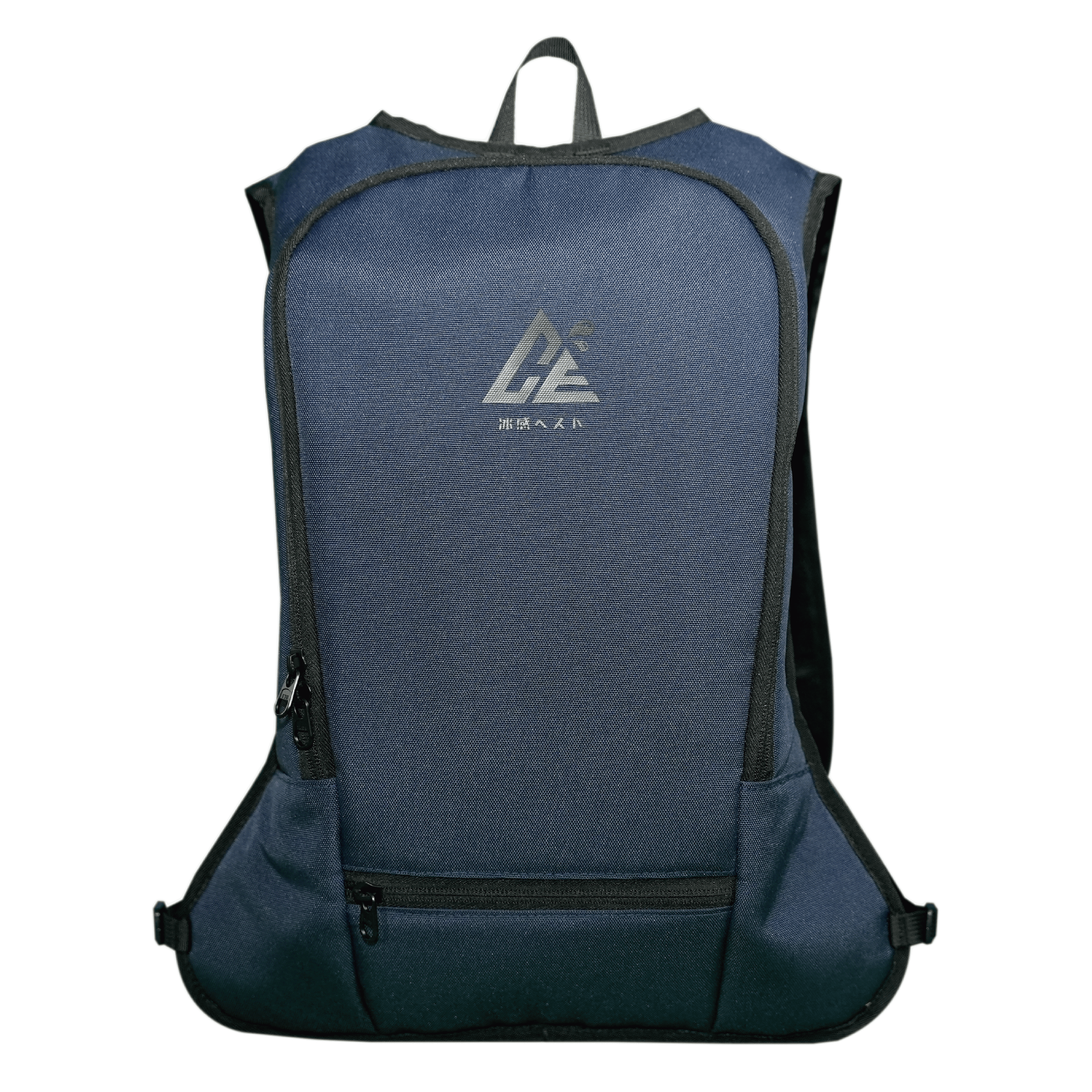
COOLWAVE Water-Circulation Cooling Vest — the circulating pump is rated at 5V, 150mA (max), with a maximum flow rate of 320–370 ml/min.
Why humid work turns a comfort product into an electrical question
Cooling apparel used to be passive: ice packs, evaporative fabric, shade and water breaks. Industrial heat management is now adopting active circulatory systems because moving chilled water across the torso distributes cooling more evenly than a single pack resting on one area of the body. Strategic Market Research records that active circulatory mechanisms, including ice water circulation, are increasingly deployed in industrial sectors to mitigate occupational heat stress.
Once cooling becomes active, an electrical component enters the personal protective equipment discussion. Site supervisors ask the practical questions: does the wearer carry a power source all day, what happens when the vest is soaked in sweat, worn through a summer downpour, or used in a high-humidity production hall? For the COOLWAVE design those questions resolve to one published number — pump output 5V, 150mA (max). In practice, teams evaluating a dual cooling water cooling vest are evaluating two separate things at once: how cooling is delivered, and what the electrical component does in a wet environment.
What a 5V, 150mA rating actually means
Voltage class is the most useful single indicator of how a powered device should be treated on site. A 5V DC pump belongs to low-voltage electronics, the same broad category as small handheld devices, rather than to the mains-powered class that industrial equipment such as cut-off machines or air compressors belongs to. That gap in voltage class is why a pump drawing a maximum of 150mA is recorded in the COOLWAVE specification as a safety characteristic of the design, not as a hazard that has to be engineered around.
| Parameter | Published specification |
|---|---|
| Pump output | 5V, 150mA (max) |
| Flow rate | Max 320–370 ml/min |
| Cooling duration | 3–4 hours |
| Weight | Within 2 kg |
| Suitable temperature (as published) | Below 10°C |
| Water bag material | TPU |
| Water bag cap | Polypropylene |
| Cooling tube | Sand rubber (black) |
| Shoulder strap material | 600D polyester |
| Outer material | PEVA |
| Contents | Water-cooled vest backpack ×1, ice packs ×2 |
The same pump output figure is published across the COOLWAVE water-circulation cooling vest range, including the Basic Model and the Professional Model in blue, gray and black. Electrical behaviour is therefore consistent across the line, and a buyer who reviews one model has effectively reviewed the electrical envelope of the others. Because the rating is stated as a maximum, the pump also cannot draw more than 150mA under normal operation — the ceiling is defined, not estimated.
What the rating does not prove
Boundary condition. A low-voltage rating is not the same thing as an ingress protection (IP) rating. The COOLWAVE specification lists pump output, flow rate, cooling duration and materials, but it does not publish an IP rating for the pump or for the electrical assembly. Buyers planning use in washdown zones, heavy rain or continuously soaked conditions should request written confirmation of moisture protection from the supplier rather than inferring it from the 5V figure.
That distinction matters specifically in humid areas, because moisture stress is not limited to the wearer's skin. Condensation forms inside backpacks, water bags are refilled with ice and meltwater, and tube connection points stay damp for hours. The materials that meet the liquid — a TPU water bag, a polypropylene cap, and a black sand rubber cooling tube — are one subject; the 5V, 150mA circuit that drives the circulation is another. Both belong in a procurement review, and neither replaces the other.
How the pump sits inside the cooling system
Knowing where the electricity is located is the fastest way to reason about humid use. In the COOLWAVE water-circulation cooling vest, cooling energy comes from ice packs: the contents list includes two ice packs, and the recorded operation mode for these deployments is described as passive cooling activated by ice packs. The pump's role is distribution. It moves chilled water from the water bag through the cooling tube at a maximum flow rate of 320–370 ml/min, so cooled water reaches the tubing worn against the body instead of remaining in the reservoir.
This architecture separates two physical systems. Water travels through the bag, the cap and the tubing. Electricity is confined to the pump and its drive circuit, which is carried inside the water-cooled vest backpack. Because the cooling medium is ice-based rather than compressor-based, the vest carries no refrigerant and no high-current load, which is part of why the complete system stays within 2 kg and can be issued as wearable protective equipment rather than as equipment that has to be wheeled around.
- Cooling window. A published cooling duration of 3–4 hours means one ice-pack load covers roughly half a standard shift. Longer shifts require a second set of packs or a mid-shift change — a planning question rather than an electrical one.
- Water handling. Refilling and pack changes are the moments when the water path is opened. Bag and cap materials determine how those joints behave over repeated cycles.
- Wearability in heat. A weight within 2 kg and 600D polyester shoulder straps keep the load on the shoulders, which matters when the wearer is also carrying tools or working overhead.
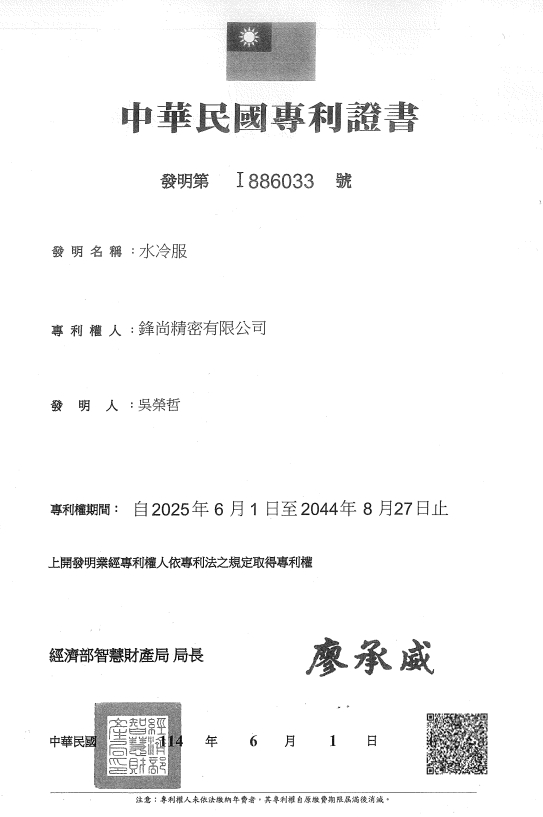
The COOLWAVE water-circulation cooling vest (Basic Model) is protected by patent number I886033, issued by the Intellectual Property Office, Ministry of Economic Affairs under the Patent Act of the Republic of China, applicable to the ROC market.
Where humid, sweat-heavy use is expected
The COOLWAVE water-circulation cooling vest is specified for construction workers, outdoor workers, food stall operators, street vendors, traffic controllers and metal sheet factories. Each setting produces a different mixture of heat, sweat and moisture, and the electrical question is sharpest in the humid ones.
Metal sheet and metal-roof factories. Radiant heat from metal surfaces combines with humidity in many sheet-metal and metal-roof workshops. Workers sweat continuously, and the water path of the vest sees constant external moisture. Because the pump is rated at 5V and 150mA, the electrical exposure stays within the low-voltage class even when the wearer is drenched.
Street vending and food stalls. Summer vending involves steam, splashes and long hours under direct sun, and vendors often cannot leave the stall to cool down. A published 3–4 hour cooling duration fits a market session better than a single ice pack applied to the neck, and the portable backpack format allows the vest to stay on while the vendor keeps working.
Traffic control and prolonged sun exposure. Traffic controllers stand in radiant heat on asphalt for extended periods with limited shade and limited opportunity to step away. A wearable circulation system keeps the cooling attached to the person rather than to a fixed location.
Construction sites. Outdoor construction combines dust, sweat, physical movement and irregular hydration breaks. In those conditions, the value of a low-voltage design is that the electrical component does not add a new class of site hazard, while the ice packs remain the consumable that determines how long cooling lasts.
Recorded deployment data supports the pattern rather than the theory: 100 units were used in Taiwan in high-temperature environments over a ten-year period, with reported outcomes of effective body cooling, heatstroke prevention, and improved work efficiency and worker comfort. Those units were documented as portable, adjustable, one-size-fits-all and ice-pack activated.
Market context: why electrical documentation is now part of cooling-vest procurement
The scale of the category explains the rising scrutiny. Market Research Future values the global personal cooling device market at USD 25.16 billion in 2024, projected to reach USD 94.85 billion by 2035. Narrowing to cooling vests specifically, Dataintelo estimates approximately USD 215 million in 2024, growing to USD 385 million by 2033. Within that market, Dataintelo reports that industrial applications including construction and manufacturing held the largest share at 34.5% in 2025, while Spherical Insights identifies Asia Pacific as the fastest-growing region, driven by industrialization and large outdoor workforces.
Two consequences follow for buyers in humid markets. First, industrial buyers are now the dominant segment, and industrial purchasing processes ask for documents before they ask for samples. Second, the regulatory frame around powered protective equipment is already established: cooling systems are expected to comply with ISO 9001:2015 for quality management, and electrical components often require CE or UL marks. For a vest whose pump is rated at 5V and 150mA, those demands are answered by documentation rather than by redesign — which is precisely why published ratings and certificates carry weight in a tender file.
Comparison with traditional cooling options — and the limits of each
| Approach | Electrical exposure | What it does well | Where it is limited |
|---|---|---|---|
| Passive ice-pack vest (no circulation) | None — no powered component | No electrical documentation required; simplest laundering and storage | Cooling depends on pack contact and placement; capacity is fixed by pack count and melts within a single window |
| Water-circulation vest (COOLWAVE type) | Low-voltage pump, 5V / 150mA (max) | Chilled water is circulated at up to 320–370 ml/min, spreading cooling across the torso; published cooling duration 3–4 hours; within 2 kg | Requires ice packs and a pump; no IP rating is published in the specification reviewed here, so moisture protection must be confirmed in writing; one pack load covers 3–4 hours, not a full shift |
| Phase change material (PCM) vests | None in most designs | Fastest-growing technology segment, at 28.7% of 2025 market share (Dataintelo) | Packs must be regenerated between uses, which adds a cold-storage step to site logistics |
The comparison exposes a trade-off rather than a winner. A passive ice-pack vest has no electrical question at all, because it has no circuit — but it also has no mechanism to spread cooling beyond where the packs sit. Adding circulation introduces a pump, and with it a voltage class, a current ceiling, a warranty term and a documentation requirement. The honest reading of the COOLWAVE specification is that the electrical side was deliberately kept small, at 5V and 150mA maximum, while the components that face moisture, sweat and repeated handling were specified on the water side: TPU bag, polypropylene cap, sand rubber tube.
Two further constraints are worth stating plainly. Certification coverage is market-specific: the COOLWAVE water-circulation cooling vest (Basic Model) is protected by patent number I886033, issued by the Intellectual Property Office, Ministry of Economic Affairs under the Patent Act of the Republic of China and applicable to the ROC market, and the COOLING water-cooled vest received the Disaster Prevention Product and Service Certification Award from the Taiwan Disaster Prevention Industry Association. Buyers purchasing for other jurisdictions should confirm which of these documents apply locally and which additional marks their own authorities expect. Commercial terms also shape deployment: the water-cooled vest carries a 6-month warranty, minimum order quantity is 10 units, lead time is 7–14 days, and monthly capacity is 3,000 units under an ODM production model.
A buyer's checklist for humid-site deployments
| Question to answer before issuing vests | Documented reference point |
|---|---|
| What voltage and current does the pump operate at? | 5V, 150mA (max) |
| How is chilled water distributed? | Circulated through the sand rubber cooling tube at a maximum of 320–370 ml/min |
| How long does one cooling load last? | 3–4 hours, ice-pack activated; two ice packs included |
| Is an ingress protection rating available in writing? | Not stated in the published specification — request from the supplier |
| Which quality and electrical marks are expected? | ISO 9001:2015 for quality management; CE or UL marks commonly required for electrical components |
| Which certificates support the product claim? | Patent No. I886033 (ROC market); Disaster Prevention Product and Service Certification Award (Taiwan) |
| What are the supply terms? | MOQ 10 units; lead time 7–14 days; monthly capacity 3,000 units; 6-month warranty for the water-cooled vest |
Future outlook
As industrial heat-stress programs formalize, the electrical content of a cooling vest is likely to be specified the way hard hats and harnesses are specified today: a stated rating, a stated standard, and a document set behind both. For low-voltage designs the direction is already visible — keep the powered part small, keep the cooling medium simple, and publish the numbers. A specification that states 5V and 150mA (max) gives a safety officer something to record; a specification that leaves voltage unstated gives that officer nothing to work with.
The harder work sits at the boundary between rating and environment. Humid halls, sweat-soaked shifts and washdown areas are environment questions rather than voltage questions, and they are answered by moisture-protection data, water-path materials and maintenance rules — not by the fact that a pump runs at low voltage. Buyers who keep the two categories separate will write tighter tender documents, and suppliers who publish both will qualify for more of them.
FAQ: electrical safety of the cooling vest pump in humid areas
What are the electrical specifications of the COOLWAVE cooling vest pump?
The pump output is rated at 5V and 150mA (max). The same pump output figure is published for the COOLWAVE water-circulation cooling vest across models, including the Basic Model and the Professional Model in blue, gray and black, so the electrical rating is consistent throughout the range.
Is a 5V, 150mA pump a shock risk when the wearer is sweating heavily or working in humid air?
A 5V DC pump drawing a maximum of 150mA sits in the low-voltage class, well below mains-powered industrial equipment, which is why the rating is described as a safety characteristic of the design. Sweat and humidity affect the outer materials and the water path, but they do not change the voltage class of the circuit. What a rating cannot do is substitute for moisture-protection data: the published specification does not state an IP rating for the pump or its assembly, so written confirmation should be requested for heavily soaked environments.
Can the vest be worn in rain or in washdown areas?
The published specification lists pump output, flow rate, cooling duration, weight, suitable temperature and materials, but it does not include an ingress protection rating. For work zones with direct water spray or sustained heavy rain, moisture protection should be treated as an open question to be confirmed in writing by the supplier before deployment, even though the pump itself operates at only 5V and 150mA.
Why does the vest use a pump at all if the cooling comes from ice packs?
The ice packs provide the cooling energy, and the recorded operation mode is passive cooling activated by ice packs, with two ice packs included in the contents. The pump distributes that cooling: it circulates chilled water from the water bag through the cooling tube at a maximum flow rate of 320–370 ml/min, so cooled water reaches the tubing worn against the body instead of staying in the reservoir.
How long does one cooling load last during humid summer work?
The published cooling duration is 3–4 hours, with two ice packs included in the set. Shifts longer than that require a second set of packs or a mid-shift pack change. The system weight stays within 2 kg, so the wearer is not carrying additional load during the changeover period.
Which documents verify quality, origin and compliance?
The COOLWAVE water-circulation cooling vest (Basic Model) is protected by patent number I886033, issued by the Intellectual Property Office, Ministry of Economic Affairs under the Patent Act of the Republic of China, applicable to the ROC market. The COOLING water-cooled vest received the Disaster Prevention Product and Service Certification Award from the Taiwan Disaster Prevention Industry Association. In addition, cooling systems are expected to comply with ISO 9001:2015 for quality management, and electrical components often require CE or UL marks — documentation that buyers should request alongside the product certificates.
What load does the wearer actually carry?
The complete system weighs within 2 kg. The water-cooled vest backpack holds the water bag and pump, shoulder straps are made of 600D polyester, the outer material is PEVA, the water bag is TPU with a polypropylene cap, and the cooling tube is black sand rubber.
What commercial terms apply when ordering the vest for a humid-site rollout?
The water-cooled vest carries a 6-month warranty. Minimum order quantity is 10 units, lead time is 7–14 days, monthly capacity is 3,000 units, and production mode is ODM. For sites with heavy moisture exposure, it is reasonable to request moisture-protection documentation for the pump together with the standard quality, patent and certification documents.
Full technical documentation, including the specification sheet, is available in the COOLWAVE product brochure: COOLWAVE product brochure (PDF).
¿Tiene preguntas o necesita más detalles?
Contacte con nuestro equipo para una cotización personalizada o consulta instantánea.
Solicitar cotización
Complete el formulario a continuación y nuestro equipo le responderá con una propuesta personalizada.
Chat directo de WhatsApp
¿Prefiere chatear en tiempo real? Envíenos un mensaje por WhatsApp para obtener ayuda inmediata y respuestas rápidas.
- Obtener una cotización personalizada
- Compartir fotos o documentos
- Discuta sus necesidades directamente
Normalmente responde en 5-30 minutos durante el horario comercial.