
Irrigation Pivot System vs Hose Reel: Which Fits Your Farm?
An independent, decision-stage comparison of the Fixed DYP center pivot irrigation system and the JP800/JP90-300 hose reel irrigation machine — judged on power, field geometry, hydraulics, materials and purchasing terms rather than brand claims.
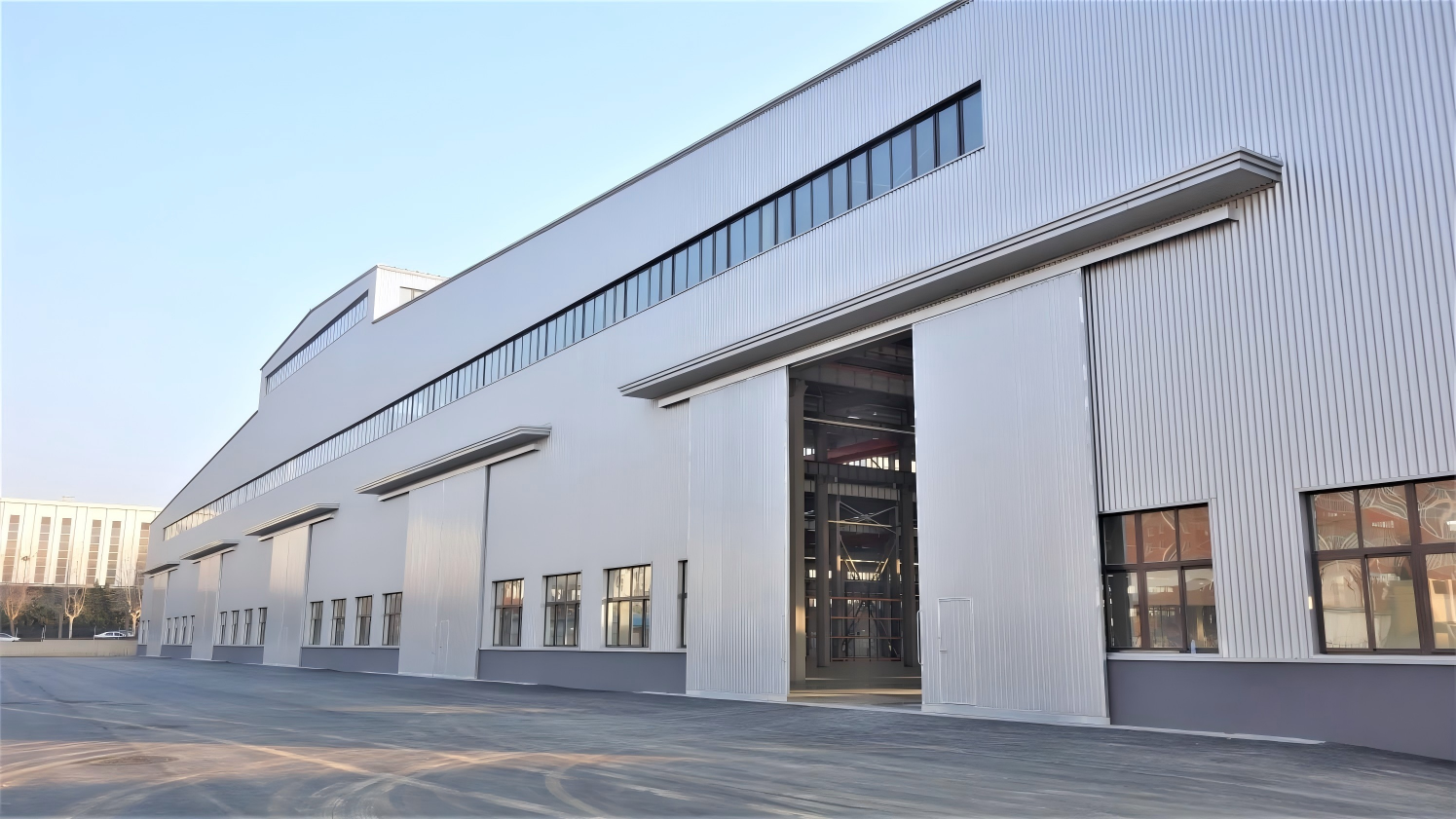
Irrigation machines in final assembly and packaging before shipment — center pivot and hose reel systems are built in the same manufacturing environment, but they solve different field problems.
The decision is a farm-fit decision, not a technology contest
Once a farm has committed to mechanised irrigation, the question that remains is not which category of machine is superior in general, but which configuration fits a specific field shape, power supply and water source. A fixed center pivot rotates a span around a fixed point and covers a circular area. A hose reel machine travels across a field while winding a polyethylene pipe and covers a strip. Those two geometries produce different capital costs, different infrastructure requirements and different day-to-day labour patterns.
This comparison examines two named machines from the same manufacturer: the Fixed DYP center pivot irrigation system and the JP800/JP90-300 hose reel irrigation machine, both produced by China Yulin Irrigation Equipment Co., Ltd. (YULIN IRRIGATION), a Dalian-based irrigation equipment manufacturer established in 2009 that develops and produces center pivot, lateral move, towing and hose reel irrigation systems as well as irrigation parts, and exports to markets including Australia, New Zealand, Canada, Mexico, Africa, Central Asia and Russia.
Because both machines come from the same production base, the comparison below isolates the variables that actually change project outcomes: how each machine is powered and controlled, what hydraulic conditions it needs, what field geometry suits it, what materials and standards apply, and what the purchasing and support terms look like.
Side-by-side: Fixed DYP center pivot vs JP800 hose reel
The table below summarises the comparison dimensions that most often determine which machine is specified for a given farm.
| Decision area | Fixed DYP center pivot irrigation system | JP800 hose reel irrigation machine |
|---|---|---|
| Water application pattern | Circular coverage; the span rotates continuously around a fixed pivot point | Travelling coverage; the machine moves along a strip while winding a 300 m PE pipe |
| Power and control | 380V–460V supply, IP65-rated control enclosure, electromechanical reversible span control | Water-turbine powered drive; no electricity required on the machine |
| Hydraulic requirement | Inlet pressure and flow must be confirmed at the pivot inlet against the pump curve | 0.6–0.9 MPa inlet pressure; 25–52 t/h water flow |
| Application hardware | Compatible with an end spray gun for supplementary irrigation and a fertilizer tank | DL50/SIMA10497 spray gun; nozzle diameter 16–22 mm; spray radius 19–41 m; net weight 2180 kg ±30 kg |
| Materials and conformity | Q235B structural metal conforming to GB 13912-2020 for the galvanized structure | Steel chassis and reel frame, galvanized protective finish; corrosion-resistant poly pipe options |
| Typical field fit | Regular, larger blocks with a reliable three-phase supply | Fields without grid power, irregular blocks and strip layouts |
| Commercial terms | MOQ 1 unit; FOB/CFR/CIF; acceptance criteria: pre-shipment test | MOQ 1 unit; FOB/CFR/CIF; acceptance criteria: pre-shipment test |
Power and control: electromechanical span control or a water turbine
The clearest structural difference between the two machines is how they are driven. The Fixed DYP center pivot irrigation system operates on a 380V–460V electrical supply and uses an IP65-rated control enclosure with electromechanical reversible span control. In practical terms, this means the buyer must have a dependable three-phase supply — from the grid or from a suitably sized generator — and the control panel must be positioned and protected so that dust and water ingress do not become a maintenance issue. The IP65 rating of the enclosure is one of the first things a buyer should verify on the nameplate and the certificate, because it determines how safely the control electronics survive rain, irrigation overspray and wash-down.
The JP800 hose reel irrigation machine takes the opposite approach. It is powered by a water turbine and does not require electricity. The machine belongs to the JP90-300 model series. For farms where extending a three-phase line to a distant block is expensive, slow to permit, or simply unreliable, removing the electrical requirement is a genuine operational advantage: there is no cable to bury, no phase imbalance to manage, and no risk that a power interruption halts irrigation mid-cycle.
The trade-off is that the turbine drive converts hydraulic energy into movement. Its performance therefore depends directly on maintaining adequate inlet pressure and flow, which moves the discussion to hydraulics.
Hydraulic requirements and what they mean for pump sizing
Hose reel machines are specified around a relatively narrow hydraulic window, and the JP800 is no exception. The published operating parameters are the starting point for pump and pipe selection.
| Inlet pressure range | 0.6–0.9 MPa |
| Water flow rate | 25–52 t/h |
| Spray radius | 19–41 m |
| Nozzle diameter | 16–22 mm |
| Spray gun model | DL50/SIMA10497 |
| Net weight | 2180 kg ±30 kg |
Two consequences follow from these figures. First, a farm whose existing pump delivers pressure below the 0.6 MPa floor will not obtain the intended performance from a JP800, regardless of nozzle choice; the pump, pipe diameter and friction losses along the supply line must be checked before ordering. Second, the 25–52 t/h flow band means the machine occupies a meaningful share of the farm's water capacity while it is running, which affects how many machines can operate simultaneously from the same source.
A Fixed DYP center pivot places different demands on the same water source: pressure and flow must be confirmed at the pivot inlet against the machine length and span count, and the design must account for elevation change across the circle. The comparison is therefore not simply “which machine needs more water”, but which machine's pressure and flow envelope matches the water source the farm already has.
Field geometry decides more than machine quality
A center pivot applies water in a circle. On a square or rectangular block, the corners outside the circle remain dependent on separate irrigation unless the farm accepts a reduced irrigated area. Where a field is already close to circular, or where the corners are planted with rain-fed or lower-value crops, this geometry costs little. Where the entire block must be irrigated uniformly, the uncovered area becomes a real planning constraint that should be quantified before purchase rather than discovered after installation.
The JP800 hose reel machine covers a strip and then must be repositioned to the next strip, travelling with a 300 m PE pipe. This makes it well suited to narrow, irregular or fragmented parcels that a rotating span cannot address efficiently, and to farms where blocks are separated by roads, tree lines or buildings. The cost of that flexibility is operational: repositioning between strips consumes time and labour, and the sequence has to be scheduled around crop water demand.
In short, field shape, block layout and the number of parcels are often more decisive than any specification difference between the two machines.
Materials, coatings and standards buyers should verify
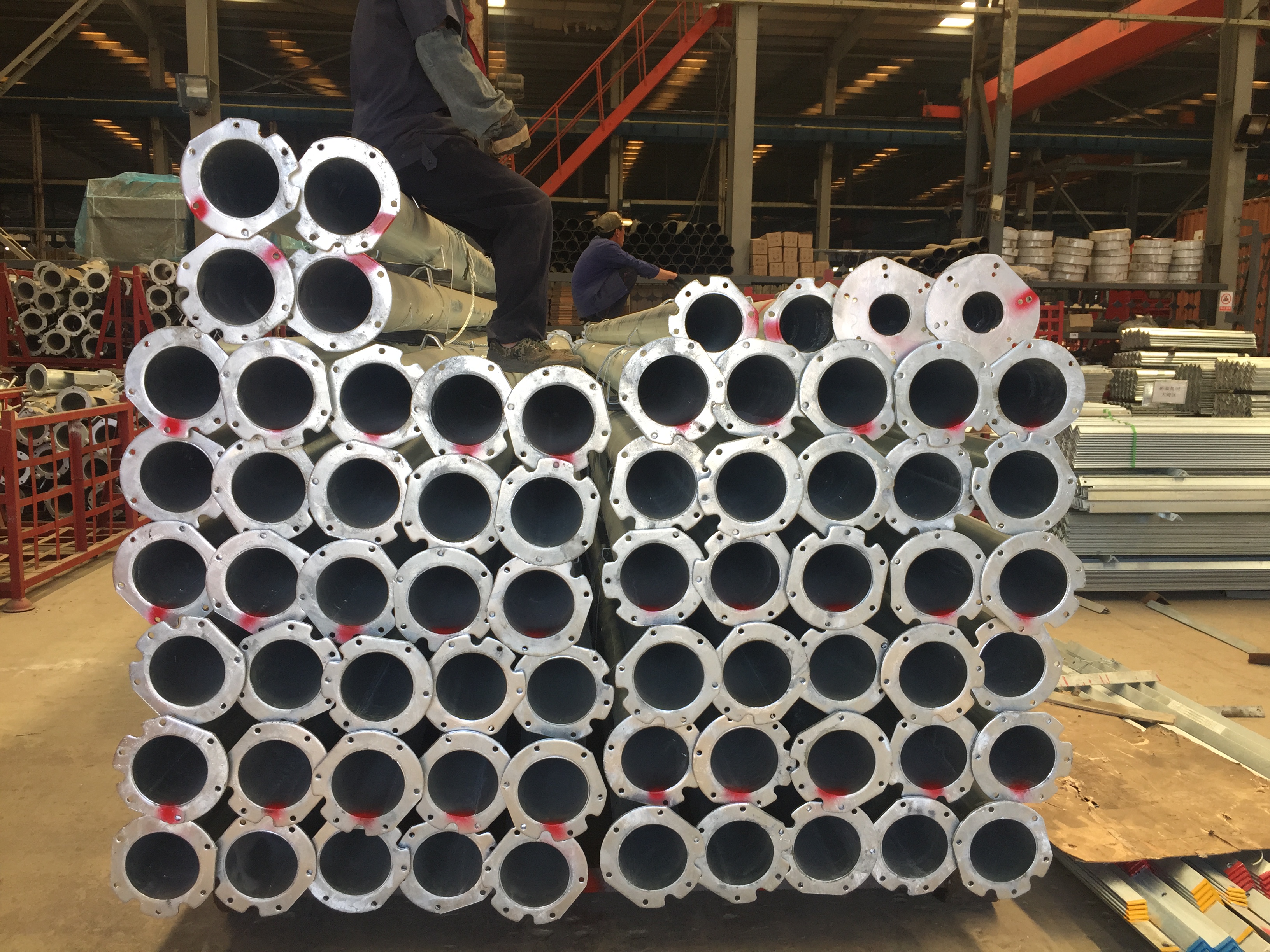
Structural pipe for a center pivot irrigation system — material grade and galvanizing conformity are among the most frequently under-documented items in irrigation procurement.
For the Fixed DYP center pivot, the structural metal specified is Q235B conforming to GB 13912-2020, the Chinese standard covering hot-dip galvanized coatings on fabricated iron and steel articles. That combination matters over a service life measured in decades: the grade determines structural behaviour under span loads and wind, while the coating determines how long the structure resists corrosion in humid, coastal or saline-alkali environments.
Buyers evaluating either machine should request, as a minimum, mill certificates for the steel grade, galvanizing inspection records with coating thickness values, and a clear statement of which standard the coating was tested against. A stated standard is only useful if the documentation shows the test was performed. Yulin Irrigation states that its irrigation equipment carries CE, ISO9001 and CSA certification and undergoes anti-corrosion and wind resistance testing for tropical, saline-alkali and high-wind farmland environments; the corresponding certificates should be reviewed at order stage rather than treated as a general claim.
For water application performance, ISO 11545:2009 is the recognised in-field method for determining the uniformity of water distribution from centre-pivot and moving lateral irrigation machines. It is a measurement method rather than a performance guarantee, which is exactly why it is useful in a purchasing discussion: a buyer can agree in advance that uniformity will be evaluated using this method during commissioning, instead of relying on a catalogue figure.
Application scenarios: which farm profile fits which machine
The two machines tend to sort themselves by scenario rather than by budget.
The Fixed DYP center pivot is typically the stronger fit where:
- the irrigated block is large, regular and largely free of obstacles;
- a 380V–460V supply is already available or can be extended economically;
- the farm wants repeatable, low-labour irrigation with reversible span control for cycle scheduling;
- supplementary irrigation or fertigation is planned at the outer end, where an end spray gun and a fertilizer tank can be added as supporting equipment.
The JP800 hose reel machine is typically the stronger fit where:
- no reliable grid power reaches the block, and running a cable would dominate the project budget;
- parcels are irregular, narrow or separated, so strip-by-strip coverage is more efficient than a circle;
- the existing pump can sustain inlet pressure within 0.6–0.9 MPa and flow within 25–52 t/h;
- water chemistry is aggressive, where a corrosion-resistant poly pipe is specified to protect the system from acidic or alkaline water;
- integrated pest control is required, using pesticide addition through the irrigation line.
Where a farm combines both profiles — a large circular or near-square block plus outlying parcels — the two machines are complements rather than substitutes, and the specification exercise becomes one of allocating water capacity and labour across both.
Market context: what is changing between 2025 and 2030
The demand environment around this purchasing decision is expanding. Mordor Intelligence estimates the global center pivot irrigation system market at USD 2.56 billion in 2025, projected to reach USD 5.67 billion by 2030. Growth of that magnitude is not evenly distributed: it reflects both replacement demand in established irrigation regions and new project demand where mechanised irrigation is being adopted at scale for the first time.
Two signals illustrate how the geography of demand is shifting. Lindsay Corporation secured a multi-year supply agreement for Zimmatic irrigation systems in the MENA region valued at more than USD 100 million in 2024, indicating that large buyers there are committing to multi-year, multi-unit programmes rather than single-machine purchases. Meanwhile, Valmont Industries reported Agriculture segment sales of USD 278.0 million in Q4 2024, representing 26.7% of total net sales, which shows how concentrated irrigation demand remains among a small number of large suppliers.
For a farm or dealer comparing a fixed pivot with a hose reel machine today, the practical implication is that supplier capacity and delivery reliability deserve the same scrutiny as the machine specification. Yulin Irrigation states a production capacity of 400 pivot systems per year and a monthly production capacity of 60 units for the hose reel range, with each product undergoing 100% testing before delivery — capacity figures that a buyer can test against promised delivery dates.
Limitations and boundaries of each option
An honest comparison has to state where each machine stops being the right answer.
Fixed DYP center pivot. It requires a 380V–460V supply and an IP65-rated control environment, so sites without accessible power face additional infrastructure cost. Its circular pattern leaves the corners of rectangular blocks outside the irrigated area. The machine is fixed: it cannot be relocated to a distant parcel without dismantling, which limits its usefulness on fragmented farms. Initial investment in a pivot structure is also generally higher than for a travelling machine of comparable coverage, which is why total cost of ownership, not purchase price, is the correct comparison basis.
JP800 hose reel machine. Its water-turbine drive removes the need for electricity but simultaneously creates a hydraulic dependency: if inlet pressure falls below the 0.6 MPa floor or flow drops below 25 t/h, travel speed and application depth are affected. Coverage is achieved strip by strip, so a block requiring uniform irrigation across its full width needs multiple passes and repositioning time. At a net weight of 2180 kg ±30 kg, towing and repositioning require suitable tractors and access lanes, and soft or wet ground can restrict movement. Labour, therefore, becomes a recurring cost that does not exist to the same degree with a fixed pivot.
Neither machine is universally better. The correct answer depends on which limitation the farm can absorb more cheaply.
Procurement terms, testing and acceptance
At the execution stage, commercial terms determine how smoothly a project proceeds. For this range, the stated purchasing terms are a minimum order quantity of 1 unit, delivery terms of FOB, CFR or CIF, and acceptance criteria of a pre-shipment test. Payment terms are a 30% deposit after contract confirmation, with the balance by T/T before shipment; L/C or D/P terms are available for the Algeria market.
Two items deserve explicit treatment in the purchase contract. First, the pre-shipment test should be documented with photo or video records and, where applicable, hydraulic test data, so that the acceptance step is evidenced rather than assumed. Yulin Irrigation states that each product undergoes 100% testing before delivery and that pre-delivery checking is combined with reinforced classified packaging and photo archiving. Second, buyers comparing the two machines should confirm what is included in the quoted price — in particular whether an end spray gun, fertilizer tank or poly pipe is part of the scope, since these are supporting items rather than standard inclusions in every configuration.
On total cost of ownership, manufacturer comparison data for Yulin's pivot range states that initial cost can be roughly 30% higher than lower-cost alternatives, while total cost of ownership over ten years is stated to be around 40% lower, with substantially less maintenance required. These are supplier-reported figures rather than independently audited results, and they should be tested against the farm's own energy, labour and water costs before being used in an investment decision.
Long-term ownership: spares, service and support
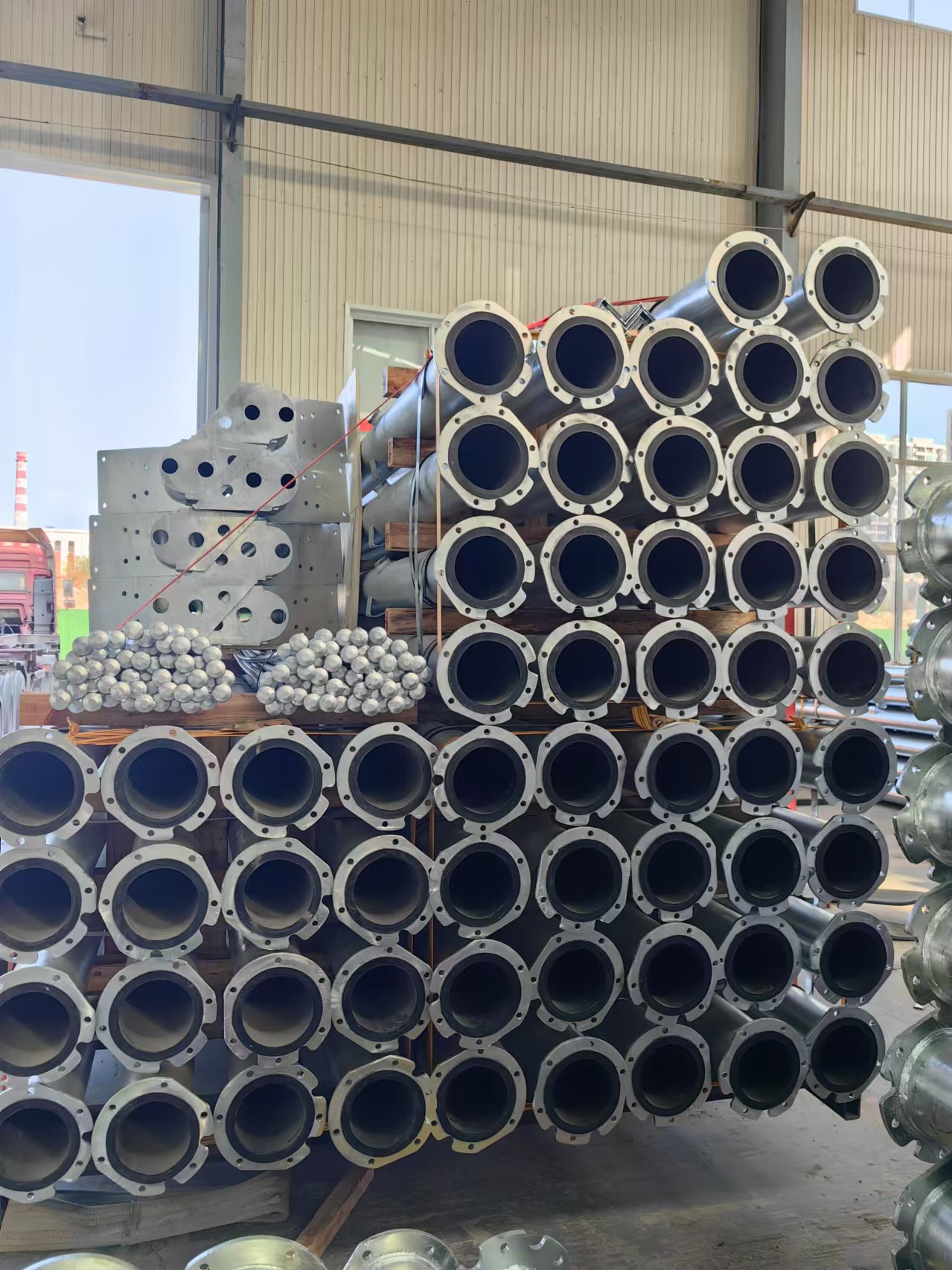
Spare-part availability and warranty handling are long-term cost drivers that are rarely visible in a quotation.
For a machine expected to work for years, the support structure behind it is part of the specification. Yulin Irrigation states that over 95% of the machine's spare parts are independently manufactured in its own factory, which supports full-process quality monitoring and helps stabilise part consistency. For company-caused faults and in-warranty damage, the company provides free spare-part reissue, and machine components are held in stock for replacement supply.
Technical support is provided through 24-hour online assistance by professional engineers, with engineers dispatched to client locations for on-site installation, commissioning and operator training for overseas projects. Where the machine is a hose reel unit that depends on correct pressure and flow, on-site commissioning is not a formality: it is where the hydraulic assumptions made at the quotation stage are confirmed in the field.
Risk management during transport follows the same logic. Parts are packaged in reinforced, classified lots with photo archiving before shipment, which reduces disputes over transit loss and makes it easier to identify whether a problem occurred before or after arrival.
Future outlook
Two directions are visible in this segment. The first is continued growth in mechanised irrigation demand, with the global center pivot market projected to move from USD 2.56 billion in 2025 toward USD 5.67 billion by 2030. The second is regional rebalancing: large multi-year agreements, such as the MENA irrigation supply agreement valued at more than USD 100 million in 2024, show that demand is increasingly organised through long-term programmes rather than one-off equipment orders.
For buyers, the practical consequence is that supplier selection criteria will matter as much as machine selection. Farms and dealers choosing between a fixed pivot and a hose reel machine should weight deliverability, spare-part continuity, documentation quality and in-field commissioning support alongside the parameters compared in this article. A machine that matches a field perfectly on paper still underperforms if the pressure ceiling, the ownership costs or the service response do not hold up in practice.
FAQ
1. How do the power requirements differ between a Fixed DYP center pivot and a JP800 hose reel machine?
The Fixed DYP center pivot irrigation system operates on a 380V–460V electrical supply and uses an IP65-rated control enclosure with electromechanical reversible span control. The JP800 hose reel irrigation machine is powered by a water turbine and does not require electricity, and it belongs to the JP90-300 model series. The comparison therefore turns on whether a site has a dependable three-phase supply, since the hose reel machine's drive depends on hydraulic rather than electrical energy.
2. What inlet pressure and flow does the JP800 hose reel irrigation machine require?
The stated inlet pressure range is 0.6–0.9 MPa, and the water flow rate is 25–52 tons per hour. The machine uses a DL50/SIMA10497 spray gun with a nozzle diameter of 16–22 mm and a spray radius of 19–41 metres, and its net weight is 2180 kg with a tolerance of ±30 kg. These figures should be matched against the pump curve and supply-line friction losses before ordering.
3. How does field shape influence the choice between a center pivot and a hose reel machine?
A center pivot applies water in a circular pattern around a fixed point, which suits large regular blocks but leaves the corners of rectangular fields outside the irrigated area. A hose reel machine travels along a strip while winding a 300 m PE pipe, which suits irregular, narrow or separated parcels and fields without grid power, at the cost of repositioning time and labour between strips.
4. Which materials and standards should be verified before purchase?
For the fixed pivot structure, the specified material is Q235B metal conforming to GB 13912-2020 for galvanized coating. Buyers should request steel mill certificates, galvanizing inspection records with coating thickness values, and the certificates behind stated CE, ISO9001 and CSA claims. For water application performance, ISO 11545:2009 provides the recognised in-field method for determining water distribution uniformity from centre-pivot and moving lateral irrigation machines, and can be agreed as a commissioning measurement method.
5. What are the purchasing terms and acceptance criteria for these machines?
The stated terms are a minimum order quantity of 1 unit, delivery terms of FOB, CFR or CIF, and acceptance criteria of a pre-shipment test. Payment terms are a 30% deposit after contract confirmation, with the balance by T/T before shipment; L/C or D/P are available for the Algeria market. Each product undergoes 100% testing before delivery.
6. What support is available over the service life of the machine?
Over 95% of the machine's spare parts are independently manufactured in the company's own factory, and machine components are stocked for replacement supply. Free spare-part reissue is provided for company-caused faults and in-warranty damage, 24-hour online technical support is available from professional engineers, and engineers are dispatched to client locations for on-site installation, commissioning and operator training. Parts are packaged in reinforced, classified lots with photo archiving before shipment.
Additional technical specifications, model options and configuration details for the Fixed DYP center pivot and the JP hose reel series are compiled in the 2026 YULIN Pivot Catalogue, available for download here: 2026 YULIN Pivot Catalogue.