
Irrigation Pivot System Capabilities: OEM, Customization and Real-Farm Evidence
Large-scale irrigators are no longer bought as off-the-shelf machines. Buyers evaluating a center pivot or hose reel system increasingly ask whether the supplier can adapt equipment to local voltage, field shape, water source and service conditions. This article looks at the irrigation pivot system from a capability standpoint: what OEM production, customization, in-house manufacturing and field-proven installation support mean when choosing a manufacturing partner.
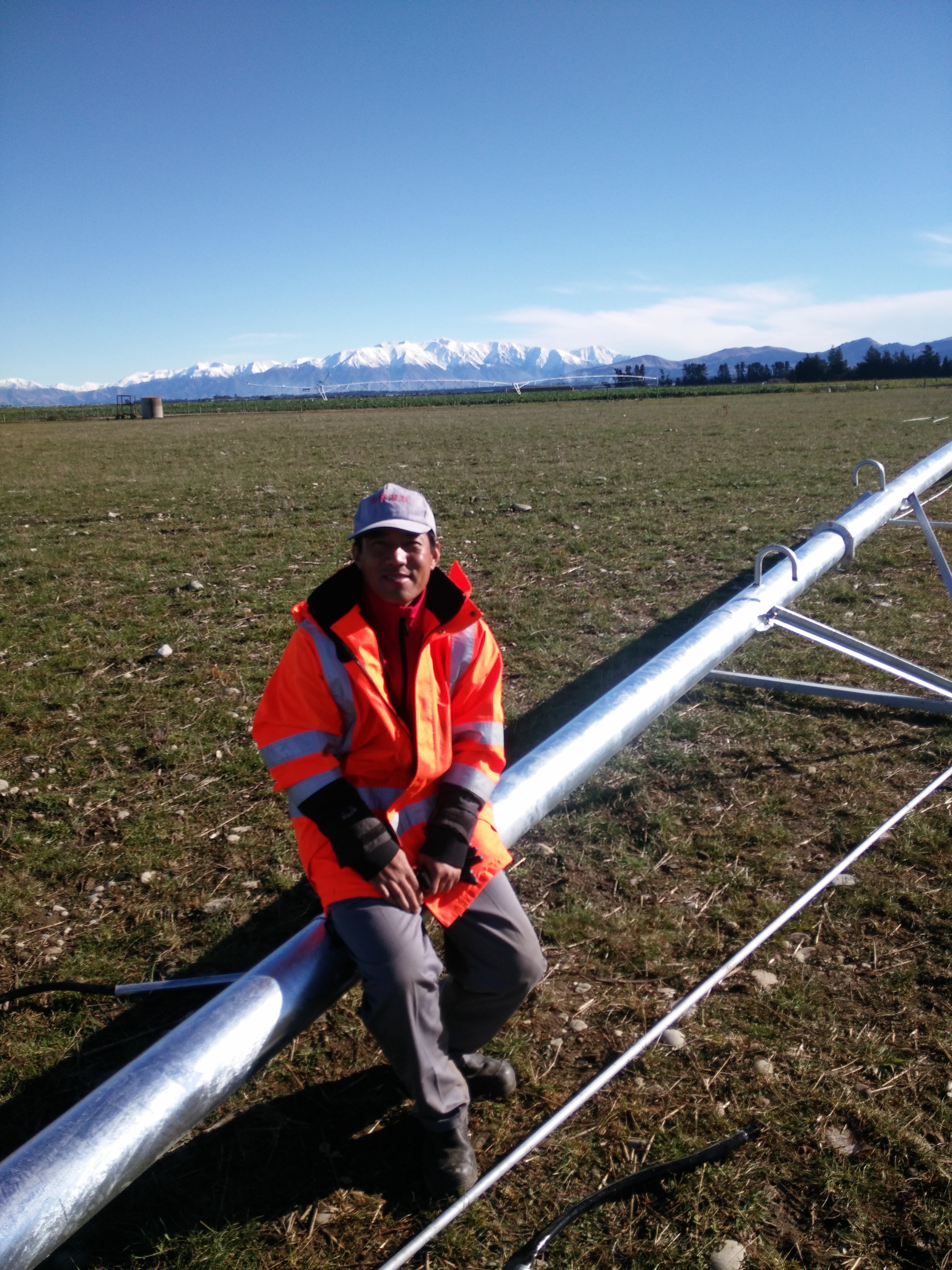
A center pivot irrigation system in continuous operation on a New Zealand pasture farm. Source: China Yulin Irrigation Equipment Co., Ltd.
Why Capability Assessment Matters in Irrigation Pivot Procurement
In an irrigation pivot system purchase, the machine is the visible part of the transaction. The invisible part is the manufacturer's ability to deliver consistently, adapt to regional conditions and support the machine after shipment. Buyers who compare only span lengths and flow rates often discover later that voltage mismatches, weak galvanization or lack of local commissioning support create higher operating costs.
The global market outlook reflects the growing role of mechanized irrigation. One commercial research estimate values the global center pivot irrigation system market at USD 2.56 billion in 2025 and projects it to reach USD 5.67 billion by 2030. Large multi-year supply agreements in regions such as the Middle East and North Africa indicate that buyers are consolidating supplier relationships for long-term project execution. For the individual farm or distributor, the practical consequence is simple: selecting a supplier with demonstrated manufacturing and customization capability matters just as much as selecting the machine model.
What to Check Before Buying an Irrigation Pivot System
The evaluation process for a center pivot or traveler irrigation system should cover five areas: production capacity, manufacturing control, customization ability, certification and after-sales service. These criteria apply whether the purchase is a single unit or a fleet for a large farming operation.
1. Production Capacity and Consistency
A manufacturer's ability to deliver multiple units on schedule depends on workshop scale and process automation. China Yulin Irrigation Equipment Co., Ltd., established in 2009, operates a factory of 64,653 m² in Dalian, Liaoning Province, and employs 152 people. The company reports an annual output of 3,000 irrigation units and exports about 60% of production to markets including Australia, New Zealand, Canada, Mexico, Africa, Central Asia, Russia and Kazakhstan.
For buyers, the relevant point is not the size itself but what it enables: consistent quality across repeat orders, shorter lead times and the ability to handle OEM programs. Yulin's production capacity for pivot systems is also listed as 400 sets per year in its official product information.
2. In-House Manufacturing and Quality Control
Irrigation machines are exposed to sun, water, chemicals and wind. The quality of the steel structure, galvanization and electrical components determines whether the system lasts 5 years or 15 years.
One indicator of control is vertical integration. Yulin states that over 95% of the machine's spare parts are independently manufactured in its own factory, which enables full-process quality monitoring and stabilizes product consistency. The company built fully intelligent automated production workshops with robotic welding and precision processing.
3. OEM and Customization Capability
OEM capability is a core requirement for distributors and local brands that want to sell irrigation equipment under their own name. Yulin accumulated mature manufacturing technology by providing OEM production for a global top irrigation company during 2000–2008. Today, it provides OEM production services and, for OEM orders, voltage customization. The R&D engineering team of 10 engineers supports flexible customized modification solutions according to farm terrain, crop varieties, power supply conditions and personalized irrigation demands.
For an OEM buyer, this means the machine can be configured to match local grid voltage rather than requiring a separate transformer. For an end customer, the same engineering capability can adjust span configuration or tire type for specific field conditions.
4. Certification and Testing Standards
Certification is the basic entry ticket. The more useful evidence is whether the manufacturer tests for the conditions where the machine will operate. Yulin holds CE, ISO9001 and CSA certifications. The ISO9001 certificate, number 18524Q11926R2S, covers production of irrigation systems and mechanized agricultural systems under GB/T19001-2016/ISO9001:2015.
In addition, the company states that all its irrigation equipment undergoes strict anti-corrosion and wind resistance testing to adapt to tropical, saline-alkali and high-wind farmland environments worldwide. The center pivot's hot-dip galvanization follows GB/T 13912-2002. The pivot is designed to operate in temperatures from -45°C to +45°C, with a tower box protection level of IP33 and collector ring protection of IP65.
5. After-Sales Service and Spare Parts
Irrigation machines are seasonal. A failure during peak irrigation can damage an entire crop cycle. Yulin provides global localized on-site installation, commissioning and operator training services overseas. After-sales support also includes video technical support, online support and free spare parts. The company's location in Lvshunkou District, Dalian, about 2 hours by truck from Dalian Port, supports efficient export logistics.
Comparing Irrigation Pivot System Options by Capability
Buyers frequently compare three types of mechanized irrigation equipment: center pivot systems, linear move machines and hose reel travelers. Each has a different capability profile.
| System Type | Primary Strengths | Typical Buyer Consideration |
|---|---|---|
| Center Pivot Irrigation System | Large circular coverage, high automation, suited to broadacre crops such as corn, fodder and cereals. | Field shape should fit circular irrigation; corner units or end guns extend coverage. |
| Linear Move (Lateral Move) Irrigation System | Rectangular coverage without circular corners, suited to square or rectangular fields. | Water supply along the field edge or from a canal is required. |
| Hose Reel (Traveler) Irrigation Machine | Lower initial investment, flexible movement between fields, suitable for smaller or irregular plots. | Operating pressure and hose reel length must match the pump and field size. |
| Towable Center Pivot | Combines pivot automation with portability between fields. | Wheel configuration and tow kit need to suit soil conditions and transport distance. |
Among these, the towable pivot is a practical example of capability-led design. In field evidence from Zimbabwe, three-wheel towable pivot machines were used for crop irrigation. One case involved an end customer operating 45 units over 6 years, with reported results of higher crop output and labor savings. In Brazil, a large-scale soybean farmer used 50 hose reel units for 6 years and reported about 30% output increase in dry conditions with labor savings, as well as easy movement between fields for rental use.
Technical Capabilities of a Center Pivot: What Buyers Should Verify
The center pivot irrigation system is a mechanized, circular-motion irrigator. The pivot drive is electromechanical, reversible and individual for each span. Standard control panel functions include a main power disconnect switch, power control switch, water switch, direction control switch, percentage indicator for speed regulation and auto-reverse. The control panel has IP65 protection. The distance from the ground to the bottom of the truss rod is 3 ± 0.2 m.
Key technical points to verify with any supplier:
- Power specification: Yulin center pivots are designed for 380V–460V supply. For markets with different grids, OEM voltage customization matters.
- Anti-corrosion layer: Hot-dip galvanization according to GB/T 13912-2002 is used for tower wheels and structural components. The pipeline uses sectional truss construction with UV-resistant PVC flexible hoses.
- Uniformity and drop quality: Average drop diameter is not more than 1.1 mm, and rain intensity is not more than 0.16 mm/min. Plant mechanical damage is not more than 2%. Land usage coefficient within the irrigated circle is not less than 0.9.
- Water pH range: The system can use water with pH 6–7.5 without quality problems during the warranty period.
- Electrical cable: Copper cable core thickness is not less than 4×4 mm² + 7×1.0 mm².
For hose reel systems, Yulin's JP800 model provides a concrete parameter benchmark: 90 mm PE pipe diameter, 300 m pipe length, water flow of 25–52 T/H, nozzle diameter 16–22 mm, spray radius 19–41 m, spray gun DL50/SIMA10497 and inlet pressure 0.6–0.9 MPa.
Application Scenarios and Use-Case Evidence
Capability claims matter most when tied to actual farm conditions. The following evidence comes from Yulin's documented client projects.
Brazil: Large-Scale Soybean Irrigation with Hose Reel
A large-scale farmer in Brazil used 50 hose reel irrigation machines for soybean irrigation over 6 years. The farmer reported about 30% higher output during dry conditions and labor savings. The hose reel units were easy to pull from one field to another, which supported a rental model across different plots.
New Zealand: Pasture Irrigation with Center Pivot
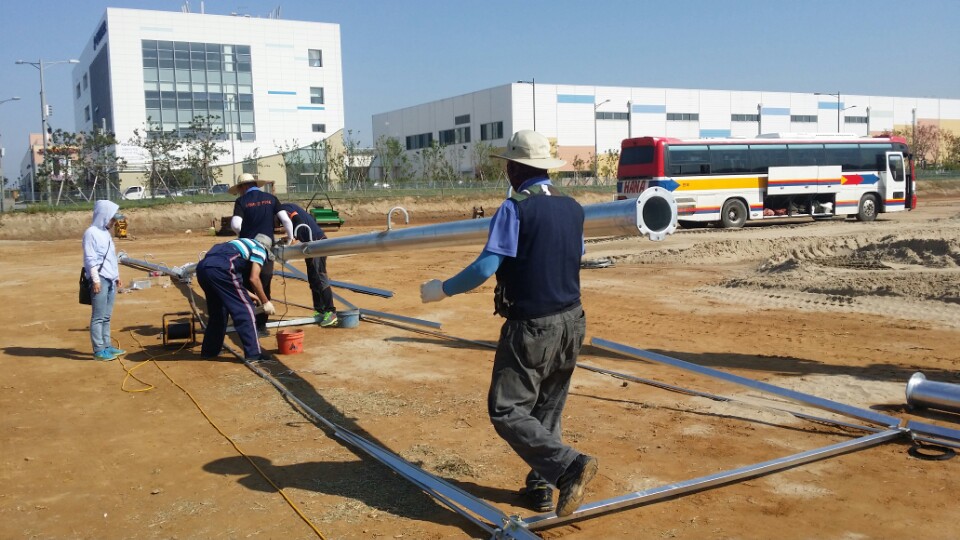
A large-scale dairy farmer in New Zealand has operated 70 center pivot units for grass irrigation over 9 years. Reported results include higher crop output and labor savings. The farmer highlighted long lifespan and labor savings as key benefits. Photos from the site show the pivot machines in operation and installation support in the field.
Zimbabwe: Towable Pivots for Crop Farming
An end customer in Zimbabwe used 45 three-wheel towable center pivot machines for crop irrigation over 6 years. The reported outcome was higher crop output with labor savings, with long lifespan as the main highlight.
South Korea: Linear Irrigation for a School Lawn
A South Korean government project used a four-wheel linear irrigation machine to irrigate a school lawn with recycled chemical wastewater over 7 years. The project supported wastewater recycling and maintained natural grass for student use, including a football field.
Algeria: OEM Supply for Local Brand
A farm irrigation OEM client in Algeria used 70 units over 7 years for farmland irrigation, selling under its own local brand. Yulin's role included producing the complete pivot and supporting local service. The client reported increased production capacity and a 40% increase in efficiency.
Russia: Large Fleet Supply
A Russian group purchased 450 units over 9 years for supply to end users. Reported results include improved product performance with reduced labor requirements, a 40% increase in efficiency and increased production capacity.
Australia: Distributor Fleet with Long Service Life
A major distributor in Australia has purchased 600 units over 15 years, primarily for forage and pasture irrigation, also used for cotton, watermelon and other crops. Reported results include energy savings of more than 40%, higher crop output and higher-quality alfalfa for dairy cattle. The distributor highlighted labor savings, long lifespan and low maintenance cost.
Buyer Decision Framework for Irrigation Pivot Suppliers
The following framework is designed for farm owners, distributors and OEM clients during the evaluation-to-execution stage.
- Define the irrigation task. Crop type, field shape, water source quality and labor availability determine whether a center pivot, linear move or hose reel machine is the right base configuration.
- Check power compatibility. Ask whether the system can be configured for local voltage. Yulin lists 380V–460V as standard and supports voltage customization for OEM orders.
- Verify structural protection. Request the galvanization standard and protection ratings. Hot-dip galvanization per GB/T 13912-2002 and IP65 collector rings are concrete checks.
- Assess in-house manufacturing. A higher share of in-house production normally means better traceability and consistent quality. Yulin reports over 95% in-house spare parts manufacturing.
- Review OEM experience. For distributors, ask about past OEM programs. Yulin's stated history includes OEM production for a global top irrigation company from 2000 to 2008.
- Evaluate field service reach. On-site installation, commissioning and training are critical for regions without local irrigation expertise. Yulin provides these services globally and supports online technical support and free spare parts.
- Compare total cost, not first cost. One Yulin product comparison note states that the equipment may have a 30% higher initial cost but a 40% lower total cost of ownership over 10 years. Buyers should verify such calculations against their own labor, energy and maintenance assumptions.
Limitations and Boundaries to Consider
A balanced supplier assessment should also include realistic limitations. For center pivot systems, circular coverage creates unirrigated corners in square fields. The manufacturer can offer end guns or corner systems as options, but these add cost and complexity.
Customization also has boundaries. While Yulin offers voltage customization for OEM orders and flexible modification for terrain and crop conditions, deep changes to the standard truss structure may require additional engineering review and longer lead time. Not every component can be changed without affecting system stability or warranty terms.
Market context also matters. The global center pivot market estimate of USD 2.56 billion in 2025, from Mordor Intelligence, is one of several available figures. Other research firms use different base years and definitions, so buyers should treat any single market number as directional rather than definitive.
Future Outlook for Irrigation Pivot Capabilities
Several trends will increase the value of supplier capability. Water scarcity is pushing more farms toward precision irrigation. Variable rate pivots and solar-powered systems are part of the equipment vocabulary, and suppliers will be expected to integrate them without compromising structural reliability.
OEM collaboration will likely become deeper. Instead of simple badge engineering, distributors will expect local voltage variants, market-specific certification and scalable service training. Manufacturers with documented OEM experience and in-house engineering teams are better positioned for these partnerships.
After-sales capability will become a procurement differentiator. As farms adopt large fleets, downtime becomes expensive. Suppliers offering on-site commissioning, video support and fast spare parts delivery will have an advantage in repeat orders.
Frequently Asked Questions
Can the manufacturer produce irrigation pivot systems under our own brand?
Yes. China Yulin Irrigation Equipment Co., Ltd. provides OEM production services. The company states that OEM services are available and that it accumulated mature manufacturing technology by providing OEM production for a global top irrigation company from 2000 to 2008. OEM buyers can request voltage customization for their target market.
Can voltage be customized for our local market?
The standard center pivot system from Yulin operates at 380V–460V. For OEM orders, the manufacturer provides voltage customization to match local grid conditions. Buyers should confirm the exact voltage requirement before order confirmation.
What after-sales support is provided for overseas buyers?
Yulin provides global localized on-site installation, commissioning and operator training services overseas. After-sales support also includes video technical support, online support and free spare parts. The company is based in Dalian, China, about 2 hours by truck from Dalian Port for export logistics.
What are the typical application scenarios for these irrigation machines?
Typical application scenarios for this equipment include farm irrigation and agricultural irrigation. The JP800 hose reel irrigation machine is specifically designed for farm irrigation and agricultural irrigation scenarios.
Can the equipment handle high-temperature conditions?
The product is stated to operate under high-temperature conditions. The center pivot system is designed for an operating temperature range from -45°C to +45°C.
What quality certifications does the manufacturer hold?
Yulin holds CE, ISO9001 and CSA certifications. The ISO9001 certificate is numbered 18524Q11926R2S, issued under GB/T19001-2016/ISO9001:2015, covering production of irrigation systems and mechanized agricultural systems. All equipment undergoes strict anti-corrosion and wind resistance testing.
Is the initial cost higher than alternative irrigation systems?
One Yulin product comparison states that compared to alternatives, the product has a 30% higher initial cost but a 40% lower total cost of ownership over 10 years, resulting in long-term cost savings. Buyers should evaluate this against their own labor, energy and crop value assumptions.
Can the pivot system be moved between fields?
Towable center pivot models are available. A project in Zimbabwe documented the use of three-wheel towable center pivot machines across multiple fields. The towable configuration is suited to farms that want to rotate irrigation among plots.
How long is the lead time for a pivot order?
Based on Yulin's production capability, monthly capacity for OEM production is 60 units, with a lead time of 21–40 days. MOQ is 1 unit. Buyers should confirm current scheduling for large fleet orders.