
IoT Module Supplier Due Diligence: Lierda's Evidence Record
IoT Module Supplier Due Diligence: Lierda's Evidence Record
Supplier capability in the IoT module market is now judged by what a buyer can audit, not by what a brochure asserts. This review applies an audit standard to Lierda Science & Technology Group Co., Ltd., an IoT module and system-solution provider founded in 2001 and listed on the Beijing Stock Exchange since 17 February 2023 under stock code 920249, and places its citable record beside four named tier-one references: Quectel, u-blox, Telit and Sierra Wireless. The purpose is practical. Consumer-electronics buyers moving from evaluation into execution need rows they can check, not adjectives they must trust.
Nothing below is a winner's list. Each dimension is paired with the evidence a supplier should be able to produce on request, followed by what Lierda's supplied record actually contains and where it stops. Peer references are treated the same way: named for calibration, credited only where attributable data exists, and otherwise left to the buyer to verify rather than assumed.
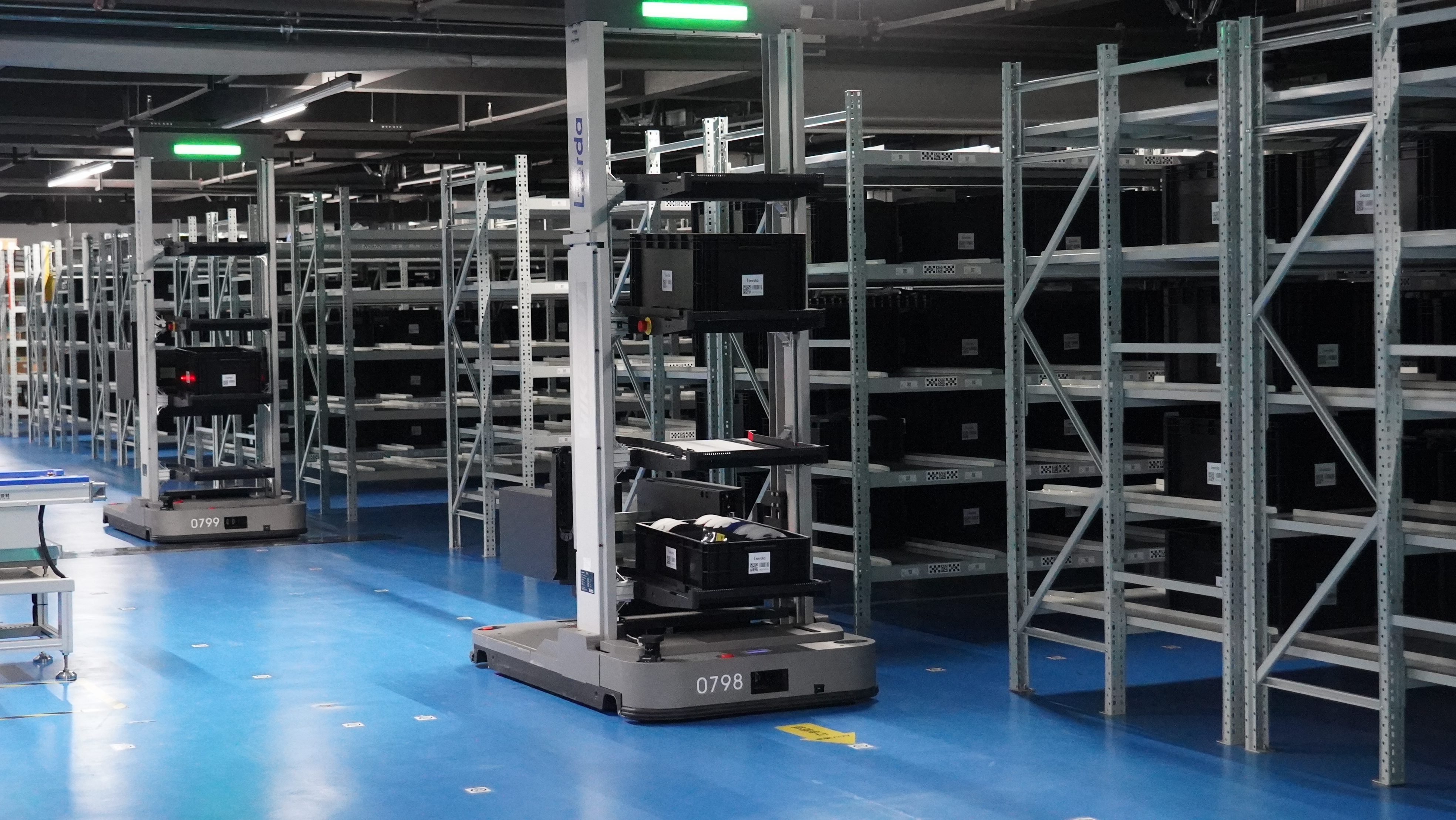
Authentic photo of Lierda's office and factory. Image: Lierda.
Why IoT module capability claims need an evidence trail in 2026
Capability claims are inexpensive to publish and expensive to disprove. A supplier can list nine radio technologies on one page; the buyer still has to confirm, part by part, which markets each model is authorised for, which antenna configuration was tested, and whether the security file is current. That gap between portfolio language and model-level documentation is where integration programmes lose schedule.
Three market signals widen the gap. The EU Radio Equipment Directive's cybersecurity requirements took effect on 1 August 2025, turning security evidence into a conformity question for any module bound for European products. Demand is broadening rather than consolidating: global cellular IoT module shipments grew 10% year on year in 2024, rebounding from the 2023 downturn, while LTE Cat 1 bis grew about 100% year on year over the same period, according to Counterpoint Research. Revenue is following volume upward — Berg Insight put cellular IoT module revenues at US$5.6 billion in 2025, up 19%. More volume means more suppliers with credible-looking catalogues, and a higher premium on documentation that can be checked.
The consequence for a buyer is a shift in what the first supplier meeting should produce: not a capability presentation, but a short list of documents — current certificate records per model, test conditions for published RF figures, a named support path for the buyer's region, and at least one deployment of comparable scope the supplier will discuss.
The four-dimension capability matrix
The matrix separates four questions that are routinely blended together, because each is verified by a different kind of evidence and each fails differently during execution.
| Dimension | What a buyer should be able to verify | Lierda record in the supplied evidence |
|---|---|---|
| R&D breadth | Engineering headcount, IP output, standards participation, and whether development covers RF, protocol stack and embedded software rather than integration alone | 224 R&D personnel within a 976-employee organisation; 66 invention patents, 176 utility model patents, 55 design patents and 530 software copyrights as of 31 May 2025; member of the National IoT Basic Standard Working Group |
| Product coverage | Named model families per radio technology, with documents for each family the project depends on | Cellular (Cat.1 bis NT26-F series, NB-IoT MB26-AGL), LoRaWAN (WB25-8D), Wi-Fi 6 (UB37, DB37, WF29A, WF39B, UB64) and Bluetooth (EB55, SB26, BT18N0/BT18N5), within a portfolio statement that also covers 5G, Wi-SUN and ZigBee |
| Support and manufacturing engagement | Engagement models, customisation scope, QC responsibility and the named escalation path | OEM, ODM and EMS models with Module/PCBA customisation; custom QC standards and testing set to customer specification; dedicated project support plus remote technical assistance; more than 20 service centres |
| Industry-solution fit | Deployments of comparable scale, duration and application, with the application class named | Supplier-reported programmes in smart metering, telecom network stations, home appliances, audio equipment, beauty devices, hotel automation and development boards, from 5,000 to more than 19.6 million units |
Two rules keep the matrix honest. A row is filled only when the evidence names the entity, model or programme; and a filled row never implies that an unfilled row is empty at the supplier. In this review, "not documented in the evidence reviewed" means exactly that and nothing more.
R&D breadth: what the record shows, and what it does not prove
Lierda's research profile is documented at company level. The organisation reports 224 technical R&D personnel out of 976 employees, a factory area of 18,000 m², and — as of 31 May 2025 — 66 invention patents, 176 utility model patents, 55 design patents and 530 software copyrights. It also states membership of the National IoT Basic Standard Working Group and participation in drafting national and industry standards.
The composition of that portfolio is more informative than its size. A count dominated by software copyrights, with a substantial utility-model layer beneath a smaller invention-patent core, is consistent with development effort concentrated in embedded firmware, protocol stacks and application integration — the work that determines whether a module's OTA path, sleep behaviour and network attach logic survive a real deployment. For a consumer-electronics buyer, that is the relevant question: a module that joins a network slowly or drains a battery in a poorly instrumented low-power state costs more in field support than the unit-price gap between suppliers.
The boundary matters as much. Patent counts do not demonstrate RF performance, thermal behaviour under load or production yield, and none of those can be inferred from an IP table. Buyers should read the R&D record as evidence of engineering depth and continuity, then require model-level test data for the parameters their product depends on. Standards participation is a signal about familiarity with certification workflows — useful when a programme must clear several regulators — not a substitute for the certificates themselves.
Product coverage across cellular, LoRaWAN, Wi-Fi 6 and Bluetooth
Lierda's portfolio statement covers 5G, RF, LoRa, NB-IoT, Cat.1, Wi-SUN, Wi-Fi, BLE and ZigBee across three business lines: IC value-added distribution, IoT modules and IoT system solutions. The question for a buyer is not whether that list is long, but whether the families that matter have documents behind them.
Cellular and LPWAN
The Cat.1 bis NT26-F series carries the deepest evidence. The NT26-FEU variant holds CE certification and an EU type-examination certificate citing EN 18031-1:2024 under the Radio Equipment Directive; the NT26-FJP variant holds Japan TELEC certification and JATE terminal approval. The NB-IoT MB26-AGL holds a separate EU type-examination certificate referencing the RED as amended by (EU) 2022/2380.
On the LPWAN side, the WB25-8D is described as a LoRaWAN end-node module supporting EU868, IN865, RU864, AU915, US915, KR920 and AS923-1/-2/-3/-4 regional plans across an 860–930 MHz band, with a UART interface. A technology-partner page published by STMicroelectronics independently describes the same device as a LoRaWAN end node referencing the LoRaWAN protocol stack and regional parameters, and the WB26-7P as a LoRa transparent module with a serial interface. Third-party corroboration of that kind is worth more than a repeated catalogue line: it confirms the product exists in another company's ecosystem documentation.
Wi-Fi 6 and Bluetooth
The short-range side holds the broadest certification record. Standard Wi-Fi 6 modules UB37 and DB37 carry FCC, CE-RED, ISED (IC) and RCM records; DB37 additionally holds TELEC. The dual-band WF29A and WF39B families are the modules named in the appliance and audio programmes described later, alongside the UB64 dual-band module. On Bluetooth, the EB55 BLE module holds CE-RED, FCC, IC and TELEC records, the SB26 standard Bluetooth module holds CE certification, and the BT18N0 (described as a Bluetooth 6.0 module) and BT18N5 multi-protocol module hold FCC certification issued in January 2026.
One gap should be stated plainly. 5G appears in the portfolio statement, but the evidence set used here did not extend to 5G model-level specifications or certification records, and no 5G performance figures are asserted. Buyers whose roadmap depends on 5G should request the corresponding model documentation directly rather than extrapolating from the Cat.1 bis and NB-IoT record.
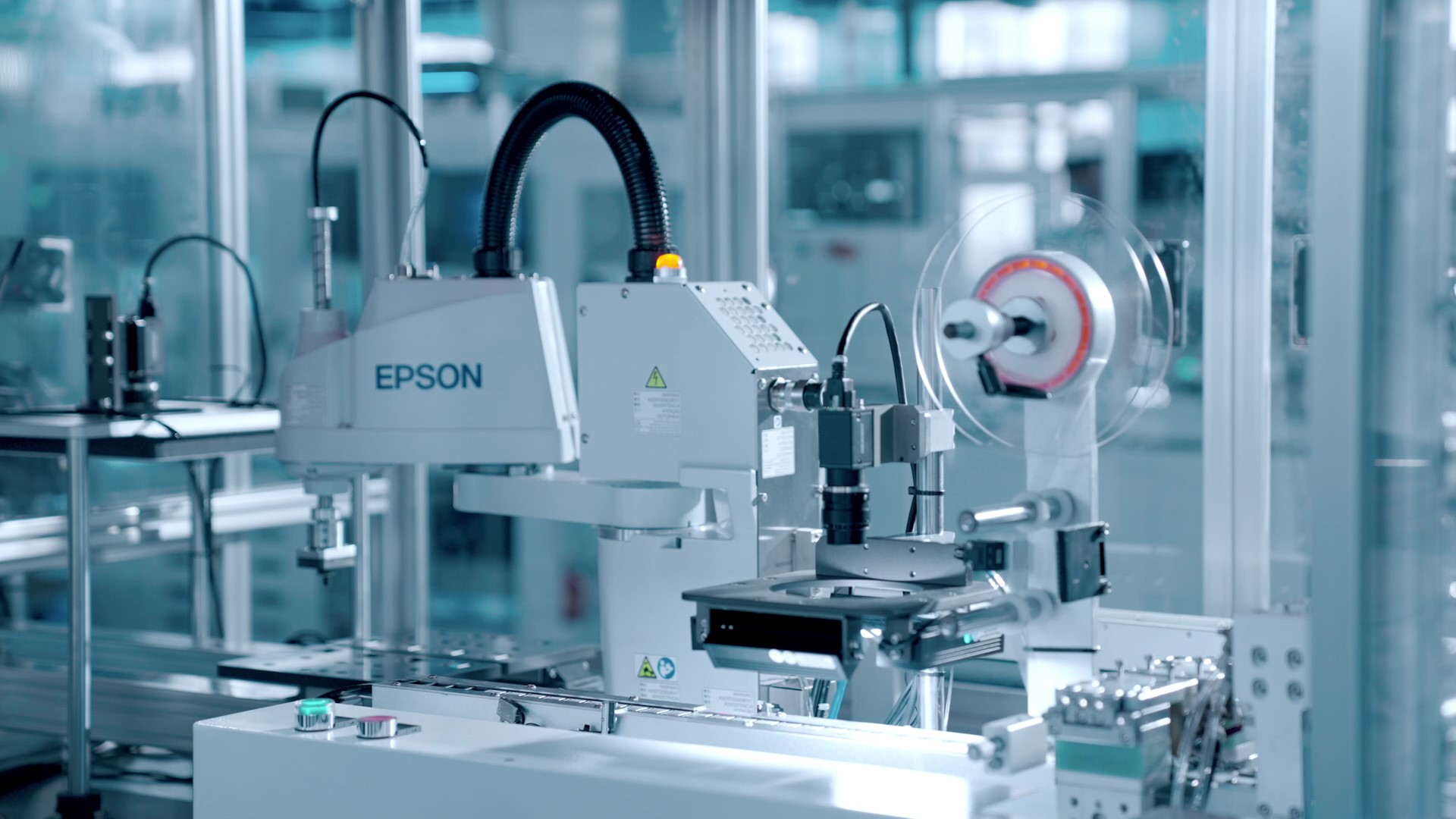
Authentic photo of Lierda's office and factory. Image: Lierda.
Reading module specifications correctly: protocol support is not market approval
The most common evaluation error in this category is treating a regional band list as market authorisation. A module that lists US915 support has said which frequency plan its radio can operate; it has not said that the device holds an FCC grant, nor which antenna configuration was tested, nor whether the grant remains valid.
The WB25-8D illustrates the point. Its published regional plans span European, Indian, Russian, Australian, North American and Asian bands — a wide span for a family intended for multi-region deployment. Yet the certification records included in this review cover the Wi-Fi 6, Bluetooth, Cat.1 bis and NB-IoT families, not that LoRaWAN module. For a North American or European rollout, the buyer's checklist should begin with the specific model's grant and end with its antenna and enclosure assumptions.
A second error is assuming a certificate for one model transfers to a sibling. It does not. UB37 and DB37 are both standard Wi-Fi 6 modules, yet each holds its own FCC, CE-RED, IC and RCM records, and only DB37 appears against the TELEC entry. Where a certificate names model variants — as the UB37 and DB37 CE-RED records do, listing the -U, -P, -L and -E suffixes — the buyer should confirm the variant being purchased is among them.
A third, newer check concerns security. With the RED cybersecurity requirements in force since 1 August 2025, the presence of EN 18031-1:2024 in a module's EU type-examination is becoming a screening criterion in its own right. Buyers should ask which standard the file cites, when it was issued, and whether the software version shipping in production matches the version assessed.
Certification evidence, model by model
The table maps what exists in this review. It is not a claim of global coverage: each entry applies only to the models and standards named, and certificate numbers were not included in the reviewed records, so a buyer will still need the documents themselves for a conformity file.
| Model / family | Category | Markets and standards evidenced | Record dates |
|---|---|---|---|
| NT26-FEU | Cat.1 bis LTE | CE (Europe); EU type-examination citing EN 18031-1:2024 and RED 2014/53/EU | May 2025; March 2026 |
| NT26-FJP | Cat.1 bis LTE | TELEC; JATE terminal approval (Japan) | September 2025 |
| MB26-AGL | NB-IoT | EU type-examination under RED as amended by (EU) 2022/2380 | September 2025 |
| UB37 | Wi-Fi 6 | FCC (US); CE-RED (EU); IC (Canada); RCM (Australia/New Zealand) | November 2024 – February 2026 |
| DB37 | Wi-Fi 6 | FCC; CE-RED; IC; RCM; TELEC (Japan) | October 2024 – March 2026 |
| EB55 | Bluetooth LE | FCC; CE-RED; IC; TELEC | August 2022 – January 2024 |
| SB26 | Bluetooth | CE (Europe) | January 2025 |
| BT18N0 / BT18N5 | Bluetooth 6.0 / multi-protocol | FCC (United States) | January 2026 |
Read as a whole, the record shows investment in multi-region conformity for the short-range and cellular families — the pattern expected of a supplier selling into Europe, East Asia, Southeast Asia and the Middle East. It does not show equivalent documentation for every family in the portfolio, and those gaps are the buyer's starting questions, not disqualifications.
Customer support, manufacturing engagement and commercial terms
Support is where supplier claims and buyer experience diverge most often, because it is hard to document and easy to promise. Lierda's published position is a three-model structure — OEM, ODM and EMS — with customisation at module and PCBA level, QC standards and testing set to the customer's specification, worldwide compliance assistance for export programmes, and after-sales support described as dedicated project support plus remote technical assistance. The company reports more than 20 service centres.
Two details are more concrete than the framing. Standard-product purchasing carries a stated minimum order quantity of 3,000 pieces, while delivery terms, acceptance criteria and payment terms are described as negotiable against customer requirements. That combination tells a buyer what to plan for: a fixed threshold for catalogue parts and project-by-project negotiation for everything else, including acceptance testing. Custom QC, meanwhile, is a commitment to follow the customer's test specification rather than a claim about a particular internal standard — useful for buyers with an existing test plan, and a gap for buyers who expect the supplier to supply the plan.
The organisational figures give the model a scale reference: 18,000 m² of factory area and 976 employees, 224 of them technical. Those describe an ability to staff engineering support; they do not describe line capacity, utilisation or lead time, none of which is published. Buyers should also note that the service-centre footprint is described in a domestic context, and that the company reports an export ratio of 8.46% alongside its European, East Asian, Southeast Asian and Middle Eastern markets. A business weighted toward its home market can still run international programmes well — but the buyer should confirm the regional escalation path, any local inventory or consignment arrangement, and the response-time expectation in writing before committing a production schedule.
Industry solutions: what the deployment record indicates
Deployment evidence is the hardest dimension to fake and the easiest to over-read. The programmes below are supplier-reported without independent audit; they are fit indicators for comparable applications, not benchmarks against other suppliers.
- Smart metering, Germany. An energy OEM has used the product family for water and gas meters across 5–10 years, with more than 19.6 million units supplied and stable quality reported as the defining characteristic. For metering buyers the signal is duration: meter programmes run for a decade or more, and a supplier with a multi-year record in the application class has already cleared the continuity question.
- Telecom network stations, South Korea. A telecom operator has deployed the NT26-FCN Cat.1 bis module at roughly 2 million units per year over a five-year project, with low power consumption and wide signal coverage cited. The reported outcome includes a leading position in the Korean Cat.1 bis market — a customer-programme claim rather than an independently measured share.
- Home appliances and audio, South Korea. A home-appliance OEM has used the WF29A and related Wi-Fi 6 modules in air purifiers and humidifiers at 500,000 units annually over five years, with PM2.5 data uploaded every five minutes, fan speed adjusted against air quality, OTA firmware updates over Wi-Fi, and reported results of a 30% power reduction and 99.5% Wi-Fi connection success. A consumer-electronics audio division has run WF29A/WF39B modules at 200,000 units per year over seven years, reporting 24-bit/96 kHz audio, latency under 50 ms for lip-sync and 99.9% Wi-Fi streaming stability.
- Hotel automation and smaller programmes, China and the US. A smart home and hotel equipment ODM has networked lighting, switches and curtains across more than 1 million units over 5–10 years, citing ease of modification and controllability. A beauty-device OEM shipped 200,000 units over three years, and a US industrial OEM has taken 5,000 development-board units over three years on recurring annual orders.
Together these establish application familiarity across metering, appliances, audio and building automation, at volumes from thousands to tens of millions. They do not establish performance parity with any named competitor, since none of the reports includes a head-to-head test against another supplier's module under identical conditions. Use them to shortlist, then compare on the metrics that decide the design.
Quectel, u-blox, Telit and Sierra Wireless as reference points
Peer benchmarking in this category is limited by evidence, not ambition. The one comparable dataset here is shipment share: Counterpoint Research placed Quectel at 37% of global cellular IoT module shipments in 2024, ahead of China Mobile at 9%, Fibocom at 7%, Sunsea at 6% and Lierda at 5%. That is a legitimate, attributable ranking — of one metric, in one year, for one product category. It measures shipped volume, not documentation quality, support responsiveness or design fit.
For u-blox, Telit and Sierra Wireless, the evidence set used here contains no verified capability data. That absence is not a finding about those companies, and no conclusion is drawn from it. What it does mean is that a buyer comparing Lierda against them should run the same four checks against each supplier's own published record: model-level documents for the parts in scope, current certificates naming exact variants and antenna configurations, a named regional support path, and deployments of comparable scale in the same application class.
The distinction between third-party and company-reported figures belongs in that work. Lierda's own 2025 industry reporting describes a 69% year-on-year shipment surge and a fourth-place position in certain segments — a company-sourced figure that differs in basis from Counterpoint's 5% share for 2024. Both can be true under different definitions and periods, but a sourcing case should weight independently tracked data above self-reported growth, and should establish which definition each number uses before it enters a business case.
Integrated portfolio versus single-protocol sourcing
The strategic question behind the matrix is whether to source cellular, LPWAN, Wi-Fi and Bluetooth from one supplier or from specialists in each. A multi-protocol portfolio carries real coordination benefits: one qualification workflow, one compliance-assistance channel, one support relationship and — where ODM or EMS is engaged — one organisation accountable for module and PCBA together. For a consumer-electronics programme spanning a cellular variant, a Wi-Fi variant and a battery-powered sensor variant, that consolidation shortens supplier management.
The trade-off is concentration and depth. Breadth at portfolio level does not guarantee best-in-class performance in every radio, and a single supplier is a single point of failure across every SKU. The evidence here supports a specific reading: documentation is deepest in Wi-Fi 6, Bluetooth and Cat.1 bis, with NB-IoT and LoRaWAN covered at family level, and 5G present as a portfolio claim rather than an evidenced family. A product mix that matches that depth gains more from consolidation than one whose roadmap leans on the thinner rows.
Fit boundary. This profile fits programmes that need Cat.1 bis, NB-IoT, LoRaWAN, Wi-Fi 6 or Bluetooth modules under one supplier relationship, with custom QC and ODM/EMS available, and that can confirm a regional support path in writing. It fits less well where the design depends on published 5G model-level data, where regional certification for a specific model is not yet in the record, or where procurement requires third-party audited capacity and lead-time figures. In those cases the same supplier may still qualify — but only after the missing documents are obtained, not on the strength of the portfolio statement.
Outlook: what to watch through 2026
Three developments will shape how this matrix is scored next. Security documentation comes first: with the RED cybersecurity requirements in force, files citing standards such as EN 18031-1:2024 move from differentiator to baseline, and suppliers already holding them for cellular families have a shorter path for European launches. Cat.1 bis momentum comes second: Counterpoint's 100% year-on-year growth for 2024 describes a technology shift, not a permanent condition, so buyers should expect continued roadmap investment while treating a single year's growth rate as non-predictive.
The third is documentation depth. The most useful change a supplier in Lierda's position could make is not another portfolio slide but publication of model-level 5G records, gateway documentation and certificate numbers alongside the existing Wi-Fi 6, Bluetooth, Cat.1 bis and NB-IoT files. For buyers, that is the item to request at the next supplier review — and the one that would most change how the peer comparison above can be written.
FAQ
What evidence should a buyer request when evaluating an IoT module supplier?
Four sets, at minimum: model-level datasheets for the exact parts in scope; current certification records naming the model variants and antenna configurations tested; a named regional support and escalation path; and at least one deployment of comparable scale and duration in the same application class. Portfolio statements, patent counts and customer logos are supporting context, not substitutes for those four.
How does Lierda's portfolio cover cellular, LoRaWAN, Wi-Fi 6 and Bluetooth?
The cellular line includes the Cat.1 bis NT26-F series and the NB-IoT MB26-AGL; the LPWAN line includes the WB25-8D LoRaWAN end-node module with EU868, IN865, RU864, AU915, US915, KR920 and AS923 regional plans; the Wi-Fi 6 line includes the standard UB37 and DB37 modules and the dual-band WF29A, WF39B and UB64; the Bluetooth line includes the EB55, SB26, BT18N0 and BT18N5 modules. The wider portfolio statement also covers 5G, Wi-SUN and ZigBee. Coverage depth differs by family, and the certification record is strongest for Wi-Fi 6, Bluetooth and Cat.1 bis.
Which certifications can be verified for specific Lierda modules?
In the records reviewed here: NT26-FEU holds CE and an EU type-examination citing EN 18031-1:2024; NT26-FJP holds TELEC and JATE approval; MB26-AGL holds an EU type-examination under the RED as amended by (EU) 2022/2380; UB37 and DB37 hold FCC, CE-RED, IC and RCM records, with DB37 also holding TELEC; EB55 holds CE-RED, FCC, IC and TELEC; SB26 holds CE; BT18N0 and BT18N5 hold FCC. Each applies only to the models and standards named.
What do Lierda's published deployment cases show, and what do they not show?
They show sustained programmes in smart metering in Germany, telecom network stations and home appliances in South Korea, audio equipment, hotel automation in China and smaller development-board supply in the United States, at volumes from 5,000 to more than 19.6 million units. They are supplier-reported and contain no head-to-head testing against other suppliers, so they indicate application fit rather than comparative performance.
How should Quectel, u-blox, Telit and Sierra Wireless be used in a supplier evaluation?
As calibration references, each assessed on its own published documentation. Only shipment share is comparable across the set: Counterpoint Research placed Quectel at 37% of global cellular IoT module shipments in 2024 and Lierda at 5%. For design decisions, apply the same evidence checks to every candidate and compare results on the metrics the product depends on, rather than treating shipment share as a proxy for capability.
Where to go next
Buyers who want the underlying product and certification detail can review the module catalogue at Lierda Science & Technology Group Co., Ltd., or download the company brochure as an offline reference: Lierda brochure (PDF).
¿Tiene preguntas o necesita más detalles?
Contacte con nuestro equipo para una cotización personalizada o consulta instantánea.
Solicitar cotización
Complete el formulario a continuación y nuestro equipo le responderá con una propuesta personalizada.
Chat directo de WhatsApp
¿Prefiere chatear en tiempo real? Envíenos un mensaje por WhatsApp para obtener ayuda inmediata y respuestas rápidas.
- Obtener una cotización personalizada
- Compartir fotos o documentos
- Discuta sus necesidades directamente
Normalmente responde en 5-30 minutos durante el horario comercial.