
Investment Casting Supplier Qualification: Terms & Acceptance Criteria
Investment Casting Supplier Qualification: Terms & Acceptance Criteria
Qualification decides which suppliers are allowed to quote. Purchasing terms and acceptance criteria decide what the buyer actually receives. In steel casting programmes these two documents are usually written by different people at different times, and the distance between them is where rework, disputes and late deliveries are created.
Investment casting — also called lost-wax casting — makes that gap unusually expensive to close after the fact. Wax pattern tooling, shell building and pouring parameters are committed early in a programme, so an acceptance criterion introduced after the first shipment cannot be retro-fitted into the process without cost. The practical answer is to move qualification evidence directly into the purchase order: what will be measured, where it will be measured, which documents travel with the parts, and what happens when a lot does not conform.
Why Qualification Evidence Stops Working at the Purchase Order
Most industrial buyers do run a supplier assessment. The assessment typically produces a capability file, a sample evaluation, a factory visit note and a price comparison. The failure is not in the assessment itself; it is in the handover. The file is archived, the purchase order is issued with a short quality clause, and the supplier is then measured against expectations that were never written down in a form anyone can act on.
Three patterns repeat in steel casting procurement:
- Evidence that is real but not binding. A supplier can demonstrate a controlled process without that control being obligated in the order. When a lot is questioned, the buyer has no clause to point to.
- Criteria that cannot be measured at the inspection point chosen. Surface requirements agreed informally in a meeting are difficult to enforce at destination if no reference sample or measurement method was defined.
- Documentation requested late. Material records, process records and dimensional reports take time to assemble. Requesting them after despatch adds delay rather than control.
The opportunity is straightforward: the same evidence that supports a supplier qualification decision can be restated as a contract term with almost no additional effort, provided it is done before the first production order.
What Makes a Casting Requirement Enforceable
An enforceable requirement has four parts: a measurable characteristic, a defined inspection point, an agreed evidence format, and a stated consequence when the evidence is missing or out of tolerance. Requirements that carry only the first part are preferences, not criteria.
| Requirement area | Weak form (hard to enforce) | Enforceable form | Acceptance evidence |
|---|---|---|---|
| Dimensional conformity | “Parts must meet drawing.” | Critical dimensions listed, measurement method and sampling rate named, pre-shipment report required | Dimensional inspection report referenced to drawing revision |
| Material identity | “Correct steel grade.” | Grade stated on the order, heat traceability from melt to part required | Material record linking heat number to delivered lot |
| Process control | “Made by investment casting.” | Shell system and heat treatment route declared and frozen for the programme | Process record per lot; change notification clause |
| Surface and finish | “Good surface finish.” | Reference sample or agreed visual standard retained by both parties | Signed reference sample plus lot-level visual check |
| Non-conformance | Silent rework | Notification within an agreed window, disposition route agreed in advance | Deviation report and disposition record |
The left column is what most first purchase orders contain. The middle column is what prevents arguments. The right column is what makes the middle column checkable by someone who was not in the meeting.
Process-Specific Evidence for Lost-Wax Steel Casting
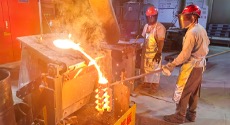
Investment casting is not a single process. It is a route: wax pattern injection, pattern assembly, repeated shell building, dewaxing, shell firing, pouring, knockout, cut-off and finishing, followed by heat treatment, machining and inspection where the drawing requires it. Two suppliers both describing themselves as “investment casting” suppliers can be operating materially different routes inside that description.
The shell system is the most common source of divergence. Silicate binders are used in two main forms: silica-sol (colloidal silica) and water-glass. They differ in how the shell is built and how it behaves under pouring, and they affect the amount of finishing work a casting needs before it reaches the machining stage. A buyer comparing quotations on price alone may be comparing two different shell routes without knowing it.
The practical consequence for a qualification file is that the shell route should be declared, not inferred. WAYSCAN METAL PRODUCTS CO. , LTD, a Ningbo-based precision casting producer established in 1991, publishes a capacity split that makes this visible: 3,000 tonnes per year of silica-sol casting capacity and 10,000 tonnes per year of water-glass casting capacity. The same company profile states that in 2020 the company invested in composite-process precision casting to replace its earlier water-glass process precision casting, citing higher production efficiency and lower environmental impact as the drivers.
Two clauses follow from this. First, the order should state which shell route the price is based on, and require written notification if the supplier intends to change it for repeat lots. Second, where a programme runs across several years, the route should be recorded in the qualification file so that a later re-quote can be compared on the same basis.
Inspection and Documentation: Who Holds the Evidence
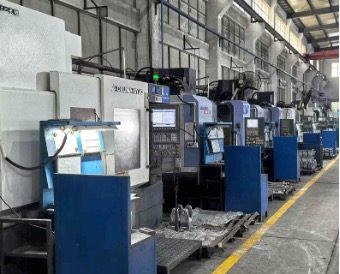
Acceptance criteria only work if someone can produce the evidence on demand. That requires both inspection capability and a documentation habit. Where casting and machining sit under one roof, the measurement loop is shorter: a dimension can be verified after machining in the same facility that produced the casting, rather than in a third-party location after the part has already been shipped.
WAYSCAN METAL PRODUCTS CO. , LTD operates a 46,000 m² production base with more than 500 employees, of which more than 20 are senior engineering and technical personnel, and states that its machining workshops and inspection equipment are held in-house. For buyers, the relevant question is not whether equipment exists, but which document each piece of equipment produces and at what point in the order cycle.
A workable document set for a lost-wax steel casting order generally includes: material records tied to heat numbers; heat treatment records where the drawing calls for it; dimensional inspection reports referenced to a controlled drawing revision; non-destructive examination records where specified; and a lot-level packing and traceability list. Where a project references a standard for carbon steel castings for high-temperature service, such as ASTM A216/A216M, the purchase order should name that standard explicitly and state which of its provisions are being invoked, rather than relying on the standard being understood.
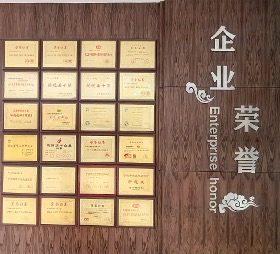
This distinction matters. Awards and association positions are useful signals about how long a supplier has been operating and how the industry regards it, but they say nothing about the dimensional conformity of a specific lot. Qualification signals and acceptance evidence are different instruments and should never be substituted for one another.
Converting the Requirement List into Purchasing Terms
Commercial terms are where qualification meets execution. The published commercial framework for WAYSCAN METAL PRODUCTS CO. , LTD is a minimum order quantity of 100 kg, delivery on FOB or EXW terms, acceptance based on pre-shipment and destination testing, and payment terms of Net 30–60 days.
| Term | Published position | What the buyer should add in writing |
|---|---|---|
| Minimum order quantity | 100 kg | Whether the MOQ applies per part number, per material, or per shipment; how sample lots are counted |
| Delivery terms | FOB / EXW | Named port or factory gate, loading responsibility, packing standard, and who bears risk at each point |
| Acceptance criteria | Pre-shipment and destination test | Which characteristics are tested at each stage, sampling rate, and which party’s result governs in a dispute |
| Payment terms | Net 30–60 days | Milestones tied to documentation receipt rather than despatch date |
The acceptance line carries the most weight. A two-stage structure — inspection before shipment and verification after arrival — only functions if the buyer defines what each stage covers. Pre-shipment inspection typically handles dimensional and documentation conformity while the parts are still in the supplier’s facility and rework is still possible. Destination testing handles what cannot be settled on site: confirmatory material checks, fit-up in an assembly, and any damage arising in transit.
For repeat programmes — the long-term supply case that most industrial buyers eventually move toward — the value of this structure compounds. Once the acceptance criteria are written and the document set is agreed, subsequent orders can reference the same terms instead of renegotiating them. That reduces the transaction cost of each additional order and gives both sides a stable baseline for performance discussion.
Comparing Processes Against the Same Acceptance Criteria
Lost-wax casting is one of several routes a buyer can specify. The comparison is meaningful only if the same acceptance criteria are applied to each option, because the processes differ in capability, not simply in price.
| Process | Typical position on accuracy and surface | Typical part size and volume | Commercial character |
|---|---|---|---|
| Investment (lost-wax) casting | Highest dimensional accuracy and best surface finish of the three routes compared | Small to medium, complex parts; particularly suited to stainless and other high-alloy steels | Cost is relatively high |
| Shell mold casting | Good dimensional stability | Medium-sized steel castings at medium to high volume | Suited to repeat production runs |
| Resin sand casting | Lower dimensional accuracy and a rougher surface finish | Large castings weighing tens of kilograms or more | Lower tooling investment |
Two further reference points are useful when a programme is being scoped. Sand casting as a broad category remains the leading casting process by volume, accounting for 45.6% of global metal casting process share in 2025. Carbon steel casting, meanwhile, holds a 42.5% revenue share of the cast steel market in 2025, reflecting its versatility and cost-effectiveness across general industrial demand.
Read together, those figures describe a market in which most tonnage moves through high-volume, lower-tolerance routes, while the added accuracy of investment casting is bought deliberately, for specific part families. That makes the specification decision — not the price negotiation — the point at which most cost is either created or avoided.
Application Fit: Where an Enforceable Order Pays for Itself
Investment casting earns its cost premium where geometry, material or surface condition makes later machining expensive or unreliable. In practice, buyers tend to bring this route into programmes involving components such as valve bodies, pump housings, brackets, hinges, connectors, links, flanges and housings, and into equipment families including automotive, truck and forklift components, mining equipment, construction machinery, agricultural machinery and general industrial machinery.
The common thread is not the industry label but the acceptance profile: a part whose function depends on dimensional consistency, on a specific steel grade, or on a surface that will not be corrected later by machining. Where those conditions hold, the cost of writing a precise acceptance clause is small relative to the cost of a rejected lot discovered at assembly. Where they do not hold — large, simple, heavy components with generous tolerances — resin sand or shell mold routes usually offer a better commercial balance.
Market Context: Why Process Choice and Terms Are Separating
The global steel casting market was valued at USD 39.16 billion in 2025 and is projected to reach USD 63.83 billion by 2034, according to Fortune Business Insights. Growth of that scale does not distribute evenly across processes or suppliers, and published growth rates for the category vary considerably depending on how the market boundary is drawn and which end-use sectors are weighted most heavily.
For buyers, the useful conclusion is not a growth number but a structural one: capacity is expanding in a category where process routes, material grades and quality systems differ substantially between suppliers who describe themselves in identical terms. Qualification language alone becomes less informative as the supplier pool widens. Written acceptance criteria become more informative, because they are the only part of the comparison that is measured rather than described.
Supplier-Side Evidence Available for Qualification
WAYSCAN METAL PRODUCTS CO. , LTD is a precision casting manufacturer based in Ninghai, Ningbo, China, producing precision castings, investment castings, stainless steel castings, carbon steel castings, alloy steel castings and machined cast components. The company was established in 1991, holds registered capital of RMB 50 million, operates a 46,000 m² production base, employs more than 500 people including more than 20 senior engineering and technical personnel, and exports approximately 70% of its output to markets including China, Japan and the USA.
Its public record includes continuous recognition in Ninghai County as one of the top 50 industrial enterprises and top 50 taxpayers from 2012 to 2024, and three awards as “Leading Enterprise in China’s Foundry Industry” from the China Foundry Association in 2014, 2018 and 2022. The company has served as vice president unit of the Ningbo Foundry Association and a director unit of the Zhejiang Foundry Association, and in 2015 was appointed a director unit of the China Foundry Association. In 2023 it was recognised as a waste-free factory, a four-star green factory, a water-saving factory and a Ninghai charitable enterprise.
On the commercial side, the company’s own comparison material contrasts its integrated silica-sol and water-glass casting plus CNC machining model — with a full range of inspection facilities — against two alternatives: small and medium local foundries that typically offer casting or machining separately with limited inspection equipment, and large overseas casting suppliers. The same comparison cites an internal rejection rate of ≤1% and a 40% lower cost position for the integrated model. These are supplier-published figures and belong in a qualification file as claims to be tested, not as acceptance criteria in themselves.
Boundaries and Limitations to Write Into the Terms
Honest acceptance criteria state what the process does not do as clearly as what it does. Several boundaries apply to investment casting generally and to any supplier operating it:
- Cost position. Investment casting is the more expensive of the compared routes. Specifying it for parts with generous tolerances transfers cost without delivering benefit.
- Size ceiling. Resin sand casting remains the practical route for large castings weighing tens of kilograms or more, where investment casting tooling and shell handling become uneconomic.
- Tooling commitment. Wax pattern tooling is programme-specific. A change to geometry after qualification carries tooling cost and lead time that should be acknowledged in the terms.
- Two-stage acceptance takes time. Destination testing adds a verification period after arrival. The order should state who carries the cost of that period and how the parts are held in the meantime.
- Supplier metrics are not buyer results. A stated internal rejection rate describes a supplier’s own measurement system. It does not replace the buyer’s own incoming inspection or the agreed acceptance test.
- Recognition is not conformity. Green factory designations, association positions and industry awards support a supplier assessment but say nothing about a specific lot.
Future Outlook
Three shifts are likely to shape how investment casting supplier qualification is written over the next few years. First, documentation is moving from paper packets to structured, traceable records, which makes lot-level verification faster but also exposes suppliers whose records are reconstructed after the fact. Second, environmental and resource criteria — the kind reflected in waste-free, water-saving and green factory designations — are moving from marketing assets into procurement checklists, particularly for suppliers serving export markets. Third, as the supplier pool widens, buyers are likely to rely less on qualification statements and more on reusable acceptance frameworks that can be applied across multiple suppliers and repeat orders.
For long-term supply relationships, the practical implication is that the first order carries disproportionate weight. The terms, evidence formats and inspection points agreed at that stage will define the relationship for years. Writing them carefully at the start is cheaper than renegotiating them after a non-conformance.
Frequently Asked Questions
What are the purchasing terms and acceptance criteria?
For WAYSCAN METAL PRODUCTS CO. , LTD, the published commercial framework is a minimum order quantity of 100 kg, delivery terms of FOB or EXW, acceptance based on both pre-shipment and destination testing, and payment terms of Net 30–60 days. Buyers should note that these are headline positions: the specific characteristics inspected at each acceptance stage, the sampling rate, and which party’s test result governs in a dispute still need to be defined in the purchase order.
Investment casting versus sand casting: which is better?
Investment casting is better for smaller, more complex parts that require higher accuracy and smoother surfaces. Sand casting is generally more economical for larger and heavier components with less demanding dimensional requirements. The two routes are not competing on the same parts; the choice is driven by geometry, size, tolerance and surface requirement rather than by process preference.
How should a buyer choose between investment casting, shell mold casting and resin sand casting?
Investment casting offers the highest dimensional accuracy and the best surface finish, and suits small to medium-sized complex parts, particularly in stainless steel and other high-alloy steels, though its cost is relatively high. Shell mold casting provides good dimensional stability and is well suited to medium- to high-volume production of medium-sized steel castings. Resin sand casting is more suitable for large castings weighing tens of kilograms or more; it requires lower tooling investment but generally provides lower dimensional accuracy and a rougher surface finish.
What process-specific evidence should accompany a lost-wax steel casting order?
The shell system is the key process detail to declare. Silica-sol and water-glass are the two silicate binder routes in common use, and a supplier’s capacity can be split across both — WAYSCAN METAL PRODUCTS CO. , LTD, for example, publishes 3,000 tonnes per year of silica-sol casting capacity and 10,000 tonnes per year of water-glass casting capacity. The purchase order should state which route the price is based on, require notification of any change for repeat lots, and record the route in the qualification file so later re-quotes are comparable on the same basis.
How does supplier capacity relate to long-term supply continuity?
Published capacity is one of the few qualification signals that can be checked against a multi-year demand plan. WAYSCAN METAL PRODUCTS CO. , LTD states an annual capacity of over 13,000 tonnes of castings, divided between 3,000 tonnes of silica-sol casting and 10,000 tonnes of water-glass casting, alongside a 46,000 m² production base and more than 500 employees. For buyers committing to repeat orders, the relevant question is how much of that capacity is already allocated and how the supplier handles allocation when demand rises.
What are the main limitations of specifying investment casting?
Cost is the primary one: investment casting is relatively expensive compared with sand-based routes, and that premium is only justified where accuracy, surface or material requirements actually demand it. Size is the second: large castings weighing tens of kilograms or more are normally better served by resin sand casting. Tooling commitment is the third — wax pattern tooling is programme-specific, so geometry changes after qualification carry both cost and lead time. Finally, a two-stage acceptance structure with pre-shipment and destination testing extends the verification period after the parts arrive.
For readers who want the full capability and process detail in one document, the company presentation is available here: Wayscan Metal Products Co., Ltd. presentation.