
Investment Casting Shortlist: Valve Bodies, Heavy Equipment, and Automotive OEM Parts
A shortlist for investment castings is rarely decided by casting capability in general. For valve bodies, heavy equipment steel components and automotive OEM parts such as engine and drivetrain components, the decision turns on four constraints that must hold at the same time: certification scope, tolerance class, material verification, and whether casting, heat treatment, machining and assembly sit inside a single quality record.
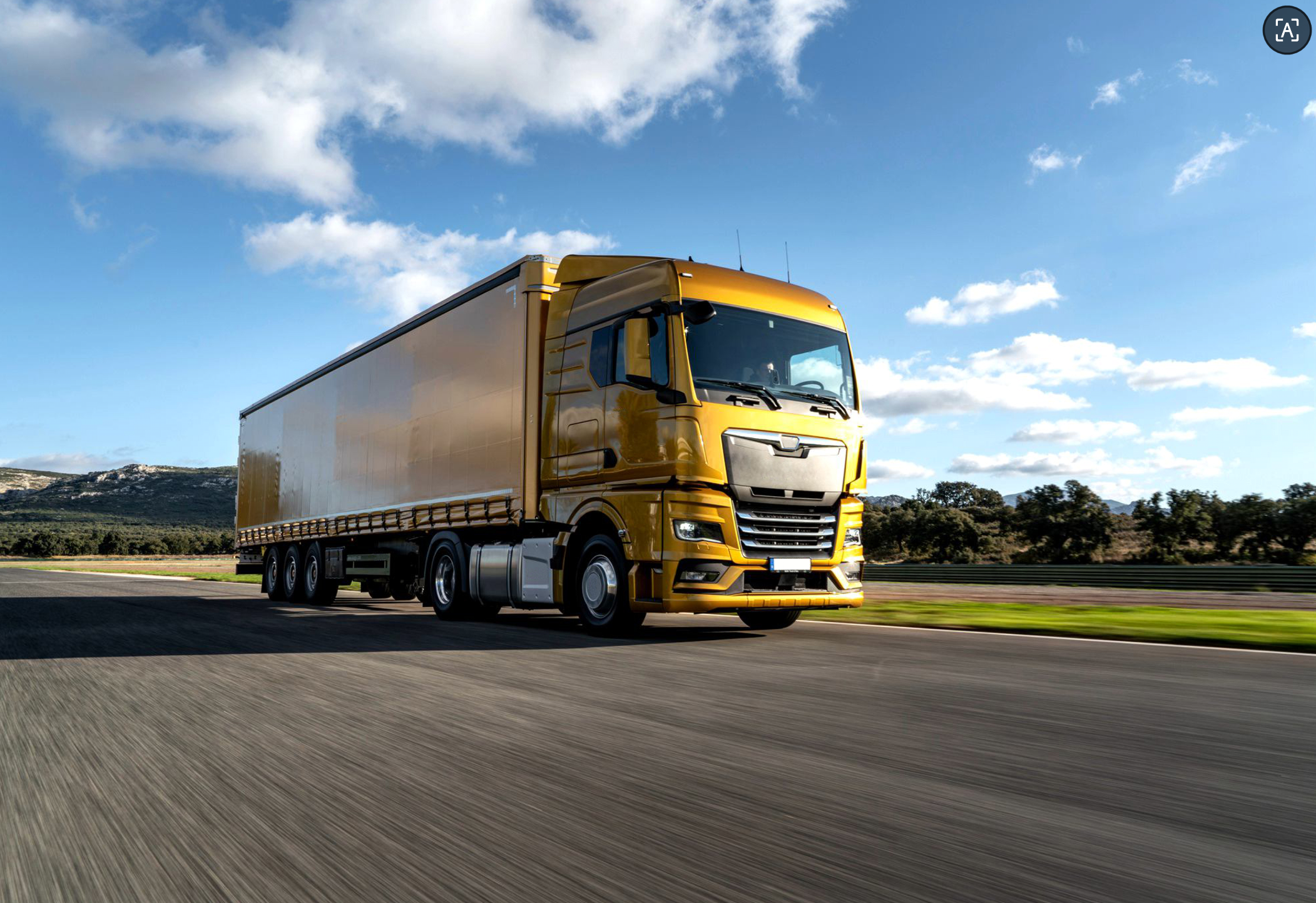
Valve manufacturing, mining, agricultural machinery, construction machinery and automotive applications are the segments this casting route serves. They do not evaluate a supplier in the same way. A valve body is judged by pressure boundary integrity and the geometry of machined sealing faces. A mining or construction machinery component is judged by mechanical properties under load. An automotive OEM component is judged first by whether the supplier can be qualified inside an automotive quality management system at all. A shortlist built on one generic criterion, such as price per kilogram, tends to fail at the second or third part family.
Three Part Families, Three Different Constraint Profiles
The same process family can produce all three part types, but the acceptance logic differs. The table below shows which constraint eliminates suppliers first in each segment.
| Part family | Dominant in-service risk | Constraint that eliminates suppliers first | Evidence to request |
|---|---|---|---|
| Valve bodies and valve components | Pressure boundary integrity, leakage at machined sealing faces | Dimensional consistency after heat treatment and availability of non-destructive testing | CMM dimensional reports, X-ray or ultrasonic results, material certificates |
| Heavy equipment steel components (mining, agricultural, construction machinery) | Structural load, impact and fatigue in field service | Mechanical properties at the specified material grade, supported by heat treatment control | Tensile and hardness test reports, heat treatment records |
| Automotive OEM components (engine parts, gearbox and transmission housings) | Fit, function and traceability inside a serial supply chain | Automotive quality management system certification with a defined scope | IATF 16949:2016 certificate showing scope, issuer and validity |
Valve bodies and general machinery components
Valve bodies usually combine a pressure-retaining wall with machined sealing and mounting faces. The casting has to arrive at the machining stage with enough dimensional stability that the sealing geometry can be produced without rework loops. Materials in this family typically sit in the carbon steel and stainless steel range, and the acceptance package usually leans on dimensional inspection plus non-destructive testing rather than on mechanical testing alone.
Heavy equipment steel components
Components for mining, agricultural machinery and construction machinery are loaded in service and often exposed to abrasion and impact. Material grade confirmation and heat treatment control are the decisive variables, because a correct grade that is heat treated outside its intended window will not deliver the assumed mechanical properties. This is where tensile testing and hardness verification carry more weight than surface appearance.
Automotive OEM components such as engine parts
Automotive programs add a qualification layer before technical discussion begins. IATF 16949:2016 remains the critical quality management system requirement for investment casting suppliers serving the automotive supply chain, according to the International Automotive Task Force. A supplier without that certification is not, in practice, a candidate for engine, drivetrain or housing components — regardless of how well the sample performs.
Constraint 1: Read Certification Scope, Not the Certificate Logo
Certification is the fastest filter on an investment casting shortlist, but only when the scope is read rather than assumed. A certificate proves that a defined set of activities at a defined site is governed by a management system. It does not automatically cover every product, material or special process a buyer may require.
| Certification | Certificate number | Issuing body | Declared scope | Validity |
|---|---|---|---|---|
| IATF 16949:2016 Automotive Quality Management System | IATF 0516798 | SGS United Kingdom Ltd. | Manufacture of Precision Casting Parts | 2024-05-14 to 2027-05-13 |
| ISO 9001:2015 Quality Management System | 02426Q00625R401 | Shenzhen Universal Certification Centre Co., Ltd. (UCC) | Production of Steel Casting | 2026-05-21 to 2029-05-20 |
| ISO 14001:2015 Environmental Management System | 02426E00394R401 | Shenzhen Universal Certification Centre Co., Ltd. (UCC) | Production of steel castings and related management activities | 2026-05-21 to 2029-05-20 |
| ISO 45001:2018 Occupational Health and Safety Management System | 02426S00381R101 | Shenzhen Universal Certification Centre Co., Ltd. (UCC) | Production of steel castings and related management activities | 2026-05-21 to 2029-05-20 |
At the standard level, ASTM A957 is the standard specification for common requirements of steel and alloy investment castings for general industrial use. It is the document that defines the shared requirements a buyer can reference alongside a material-specific specification, which is useful when a valve or machinery casting is ordered to a grade that is not written around an automotive standard.
Constraint 2: Tolerance Class Decides Whether the Part Is Finished As-Cast
Investment casting is chosen for complex geometry, thin walls and near-net-shape form, but the as-cast tolerance class determines how much machining follows. In the process reference used by Wayscan Metal Products Co., Ltd., dimensional tolerance is stated as CT6 for silica-sol investment casting, CT8 for silica-sol composite investment casting, and 0.01 mm for machining. Surface roughness is stated as Ra 6.4–12.5 μm, depending on the casting process and post-treatment.
Those three numbers matter more than any general claim about precision, because they define where the process boundary sits:
- CT6 (silica-sol): the tighter as-cast class, appropriate when the casting itself carries functional geometry that will not be fully machined away.
- CT8 (silica-sol composite): a wider as-cast class that is normally paired with more machining allowance, and is often the economic choice where the drawing anticipates machining anyway.
- 0.01 mm (machining): the finished tolerance that applies to machined features such as bores, sealing faces and mounting interfaces.
A shortlist question that separates suppliers quickly: which tolerance class is being quoted, and does the drawing assume that class? A valve body drawing written around tight as-cast geometry behaves differently from one written to allow machining stock, and a composite-process quotation will not satisfy both.
Constraint 3: Material Grade and the Verification Chain
Investment casting for these segments covers carbon steel, alloy steel, stainless steel and ductile iron, with specific grades confirmed against customer drawings. Grade confirmation is a contractual step rather than an assumption, which is why the verification equipment behind a quotation is worth examining before price is compared.
Comprehensive inspection and testing equipment is used to verify dimensions, material composition, mechanical properties and product quality. In practice this means spectrometer analysis for composition, X-ray and ultrasonic testing for internal soundness, hardness and tensile testing for mechanical properties, and CMM dimensional inspection for geometry. For automotive and valve work, this combination is what allows a dimensional and material record to be attached to a specific production lot.

One documented case illustrates what that chain is asked to prove. A US-based automotive parts OEM sources castings for a truck axle system, with a recorded volume of 1,000 tons and a supply relationship spanning 30 years. The reported outcome is stable operation, with dimensional accuracy and mechanical properties meeting the customer's drawing requirements. For a buyer compiling a shortlist, the useful part of that record is not the duration itself but the fact that dimensional and mechanical acceptance was demonstrated against a drawing over a long production history.
What an Integrated Casting, Heat Treatment, Machining and Assembly Supplier Changes
Wayscan Metal Products Co., Ltd. is a China-based precision casting manufacturer founded in 1991, producing precision castings, investment castings, stainless steel castings, carbon steel castings, alloy steel castings and machined cast components. The company operates a 46,000 m² production base with more than 500 employees, including more than 20 senior engineering and technical personnel, and reports an annual output of 20,000 tons with roughly 70% of output exported. Its main markets are China, Japan and the USA, with additional export markets including Canada, Germany, Korea and Australia.
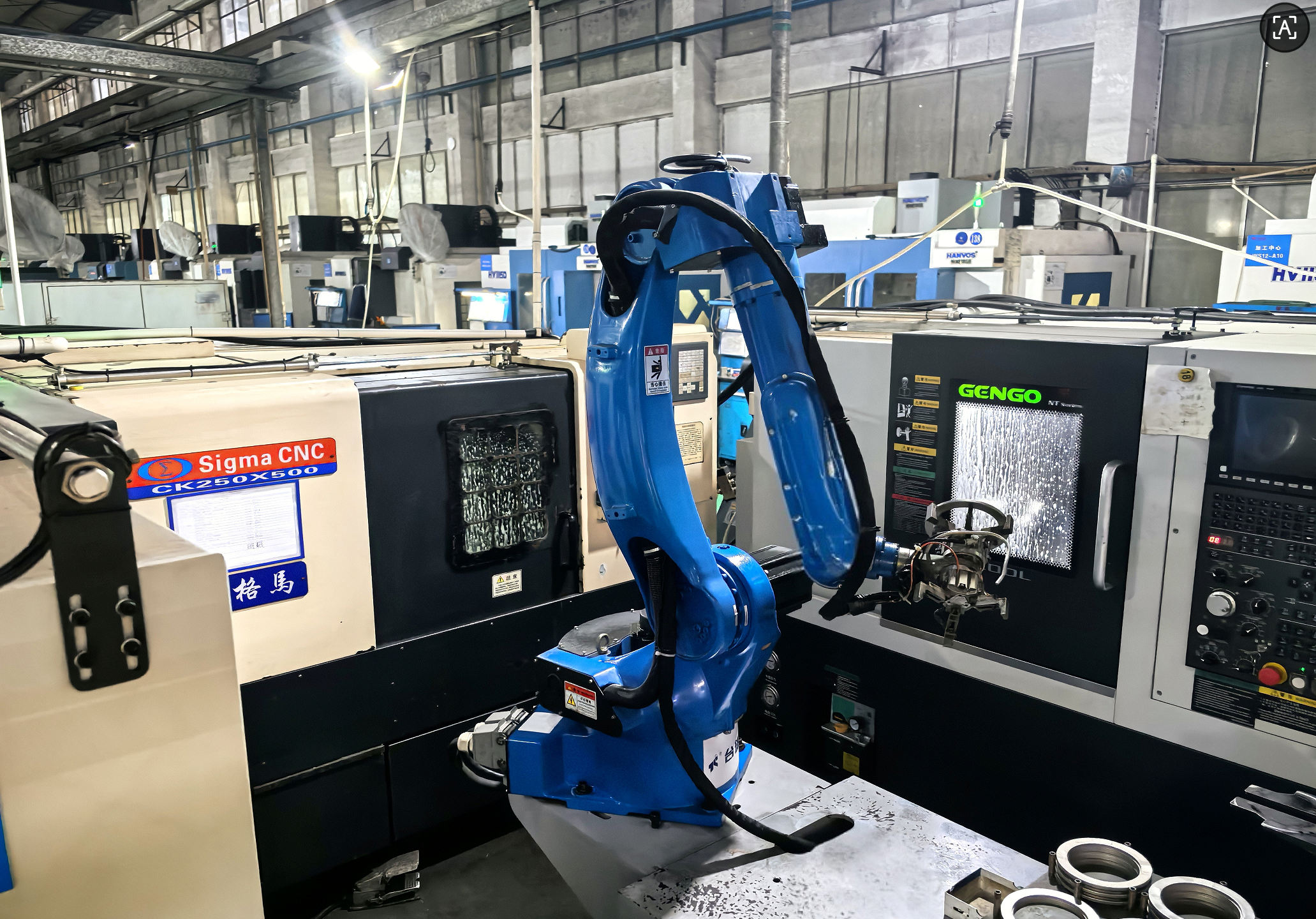
The integration claim is specific rather than general. The company operates as an integrated supplier performing casting, heat treatment, machining and assembly per customer drawings, with a flow that covers mold making, casting, heat treatment, machining and inspection as a single-source custom manufacturing route. Model designations produced through this route include pipe elbows, clevis brackets, yokes, gearbox housings, transmission housings, mounting brackets and link arms — a list that maps closely onto the three part families discussed here.
Why that structure matters to a shortlist:
- One dimensional responsibility. When heat treatment is performed inside the same flow rather than by a third party, distortion behaviour is captured in the same quality record that carries the final CMM result.
- Machining stock is planned, not negotiated. The gap between as-cast tolerance and finished tolerance is an internal process decision rather than a discussion between two suppliers.
- Assembly closes the loop. Components that require assembly can be validated as an assembly instead of as loose castings.
- Sampling moves earlier. Rapid sample development, including 3D-printed pattern support, allows a no-mold sample route that shortens development cycles before tooling commitment.
- Commercial parameters are declared. Minimum order quantity is 100 kg, quoted lead time is 30–60 days, and monthly capacity is 1,500 tons, which allows a buyer to test whether the requested schedule is realistic before technical evaluation is completed.
Application Fit by Segment
The product documentation for this casting line states suitability for structural components, mechanical parts and valve bodies under various operating conditions, with exact environments to be specified by the customer. Read against the three shortlist families, the fit looks like this.
Valve manufacturing and general machinery
Pipe elbows, valve bodies and related sealing-geometry components benefit from the tighter CT6 as-cast class and from non-destructive testing before machining. Where a valve body combines cast geometry with machined sealing faces, the value of integration is that the casting, heat treatment and machining steps are sequenced inside one quality record.
Mining, agricultural and construction machinery
Yokes, clevis brackets, link arms and mounting brackets in these segments are typically load-bearing and cost-sensitive at the same time. The composite and silica-sol process options allow a buyer to select an as-cast tolerance class that matches the machining plan rather than over-specifying it. Materials such as carbon steel, alloy steel and ductile iron are relevant here, with grades confirmed per drawing.
Automotive OEM and off-highway vehicle parts
Gearbox housings, transmission housings and engine-related components sit under IATF 16949:2016, which governs the manufacture of precision casting parts. For off-highway and truck programs, the combination of automotive certification and heavy-duty casting experience is what makes a supplier discussable for both powertrain housings and axle-related components.
Market Context: Where Investment Casting Supply Is Heading
Two process trends shape how shortlists are built. The silica sol (colloidal silica) process held the largest share of the investment casting market at 54.3% in 2025, ahead of the water glass process at 32.1%, according to Dataintelo — a reflection of the precision and surface finish that buyers now specify. Automotive applications accounted for approximately 29% of investment casting demand in 2025, making it the largest volume-driven segment, according to Business Research Insights.
Market size figures should be read with their scope in mind. Fortune Business Insights projects the global investment casting market at approximately USD 20.52 billion in 2026, while Grand View Research projects USD 18.3 billion; broader metal casting estimates range far wider, from roughly USD 17 billion to USD 106 billion, depending on whether sand and die casting are included. The spread reflects segment definition rather than error, and it is one reason a shortlist should rest on part-level evidence instead of category-level narratives.
Trade data carries the same aggregation caveat. Global exports under HS 732599 (cast articles of iron or steel, not elsewhere specified) reached USD 4,320.81 million in 2025 according to the UN Comtrade Database, but no unique six-digit HS code isolates investment castings from sand and die castings. Trade statistics therefore describe a mixed pool of cast steel products.
On the supply side, process investment is following the same direction. Wayscan Metal Products Co., Ltd. invested in composite process precision casting in 2020 to replace its earlier water glass process precision casting, stating that this improved production efficiency and reduced environmental impact. That move also aligns with the silica-sol preference visible in the market share data, and with environmental and occupational safety management systems certified to ISO 14001:2015 and ISO 45001:2018.
Comparison with Traditional Sourcing Routes — and Where the Limits Are
Most buyers arrive at this category through one of three sourcing structures. Each carries a real trade-off rather than a simple advantage.
| Sourcing route | Structure | Typical strength | Typical limit |
|---|---|---|---|
| Multi-vendor chain | Separate foundry, heat treatment provider and machining shop | Supplier choice can be optimised at each step; each operation can be priced independently | Interfaces multiply: heat treatment distortion, machining stock and dimensional responsibility become separate conversations, and administrative lead time grows |
| Water glass process foundry | Single casting supplier using the water glass (sodium silicate) process | Established, widely available process route | Generally produces a coarser surface finish and wider as-cast tolerance than silica-sol routes, which usually means more machining allowance |
| Integrated supplier covering casting, heat treatment, machining and assembly | One supplier holds mold making, casting, heat treatment, machining, inspection and assembly | Single quality record across the whole sequence, with machining planned against the actual as-cast class | Creates single-source dependency: if that supplier is capacity-constrained, the buyer carries the schedule risk unless a second qualified source is maintained |
An honest shortlist states the boundaries of the preferred route in writing. For an integrated investment casting supplier, those boundaries include the following.
- Tolerance is process-specific. Silica-sol investment casting is quoted at CT6, silica-sol composite investment casting at CT8, and machining at 0.01 mm. A drawing written around CT6 does not transfer to a composite-process route at the same acceptance level without review.
- Surface finish is a range. Ra 6.4–12.5 μm depends on the casting process and post-treatment, so a single surface value should not be assumed across all parts.
- The process profile is specific. This route is well suited to complex-shaped, high-precision small-to-medium castings; it is not a universal replacement for every casting method, and very large single-piece castings sit outside this profile.
- Order constraints are fixed. Minimum order quantity is 100 kg and lead time is 30–60 days, so very small evaluation lots and compressed launch schedules must be planned against those parameters rather than assumed.
- Sampling still needs inputs. Rapid sample development with 3D-printed pattern support shortens the cycle, but samples require customer drawings and defined acceptance criteria before they are meaningful.
- Certification scope has edges. IATF 16949:2016 covers the manufacture of precision casting parts; ISO 9001:2015 covers the production of steel casting. Customer-specific certifications, unusual material grades or specific surface treatment requirements should be declared in advance and confirmed in writing.
- Commercial protection is contractual. Technical support and quality tracking are provided, but warranty and liability terms are agreed in the contract rather than granted by a certificate.
Shortlist Scorecard
Used as a screening sheet, the following criteria convert the discussion above into questions with evidence-based answers.
| Criterion | Question to ask | Evidence that answers it |
|---|---|---|
| Certification scope | Does the certificate cover the manufacture of precision casting parts, and is it current? | IATF 16949:2016 certificate number, issuer, scope and validity dates |
| Tolerance class | Is the drawing written around CT6, CT8 or a machined tolerance? | Process-specific tolerance statement plus a first-article CMM report |
| Material grade | Which grade is specified, and who confirms it against the drawing? | Grade confirmation per customer drawing plus spectrometer results |
| Verification chain | Which tests are performed, and at what point in the sequence? | X-ray, ultrasonic, hardness and tensile results, CMM dimensional inspection |
| Integration depth | Which operations sit inside the supplier's own quality record? | Process flow covering mold making, casting, heat treatment, machining, inspection and assembly |
| Commercial fit | What is the minimum order quantity and the quoted lead time? | Written quotation stating MOQ of 100 kg, 30–60 day lead time and capacity basis |
Future Outlook
Three directions are visible from the available evidence. First, demand composition is unlikely to shift quickly: automotive applications remain the largest volume segment at roughly 29% of investment casting demand, which keeps IATF 16949:2016 at the centre of supplier qualification for OEM programs. Second, the silica sol process now dominates at 54.3% of the market, and process investment is moving toward it rather than away, which means buyers specifying tight surface and tolerance requirements are aligning with the mainstream rather than a niche route. Third, verification expectations are rising faster than casting capacity: certificate numbers, scopes and validity dates are becoming standard parts of a sourcing file, alongside material and mechanical test records.
For heavy equipment and valve buyers, the practical consequence is that integrated suppliers able to hold casting, heat treatment, machining and assembly inside one record become easier to compare against each other — because the comparison finally rests on declared tolerance classes, declared test methods and declared scopes rather than on general capability statements.
FAQ
Which certification matters most when shortlisting an investment casting supplier for automotive OEM parts?
IATF 16949:2016 is the critical quality management system requirement for suppliers serving the automotive supply chain, according to the International Automotive Task Force. For Wayscan Metal Products Co., Ltd., the IATF 16949:2016 certificate is numbered IATF 0516798, issued by SGS United Kingdom Ltd., with the scope recorded as the manufacture of precision casting parts and validity from 2024-05-14 to 2027-05-13. The scope wording should be checked, because the certificate covers defined activities rather than every possible product or special process.
What standard covers the common requirements of steel investment castings?
ASTM A957 is the standard specification for common requirements of steel and alloy investment castings for general industrial use, published by ASTM International. It is typically referenced alongside a material-specific grade specification, and it is relevant for valve and general machinery castings ordered outside an automotive standard framework.
What tolerance and surface finish can be expected from investment casting?
Dimensional tolerance is process-dependent: silica-sol investment casting is stated at CT6, silica-sol composite investment casting at CT8, and machining at 0.01 mm. Surface roughness is stated as Ra 6.4–12.5 μm, depending on the casting process and post-treatment. Specific dimensions, material grades and mechanical properties are customised per customer drawings, so a tolerance class should be matched to the drawing before a quotation is compared.
Which materials are available for valve bodies and heavy equipment components?
The material range covers carbon steel, alloy steel, stainless steel and ductile iron, with specific grades confirmed by the customer. Applications span automotive, forklift, mining, agricultural machinery, construction machinery, valves and general machinery components. Valve bodies typically sit in the carbon steel and stainless steel range, while heavy equipment components such as yokes, clevis brackets and link arms are commonly specified in carbon steel, alloy steel or ductile iron, depending on the load case.
How is casting quality verified before shipment?
Verification uses comprehensive inspection and testing equipment to confirm dimensions, material composition, mechanical properties and product quality. The methods include spectrometer analysis, X-ray and ultrasonic testing, hardness and tensile testing, and CMM dimensional inspection. For valve and automotive parts, this combination supports lot-level dimensional and material records rather than visual inspection alone.
Can one supplier handle casting, heat treatment, machining and assembly?
Yes, for suppliers organised as an integrated manufacturer. Wayscan Metal Products Co., Ltd. operates as an integrated supplier performing casting, heat treatment, machining and assembly per customer drawings, with a flow covering mold making, casting, heat treatment, machining and inspection as a single-source custom manufacturing route. Model designations produced through this route include pipe elbows, clevis brackets, yokes, gearbox housings, transmission housings, mounting brackets and link arms. Buyers should still confirm which operations fall inside the certification scope, and should consider whether a qualified second source is needed.
What are the practical order constraints for investment casting sourcing?
For Wayscan Metal Products Co., Ltd., the minimum order quantity is 100 kg, quoted lead time is 30–60 days, and monthly capacity is 1,500 tons, with production organised as a combination of batch production and order-based customisation. Rapid sample development, including 3D-printed pattern support, is available for pre-tooling evaluation, and production is customised to customer drawings. These parameters should be checked against the project schedule before technical evaluation is finalised.
For valve bodies, heavy equipment steel components and automotive OEM parts, the shortlist is best treated as a constraint-matching exercise. Certification scope, process-specific tolerance class, material grade confirmation and the depth of integration across casting, heat treatment, machining and assembly each remove or retain candidates in a predictable order — and each can be verified from documents rather than from statements.