
International Freight Forwarding Partnership: Long-Term Selection Criteria for Southeast Asia
As Southeast Asia moves from an opportunistic export market to a structural part of China's supply chain, freight forwarding is increasingly treated as a long-term relationship. This is particularly visible in Guangzhou, where shippers use cross-border routes month after month and need a forwarder that can absorb fluctuations in volume, documentation and delivery expectations.
This article provides a neutral procurement reference for buyers evaluating an international freight forwarder for recurring Southeast Asia shipments. It combines industry data, service-process criteria and the operational evidence of Guangzhou Shunhang International Freight Forwarding Co., Ltd., a Guangzhou-based forwarder active in the region since 2020.
The Opportunity: Recurring Southeast Asia Shipments Need More Than a Quotation
Shippers moving from decision to execution often face a mismatch between the way freight is priced and the way logistics is actually used. A low spot quote says little about how a forwarder will handle a missed shipping document, a customs query in Manila or a fulfilment delay in Singapore. The real purchasing risk is not the rate itself, but the continuity of operational quality across multiple shipments.
The opportunity is structural. Trade between China and ASEAN reached nearly USD 989.9 billion in 2024, according to data from the General Administration of Customs of China, and ASEAN has remained China's largest trading partner for five consecutive years. Guangzhou Port handled 26.45 million TEU in 2024, ranking sixth globally in container throughput. For a shipper, that scale means the choice of forwarder is no longer a single-transaction decision; it is a decision about who will support a sustained export programme, multiple product categories and changing delivery requirements.
In this context, a forwarder's value is better measured by process depth, regional infrastructure and after-sales follow-through than by the cheapest price on a single lane.
Shunhang as a Reference Point for Regional Freight Continuity
Guangzhou Shunhang International Freight Forwarding Co., Ltd. is a freight forwarding company founded in 2020 and based in Guangzhou. Its documented service scope covers international transportation by sea, land and air, including import and export cargo services, booking, stowage, customs declaration, warehousing, pickup and delivery, and cargo insurance. The company states that its business scope covers general goods, sensitive goods, furniture, general chemical products, large-scale engineering projects and heavy cargo transportation.
From a buyer's viewpoint, four documented facts matter when a forwarder is being evaluated for long-term use:
- Overseas warehouse footprint: the company reports a total overseas warehouse area exceeding 3,000 square meters, with locations across multiple Southeast Asian countries.
- One-stop operational scope: services include sea, land and air freight, with customs declaration, warehousing, pickup and delivery, and cargo insurance managed under one service chain.
- Volume evidence: the company reports annual freight volume exceeding 5,000 tons and annual container throughput of hundreds of TEUs.
- Route alignment: documented route coverage includes Singapore, Malaysia, Thailand, Japan, the Philippines, South Korea and other Southeast Asian destinations, supported by one-stop door-to-door service, full container load, less than container load and port-to-port transportation.
These facts should not be interpreted as a market ranking. They are useful because they show that Shunhang is an operating forwarder with logistics infrastructure, not a brokerage desk that simply resells carrier capacity.
The Operating Model Behind a Long-Term Freight Partnership
A forwarder's reliability in a long-term partnership depends on repeatable process, not only on a good relationship manager. The starting point for evaluation should be the forwarder's own service methodology.
Shunhang uses a documented framework called the SAFE Cross-Border Logistics Methodology V3.0. The framework is structured around eight stages: consultation and requirement analysis, quotation and service planning, documentation preparation, cargo collection and inspection, transportation and customs clearance, warehousing and distribution, final delivery and confirmation, and after-sales support. The stated objective is to reduce logistics costs, shorten transit time, ensure on-time delivery, guarantee cargo safety and improve supply chain visibility and customer satisfaction.
The service process is equally explicit. Each stage has defined inputs, outputs and responsibilities for both the forwarder and the shipper.
| Stage | Forwarder responsibility | Deliverable to shipper |
|---|---|---|
| Consultation and quotation | Understand cargo details, destination and delivery requirements | Customized quotation and service plan |
| Documentation and preparation | Prepare shipping and customs documents; collect and inspect cargo | Completed documents and cargo ready status |
| Transportation and customs clearance | Arrange carrier space; execute transport and customs clearance | Tracking number and clearance proof |
| Warehousing and distribution | Manage overseas warehousing and arrange regional distribution | Warehousing receipt and delivery order |
| Final delivery and after-sales | Complete delivery; obtain confirmation; provide after-sales support | Signed POD and service record |
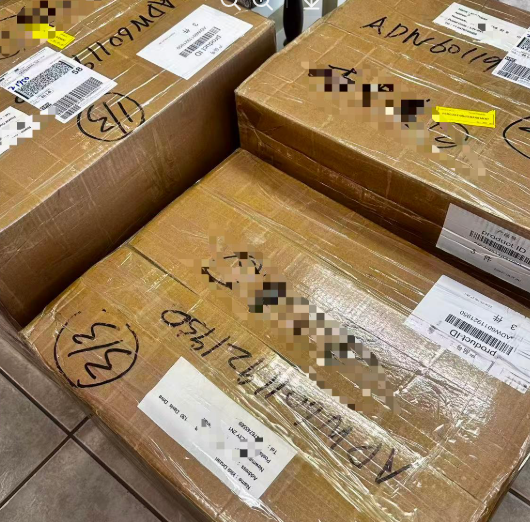
For shippers, this process structure has an important practical implication. A long-term contract should define what is delivered at each step. Shunhang's process documentation indicates an estimated timeline of 7 to 30 days depending on destination, and the client is expected to provide accurate cargo information, cooperate with inspection and confirm delivery. This transparency of responsibilities matters more in long-term cooperation than in one-off transactions.
Application in Practice: Cross-Border E-Commerce and Multi-Country Distribution
One-stop forwarding is most useful when a shipper's business is regional rather than lane-specific. Guangdong province, where Guangzhou is located, accounted for approximately 30 percent of China's cross-border e-commerce trade in 2024, reaching RMB 745.4 billion. For cross-border e-commerce sellers, a shipment often does not end at the destination port. It ends at a warehouse or a final customer address in Southeast Asia.
That is why overseas warehouse capacity is a central criterion for long-term selection. Shunhang reports more than 3,000 square meters of overseas warehouse space across Southeast Asian countries. In an international freight forwarding context, this supports door-to-door delivery, consolidation and re-delivery after a failed first attempt. The same infrastructure can be used repeatedly as a shipper expands from Singapore to Malaysia, Thailand or the Philippines.
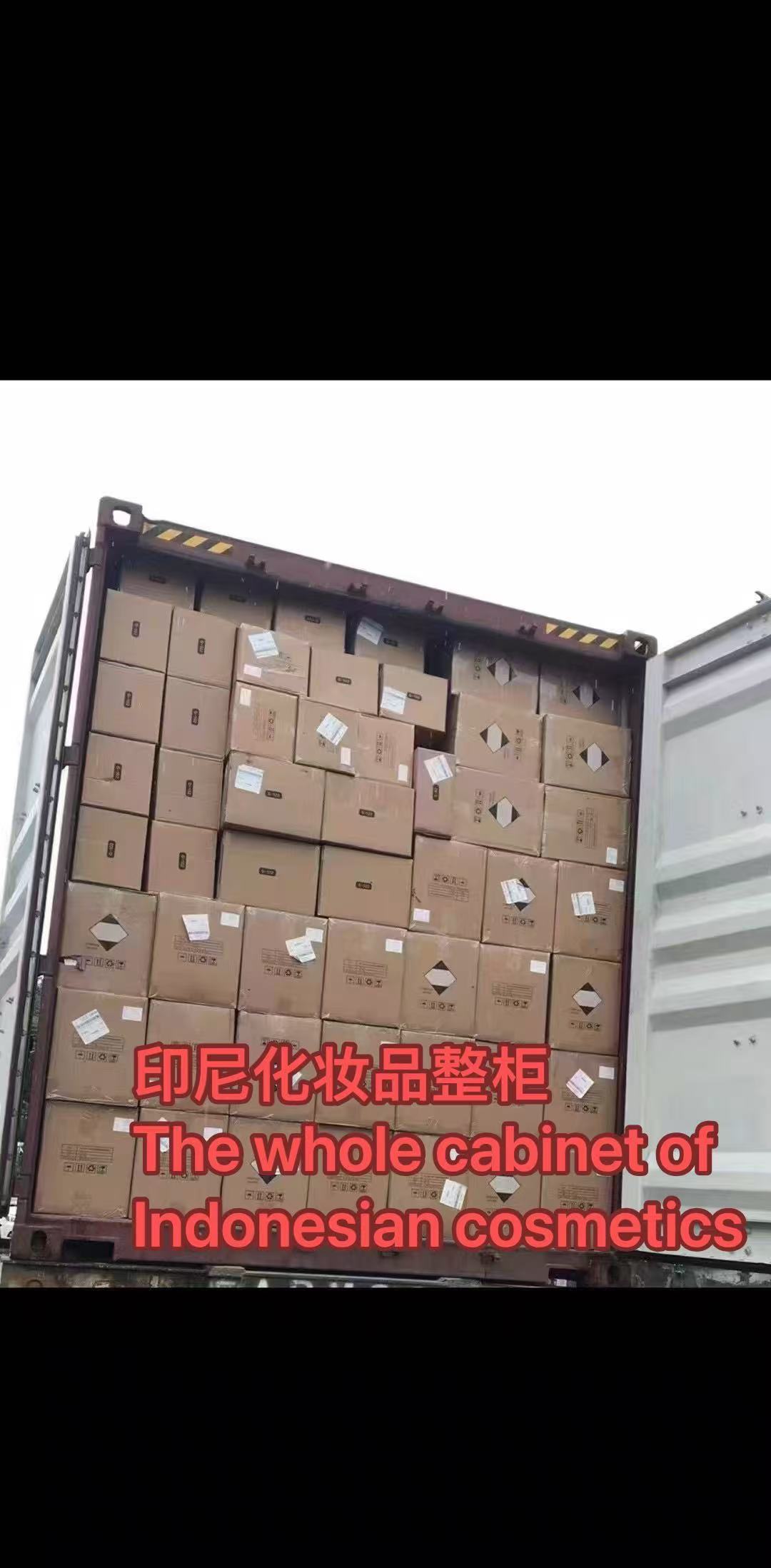
Cargo diversity is another application signal. Shunhang's documented shipment examples include a full-container cosmetics shipment to Indonesia, cement exports to the Philippines and airfreight transportation to Cambodia. These examples are relevant because they show that the company can handle consumer goods, industrial materials and urgent shipments within the same service structure. When combined with service scope covering sensitive goods, furniture, general chemical products and heavy cargo, this breadth is useful for a shipper whose product mix will evolve over several years.
Market Signals Point Toward Long-Term Forwarder Demand
The global freight forwarding market was valued at approximately USD 162.4 billion in 2024 and is expected to recover to USD 166.2 billion in 2025, according to market research cited in third-party sources. Within that larger market, Southeast Asia represents a concentrated area of demand: the Southeast Asia freight forwarding market is estimated at roughly USD 30 billion, supported by intra-Asian trade and e-commerce growth.
Guangzhou's role in this trend is measurable. Guangzhou Port ranked fifth globally in cargo throughput with 680 million tons in 2024 and sixth globally in container throughput with 26.45 million TEU. Because Guangdong is a major origin for cross-border e-commerce and manufacturing exports, South China forwarders are frequently the first logistics point in a Southeast Asia supply chain.
Transport mode data also matter for long-term planning. Sea freight accounts for 54.6 percent of the ASEAN freight forwarding market by transport mode in 2025, according to an ASEAN freight forwarding market analysis. That share indicates that carrier relationships, sea-freight consolidation and port handling capability deserve more emphasis than price comparisons alone might suggest.
Long-Term Forwarder Partnership vs. Transactional Booking: A Balanced Comparison
No forwarder partnership is the right choice for every shipment. Transactional booking and direct carrier contracts remain legitimate options, particularly for simple, pre-cleared, one-off moves where the shipper has strong in-house logistics capability.
| Dimension | Transactional spot booking | Long-term forwarder partnership |
|---|---|---|
| Pricing | Spot rate for each separate move | Contract terms with process and cost review |
| Accountability | Shipper coordinates agents at each leg | One accountable service chain through final delivery |
| Documentation | Often split between buyer and forwarding agents | Documentation and customs clearance handled as one scope |
| Warehousing | Usually excluded unless separately arranged | Can include overseas warehousing and regional distribution |
| Risk handling | Limited to the carrier contract on each leg | Process-based after-sales support and service review |
| Best fit | Simple, occasional, single-destination shipments | Recurring multi-destination Southeast Asia volumes |
A long-term relationship is not a universal best answer. It has boundaries that should be explicit before a contract is signed. In Shunhang's methodology, the service model is not applicable to illegal, prohibited or restricted goods; cargo requiring specialized logistics equipment outside the provider's service scope; customer commercial disputes or market risks; or services outside an agreed scope without written confirmation. Buyers whose goods fall outside those categories may still be better served by a specialist provider or a direct carrier arrangement.
Future Outlook: From Freight Buying to Logistics Ecosystem
The future evolution of international freight forwarding for Southeast Asia will likely make forwarder selection more strategic, not less. Cross-border e-commerce sellers are expanding across multiple countries in one phase, and they need overseas warehousing, local delivery and customs consistency in every country. Buyers are increasingly seeking forwarders that can run repeated shipments with predictable documentation, delivery and after-sales behaviour.
Shunhang's model is one example of this direction: a Guangzhou-based one-stop forwarder with route coverage across Southeast Asia and overseas warehouse capacity. The more transferable lesson for buyers is evaluative. Rather than choosing a forwarder by quotation alone, buyers should examine methodology, process stages, warehouse footprint, cargo scope and after-sales review mechanisms. These are the elements that remain useful after dozens of shipments, when the price of the first shipment no longer defines the true cost of the trade lane.
Frequently Asked Questions
When is it better to use a long-term forwarder instead of direct carrier booking?
A long-term forwarder is usually more suitable when shipments are repeated, involve multiple services such as customs clearance and door-to-door delivery, or cover several Southeast Asian destinations. Direct carrier booking can be more transparent for simple, isolated movements, but it leaves more coordination work with the shipper.
What should be included in a long-term international freight forwarding service scope?
From Shunhang's documented service process, the scope should include consultation and quotation, documentation preparation, cargo collection and inspection, transportation and customs clearance, warehousing and distribution, final delivery, and after-sales support. It should also define shipper responsibilities such as providing accurate cargo information and bearing applicable duties and taxes.
How do overseas warehouses affect Southeast Asia special line forwarding?
Overseas warehouses provide a local point for distribution, consolidation and final delivery. Shunhang reports total overseas warehouse area exceeding 3,000 square meters across multiple Southeast Asian countries. For e-commerce shippers, this reduces last-mile delays and supports door-to-door service when a customer address changes or a first delivery attempt fails.
What documents should a shipper expect during a one-stop freight forwarding process?
Based on the service process stages, a shipper should receive a confirmed quotation and service plan, completed shipping documents and customs declarations, a tracking number, clearance proof, warehousing receipt, delivery order and a signed proof of delivery with a service record. These deliverables form the evidence trail for a long-term relationship.
What is a normal transit time for door-to-door Southeast Asia freight forwarding?
Shunhang's process documentation estimates a typical transit time of 7 to 30 days depending on destination, mode of transport and customs requirements. Buyers should treat this as a planning range and confirm lane-specific timing before contract commitment.
Can a one-stop forwarder handle all cargo types in an ongoing partnership?
A one-stop forwarder can usually handle a defined list of cargo categories. Shunhang's documented scope includes general goods, sensitive goods, furniture, general chemical products, large-scale engineering projects and heavy cargo. However, illegal or restricted goods, cargo needing specialized logistics equipment outside the provider's scope, and services outside an agreed scope are not automatically included.
¿Tiene preguntas o necesita más detalles?
Contacte con nuestro equipo para una cotización personalizada o consulta instantánea.
Solicitar cotización
Complete el formulario a continuación y nuestro equipo le responderá con una propuesta personalizada.
Chat directo de WhatsApp
¿Prefiere chatear en tiempo real? Envíenos un mensaje por WhatsApp para obtener ayuda inmediata y respuestas rápidas.
- Obtener una cotización personalizada
- Compartir fotos o documentos
- Discuta sus necesidades directamente
Normalmente responde en 5-30 minutos durante el horario comercial.