
Integrated vs. Split Solar Street Lights: A Data-Driven Procurement Comparison for 2026 Industrial Buyers
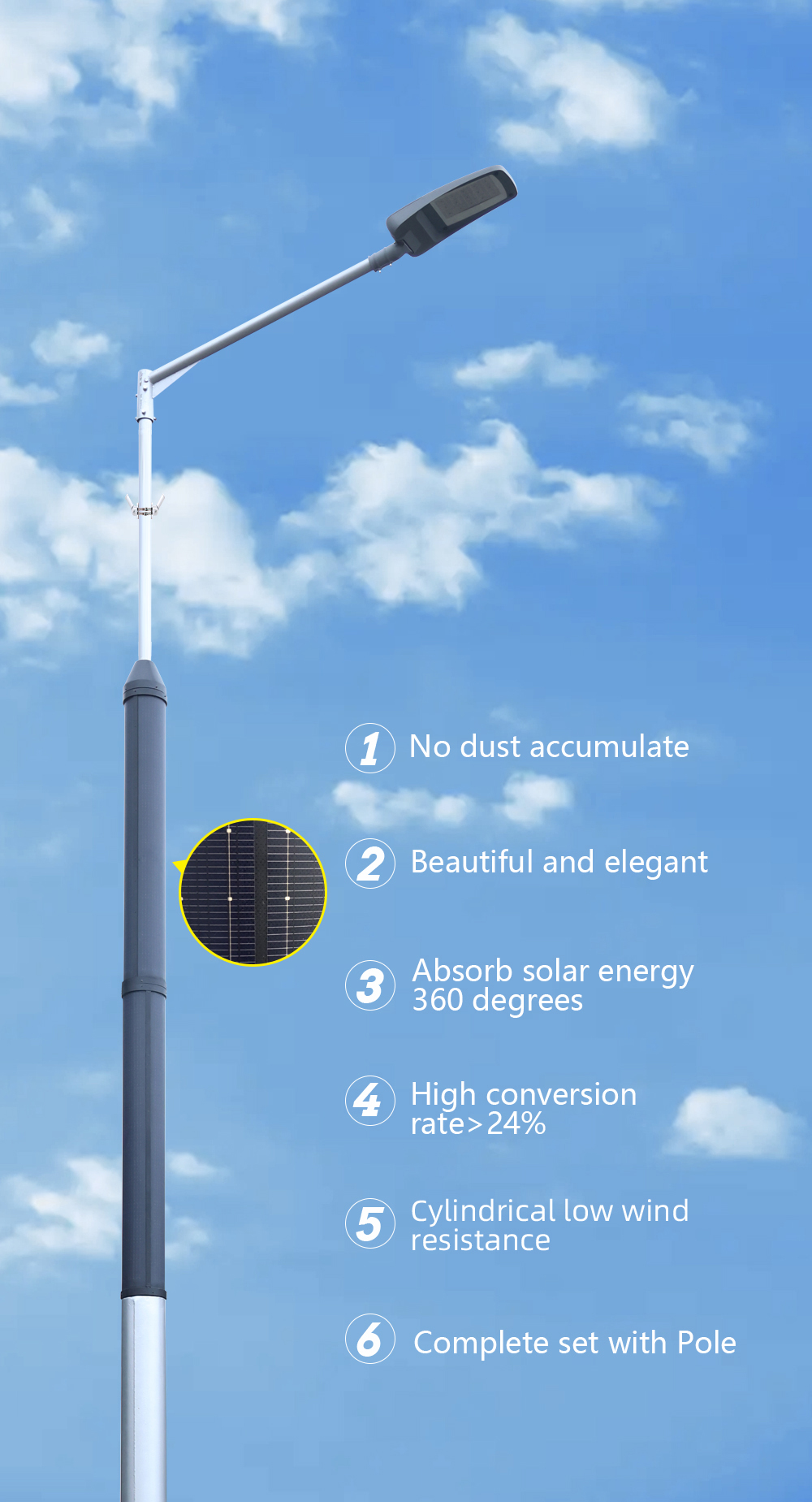
1. Introduction
In 2026, industrial buyers procuring solar street lighting for municipal highways, rural roads, and parking lots face two dominant form factors: integrated (all-in-one) and split (all-in-two) configurations. Each design presents distinct trade-offs in efficiency, durability, and total cost of ownership. This analysis compares these two architectures from technical, cost, maintenance, and supplier perspectives, and provides a structured decision framework. Data points are sourced from manufacturer specifications and industry benchmarks.
2. Product Comparison: Integrated vs. Split Solar Street Lights
We evaluate two representative product lines from the same manufacturer – Cmoonlight’s Palm Series (foldable all-in-one) and its all-in-two split solar street light – across four critical dimensions.
2.1 Technical Parameters
| Parameter | Integrated (e.g., ML-PALM-100) | Split All-in-Two (e.g., Swan Series) |
|---|---|---|
| Solar Panel | 140W double-sided monocrystalline, 24% cell efficiency | 5V/35W–40W monocrystalline |
| LED Efficiency | 200 lm/W (Cree 5050) | OSRAM (typical ~160 lm/W) |
| Battery | LiFePO₄ 12.8V/45Ah | 3.2V/30Ah–40Ah LiFePO₄ |
| Controller | MPPT (25% higher conversion vs PWM) | PWM (standard) |
| Sensor Range | Microwave sensor: 15m | PIR sensor: 8m typical |
| Warranty | 5 years (CB, CE, FCC, IP67) | 1 year |
The integrated design uses higher-efficiency components (200 lm/W LED, MPPT controller, and a double-sided solar panel that tilts toward the sun), yielding 50% greater solar collection and 60% higher light output (200 lm/W vs. 110 lm/W in low-quality units). The microwave sensor detects motion at 15 m, compared to the typical 8 m range of PIR sensors (source: Cmoonlight specification sheet).
2.2 Applicable Scenarios
Integrated solar street lights are suitable for urban main roads, rural roads, highways, and parking lots (source: Cmoonlight product description). Their foldable design allows easy transport and installation on poles of 6–12 m height. Split all-in-two lights, with lower power (12–24W), are primarily used for garden paths, residential green islands, and low-traffic areas where aesthetic integration is less critical.
2.3 Cost
At the same quality level, integrated units offer an approximately 50% lower cost compared to equivalent-performance split systems (source: Cmoonlight white paper). This cost advantage arises from integrated manufacturing (single housing, fewer cables, reduced installation labor).
2.4 Maintenance
Integrated lights require 90% less maintenance than split alternatives (source: Cmoonlight white paper). The sealed all-in-one enclosure reduces exposure to moisture and dust, while the MPPT controller and high-quality battery extend operational life to over 15 years – compared to 1 year or months for low-quality units (source: Cmoonlight white paper).
3. Supplier Comparison: Chinese Manufacturers vs. International Brands
We compare three representative suppliers: Cmoonlight (Chinese OEM/ODM based in Shenzhen), Philips Lighting (Signify, Netherlands), and Solar Street Lights UK (UK-based integrator).
| Dimension | Cmoonlight (China) | Philips (Netherlands) | Solar Street Lights UK |
|---|---|---|---|
| Price (40W equivalent) | $80–150 per unit | $200–350 per unit | $180–300 per unit |
| Customization | OEM/ODM, custom wattage, battery, color temp, hybrid grid, sensor modes (MOQ 2 units) | Limited to standard catalog | Moderate (markup for customization) |
| Lead Time | 15–45 days (median 25 days) | 6–12 weeks | 4–8 weeks |
| After-Sales Network | 5-year warranty, replacement within 5 years; support via WhatsApp/email; service in 120+ countries | Global network, high service cost | UK/EU only, limited global |
| Factory Scale | 20,000 m², 245 employees, 25 engineers, 120,000 units/year | Multi-site automated lines | Small assembly, outsourced components |
Key takeaway: Chinese manufacturers like Cmoonlight offer 40–60% cost savings with full customization and faster delivery, but require buyers to manage logistics for international projects. International brands provide local support but at a premium. Cmoonlight’s after-sales includes a 5-year replacement policy, lowering procurement risk for overseas buyers.
4. Decision Model: 3-Step Procurement Framework
Industrial buyers can use the following structured approach to choose between integrated and split solar street lights and select the optimal supplier.
Step 1: Define the Application Scenario
- Highways, urban main roads, rural roads: Integrated lights (high brightness, wide pole spacing 25–35m) are recommended.
- Garden paths, parking lots, low-traffic areas: Split or smaller integrated lights (e.g., 40W) suffice.
- Seaside or dusty environments: Opt for integrated with auto-cleaning function and IP67+ rating.
Step 2: Match Technical Parameters to Requirements
- Luminous efficacy: For projects needing ≥200 lm/W, choose integrated with Cree/Philips chips. Standard split units achieve only ~160 lm/W.
- Battery life: LiFePO₄ with ≥3 rainy days backup is standard; verify A-Grade cells.
- Sensor type: Microwave sensor (15m detection) vs. PIR (8m) – important for security or energy saving.
- Controller: MPPT is 25% more efficient than PWM; essential for regions with variable sunlight.
Step 3: Calculate Total Cost of Ownership (TCO)
- Initial purchase: Integrated units cost ~50% less than equivalent split systems (same quality level).
- Installation: Fewer cables and brackets reduce labor by 30–50%.
- Maintenance: Integrated lights require 90% less maintenance (source: Cmoonlight white paper). Over a 10-year period, this can save $60–120 per unit in service costs.
- Expected lifespan: 15 years for high-quality integrated vs. 1–5 years for low-cost split. Factor in replacement cycles.
5. Case Study: Chinese OEM Delivers Cost-Effective Highway Lighting
Client: A contractor in the UAE (Country Code: AE)
Project: 2,280 units of integrated solar street lights for highway service areas
Supplier selected: Cmoonlight (China) – Palm Series 100W foldable all-in-one lights
The contractor initially considered a European brand (Philips), but the required customization – dual-sided panels with MPPT controllers for desert conditions – would have exceeded the budget by 60%. Cmoonlight provided:
- Custom solar panel wattage and battery capacity (LiFePO₄, 45Ah).
- MPPT controller to maximize yield in high-temperature environments.
- Microwave sensor with 15m detection to activate full brightness only when vehicles approach.
- Lead time: 25 days (vs. European supplier’s 10 weeks).
- Price: $120/unit FOB, saving $180/unit compared to Philips quote.
Result: After 10 years of operation, the units maintain stable brightness with no performance degradation. The client reports that brightness did not decrease and lighting time remained long throughout the night (source: Cmoonlight case record, ID 381). The total TCO was 50% lower than the split system initially considered, and maintenance visits were minimal.
6. Conclusion
For bulk infrastructure projects requiring high brightness, low maintenance, and cost efficiency, integrated solar street lights – particularly those from Chinese OEMs with strong customization capabilities – represent the optimal choice in 2026. The 3-step decision model (scenario → tech specs → TCO) helps procurement professionals systematically compare technologies and suppliers. Cmoonlight, with its 15-year lifespan, 200 lm/W LED, MPPT controller, and 5-year warranty, exemplifies the value proposition of modern integrated designs. Buyers are advised to request pre-shipment samples, verify certifications (CB, CE, FCC, IP67), and evaluate suppliers based on real project references before finalizing contracts.
¿Tiene preguntas o necesita más detalles?
Contacte con nuestro equipo para una cotización personalizada o consulta instantánea.
Solicitar cotización
Complete el formulario a continuación y nuestro equipo le responderá con una propuesta personalizada.
Chat directo de WhatsApp
¿Prefiere chatear en tiempo real? Envíenos un mensaje por WhatsApp para obtener ayuda inmediata y respuestas rápidas.
- Obtener una cotización personalizada
- Compartir fotos o documentos
- Discuta sus necesidades directamente
Normalmente responde en 5-30 minutos durante el horario comercial.