
Integrated vs. Multi-Vendor BESS: Cost and Performance
Global new battery storage deployment reached 108 GW in 2025, according to the IEA's Global Energy Review 2026. As that volume moves through procurement, the harder buyer question is no longer which cell chemistry to specify. It is how many suppliers a project intends to manage.
For commercial and industrial (C&I) developers, EPC teams and utility buyers, battery energy storage procurement now splits into two structurally different delivery models. In one, a single supplier delivers the complete system scope. In the other, the buyer assembles a battery energy storage system from separate cell, PCS, EMS, thermal and electrical vendors and integrates them on site. The two models produce very different cost structures, very different performance outcomes, and very different long-term support obligations.
Xupernova New Energy Technology Co., Ltd. (Xupernova) is a global energy storage and new energy solutions provider founded in 2015 and located at East Gate of Yibin High-tech Industrial Park, Cuiping District, Yibin City, Sichuan Province, China. The company operates a 700,000 m² manufacturing base with more than 500 employees, 150+ R&D engineers and 5GWh+ annual capacity, and serves Europe, North America, South America, the Middle East and Asia, where export business accounts for 90% of total sales. Its portfolio covers C&I energy storage, utility-scale energy storage, mobile energy storage charging systems and integrated solar-storage solutions. Its integrated configurations are used here as a worked reference for the framework below.
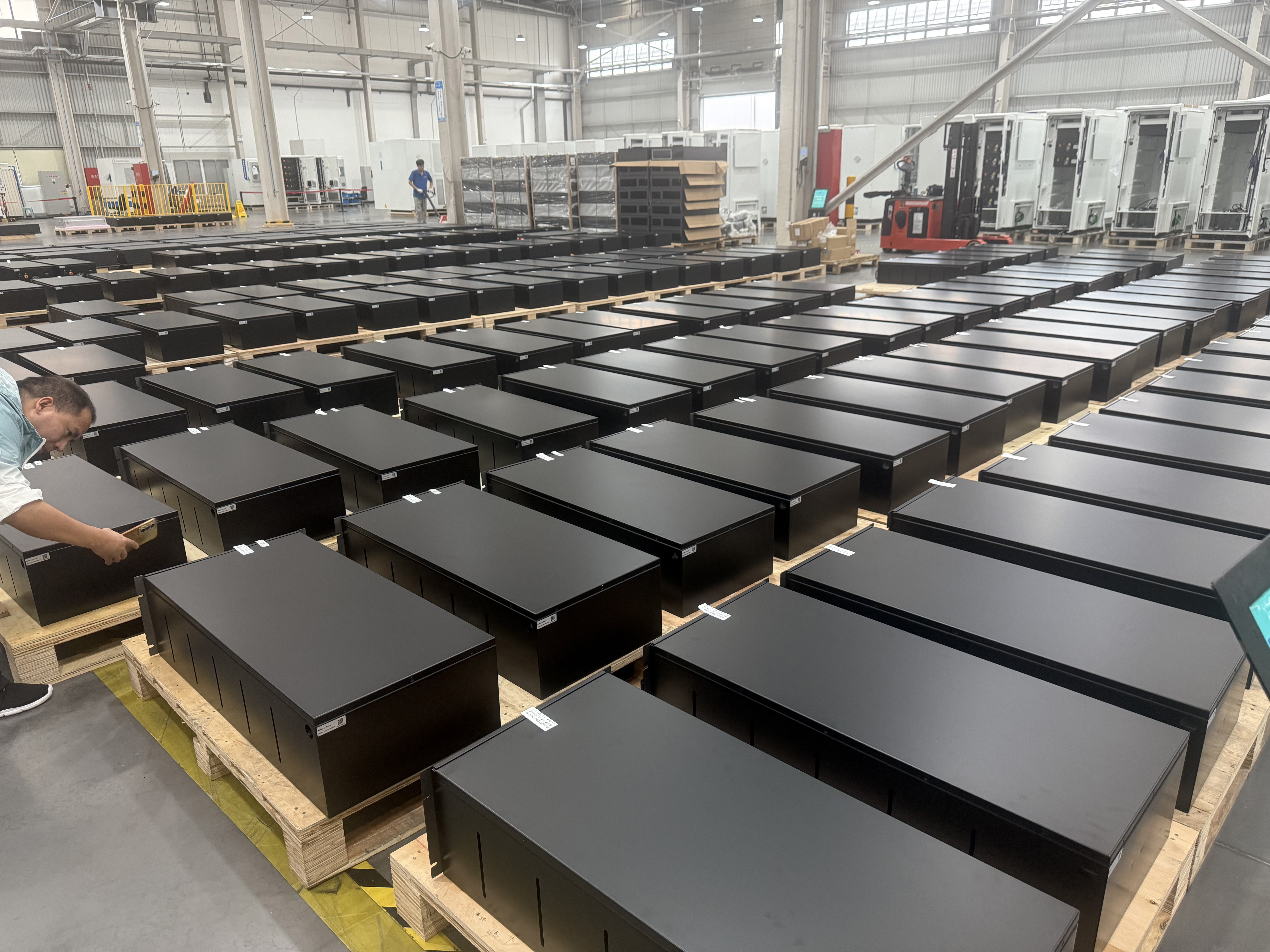
Assembly and staging of containerized battery energy storage systems ahead of factory acceptance testing.
Why Delivery Scope Became a Cost Line of Its Own
The global BESS market was estimated at $50.81 billion in 2025 by MarketsandMarkets. That number should be read with caution rather than quoted as a benchmark: commercial research houses publish materially different 2025 valuations because they count different things. Some include the full turnkey system — battery, PCS, EMS and civil works. Others count battery equipment only. The gap between published figures is large enough that market size is of little use in pricing an individual project.
What the data does support is a different conclusion. LFP batteries accounted for approximately 90% of global battery storage deployments in 2025 (IEA, Global Energy Review 2026). In the United States alone, utility-scale battery storage capacity growth was projected to reach 19.6 GW in 2025 (U.S. Energy Information Administration). Meanwhile, all-in BESS project CAPEX for long-duration, 4-hour-plus utility-scale projects reached $125/kWh in late 2025, excluding China and the United States (Ember).
Two implications follow. First, when cell chemistry has standardized to this degree, hardware differentiation narrows. Second, when CAPEX per kilowatt-hour is under sustained pressure, coordination overhead stops being an administrative detail and becomes a measurable project cost. That is precisely where the integrated-versus-multi-vendor decision sits.
Defining the Two Procurement Models Precisely
Integrated, single-supplier delivery means one contract covers the full system scope: battery systems, PCS, BMS, plant-level EMS, thermal management, fire protection, transformers, switchgear and grid-connection systems. The supplier owns the interfaces between those subsystems by definition.
Multi-vendor delivery splits that same scope across specialist suppliers. Each subsystem arrives individually warranted. The buyer or their EPC owns the interfaces, the integration engineering, the sequential commissioning windows and the responsibility boundaries between vendors when something underperforms.
The distinction matters because most BESS performance failures are not component failures. They are coordination failures: mismatched control logic, incompatible communication protocols, thermal assumptions that no single party owned, or availability targets that no single contract covers.
The Cost Side of the Ledger: Coordination, Engineering and Commissioning
The measurable cost difference between the two models sits almost entirely in coordination and site labor rather than in hardware. In an integrated design, external system interfaces are reduced by up to 70% relative to a conventional multi-vendor configuration, although the actual reduction depends on configuration. On-site integration workload is cut by 55%, and commissioning time is shortened by 45%. Multi-supplier coordination workload falls by 60%, and the on-site deployment cycle is reduced by 40%.
The mechanism behind these figures is straightforward. Every interface between two vendors generates documentation, a responsibility boundary, at least one witness test and a commissioning sequence that must wait on another party. A project with ten vendor interfaces has ten opportunities for schedule slippage. Consolidating those interfaces into one scope removes the waiting, not the engineering.
At the electrical boundary the effect compounds. Where medium-voltage AC collection, step-up transformation and grid interconnection are integrated into the system, on-site high-voltage installation work is reduced by 50% and balance-of-system cost is cut by 18%. That configuration is designed to scale to 100 MW+ AC-side systems with direct medium-voltage grid connection, which is where multi-vendor interface management becomes most expensive.
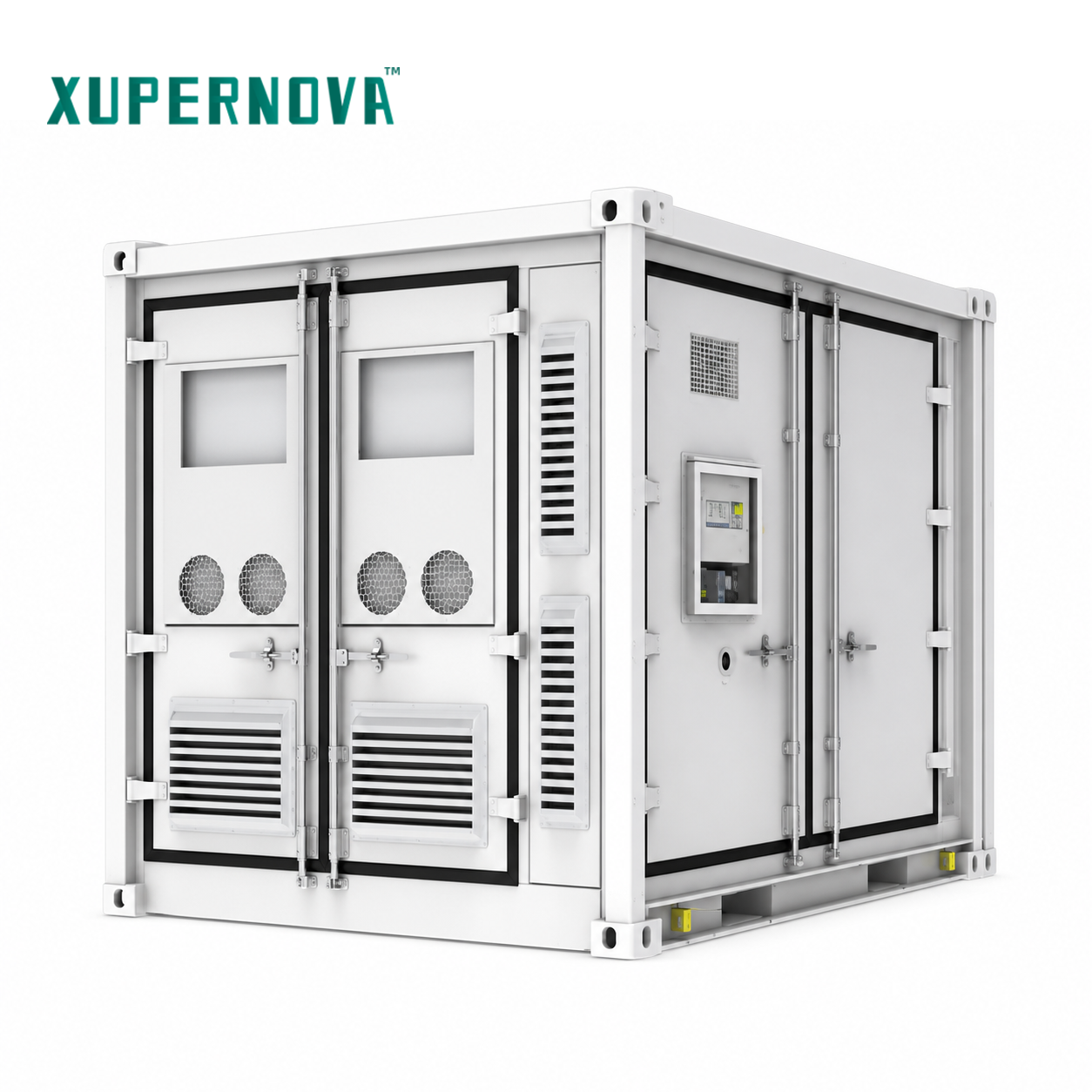
The 1 MWh-class containerized unit (XA-X1044-L1, 500 kW / 1044 kWh, liquid-cooled, rated for -30 to 55 °C) is a typical building block where integration scope shortens site work.
The Performance Side of the Ledger: Availability, Efficiency and Control
Cost savings alone would not justify an integrated purchase. The performance argument rests on three verifiable parameters.
Availability. Integrated delivery targets system availability of at least 99.9%. That figure is achievable because a single control architecture governs battery, PCS, EMS and electrical equipment together. In a multi-vendor system, availability is the product of each vendor's uptime and each interface's reliability, and no single party guarantees the result.
Efficiency. Where the AC side is designed as one coordinated system, round-trip efficiency reaches at least 91.5%, with losses reduced through coordinated AC-side design rather than through component selection alone. This is a design outcome, not a chemistry claim: overall efficiency still depends on the selected battery chemistry and PCS configuration.
Control scale and response. Plant-level EMS provides plant-wide monitoring and coordinated control, supports plant capacity of 200 MW and above, delivers control response of 100 ms or faster, and reduces manual intervention by 70% through centralized alarms, diagnostics and remote operation. Device-level energy management systems cannot unify dispatch across a multi-container plant in the same way, because each subsystem reports to a different platform.
Safety architecture follows the same logic. Integrated designs use LFP cells with multi-level temperature monitoring, BMS protection, liquid cooling, automatic alarm and emergency shutdown, supported by smoke and temperature detection, pack-level and cluster-level aerosol fire suppression and a water fire-fighting interface. On applicable liquid-cooled models, cell temperature difference is controlled within 3 °C, which matters because thermal imbalance across a container is an integration problem before it is a component problem.
Comparing the Two Models on the Same Dimensions
| Comparison dimension | Integrated single-supplier BESS | Multi-vendor BESS |
|---|---|---|
| External system interfaces | Reduced by up to 70%, actual reduction depends on configuration | Full interface set retained and owned by buyer or EPC |
| Multi-supplier coordination workload | 60% lower | Baseline |
| On-site integration workload | 55% lower | Baseline |
| Commissioning time | 45% shorter | Sequential, vendor-by-vendor commissioning |
| On-site deployment cycle | 40% shorter | Baseline |
| Balance-of-system cost (large AC-side projects) | 18% lower where MV collection and grid connection are integrated; 50% less on-site high-voltage installation work | Higher, with duplicated installation and interface engineering |
| Availability target | At least 99.9%, designed into a single control architecture | Derived from multiple vendors' uptime and interface reliability |
| Post-commissioning support | Single-point technical coordination, unified commissioning, remote monitoring and lifecycle service support | Multiple support paths; fault attribution must be resolved between vendors |
| Main trade-off | Configuration dependence and concentration on one supplier | Greater integration risk, coordination load and interface liability |
Where Multi-Vendor Sourcing Still Makes Sense
An honest framework has to concede that splitting supply is sometimes the better commercial decision.
- Bankability-driven cell selection. Batteries can be sourced from current BloombergNEF Tier 1 energy storage manufacturers, verified against the latest quarterly BNEF Tier 1 list. Buyers who want that flexibility in their own hands may prefer to select cells directly, where at least 8 qualified Tier 1 battery vendors are available, qualified cell capacity exceeds 20 GWh of annual supply, supply risk is reduced by 55% and a minimum 7-year cell warranty is guaranteed.
- Chemistry roadmap flexibility. Where a project needs to move across LFP, solid-state and sodium-ion technologies, a flexible-chemistry platform compatible with three or more cell chemistries can reduce platform re-development effort by 65% and shorten the new-chemistry product launch cycle by 50%. Buyers with a strong technology-forecasting function sometimes prefer to hold that decision themselves.
- Brownfield and mandated equipment. If PCS, transformers or medium-voltage switchgear are already installed, or if the site owner or utility mandates specific brands, the scope on offer is only partially integrated anyway.
- In-house integration capability. A buyer with an experienced integration engineering team is paying for coordination it may already perform. In that case, a lower headline component price can offset a higher internal workload.
- Unit-level procurement cost. Procurement cost depends on the selected supplier and project volume. On straightforward, single-site projects, a component-by-component tender can produce a lower initial outlay.
The corresponding risk is not theoretical. Splitting supply means interface accountability, commissioning sequencing and dispatch coordination all become buyer obligations. Spare parts and warranty claims travel through different organizations, and the party responsible for a system-level underperformance can be difficult to determine.
Where Integrated Delivery Has Real Limits
Integrated delivery is not a default recommendation, and several of its limits are structural rather than commercial.
- Interface reduction is configuration-dependent. The up-to-70% figure is a ceiling, not a guarantee. A project that retains third-party SCADA, site-mandated medium-voltage equipment or an existing transformer will keep a meaningful number of interfaces regardless of how the battery scope is purchased.
- Single-supplier concentration. Consolidating the scope concentrates business-continuity risk, spare-parts dependency and, over a service relationship that may run ten years or more, the buyer's negotiating position.
- Standardization versus unusual footprints. A standardized integrated design may fit a greenfield C&I or utility site well but fit a constrained brownfield site, an unusual voltage configuration or a hybrid retrofit poorly.
- Not always the lowest upfront cost. Integration engineering is priced into the contract. Where the buyer already owns that capability and the site is simple, a multi-vendor approach can carry a lower initial capital outlay.
- Integration does not substitute for component quality. Round-trip efficiency and cycle life still depend on the selected battery chemistry and PCS configuration. Integrated delivery removes coordination losses; it does not create performance that the underlying hardware cannot deliver.
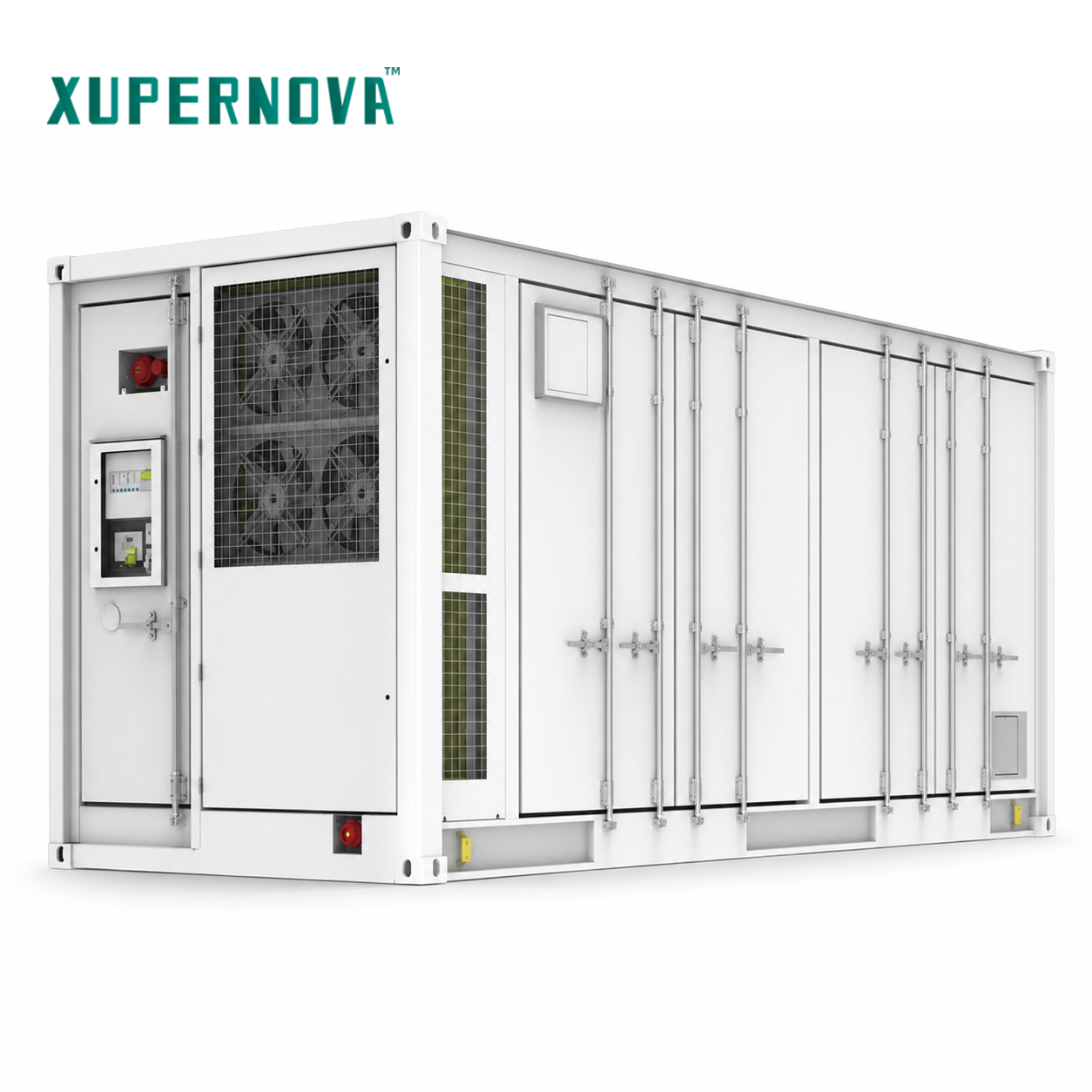
Utility-scale reference point: the XA-V5015-L1 20-ft liquid-cooled container at 5.015 MWh, 0.5P/1P/2P, rated for -30 to 55 °C.
Long-Term Ownership: Lifecycle, Ecosystem and Support
Delivery model choices are usually made on capital cost and schedule. They are paid for over the following decade. Three lifecycle factors deserve equal weight in the evaluation.
Support structure. Integrated supply routes to a single point of technical coordination, with unified commissioning, remote monitoring and lifecycle service support. Xupernova provides 24/7 support, one-on-one consultations and after-sales service. Multi-vendor systems distribute that responsibility, which is efficient when everything works and slow when it does not.
Ecosystem reach. Xupernova has established strategic partnerships with more than 80 companies across over 30 countries. For buyers operating multi-site portfolios or remote installations, partner reach determines how quickly a spare part or field engineer can reach a site.
Commercial execution terms. These shape project cash flow as much as price does. Xupernova's terms include a minimum order quantity of 1 unit; delivery on EXW, FOB, CIF, DAP or DDP; 100% factory acceptance testing before shipment, with third-party inspection and site acceptance testing available; and payment of 30% deposit with 70% before shipment after FAT. Buyers comparing models should normalize these terms across offers, because a lower unit price with weaker acceptance testing transfers risk back to the buyer.
A Six-Question Decision Framework
The framework below converts the cost and performance data above into a sequence of questions. It is designed to be applied before a tender is issued, not after bids are received.
1. How many external interfaces will my team own?
Count them explicitly, including SCADA, protection, metering and grid-connection interfaces. Multiply by the engineering hours your team realistically has. If the number exceeds your integration capacity, delivery scope becomes a resourcing decision rather than a pricing one.
2. What does one hour of unavailability cost?
If the answer is high — critical facilities, data centers, hospital loads, continuous industrial processes — the 99.9% availability target of an integrated architecture becomes a design requirement. If the site has a low cost of downtime and a simple load profile, the performance premium carries less weight.
3. Which equipment is already fixed on my site?
Mandated switchgear, an existing transformer or an owner-specified PCS reduces the achievable integration benefit. Where a significant share of the scope is fixed, the honest comparison is between a partially integrated system and a deliberately modular one.
4. What is the real cost of coordination in my organization?
A 60% reduction in multi-supplier coordination workload is only valuable if that workload would otherwise be performed by salaried engineers with competing projects. For organizations without integration staff, the avoided cost is close to the full figure.
5. What happens at year five and year seven?
Warranty term, spare-parts path, remote monitoring capability and the number of support contacts should be written into the comparison. A minimum 7-year cell warranty and single-point technical coordination have measurable value in year six; they rarely appear in year-one pricing tables.
6. Which chemistry will this asset need in five years?
If the project is likely to migrate toward solid-state or sodium-ion, platform flexibility has value. If the site is a stable LFP application with a fixed duty cycle, integration certainty is usually worth more than chemistry optionality.
Applying the Framework by Application
Commercial and industrial peak shaving. Facilities on time-of-use tariffs with fluctuating loads need charge and discharge scheduling, load-following control and demand-limit control running 24/7. The natural building blocks are a liquid-cooled all-in-one cabinet rated at 125 kW / 261.25 kWh (XA-C0261-L1) or a 10-ft liquid-cooled container at 500 kW / 1044 kWh (XA-X1044-L1). For single sites, either delivery model can work. For portfolios of dozens of sites, integrated delivery is usually the only way to keep a plant-level EMS, grid-connection cabinet, metering and protection scheme consistent across locations.
Utility-scale and grid-side storage. Projects of 100 MW+ AC-side scale involve medium-voltage collection, step-up transformation, substations, protection and control systems, SCADA and dispatch interfaces. Integrated medium-voltage design reduces balance-of-system cost by 18% and halves on-site high-voltage installation work. Reference platforms include 5.015 MWh (XA-V5015-L1) and 2.170 MWh (XA-X2170-L2) 20-ft liquid-cooled containers, with plant-level EMS supporting 200 MW and above.
Solar-plus-storage. Here the integration problem is control, not just hardware: photovoltaic generation, battery state of charge, export limits and evening peak demand must be coordinated automatically. Cabinet-level options include a 261 kWh liquid-cooled solar-plus-storage cabinet (XA-H0261-L1) and a 25–50 kW / 64.54 kWh air-cooled cabinet (XA-H0064-A1) for smaller commercial sites.
Microgrids and off-grid industrial sites. Mining and remote operations combine solar, diesel generators, grid-forming PCS, a microgrid controller, load management and plant-level EMS. Source scheduling and spinning-reserve strategy span every one of those elements, which makes coordination the dominant cost. Grid-connection approvals, islanding protection and black-start strategy also need one responsible party.
EV charging hubs and fleet depots. High short-duration charging demand against limited grid capacity requires dynamic power allocation between grid, PV, storage and chargers. The control loop crosses subsystem boundaries by design.
Across these applications, applicable product platforms use Grade A LFP lithium-ion cells from leading BloombergNEF Tier 1 energy-storage cell manufacturers, with optional semi-solid-state, solid-state and sodium-ion technologies subject to project requirements, technical validation and availability. Rated operating scope for the referenced units is -30 to 55 °C.
Future Outlook
Three trends are likely to sharpen this decision rather than dissolve it. First, standardized container formats and integrated medium-voltage AC collection will keep pulling coordination work into the supply scope, which favors integrated delivery for large projects. Second, chemistry diversification toward solid-state and sodium-ion will keep some buyers attached to multi-vendor flexibility so they can switch cell technologies without replacing the whole platform. Third, as annual deployment volumes continue at the scale reported for 2025, procurement teams are increasingly likely to formalize interface counts and lifecycle support obligations as scored tender criteria rather than qualitative preferences.
The practical consequence is that cost versus performance in energy storage is no longer a comparison of equipment. It is a comparison of delivery models, measured in interface count, coordination workload, commissioning sequence, availability architecture and the support structure that remains in place long after the last container is energized.
FAQ
What does an integrated BESS delivery actually include?
An integrated scope covers battery systems, PCS, BMS, plant-level EMS, thermal management, fire protection, transformers, switchgear and grid-connection systems under one contract. The supplier owns the interfaces between these subsystems, rather than the buyer or EPC.
How should a buyer compare upfront cost against lifetime performance?
Normalize both offers on the same dimensions: external interface count, on-site integration workload, commissioning duration, availability target and post-commissioning support structure. Integrated delivery reduces multi-supplier coordination workload by 60% and shortens commissioning by 45%, while targeting availability of at least 99.9%. Those gains need to be weighed against a contract value that includes integration engineering.
What evidence should a buyer require on cell sourcing and warranty?
Batteries can be sourced from current BloombergNEF Tier 1 energy storage manufacturers, verified against the latest quarterly BNEF Tier 1 list. Where at least 8 qualified Tier 1 battery vendors are available, qualified cell capacity exceeds 20 GWh of annual supply, supply risk is reduced by 55% and a minimum 7-year cell warranty is guaranteed.
How does after-sales support differ between the two models?
Integrated supply routes to a single point of technical coordination with unified commissioning, remote monitoring and lifecycle service support. A multi-vendor system distributes support across several organizations, so fault attribution and spare-parts logistics must be resolved between vendors. Xupernova provides 24/7 support, one-on-one consultations and after-sales service within its integrated scope.
What are the limits of the integrated approach?
Interface reduction is configuration-dependent and can be reduced by site-mandated equipment, existing switchgear or third-party SCADA. Concentrating scope on one supplier also concentrates business-continuity and spare-parts dependency, and standardized integrated designs may suit greenfield sites better than constrained brownfield retrofits. Integrated delivery also does not change the fact that efficiency depends on the selected chemistry and PCS configuration.
Which applications favor an integrated system most strongly?
Utility-scale projects of 100 MW+ AC-side scale, solar-plus-storage installations with export limits, remote mining microgrids and off-grid facilities, EV charging hubs with constrained grid capacity, and multi-site commercial and industrial portfolios. In each case, control logic and source scheduling cross subsystem boundaries, which is where integration delivers the largest measurable benefit.
Reference material: Xupernova's energy storage product catalog, covering containerized and cabinet BESS platforms, is available for download at XUPERNOVA_Energy_Storage_Product_Catalog.pdf.
¿Tiene preguntas o necesita más detalles?
Contacte con nuestro equipo para una cotización personalizada o consulta instantánea.
Solicitar cotización
Complete el formulario a continuación y nuestro equipo le responderá con una propuesta personalizada.
Chat directo de WhatsApp
¿Prefiere chatear en tiempo real? Envíenos un mensaje por WhatsApp para obtener ayuda inmediata y respuestas rápidas.
- Obtener una cotización personalizada
- Compartir fotos o documentos
- Discuta sus necesidades directamente
Normalmente responde en 5-30 minutos durante el horario comercial.