
Integrated High-Speed Blister-Cartoning Lines: What to Consider
Integrated High-Speed Blister-Cartoning Lines: What to Consider
Shortlisting an integrated high-speed blister-cartoning line comes down to four engineering questions: how modular the line is, how it replenishes product at speed, how it remembers a format change, and whether packaging material keeps flowing without stopping the machine. Commercial terms are negotiated around those four answers, not instead of them.
Most pharmaceutical packaging floors reach this decision only after they have already ruled out the manual or semi-automatic blister-to-carton handoff. What remains is a configuration problem: which line can hold the intended output across the formats the plant actually runs, and which supplier can keep that configuration available, documented and serviceable over the life of the equipment. That is a different question from "which machine is fastest," and it is the one a shortlist should be built to answer.
The market context explains why the question keeps returning. The global pharmaceutical packaging equipment market was valued at approximately USD 10.71 billion in 2024, according to SkyQuest Technology, and Fortune Business Insights put the pharmaceutical cartoning machinery segment at about USD 1.46 billion in the same year. Grand View Research reports that Asia Pacific held the largest regional revenue share of that packaging equipment market, at 40.7% in 2025 — the region where a substantial share of integrated blister-cartoning projects is now sourced.
Zhejiang Hoping Machinery Co., Ltd. (Hoping) is a pharmaceutical packing machinery manufacturer established in 2001 in Ruian City, Zhejiang Province, China, producing blister packaging machines, cartoning machines, case packing machines and end-of-line packaging equipment. Its blister-cartoner portfolio — the DHL and IXW families — offers a concrete reference set for the criteria discussed below. Nothing here is a ranking of suppliers; it is a framework for evaluating any integrated line, including the ones named.
Why an Integrated Blister-Cartoning Line Reaches the Shortlist
A conventional solid-dosage setup links a blister machine to a standalone cartoner through manual or semi-automatic transfer. An integrated blister-cartoning line instead combines blister packaging, blister transfer, leaflet handling, carton opening, insertion, inspection or rejection, and downstream connection into a single automated process. The immediate effect is fewer manual interventions and less intermediate handling between stations — fewer points where product, leaflet and carton can go out of sequence.
The trade-off is capital. Initial investment in an integrated line is usually higher than for standalone or semi-automatic equipment. The counter-argument is the operating structure: in large-scale continuous production, the integrated format helps reduce labor, transfer, management and quality-risk costs, and those are the cost lines that dominate a line's lifetime rather than the purchase order itself.
Buyers therefore tend to shortlist integrated lines when three conditions hold at once: volume is high enough to keep the line loaded, the format mix is stable enough to justify the tooling set, and the plant specifically wants fewer points at which product is handled by people. Where any of those conditions is uncertain, a standalone configuration can be the better value — a conclusion worth writing into the business case before a supplier is contacted.
Four Criteria That Separate a Shortlist Candidate From a Catalogue Entry
1. Modularity at station level
An integrated line is not one machine. It is a set of stations with a shared control philosophy. The DHL8005H scope, for example, runs from high-speed blister forming and sealing through transfer, leaflet handling, carton opening, insertion, coding and inspection, and then connects to bundling, case packing and palletizing equipment. Downstream modules in the wider portfolio include the XWK4060 stretch bander, the XWG4060 overwrapper, the XWK series case packers and the ICP12 case packing and palletizing integral machine.
A shortlist should map which of those modules is included, which is optional, and which is expected to be added later. That map determines how much of the line is renegotiated in three years, and it is the difference between buying a machine and buying an expandable line.
2. Servo-driven independent replenishment
This is where published configurations differ in a measurable way. The DHL8005H specifies a three-channel servo-driven independent replenishment system; the DHL1000/5H specifies four channels. The DHL7005H, DHL7004 and DHL6004 list servo-driven independent replenishment without publishing channel counts, and the IXW800, IXW600 and IXW400 also specify servo-driven independent replenishment.
The useful evaluation question is not "servo or not." It is: how many independent channels does this line have, and what happens to the rest of the line when one channel is empty or blocked? Buyers should also confirm how the replenishment method is set for their specific product, since the DHL1000/5H and DHL8005H both list different feeding methods according to customer requirements. A replenishment system that has to be re-argued after installation is a project risk, not a technical detail.
3. Changeover memory and format tooling
Memory functions are listed differently across models, and the difference matters at quotation stage. The DHL1000/5H lists mold-change and recipe memory functions; the DHL8005H lists mold-change and preset-memory functions; the DHL6004 and DHL7004 are described as having convenient mold change within full-servo lines; the IXW600 lists mold-change support.
A memory function stores machine parameters associated with a format. It does not store format parts. Due diligence should therefore separate two line items in the quotation: the recipe or preset system, and the physical tooling set required for each format the plant intends to run. Buyers should ask how many formats can be held in memory, how a format is identified at changeover, and whether the stored data covers only the blister station or the full blister-to-carton sequence.
4. Material continuity: PVC and Alu foil splicing
Automatic PVC/Alu foil splicing appears on the DHL1000/5H and the DHL8005H. The IXW800 and IXW600 list PVC / cold Alu auto splice, and the IXW400 lists PVC and top cover film auto splicing. This feature is the one most often discussed as an upgrade, because it targets the interruptions that occur when a foil roll runs out rather than a mechanical fault.
Treat it as a configuration item to verify, not an assumption. Confirm which material paths are covered — PVC, Alu, cold Alu or top cover film — and whether splicing is included in the base configuration of the specific model or quoted separately. At higher output targets, film is consumed faster per running hour, so the value of uninterrupted splicing rises with the throughput the buyer is actually specifying.
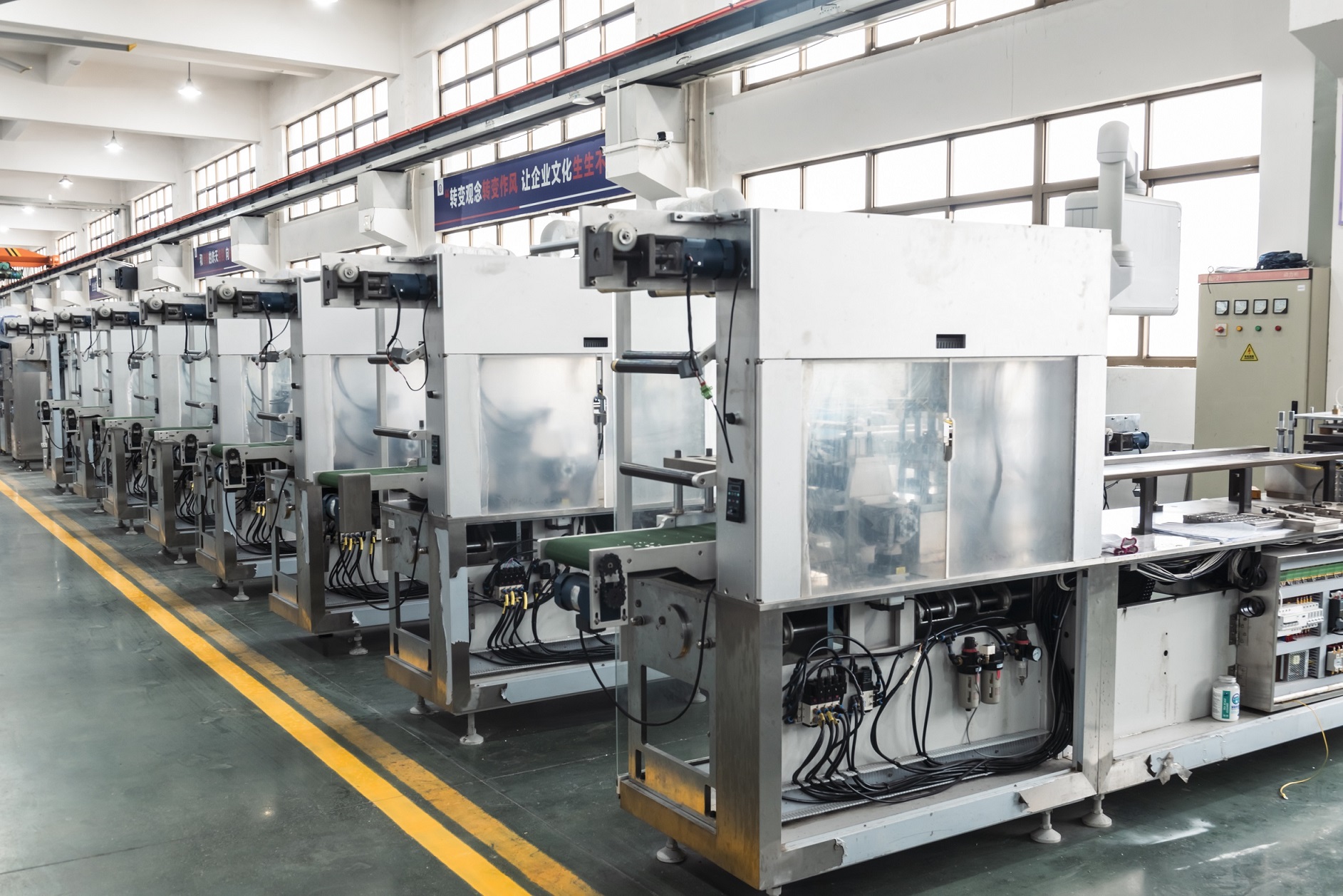
How the Technical Architecture Differs From Standalone Equipment
Two subsystems decide whether an integrated line behaves like one machine or like two machines placed end to end: the transfer system and the control platform.
Transfer. The DHL1000/5H and DHL8005H specify the D3 intelligent top-loading parallel tracking transfer system. The DHL7005H and DHL7004 use the self-developed IRB24 intelligent transfer robot. The DHL6004 uses a high-speed transfer and cartoning linkage. The IXW800 combines D3 top-load robotics with a rotary manipulator, and the IXW400 uses a D3 top-loading robot. These are different mechanical answers to the same requirement: moving a blister card from the blister web into the carton at line speed without losing orientation.
Control platform. The DHL8005H, DHL6004, IXW800, IXW600 and IXW400 specify a Beckhoff motion controller with the CP9315 industrial PC. The DHL1000/5H specifies a Beckhoff motion controller with a high-bus industrial control system. The DHL7005H and DHL7004 specify a Siemens motion controller with the TP900 HMI. Because the control platform determines which drives, motion components and operator interface a plant must stock, document and maintain, it belongs in the shortlist comparison table — not in the closing commercial negotiation.
Configuration Matrix: Integrated Lines to Compare
| Model | Max blister / carton output | Transfer technology | Replenishment and drive | Control platform | Notable configuration |
|---|---|---|---|---|---|
| DHL1000/5H | Up to 1000 blisters/min and 500 cartons/min | D3 intelligent top-loading parallel tracking transfer | Four-channel servo-driven independent replenishment; fully servo | Beckhoff motion controller; high-bus industrial control system | PVC/Alu foil auto splicing; mold-change and recipe memory; GMP-oriented design |
| DHL8005H | Up to 800 blisters/min and 500 cartons/min | D3 intelligent top-loading parallel tracking transfer | Three-channel servo-driven independent replenishment; fully servo | Beckhoff motion controller; CP9315 industrial PC | PVC/Alu foil auto splicing; mold-change and preset memory; multiple feeding methods |
| DHL7005H | Up to 700 blisters/min and 500 cartons/min | Self-developed IRB24 intelligent transfer robot | Independent replenishment; full servo drive | Siemens motion controller; TP900 HMI | Mold-change support; GMP-oriented in-line design |
| DHL7004 | Up to 700 blisters/min and 400 cartons/min | Self-developed IRB24 intelligent transfer robot | Servo-driven independent replenishment; full servo drive | Siemens motion controller; TP900 HMI | Convenient mold change; GMP-oriented design |
| DHL6004 | Up to 600 blisters/min and 400 cartons/min | High-speed transfer and cartoning linkage | Servo-driven independent replenishment; fully servo | Beckhoff motion controller; CP9315 industrial PC | Convenient mold change; GMP-oriented design |
| IXW800 | Up to 600 blisters/min, 600 packs/min and 500 cartons/min | D3 top-load robotics and rotary manipulator | Servo-driven independent replenishment; fully servo | Beckhoff controller; CP9315 industrial PC | PVC / cold Alu auto splice; rotary reciprocating flow-wrapper stage before cartoning |
| IXW600 | Up to 600 blisters/min, 300 packs/min and 300 cartons/min | Rotary reciprocating flow-wrapper matching technology | Servo-driven replenishment; fully servo | Beckhoff controller; CP9315 industrial PC | PVC / cold Alu auto splice; mold-change support |
| IXW400 | Up to 400 blisters/min and 150 cartons/min | D3 top-loading robot | Servo-driven independent replenishment; fully servo | Siemens controller; CP9315 industrial PC | PVC and top cover film auto splicing; built for filled syringes, ampoules and cartridges |
Published maximum capacities. Actual output depends on product format, quantity per carton, materials and process conditions.
Evaluating the DHL8005H Upgrade Option
The DHL8005H sits in a practical middle tier for plants that want high throughput without stepping up to the DHL1000/5H output class. It is specified at up to 800 blisters/min and 500 cartons/min, with the D3 intelligent top-loading parallel tracking transfer system, three-channel servo-driven independent replenishment, a Beckhoff motion controller and CP9315 industrial PC, mold-change and preset-memory functions, multiple feeding methods, PVC/Alu foil auto splicing, and a GMP-oriented line design.
Its scope runs from blister forming and sealing through transfer, leaflet handling, carton opening, insertion, coding and inspection, and then connects to bundling, case packing and palletizing equipment. For a plant that already runs a blister machine and a standalone cartoner, that scope is the part of the evaluation that is easiest to underestimate, because it replaces not just a machine but a set of manual handoffs.
For the splicing upgrade specifically, the shortlist should record three answers in writing: whether splicing covers both the PVC and Alu foil paths on the exact model being quoted; whether it is a standard element of that configuration or a separately quoted option; and how the three replenishment channels and the preset memory behave together during a material change. Those three answers, not the feature name, are what make the upgrade comparable between the DHL8005H, the DHL1000/5H and the DHL7005H on the same quotation sheet.
Where Integrated Lines Fit: Application Notes
Integrated blister-cartoning lines are best suited to large-scale solid-dosage pharmaceutical packaging, high-capacity workshops, production that requires reduced manual contact and improved line efficiency, and multi-format packaging lines that need stable operation. Within a portfolio, the fit narrows further by model and by dosage form.
The DHL7005H lists pharmaceutical tablets, capsules, soft capsules, nutraceuticals and healthcare products. The DHL8005H lists capsule and tablet packaging together with healthcare, food and cosmetic blister-cartoning projects. The DHL6004 covers tablets, capsules and other solid-dosage formats at medium-to-high capacity, and the DHL7004 covers pharmaceutical, nutraceutical, healthcare and food blister-cartoning production.
The IXW800 and IXW600 add a flow-wrap stage between blister and carton, which suits products that require pillow packaging before cartoning, including moisture-sensitive blister formats. The IXW400 applies the same integrated logic to liquid dosage — pre-filled syringes, ampoules and cartridges — at up to 400 blisters/min and 150 cartons/min.
When a project extends beyond the blister-cartoner, the downstream question is whether the secondary packaging line can be specified from the same source. One documented combination, the XWZ300II cartoner with the XWK4060 stretch bander and the ICP12 case packing and palletizing integral machine, is specified at about 60–220 cartons/min, 30–60 bundles/min and about 12 cases/min respectively — the kind of continuity that reduces interface risk between blister, carton, bundle, case and pallet.
Comparison With Traditional Blister-to-Carton Setups
| Dimension | Blister machine + manual transfer + standalone cartoner | Integrated fully servo blister-cartoner line |
|---|---|---|
| Process scope | Separate stations with intermediate handling between them | Blister packaging, blister transfer, leaflet handling, carton opening, insertion, inspection/rejection and downstream connection in one automated process |
| Manual intervention | Higher, particularly at transfer and infeed points | Reduced manual intervention and intermediate handling |
| Output reference | Depends on the individual machines and the transfer method | Representative DHL1000/5H configuration reaches up to 1000 blisters/min and 500 cartons/min; actual output depends on product format, quantity per carton, materials and process conditions |
| Initial investment | Lower entry cost; semi-automatic options available | Usually higher than standalone or semi-automatic equipment |
| Cost structure over time | Labor, transfer and quality-risk costs accumulate across stations | Helps reduce labor, transfer, management and quality-risk costs in large-scale continuous production |
| Maintenance model | Multiple independent service routines | Centralized control, modular stations, alarm indication and parameter management support routine maintenance |
| Best fit | Lower or variable volume, wide format mix, limited capital budget | Large-scale solid-dosage packaging and high-capacity workshops needing fewer manual touchpoints |
Comparison based on published configuration and performance data for integrated blister-cartoner lines.
What an Integrated Line Does Not Solve
Three boundaries belong in the evaluation rather than on the discovery list after installation.
First, published maxima are not guaranteed sustained output. The stated figures of up to 1000 or 800 blisters/min describe a representative configuration under defined conditions; real output depends on product format, quantity per carton, material behavior and process conditions. A shortlist that treats the headline number as a production promise will mis-rank its candidates.
Second, energy consumption should be measured on site against actual output, running hours and configuration rather than inferred from the drive type. A fully servo line improves motion synchronization and operating efficiency, but the electricity figure that matters belongs to the plant's own duty cycle.
Third, maintenance does not disappear. Centralized control, modular stations, alarm indication and parameter management support routine maintenance, but operator training, spare-parts management and preventive maintenance remain important. Format change still requires physical tooling, and memory presets store parameters rather than parts.
Procurement and the Long-Term View
For long-life equipment, commercial parameters are part of the technical shortlist. Hoping publishes a minimum order quantity of 1 set or 1 complete line, a typical production lead time of 60–120 days after technical confirmation, and a monthly production capacity of 30–40 units. Delivery terms run from EXW Ruian/Wenzhou through FOB Ningbo or Shanghai to CIF/CFR destination port, with final terms subject to contract and customer country requirements.
The acceptance path is also defined: technical agreement confirmation, sample testing, factory acceptance testing before shipment, site acceptance testing at the customer's plant, and third-party inspection where requested. Payment terms are subject to quotation, contract value, customer credit, project scope, destination market and the final project agreement — which is to say they are negotiable variables rather than published constants, and should be assessed as such.
Long-term support is where an integrated line differs most from a standalone machine. Hoping reports 300 employees, 56 R&D engineers, 26 invention patents, 70 utility patents, 4 appearance patents, 10 PCT filings protected in Europe, Russia, Germany and Italy, and 28 software copyrights. Exports account for 25% of output, across Southeast Asia, the Middle East, Eastern Europe, South America and Africa, and the company's published profile lists CE and ISO 9001/14001 certification. For a buyer, those facts translate into specific questions: who supplies spare parts after year five, how remote technical support is delivered, and whether format tooling can be reordered to the original drawing.
Risk screening should be explicit. The failure modes that an integrated line has to be screened against are known: poor blister forming or sealing; missing, wrong or incomplete product feeding; missing leaflet; carton jam; coding or date printing error; foreign matter or contamination risk; downtime during high-speed operation; and delivery and installation risk on export projects. The control set paired with those failure modes includes sensor monitoring, vision or checkweighing inspection where configured, missing-product alarms, automatic stop, automatic rejection, key-parameter locking, fault records, mechanical safety protection, FAT/SAT acceptance and SOP training.
The supplier-side measures that support those controls include confirming samples and packaging materials at the early project stage, designing the solution around confirmed blister and carton formats, running no-load and material tests before shipment, providing installation, commissioning, training, spare parts and remote technical support, and arranging customer witness acceptance for key projects. A shortlist that asks for these commitments in writing is evaluating the line and the ecosystem around it at the same time.
Market Trend Analysis
Three data points frame the demand side of this decision. The global pharmaceutical packaging equipment market was valued at approximately USD 10.71 billion in 2024 (SkyQuest Technology), and the pharmaceutical automatic cartoning machine segment at about USD 1.46 billion in 2024 (Fortune Business Insights). Asia Pacific held the largest regional revenue share of the packaging equipment market at 40.7% in 2025 (Grand View Research).
Supply concentration is a second signal. Market intelligence data places the combined share of Uhlmann, IMA and Marchesini at approximately 29% of the pharmaceutical blister packaging machine market. That figure is meaningful for buyers because it indicates a fragmented remainder: most of the market is served by regional and specialist manufacturers, which is precisely why supplier evaluation criteria — not brand familiarity — determine the shortlist outcome.
Regulatory pressure reinforces the same direction. Pharmaceutical packaging machines must comply with ISO 15378, which integrates GMP requirements for primary packaging materials, and EU pharmaceutical equipment safety is governed by the Machinery Directive 2006/42/EC together with the EN 415 series for packaging machines. Compliance documentation therefore travels with the line, and a supplier's ability to produce it is a procurement criterion rather than a formality.
Future Outlook
The direction of travel in integrated blister-cartoning is toward fewer format-specific dependencies and more continuity across the line. Two of the four criteria above — changeover memory and material splicing — are likely to carry more weight in the next procurement cycle than raw maximum output, because most buyers already find the maximum output class they need and then spend the following years managing changeovers and material interruptions.
A second shift is downstream scope. Blister-cartoner lines are increasingly specified together with bundling, case packing and palletizing modules, so the practical question becomes whether the blister-cartoner is the end of the project or the first phase of one. Suppliers with in-house tooling, control and service capability are better positioned for that continuity than suppliers who assemble from third-party modules.
A third factor is documentation. Under ISO 15378 and the EU machinery framework, the value of an integrated line is partly the value of what can be demonstrated about it — validation records, safety architecture, software version control and traceable acceptance testing. Buyers should expect that evidence to be part of the commercial offer, not a post-purchase request.
Frequently Asked Questions
What makes a blister-cartoning line "integrated" rather than two linked machines?
An integrated line combines blister packaging, blister transfer, leaflet handling, carton opening, insertion, inspection or rejection and downstream connection into one automated process rather than linking separate stations through manual or semi-automatic transfer. The practical consequence is reduced manual intervention and less intermediate handling, with the trade-off that initial investment is usually higher than for standalone or semi-automatic equipment.
Why does servo-driven independent replenishment matter in a high-speed line?
Replenishment is the part of the line that keeps product flowing into the blister feed. Published configurations differ: the DHL8005H specifies three servo-driven independent replenishment channels and the DHL1000/5H specifies four, while the DHL7005H, DHL7004, DHL6004, IXW800, IXW600 and IXW400 list servo-driven independent replenishment without publishing channel counts. Buyers should establish the channel count and the behavior of the remaining channels when one is empty or blocked.
What does changeover memory actually store on a blister-cartoner?
Memory functions store machine parameters associated with a packaging format. The DHL1000/5H lists mold-change and recipe memory functions, the DHL8005H lists mold-change and preset-memory functions, and the IXW600 lists mold-change support. These functions do not store format parts, so the tooling set per format should be quoted and planned separately from the parameter memory system.
Is automatic PVC/Alu foil splicing worth specifying?
Automatic PVC/Alu foil splicing is listed for the DHL1000/5H and DHL8005H, PVC / cold Alu auto splice for the IXW800 and IXW600, and PVC and top cover film auto splicing for the IXW400. Whether it is worth specifying depends on the output target and the buyer's tolerance for material-change interruptions. Confirming which material paths are covered, and whether splicing is standard or optional on the exact model quoted, is the way to make the comparison meaningful.
How should an integrated blister-cartoning line be accepted?
The defined acceptance path is technical agreement confirmation, sample testing, factory acceptance testing before shipment, site acceptance testing at the customer's plant, and third-party inspection where requested. Supplier-side preparation includes confirming samples and packaging materials at the early project stage, designing to the confirmed blister and carton formats, and conducting no-load and material tests before shipment. Customer witness acceptance can be arranged for key projects.
What are the limits of an integrated high-speed line?
Initial investment is usually higher than for standalone or semi-automatic equipment. Published maximum outputs describe a representative configuration — actual output depends on product format, quantity per carton, materials and process conditions. Energy consumption should be measured against the plant's own output and running hours rather than inferred from the drive type. And maintenance does not disappear: operator training, spare-parts management and preventive maintenance remain important.
What lead time and minimum order should a buyer plan for?
For this portfolio the minimum order quantity is 1 set or 1 complete line, typical production lead time is 60–120 days after technical confirmation, and monthly production capacity is 30–40 units. Delivery terms range from EXW Ruian/Wenzhou and FOB Ningbo or Shanghai to CIF/CFR destination port, with final terms subject to contract and customer country requirements. Payment terms are project-specific and subject to the final agreement.