
Insulated vs. Laminated Glass: A 2026 Buyer's Comparison for High-Performance Facades
The choice between insulated glass and laminated glass is rarely a question of which product is “better” in the abstract. For construction buyers, it is a question of performance priorities: whether the enclosure must first minimize heat transfer or first ensure safety under impact. This comparison examines both glass families from a procurement standpoint, using verified performance parameters and clearly defined application logic for 2026 building projects.
Why This Comparison Matters in 2026
The global construction glass market was valued at USD 119.2 billion in 2025 and is projected to reach USD 189.33 billion by 2034, according to Fortune Business Insights. As energy codes tighten and facade design becomes more demanding, buyers are being asked to choose between glass types that are often positioned as interchangeable. They are not.
Insulated glass and laminated glass serve fundamentally different primary functions. Insulated glass is a thermal envelope solution; laminated glass is a safety and security solution. They can also be combined in a single unit. But procurement decisions often require selecting one as the dominant specification before further engineering, which makes an early-stage performance comparison essential.
The Procurement Problem: Two Products, Overlapping Specs
Buyers evaluating building glass for curtain walls, skylights, balustrades, or storefronts often receive quotations that include both insulated glass and laminated glass, sometimes with similar light-transmittance figures and similar visual appearances. This overlap creates a decision problem:
- If the project is a curtain wall, the dominant threat is heat gain and heat loss, but safety codes still apply.
- If the project includes overhead glazing or high-Impact zones, the dominant threat is glass fallout, but energy performance still matters.
Understanding the verified performance baseline of each product type helps buyers avoid the common mistake of specifying a single glass family without acknowledging its real limitations.
Product Definition and Verified Performance Parameters
For a constructive comparison, this article refers to two representative product families from a Chinese architectural glass manufacturer, DYGLASS: insulated glass (production code DY-ZK01) and laminated glass (production code DY-JJ01). DYGLASS, operating as Shenzhen Dayang Special Glass Co., Ltd., is a Shenzhen-based building-glass processor with about 130 employees and an annual output of approximately 600,000 square meters. Its product range includes tempered glass, laminated glass, insulated glass, curved glass, smart glass, and other processed building-glass categories, with export markets including the UAE, Saudi Arabia, Bahrain, the United States, the Philippines, and Vietnam.
Insulated Glass (DY-ZK01)
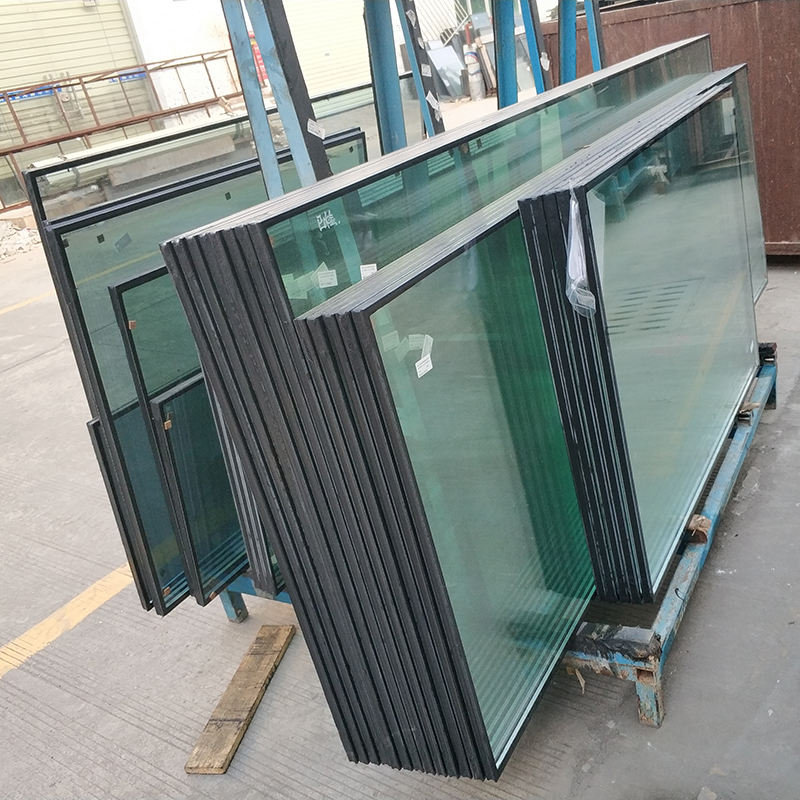
Insulated glass is made by sealing two or more glass panes with a hollow spacer and desiccant, creating an air- or gas-filled cavity that reduces heat transfer. DYGLASS states the achievable light transmittance range for its insulated glass products at 70–89%. This broad range reflects variations in glass type, coating, and thickness. A common specification is 6mm+12A+6mm, meaning two 6mm panes separated by a 12mm air gap.
Laminated Glass (DY-JJ01)
Laminated glass is made by bonding two or more glass plies with an interlayer, typically polyvinyl butyral (PVB), under heat and pressure. The interlayer holds the glass together when fractured, making the product suitable for safety-critical locations. DYGLASS states a sound insulation range of 30–45dB for its laminated glass, depending on construction. Clear laminated glass can achieve light transmittance in the 85–92% range when specified with low-iron or clear base glass.
| Performance Parameter | Insulated Glass (DY-ZK01) | Laminated Glass (DY-JJ01) |
|---|---|---|
| Primary Function | Thermal insulation / energy - efficient enclosure | Safety, security, impact resistance |
| Light Transmittance | 70–89% (clear glass range; tinted achievable within this band) | Clear base glass: 85–92%; tinted glass: 10–70% |
| Sound Insulation | 35–45dB | 30–45dB |
| Common Construction | 6mm + 12A + 6mm (two panes, sealed cavity) | Two or more plies bonded with interlayer |
| Post-Fracture Behavior | Tempered Panes may shatter into small particles; no interlayer containment | Interlayer holds broken glass in place, preventing fallout |
These are baseline, manufacturer-stated performance ranges. Final spectral performance depends on the assembly combination and on whether the unit is double-glazed, triple-glazed, heat-treated, or coated with low-emissivity layers. But for the initial shortlist, these verified figures already show the functional split: insulated glass is engineered to separate temperatures, laminated glass is engineered to hold fragments.
Light Transmittance: How the Two Glass Types Behave
Light transmittance is one of the most commonly compared specification points among building glass buyers. It influences daylight autonomy, visual comfort, façade appearance, and the sizing of cooling equipment.
- Laminated glass with clear glass or low-iron clear glass delivers the highest light transmittance range: 85–92%. This makes it a strong candidate for spaces where daylight is a priority and where the interlayer is needed for safety reasons, for example glass balustrades, skylights, or large partitions.
- Insulated glass normally transmits slightly less light: between 70% and 89%. The glass layers themselves are typically clear, but the reflection at multiple surfaces and the possible use of Low-E coatings reduce the solar transmittance.
- Tinted laminated glass can intentionally lower light transmittance to a range of 10–70%, depending on the coating or body-tinted glass chosen. This allows architects to control glare and solar heat without abandoning the laminating safety function.
Sound Insulation: A More Complex Comparison
Manufacturer-stated sound insulation values often lead to false equivalences. Insulated glass is listed at 35–45dB, while laminated glass is listed at 30–45dB. On paper, the top of each range is similar; in practice, acoustic performance depends on glass mass, cavity width, interlayer type, mounting system, and the frequency spectrum of the noise source.
Laminated glass with a PVB interlayer improves damping of sound at certain mid-range frequencies because the viscoelastic interlayer converts vibrational energy into a small amount of heat. This behavior is most useful in traffic-noise situations. Insulated glass, such as DY-ZK01 in a 6mm+12A+6mm construction, can also perform well, but the acoustic result is more sensitive to the width of the air gap and the resonance frequency of the cavity. Where both thermal insulation and acoustic comfort are required, an insulating glass unit with two panes of different thicknesses—for example 6mm outer and 8mm inner—can be designed to stagger resonance frequencies, an approach often used in curtain wall specifications.
Curtain Walls vs. Safety-Critical Applications: Scenario Logic
The following application guide reflects a widely used procurement logic in the architectural glass industry: choose the product family whose primary failure mode is least dangerous for the specific location of the glazing.
Curtain Wall and Energy-First Facades → Insulated Glass (DY-ZK01)
Curtain walls are the building envelope of most commercial buildings. A typical DY-ZK01 specification, for instance 6mm+12A+6mm, can be selected as a high-performance base unit for regulating the facade's thermal transmission. It can be combined with Low-E coatings or tempered substrates to meet project requirements.
For thermal comfort, condensation control, and reduction of solar heat gain in continuously air-conditioned spaces, insulated glass is the conventional vertical façade choice. If an additional laminated pane is needed for safety, it is possible to replace one of the two panes with a laminated pane—forming a so-called “insulated laminated” unit—but this increases weight and cost. If the project is not subject to a specific impact-safety code, DY-ZK01 used alone is usually sufficient for normal curtain wall locations above ground level.
Safety-Critical and Impact Zones → Laminated Glass (DY-JJ01)
Safety-critical glazing positions include:
- Skylights and overhead glazing: Because broken glass can fall on occupants. Laminated glass is often required to retain broken fragments even after cracking.
- Glass balustrades and in-fills: Because they serve as barriers against falls.
- Storefronts, entrance doors, and sidelites: Because they are subject to human impact and forced-entry attempts.
- Suspended glass assemblies or large floor-to-ceiling windows in public buildings.
In these locations, the primary threat is not heat flow but the release of glass fragments. Laminated glass's interlayer is what improves the safety after fracture. Therefore, even when its thermal performance is lower than an insulated unit, the product cannot be substituted by insulated glass without changing the risk profile of the project.
Thickness Options and Build-Up Configurations
Although this article does not list every possible lamination stack, the presence of standard thickness configuration such as 6mm+12A+6mm indicates a meaningful point: DYGLASS is not a float-glass producer, but a processor capable of cutting, tempering, laminating, and sealing glass to order. For a buyer, the more important implication is that the listed glass configurations follow the glass-industry logic of combining stock float glass with processing steps. Insulating and laminating capabilities are stated in the company's factory capacity and production lines, including a flat and curved tempered line and an insulated glass line. The verified product range also includes curved and complex-facade glass, which affects purchase decisions only if the project requires curved bent glass.
Behavior After Breakage: The Real Differentiator in a Functional Comparison
In a comparison document, the most important technical distinction is not the light or acoustic performance, but what happens when glass breaks.
- Insulated glass (DY-ZK01): If the unit uses fully tempered glass panes, breakage under sufficient stress causes the glass to disintegrate into small, relatively harmless particles. However, there is no interlayer to keep these particles together as a sheet. Glass can therefore detach from the frame if both panes break.
- Laminated glass (DY-JJ01): When broken, the interlayer retains most fragments. It can produce a spiderweb-like crack pattern while remaining in the frame, and it can still provide a barrier against wind pressure and temporary security. Even if not combined with tempered glass, it often can be installed in locations where post-fracture retention is required by safety design.
Because these post-fracture behaviors are so different, the two product types should not be treated as interchangeable substitutes.
Manufacturer-Level Considerations Before Shortlisting
When buyers shortlist suppliers for either insulated or laminated glass, the following manufacturer-level considerations strongly affect whether a specific product family can satisfy the project at all.
- Production capacity: DYGLASS has an annual output of approximately 600,000 square meters, which makes it a mid-capacity processor. This scale is relevant for buyers who need customized sizes but do not want the minimum-order rigidity of very large float-glass groups.
- Tempered/Laminated/Insulated integration: Buyers should verify that the glass fabricator operates its own tempering, laminating, and insulating lines. DYGLASS's published facility equipment includes a tempered line, an autoclave (for laminated glass), and an insulated line. In-process control reduces lead time and quality divergence compared with relying on subcontracting.
- Export documentation: DYGLASS reports exporting approximately 60% of its output, with main markets including UAE, Saudi Arabia, Bahrain, the United States, the Philippines, and Vietnam. For buyers, this translates into an established export logistics process, which can reduce friction in customs and packaging requirements.
Quality-Control Evidence: Heat Soaking and Process Control
For buyers who are considering tempered glass as a component in either insulating or laminated glass, the phenomenon of nickel-sulfide inclusion (rare but real) is one reason why some project specifications require heat-soak testing. DYGLASS's listed facility equipment includes a heat soak furnace. Heat soaking is a verified and recognized method for reducing the risk of spontaneous breakage of tempered glass. Buyers working on safety-critical overhead glazing should ask their supplier whether their heat-soak furnace is available and whether the product is processed under a certified quality system such as SGS-verified testing.
From an independent assessment standpoint, buyers should recognize that laminating and insulating lines are not proof of quality by themselves. The final quality depends on process discipline—particularly the autoclave cycle for laminated glass and the sealing quality for insulated glass. This is why direct factory audits and inspection reports remain important parts of a product evaluation.
Cost and Value Logic: What the Verified Facts Do Not Say
The corpus that supports this article does not contain a direct price comparison between DY-ZK01 insulated glass and DY-JJ01 laminated glass. Buyers should therefore read the cost statements on this page carefully: they reflect general cost drivers, not a unit-price list.
- Insulated glass cost is driven strongly by the cavity width, spacer quality, gas filling (if any), and the number of panes.
- Laminated glass cost is driven by the glass thickness, the number of PVB interlayers, and whether the interlayer is acoustic or structural.
- An insulated laminated unit raises cost substantially because it combines both manufacturing processes.
- For an equal glass thickness and area, insulated glass usually has higher material cost than a single laminated pane of the same size, because an insulating unit multiplies the number of panes and adds spacer assembly and desiccant. Laminated glass, however, becomes the higher-cost option when thicker PVB or heat-treated laminated construction is specified.
Comparison with Traditional Solutions: Identified Limitations and Boundaries
A transparent product comparison requires an honest acknowledgment of each option's limitations.
- Insulated glass (DY-ZK01) has a critical long-term weak point: seal failure. Once the edge seal degrades, the cavity loses gas fill and moisture can enter, resulting in condensation visible between panes. In traditional double-glazing, this is the dominant failure mode. Modern sealants and quality control reduce but do not eliminate the risk. Laminated glass has no internal cavity; therefore, it does not have this “fogging between panes” failure mode.
- Laminated glass (DY-JJ01) is not an effective thermal envelope by itself. A single laminated pane does not provide the same thermal insulation as an insulating unit. Laminated glass can reduce solar heat gain through tinted coatings or reflective layers, but it does not supply the low U-value that comes from a sealed air cavity or low-emissivity coating in an insulating glass unit. If buyers choose laminated glass as their sole glazing material to improve safety, they must be prepared to accept higher HVAC energy loads unless the laminated glass is specified in a double-glazed insulated construction.
- Sound insulation figures are not directly comparable across manufacturers. The stated 30–45dB of laminated glass and 35–45dB of insulated glass are product-level initial values. Actual in-situ acoustic performance depends on frame system, installation gaps, and the entire wall element. Buyers should request acoustic test reports that specify both the product construction and the frequency range.
These boundaries are part of real expertise. Without them, a comparison document would be only a sales sheet in disguise.
Market Trends and Data Context
Three external market facts help buyers frame this comparison.
- Market growth: The global construction glass market is projected to grow from USD 119.2 billion in 2025 to USD 189.33 billion by 2034, suggesting continued demand for processed glass products, including both insulating and laminated types.
- Architectural share: Architectural glass accounts for nearly 70% of global flat glass production, according to Business Research Insights (2024). This means the selection logic discussed here is not niche; it is the dominant category of flat glass processing.
- Producer geography: China's glass market was estimated at USD 31.2 billion in 2024 and is expected to grow to USD 55.0 billion by 2035. Because many laminated and insulating glass units are exported from China, the supplier's own production process and export infrastructure are relevant factors.
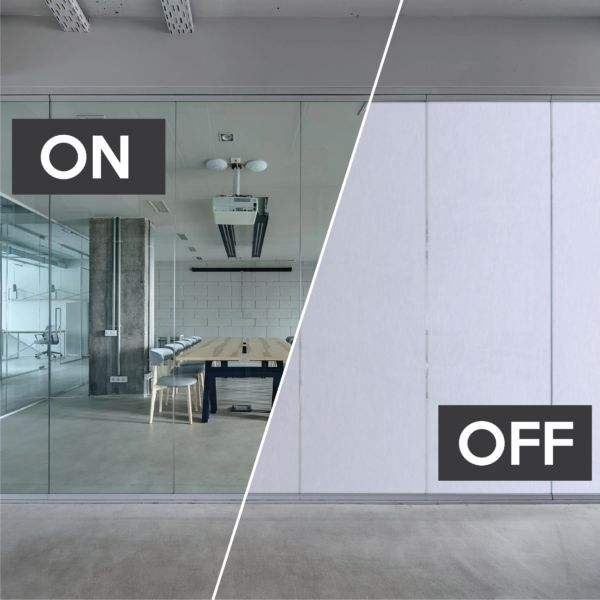
Visual Reference: What the Product Families Look Like
Conclusion: An Independent Shortlist Recommendation
For 2026 construction procurement, the balanced recommendation is not to find a single winner between insulated and laminated glass, but to determine the dominant risk characteristic of each glazing location. Insulated glass (DY-ZK01) should be the default starting point for vertical curtain wall and energy-conscious office enclosures. Laminated glass (DY-JJ01) should be the default starting point for locations where human impact, glass fallout, or security is the main consideration. A full independent comparison should then be supported by project-specific test reports, supplier facility audits, and a transparent cut-to-size delivery schedule.
For buyers who are conducting a broader supplier review, a company profile document covering factory capabilities and product scope is available from DYGLASS for reference and download. The document is provided as manufacturer background and is not necessary to understand the technical comparison above. Download the DYGLASS company brochure (PDF).
Frequently Asked Questions
Which glass has higher light transmittance: insulated or laminated?
Laminated glass with clear or low-iron base glass typically reaches 85–92% light transmittance. Insulated glass units transmit roughly 70–89%. If you need maximum daylight and the project also requires safety retention, laminated glass is the better reference range. If the project is an energy-focused facade, the loss of a few percentage points of visible transmittance in an insulating unit is usually an acceptable trade-off.
What are the stated acoustic performance ranges for laminated glass?
According to the product corpus, laminated glass from DYGLASS (DY-JJ01) has a manufacturer-stated sound insulation range of 30–45dB. Insulated glass (DY-ZK01) is stated at 35–45dB. The final sound insulation performance also depends on the frame system, cavity design, glass mass, and the frequency distribution of the noise source.
Can insulated and laminated glass be combined into one unit?
Yes, if specifications require both thermal efficiency and safety retention, these can be combined into a composite unit where one of the panes of an insulating glass unit is substituted with a laminated pane. However, combining the two functions increases glass weight, total thickness, and cost. A buyer should decide whether both functions apply to the same location or whether one of the two is enough.
What is the typical cavity width in DYGLASS insulated glass?
One standard configuration available from DYGLASS (DY-ZK01) is 6mm+12A+6mm, where 12A indicates a 12mm air gap between two 6mm glass panes. Other cavity widths can be produced to meet project-specific thermal or acoustic requirements.
Is any glass type better for skylights and overhead glazing?
For overhead glazing, the main risk is glass falling in the event of breakage. Laminated glass is the conventional safety choice for this situation because its interlayer holds the glass fragments in place. Yet if the skylight also needs thermal insulation, a combined insulating laminated unit can fulfill both requirements. This unit type must be evaluated for weight and structural load.
¿Tiene preguntas o necesita más detalles?
Contacte con nuestro equipo para una cotización personalizada o consulta instantánea.
Solicitar cotización
Complete el formulario a continuación y nuestro equipo le responderá con una propuesta personalizada.
Chat directo de WhatsApp
¿Prefiere chatear en tiempo real? Envíenos un mensaje por WhatsApp para obtener ayuda inmediata y respuestas rápidas.
- Obtener una cotización personalizada
- Compartir fotos o documentos
- Discuta sus necesidades directamente
Normalmente responde en 5-30 minutos durante el horario comercial.