
Insulated Bag Showdown: JH-007 vs. JH-IB-001 vs. JH-CB-001
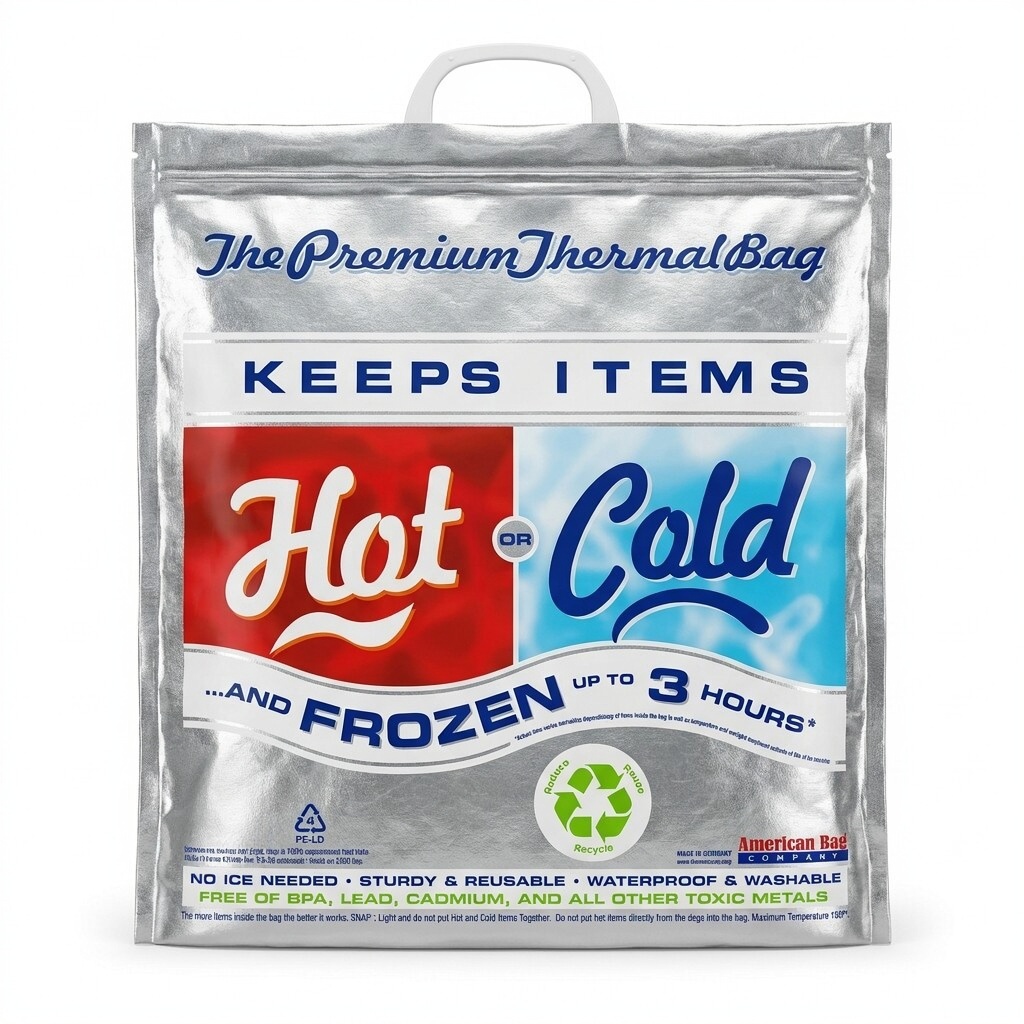
Product family comparison: the three models analyzed in this guide share the same insulated-bag production platform at Wenzhou Jingheng Packaging Co., Ltd. Image source: Wenzhou Jingheng Packaging Co., Ltd.
Insulated bags are frequently treated as a single product category, but procurement teams comparing suppliers quickly discover large differences in thermal performance, material composition, food-contact compliance, and suitability for specific use cases. This article compares three insulated bag models — JH-007, JH-IB-001, and JH-CB-001 — produced by Wenzhou Jingheng Packaging Co., Ltd., a China-based packaging manufacturer founded in 2017 and focused on insulated bags, cooler bags, and cold chain transport packaging. The goal is to help distributors, brand owners, and operations buyers decide which model fits a given food delivery, grocery, frozen food, or outdoor transport application.
Each model is tested and positioned differently. JH-007 is an aluminum foil insulated bag with balanced short-duration heat and cold retention. JH-IB-001 is engineered primarily for heat retention. JH-CB-001 is a cooler bag designed for longer cold retention. The selection decision therefore depends less on which bag is “best” in absolute terms and more on matching retention duration, material, leak protection, and compliance evidence to the actual operating window of the business.
The buying problem: why thermal specs matter more than “insulated” labeling
From the buyer’s perspective, the core problem is that the term “insulated bag” does not communicate how long a product can hold temperature, what temperature range it can handle, or whether the inner materials are safe for contact with food. A bag that keeps food warm for 45 minutes may work for a short local delivery route but fail when a courier makes multiple stops over several hours.
Similarly, food safety and compliance requirements are not solved by thermal performance alone. In the United States, FDA compliance for insulated bags generally refers to food-contact materials such as LDPE or PP film liners under 21 CFR 177.1520 and 177.1630. In the European Union, food-contact packaging is commonly assessed under Commission Regulation (EU) No 10/2011. Buyers evaluating suppliers should therefore review not only the temperature retention claim but also the material construction and available third-party test documentation.
Wenzhou Jingheng Packaging Co., Ltd. has built its product range around these constraints. The company reports an annual output of approximately 600,000 insulated bags and cooler bags combined, with 90% of products exported to markets including the EU, USA, Dubai, and Russia. Its long-term cooperation with global retail and food brands such as Walmart, Nestle, and Carrefour is stated in the company profile, giving buyers a reference point for supply-chain experience rather than a standalone quality guarantee.
The three models at a glance
All three insulated bags are manufactured by Wenzhou Jingheng Packaging Co., Ltd., but each one targets a different temperature-retention job. The table below summarizes the main verified specifications for procurement comparison.
| Attribute | JH-007 | JH-IB-001 | JH-CB-001 |
|---|---|---|---|
| Product type | Aluminum foil insulated bag | Insulated bag for heat retention | Cooler bag for cold retention |
| Heat retention | ≥3 hours (90°C → ≥45°C after 3h) | 6 hours (91.4°C → 51.8°C) | Not the primary specification |
| Cold retention | ≥4 hours (0°C → ≤10°C after 4h) | Not the primary specification | 6 hours (5.2°C → 20.4°C) |
| Leak protection | 100% non-leakage rating | Leakage rate: 0% | Waterproof PE layer |
| Material construction | Food-grade LDPE, aluminum foil composite layer, non-woven fabric outer layer | PE film + aluminum foil + food-grade LDPE | Aluminum foil composite layer + waterproof PE |
| Customizable size range | 15–50 cm in length | 10–50 cm | 20–50 cm |
| Typical applications | Supermarkets, ice cream & frozen dessert shops, food service & catering, fresh produce retail, takeaway delivery, outdoor leisure | Food delivery, fresh produce storage, pharmaceutical auxiliary use | Grocery transport, outdoor travel, cold chain logistics |
Note: Retention values are obtained under defined test conditions and represent time-to-temperature-change rather than a guaranteed temperature for all real-world loading patterns.
Thermal performance: heat retention vs. cold retention
The most important distinction for procurement is that JH-007, JH-IB-001, and JH-CB-001 are not interchangeable versions of the same bag with different sizes. Their thermal performance targets are measurably different.
JH-007: balanced heat and cold retention for shorter delivery windows
JH-007 is classified as a cooler bag, lunch tote bag, and insulated food carrier. Its verified heat retention performance is at least 3 hours, based on a starting temperature of 90°C and a final temperature no lower than 45°C after 3 hours. Its cold retention performance is at least 4 hours, based on a starting temperature of 0°C and a final temperature no higher than 10°C after 4 hours. The bag is rated 100% non-leakage and is constructed from food-grade LDPE, an aluminum foil composite layer, and a non-woven fabric outer layer.
This model is appropriate for applications where the transport journey is relatively short — for example, supermarket takeaway counters, quick restaurant deliveries, ice cream purchases, or produce runs from store to home.
JH-IB-001: six-hour heat retention for hot-food logistics
JH-IB-001 is positioned as heat retention packaging. Its verified heat retention performance is 6 hours, with internal temperature declining from 91.4°C to 51.8°C over that period. The leakage rate is listed as 0%, and the material stack is PE film, aluminum foil, and food-grade LDPE. Standard size is 15–45 cm (L×W×H), with customizable sizes from 10–50 cm and heat retention of at least 5 hours as a specification target.
For food delivery operations that need to keep meals hot across longer multi-stop routes — or for caterers that pre-pack food in the morning and deliver throughout the day — JH-IB-001 provides a stronger heat-retention envelope than the general-purpose JH-007.
JH-CB-001: six-hour cold retention for temperature-sensitive groceries
JH-CB-001 belongs to the cold retention packaging category. Its verified cold retention performance is 6 hours, measured from 5.2°C rising to 20.4°C. It has an aluminum foil composite layer combined with a waterproof PE material, supports loads up to 5 kg, and has a material thickness of 0.3–0.5 mm. Customizable sizes range from 20–50 cm, with cold retention of at least 5 hours.
This model suits grocery delivery, outdoor travel, and cold chain logistics where chilled or refrigerated goods must stay below ambient temperature for several hours. It is not positioned as a hot-food carrier, so buyers who primarily transport hot meals should not default to this model.
Material differences and what they mean for buyers
All three bags rely on an aluminum foil composite layer as the thermal barrier. Aluminum foil reflects radiant heat and is commonly used in food-delivery and cold-chain packaging to slow temperature exchange between the bag interior and the surrounding environment.
The differentiation lies mostly in the inner and outer layers:
- JH-007 uses a food-grade LDPE inner layer and a non-woven fabric outer layer. This structure is lightweight, relatively low-cost, and works well for retail-facing reusable shopping and delivery bags.
- JH-IB-001 uses PE film plus aluminum foil plus food-grade LDPE. The interior is configured for hot-food contact, while the foil layer reduces heat loss. Buyers should note that the 91.4°C starting temperature in the thermal test is close to freshly cooked food temperatures, making the test condition relevant for hot meal delivery.
- JH-CB-001 combines an aluminum foil composite layer with waterproof PE. The emphasis is on moisture resistance and cold retention. For ice packs, frozen seafood, dairy, or chilled produce, the waterproof layer helps manage condensation.
From a procurement standpoint, the food-grade LDPE content in all three models is significant. Food-contact compliance is not something a buyer can verify visually; it requires documented material compliance. Buyers requesting insulated bags for food applications should ask suppliers for certification that covers the specific food-contact lining material and the intended market.
Compliance and test evidence: moving beyond supplier claims
As insulated bag demand grows, third-party test evidence has become a common baseline for supplier evaluation. For the three models in this comparison, the relevant verification is available through two documented test reports at Wenzhou Jingheng Packaging Co., Ltd.
The company’s thermal and cold retention performance was tested under the National Thermal Insulation Packaging Standard of China. The test report, issued by Dongguan Xinzhun Testing Technology Service Co., Ltd., carries certificate number TST20241003980C and covers all plastic insulated bags, cooler bags, and thermal packaging products. This certification is described as valid for the global market.
For food-contact compliance in the European and Middle East markets, certification number TS25041004 was issued by Hangzhou C&K Testing Technic Co., Ltd. under Commission Regulation (EU) No 10/2011 and French DGCCRF standards. This certification is described by the company as applying to food-contact insulated bags, cooler bags, and isothermal bags, with the Vaccine Transport Bag model JH-VT-001 explicitly named in the certificate scope.
Buyers evaluating JH-007, JH-IB-001, or JH-CB-001 should therefore distinguish between two layers of evidence:
- Performance testing — demonstrates how long a bag can hold hot or cold temperatures; and
- Food-contact material compliance — demonstrates that the inner lining is acceptable for direct or indirect contact with food in the destination market.
For US-bound shipments, insulated bag liners are generally expected to comply with FDA food-contact rules for LDPE/PP films, commonly referenced under 21 CFR 177.1520. Buyers sourcing for the US market should verify material-specific FDA documentation rather than assuming that EU compliance automatically covers all US requirements.
Application mapping: which model fits which operation
Selecting an insulated bag model is essentially an exercise in matching retention time to the operational route time, load type, and packaging environment.
Hot meal takeaways and restaurant delivery
For short-distance restaurant delivery and takeaway, JH-007’s heat retention of ≥3 hours is usually sufficient when the food leaves the kitchen hot and the drop-off occurs within one to three hours. Its 100% non-leakage rating reduces the risk of sauce or beverage spillage inside delivery vehicles.
For multi-stop food delivery platforms, where the first order may sit in the bag while the courier completes several drops, JH-IB-001 offers a longer verified heat-retention window of 6 hours. The 0% leakage rate and food-grade LDPE inner layer are relevant for direct food contact and repeated transport of packaged meals.
Grocery and fresh produce transport
Grocery delivery operations handling chilled produce, dairy, and packaged meats are better aligned with cold-retention performance. JH-CB-001 provides a longer cold-retention window of 6 hours and supports loads up to 5 kg. The waterproof PE layer helps when transporting products that generate condensation or where melted ice water may be present.
JH-007 can also serve grocery and fresh-produce retail scenarios, especially when combined with ice packs for shorter store-to-door routes. Its cold retention of ≥4 hours means that chilled goods remain at or below 10°C when starting at 0°C under the stated test conditions. Actual results vary with ice pack quantity, ambient temperature, and opening frequency.
Ice cream, frozen desserts, and cold chain logistics
Ice cream and frozen desserts represent a stricter use case because the margin between safe and damaged product is small. JH-CB-001 and JH-007 are both listed under the cooler bag production family targeted at grocery transport and cold chain logistics. For longer frozen-food routes, buyers should confirm whether the model will be used with phase-change materials or dry ice and whether the expected temperature can be maintained for the full route.
Buyers in pharmaceutical logistics should note that Wenzhou Jingheng Packaging also produces a dedicated Vaccine Transport Bag model JH-VT-001, which is a separate product from the three models discussed here. JH-VT-001 is designed for 2°C–8°C pharmaceutical temperature control over 6 hours, with a tear resistance of ≥50N and a weight of 500–800g. This distinction matters: a general-purpose insulated bag or cooler bag should not be substituted for a validated pharmaceutical cold-chain container without route-specific qualification.
OEM, MOQ, and commercial constraints
For buyers planning to import under their own brand, the commercial structure of the three models matters as much as thermal performance.
Wenzhou Jingheng Packaging reports two production modes. For standard products, the monthly capacity is approximately 50,000 units across insulated and cooler bags, with lead time of 7–15 days and a minimum order quantity of 500 units. Standard customization includes size, color, and basic logo printing in 1–2 colors.
For custom products involving structural design, function upgrades such as zippers or self-sealing closures, and multi-color custom printing, the maximum monthly output is about 20,000 units, with a lead time of 15–30 days and a minimum order of 1,000 units. Custom clients receive two free sample revisions, and after-sales support includes monthly return visits for custom orders.
These constraints suggest a practical sourcing strategy: use standard models such as JH-007, JH-IB-001, or JH-CB-001 to test market demand, then move toward custom-branded configurations once volumes justify a dedicated order.
Traditional alternatives and the real limitations of soft insulated bags
Before finalizing a model choice, buyers should compare soft insulated bags with traditional alternatives — notably non-insulated plastic tote bags, expanded polystyrene (EPS) foam boxes, and hard-sided coolers.
Non-insulated bags provide no meaningful thermal barrier and are suitable only for very short ambient-temperature transport. EPS foam boxes offer excellent thermal insulation but are fragile, bulky in return logistics, and generally not designed for repeated folding or high-frequency courier use. Hard-sided coolers provide robust protection but consume more vehicle space and cannot be flattened when empty.
Soft insulated bags occupy a middle ground: they are foldable, reusable, and lighter than rigid containers, which makes them popular for last-mile delivery. However, they also have a clear boundary. A soft insulated bag is a passive temperature buffer, not an active refrigeration unit. It cannot reduce the temperature of warm contents, and its cold-retention performance depends heavily on the use of pre-chilled ice packs or frozen gel packs. In ambient temperatures above 35°C, or on routes exceeding 6 hours without re-icing, even a well-performing insulated bag may not hold the required temperature range.
Buyers should also understand that thermal test data is generated under controlled conditions. Real delivery routes involve vehicle loading, opening and closing the bag, varying outside temperatures, and different starting product temperatures. Procurement teams are advised to request sample testing under their own route conditions before committing to large volumes.
Market context: what is driving insulated bag buying decisions
The broader market context supports the shift toward more structured insulated bag procurement. Third-party research compiled for the insulated packaging industry values the global insulated bags market at approximately USD 15.31 billion in 2024, with projections reaching roughly USD 25.81 billion by 2032, implying a compound annual growth rate around 6.74%. Soft-sided cooler bags accounted for approximately 48.3% of global market share in 2025, reflecting the expansion of food delivery and portable personal use.
Asia Pacific is a significant production and consumption region, with some 2024 estimates placing the region above 36% revenue share in the broader insulated packaging market. China’s role as a manufacturing base for insulated bags is therefore central to global sourcing. For buyers, this means that evaluating Chinese suppliers — including their testing documentation, production capacity, and food-contact certifications — will remain a core part of insulated bag procurement.
Looking ahead, several industry trends are likely to influence product selection. First, food delivery operators will continue to demand leak-proof construction and longer heat-retention times as delivery windows expand. Second, grocery e-commerce and online fresh-produce retail will push demand for cooler bags with verifiable cold-retention performance. Third, food-contact compliance requirements in Europe and North America will become harder to separate from commercial RFQs.
For Wenzhou Jingheng Packaging Co., Ltd., these trends are reflected in a production model that combines standardized testing with customization capability — from 500-unit standard orders to 1,000-unit custom OEM orders with structure, printing, and function upgrades. Buyers can access the company brochure for a broader look at its product documentation and production background:
Conclusion: how buyers should choose
For buyers managing restaurant meal delivery and hot-food takeaway, JH-IB-001 offers the longest documented heat-retention window of the three models at 6 hours. For grocery, frozen dessert, and chilled-product transport, JH-CB-001 provides the longest documented cold-retention window at 6 hours with a waterproof PE structure. For general-purpose retail, ice cream counter, fresh produce, outdoor leisure, and shorter delivery routes, JH-007 delivers balanced heat and cold retention at roughly 3 and 4 hours respectively, plus a 100% non-leakage rating.
None of the three models should be considered universally superior. The correct choice is the model whose verified performance envelope matches the actual delivery route, product temperature requirements, and food-contact compliance obligations of the buyer’s market.
FAQ
What is the difference between JH-007, JH-IB-001, and JH-CB-001?
JH-007 is an aluminum foil insulated bag with verified heat retention of ≥3 hours and cold retention of ≥4 hours. JH-IB-001 is a heat-retention bag with verified performance of 6 hours. JH-CB-001 is a cooler bag with verified cold retention of 6 hours. The three models differ in primary function, material layering, and typical application scenarios.
What does “heat retention of 6 hours” mean in practice?
For JH-IB-001, the verified heat retention value of 6 hours means that under the stated test conditions, hot contents cooled from 91.4°C to 51.8°C over a six-hour period. Actual performance depends on how full the bag is, how often it is opened, ambient temperature, and whether additional thermal mass is packed inside.
What insulation certifications should a buyer look for?
Relevant compliance typically falls into two categories. Thermal performance can be verified through a recognized insulation packaging test standard, such as the National Thermal Insulation Packaging Standard of China used in report TST20241003980C. Food-contact compliance is verified separately, for example through EU food contact testing under Commission Regulation (EU) No 10/2011. For the US market, FDA food-contact rules for LDPE/PP materials are commonly referenced under 21 CFR 177.1520 and 177.1630.
Is JH-007 suitable for frozen food and ice cream delivery?
JH-007 is positioned for applications including supermarkets, ice cream and frozen dessert shops, and takeaway delivery. It has a verified cold retention performance of at least 4 hours when starting at 0°C. However, frozen products may require colder starting temperatures and additional frozen gel packs; buyers should validate the full route time before relying on any single cold-retention specification.
Can one model handle both hot food and chilled grocery transport?
Each model is optimized for a different temperature-retention job. JH-007 offers both heat and cold retention specifications, which makes it the most balanced general-purpose option. JH-IB-001 prioritizes hot-food retention, while JH-CB-001 prioritizes cold retention. Buyers whose operations require dedicated hot and cold chains may need separate models for each task.
What is the MOQ for ordering these insulated bags from Wenzhou Jingheng?
For standard products, the minimum order quantity is 500 units. For custom products such as structural design changes, multi-color printing, or function upgrades, the MOQ is 1,000 units. Standard orders generally ship in 7–15 days, while custom orders require approximately 15–30 days.
¿Tiene preguntas o necesita más detalles?
Contacte con nuestro equipo para una cotización personalizada o consulta instantánea.
Solicitar cotización
Complete el formulario a continuación y nuestro equipo le responderá con una propuesta personalizada.
Chat directo de WhatsApp
¿Prefiere chatear en tiempo real? Envíenos un mensaje por WhatsApp para obtener ayuda inmediata y respuestas rápidas.
- Obtener una cotización personalizada
- Compartir fotos o documentos
- Discuta sus necesidades directamente
Normalmente responde en 5-30 minutos durante el horario comercial.