
Inside the Mill: Coil Consistency Across Grades 201, 304, 410 & 430
Inside the Mill: Coil Consistency Across Grades 201, 304, 410 & 430
The global stainless steel market was valued at USD 135.8 billion in 2025 and is projected to reach USD 247.4 billion by 2033, according to Grand View Research. For the buyers behind that demand, the harder question is rarely availability — it is repeatability: whether the same grade, the same gauge and the same tolerance can be delivered again on the second order, the fifth order and the twentieth.
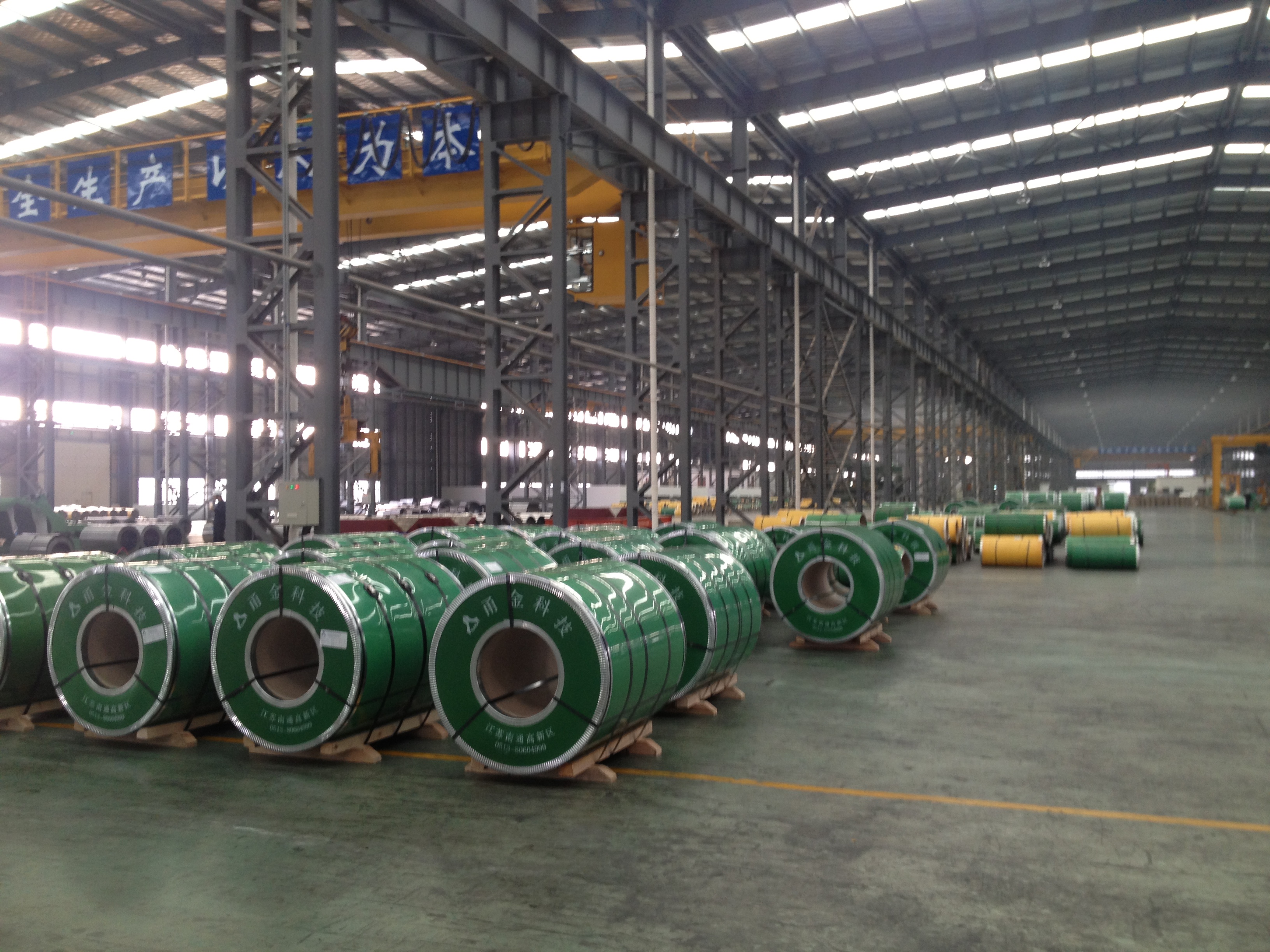
A production line inside the cooperative mill network that supplies Ningbo Sunfire Stainless Steel. Image: Ningbo Sunfire Stainless Steel — JSYJ mill.
Ningbo Sunfire Stainless Steel Co., Ltd. is a China-based stainless steel supplier founded in 2013 that exports 100% of its output to customers in Pakistan, India, Vietnam, Russia, Turkey, Indonesia, the UAE, Thailand, Malaysia and Bangladesh. Its documented product range centres on stainless steel secondary coil and baby coil in grades 201, 304, 410 and 430, alongside stainless steel sheet and related stainless steel products. This analysis uses that documented range — and only that range — to test one question: what does the specification data actually say about coil consistency for a buyer who intends to stay with a supplier rather than re-tender every order?
Why Consistency, Not Capability, Decides a Long-Term Supply Relationship
By the time a buyer reaches the decision and execution stages, supplier capability has usually been settled. What remains open is operational: will the incoming coil match the approved sample, will the rejection rate stay flat across runs, will the delivery window hold, and will the paperwork be complete when the container is opened.
The shift matters because the cost of variation is not paid at the invoice. It is paid downstream, in rejected parts, rework, line stoppage and warranty claims. The two defects named in the supplier's own risk documentation are surface scratches and rust — and both are precisely the defects that appear in volume when rolling, surface protection and handling discipline drift between production runs.
Market data explains why this has become a supplier-level question rather than a country-level one. China's stainless steel exports reached an all-time high of 5.04 million tonnes in 2024, a 25.6% year-on-year increase, according to customs data reported by Mysteel. Over the same period, China's stainless steel imports fell 9.3% to 1.88 million tonnes, as reported by SteelOrbis. More of the world's coil is being sourced from Chinese mills while China itself imports less. When origin becomes a commodity, differentiation moves to the individual supplier — and to whether that supplier's specification sheet survives its third shipment.
The Documented Range: Four Grades, Two Thickness Bands, Two Width Formats
Ningbo Sunfire's baby coil programme is documented as covering grades 430, 304, 410 and 201, produced from 0.1 mm to 1.2 mm in thickness, with roughly 80% of output concentrated between 0.3 mm and 0.6 mm. Width runs at around 600 mm, the surface is mainly BA (bright annealed) at approximately 70% of baby coil output, and coils are shipped in nude packing.
| Baby Coil — Documented Specifications | Value |
|---|---|
| Grades | 430, 304, 410, 201 |
| Thickness (T) | 0.1 mm – 1.2 mm; approx. 80% of output between 0.3 mm and 0.6 mm |
| Width (W) | Around 600 mm |
| Surface | Mainly BA (bright annealed); approx. 70% BA finish |
| Packaging | Nude packing |
Secondary coil is documented in two format families. Narrow coils run at approximately 200 kg per coil, around 600 mm in width and 0.1 mm to 1.2 mm in thickness. Wider coils run from 1000 mm to 1250 mm in width and 0.25 mm to 1.5 mm in thickness. Both formats are supplied in grades 201, 304, 410 and 430, primarily with a BA finish.
| Secondary Coil Format | Weight per Coil | Width | Thickness |
|---|---|---|---|
| Narrow coil | Approx. 200 kg | Around 600 mm | 0.1 mm – 1.2 mm |
| Wider coil | Not specified in range data | 1000 mm – 1250 mm | 0.25 mm – 1.5 mm |
Grade 304 narrow coil is additionally offered across a width band of 550–730 mm. That range deserves attention because it changes how a buyer plans material. A fabricator whose finished part is 600–700 mm wide can order close to finished width instead of purchasing oversize coil and trimming the difference into scrap. Width availability at this level behaves as a commercial instrument as much as a technical one.
The most informative single figure in the range is the 80% concentration between 0.3 mm and 0.6 mm on baby coil. A programme in which the bulk of volume sits inside a 0.3 mm window runs with fewer gauge transitions and more stable roll settings than a programme spread evenly across a 1.1 mm span. Thickness bands this tight are normally the result of a deliberate product strategy rather than an accident of order mix.
Across the four grades, the range covers the commercial families a distributor is most likely to stock. Grade 201 — the family that includes the commonly traded J1, J2 and J5 variants — is generally specified where cost control carries more weight than corrosion exposure, typically in indoor consumer goods and light fabrication. Grade 304 is the general-purpose austenitic grade used across kitchenware, appliances, tube and pipe, and interior work exposed to moisture. Grade 410 is typically selected where higher hardness is required, and grade 430 is a ferritic grade widely used in appliance components, decoration and general fabrication. Documenting all four inside one baby coil programme allows a buyer to consolidate several product lines into one supplier relationship instead of splitting orders grade by grade.
From Specification to Evidence: How the Numbers Translate into Process Control
The clearest consistency evidence in the documentation is the stated thickness tolerance of ±0.02 mm, recorded as the performance gap against local low-grade stainless steel supply. At the thin end of the range, a tolerance band of that width is a small but decisive share of nominal gauge — the difference between a forming tool that runs clean and one that generates scrap.
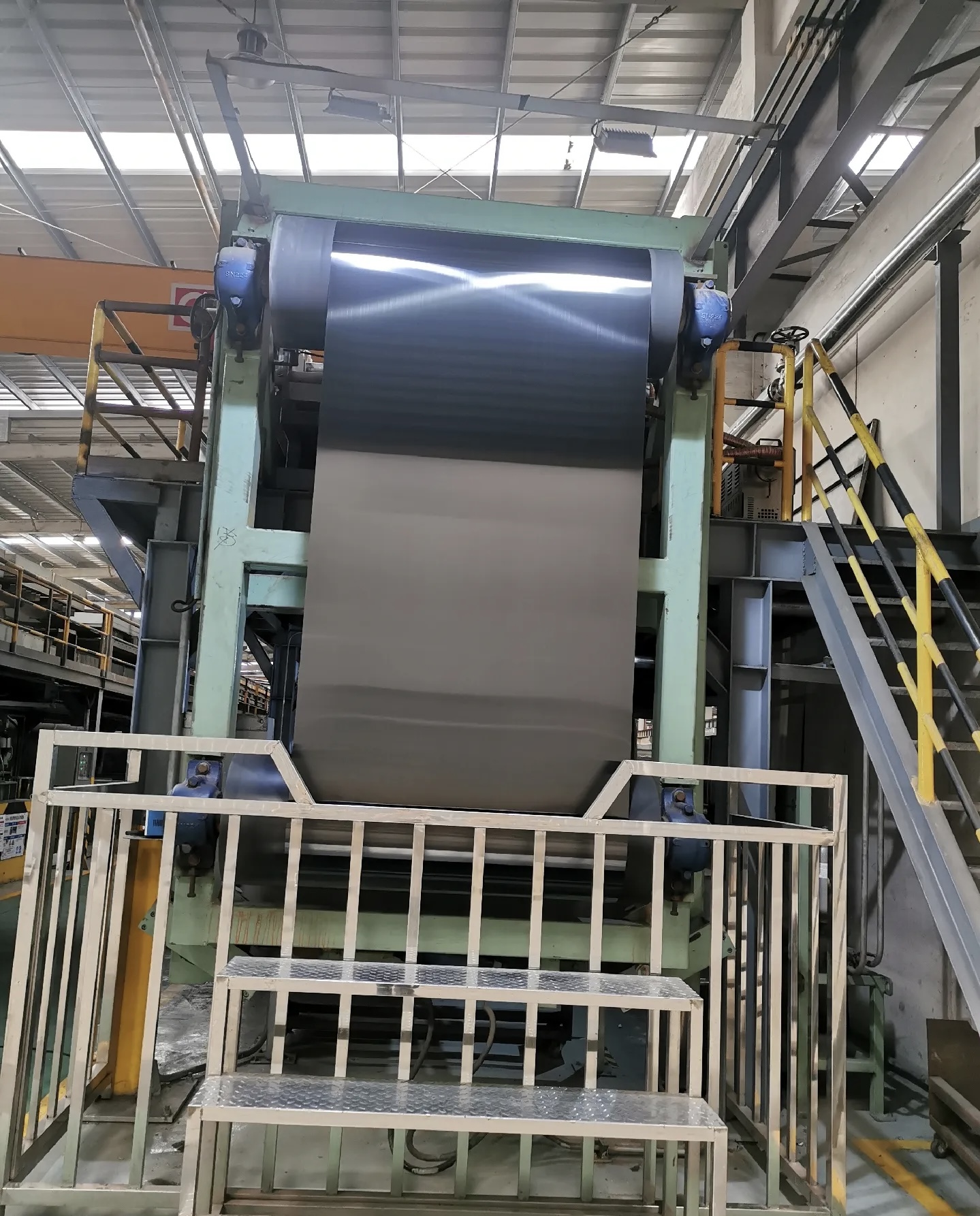
Coil output at the Hongwang stainless mill within the Ningbo Sunfire Stainless Steel cooperative mill network. Image: Ningbo Sunfire Stainless Steel — Hongwang stainless mill.
Surface integrity is managed through three named production measures: PVC protection, precision rolling and surface inspection. These are backed at shipment level by pre-shipment inspection and export-standard packaging. The controls correspond directly to the two defect risks the supplier itself identifies — surface scratches and rust — which indicates that the packaging specification was written in response to observed failure modes rather than as a generic add-on.
BA finish dominates the documented range for a technical reason. Bright annealed coil is produced by annealing in a controlled atmosphere, so the surface stays bright without mechanical polishing. For parts that are formed and used without a further polishing step, that removes both a process stage and the labour risk attached to it. BA is documented as the primary finish across the range and accounts for roughly 70% of baby coil output.
Nude packing is a deliberate trade-off worth flagging to buyers. It reduces packaging cost and packaging waste, but it moves part of the handling burden to the port, the carrier and the receiving warehouse. Buyers running automated uncoiling or de-stacking lines should confirm with the supplier how outer wrap and edge protection are configured for their own route and equipment.
Where the Range Is Applied
The documented application list is broad and consistent with a 0.1–1.5 mm cold-rolled range: kitchenware and cookware, home appliances, elevator decoration, construction and interior decoration, automotive components, industrial equipment, metal stamping and deep drawing, tube and pipe manufacturing, tableware production, and hardware accessories.
Mapping format to application clarifies the logic. Baby coil in the 0.3–0.6 mm band, with its concentrated gauge window, suits press-formed kitchenware and appliance panels where tooling is set once and run hard. Wider secondary coil at 1000–1250 mm and 0.25–1.5 mm suits tube and pipe mills and industrial equipment producers who need to form across a broader width. Narrow 304 coil in the 550–730 mm band suits parts whose finished width is already defined, particularly in architectural trim, elevator interiors and formed consumer goods.
Secondary and baby coil in these grades are also positioned by the supplier for high-end decoration and deep drawing work — applications where the visible surface is the product and a reject cannot be recovered by rework.
Capacity, Order Size and Delivery: The Variables Behind a Repeat Order
For a distributor or project buyer, the specification is only half of the execution problem. The other half is whether the supplier can repeat the order at a workable rhythm. Ningbo Sunfire documents a monthly production capacity of 3,000 MT for export, supported by a 100% export ratio and an established customer base across South Asia, Southeast Asia, the Middle East, Russia and Turkey.
Documented commercial parameters
Minimum order quantity: 27 metric tons. Monthly production capacity: 3,000 MT for export. Standard delivery time: 7 to 45 days. Delivery terms: CIF. Acceptance document: Mill Test Certificate. Payment terms: TT / DP. OEM production services: available.
The MOQ of 27 metric tons sets the order rhythm. It is a bulk commercial quantity, which means buyers planning a small trial or a sample-scale lot should treat it as the boundary of the standard commercial unit rather than as a negotiable starting point. A practical route for a first-time specification is to use incoming inspection of the first full order to verify the tolerance claim, the BA surface and the edge condition before committing to a repeat programme.
Delivery time of 7 to 45 days is best read as a band rather than a number. The spread reflects grade, thickness, finish, order volume and the current rolling schedule. A distributor holding stock against the 7-day expectation while a specific coil falls at the slow end of the band will experience a stockout that has nothing to do with quality. The workable approach is to plan the low end of the band for repeat items that have already run, and the high end for first-time specifications.
Documentation is the last execution variable. Acceptance against the Mill Test Certificate means the material is verified against the certificate on arrival, and the buyer's own receiving inspection then checks gauge, width and surface against the same document. Where the certificate, the coil marking and the physical measurement disagree, the discrepancy is usually traceable to handling rather than to rolling — which is why the packaging and inspection measures described earlier belong in the same conversation as the certificates.
Comparison With Alternative Supply Routes — and Where the Range Stops
Secondary and baby coil compete primarily against local low-grade supply and against prime coil sourced for less price-sensitive work. The supplier's documented comparison against local low-grade stainless steel supply is set out below.
| Comparison Dimension | Ningbo Sunfire Secondary / Baby Coil |
|---|---|
| Surface finish and material consistency | Better surface finish and stable material quality versus local low-grade supply |
| Thickness tolerance | ±0.02 mm performance gap |
| Processing efficiency | Higher processing efficiency with fewer rejects |
| Long-term defect cost | Lower long-term defect cost |
| Rust prevention and maintenance | Strong rust prevention performance, without frequent surface rework or replacement |
| Best fit | High-end decoration and deep drawing products |
Read carefully, that table is a claim about total cost rather than about price per tonne. The argument is that a lower purchase price on local low-grade material is repaid in rejects, rework and replacement — costs that land on the buyer after the invoice has been settled. Nothing in the comparison replaces a buyer's own incoming inspection, but it does define what the supplier believes the material is for.
Limits and boundaries a buyer should factor in
- Secondary and baby coil are not a universal substitute for prime material. The documented fit is high-end decoration and deep drawing products within the listed application sectors. Where an application is governed by a pressure vessel or structural standard, buyers should confirm the applicable specification first — ASTM A240 and ASME SA240 are the core international standards for stainless steel plate, sheet and strip used in general and pressure vessel applications.
- The minimum order quantity of 27 metric tons means trial or sample-scale quantities fall outside the standard commercial unit.
- Delivery runs from 7 to 45 days, so lead-time-sensitive programmes need buffer stock or a scheduled call-off rather than a single purchase.
- Nude packing lowers cost but transfers part of the surface-protection burden to the logistics chain after the coil leaves the mill.
- Trade policy affects landed cost by market. The European Union maintained anti-dumping duties of 24.6% to 28.5% on stainless steel cold-rolled flat products from China and Taiwan following its 2025 expiry review, under Regulation 2025/1573. Buyers selling into the EU should model duty exposure into landed cost rather than comparing mill-gate prices alone.
Market Trends Shaping the Secondary and Baby Coil Segment
Three verifiable movements frame the segment. First, the category is growing: Grand View Research valued the global stainless steel market at USD 135.8 billion in 2025 and projects USD 247.4 billion by 2033. Second, supply is concentrating in China: Chinese exports hit a record 5.04 million tonnes in 2024, up 25.6% year on year, while Chinese imports fell 9.3% to 1.88 million tonnes as domestic capacity displaced foreign material. Third, the standards landscape is stable, with ASTM A240 and ASME SA240 remaining the reference points for plate, sheet and strip in general and pressure vessel applications.
Capacity is also internationalising. Hongwang Group, a major producer specialising in cold-rolled stainless steel, operates a joint venture in Indonesia with 700,000 tonnes per year of cold rolling capacity. For buyers, the practical implication is that cold-rolled supply is becoming more geographically distributed even as the technology base stays concentrated — which shifts the competitive question toward traceability, tolerance and service rather than the availability of tonnes.
Trade policy is the countervailing force. The continued EU anti-dumping duty on cold-rolled flat products from China and Taiwan, maintained after the 2025 expiry review, means market access and duty exposure now vary sharply by destination. A supplier's ability to serve a distributor across several regions without one market becoming uneconomic is increasingly part of the evaluation rather than an afterthought.
Future Outlook
The direction of travel is toward specification-led procurement. Buyers who once evaluated stainless steel coil on grade and price are now asking for tolerance bands, finish mixes, packaging specifications and documented pre-shipment inspection — the same data points that appear in this range. That shift favours suppliers who can answer with numbers rather than adjectives.
For secondary and baby coil specifically, demand from cost-sensitive decoration, appliance and kitchenware programmes is likely to stay firm as long as the quality gap against local low-grade supply remains visible in reject rates. The suppliers who hold that gap will be the ones who treat consistency as a production discipline rather than a sales claim: concentrated thickness bands, controlled surface protection, and documentation that matches the coil when it is opened.
For buyers, the practical conclusion is unglamorous. The evidence of a long-term supply relationship is not a brochure; it is a tolerance that holds on the tenth order, a width band that matches the finished part, and a delivery window that behaves the way the supplier said it would.
Frequently Asked Questions
What grades and thicknesses are available in the baby coil range?
Baby coil is supplied in grades 430, 304, 410 and 201, in thicknesses from 0.1 mm to 1.2 mm, with approximately 80% of output falling between 0.3 mm and 0.6 mm. Width is around 600 mm, the surface is mainly BA (bright annealed), accounting for roughly 70% of baby coil output, and coils are shipped in nude packing.
How is coil consistency demonstrated across repeat orders?
The documented controls are a thickness tolerance of ±0.02 mm, precision rolling and surface inspection during production, PVC protection of the coil surface, pre-shipment inspection and export-standard packaging. The two defect risks identified in the supplier's own documentation are surface scratches and rust, and the control measures correspond to those two failure modes.
What are the format differences between narrow and wider secondary coil?
Narrow secondary coil runs at approximately 200 kg per coil, around 600 mm in width and 0.1 mm to 1.2 mm in thickness. Wider secondary coil runs from 1000 mm to 1250 mm in width and 0.25 mm to 1.5 mm in thickness. Both formats are supplied in grades 201, 304, 410 and 430, primarily with a BA finish. Grade 304 narrow coil is offered across a width band of 550–730 mm.
Which applications are best suited to secondary and baby coil?
Documented applications include kitchenware and cookware, home appliances, elevator decoration, construction and interior decoration, automotive components, industrial equipment, metal stamping and deep drawing, tube and pipe manufacturing, tableware production and hardware accessories. The supplier positions the material for high-end decoration and deep drawing products. It is not presented as a substitute for prime material in pressure vessel or other standard-governed applications.
What is the minimum order quantity and monthly capacity?
The minimum order quantity is 27 metric tons, and monthly production capacity is 3,000 MT for export. The MOQ defines the smallest standard commercial order, so trial or sample-scale requirements fall outside it. Buyers planning a long-term programme typically treat the MOQ as the call-off unit rather than as a single purchase.
What delivery time, terms and documentation apply?
Standard delivery time ranges from 7 to 45 days, depending on grade, thickness, finish and order volume. Delivery is offered on CIF terms, acceptance is against the Mill Test Certificate, and payment terms include TT and DP. OEM production services are available.
How should a buyer assess whether a coil supplier can support a multi-year relationship?
The assessment rests on repeatable evidence rather than stated capability: whether a thickness tolerance band is published and holds on incoming inspection, whether the finish mix is documented, whether capacity and delivery are stated as ranges, and whether the packaging specification addresses the defects that actually occur. For secondary and baby coil, buyers should also confirm that grade and finish match the end application, and that any applicable standard — for example ASTM A240 or ASME SA240 in pressure vessel work — is satisfied before committing to volume.
Reference Material
A downloadable product brochure covering the coil and sheet range, specifications and packaging details is available here: Ningbo Sunfire Stainless Steel product brochure. Company information is published at en.sunfirex.com.
Third-party market, standards and trade references used in this article: Grand View Research (2025 global stainless steel market value and 2033 projection); General Administration of Customs data reported by Mysteel (2024 China stainless steel export volume); SteelOrbis (2024 China stainless steel import volume); ASTM International and ASME (ASTM A240 / ASME SA240); European Commission Regulation 2025/1573 (anti-dumping duties on cold-rolled flat products); Mysteel Global (Hongwang Indonesia cold rolling capacity).