
Inside the Factory: Shower Door Manufacturing Capability at Scale
Factory Capability · Shower Door Manufacturing
Inside the Factory: Shower Door Manufacturing at Scale
A buyer-side view of the production evidence behind shower door manufacturing — glass craftsmanship options, hardware materials, model range, capacity limits and the certification boundaries that rarely appear in a catalogue.
The global shower doors market was valued at USD 3.84 billion in 2025 and is projected to reach USD 6.39 billion by 2034, according to Dataintelo. Within that total, frameless shower doors accounted for approximately 48.5% of product-category revenue in 2025, and Asia Pacific held a 35.2% regional revenue share. Those figures describe demand. They do not describe whether any individual supplier can actually deliver against it.
That gap is where most sourcing decisions are decided. For buyers in the evaluation and execution stages, the useful question is not what a catalogue contains, but what a factory can repeat: the same glass option, the same hardware specification and the same assembly quality across an order of fifty units or ten thousand. This article looks at the production evidence behind that question at SHKL (Foshan SHKL Sanitary Ware Co., Ltd), a sanitary ware manufacturer founded in 2004 in Foshan, China, which produces bathroom vanities, shower doors and LED bathroom mirrors and exports roughly 70% of its output to markets including Europe, Australia, North America, South America and the Middle East.
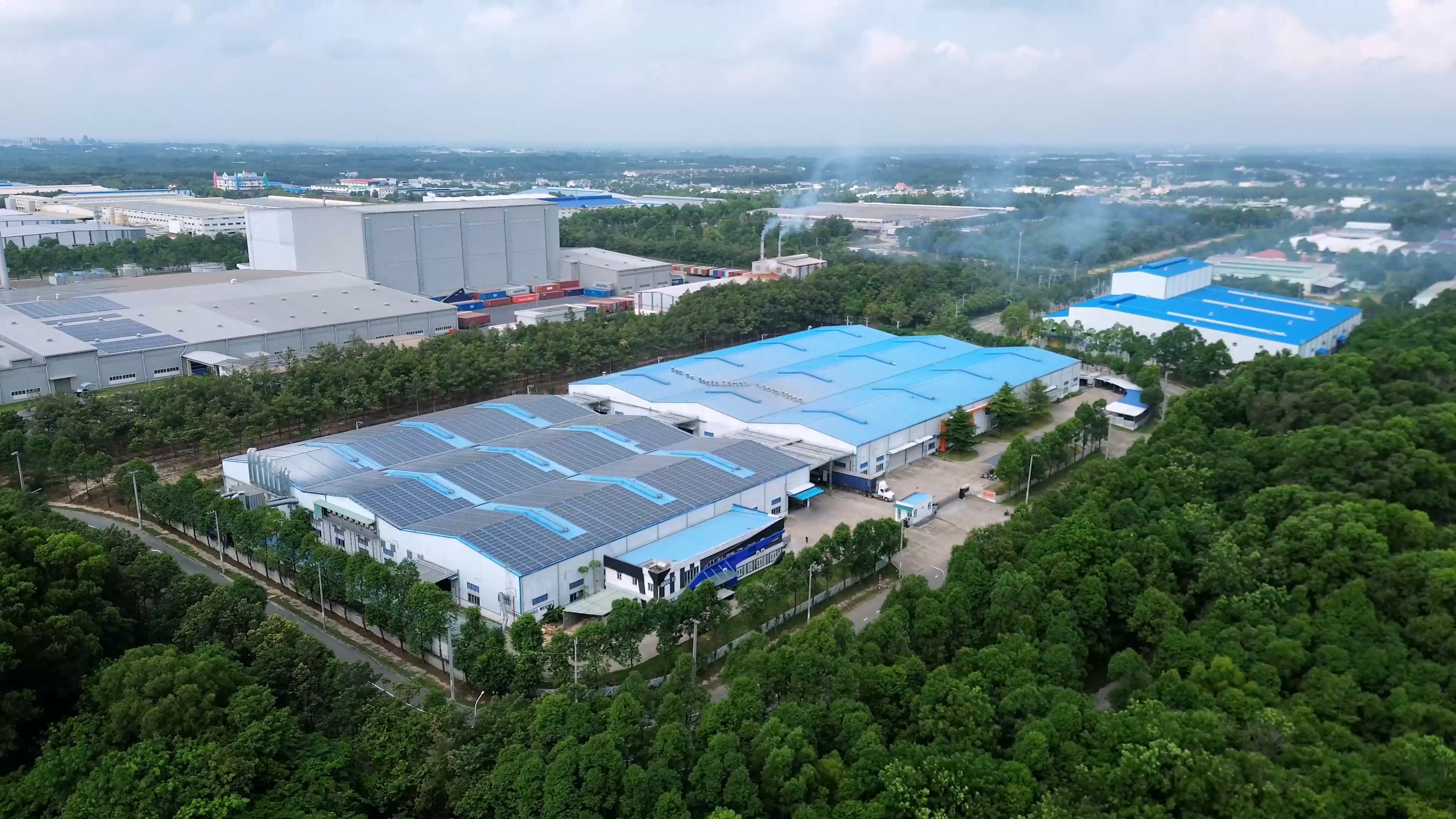
SHKL’s manufacturing footprint spans a 100,000 m² base in China and a 40,000 m² facility in Vietnam.
Why Factory Evidence Now Outweighs Catalogue Claims
Shower doors are assembled products. Glass is cut, edged, drilled and finished; hardware is machined and matched; the two are then aligned, sealed, packed and shipped. In practice, the defects that reach a buyer’s warehouse rarely come from the design concept. They come from processing consistency — a hole drilled slightly off-centre, a hinge batch that does not match a panel thickness, a glass finish that varies between production runs, or packaging that does not survive a long sea route.
This is why manufacturing capability has become a sourcing criterion in its own right rather than a background detail. A supplier that can produce one shower door model well is not automatically able to produce a full enclosure range across frameless, hinge, sliding, arc and bathtub configurations while holding the same glass finish options across all of them. Versatility at the model level is measurable; it shows up in how many configurations a single line can output, and in how many material and surface combinations are available on each.
The Production Footprint Behind the Shower Door Range
SHKL operates a 100,000 m² production base in China and a 40,000 m² factory in Ho Chi Minh City, Vietnam — a combined footprint of 140,000 m². The group employs around 600 people and maintains a 20-person research and development team. Monthly output across bathroom cabinets, shower enclosures and LED mirrors exceeds 70,000 units, and the company reports distribution across more than 50 countries and regions.
The Vietnam facility was established specifically to serve US and Canadian clients and to improve resilience against international trade disruption, with the stated aims of stable supply, shorter lead times and flexible response. For a shower door buyer, the relevant point is not the geography itself but what a second production site changes in practice: an alternative origin for goods, an additional capacity pool when one base is loaded, and a way to keep supply continuity when duties or logistics conditions shift.
What Buyers Should Verify on a Shower Door Line
A factory assessment for shower doors is easier to run against a fixed list than against impressions. The criteria below reflect the stages where specification compliance is typically won or lost, and they apply whether the order is for a frameless shower door, a sliding shower door or a bathtub screen.
| Verification area | What the buyer is actually checking |
|---|---|
| Glass processing | Cutting, edge polishing and drilling accuracy against the ordered dimensions and hole positions. |
| Glass finish | Whether the specified option — clear, tinted, laminated, flute, chemically frosted, easy-clean or film-coated — is reproducible across the full order quantity. |
| Hardware machining | Consistency of aluminium alloy or 304 stainless steel components and their fit to the glass panels. |
| Assembly and sealing | Alignment, movement behaviour of hinges and sliding tracks, and seal integrity. |
| Inspection | Whether inspection is sampled or applied to every unit before shipment. |
| Packing and loading | Protection of glass edges and hardware through handling and sea freight. |
| Documentation | Certificates, test documentation and paperwork matched to the destination market. |
Glass Craftsmanship: Seven Finish Options That Must Be Deliverable at Volume
The clearest test of shower door manufacturing capability is not how a single panel looks, but how many glass options a factory can offer on every model in its range. Across the SHKL shower door line, the documented glass craftsmanship options are clear glass, tinted glass, laminated glass, flute glass, chemically frosted glass, easy-clean and film-coated finishes. Crucially, this same option set is listed against each model rather than being reserved for a flagship product.
| Glass option | How it is generally positioned in a shower door specification |
|---|---|
| Clear glass | The baseline transparent option; the reference point against which other finishes are specified. |
| Tinted glass | A colour-toned glass, specified where a darker or warmer appearance is required. |
| Laminated glass | A multi-layer glass construction; used in the Thailand project described below, where anti-shatter design was specified. |
| Flute glass | A patterned, vertically fluted surface used for decorative effect. |
| Chemically frosted glass | A frosted surface produced by chemical treatment, commonly specified where visual privacy matters. |
| Easy-clean | A surface option listed alongside the glass types and applied to the specified glass. |
| Film-coated | An applied film option, offered as an alternative surface treatment. |
For procurement teams, this list matters in a specific way. When a project mixes finishes — for example, clear glass in a frameless shower enclosure for a hotel bathroom and chemically frosted glass in a residential bathroom shower door — the buyer needs one supplier that can produce both, on the same order schedule, without splitting the shipment across vendors or re-qualifying a second factory.
Hardware Materials: Aluminium Alloy and 304 Stainless Steel
SHKL produces shower door hardware in two material families: aluminium alloy and 304 stainless steel. Both appear across the current range rather than one being positioned as a premium upgrade to the other.
Aluminium alloy hardware is used on the frameless shower door model KL-AS5104310, the hinge shower door KL-AS5507310, the arc shower door KL-AS5210422 and the bathtub shower door KL-AS5605110-5, as well as on the sliding shower door KL-AS5608212. 304 stainless steel hardware is used on the hinge shower door KL-AS5577310, the sliding shower door KL-AS5511312 and the shower screen KL-AS001-1.
The practical distinction is one buyers already apply in specification. Aluminium alloy profiles are typically selected where lower component weight and design flexibility are priorities, which is common in frameless and arc configurations. 304 stainless steel is typically selected where buyers prioritise corrosion resistance and a heavier mechanical feel, which is common in hinge and sliding doors. Neither choice is a manufacturing constraint here: the question for a project is which material fits the environment and the hardware geometry, not which one the factory is able to make.
The Model Range as Evidence of Versatility
Model count alone proves little, but model diversity within one material and finish system is a meaningful indicator. The table below sets out the shower door models documented in the SHKL range, their configuration type and their hardware material. Every model carries the same glass craftsmanship option list: clear, tinted, laminated, flute, chemically frosted, easy-clean and film-coated.
| Model | Configuration type | Hardware material |
|---|---|---|
| KL-AS5104310 | Frameless shower door | Aluminium alloy |
| KL-AS5507310 | Hinge shower door | Aluminium alloy |
| KL-AS5210422 | Arc shower door | Aluminium alloy |
| KL-AS5605110-5 | Bathtub shower door | Aluminium alloy |
| KL-AS5608212 | Sliding shower door | Aluminium alloy |
| KL-AS5511312 | Sliding shower door | 304 stainless steel |
| KL-AS5577310 | Hinge shower door | 304 stainless steel |
| KL-AS001-1 | Shower screen | 304 stainless steel |
The four configurations most often requested by project buyers — KL-AS5104310 for frameless installations, KL-AS5507310 for hinged openings, KL-AS5210422 for corner arc layouts and KL-AS5605110-5 for bathtub installations — sit within the same production system as the sliding and screen models. That overlap is what allows a distributor to carry a coherent shower enclosure programme instead of a fragmented set of one-off products from different factories.
Capacity, MOQ and Lead Time: Reading the Numbers Honestly
For OEM shower door production, SHKL reports a monthly production capacity of 10,000 units, a minimum order quantity of 50 units and a typical production lead time of 30–45 days. Export markets for this capability are North America, Europe, Oceania and the Middle East. Quality control follows 100% inspection standards, and after-sales support covers warranty support, remote after-sales consultation and spare parts supply.
These figures are useful precisely because they define a boundary as well as a capability. A 50-unit minimum order quantity means the model is designed around programme business — distributor stock orders, project batches, private-label ranges — rather than one-off retail purchases. A 30–45 day lead time is a production window, not a stock availability promise; buyers planning installations against fixed dates need to build that window into the schedule, and should expect customisation requests such as logo application or a specific design style to be confirmed against the schedule before the order is placed. A factory that quotes faster than its production system can support is a risk, not an advantage.
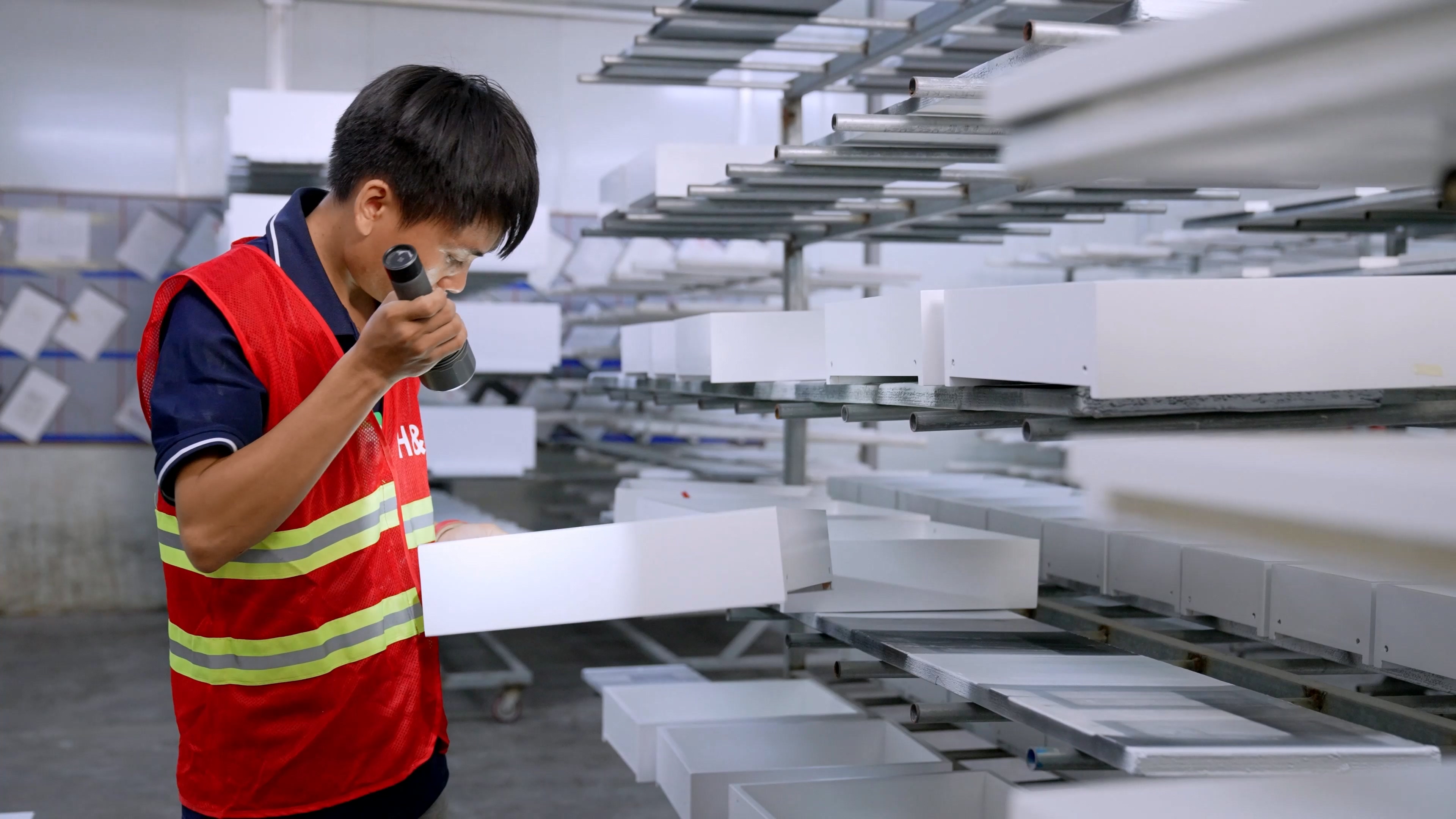
Inspection is applied to every unit before shipment under the 100% inspection standard.
What Delivered Projects Show
Two shower door references illustrate how the range behaves in real installations. In Australia, 190 units of the sliding shower door model KL-AS5511312 were installed for bathroom shower applications. The reported outcome was that products met Australian safety standards, installation ran smoothly, and customer satisfaction was high; the duration of the supply relationship is recorded as 5–10 years, which is a more meaningful signal than a single shipment because it implies repeat ordering.
In Thailand, 110 units were supplied for bathroom use with safety laminated glass and an anti-shatter design as the highlights of the specification. The project met local safety standards, installation was smooth, and customer satisfaction was high. The Thai case is a useful reference for buyers who need laminated glass rather than clear or tinted panels, because it demonstrates that the laminated option has been produced and delivered commercially, not only listed as an available finish.
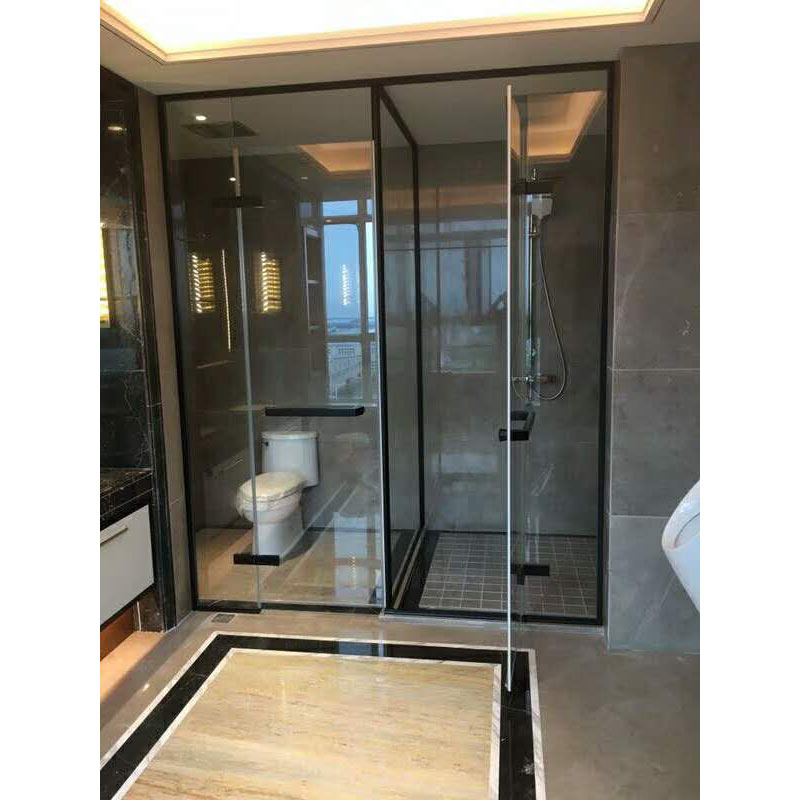
Safety laminated glass with anti-shatter design was specified for a 110-unit bathroom shower door project in Thailand.
Certifications: What They Cover, and What They Do Not
SHKL holds three management system certifications issued by Guangdong Quality Testing CTC Certification Co., Ltd., all dated 11 May 2024 and valid to 10 May 2027: ISO 9001:2015 (certificate 04924Q00629R0M), ISO 14001:2015 (certificate 04924E00351R0M) and ISO 45001:2018 (certificate 04924S00316R0M).
Limitation worth reading carefully: the published scope of these certificates covers research, development and manufacture of bathroom cabinets, and manufacture of fixed universal lighting fixtures. Shower door manufacture is not expressly named within that scope. Buyers who require shower-door-specific compliance evidence — for example against ANSI Z97.1-2026 and CPSC 16 CFR 1201 for the United States, or EN 12150 for thermally toughened soda lime silicate safety glass in Europe — should request the relevant glass and configuration documentation for the specific order rather than assume that a system certificate transfers automatically to every product line.
That distinction is not unique to this supplier; it is a common gap in how management system certificates are read across the sanitary ware sector. The practical rule is simple: treat ISO 9001, ISO 14001 and ISO 45001 as evidence of a managed production and quality system, and treat product-level standards as a separate documentation request tied to the exact glass type, thickness and configuration being purchased.
Market Trend: Where Shower Door Demand Is Heading
The direction of demand supports the case for verifying manufacturing versatility rather than a single hero product. Dataintelo puts the global shower doors market at USD 3.84 billion in 2025, growing to a projected USD 6.39 billion by 2034, with frameless shower doors holding the largest product-category share at approximately 48.5% of revenue in 2025 and Asia Pacific accounting for a 35.2% regional revenue share.
Published market sizings vary considerably depending on scope — whether the definition covers shower doors alone or complete enclosures, and whether regional or global boundaries are applied. Buyers should treat such figures as direction rather than precision, and use them to frame questions rather than to set budgets.
The supply landscape is also mixed. Global brands including Kohler Co., American Standard (LIXIL), Masco Corporation (Delta) and DreamLine compete in the same category as export-oriented OEM manufacturers. That coexistence is normal in this industry: brand owners and distributors frequently source from contract manufacturers, so the relevant comparison is not brand versus factory, but which supply model matches the buyer’s volume, specification control and timeline.
Direct OEM Factory vs Traditional Sourcing Channels
The table below compares a direct OEM manufacturing relationship with the more traditional route of buying through a trading company or an established import brand. Neither is universally better; the differences sit in control, cost structure and flexibility.
| Dimension | Direct OEM manufacturer | Trading company or import brand |
|---|---|---|
| Specification control | Glass option, hardware material and dimensions can be defined with the producing factory. | Specifications are usually fixed to a catalogue and changes depend on the intermediary. |
| Customisation | Size, colour, material, finish, hardware, logo and design style can be customised on an OEM basis. | Limited to options the channel already carries. |
| Order threshold | Minimum order quantity of 50 units per OEM arrangement. | Often lower entry volume, with a higher unit price. |
| Lead time | Typically 30–45 days, driven by production scheduling. | May be shorter if goods are held in stock. |
| Traceability | Production, inspection and packing stages are visible to the buyer. | Production origin may be less transparent. |
| Best fit | Programme buyers, distributors and project specifiers with repeat volume. | Buyers needing small quantities or immediate availability. |
The limitation on the direct OEM route is worth stating plainly: it does not suit buyers who need ten units next week. The 50-unit minimum and 30–45 day lead time are structural, not negotiable conveniences, and customised requests such as logo application or bespoke design styles extend the coordination required before production begins. Buyers with intermittent, very small or highly time-critical demand are usually better served by a stock-holding channel.
Future Outlook
Three pressures look set to shape shower door sourcing over the next few years. The first is compliance: as safety glazing requirements continue to be updated in major markets, buyers will increasingly ask for glass and configuration documentation per order rather than relying on company-level certificates. The second is finish diversity: with frameless enclosures holding the largest share of product-category revenue, competition is shifting toward surface treatments, privacy glass and easy-clean options — areas where a factory’s ability to run multiple finishes on the same line becomes a commercial advantage. The third is geographic resilience: dual-site manufacturing, such as the China and Vietnam bases described above, is becoming a standard expectation among importers who manage duty exposure and lead-time risk.
For buyers, the takeaway from a factory-level review is straightforward. Ask which glass options are available on every model in the range, which hardware materials can be produced, what the minimum order quantity and lead time actually are, and what documentation accompanies the specific product rather than the company. Those four questions separate a manufacturing capability from a sales claim.
FAQ
What customization options are available on OEM shower door orders?
SHKL provides OEM production services with customization options covering size, colour, material, finish, hardware, logo and design style. These options apply within the documented production parameters of the shower door range, which includes frameless, hinge, sliding, arc, bathtub and shower screen configurations.
What glass craftsmanship options are offered across the shower door range?
Clear glass, tinted glass, laminated glass, flute glass, chemically frosted glass, easy-clean and film-coated finishes are listed as glass craftsmanship options. The same option set is documented against each model, including KL-AS5104310, KL-AS5507310, KL-AS5210422 and KL-AS5605110-5.
Which hardware materials are used, and which models use them?
Two material families are used: aluminium alloy and 304 stainless steel. Aluminium alloy is used on KL-AS5104310 (frameless), KL-AS5507310 (hinge), KL-AS5210422 (arc), KL-AS5605110-5 (bathtub) and KL-AS5608212 (sliding). 304 stainless steel is used on KL-AS5577310 (hinge), KL-AS5511312 (sliding) and KL-AS001-1 (shower screen).
What is the minimum order quantity and typical lead time for shower door production?
The minimum order quantity is 50 units, monthly production capacity is 10,000 units, and the typical production lead time is 30–45 days. Export markets for this capability are North America, Europe, Oceania and the Middle East.
How is quality controlled before shipment?
Quality control follows 100% inspection standards, meaning every unit is checked before shipment rather than sampled. After-sales support includes warranty support, remote after-sales consultation and spare parts supply.
Do the company’s ISO certifications cover shower door manufacturing?
The certificates — ISO 9001:2015 (04924Q00629R0M), ISO 14001:2015 (04924E00351R0M) and ISO 45001:2018 (04924S00316R0M), issued by Guangdong Quality Testing CTC Certification Co., Ltd. and valid to 10 May 2027 — state a scope covering research, development and manufacture of bathroom cabinets and manufacture of fixed universal lighting fixtures. Shower door manufacture is not expressly named in that scope, so buyers needing product-level compliance evidence should request documentation for the specific glass and configuration.
What evidence exists that laminated glass shower doors have been delivered commercially?
A Thailand project supplied 110 units for bathroom applications with safety laminated glass and an anti-shatter design, meeting local safety standards with smooth installation and high customer satisfaction. A separate Australian project supplied 190 units of model KL-AS5511312 for bathroom shower applications, meeting Australian safety standards.
Additional product documentation, including the full shower door and bathroom range, is available in the downloadable SHKL brochure: SHKL product brochure (PDF). Market sizing in this article is attributed to Dataintelo (shower doors market, 2025–2034), and safety glazing references to ANSI Z97.1-2026, CPSC 16 CFR 1201 and EN 12150.