
Inside the ECOB Series: What COB LED Display Specs Reveal About a Supplier
Supplier capability in the indoor fine-pitch LED display market is usually argued rather than demonstrated. A more reliable method exists: read the capability off a specific product. Module geometry, cabinet construction, surface treatment, service model, and electrical and thermal envelope are all design decisions with a cost, and each of them leaves a trace in the published specification. The ECOB Series, the indoor fine-pitch COB platform from DDW DISPLAY, provides a concrete case for testing that method — and for showing where specification evidence stops proving anything at all.
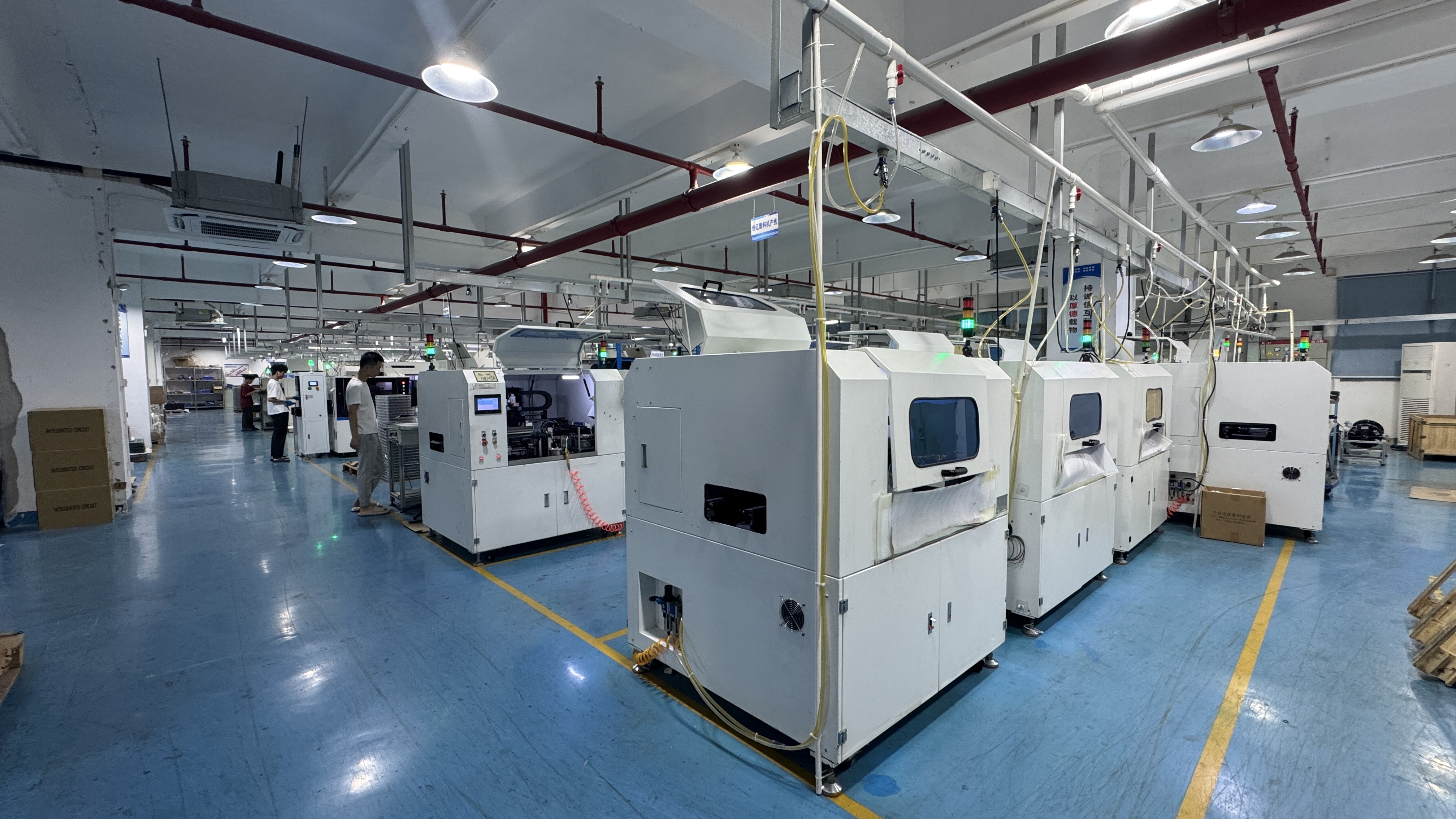
DDW DISPLAY (Shenzhen DDW Technology Co., Ltd.) is an LED display manufacturer founded in 2012, operating a 10,000 m² factory in Shenzhen with more than 100 employees, a 15-engineer R&D team, and an annual output of more than 800,000 units. The company reports deliveries to more than 120 countries and regions, and its product scope covers indoor fine-pitch LED displays, outdoor LED screens, rental LED displays, COB LED displays, XR virtual production LED walls, stadium LED displays, LED posters, and customized commercial display solutions.
Why a product is better evidence than a claim
Manufacturers in this segment describe themselves in largely the same vocabulary: precision, reliability, serviceability, long-term support. The wording is not dishonest, but it is unfalsifiable. A buyer at the decision-to-execution stage needs evidence that will still hold three years after commissioning, and a general capability statement cannot be tested at that point.
Product architecture can be tested, at least on paper. Three evidence types are available before an order is confirmed, and they carry different weights.
- Architecture evidence — how the LED is packaged and sealed, how the cabinet is cast and toleranced, whether the display is serviced from the front or the rear, and what the input voltage and operating temperature range allow. This is the strongest category because it is expensive to fake and directly constrains the installation.
- Process evidence — inspection and testing statements. DDW DISPLAY applies 100% pre-shipment inspection, and its acceptance criteria include aging tests, display performance testing, and brightness and colour consistency inspection, with customer video inspection or third-party inspection available on request.
- Continuity evidence — whether the supplier can still support the project in year five. Relevant signals include factory scale, export reach, spare-part practice, OEM and private label capability, and order terms.
Architecture evidence answers the technical question. Continuity evidence answers the commercial one. Neither is a substitute for the other, and an article that only discusses product features has not actually evaluated a supplier.
The ECOB Series at a glance
The ECOB Series is an indoor fine-pitch COB LED display built on Flip Chip COB technology, a die-cast aluminium cabinet, and a matte surface treatment, with front-service maintenance. Its published specifications are narrow enough to be checked line by line.
| Parameter | ECOB Series specification | What the buyer should verify |
|---|---|---|
| Application | Indoor fine-pitch COB LED display | That the project is indoor and fixed — this is not an outdoor or touring cabinet |
| LED technology | Flip Chip COB | Packaging method and module-level replacement procedure |
| Surface treatment | Matte surface | Reflection behaviour in the actual ceiling-lighting layout |
| Module size | 150 × 168.75 mm | Spare-module availability and edge sealing detail |
| Panel option 1 | 600 × 337.5 × 39.5 mm, 4 kg | Mounting structure loading calculation |
| Panel option 2 | 600 × 675 × 39.5 mm, 7.9 kg | Same, plus handling route to the installation point |
| Pixel pitch | P0.625 to P1.87 | Pitch selected against real viewing distance, not against the smallest available number |
| Brightness | 600 nits / 1000 nits | Which setting matches the room's ambient light level |
| Contrast | 10,000:1 | Whether the figure is quoted for the matte surface at the intended brightness |
| Refresh rate | 3,840 Hz | Camera compatibility if the room will be filmed |
| Input voltage | AC 100–240 V | Local single-phase supply and distribution design |
| Operating temperature | -10 °C to +40 °C | Room thermal performance, especially in unconditioned halls |
| Lifetime | 100,000 hours at 50% brightness | The derating basis and the brightness setting used in the test |
| Maintenance | Front service | Clearance in front of the finished wall during service |
What Flip Chip COB and a matte surface actually change
In COB packaging, LED dies are bonded directly to the board and the module surface is encapsulated as a continuous layer, rather than being assembled from individual SMD lamp packages. Flip-chip die attach removes the top-side wire bond that a conventional face-up package relies on. The engineering consequence is a display surface with no lamp bowls and no exposed wire loops.
Three practical effects follow. First, the surface is continuous, so mechanical contact during installation, cleaning, or furniture movement is less likely to damage an individual emitter. Second, a matte treatment on the encapsulation lowers specular reflectance, which is why the matte option exists at all — in a room with visible ceiling fixtures, a glossy surface registers reflections that reduce perceived black level and make a stated 10,000:1 contrast figure effectively unreachable. Third, the continuous surface changes the repair model: faults are handled by replacing a module rather than by working at lamp level, which is precisely why front-service access matters in a fixed installation.
The trade-off is real and worth stating. A COB surface shifts complexity from the field to the module: individual lamp replacement is not the service path, so the quality of module-level spares and the accessibility of the module grid become the variables that determine long-term downtime. Buyers should confirm both before signing, not after the first failure.
Module geometry, panel format, and what the numbers imply
The ECOB module measures 150 × 168.75 mm. The 600 × 337.5 mm panel resolves into a 4 × 2 module grid, and the 600 × 675 mm panel into a 4 × 4 grid. Neither format requires a partial or cut module at the edge. For a procurement team this matters in two ways: seam geometry is uniform across the wall, and spare-part planning is reduced to a single module type per project.
The two panel formats also share a 39.5 mm depth and are each usable in a 16:9 arrangement. One 600 × 337.5 mm panel is 16:9 on its own; two of the taller 600 × 675 mm panels side by side produce a 1200 × 675 mm area that is also 16:9. That gives a designer a small-format and a large-format route to the same aspect ratio without mixing cabinet depths — useful when a project combines a wide presentation wall with a narrower adjoining surface.
Weight behaves consistently across the two formats. Dividing the stated panel weight by the stated panel area gives approximately 19.8 kg/m² for the 600 × 337.5 mm panel and approximately 19.5 kg/m² for the 600 × 675 mm panel.
Pixel pitch runs from P0.625 to P1.87. At the fine end, a single 600 × 337.5 mm panel carries approximately 960 × 540 pixels; at P1.25 the same panel carries approximately 480 × 270 pixels. Both are computed directly from the pitch and the panel dimensions. The point of the range is not that the smallest pitch is best, but that the series covers close-viewing rooms and medium-viewing rooms within one cabinet family — which reduces the risk of a project being reconfigured onto a different mechanical platform halfway through design.
DDW's own selection guidance is consistent with this: for close-viewing indoor applications such as conference rooms, control rooms, showrooms, and premium retail, fine pitches such as P1.25, P1.53, and P1.86 are generally more suitable, while a smaller pitch raises cost and is only worth paying for when the viewing distance justifies the pixel density.
Front service: the access question buyers forget
A front-service display is maintained from the viewing side, so the wall behind it does not need a service corridor. In practice this decides whether a screen can be flush-mounted in a boardroom, embedded in a lobby feature wall, or placed against an occupied neighbouring space. It is one of the few specification lines that directly changes a building's layout.
The limitation should be stated plainly. Front service trades rear access for front access: the finished room must still allow a technician to reach the wall and remove modules, and the display must not sit behind fixed furniture, glazing, or a stage element that cannot be moved. In a tight control room where consoles run along the display wall, that clearance has to be designed in from the start. A front-service product does not remove the access requirement; it relocates it.
Electrical and thermal envelope
The AC 100–240 V input is a practical rather than a glamorous specification. It means the display can be specified against the single-phase supplies common in most destination markets without a step-down transformer in the cabinet circuit, which simplifies the distribution design and reduces the number of components that can fail. Project-specific power distribution, protection, and grounding still belong to the electrical designer; the universal input range removes one variable, not all of them.
The stated operating range of -10 °C to +40 °C is an indoor envelope and should be read as one. It fits conditioned conference rooms, control centres, showrooms, and retail interiors. It assumes the room is doing its job. In an unconditioned exhibition hall, a glazed atrium, or a space where the display sits in the return-air path of a large HVAC system, the upper bound can be approached during a summer afternoon or an equipment failure. Where that risk exists, the thermal design of the room — not the display specification — is the item to fix.
Reading the 100,000-hour lifetime figure correctly
The stated lifetime is 100,000 hours at 50% brightness. That qualifier is the most important part of the sentence. LED lifetime is a brightness-derated number: driving the emitters at reduced brightness lowers junction temperature and current, and a rating taken at 50% brightness is therefore more conservative than a full-output figure would be.
For planning purposes, 100,000 hours is roughly 11.4 years of continuous 24/7 operation — an arithmetic conversion, not a warranty statement. The operational question is what the figure becomes at the brightness the room actually uses. If a control room runs the wall at 600 nits continuously, the 50% derating basis is close to the operating condition and the number is meaningful. If a bright lobby runs the wall at 1000 nits for twelve hours a day, the buyer should ask the supplier to explain the relationship between the derated rating and that operating point, and should treat the answer as part of the technical comparison rather than as a footnote.
Where the ECOB Series fits, and where it does not
| Application | Fit | Reasoning behind the fit |
|---|---|---|
| Control rooms and command centres | Strong | Close viewing distance, fine pitch, matte surface to control reflections, 24/7 operation, front service where rear access is unavailable |
| Conference and boardrooms | Strong | P1.25–P1.87 range matches typical room depth; 600 nits is appropriate for controlled lighting; front service suits flush walls |
| Corporate showrooms and lobbies | Good | 1000 nits option handles brighter interiors; matte surface limits visible reflections from feature lighting |
| Retail flagship interiors | Good | Fine pitch at short viewing distance; fixed installation and front service match permanent fit-outs |
| Exhibition halls and museums | Conditional | Requires verification of ambient light level and thermal conditions in an unconditioned hall |
| Broadcast and studio walls | Conditional | 3,840 Hz is workable for many camera setups, but DDW offers configurations up to 7,680 Hz on other series where camera performance is the primary requirement |
| Outdoor facades and billboards | Not suitable | Indoor product; 600/1000 nits cannot compete with daylight, and the thermal envelope is indoor |
| Touring and rental use | Not suitable | Fixed-installation cabinet without the quick-lock touring hardware that rental LED displays are designed around |
The rental distinction is worth making explicit because it is frequently blurred in supplier marketing. Rental LED displays are engineered for repeated assembly, transport, and reconfiguration, typically with lightweight cabinets and quick-lock connections. Fixed displays are engineered for permanent installation, long-term stability, and maintenance access. The ECOB Series belongs firmly to the second category, and a rental company evaluating it for touring stock is looking at the wrong product family.
Market context: fine pitch is moving from premium to standard
Mordor Intelligence projects the global LED display market at USD 20.73 billion in 2026, rising to USD 26.98 billion by 2031. Published market sizes for this category vary considerably with definition — some sources count only direct-view signage, others count all large-format LED — so the figure should be read as directional rather than as a precise addressable market for any single product line.
The structural trend that matters for a series like the ECOB is the migration of fine pitch from flagship projects into ordinary commercial fit-outs. As sub-1.5 mm pitches become routine in conference rooms, control centres, and retail interiors, the differentiator shifts from whether a supplier can produce a fine-pitch module to whether the module, cabinet, and service model hold up across a multi-year installation. Grand View Research projects the adjacent Micro-LED market growing at a 77.4% CAGR from 2024 to 2030 to a projected USD 25.65 billion, which indicates where long-term technology investment is heading. It does not remove the near-term requirement: for most indoor projects commissioned now, mature COB packaging is the practical route to sub-2 mm pitch at project scale.
Comparison with conventional indoor SMD fine pitch
| Dimension | ECOB Series (Flip Chip COB, die-cast aluminium) | Conventional SMD indoor fine pitch |
|---|---|---|
| Surface | Continuous encapsulated matte surface | Individual lamp packages with exposed emitters |
| Mechanical contact risk | Lower, because no single lamp stands proud of the surface | Higher at lamp level during handling and cleaning |
| Reflection control | Matte treatment limits specular highlights; supports the stated 10,000:1 contrast | Depends on package and mask design; highlights more visible under feature lighting |
| Cabinet | Die-cast aluminium: lighter, higher dimensional precision, better flatness, more efficient heat dissipation than welded iron | Cabinet construction varies widely by supplier and price point |
| Service route | Front service, module-level replacement | Front or rear service depending on product; lamp-level repair is more common |
| Initial cost | Generally higher than entry-level solutions at comparable pitch | Lower entry price at comparable pitch |
| Best fit | Permanent indoor installations where service access is constrained and long-term appearance matters | Budget-led installations where rear access exists and appearance tolerances are looser |
Four limitations of the ECOB Series should be recorded alongside its advantages, because a specification without boundaries is a sales document rather than a reference.
- Initial cost. DDW states that its project-specific configuration approach may require a higher initial investment than entry-level LED solutions. The argument for paying it is a lower lifecycle cost through modular replacement and application-matched specification — not a lower purchase price.
- Pitch ceiling at P1.87. The series does not extend into the larger pitches used for long-viewing-distance or large-format outdoor work. A project that needs P2.5 and above belongs in a different DDW series.
- Refresh rate below the portfolio maximum. At 3,840 Hz the ECOB sits below the 7,680 Hz configurations DDW offers on professional and XR-oriented series. For camera-facing applications, that gap is a specification decision, not a detail.
- Brightness ceiling of 1000 nits. This is an indoor product. Any project with significant daylight loading on the display surface needs a different specification entirely.
A practical evaluation sequence for buyers
Applying this evidence method to any fine-pitch COB candidate takes a short, repeatable sequence.
- Fix the viewing condition first. Determine the real viewing distance and ambient light level, then select pitch and brightness. Choosing the smallest available pitch before this step inflates cost without improving perceived image quality.
- Request the module and panel drawings. Confirm module size, panel dimensions, depth, and panel weight, and check that the panel grid divides without cut modules.
- Calculate the structural load. Convert panel weight to load per square metre for the backing structure and rigging design, and confirm the handling route to the installation point.
- Resolve the service path on the architectural plan, not on the datasheet. Front service is only an advantage if the finished room leaves front clearance.
- Ask for the derating basis of the lifetime figure and map it to the brightness the room will actually run.
- Check continuity terms. DDW accepts project-based orders with a minimum order quantity of one unit, offers OEM and private label LED display manufacturing capability, and quotes EXW Shenzhen, FOB Shenzhen, CIF, or DDP depending on destination and order requirements, with T/T terms of 30% deposit in advance and 70% balance before shipment. For import planning, LED displays are typically classified under HS code 852859.
Future outlook
The direction of travel in indoor fine pitch is toward tighter pitches and higher camera performance, and COB packaging is likely to remain the mainstream route for sub-2 mm indoor work while Micro-LED volumes develop. Two consequences follow for procurement. First, the mechanical platform — module geometry, cabinet precision, service model — will outlast several LED generations, so it deserves more scrutiny than the pitch number. Second, suppliers will increasingly be judged on documented evidence: inspection protocols, derating bases, spare-part availability, and order terms that survive into year five. A buyer who evaluates a named series against these criteria, rather than evaluating a brand against its own brochure, is making a decision that can be defended internally when the first module needs replacement.
Technical documentation covering the ECOB Series and the wider DDW DISPLAY portfolio is available in the 2026 LED Display catalog (PDF).
FAQ
The module divides both ECOB panel formats without a partial module: the 600 × 337.5 mm panel uses a 4 × 2 module grid and the 600 × 675 mm panel uses a 4 × 4 grid. For a project this means uniform seam geometry across the wall and a single spare-module type per installation, which simplifies both structural planning and long-term spare-part stocking.
The specification states 100,000 hours at 50% brightness. Because LED lifetime figures are brightness-derated, a value taken at reduced brightness is more conservative than a full-output rating. Buyers should ask how the rating relates to the brightness the installation will actually run, and treat the answer as part of the technical comparison rather than as a warranty claim.
Both formats share a 39.5 mm depth and can each be arranged in 16:9 — one 600 × 337.5 mm panel is 16:9 on its own, and two 600 × 675 mm panels side by side form a 1200 × 675 mm 16:9 area. The 4 kg panel is easier to handle in confined rooms and smaller walls; the 7.9 kg panel reduces the number of cabinets and seams on larger surfaces. Front service applies to both, so the deciding factor is usually handling access and wall size rather than the display technology.
The series uses front-service maintenance, so modules are reached from the viewing side and no rear service corridor is required. The installation still needs service clearance in front of the finished wall, and the display should not be obstructed by fixed furniture, glazing, or stage elements. Repairs are handled at module level rather than at individual lamp level, which is why module spares availability is a relevant procurement question.
Distributors typically need three evidence types: product documentation that can be quoted to end customers, such as module and panel drawings and the derating basis of the lifetime figure; process documentation, such as pre-shipment inspection and aging-test procedures; and continuity documentation covering factory capacity, export reach, OEM and private label capability, order terms, and spare-part practice. DDW DISPLAY reports a 10,000 m² factory, more than 100 employees, annual output above 800,000 units, deliveries to more than 120 countries and regions, and project-based orders from a minimum of one unit — figures that can be compared directly with a distributor's expected order profile.
¿Tiene preguntas o necesita más detalles?
Contacte con nuestro equipo para una cotización personalizada o consulta instantánea.
Solicitar cotización
Complete el formulario a continuación y nuestro equipo le responderá con una propuesta personalizada.
Chat directo de WhatsApp
¿Prefiere chatear en tiempo real? Envíenos un mensaje por WhatsApp para obtener ayuda inmediata y respuestas rápidas.
- Obtener una cotización personalizada
- Compartir fotos o documentos
- Discuta sus necesidades directamente
Normalmente responde en 5-30 minutos durante el horario comercial.