
Inside a Silicone Sealant Factory: What Evidence Actually Proves
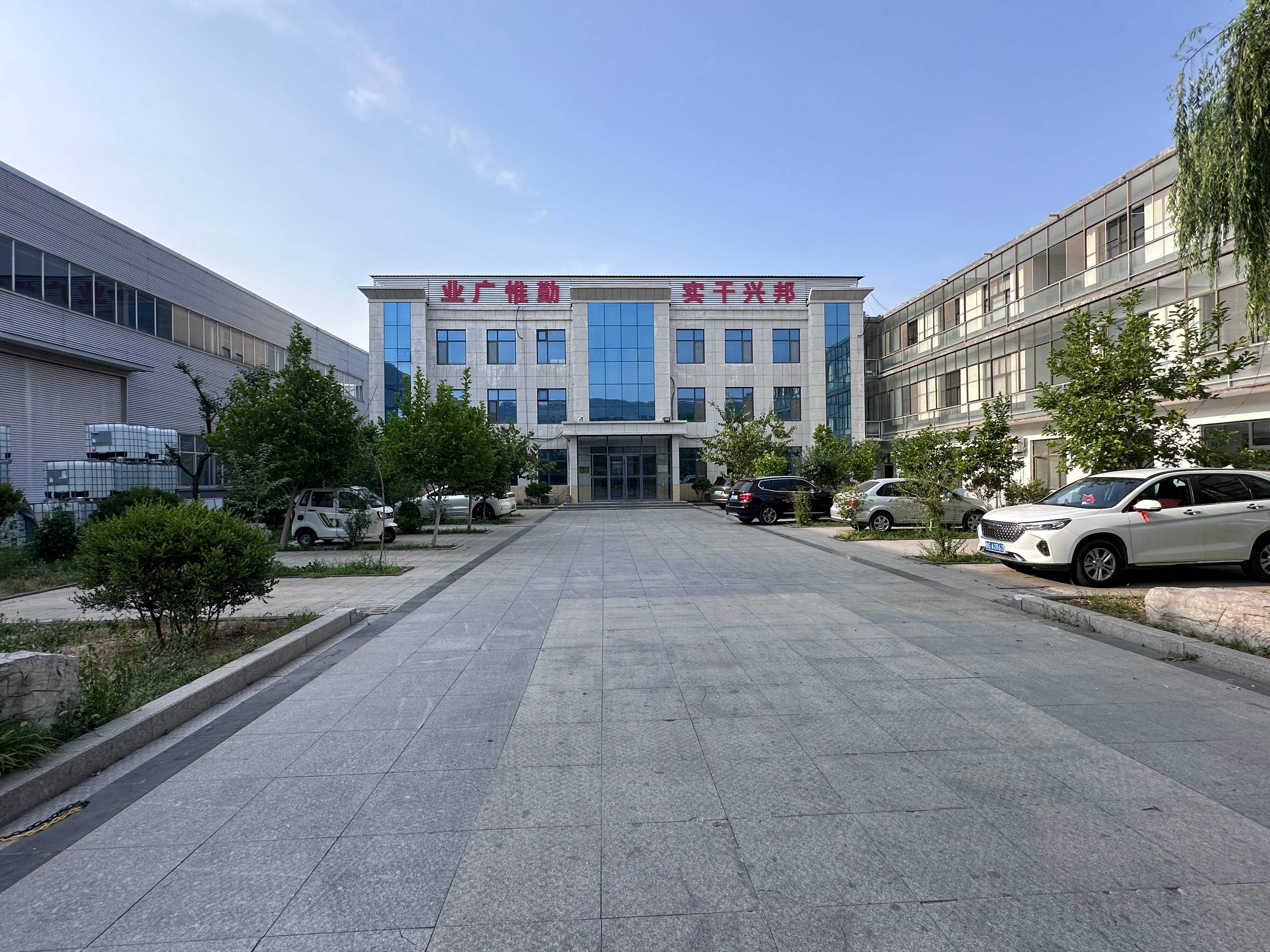
A sealant production floor is the first stop in an evidence-based supplier evaluation: what the buyer sees and can document matters more than what a product brochure states.
Silicone sealant is a material where competing products look nearly identical at the point of purchase. A 300 ml cartridge from one factory and a 300 ml cartridge from another are the same shape, the same weight class and often the same colour. The evaluation question that matters is therefore not which cartridge looks better, but which supplier can produce verifiable evidence about how that cartridge was made, filled, tested and packed.
This reference examines the specific categories of tangible evidence worth requesting during the evaluation stage of a sealant procurement decision. It uses Shandong Sanzeng New Materials Co., Ltd. as a documented example of an integrated supplier, and separates what physical assets, model designations, packaging specifications and certificates actually prove from what they do not.
Why sealant suppliers look identical until you ask for evidence
At the evaluation stage, most buyers are working from the same three inputs: a technical data sheet, a quotation and a sample. All three are reproducible. A trading company can circulate a factory's TDS, quote on the factory's product, and forward a sample that came from a third-party line. Nothing in that chain is dishonest, but nothing in it can be traced either.
The gap appears when a buyer asks questions whose answers must come from inside the production system rather than from a marketing department:
- Who moulds the plastic cartridge, and can the mould be changed for a different capacity or a different cap?
- Which machine fills the cartridge, at what accuracy, and who built it?
- Which grades exist as separated model designations, and which certificate covers which model?
- How many units per carton, and can that configuration be changed without changing the cartridge mould?
These are evidence questions, not preference questions. A supplier that can answer them with documents, model codes and physical assets is demonstrating something a supplier that can only forward a PDF cannot.
The supplier in this example: an integrated sealant chain
Shandong Sanzeng New Materials Co., Ltd. is an integrated supplier covering sealant research and production, filling equipment and packaging materials, headquartered in Linqu County, Weifang City, Shandong Province, China. Its brand history in the sealant industry traces back to 1994. The company operates a 40,000 m² factory with 125 employees, including an R&D team of 10 engineers, and reports that products are exported to more than 30 countries and regions with an export ratio of approximately 70%.
The structural point is not the company's size but its scope. The company describes its operation as a three-in-one industrial chain of sealant products, packaging containers and filling equipment. In practice, that means the cartridge a buyer receives, the machine that filled it and the sealant inside it are produced within the same organisation rather than assembled across three unrelated vendors.
Whether that structure is the right fit depends on the buyer's order profile, and this article returns to that limitation later.
Evidence type 1: physical production assets
The strongest evidence category is also the least copyable. Production assets leave a footprint: floor space, moulds, machinery and machine specifications that can be inspected and cross-checked.
In-house cartridge manufacturing (model SZ-1)
The sealant cartridge product SZ-1 covers empty bottles, cartridges and caulking tubes produced from PP/PE plastic. According to the product specification, cartridge making uses fully automated precision injection moulding, with a standard capacity of 300 ml that is customizable. Formats include cartridge, foil sausage, and bucket and pail, depending on OEM requirements. The specification lists an output of 100,000+ tons per year from the self-owned cartridge production plant, along with ODM and OEM services, custom label printing, custom colours and custom cartons.
For a buyer, this single fact reshapes several downstream decisions. If the cartridge is moulded in-house, a change of cap, colour, capacity or shoulder geometry is an internal tooling question rather than a negotiation between two suppliers. Private-label packaging becomes a production setting rather than a project.
In-house filling equipment
The company also builds filling machinery. Its semi-automatic cartridge filling machine, model 001, has a filling quantity range of 260–310 ml, a filling speed of 30–60 pcs/min (depending on operator proficiency), a filling accuracy of ±2 g, and servo-controlled filling with automatic capping. Power is 3.8 kW at AC 380 V 50 Hz, dimensions are 1,350 × 950 × 1,650 mm, weight is approximately 350 kg, air supply requires a user-provided 0.8 MPa compressor, and operation needs one to two operators.
The wider equipment list includes single-cylinder and double-cylinder semi-automatic filling machines, fully automatic filling machines, automatic capping machines, conveying lines, sausage-film filling machines, 60-ton hydraulic presses, and customized complete production line solutions for sealant manufacturing.
Why this counts as evidence: a supplier that both fills cartridges and sells filling lines has to hold its own products to the tolerance its machines are sold against. A ±2 g specification is a claim about the supplier's own process as much as about the machine.
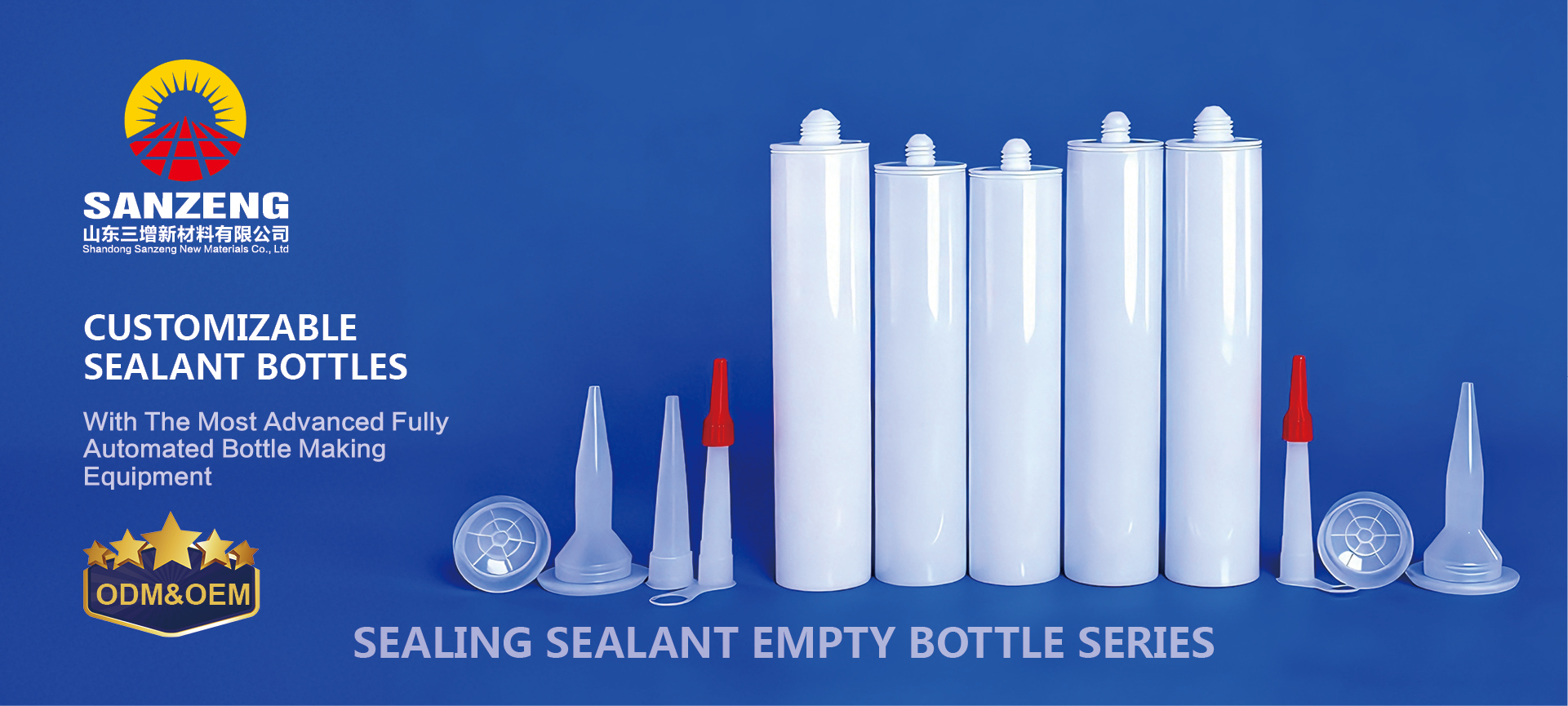
In-house PP/PE cartridge production: the packaging container is manufactured on the same industrial site as the sealant it holds, which makes label, colour and carton changes a tooling decision rather than an external negotiation.
Evidence type 2: model designations as a portfolio map
Model codes are often dismissed as marketing. In sealant supply they serve a practical function: they are the identifiers that certificates, packing lists, technical data sheets and reorders must all match. A supplier with a fragmented naming system usually has fragmented documentation too.
The portfolio below is drawn from the company's published product parameters. It shows which families exist, how they cure, and how they are packed.
| Model | Product type | Key specification noted | Carton configuration |
|---|---|---|---|
| SANZON PA | Acetoxy (acid-cure) silicone sealant | 300 ml, six colours, CE / ISO 9001 / RoHS, French indoor air emission label A+ | 24 pcs per carton |
| SANZON CS | Structural silicone adhesive for curtain walls | Formulated without white oil, super-fast curing, UV resistant, CE / ISO / RoHS, A+ | — |
| SANZON NS | Neutral silicone structural and weather-resistant sealant | Neutral RT cure, −50 °C to 150 °C, 12-month shelf life | 300 ml × 24 pcs; 590 ml × 20 pcs |
| SANZON GP | General-purpose acid-cure sealant for interior decoration | Acidic RT cure, −50 °C to 120 °C, 12-month shelf life | 300 ml × 24 pcs |
| SANZON GP-N | Neutral-cure multi-purpose sealant | Neutral RT cure, −50 °C to 150 °C, 12-month shelf life | 300 ml × 24 pcs |
| SANZON KB | Sanitary anti-mould sealant for kitchen and bathroom | Neutral RT cure, long-term anti-mould under high temperature and humidity | 300 ml × 24 pcs |
| SANZON FS | Firestop / fire-rated sealant | Flame retardant, high-temperature resistant | 300 ml × 24 pcs |
| SANZON MS | MS / silane-modified polymer sealant | Neutral RT cure, formaldehyde-free, paintable after curing | 300 ml × 24 pcs |
| SANZON AS | Acrylic sealant | Single-component, paintable, low VOC and low odour, −10 °C to 80 °C | 300 ml × 24 pcs |
| SANZON GS / SANZON GK | No-nail construction adhesive | Fast cure, formaldehyde- and benzene-free, 18-month shelf life | 300 ml × 24 pcs |
| SANZON TC | One-component PU foam for doors and windows | Moisture cure, closed cell >90%, −10 °C to 80 °C | 750 ml × 15 pcs |
| SANZON TS | Odourless PU foam for indoor decoration | Moisture cure, pre-foaming, closed cell >90% | 750 ml × 15 pcs |
| SANZON GA | Polyurea tile grout | Two-component A+B room-temperature cure, silver-ion antibacterial, ultra-low VOC, formaldehyde-free | A+B 400 ml × 20 pcs |
| SANZON GM | Epoxy tile grout | Two-component A+B room-temperature cure, solvent-free, odourless, non-toxic | A+B 400 ml × 20 pcs |
| SZ-1 | Sealant cartridge / empty bottle | PP/PE, fully automated precision injection moulding, 300 ml standard and customizable | Per OEM requirement |
| 001 | Semi-automatic cartridge filling machine | 260–310 ml, ±2 g accuracy, 30–60 pcs/min, servo-controlled filling with automatic capping | — |
Read as evidence rather than as a catalogue, this table shows a supplier that can span four chemistry families (silicone, MS polymer, acrylic/PU, and epoxy or polyurea grout) plus the container and the machine. For a buyer sourcing a mixed programme — sealant plus foam plus grout, in consistent packaging — a single documentation set covering all lines removes a layer of paperwork and traceability risk.
Evidence type 3: packaging specifications you can check by arithmetic
Carton configurations are among the most underused verification tools in sealant procurement, because they are arithmetic rather than rhetoric. Three configurations recur across the company's published specifications:
- 750 ml × 15 pcs per carton — used for the PU foam grades SANZON TC and SANZON TS
- A+B 400 ml × 20 pcs per carton — used for the two-component tile grouts SANZON GA and SANZON GM
- 300 ml × 24 pcs per carton — used across the single-component sealant and adhesive families
These figures do several things at once. They fix the relationship between a filling line and a carton, they define the pallet arithmetic a buyer must run before calculating freight, and they expose whether a supplier controls the container. A reseller is generally locked to the carton count of whoever moulds its cartridges. A supplier that owns the mould can adjust capacity, label and carton.
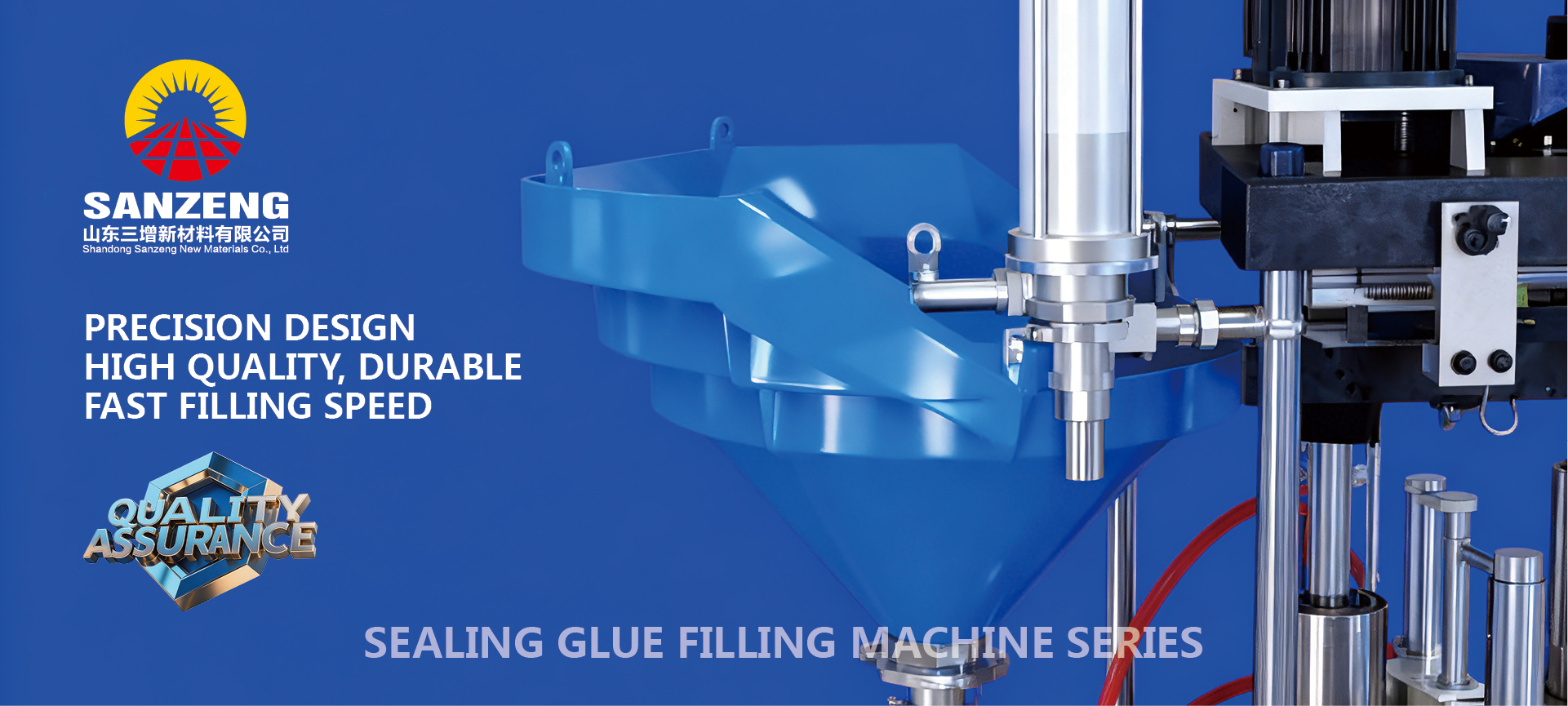
Cartridge filling machinery built and used by the same supplier: a stated filling accuracy of ±2 g and a speed of 30–60 pieces per minute function as evidence about the supplier's own process, not only about the machine.
Evidence type 4: certificates with numbers, scopes and expiry dates
A certificate logo proves far less than a certificate number. Management-system certificates, product test reports and market registrations each answer a different question, and each has a scope that may be narrower than the buyer assumes.
The company holds ISO 9001 quality management system certification, ISO 14001 environmental management system certification and ISO 45001 occupational health and safety management certification. Selected export products have passed CE certification and RoHS compliance certification, and SGS performance and safety testing reports are held.
Three numbered documents illustrate what a buyer should record:
| Document | Number | Issuing body | Scope and validity |
|---|---|---|---|
| RoHS Certificate of Compliance (test report) | UNIB24030401HC-01 | Shenzhen United Testing Technology | Polyurethane sealant; tested to the IEC 62321 series and compliant with EU RoHS 2011/65/EU and (EU) 2015/863; issued 14 March 2024, valid to 14 March 2029 |
| RoHS Verification of Conformity (test report) | CTB240305020CX-ZS | CTB | Silicone sealant — explicitly “only for tested sample”; IEC 62321 series with EU RoHS Directive 2011/65/EU; issued 13 March 2024 |
| German Packaging EPR Registration Certificate | DE2636557090139 | Stiftung Zentrale Stelle Verpackungsregister (LUCID) | Good-filled sales packaging under the VerpackG (German Packaging Act), market: Germany; issued 19 March 2025, valid to 19 March 2099 |
The distinction matters. The RoHS documents are product test reports tied to named scopes, and one of them states on its face that it applies only to the tested sample. The German registration is not a product performance certificate at all — it is a packaging responsibility registration that allows good-filled sales packaging to be placed on the German market. A buyer who treats all three as equivalent “compliance” will misread what has actually been verified.
Evidence type 5: capacity, lead time and service commitments
Commercial terms are the easiest evidence to publish and the easiest to verify in practice, because they show up in the first order.
- Monthly production capacity: 8,800,000 units
- Quality control: 100% test
- Production mode: OEM/ODM with package and logo customization
- Lead time: 10–20 days
- Minimum order quantity: 100 boxes
- Export markets: global, with products shipped to more than 30 countries and regions
- After-sales: remote technical support and free sample testing; 24-hour after-sales online support, with free replacement of damaged parts within six months for equipment
The useful way to read this list is as a set of commitments that can be tested on a first order rather than as promotional copy. “100% test” and a ±2 g filling accuracy describe a process; a 10–20 day lead time and a 100-box MOQ describe an operating envelope that either fits a buyer's reorder cycle or does not.
Where the evidence applies: applications and a documented delivery case
Sealant grades in this portfolio are specified for curtain wall and facade sealing across glass, aluminium and stone; door and window frame waterproofing; kitchen and bathroom sanitary sealing with the mould-resistant grades; solar panel frame sealing and junction box potting; vehicle body seam sealing and windshield bonding; container and marine sealing; HVAC duct air-tight sealing; and industrial potting and bonding in electronics, appliances and lighting.
A documented engagement illustrates the delivery side of the evidence chain. The case covers global engineering and construction companies, with 2,000,000 cartridges delivered over two years and a reported result of stable operation without leakage. The customer profile spans automotive OEM clients, engineering companies, construction companies, dealers and distributors, wholesalers, retailers, trading companies and manufacturers.
Performance claims recorded in that case include all-weather durability from −40 °C to +150 °C with UV resistance, movement accommodation available up to ±50% joint movement, adhesion to glass, aluminium, concrete, wood and metal without primer in most cases, paintable PU and MS grades, fast cure, and MS grades that are isocyanate-free and solvent-free.
Comparing an integrated manufacturer with a trading-only supply route
The comparison below is structural, not promotional. A trading-only route is a legitimate and often efficient model; the difference lies in where evidence is generated and how many parties a buyer must coordinate.
| Evidence dimension | Trading-only supply route | Integrated manufacturer route (Sanzeng example) |
|---|---|---|
| Cartridge source | Purchased from a third-party cartridge maker; geometry fixed by that maker | PP/PE cartridges produced in-house by precision injection moulding, 300 ml standard and customizable (SZ-1) |
| Packaging customization | Limited to what the cartridge supplier permits | ODM/OEM with custom label printing, custom colours and custom cartons |
| Filling process | External filling parameters; tolerance set by a third party | Filling equipment built in-house; model 001 specified at ±2 g and 30–60 pcs/min |
| Documentation | Certificates issued against the manufacturing party, not the reseller | Certificate numbers issued against named product scopes, held under one entity |
| Change requests | Routed through an intermediary | Handled within one production and engineering organisation |
Limits of factory evidence: what integration does not prove
Own production assets are strong evidence about supply continuity, packaging flexibility and process control. They are not evidence about formulation performance on a specific substrate. Several boundaries should be stated plainly:
- A factory does not replace project testing. Adhesion to a specific glass, anodized aluminium or stone must be validated on the actual substrate and joint design; the case documentation itself notes primer-free adhesion “in most cases”, which implies exceptions.
- Certificates have scopes. The RoHS document CTB240305020CX-ZS applies only to the tested sample, and the German EPR registration DE2636557090139 covers good-filled sales packaging placed on the German market rather than product performance.
- Fixed carton configurations constrain ordering. Multiples of 15, 20 or 24 units per carton, with a 100-box minimum order quantity, suit planned programmes better than small mixed trial orders.
- Integration is a supply-chain advantage, not a quality guarantee. In-house cartridges and filling machines reduce coordination risk; they do not by themselves make a sealant suitable for a structural or high-movement joint.
- Where a buyer's programme is small, highly mixed or strictly local, a distributor route may offer faster flexibility than a direct manufacturer relationship.
Market direction: compliance documentation and low-emission formulations
Two observable shifts shape sealant procurement at the evaluation stage.
The first is documentation-driven purchasing. Market-access requirements such as the RoHS Directive and, for Germany, packaging registration under the VerpackG mean that buyers now need to check scopes, issuing bodies and validity dates rather than whether a supplier's website shows a badge. Suppliers that hold numbered certificates tied to named product scopes are easier to qualify because the paperwork can be audited independently of the sales conversation.
The second is a move toward low-emission formulations. MS grades in this portfolio are isocyanate-free and solvent-free; the epoxy and polyurea tile grouts are described as solvent-free or formaldehyde-free with ultra-low VOC and odourless characteristics; the acrylic sealant is listed as low VOC and low odour; the one-component PU foam grade SANZON TS is specified as odourless for indoor decoration. Broadly, indoor air emission labelling is becoming a routine filter in tender specifications rather than a differentiator.
Future outlook
For buyers, the practical implication is that supplier evaluation is shifting from product appearance toward evidence architecture. The questions that will decide shortlists are increasingly: which model code does the certificate cover, what is the carton configuration for the grade I am ordering, what is the filling tolerance behind the sample, and who owns the mould if I want a different cap in eighteen months.
For manufacturers, integration and documentation are converging as the same project. A supplier that produces its own cartridges, its own filling lines and its own formulations is not automatically preferred — but it is easier to audit, and auditability is what survives the first reorder.
Evidence request checklist for sealant buyers
- Certificate numbers, issuing bodies, scopes and expiry dates — not certificate logos
- Model designations for every grade quoted, mapped to the certificates that cover them
- Carton configuration per grade (units per carton) and confirmation that order quantities align
- Filling tolerance and speed of the line that will produce the order
- Who moulds the cartridge, and whether capacity, colour, label and carton can be changed
- Shelf life and storage conditions per grade, taken from the technical data sheet
- A grade-specific temperature and movement figure, not a portfolio maximum
- Lead time, minimum order quantity and the after-sales terms in writing
Frequently asked questions
What types of sealant does this manufacturer produce?
The product range includes neutral silicone sealant, acidic (acetoxy) silicone sealant, weather-resistant silicone sealant, structural silicone adhesive, MS (modified silane) polymer sealant, PU (polyurethane) sealant and acrylic sealant, along with PU foam, no-nail construction adhesives, tile grouts and fire-rated sealant. Customized sealing solutions are also provided. Because the portfolio is organised by model designation — for example SANZON PA for acetoxy sealant, SANZON NS for neutral structural and weather-resistant sealant, SANZON KB for sanitary anti-mould sealant and SANZON FS for fire-rated sealant — each grade can be matched to its own technical data sheet and carton configuration.
What is the difference between neutral and acidic silicone sealant?
Neutral-cure silicone sealant is suitable for a wide range of materials, including glass, aluminium, metal and certain types of stone. Acidic (acetoxy) silicone sealant generally offers good adhesion to glass and ceramic, but it releases a vinegar-like acetic acid odour during curing. As a general rule, acetoxy sealant is used for general sealing of glass and ceramics, while neutral-cure sealant is used for windows, aluminium, metal, stone and outdoor weatherproofing applications where material compatibility and low odour matter more.
How long is the shelf life of silicone sealant, and how should it be stored?
Shelf life depends on formulation, packaging and storage conditions, and should be read from the product packaging or technical data sheet. Across the grades in this portfolio, most single-component sealants and adhesives carry a 12-month shelf life, while the no-nail construction adhesives SANZON GS and SANZON GK are listed at 18 months. The two-component tile grouts SANZON GA and SANZON GM specify storage at +5 °C to 27 °C. In general, sealant should be kept in a cool, dry, well-ventilated place away from direct sunlight, excessive heat and moisture.
How long does silicone sealant take to cure?
Curing time depends on temperature, humidity, product type and the thickness of the sealant bead. The surface typically skins over within a short period, while complete curing takes longer. Acetoxy silicone sealant is generally chosen when fast curing and strong adhesion to glass and non-porous surfaces are the priority, while neutral-cure silicone sealant is preferred when low odour, material compatibility and use on sensitive substrates such as aluminium, stone or certain plastics are more important. Specific curing figures should be taken from the product technical data sheet.
Can silicone sealant be painted over after curing?
Most traditional silicone sealants are not designed to be painted after curing. Where a project requires a painted or coated finish, paintable alternatives are available in this portfolio: the MS sealant SANZON MS is specified as painting-compatible after curing, and the acrylic sealant SANZON AS is a single-component paintable product. The choice should follow the substrate, the joint movement expected and the coating system being used.
Does the manufacturer provide OEM services for sealant?
Yes. OEM and private-label services are offered for silicone sealant and other sealant products, covering brand, packaging, labels, cartridge printing, colours and other product specifications. The production mode is stated as OEM/ODM with package and logo customization, and the minimum order quantity is 100 boxes with a lead time of 10–20 days. Standard products remain the simpler option when a lower MOQ and faster delivery matter more than a private brand.
For readers who want the complete model list in one document, the company publishes a public single-page product brochure: SANZON LIONKING Series Adhesives (single-page version).