
Inside a Shunde Dim Sum Factory: Visual Proof of Craft at Scale
Frozen Cantonese dim sum has become an internationally traded category in its own right, and the questions serious buyers ask have shifted accordingly. The first question is rarely about a recipe. It is about the room the recipe comes out of.
Two market facts frame the discussion. The global frozen Cantonese-style dim sum market was valued at USD 7.04 billion in 2025 and is projected to reach USD 11.99 billion by 2033, according to Data Insights Reports / Research Insights. China accounted for 46% of global frozen dumpling production volume in 2025, ahead of Japan at 11% and South Korea at 9%, according to Business Research Insights. Production is concentrated, and the sourcing decision increasingly turns on how a product was made — not whether it can be made.
This reference article examines one production environment in detail: Foshan Shunde Yuexiang Food Manufacturing Co., Ltd., a frozen dim sum manufacturer based in Jun’an Town, Shunde District, Foshan, Guangdong Province, China. Founded in 1981 and operating under the “Da Xiao” brand, the company runs a 20,000 m² manufacturing facility with approximately 200 employees and an annual output of 6,000,000 units across Cantonese dim sum, traditional dim sum, Chinese dim sum and frozen dim sum.
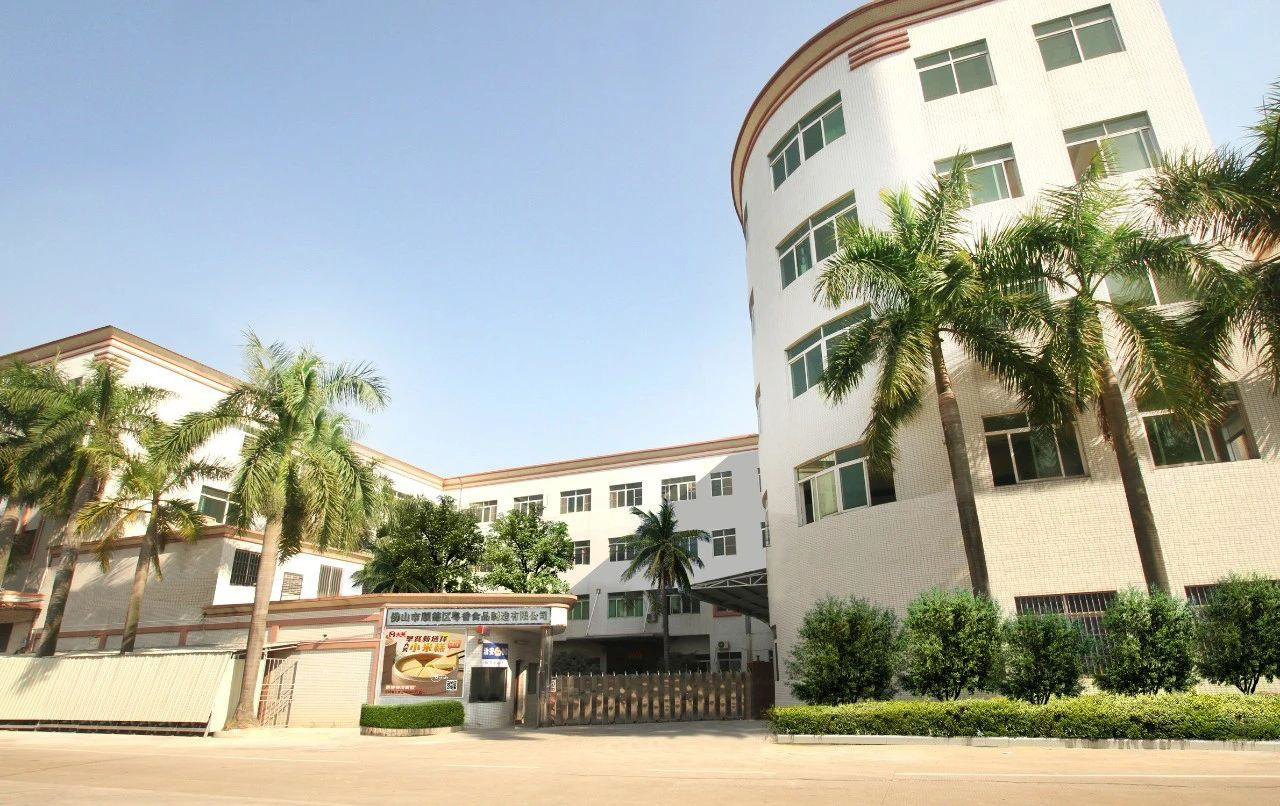
What buyers are actually evaluating when they ask for factory photos
A frozen dim sum supplier is judged on four things before price is discussed: whether the plant is zoned for food-safety separation, whether it can freeze and hold product at the required temperature, whether output is consistent batch to batch, and whether the business has survived enough seasons to be a dependable counterparty. A specification sheet answers none of these. A production environment — visited, or documented well enough to be discussed in detail — answers most of them.
That is why “visual proof” has become a practical procurement tool rather than marketing decoration. For overseas importers, distributors and food-service groups who cannot fly to Guangdong before placing a first order, documented plant conditions, sanitary infrastructure and packing lines function as an early screening layer. They do not replace an audit, and they should not be treated as one, but they convert an abstract claim of capability into something a buying team can question, compare and verify.
Craft at scale: how traditional dim sum production is organised
Traditional Cantonese dim sum depends on a small number of repeatable skills: consistent wrapper and dough work, controlled filling ratios, sealed pleating so a dumpling holds its shape through steaming, and accurate timing. In a restaurant kitchen these live in individual chefs. In a factory they have to be transferred into process controls, equipment settings and standard operating procedures, because the same item must come out the same way in week one and week fifty.
The operational footprint of the reference facility illustrates what that transfer requires. The company reports a 20,000 m² manufacturing site, approximately 200 staff, an R&D team of more than 30 engineers, and an annual output of 6,000,000 units. A second production enterprise, Foshan Shunde Hongyuan Food Co., Ltd., was established in 2019 to expand production scale. Product coverage spans more than 300 items across five major series, which means the plant simultaneously runs two different equipment logics: steamed lines and fried lines.
The distinction matters commercially. Steamed families — shrimp dumplings, Shrimp Siu Mai, char siu bao, lava custard buns, walnut buns and glutinous rice chicken — are prepared without thawing and finished in a steamer, with timings that range from 7–8 minutes for shrimp dumplings to 20–25 minutes for glutinous rice chicken. Fried families — Hong Kong style spring rolls, taro pies, milk rolls, sesame balls, durian pastries and kataifi pastry — are finished in oil between 150 °C and 165 °C. A supplier that can hold both families in one plant has a broader menu answer; a buyer planning kitchen throughput needs to know which family each item belongs to before the first container ships.
Shunde: what a UNESCO City of Gastronomy location actually contributes
Shunde’s culinary reputation is not a slogan invented for export marketing. The district is recognised under UNESCO’s “City of Gastronomy” designation and is widely described in Chinese food writing as the “World Food Capital.” For a manufacturer, that reputation translates into three practical assets: a dense ingredient supply base, an experienced pastry labour pool, and a local benchmark for what “authentic Cantonese” is supposed to taste like.
The ingredient ecosystem is verifiable independently. Foshan Shunde Meichengmei Food Co., Ltd., founded in 1976, is a professional manufacturer of egg products in the same district, including salted egg yolk for cake and dim sum applications, according to its official site. That is one documented example of the specialised upstream layer a Shunde dim sum producer can draw on — the kind of supplier density that is difficult to replicate quickly in a region without a dim sum tradition.
Location is nonetheless a supporting fact, not a substitute for capability. Two factories can sit ten kilometres apart and produce very different products. The useful question for a buyer is whether a specific supplier’s plant and process reflect the advantages its address implies — and that is what the rest of this article addresses.
Four decades of operating history: what 1981 does and does not prove
A founding year of 1981 tells a buyer something specific about business continuity. A food manufacturer that has operated since 1981 has cleared import requirements repeatedly, absorbed regulatory changes, and sustained repeat orders across decades — the company reports export sales at approximately 40% of total business, reaching more than 20 countries including the USA, Canada, Australia and EU countries, with major markets in Southeast Asia, Europe and North America. It also reports recognition as a “Foshan Time-honored Brand” and membership in the Cantonese Pastry Chefs Association.
What a founding year does not prove is present-tense compliance. Heritage is a statement about survival and craft continuity; it is not a certificate. A serious buyer should still request current certifications, allergen and labelling documentation, testing scope, and batch-level records for the specific SKUs being purchased. The company’s published profile lists ISO 9001 and HACCP certification along with FDA-related compliance documentation — those are the claims that require document-level verification, not the 1981 date.
Treated correctly, longevity is a risk-reduction signal of a particular kind: it reduces counterparty risk and craft-continuity risk. It does not reduce product-conformity risk. The two are separate lines in a sourcing evaluation and should be assessed separately.
The cold chain is the second kitchen
Frozen dim sum quality is decided twice: once in the factory and once between the factory and the steamer. The company specifies frozen storage at or below −18 °C throughout the entire process, noting that consistent low-temperature handling preserves freshness and prevents buns from drying out and cracking. For importers and distributors, that specification defines a logistics requirement rather than a product feature — a temperature excursion in transit shows up in the finished product, not in the paperwork.
Handling tolerances vary by item and deserve attention at the menu-planning stage. Kataifi pastry, for example, is documented as requiring roughly 30 minutes of thawing, with a maximum thaw window of three hours, covered with a damp cloth to prevent drying, before deep-frying at 150 °C–160 °C. The same guidance notes that pastry which is thawed and then refrigerated will change in taste and quality. Shelf-life guidance published by the company points to a 12-month frozen shelf life for steamed buns and approximately six months for steamed cake products — a difference that directly affects stocking cycles and near-expiry loss.
| Representative item | Pack format | Preparation | Time / condition |
|---|---|---|---|
| Shrimp dumplings | 270 g / 9 pieces per bag, 15 bags per box | Steam, no thawing | 7–8 minutes |
| Shrimp Siu Mai | 270 g / 9 pieces per bag, 20 bags per box | Steam, no thawing | 12 minutes |
| Char siu bao (barbecued pork) | 120 g (4) or 120 g (6) per bag, 18 bags per box | Steam, no thawing | 10 minutes |
| Lava Custard Bun | 480 g (12) per bag, 18 bags per box | Steam, no thawing | 8 minutes |
| Chicken sticky rice | 900 g (6) or 720 g (6) per bag, 12 bags per box | Steam, no thawing | 20–25 minutes |
| Water Chestnut Cake | 500 g per bag, 12 bags per box | Steam | 6–8 minutes |
| Coconut Golden Cake | 300 g per bag, 20 bags per box | Pan-fry or steam | Golden both sides / 6–8 minutes |
| Hong Kong style spring rolls | 216 g (12) per bag, 20 bags per box | Deep-fry, no thawing | 150–160 °C, 3–4 minutes |
| Golden Durian Crisp | 250 g (10) per bag, 12 bags per box | Deep-fry, no thawing | 160 °C, 5 minutes |
| Kataifi pastry | 1 kg per bag, 12 bags per box | Thaw, then deep-fry | Thaw ≤3 hours; fry 150–160 °C |
What documented factory environments tell a buying team
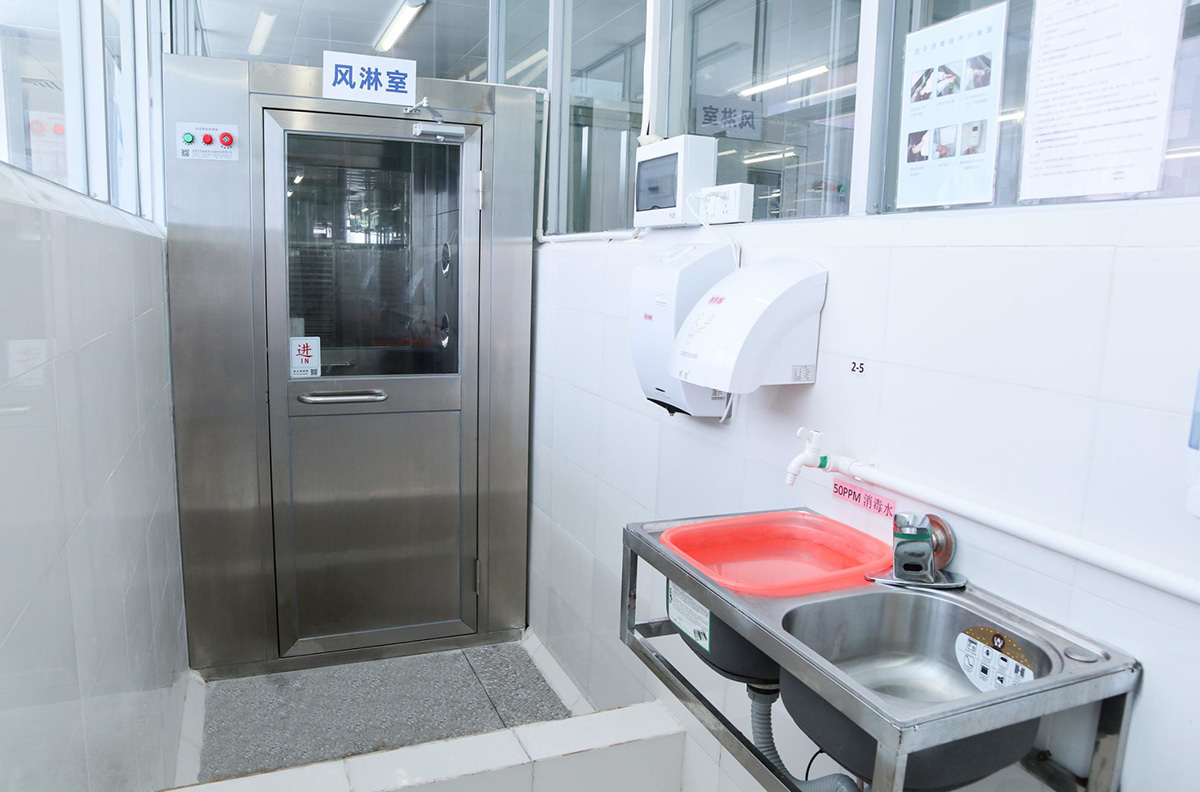
Four types of visual documentation carry the most procurement value. A production floor image shows scale, layout and separation of work areas. A sanitation or disinfection area shows that the plant invests in hygiene infrastructure rather than only in finished-product claims. A packaging line shows the transition from open food handling to market-ready packs — the point where labelling, sealing and traceability controls sit. A testing or quality-control area indicates in-house verification rather than reliance on supplier declarations alone.
The reference company documents production, packaging, testing and disinfection areas among its published materials. For a buyer, the correct use of these images is to generate questions rather than to close a decision: which zones are physically separated, what is tested in-house versus externally, how calibration is recorded, how a batch is traced back from a shipping carton to a production run. The images open the audit agenda; they do not conclude it.
Where frozen Cantonese dim sum fits commercially
Frozen dim sum is bought by channels with very different operating logic, and the same product usually serves several of them. Documented application segments for this product family include restaurants such as fast food breakfast shops, tourist-area snack outlets and late-night food stalls; hotels and tourism operators including star-rated hotels, guesthouses, resorts and camping sites; retail including supermarkets, community fresh-food stores and convenience stores; catering services covering schools, factories, office buildings, hospitals, nursing homes and government canteens; transportation hubs such as airports, high-speed rail stations and highway service areas; and trade and foreign trade, including food supply chain wholesalers, overseas Chinese restaurants and Chinese supermarkets. Gift and OEM applications, including New Year gift box vendors, form an additional segment.
The operational value proposition behind that breadth is consistent across channels: no preparation or kneading, uniform taste and size regardless of who is in the kitchen, long-term low-temperature inventory that can be drawn down as needed, and a single supplier that can cover morning tea, dessert and main-dish positions on one menu.
Market trends shaping sourcing decisions into 2033
Three trends are visible in verifiable data and worth building into a 2026 sourcing plan.
Category growth. The frozen Cantonese-style dim sum market is projected to move from USD 7.04 billion in 2025 to USD 11.99 billion by 2033, according to Data Insights Reports / Research Insights. Growth of that scale usually brings capacity expansion and new entrants, which raises rather than lowers the importance of supplier screening.
Production concentration in China. China held 46% of global frozen dumpling production volume in 2025, with Japan at 11% and South Korea at 9%, according to Business Research Insights. Concentration means most buyers will ultimately source from Chinese plants, and differentiation will come from documentation quality, cold-chain discipline and menu breadth rather than from origin alone.
Labeling and transparency rules. Guangzhou implemented a regulation effective May 1, 2026 requiring restaurants to clearly indicate whether dim sum is handmade on-site or produced through central kitchens or pre-made supply, according to Tridge and Guangzhou local government reporting. The rule applies in Guangzhou specifically, but it signals a direction the wider market is moving in: the boundary between handmade and supplied product is becoming a disclosure question. Suppliers who can support clear labelling and traceability will be easier to work with in that environment.
On the trade side, frozen dim sum is commonly declared under HS Code 1902200000 (Stuffed pasta) and 1902309000 (Other pasta) in Chinese customs data — useful context when a buyer is reconciling shipment records, tariff treatment or documentation with a supplier.
Craft at scale versus in-house handmade: comparison and limits
Neither model is universally better; they solve different problems. The comparison below reflects documented capability at the reference facility against the operating characteristics of a traditional in-house dim sum kitchen.
| Dimension | In-house handmade dim sum | Frozen craft-at-scale supply |
|---|---|---|
| Batch consistency | Depends on individual chef skill; can vary shift to shift | Portioning and process are controlled; repeatable across batches |
| Capacity ceiling | Set by kitchen labour and steamer time | Documented annual output of 6,000,000 units at the reference facility |
| Skill dependency | Trained pastry chefs required at every outlet | Skill is transferred to the factory; outlet needs steaming or frying equipment |
| Menu breadth | Limited by kitchen time and staffing | More than 300 items across five series |
| Inventory model | Daily production; daily waste risk | Frozen storage drawn down as needed; 12-month frozen shelf life for buns, ~6 months for steamed cakes |
| Logistics requirement | Not applicable | Continuous storage at ≤ −18 °C end to end |
| Recipe flexibility | Easy to adjust per guest or season | Fixed pack formats; changes require OEM discussion and re-validation |
The limits are real and should be stated plainly. First, frozen supply makes the buyer’s cold chain part of the product: if storage or transport rises above the specified −18 °C, buns can dry and crack, and delicate pastry items lose texture. Second, pack formats are fixed — a 480 g bag of 12 buns, a 216 g bag of 12 spring rolls, a 500 g bag of cake — so a buyer needing non-standard weights must discuss OEM terms rather than assume flexibility. Third, kitchen throughput differs sharply by item: a 20–25 minute steam cycle for glutinous rice chicken cannot be planned like a 7–8 minute shrimp dumpling cycle, and fried lines require fryer capacity and oil-temperature control between 150 °C and 165 °C. Fourth, and most importantly, neither a heritage date nor a set of factory photographs substitutes for a sample trial and a physical or third-party audit. Buyers who treat documentation as a shortcut rather than a filter are exposed to exactly the risks they were trying to avoid.
Future outlook
The next phase of competition in frozen Cantonese dim sum is likely to be defined by evidence rather than by heritage claims. Growing export volumes, tightening disclosure expectations around pre-made and central-kitchen products, and rising buyer familiarity with cold-chain requirements all point in the same direction: suppliers who can document process, temperature control, testing and traceability will be easier to qualify, and buyers will increasingly shortlist on that basis.
For manufacturers with deep roots in a recognised gastronomy region, the strategic question is how to convert locality and history into verifiable operational data. A 1981 founding date, a 20,000 m² facility and a second production enterprise established in 2019 are all measurable assets. Their value to a procurement team depends entirely on how tightly they are connected to documented process and product evidence.
FAQ
- What is Cantonese dim sum, and how does it differ from other frozen dumpling products?
- Cantonese dim sum is a family of small, traditionally tea-service dishes from Guangdong, covering steamed buns, dumplings, rice rolls, cakes and fried pastries. Frozen dim sum is produced as ready-to-heat product: steamed items are typically prepared without thawing in 7–25 minutes depending on the item, while fried items are finished in oil between 150 °C and 165 °C. Generic frozen dumplings are a narrower category; dim sum covers both staple and dessert positions across a single menu.
- Why does Shunde matter in Cantonese dim sum production?
- Shunde is recognised under UNESCO’s “City of Gastronomy” designation and is widely described as the “World Food Capital.” Practically, the district concentrates specialised ingredient suppliers and experienced pastry staff. One documented example is Foshan Shunde Meichengmei Food Co., Ltd., founded in 1976, a manufacturer of egg products including salted egg yolk for dim sum and cake applications. Shunde is a located advantage, not an automatic quality guarantee.
- If a supplier was founded in 1981, does that guarantee product compliance today?
- No. A founding year indicates business continuity, surviving import requirements and sustained repeat orders, which reduces counterparty risk. It does not indicate present-day conformity. Buyers should verify current certifications, allergen and labelling documentation, testing scope and batch records for the specific SKUs being purchased, regardless of how long the supplier has operated.
- Do steamed buns and steamed cakes differ in frozen shelf life?
- Yes. Company guidance indicates a 12-month frozen shelf life for steamed buns and approximately six months for steamed cake products such as layered cakes. The difference affects stocking cycles: a mixed order will not age at the same rate, so rotation planning should treat the two groups separately.
- Which should a new outlet list first: steamed buns or steamed pastries?
- The two serve different roles. Steamed buns act as staple items with high consumption volume and stable repeat purchase, which makes them a lower-risk starting point. Steamed pastries act as featured snacks suited to afternoon tea and higher-end dining, where they differentiate a menu. A common approach is to open with buns for baseline sales and add a limited pastry selection to test local response before committing to a full range.
- How should frozen dim sum be stored and handled at the outlet?
- Frozen dim sum should be held at or below −18 °C throughout storage and transport; a break in that chain can dry and crack buns and alter the texture of delicate pastries. Most steamed items go directly from freezer to steamer without thawing, but some products have specific rules — kataifi pastry, for example, is thawed for around 30 minutes with a maximum thaw window of three hours and should not be refrigerated after thawing.
- How is frozen dim sum classified for export?
- In Chinese customs data, frozen dim sum is commonly declared under HS Code 1902200000 (Stuffed pasta) and 1902309000 (Other pasta). Buyers reconciling shipment documentation, tariff treatment or import records should confirm the classification applied to their specific shipment with the supplier and their customs broker.
Reference material. The manufacturer’s product and capability brochure covering dim sum series, specifications and applications is available here: Foshan Shunde Yuexiang Food Manufacturing Co., Ltd. brochure. Company information is also published at www.dimsum-daxiao.com.
¿Tiene preguntas o necesita más detalles?
Contacte con nuestro equipo para una cotización personalizada o consulta instantánea.
Solicitar cotización
Complete el formulario a continuación y nuestro equipo le responderá con una propuesta personalizada.
Chat directo de WhatsApp
¿Prefiere chatear en tiempo real? Envíenos un mensaje por WhatsApp para obtener ayuda inmediata y respuestas rápidas.
- Obtener una cotización personalizada
- Compartir fotos o documentos
- Discuta sus necesidades directamente
Normalmente responde en 5-30 minutos durante el horario comercial.