
Inside Vietnam Yawanhong: Factory Evidence for Custom Board Game Buyers
Inside Vietnam Yawanhong: Factory Evidence for Custom Board Game Buyers
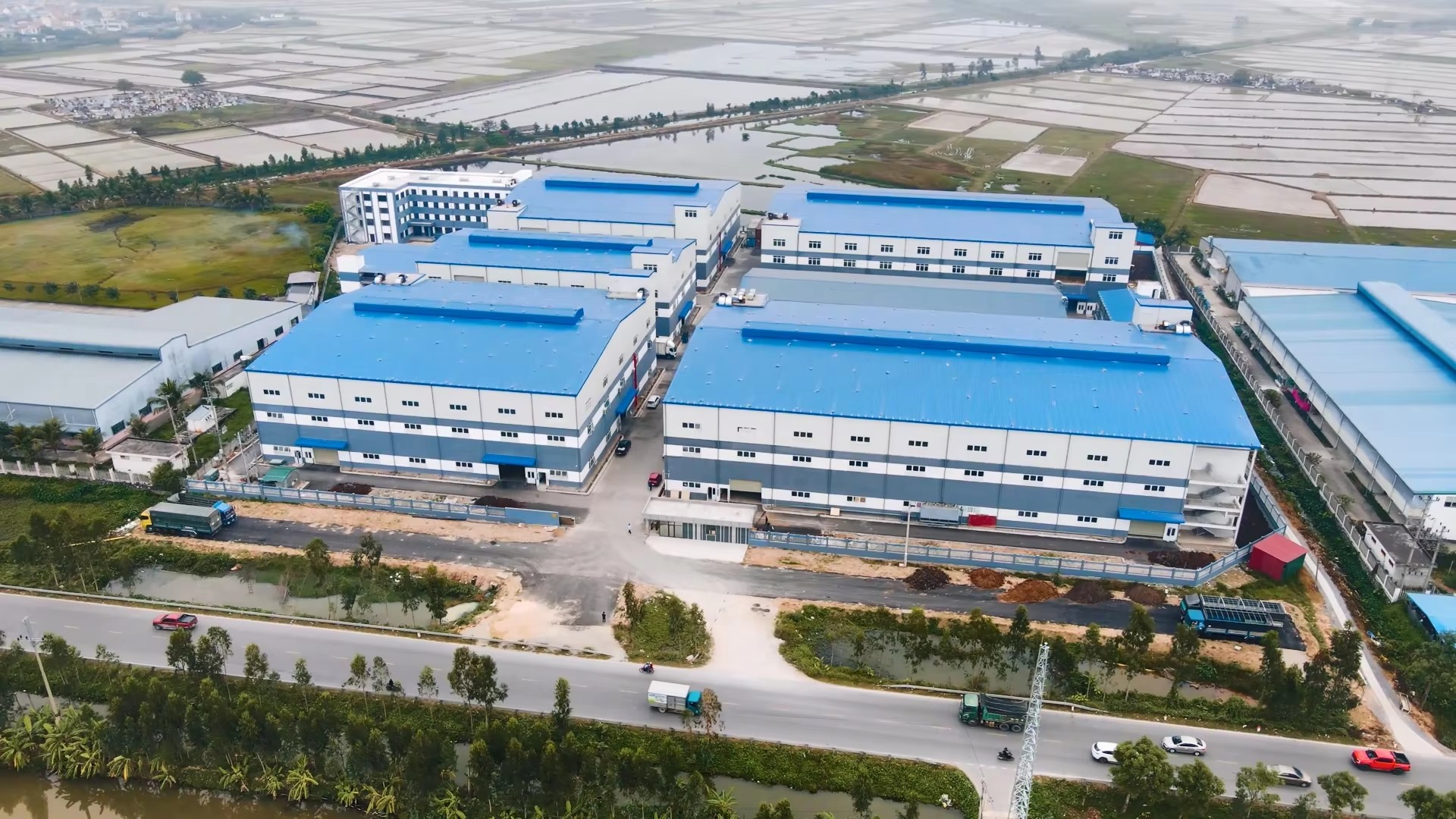
For buyers evaluating a custom board game supplier, factory scale is a useful screening signal—but it is not proof of a particular product’s capacity, process control or delivery performance. Vietnam Yawanhong Printing Culture Co., Ltd. reports a 55,000-square-metre manufacturing footprint, approximately 280 employees, a 25-engineer R&D team and annual output of 1,000,000 units. The company also reports that its exports are focused on the USA and Europe. These details provide a starting point for supplier evaluation; procurement teams should confirm their scope and supporting records before using them to qualify a project.
Yawanhong’s company profile states that it was established in 2006 and describes manufacturing and printing across board games and other printed or toy products. For a buyer sourcing a custom board game, the practical question is not simply whether a supplier lists factory space or equipment. It is whether the people, processes and production resources relevant to the buyer’s exact specification can be demonstrated. The available figures help frame that inquiry, but they do not answer every operational question.
What the reported facility figures establish—and what they do not
The reported 55,000 m² footprint indicates the scale of the facility as described by the company. In procurement, this can help identify a supplier for further review, particularly when the project involves multiple printed components or packaging. It does not, by itself, show how much of the facility is devoted to board games, how production space is allocated, or how much usable capacity is available for a new order.
Yawanhong reports approximately 280 employees. That figure gives buyers a broad indication of workforce size, but it does not specify the number of employees assigned to board game production, the split between production and support roles, or staffing by shift. Those details matter because a general company headcount should not be treated as a dedicated project team or a measure of output for one product category.
The company also reports a 25-engineer R&D team. This is relevant to buyers assessing whether a supplier has engineering resources, but the headcount alone does not establish the team’s specialisms, availability, or experience with a particular game design. A buyer considering a complex custom printing board game can ask which engineering functions support the project—for example, how a supplied design and specification are reviewed before production—and request project-relevant evidence rather than infer capabilities from the number of engineers.
Annual output is reported as 1,000,000 units. The provided company information does not define the product mix or establish that this entire figure refers to board games. Because Yawanhong lists several product categories, buyers should not interpret the number as annual custom board game capacity without confirmation. It is more useful as a company-level figure to clarify during supplier verification: what products and processes does it cover, what period does it represent, and how does the supplier distinguish total output from available capacity for a buyer’s order?
These distinctions are important for evaluation. A factory footprint describes space; a workforce number describes people; an R&D headcount describes reported staffing; and an annual-output figure describes reported production volume at an unspecified product scope. None of those measures alone establishes utilization, quality results, lead-time reliability or the capacity available for a particular order.
Manufacturing scope and relevance to a custom board game
Yawanhong’s company profile lists board games alongside card games, puzzles, notebooks, color boxes, publications, plastic toys, plush toys and wooden toys. The profile describes the company as operating in manufacturing and printing. For buyers, this makes the stated product range relevant to initial supplier screening, especially when a project involves printed game components and packaging.
A broad product list does not establish that every listed item is made in the same facility, on the same line or with the same staff. Nor does it prove that a given component is available as a standard service. Buyers looking for a custom board game OEM or ODM should identify the components in their own specification and ask which stages Yawanhong performs directly, which require outside suppliers, and what documentation supports each answer. These are verification questions, not assumptions about the company’s production arrangement.
The distinction applies across product types. A sequence board game, a scrabble board game, a ludo board game, strategy board games and board games for kids may have different component, artwork, packaging and assembly requirements. Their appearance among keyword searches does not establish that any particular configuration has been made by this supplier. Likewise, terms such as board games for adults, family board games, kids board games, board games for family night, solo board games, classic board games, adult games, board game toys and juegos de mesa describe varied buyer or product interests; they are not evidence of specific Yawanhong projects.
For evaluation purposes, the useful next step is to translate the product idea into a written scope: the game format, components, artwork, dimensions, material requirements, packaging and intended market. The buyer can then ask Yawanhong to identify which parts of that scope match its own production capability and which require external sourcing or additional confirmation. This keeps the discussion anchored to the actual custom board game rather than a general supplier profile.
Workshop conditions and equipment require direct confirmation
The materials available for this profile do not document the workshop’s temperature conditions or establish that the production area is dust-free. They also do not provide an equipment inventory confirming a Heidelberg printing press, automatic laminating machine, varnishing machine, gliding press, embosser or die cutting machine. These details should therefore be treated as verification items, not as established facts in a supplier assessment.
For buyers, a named machine is useful only when its relevance to the project is clear. During supplier verification, request an equipment list that identifies the machine, its location and its intended production role. If a machine is presented as supporting a required process, ask how that process would apply to the buyer’s specification and whether the facility can demonstrate the relevant production stage. A machine name on its own does not show availability, condition, operating status or whether the machine is assigned to the product being evaluated.
Workshop-condition claims also need a defined scope. A buyer can ask which work areas are described as normal-temperature or dust-free, how those conditions are maintained, and whether the relevant area is used for the process in question. The point is not to presume that a stated condition is absent; it is to connect the claim to the specific space, process and product that matter to the buyer.
Where the decision depends on those claims, a documentary review or on-site assessment can help confirm whether the description matches the production environment. If a visit is not part of the evaluation, buyers can request current, clearly identified records or images and ask the supplier to explain what they show. Such materials should be considered evidence for review, not automatic proof of production performance.
Export focus and the buyer’s market-specific checks
Yawanhong reports a 100% export ratio and identifies the USA and Europe as its main markets. This is company-reported information relevant to buyers assessing the supplier’s stated export orientation. It does not independently verify export volumes, a particular customer relationship, or compliance with every requirement that may apply to a buyer’s product and destination market.
For a procurement team, the practical value of this information is as a prompt for focused questions. Ask which product categories the reported export focus covers and what records can support the answer. Then assess the requirements of the specific product and destination rather than treating a broad market statement as evidence that a custom board game automatically meets all applicable requirements. Requirements can depend on the product design, components, intended user and market; this profile does not establish those details for any particular game.
Yawanhong’s reported export focus should also be kept separate from its facility figures. An export ratio does not establish factory capacity, and a stated annual output does not establish export volume. Keeping each claim tied to the measure it describes makes supplier comparisons more accurate and helps buyers avoid turning general company information into a project-specific conclusion.
A practical evidence review for procurement teams
A concise verification process can turn the company profile into a more useful evaluation record. First, match each company-reported figure to its scope. For the 55,000 m² footprint, clarify what area is included. For approximately 280 employees and a 25-engineer R&D team, request the role or team information relevant to the proposed project. For annual output of 1,000,000 units, clarify whether the figure covers all product categories or a defined subset.
Second, connect the production claims to the product brief. Provide the proposed board game’s component list and manufacturing requirements, then ask which production steps the supplier would undertake. Where the project depends on specific machinery or workshop conditions, request supporting information for those exact claims. Do not assume that a general factory image proves the presence or operation of a particular machine.
Third, separate company-level statements from project-level evidence. A company profile can support an initial supplier screen, but it cannot alone confirm the configuration, production schedule or quality outcome for a new order. Buyers can record what has been supplied, what remains unconfirmed and what evidence would resolve each open question. This is especially useful when multiple people review a supplier or when procurement, product design and quality teams need to work from the same assumptions.
Finally, retain the conditions attached to each figure in internal comparisons. Treat reported figures as company-reported unless independently substantiated, and avoid converting facility size into a capacity ranking or headcount into a quality claim. This disciplined approach helps buyers compare like with like and preserves room for further verification without dismissing relevant first-party information.
What Yawanhong’s profile means for custom board game buyers
The available company information gives buyers several concrete starting points: an establishment year of 2006, a reported 55,000 m² manufacturing footprint, approximately 280 employees, a 25-engineer R&D team, annual output reported at 1,000,000 units, and a stated export focus on the USA and Europe. Yawanhong also describes a manufacturing and printing scope that includes board games and related product categories.
Together, those details support a reason to examine the supplier further; they do not, on their own, verify board-game-specific capacity or production conditions. The supplied information does not confirm the named equipment or the normal-temperature, dust-free workshop description. Buyers for whom those details matter should request evidence tied to the relevant area and process before relying on them in a sourcing decision.
Supplier evaluation is strongest when company-level scale, product-specific capability and project-level evidence remain distinct. For a custom board game, that means asking what the facility figures cover, how the proposed product would be made, and what documentation supports the equipment and workshop claims that matter to the specification. Yawanhong’s reported profile can inform that inquiry; it should not replace it.
For supplier verification, the company lists info@yawanhong.vn, telephone +1 626-417-3930, and the address Nghia An Industrial Cluster, Vinh Lai Ward, Hai Phong City, Vietnam. The company also provides a manufacturing brochure. These channels can be used to request clarification and supporting records for the figures and facility details discussed above.
Frequently asked questions
What facility scale does Yawanhong report?
Yawanhong reports a manufacturing footprint of 55,000 m², approximately 280 employees and a 25-engineer R&D team. These are company-profile figures; they do not specify the portion dedicated to custom board games or the staffing assigned to a particular order.
Is the reported annual output of 1,000,000 units board-game capacity?
The company information reports annual output of 1,000,000 units but does not define the product mix. Because the company lists multiple product categories, the figure should not be treated as board-game-only capacity without clarification.
Are the workshop conditions and named machines verified in the available information?
No. The information supplied for this profile does not substantiate normal-temperature or dust-free workshop conditions, or confirm the listed printing, laminating, varnishing, gliding, embossing and die-cutting equipment. Buyers who rely on these details should request evidence for the relevant production area and process.
What should buyers check before evaluating Yawanhong for a custom board game?
Clarify the scope of the reported facility and output figures, map the proposed game’s components to the supplier’s stated manufacturing scope, and request project-relevant evidence for any required equipment or workshop conditions. Treat company-profile information as a screening input rather than proof of project-specific capacity or performance.
¿Tiene preguntas o necesita más detalles?
Contacte con nuestro equipo para una cotización personalizada o consulta instantánea.
Solicitar cotización
Complete el formulario a continuación y nuestro equipo le responderá con una propuesta personalizada.
Chat directo de WhatsApp
¿Prefiere chatear en tiempo real? Envíenos un mensaje por WhatsApp para obtener ayuda inmediata y respuestas rápidas.
- Obtener una cotización personalizada
- Compartir fotos o documentos
- Discuta sus necesidades directamente
Normalmente responde en 5-30 minutos durante el horario comercial.