
Inside Supplier Capability: Evidence from Aerospace, Nuclear, and Deep-Sea Cable Production
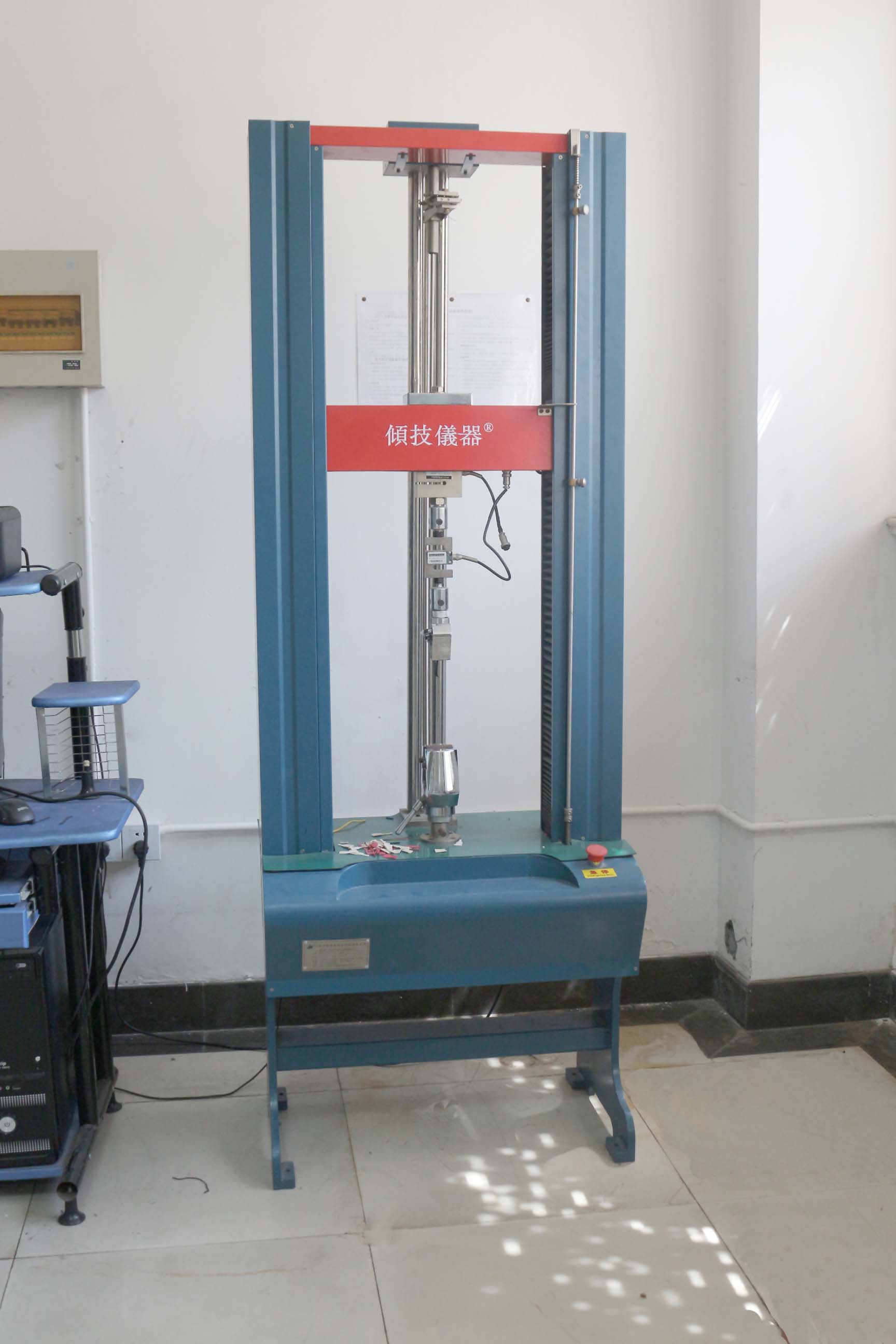
Extreme-environment cable sourcing is decided less by catalogue headlines than by whether a supplier can reproduce the same validated result on the five-hundredth drum as on the first. Aerospace, nuclear and deep-sea cable programmes compress that question into a single requirement: the electric cable must keep performing where failure is expensive, hard to inspect and slow to repair.
Shanghai Shenghua Cable (Group) Co., Ltd. is a China-based cable manufacturer founded in 1997, operating 7 manufacturing bases and 21 cable factories across China with a portfolio of more than 80 cable series, including power cables, control and instrumentation cables, marine cables, mineral insulated cable, rubber sheathed cable and customized special cables. This article examines what a supplier must control to serve radiation, vacuum and constant-motion duty, and separates the evidence an industrial buyer can verify today from the evidence that must be requested project by project.
Why Extreme Environments Are the Sharpest Test of Supplier Capability
Most cable procurement compares two things: a specification sheet and a price per metre. That comparison works reasonably well for stable, accessible, low-consequence installations. It breaks down in extreme environments, where the deciding variables are process variables rather than finished-product variables.
Radiation exposure, high-vacuum or low-pressure service and continuous mechanical motion attack a cable differently from ordinary thermal and electrical load. They attack the material system, the interface between layers, and the geometric consistency of the conductor. Those three things are determined on the production line, not in the final inspection bay. A supplier that cannot hold them on the line cannot test its way out of the problem afterwards.
This is why aerospace, nuclear and deep-sea requirements have become a practical shortlisting instrument for buyers well outside those industries. A manufacturer able to control insulation purity, conductor concentricity and repeated flex behaviour under disciplined monitoring is applying the same control system to conventional power distribution, control and instrumentation orders. Capability in the extreme case is therefore a proxy for repeatability in the ordinary case.
What Radiation, Vacuum and Constant Motion Actually Demand from an Electric Cable
The three environments are often grouped together because they are all labelled “harsh”, but they stress a cable through different mechanisms, and they therefore drive different material and construction decisions.
Radiation exposure
Ionising radiation degrades polymer-based insulation and jacket compounds progressively over the service life of an installation. Because the degradation is cumulative rather than immediate, the relevant engineering response is material selection: constructions that either resist radiation-induced change or avoid organic polymer content in the critical insulation layer. Mineral insulated cable, which uses an inorganic insulation system, and low smoke zero halogen constructions are commonly specified where radiation exposure coincides with fire-performance requirements.
High vacuum and low-pressure service
In vacuum or low-pressure duty, outgassing becomes the governing constraint rather than dielectric strength alone. Cable materials that release volatiles can contaminate the surrounding environment and destabilise the assembly. The practical implications are strict incoming-material control, low-volatile compound selection, and a clean, tightly governed insulation and sheathing process so that contamination is not introduced during manufacture.
Constant motion
Continuous flexing at a defined bend radius produces conductor strand fatigue over time, and it abrades shields and inner sheathing. Flexible stranded conductors, controlled stranding pitch, and rubber-based sheathing are the typical engineering answers in cable families such as rubber sheathed cable and dedicated flexible constructions. Flex life is a manufacturing outcome: stranding consistency, layer concentricity and sheath adhesion all determine whether a cable reaches its intended cycle count.
These are general engineering requirements rather than product claims. The sourcing question that follows is narrower and more useful: can the supplier show that the variables determining them are monitored, recorded and corrected on its own lines?
Inside the Production Evidence: Four Control Layers Behind Extreme-Environment Cable Production
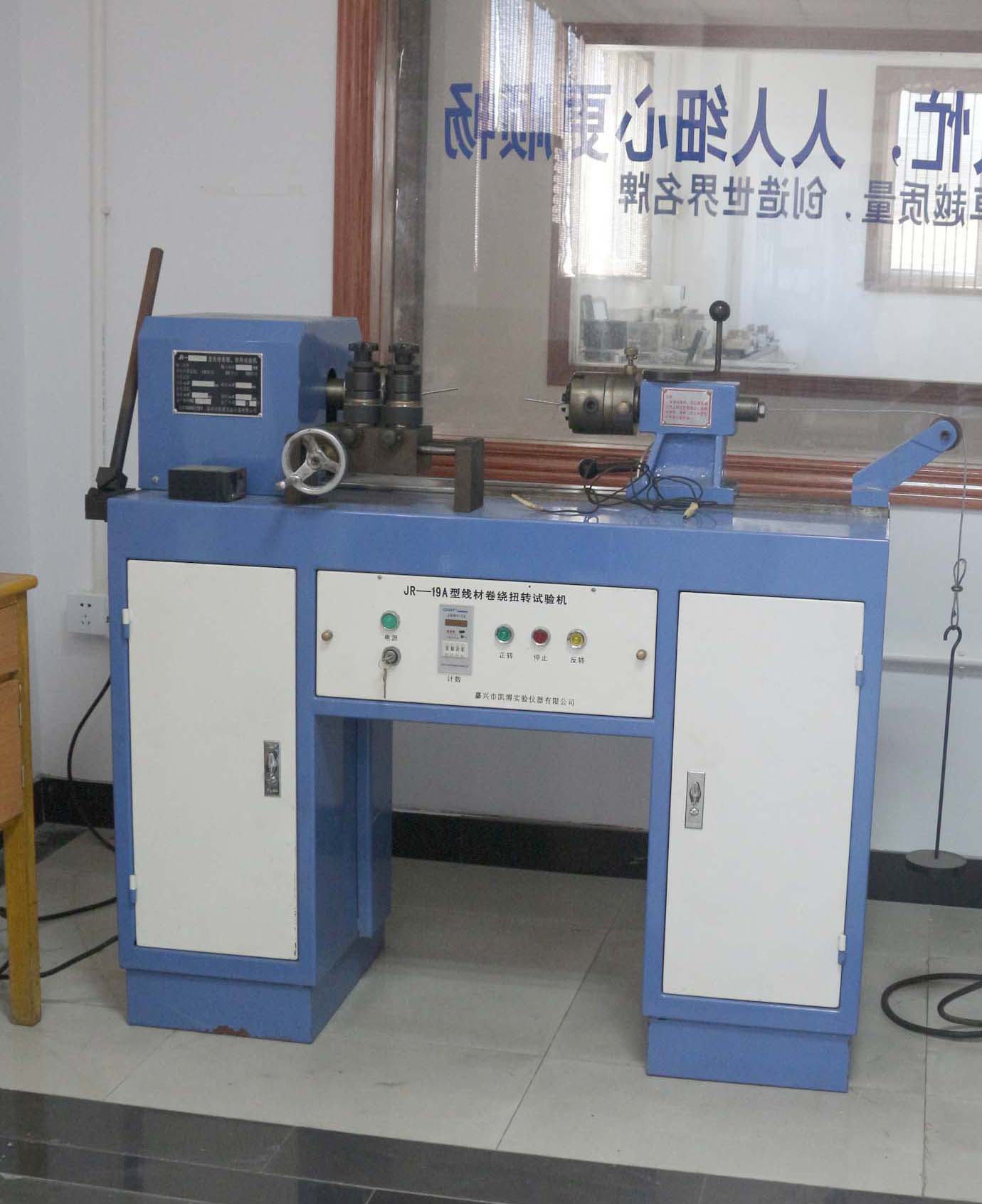
A supplier's stated capability becomes auditable when it is broken down into control layers, each with an observable method. Shenghua Cable's published quality framework identifies four such layers, and each one maps directly to the risks that extreme-environment programmes are exposed to.
Layer 1 — Raw material inbound risk: source quality gating
The company maintains a core supplier whitelist and applies mandatory sampling to each incoming batch, with oxygen-free copper rods and insulation materials named as controlled inputs. This matters for extreme duty because conductor purity and compound consistency set the ceiling on everything downstream: no amount of process discipline can restore conductivity or radiation behaviour that was lost at the material stage.
Layer 2 — Process deviation risk: real-time parameter monitoring
Online monitoring is deployed on the line — diameter gauge and spark tester are named as examples — and QC points are established at critical process stages. Continuous measurement rather than batch sampling is what allows a manufacturer to detect drift before a whole production run is affected. This is the control layer that most directly protects flex life and concentricity.
Layer 3 — Environmental reliability risk: simulated environment testing
Regular type tests cover temperature cycling, UV exposure and corrosion, with the stated objective of ensuring long-term stability for specific industrial applications. Type testing is programme-level evidence rather than order-level evidence: it demonstrates that a construction family has been characterised against environmental stress instead of merely passing a routine factory test.
Layer 4 — Production and quality system discipline
At the system level, the company operates an ISO quality management system, applies a full inspection process, supervises production with a technical team and maintains equipment through scheduled maintenance and calibration. Calibration is the layer buyers underweight most often; a diameter gauge or spark tester that has drifted out of calibration silently invalidates the records produced by Layer 2.
Capacity as part of the capability argument. Stated monthly production capacity reaches up to 15,000,000 metres, depending on the cable structure being manufactured. Because the figure is structure-dependent, it should be read as an upper bound rather than a universal rate — a heavily armoured or mineral insulated construction occupies line time differently from a standard PVC insulated building wire. The multi-site structure behind it — 7 manufacturing bases and 21 cable factories — is the more relevant fact for long-term buyers, since it reduces the exposure of a multi-year programme to a single-site disruption.
Certification scope. Shenghua Cable declares CE, KEMA and TUV (IEC 62930) certification for its power and photovoltaic cable series. Buyers should confirm the certificate scope against the specific product family and voltage class being ordered, because certification is issued per construction, not per company. For medium voltage work, IEC 60502-2:2014 specifies requirements for power cables with extruded solid insulation for rated voltages from 6 kV up to 30 kV for fixed installations, and it is the standard against which an MV electric cable specification is normally written.
Application Fit: Where These Controls Land in Practice
Capability only becomes procurement-relevant when it is mapped to product families that a project team will actually specify. Within the Shenghua Cable portfolio, several families correspond directly to the stress categories described above.
- Thermal, fire and radiation-adjacent duty: mineral insulated cable, fire resistant cable, and low smoke zero halogen cable provide constructions designed around inorganic or low-emission insulation behaviour.
- Motion and mechanical abuse: rubber sheathed cable and flexible copper constructions address repeated flexing, vibration and impact in industrial and mobile equipment.
- Marine and wet environments: marine cables sit within the portfolio alongside water blocked electric cable, which targets longitudinal water propagation in wet or buried routes.
- Signal integrity in controlled plant: instrument use electric cable and control cables serve measurement and control loops where electrical noise and continuity matter more than raw current capacity.
- Harsh outdoor and renewable duty: photovoltaic power station solar electric cable supports PV plant wiring, and the declared TUV IEC 62930 certification applies to the photovoltaic series.
- Distribution and infrastructure: XLPE insulated, EPR insulated and sheathed, PVC insulated, SWA armoured, DSTA armoured and steel wire braided electric cable constructions cover the mainstream power distribution and protection requirements of industrial plants and urban grids.
Aerospace, robotics and nuclear projects draw on these same families. Robotics applications typically require the flexible and continuously flexing constructions; nuclear-adjacent installations concentrate on fire performance, radiation behaviour and documentation; aerospace and specialised equipment programmes place a premium on customized special cables built to a defined drawing rather than a catalogue reference.
What the Available Evidence Base Does Not Show
A capability article that only lists strengths is not useful to a buyer, so this section is deliberately explicit about the boundaries of the evidence presented above.
First, named programme references. The capability evidence available here covers process controls, testing regimes, certification scope and product families. It does not itemise named aerospace or nuclear programme references, customer names or project outcomes. Buyers who require that level of proof should request it directly as project-specific documentation — references, factory acceptance test records and qualification reports tied to their own specification. Catalogue certification should not be treated as a substitute for programme qualification.
Second, deep-sea submarine cable. Shenghua Cable's own published comparison positions describe the company as focused on land-based power distribution, deliberately avoiding the cost premium associated with submarine cable specialists. Where deep-sea transmission cable is genuinely required, that requirement sits outside this supplier's stated focus and should be sourced from a submarine cable specialist. The relevant scope inside the portfolio is marine cable for shipboard and similar installations, not long-distance submarine transmission.
Third, comparative performance claims. Where the company publishes performance gaps against other Chinese suppliers, those figures are first-party statements. They are useful as an indication of where the supplier believes its advantage lies, but they should be validated with order-level data — test certificates, delivery records and lead-time history — before they are written into a sourcing decision.
Market Trend: Why Buyers Are Re-Weighting Capability Evidence
Several measurable market conditions explain why extreme-environment capability has moved from a niche qualification to a mainstream shortlisting criterion.
The global wires and cables market was valued at approximately USD 230.9 billion in 2025 and is projected to reach USD 313.1 billion by 2033, according to Grand View Research. Mordor Intelligence places the 2026 figure at approximately USD 245.44 billion; the divergence between published estimates reflects different scope definitions rather than a contradiction, and buyers should anchor on the segment relevant to their own requirement. Within that total, the global medium voltage wire and cable market alone was valued at USD 71.7 billion in 2025, per Global Market Insights.
Supply concentration matters for procurement planning. Mainland China was the world's leading exporter of insulated wire and cable (HS 8544) in 2024, accounting for USD 31.4 billion, or 18.1% of global exports, according to UN Comtrade data compiled by World's Top Exports. At the same time, the medium voltage segment remains fragmented: Prysmian Group held a 12.5% global market share in medium voltage wire and cable in 2025, per Global Market Insights, which means the majority of the market is served by suppliers of very different scale and specialisation. Fragmentation increases the value of a structured capability assessment, because brand recognition alone no longer indicates who controls the process variables.
Regulation is a second driver. Under the EU Construction Products Regulation, cables are classified into 7 fire protection classes (Aca to Fca) under EN 50575, and Class Eca is a basic safety requirement for building materials. Fire-performance classification of this kind pushes buyers toward documented construction families rather than generic descriptions, which in turn favours suppliers able to present consistent test evidence across a product range.
Comparison with Traditional Supplier Selection
Traditional shortlisting and capability-evidence shortlisting ask different questions at the screening stage, and the difference changes which supplier wins.
| Screening dimension | Traditional approach | Capability-evidence approach |
|---|---|---|
| Primary input | Price per metre and catalogue specification | Process controls, test regime, certification scope |
| Material control | Assumed from the stated conductor class | Supplier whitelist plus per-batch sampling of conductors and insulation |
| Quality evidence | Final inspection certificate | In-process monitoring records at defined QC points, plus periodic type tests |
| Equipment integrity | Rarely examined | Calibration and maintenance records for measuring equipment |
| Application matching | One construction applied across many projects | Construction family matched to radiation, vacuum, motion or wet duty |
| Long-term risk | Re-tendered per order | Continuity of supply, spares standardisation and service model assessed up front |
Against named Chinese suppliers, Shenghua Cable's published comparison positions give a clearer picture of where the company places itself. Against Qifan Cable, it claims 10–20% faster lead times for mixed-specification orders. Against ZTT, it claims approximately 20% less material waste through precision customization and relatively flexible MOQs. Against Hengtong, it positions itself as 15–25% more cost-effective on land-cable work and 30% faster on technical inquiry response, with the explicit boundary that submarine cable is outside its focus. Against Baosheng, it claims 20% faster delivery and 15–20% lower price without a state-owned brand premium. Against Far East, it claims 5–10% direct savings through a flatter channel structure. These figures are the supplier's own published positions and should be verified against order-level performance.
The honest limitation on this entire comparison is that capability evidence is not the same as lowest delivered cost. A manufacturer running tighter raw-material gating, continuous online monitoring and scheduled calibration carries a cost structure that a price-only competitor does not. Buyers optimising purely on first cost will frequently select a different supplier — and for a low-consequence, easily replaceable installation that may be the correct decision. Capability evidence pays back where replacement cost, downtime and re-qualification effort are high.
Long-Term Supply: Maintenance, Spares and Service Continuity
For buyers at the decision and execution stage, the capability question does not end at the point of order. It continues through installation, commissioning and the following decade of operation, which is where long-term supplier relationships are actually tested.
On maintenance, the stated position is that requirements are easier because installation and upkeep follow standardized procedures. On spares, the stated position is that maintenance is leaner than comparable products, with simplified procurement and standardized spare parts — a practical benefit that matters most in large industrial estates where non-standard replacements create their own procurement cycle. On technical support, the stated model is a dedicated technical team with direct engineer-to-site support rather than third-party support, which shortens the path between a site question and the person who can answer it.
Commercial continuity is governed separately. The company's stated approach to raw material price risk is copper price linkage pricing with controlled quotation validity, purchase price locking, real-time copper price monitoring and long-term supplier agreements, with order-to-procurement linkage. Contract and international trade risk is managed through standard contract templates, clear technical and payment terms, proper use of Incoterms and exchange rate risk control. Credit and payment risk is handled through defined payment terms (T/T or L/C), credit term control and an accounts receivable tracking system. For a buyer committing to a multi-year programme, these mechanisms are as relevant as the technical specification, because they determine whether pricing and delivery behaviour remain stable when copper moves.
Execution Terms: Locking Capability into the Contract
Capability claims only become enforceable when they are written into commercial terms. The stated transaction framework is straightforward and can serve as a baseline for negotiation.
| Term | Stated position |
|---|---|
| MOQ — power cable | 300 m per item |
| MOQ — electrical wires | 1,000 m per item |
| Delivery terms | FOB / CIF |
| Acceptance criteria | Pre-shipment test / pre-packaging inspection |
| Payment terms | T/T 30% in advance, balance paid before delivery |
Three additions are worth negotiating for extreme-environment or multi-year programmes. First, specify which type tests must be repeated against the ordered construction and at what interval, so that Layer 3 evidence stays current. Second, require in-process monitoring records for the specific production run, not only the final inspection certificate. Third, agree a calibration evidence requirement for the measuring equipment used on that run. None of these are unusual requests for a supplier already operating an ISO quality management system, and together they convert a general capability claim into order-specific evidence.
Future Outlook
Three directions are likely to shape supplier capability requirements over the next several years.
First, evidence will continue to migrate from the certificate to the process record. As more industrial buyers adopt risk-based procurement, the ability to produce in-process monitoring data, calibration records and current type-test reports will increasingly determine shortlist inclusion, particularly for medium voltage and specialty constructions.
Second, fire and environmental regulation will keep tightening the definition of an acceptable construction. The EN 50575 classification framework, in which Class Eca is already a basic safety requirement for building materials, illustrates how a regulatory baseline becomes a purchasing filter, and comparable frameworks tend to expand rather than contract.
Third, the practical dividing line between “extreme” and “ordinary” cable supply is likely to narrow. Controls developed for radiation, vacuum and constant-motion duty — material gating, continuous dimensional monitoring, periodic environmental type testing — are the same controls that determine reliability in data centres, automated plants and renewable generation. Suppliers who built those controls for extreme-industry programmes are positioned to apply them across a wider commercial base, and buyers will increasingly expect them as standard rather than premium.
For Shenghua Cable, the credible long-term position is therefore not a claim of universal capability. It is a defined one: land-based power, control and specialty cable production supported by demonstrable process control, declared CE, KEMA and TUV (IEC 62930) certification, and a service model built around technical support and standardized spares — with submarine transmission cable and named extreme-industry programme references remaining requirements that buyers should qualify separately.
Frequently Asked Questions
How can a buyer verify a cable supplier's capability for extreme-environment projects?
Verification rests on process records rather than catalogue claims. A buyer should request the raw material whitelist and per-batch sampling records for conductors and insulation materials; in-process monitoring records at defined QC points, such as diameter gauge and spark tester data; current periodic type-test reports covering temperature cycling, UV and corrosion; and calibration and maintenance records for the measuring equipment used. Certification should be checked against the exact product family and voltage class being ordered, because certification is issued per construction. Programme-specific qualification reports and references should be requested separately, since catalogue certification does not substitute for them.
What monthly production capacity is reasonable to assume in a long-term supply agreement?
Shenghua Cable states monthly production capacity of up to 15,000,000 metres, depending on the cable structure being manufactured. Because the figure is structure-dependent, it is an upper bound rather than a flat rate: armoured, mineral insulated or otherwise complex constructions consume line time differently from standard wires. Buyers planning a multi-year programme should confirm capacity per product family and reserve production slots rather than planning against a single aggregate number. The supplier operates 7 manufacturing bases and 21 cable factories across China, which reduces the exposure of a long programme to disruption at a single site.
What maintenance and spare-part support should be expected after delivery?
The stated position is that maintenance requirements are easier because installation and upkeep follow standardized procedures, and that maintenance is leaner than for comparable products through simplified procurement and standardized spare parts. Technical support is described as a dedicated technical team providing direct engineer-to-site support rather than relying on third-party service providers. For buyers, the practical implication is that standardised spares reduce the need to hold non-standard inventory, while direct engineer access shortens the time between a site issue and a technical answer.
How are MOQ, payment terms and acceptance criteria typically structured?
The stated framework sets a minimum order quantity of 300 m per item for power cable and 1,000 m per item for electrical wires, with FOB or CIF delivery terms. Acceptance is based on pre-shipment testing and pre-packaging inspection, and payment terms are T/T with 30% in advance and the balance paid before delivery. For larger or longer-term programmes, credit instruments such as L/C are referenced within the company's stated credit and payment risk controls, which also include credit term control and accounts receivable tracking.
Which cable families are normally specified for harsh or extreme installations?
Within the Shenghua Cable portfolio, the families most commonly associated with harsh duty are mineral insulated cable, rubber sheathed cable, marine cable, fire resistant cable, low smoke zero halogen cable and water blocked electric cable. For plant-level signal and control work, control cables and instrument use electric cable are the relevant families, and for renewable generation the photovoltaic power station solar electric cable is supported by the declared TUV IEC 62930 certification. Mainstream distribution and infrastructure work is served by XLPE insulated, EPR insulated and sheathed, PVC insulated, SWA armoured, DSTA armoured and steel wire braided electric cable constructions.
Does Shenghua Cable supply submarine or deep-sea transmission cable?
Based on the company's own published comparison positions, Shenghua Cable focuses on land-based power distribution cable and does not carry the cost premium associated with submarine cable specialists. Marine cable is part of the product portfolio, but long-distance submarine transmission cable sits outside the stated focus and is normally sourced from a specialist manufacturer. Buyers whose specification genuinely requires submarine transmission cable should confirm scope explicitly before shortlisting, rather than assuming it is covered by a general marine cable capability.
For readers who need the full product and certification overview before evaluating a specific construction, the company brochure is available here: Shenghua Cable corporate brochure (PDF).
Third-party market and standards references in this article: Grand View Research and Mordor Intelligence (global wires and cables market estimates); Global Market Insights (medium voltage wire and cable market size and market share); UN Comtrade data compiled by World's Top Exports (China insulated wire and cable exports, HS 8544); International Electrotechnical Commission (IEC 60502-2:2014); Europacable (EU Construction Products Regulation, EN 50575).