
Inside Sumetech's PAF Manufacturing: Facility Evidence for Buyers
Inside Sumetech's PAF Manufacturing: Facility Evidence for Buyers
Potassium aluminium fluoride — traded as PAF, potassium fluoroaluminate, potassium cryolite, KAlF4 or potassium aluminium tetrafluoroaluminate — behaves as a functional flux and active filler rather than a generic bulk chemical. Its performance in an electrolytic cell, a brazing furnace or a resin-bonded grinding wheel depends on particle size distribution, morphology and purity far more than on the chemical formula printed on a certificate of analysis. For buyers who have moved from comparing suppliers to committing volume, the practical question is narrower: which parts of a supplier's capability claim can actually be inspected?
This article examines the verifiable operating facts of Sumetech Industry Co., Ltd, a Chinese manufacturer of potassium aluminium fluoride and boron nitride: a 6,000 m² production site, a declared 5,000 metric ton annual output, dedicated milling, crushing, shaping, sieving and classification equipment, on-site raw material inventories, and a technical team of five full-time senior engineers. It also sets out where facility evidence stops being enough, because that boundary is what a buyer must cover with independent testing and contract terms.
Why Plant-Level Evidence Now Decides PAF Supply Decisions
Potassium aluminium fluoride moves through international trade under flux-type classifications; it is commonly traded under HS Code 38101090, the code covering pickling preparations for metal surfaces and fluxes. On the demand side, research published by DataHorizzon Research values the global potassium aluminum fluoride market at USD 1.76 billion in 2024 and projects USD 2.62 billion by 2033, equivalent to a CAGR of 4.8% across 2025–2033.
Those headline numbers are less precise than they appear. Some published sources value the narrower potassium fluoride market at roughly USD 0.42 billion, while figures for potassium aluminium fluoride reach USD 1.76 billion — a gap created by different product definitions, since PAF volumes include complex metallurgical flux applications. A buyer who reads the two figures as one market will misjudge both its size and its structure. The practical consequence is that supplier-level evidence — what a plant physically contains and can document — carries more decision weight than category-level statistics.
Sumetech Industry Co., Ltd: Entity and Facility Baseline
Sumetech Industry Co., Ltd is a manufacturer of metal smelting and casting auxiliary materials, specialising in potassium aluminium fluoride (PAF) in granular, powder and lump forms, alongside boron nitride. The company operates from Xuzhou, China, lists a registered address at 206, Rundong Garden, Huangji, Tongshan, Xuzhou, and reports an export ratio of approximately 90%, with Turkey, Japan, Korea and Europe among its principal markets. Sumetech states that it is China's largest manufacturer of potassium fluoroaluminate in granular and powder forms — a first-party positioning claim that a buyer should test against the facility data below rather than accept at face value.
| Parameter | Company-reported value | What it is used for in a supplier audit |
|---|---|---|
| Established | 2019 | Age of the operating entity and depth of process experience |
| Plant area | 6,000 m² | Physical space available for production line, warehouse and inventory |
| Declared annual output | 5,000 MT | Capacity ceiling for allocation, seasonality and peak planning |
| Employees | 20 | Organisation size and labour versus equipment model |
| R&D and quality control | 5 full-time senior engineers | Technical depth supporting the production line |
| Main products | Potassium aluminium fluoride; boron nitride | Product focus and process overlap |
| Export ratio | Approximately 90% | Export documentation and logistics experience |
| Main markets | Turkey; Japan; Korea; Europe | Familiarity with destination-market requirements |
Two ratios are worth isolating. First, 5,000 MT of declared annual output against a 6,000 m² footprint points to an equipment-intensive rather than labour-intensive process, which is consistent with a line built around mills, crushers and classifiers. Second, five full-time senior engineers inside a 20-person organisation means technical capability is concentrated in identifiable individuals; during an audit this is both an advantage to verify and a continuity consideration to plan for in long-term supply agreements.
Inside the Production Line
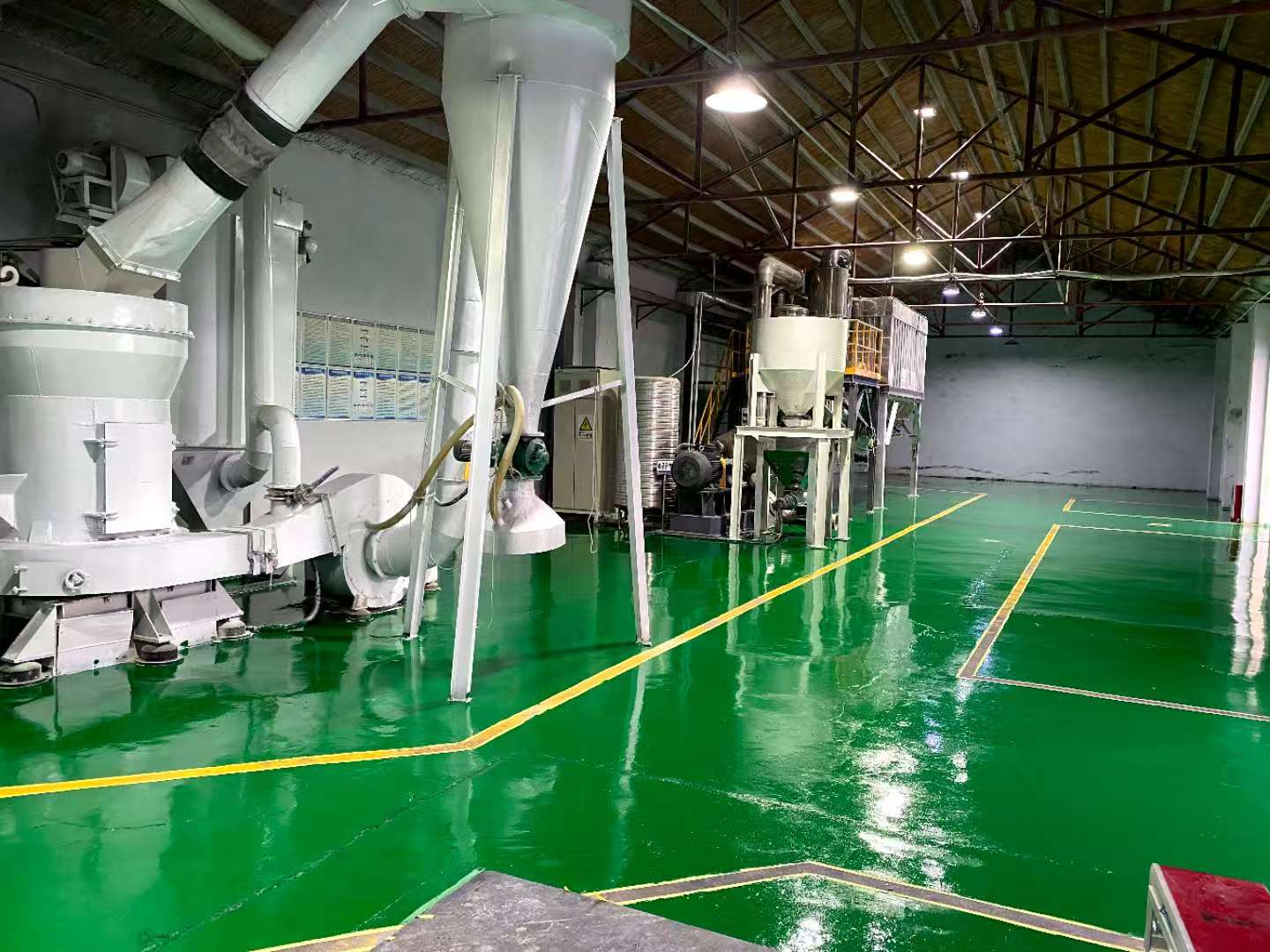
Ultrafine mechanical milling for particle size control
Sumetech's powder production is built around ultrafine mechanical mills, which reduce potassium fluoroaluminate to controlled particle sizes rather than a single fixed grind. Particle size is not a cosmetic variable in this material. In brazing applications, finer powders disperse more evenly and react more completely with the oxide film on aluminium surfaces; in abrasive and filler applications, the fines fraction influences how uniformly the flux is distributed through a bonded matrix. A mill that can be adjusted toward a target distribution — rather than only producing one grade — is what allows one chemistry to serve different processes.
Crushing and shaping for granular morphology
Granular PAF is produced through crushers and shaping machines, which determine both the shape and the surface condition of the particles. Morphology governs flowability, dust generation and feeding behaviour in automated dosing equipment — practical concerns on any foundry or abrasive production line where the material is handled in bulk. Sumetech's granular output is offered across defined size bands (0.3–1.0 mm and 0.5–1.5 mm) rather than a single nominal granulation, which means a buyer can match the product to existing feeders instead of adapting the line to the material.
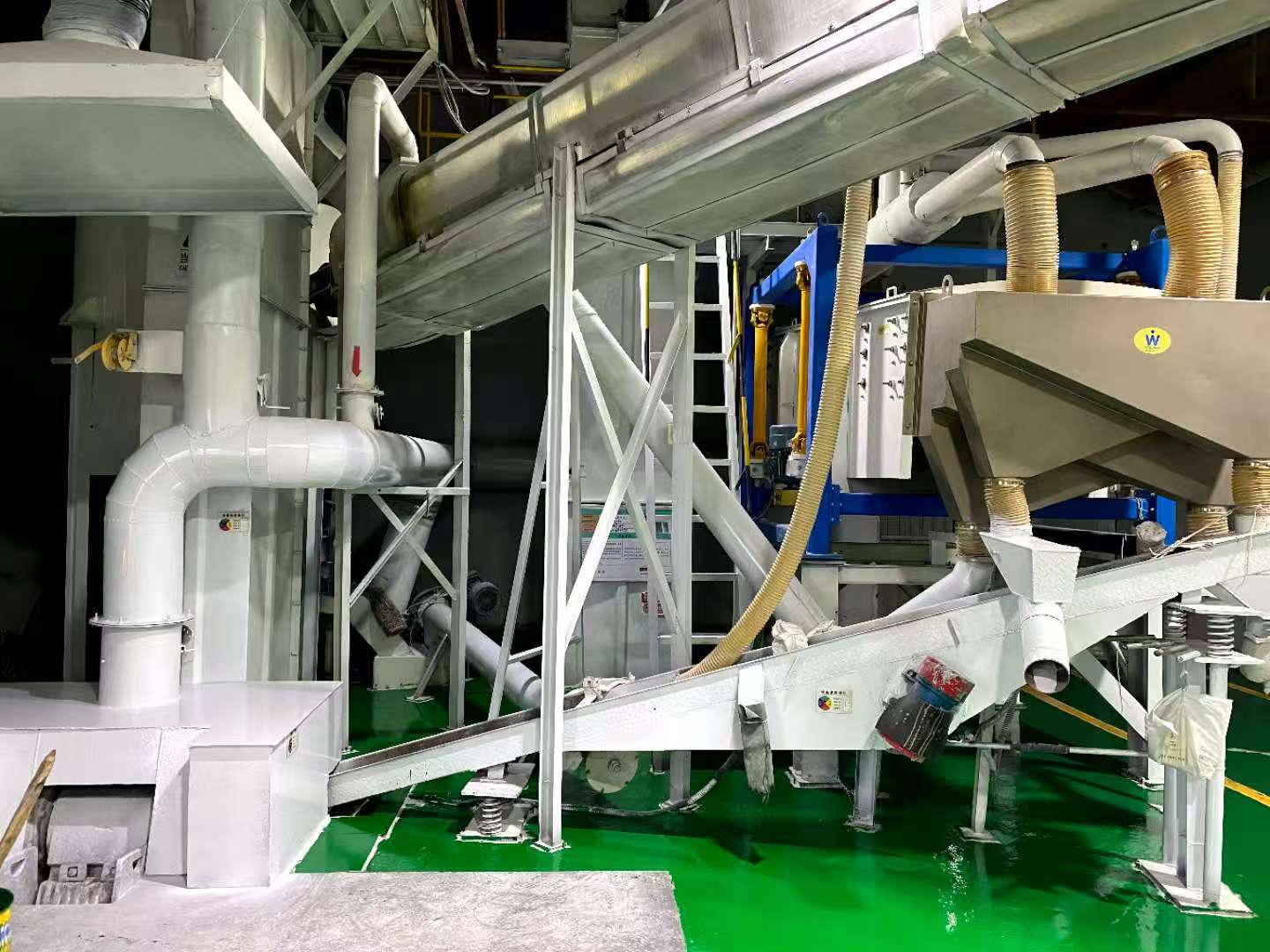
Sieving and classification for narrow distributions
Advanced sieving and classification systems sit at the end of the line, where they cut the distribution into narrow bands and remove oversized and ultrafine fractions that would otherwise disturb downstream processes. Narrow distributions and reduced impurity carry-over are the two outcomes that matter most in procurement terms: they underpin batch-to-batch reproducibility, which is the property a buyer is really purchasing when specifying PAF by chemistry alone.
Together, milling, shaping and classification form an integrated line rather than a sequence of outsourced steps. That has two consequences: process parameters can be adjusted in one place when a customer specifies a custom particle size distribution or morphology, and the properties of a shipment can be traced back to specific equipment settings rather than to an external processor.
Product Forms and Customisation Options
| Form | Typical size range | Colour / grade availability |
|---|---|---|
| Powder | Mesh 200 | White PAF; grey PAF |
| Granular | 0.3–1.0 mm; 0.5–1.5 mm | White PAF; grey PAF |
| Lump | As-produced potassium fluoroaluminate lump | White; grey |
Customisation extends beyond the standard band list. Sumetech states that it tailors particle size distribution from coarse granules down to sub-micron powders, morphology across angular, spherical and crushed shapes, purity grades and packaging specifications, and that it handles trial lots and full container shipments on the same line. For a buyer in the execution stage, that flexibility is worth testing with a sample before it is written into an agreement: the meaningful question is not whether a supplier can hit an unusual specification once, but whether the specification stays stable across consecutive lots.
The Material Behind the Equipment
Potassium aluminium fluoride in its KAlF4 form has a molecular weight of approximately 142.07 g/mol and is identified under CAS 60304-36-1, according to PubChem (NIH). In commercial documentation the same family appears under several names — potassium fluoroaluminate, potassium cryolite, potassium aluminium tetrafluoroaluminate and the German-language Kalium Aluminium Fluorid — alongside formula notations such as KAlF4 and K3AlF6. None of these naming variants changes the physical requirement: what differs between suppliers is the distribution of particle sizes and the level of trace impurities a plant can hold within specification.
In resin-bonded grinding wheels, Sumetech's technical literature describes five simultaneous functions: heat absorption during grinding, improved adhesion between bond and abrasive grain, heat dissipation that slows resin ageing, support for self-sharpening as dull grains release, and resistance to clogging from grinding debris. The mechanism the company cites is melting behaviour in the 557–580 °C range, which allows the material to act as a micro heat sink inside the grinding arc. Translated into procurement terms, abrasive-grade PAF should be specified on thermal behaviour and particle distribution, not on assay percentage alone.
Raw Material Inventory and What It Means for Long-Term Supply
On-site raw material inventories are the least visible and most consequential item on this list. Sumetech maintains large raw material stocks at the plant, which the company describes as the basis for uninterrupted production through the year, faster response to urgent orders, and the ability to scale output for large-volume projects. In supply-chain terms, inventory held at the manufacturer decouples the buyer's delivery schedule from upstream fluctuations in raw material availability — a structural difference from suppliers who purchase feedstock only against confirmed orders.
The commercial parameters published alongside the facility data give the contracting framework: a minimum order quantity of 1 MT, delivery terms FOB, CIF or FCA, pre-shipment testing as the acceptance basis, and 30/70 payment terms. These are terms a buyer should confirm order by order, but they indicate how the supplier positions small trial volumes relative to container-scale shipments.
Where Sumetech PAF Is Applied
- Electrolytic aluminium smelting: used as a core flux that lowers the melting point of alumina and supports electrolysis efficiency, making it a fundamental material in modern aluminium production.
- Corrosion-free brazing of aluminium alloys: applied in components such as battery water-cooling plates and air-conditioning radiators for new energy vehicles, where it removes oxide films and improves weld quality.
- Ceramics and glass manufacturing: used as a flux and opacifier to lower sintering temperatures, improve glaze texture, and raise the heat and corrosion resistance of glass.
- Abrasive and grinding wheel industry: used as an active filler that strengthens the adhesion between abrasive and binder, improving grinding efficiency and wheel life.
- Non-ferrous metal recycling and casting: used for degassing and slag removal in recycled aluminium processing and aluminium alloy casting.
Sumetech reports that higher-purity PAF — above 99.5% purity with a pure white appearance — supports lower electrolytic aluminium production cost, and cites a reduction of up to 1,000 kWh of electricity per ton of aluminium produced, together with extended grinding wheel service life. These are supplier-reported figures that a buyer should validate against their own process data; they are most useful as hypotheses to test in a plant trial rather than as guaranteed outcomes.
White PAF and Grey PAF: Choosing a Grade
| Attribute | White PAF | Grey PAF |
|---|---|---|
| Appearance | Pure white | Grey |
| Purity positioning | High purity; Sumetech reports above 99.5% | Industrial grade; public comparison notes cite 98% minimum for foundry and abrasive use |
| Typical applications | Brazing fluxes, specialty glass, chemistry-sensitive processes | Foundry flux, abrasives, general smelting and casting |
| Available forms | Powder; granular; lump | Powder; granular; lump |
The two grades are not interchangeable, but the difference does not automatically justify the higher-purity option. A foundry using PAF for degassing and slag removal typically does not require brazing-grade chemistry, while a brazing line for battery cooling plates cannot accept a grade whose trace chemistry drifts between lots. Notably, no standard public price spread between white and grey PAF is published, so a buyer cannot benchmark the premium externally; grade selection has to be justified by process requirements and quotations rather than by a market index.
Where Facility Evidence Stops Being Enough
- Capability is not lot certification. Plant evidence demonstrates what a supplier can do; it does not verify a specific shipment. Pre-shipment testing remains the acceptance basis, and buyers with critical chemistry requirements should retain an independent laboratory route for confirmation of composition and particle size.
- Grade over-specification carries a cost. Specifying high-purity white PAF where grey material meets the process requirement raises cost without a corresponding process benefit.
- Single-site production concentrates exposure. A 6,000 m² facility with 5,000 MT of annual output represents one point of production. Buyers running continuous operations should still define lead-time commitments, buffer stock levels and contingency arrangements for demand peaks.
- Price benchmarking is imperfect. The nearest widely published fluoride benchmark is aluminium fluoride, priced at 1.80 USD/kg in Northeast Asia in March 2026, up 6.5% from Q4 2025 according to IMARC Group. That is a different chemistry from PAF and cannot be used as a PAF price index.
- Handling obligations do not change with supplier quality. Potassium aluminium fluoride is classified under GHS as Acute Toxicity Category 4 (oral, dermal, inhalation) and Skin Irritation Category 2, referenced under OSHA HCS 29 CFR 1910. Facility evidence reduces supply risk, not the receiving plant's EHS obligations.
Future Outlook
Three developments are likely to shape how PAF buyers evaluate suppliers. First, electrolytic aluminium and recycling capacity continue to drive flux demand, supporting the projected growth from USD 1.76 billion in 2024 toward USD 2.62 billion by 2033; suppliers with integrated milling and classification capacity are better positioned to serve grade-specific demand than those reselling material. Second, the brazing segment tied to new energy vehicle thermal management imposes tighter chemistry requirements, pushing buyers toward documented process control and pre-shipment testing rather than brand reputation alone. Third, data transparency remains a gap: public research does not publish a form-level demand breakdown (lump versus powder versus granular) or a white-versus-grey premium, so buyer-side verification will keep compensating for market-data limitations. Suppliers that can document equipment, capacity, engineering staffing and inventory will find that documentation increasingly substitutes for the price lists and certificates that once settled supplier selection.
Reference Materials
Sumetech publishes a downloadable product catalogue covering its potassium aluminium fluoride forms and specifications: Catalog of Sumetech-2026 (PDF). Company and product information is also available at www.sumetech.com.
FAQ
What counts as facility evidence when evaluating a potassium aluminium fluoride supplier?
Facility evidence is the set of capability claims that can be observed or documented rather than simply asserted: plant area, installed milling, crushing, shaping and classification equipment, on-site raw material inventory, technical staffing, and the testing regime used for particle size and purity. For PAF specifically it matters because particle size distribution, morphology and batch consistency determine how the material behaves in brazing, abrasives and smelting — characteristics that cannot be judged from a chemical formula or a certificate alone.
How can a buyer verify declared PAF production capacity before committing to a long-term contract?
The usual approach combines document review with an on-site or third-party audit. Declared output should be checked against order history and equipment nameplate; the mills, crushers, shaping machines and classifiers named in supplier material should be physically present and operating; particle-size testing practice should be reviewed; and the technical team should be identified by role. Sumetech, for example, reports 5,000 MT of annual output from a 6,000 m² site with five full-time senior engineers overseeing R&D and quality control — figures that can be examined directly during a plant visit.
What is the difference between white PAF and grey PAF?
White PAF is a high-purity, pure-white grade used where trace chemistry matters, such as aluminium brazing fluxes and specialty glass; Sumetech reports a purity above 99.5% for its white material. Grey PAF is the industrial grade typically used in foundry and abrasive applications, where public comparison notes cite a minimum purity around 98%. Both grades are supplied in powder, granular and lump forms, so colour and purity are separate decisions from physical form.
How should a buyer choose between powder, granular and lump potassium aluminium fluoride?
The choice follows the feeding and dissolution requirements of the process rather than price alone. Powder (mesh 200 in Sumetech's range) disperses quickly and suits brazing flux and filler applications; granular material (0.3–1.0 mm and 0.5–1.5 mm) flows more predictably and generates less dust in automated dosing and abrasive mixing; lump is the as-produced form used where the buyer further processes or charges the material. Matching the form to existing handling equipment avoids the cost of adapting a production line to the material.
How does on-site raw material inventory affect supply reliability for long-term buyers?
Holding raw material at the plant allows production to continue independently of short-term upstream availability, which shortens response time on urgent orders and supports rapid scale-up for large projects. This is structurally different from suppliers who purchase feedstock only after receiving firm orders. It does not remove all risk: production concentrated at a single site still exposes the buyer to that site's operational continuity, so long-term agreements should define lead times, pre-shipment acceptance testing and contingency arrangements for demand peaks.