
Inside Social Media Marketing Services: Capability Signals
According to Grand View Research, the global social media management services market was valued at USD 24.76 billion in 2024 and is projected to grow to USD 85.06 billion by 2030. Another estimate, covering social media marketing company services, placed the market near USD 42 billion in 2026 and projected a CAGR of 21.4% through 2035. The discrepancy between the two figures is itself useful for buyers: market definitions differ enough that procurement teams now need more than a headline growth number to compare service providers.
Social media marketing has evolved from a publishing activity into an operational function. Modern service engagements are expected to plan multi-platform content calendars, produce original visual assets and video, run paid campaigns, manage communities, localize language and culture, convert traffic into requests or purchases, and report performance. For brands that are in the evaluation or execution stage, the practical question is not whether social media marketing works, but which agency model has the capability stack to deliver a specific engagement profile.
A Market Defined by Capability Demand
Social channels have become routine marketing infrastructure. Around 96% of small businesses were reported to use social media for marketing purposes in 2024. Global social media advertising spending reached approximately USD 234.5 billion in 2024, with Asia representing the largest regional market at USD 106.57 billion. North America also remains a large demand center, with the regional social media management market valued at USD 12.76 billion in 2025.
Those figures explain why social media marketing services are no longer sold as experiment budgets. In practice, service buyers state needs that are operational in nature: consistent global brand image across markets, local market understanding, campaigns that can adapt industry jargon and audience expectations, and measurable results. When these goals are unmet, the failures usually come from an agency being under-structured for the task, not from a single bad post.
The opportunity is therefore on the supplier side. A growing share of agencies now operates specialized production teams rather than a few generalists posting content on the client's behalf. Buyers who understand this structural shift are in a better position to evaluate what they are actually buying.
The Core Problem: Judging Delivery, Not Just Offers
Most agencies can describe deliverables: content calendars, video production, paid campaign management, monthly reporting. The harder problem for brands is evaluating whether the provider has the internal organization to deliver those services consistently across platforms and geographies. Common buyer-side warning signs are inconsistent implementation of brand identity, weak local insights in export markets, and slow correction when a post or campaign underperforms.
Agencies reveal capability signals in their operating model. Does the production team have dedicated departments for strategy, content creation, video editing, paid advertising, community management and design? Can the provider handle Chinese platforms and global platforms without handing off to subcontractors? Is reporting built into the process or treated as a monthly add-on? These signals are more useful than an agency's self-description as a full-service social media marketing company.
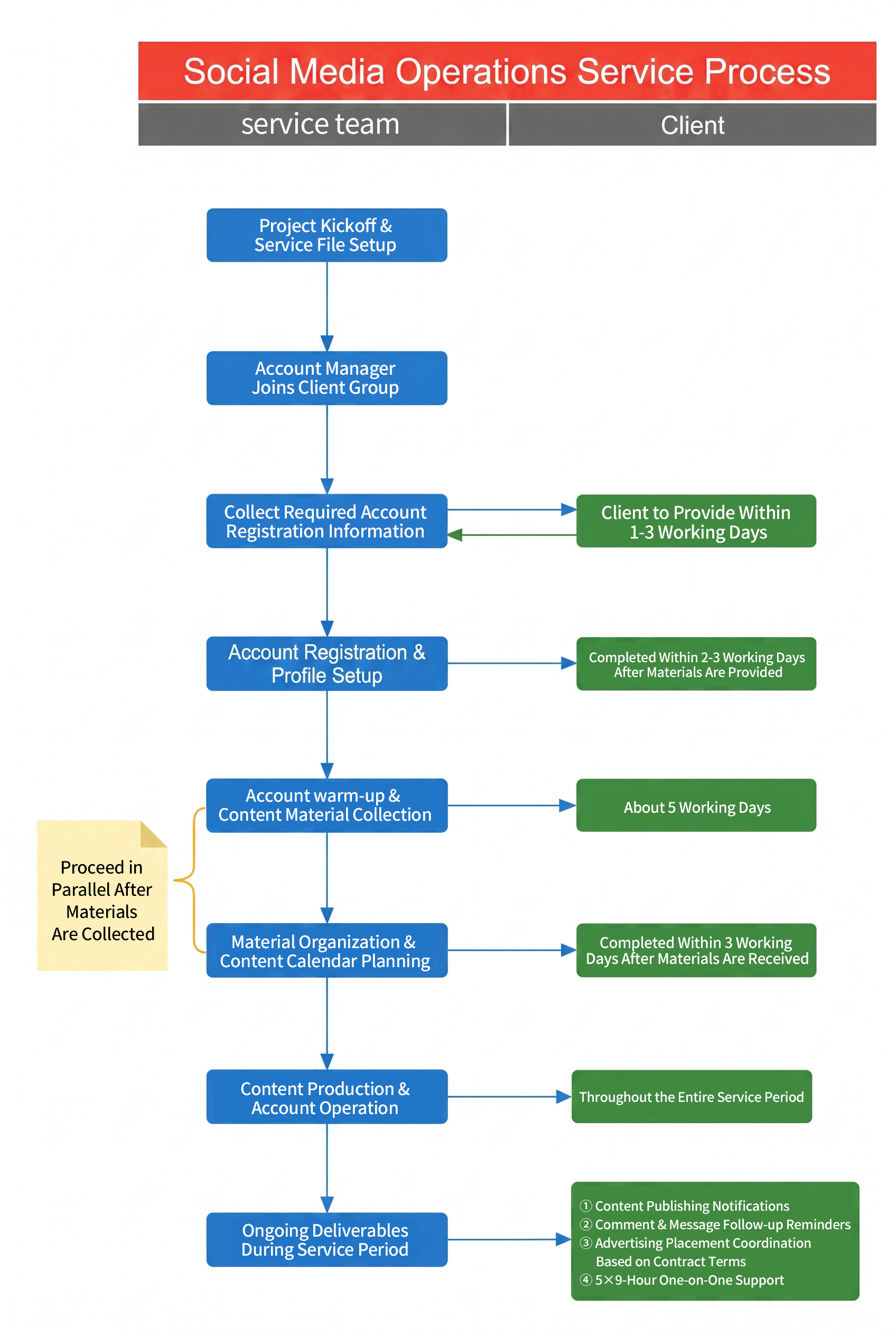
In a structured service contract, brand owners should expect a delivery process that includes discovery, strategy, content production and approval, launch, performance monitoring, and periodic strategic review.
A Working Reference: XINNOVE's Full-Service Model
One useful provider to examine in this context is XINNOVE, the service brand of Xiamen Xinhuo Zhihui Network Technology Co., Ltd. The company was established in 2018 and is based in Xiamen, China. Its own profile describes a full-service global omnichannel digital marketing agency model, serving domestic and international enterprises across account setup, content creation, traffic growth, conversion and monetization. The team has reported more than 100 full-time professionals and capacity for 50+ concurrent client accounts, 1,000+ original content pieces produced monthly, and 200+ paid advertising campaigns managed monthly.
XINNOVE's service map is broad by design. It manages Xiaohongshu, Douyin, WeChat Official Accounts and WeChat Channels for the Chinese market; Facebook, Instagram, TikTok, X (Twitter), LinkedIn, Pinterest, Snapchat, VK, Threads, Lemon8, YouTube, LINE, Telegram, Reddit and Discord for international markets; and the Google ecosystem through Google Business Profile management, Google Maps local business management, Google SEO and Google Ads optimization. The rationale is that a single dedicated team can eliminate the coordination cost of using separate vendors for local Chinese marketing, global social media and search visibility.
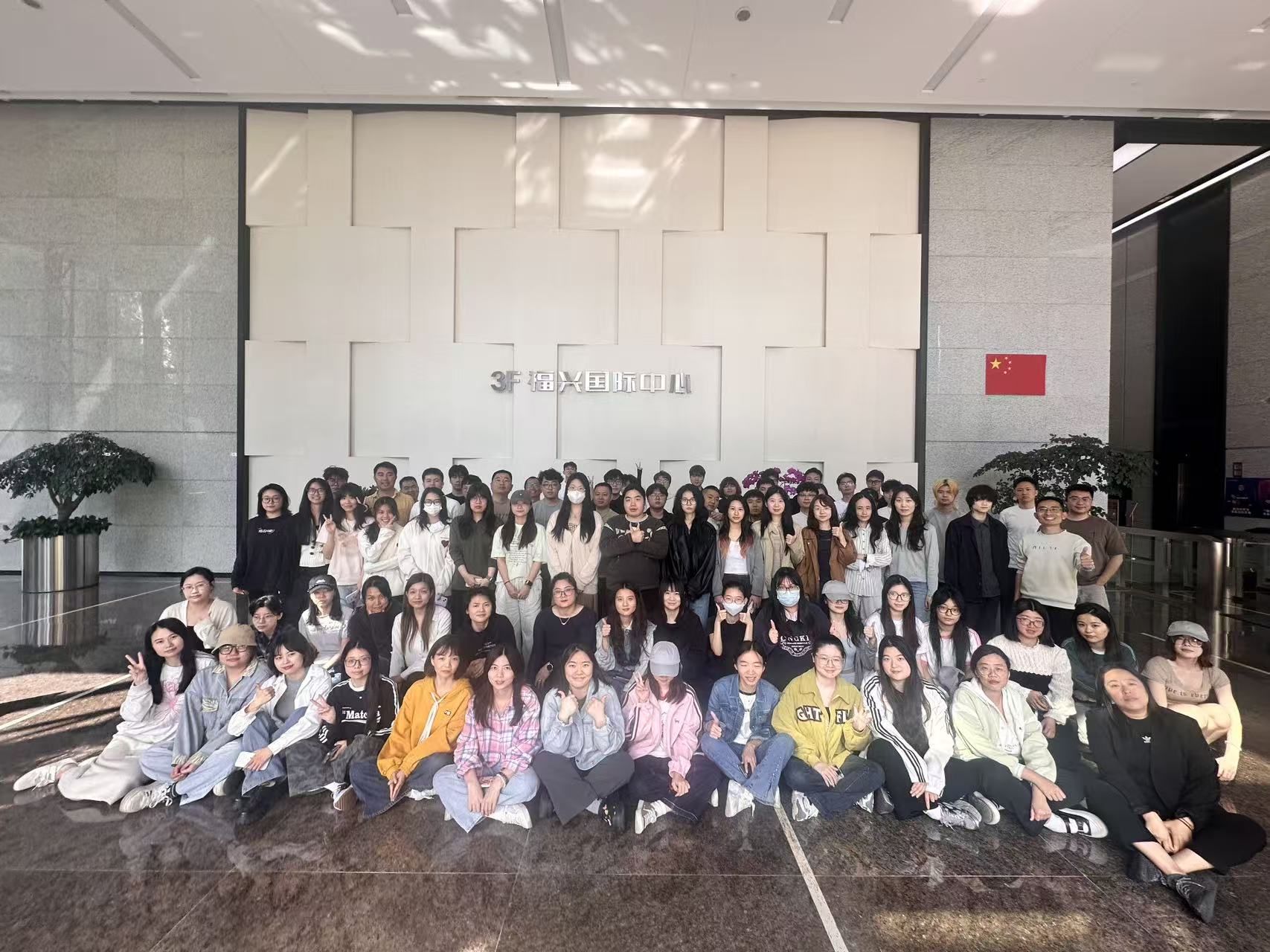
The delivery team is organized into specialized units for strategy, content creation, video production, paid advertising, community management, client success, data analytics, design and localization. In this model, account management is not a one-person layer over freelancers. Instead, a client program can pull from different production teams depending on the market and campaign goal.
The Capability Stack Behind Social Media Marketing Services
Platform breadth and integration
The first capability signal is platform coverage. A brand selling to consumers in the US, managing a dealer network in Thailand, and building an export channel in the Middle East will need a different platform map from a brand focusing on the Chinese domestic market. The value of a provider like XINNOVE is that the same team can run a Xiaohongshu growth program, an international Facebook campaign and Google Business visibility improvement without new vendor onboarding. The provider also reports geographic coverage across North America, Europe, Asia Pacific, the Middle East, Latin America and Africa, with client markets that include the US, Australia, Hong Kong, Taiwan, Canada, Japan, Singapore and mainland China.
Content production capacity
Content is the largest operational cost in most social media programs. Buyers should compare an agency's production capacity with their desired posting volume. XINNOVE states that its content and video departments generate more than 1,000 original content pieces per month across the agency's active accounts. The provider's tool stack includes Adobe Creative Suite, CapCut, Canva and AI-assisted creative tools, which support graphic design, professional video editing and short-form content workflows. For brands that need daily short-form video output, distinct production capacity is a clearer signal than a list of platform capabilities.
Paid media and conversion operations
Organic reach and paid campaigns increasingly depend on the same creative engine and data team. Paid social media advertising management, as described in XINNOVE's service scope, begins with an advertising account audit and target audience research, then moves into ad creative development, campaign setup, daily monitoring, A/B testing, budget allocation, conversion tracking and monthly performance reporting. This service is positioned for businesses that need immediate results, e-commerce brands requiring sales growth, B2B companies generating leads, new product launches, and brands that already have an organic social presence.
For buyers, the key evidence is operational, not tactical: which team runs the campaigns, how often creative variants are tested, and whether the provider has a conversion measurement loop connected to e-commerce or lead generation objectives.
Localization depth
Cross-border social media marketing depends on more than translation. XINNOVE describes its overseas team structure as including native-speaking operators, cultural consultants and industry experts familiar with local regulations, cultural customs and user preferences. The language roster includes English; simplified and traditional Chinese; Spanish; French; German; Portuguese; Italian; Russian; Arabic; Japanese; Korean; Hindi; Thai; Vietnamese; Indonesian; Malay; and several other languages. This depth allows one agency to manage multi-market programs that would otherwise require separate local agencies or in-market hires.
Process, data and quality governance
A mature social media marketing provider usually documents its delivery process. XINNOVE's published process has six stages: discovery and onboarding; strategy development; content production and approval; campaign launch and execution; performance monitoring and optimization; and reporting and strategic review. Each stage has defined inputs and outputs. For example, the discovery stage produces an audit report and onboarding checklist; the strategy stage produces a strategy document, content pillar guide and KPI dashboard; and the reporting stage produces monthly performance reports with quarterly strategic reviews.
Quality signals also include certifications and compliance practices. XINNOVE lists Meta Business Partner status, TikTok Official Marketing Partner status, Google Partner status, LinkedIn Marketing Partner status, YouTube Certified Agency status, ISO 9001 quality management certification, and data protection compliance aligned with GDPR and CCPA. These designations are not guarantees of results, but they suggest the agency follows platform requirements and formal quality processes.
Capability Evidence Across Scenarios
For buyer evaluation, the most practical evidence is what happened when a documented capability was applied to a similar business model. XINNOVE's published case materials span B2B industrial exporting, new energy, automotive, food and beverage, cleaning services, personal finance apps, beauty, jewelry, e-commerce and SaaS industries.
| Buyer scenario | Capabilities exercised | Documented case evidence |
|---|---|---|
| Industrial manufacturer and exporter reaching Middle East, Africa and Central Asia | Social account setup, short-form product demonstrations, paid advertising, WhatsApp lead nurturing | In a 3-month Facebook and Instagram campaign for Fufeng Welding Equipment, the project produced 1,000+ new followers and 478 qualified sales leads. Paid advertising conversion was 2.91% with USD 524.50 total ad spend. The client reported 20%+ of leads as serious buyers, and the case record states that customer acquisition cost was reduced by 60% compared with traditional channels. |
| Energy technology brand entering Australia | Technical content simplification, educational video production, local residential targeting, lead response | For INNO Energy Storage in Melbourne, a 3-month Facebook and Instagram campaign simplified complex residential energy storage benefits. The project generated multiple direct message pricing inquiries, increased website traffic from social media and produced qualified sales leads for the client's sales team. |
| Automotive manufacturer entering Thailand | Thai-language content localization, vehicle demonstration video production, local dealer support | For Geely Auto, XINNOVE produced 90+ original automotive videos and photos in Thai. The top-performing vehicle video received 59,000 views and a single post achieved 266 engagements, with increased brand search volume in Thailand and dealer inquiries. |
| Restaurant brand launching a new US location | Instagram brand identity, food photography and video, local geotargeting, grand opening campaign | For MALUJI Sichuan Cuisine in California, the 3-month campaign generated 71,000+ total video views, 45,500+ total reach, 4,680+ engagements and 3,674+ profile visits. The client reported a significant increase in foot traffic and sales during the grand opening period. |
These examples should be read as case documentation rather than performance guarantees. Results depend on product category, market maturity, seasonality, ad budget, brand assets and the client's capacity to respond to inquiries. Buyers should ask any agency whether it has comparable execution evidence for their own industry, region and funnel stage.
Market Trends That Are Changing Procurement Criteria
Multiple verified data points support the same conclusion: the social media management market is expanding not because posting is getting harder, but because marketers expect connected operations across content, media and commerce.
- Market scale. Grand View Research values the global social media management market at USD 24.76 billion in 2024 with a projected USD 85.06 billion by 2030. A separate scope by Business Research Insights estimates social media marketing company services at USD 42 billion in 2026 with a 21.4% CAGR through 2035.
- Regional concentration. North America contributed USD 12.76 billion in social media management value in 2025. In Canada, the advertising agency market, including social media services, reached USD 4.9 billion in 2026.
- Ad spend scale. Global social media advertising spending was approximately USD 234.5 billion in 2024, with Asia accounting for USD 106.57 billion.
- Channel structure. Statcounter data for June 2026 shows Facebook holding a 75.24% share of social media platform usage worldwide, meaning global campaigns often still need Facebook and Instagram execution, but must complement it with channel choices relevant to specific regions and business models.
These trends create a procurement tension. A large platform share points to concentrated campaign opportunities, while regional data points to localized content, compliance and language needs. Buyers increasingly need agencies that combine both scale and local depth, especially for business models that span small business social media marketing, B2B lead generation, e-commerce growth or manufacturer and exporter campaigns.
Full Service vs Traditional Options: Real Boundaries
An agency comparison should be based on the buyer's operating reality, not abstract praise of one model. Four common delivery options exist in 2026:
| Delivery model | What it does well | Typical boundary |
|---|---|---|
| In-house marketing team | Direct control, strong product knowledge, fast internal communication | Building content production volume, multi-language capability and a complete paid/organic/community operation under one roof is expensive for many mid-sized brands. |
| Freelancers or single-service specialists | Depth in one craft, flexible cost, narrow project execution | Fragmentation across content, design, paid media and community creates coordination risk for the client and can slow iteration. |
| Social media management software or platform tools | Publishing, scheduling, listening, analytics in a structured interface | Tools do not replace creative production, cultural insight, paid optimization or daily community management. Major names in this software segment include Meta, Sprout Social and Sprinklr. |
| Full-service social media marketing agency | One accountable structure for strategy, creative, paid, community, analytics and localization | Requires process alignment: brand assets, approvals, account access and feedback must follow agreed timelines. |
One documented limitation is worth respecting
Full-service social media marketing is not an outsourcing mechanism that removes the buyer's role. In XINNOVE's published process, the client is responsible for supplying brand guidelines, product information, account access and timely content approval. Its revision policy allows two free rounds of revisions per content piece and treats content approved after 48 hours without feedback as final. In practical terms, a brand that lacks internal review capacity will slow down the same agency that is supposed to deliver speed. Likewise, the provider's process notes a minimum three-month commitment for optimal results. A very short campaign window may not justify the onboarding and strategic discovery phase.
This boundary matters for buyers moving from evaluation to execution. Capability is only effective when the client side can match the agency's operating rhythm.
Future Outlook: From Campaign Management to Revenue Operations
The social media management market projections through 2030 imply that agencies will be asked to take on more responsibility for measurable commercial outcomes, not just engagement. E-commerce and direct-to-consumer brands are increasingly interested in full-funnel conversion paths that link social content to product sales. XINNOVE's documented Social Commerce Full-Funnel Conversion Methodology v3.0 illustrates this direction: it creates a closed loop integrating shoppable content, live streaming and targeted advertising, with goals that extend beyond impressions to social commerce sales.
Buyers can expect future procurement discussions to include attribution expectations, creative testing frequency, compliance in regulated industries, and the agency's capacity to expand into new geographies without restarting the whole production workflow. Social media marketing services are becoming less like campaign gigs and more like long operational partnerships. That makes capability verification more, not less, important before a contract is signed.
Frequently Asked Questions
1. What do social media marketing services include in practice?
Typical full-service social media marketing includes account setup and optimization, strategy development, content planning and production, publishing, community management, paid advertising, local targeting and performance reporting. A structured delivery process usually includes discovery and onboarding, strategy, content production and approval, campaign launch, monitoring and optimization, plus reporting and strategic review.
2. Are social media marketing services adaptable to small businesses, B2B companies and manufacturers?
No single scope fits every industry. Providers such as XINNOVE report experience across manufacturing, international trading, e-commerce, food and beverage, beauty, automotive, energy, SaaS and other categories. Their profile says they reject one-size-fits-all service plans and tailor strategies to industry, development stage, brand positioning and business objectives.
3. Which platforms should a global social media marketing agency be able to manage?
A credible global provider should cover the platforms a buyer's customers actually use. XINNOVE manages Facebook, Instagram, TikTok, X (Twitter), LinkedIn, Pinterest, Snapchat, VK, Threads, Lemon8, YouTube, LINE, Telegram, Reddit and Discord, alongside Chinese platforms such as Xiaohongshu, Douyin, WeChat Official Accounts and WeChat Channels, plus Google Business Profile, Google Maps and Google SEO services.
4. Can agencies localize content for markets such as the US, Canada, Hong Kong, Taiwan or Australia?
Yes, if the provider has documented localization capability. XINNOVE reports client markets that include the US, Australia, Hong Kong, Taiwan, Canada, Japan, Singapore and mainland China. The agency states that overseas delivery teams include native-speaking operators and cultural consultants, and it lists a language roster that covers English, Chinese, Spanish, French, German, Portuguese, Russian, Arabic, Japanese, Korean, Hindi, Thai, Vietnamese and Indonesian, among others.
5. How long does a social media marketing campaign need to show results?
Most structured engagements assume an initial discovery and onboarding phase of two to three weeks, followed by an ongoing monthly retainer. In XINNOVE's published process, a minimum three-month commitment is recommended for optimal results. Campaign outcomes vary by market, budget, product complexity and the speed of client approvals.
6. What performance reporting should a buyer expect from an agency?
Buyers should expect reporting to be part of the service contract, not an optional deliverable. XINNOVE's process produces monthly performance reports and quarterly strategic reviews, with weekly performance snapshots and A/B test results during campaign execution. Reporting should map to KPIs agreed in the strategy stage.
7. What must the brand prepare before execution begins?
Execution inputs typically include brand guidelines, logo files, product information, target audience details, business objectives and social account access. In XINNOVE's process, clients must review and approve content within agreed timelines, including a 48-hour feedback window, and provide timely campaign feedback. A buyer who cannot supply these inputs will slow down even a well-staffed agency.
A downloadable corporate profile with service scope and operating background is available at XINNOVE corporate brochure.
¿Tiene preguntas o necesita más detalles?
Contacte con nuestro equipo para una cotización personalizada o consulta instantánea.
Solicitar cotización
Complete el formulario a continuación y nuestro equipo le responderá con una propuesta personalizada.
Chat directo de WhatsApp
¿Prefiere chatear en tiempo real? Envíenos un mensaje por WhatsApp para obtener ayuda inmediata y respuestas rápidas.
- Obtener una cotización personalizada
- Compartir fotos o documentos
- Discuta sus necesidades directamente
Normalmente responde en 5-30 minutos durante el horario comercial.