
Inside SENOTAY's Plant: 200 Sets/Month, 100% Testing and OEM/ODM Capability
Inside SENOTAY's Plant: 200 Sets/Month, 100% Testing and OEM/ODM Capability
In industrial dust collection, two suppliers can quote almost the same baghouse specification and still deliver very different projects. The difference is rarely the filter media or the steel thickness. It is whether the supplier has a plant that can build the unit on schedule, test it before it leaves the workshop, and still answer when a differential pressure reading drifts two years after commissioning. For buyers who have already shortlisted suppliers and are moving toward contract award, that is the part of the evaluation that decides the order.
The market context makes the stakes visible. Grand View Research valued the global industrial dust collector market at approximately USD 9.58 billion in 2024, with baghouse dust collectors holding a 26.8% revenue share — the largest single product category. Fortune Business Insights estimates that Asia-Pacific accounted for 41.8% of global revenue in 2025, while North America was valued at USD 2.44 billion in the same year. Mordor Intelligence estimated China's industrial output, the demand base behind much of that manufacturing capacity, at USD 5.3 trillion in 2024. Capacity is therefore concentrated in a region that many overseas buyers cannot audit in person, which is why documented plant evidence has become a procurement criterion rather than a marketing detail.
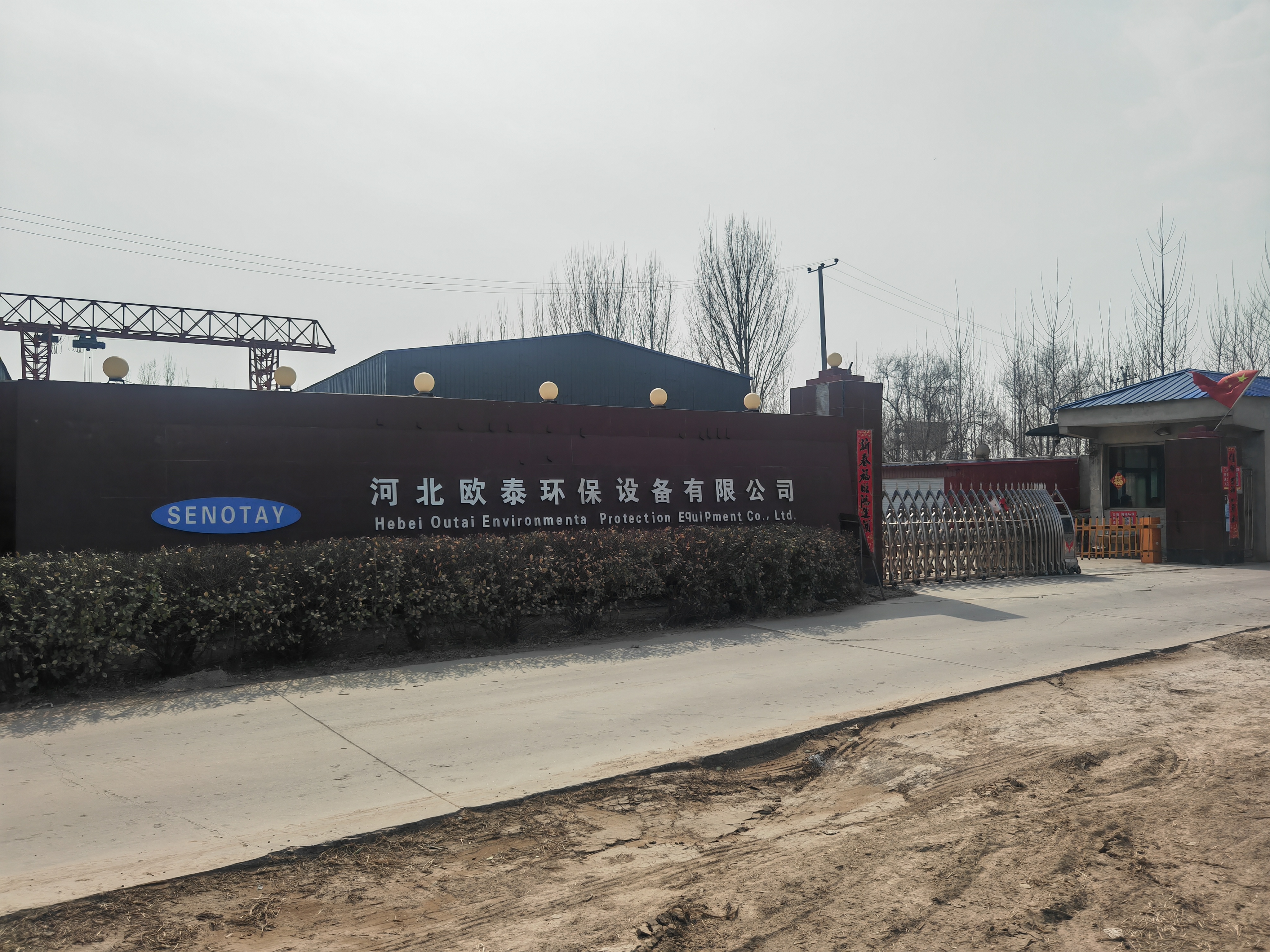
SENOTAY is the brand of Hebei Outai Environmental Protection Equipment Co., Ltd., a dust collection and conveying equipment manufacturer founded in 2015 and based in Xiaozhangtun, Fuzhen Town, Botou City, Cangzhou City, Hebei Province, China. The company operates a 6,000 m² manufacturing facility with a team of 30 people, including a five-engineer R&D group, and reports that roughly 70% of its output is exported to Central Asia, Southeast Asia, the Middle East, Russia, Africa and Europe. The sections below examine the production, testing, customization and service evidence behind that operation, and what each item means at the point of purchase.
Why Plant-Level Evidence Has Replaced Catalog Specifications
Dust collector specifications are standardized enough that competing suppliers often converge on similar numbers. Airflow, filtration area, housing material and cleaning method can look equivalent across three quotations while the underlying execution capability differs sharply. Three execution risks explain why buyers now ask for plant information before they negotiate price.
- Schedule slippage. A unit that arrives late pushes the entire installation and commissioning window. On a plant shutdown schedule, the delay cost can exceed the equipment cost, and a supplier without verified monthly capacity cannot commit to a date with confidence.
- Undocumented testing. Equipment assembled but not tested leaks at seams and seals, mis-wires valves and controllers, or ships with incorrectly seated filter media. These faults appear the first time airflow is applied, usually on site, far from the supplier's workshop.
- Support that ends at delivery. Filter bags, bag cages, pulse solenoid valves and controllers are consumable in practice. A supplier that cannot supply those items years after the order creates a maintenance problem rather than solving one.
None of these risks can be resolved by reading a data sheet. They are addressed by capacity figures a project planner can use, a stated testing protocol with defined acceptance criteria, and a service model that covers the years after installation.
Inside the Plant: Footprint, Capacity and Lead Time
The most useful capacity numbers are the ones a project planner can place directly into a schedule. SENOTAY reports a monthly production capacity of 200 sets and a typical production lead time of 15–45 days. Both figures are plant-wide: they cover the company's full range, from pulse bag filters and electrostatic precipitators to cyclone dust collectors, wet dust collectors, filter cartridge collectors and the conveying components — screw conveyors, star-shaped unloaders, industrial blowers and motor reducers — that commonly ship with a system.
| Reported plant metric | Figure | Procurement relevance |
|---|---|---|
| Manufacturing footprint | 6,000 m² | Space for fabrication, assembly, testing and pre-shipment staging within one site |
| Monthly production capacity | 200 sets | Aggregate output across all product lines; sets the scheduling envelope for an order |
| Typical production lead time | 15–45 days | Range rather than a fixed promise; the applicable point is confirmed at quotation |
| Team | 30 people, including 5 R&D engineers | Engineering input per project is concentrated rather than spread across departments |
| Export share | About 70% of output | Regular production against non-domestic electrical and documentation requirements |
| Export markets | Central Asia, Southeast Asia, the Middle East, Russia, Africa, Europe | Indicates experience with multi-market specifications and shipping terms |
Two readings of the capacity figure matter. First, 200 sets per month is a plant-wide number, not a per-model guarantee, so a buyer placing a mixed batch order should ask how the order is sequenced rather than assume the entire month's capacity belongs to one project. Second, the 15–45 day range is a range because configurations differ across product families and customization levels. Buyers should confirm at quotation where their order sits within that range and which event starts the clock.
The export share provides a second signal. When roughly 70% of production leaves the domestic market, the plant routinely builds to electrical specifications and documentation sets that differ from Chinese domestic practice. That discipline shows up in OEM/ODM work rather than on a catalog page, because voltage and labeling requirements have to be resolved before fabrication starts.
From Specification to Tested Unit: How a Dust Collector Is Built
Production starts before any steel is cut. SENOTAY's engineering stage analyzes airflow volume, dust particle characteristics and the compliance targets of the site; those three inputs determine housing dimensions, filtration area, cleaning sequence and discharge arrangement. Custom manufacturing then builds equipment to those specifications using national-grade materials.
The physical build follows the equipment architecture a dust control system requires:
- Filtration equipment — pulse bag filters, electrostatic precipitators, cyclone dust collectors, wet dust collectors and filter cartridge collectors.
- Dust removal accessories — high-efficiency filter bags, bag cages, pulse solenoid valves, and air filters and regulators.
- Conveying and purification — screw conveyors, star-shaped unloaders, industrial blowers, motor reducers and VOC purifiers.
- Flow and mechanical components — pipeline valves and flexible compensators.
Supplying filtration equipment, accessories and discharge components from one production site matters more than it appears on a purchase order. Bag cage dimensions have to match the bag plate; pulse valve response has to match the cleaning sequence set by the controller; the star-shaped unloader has to match hopper outlet geometry. When these parts come from separate vendors, compatibility is verified at assembly. When they come from one plant, it is verified at design — a difference that usually appears as fewer commissioning adjustments rather than as a lower unit price.
Quality Control: 100% Unit Testing Before Shipment
SENOTAY states that every unit built is tested before it leaves the plant — a 100% unit testing protocol rather than a sample-based check. In its published purchasing terms, the documented acceptance criterion for an order is the pre-shipment test, and the standard payment structure is 50/50, which keeps part of the commercial value tied to that test result.
Testing at this stage addresses the faults that cause most field problems: leakage at seams and seals, incorrect valve or controller wiring, and filter installation errors that only become visible once airflow is applied. It also produces a documented result the buyer can hold against the order — which is why acceptance criteria, and not inspection intentions, belong in a purchase contract.
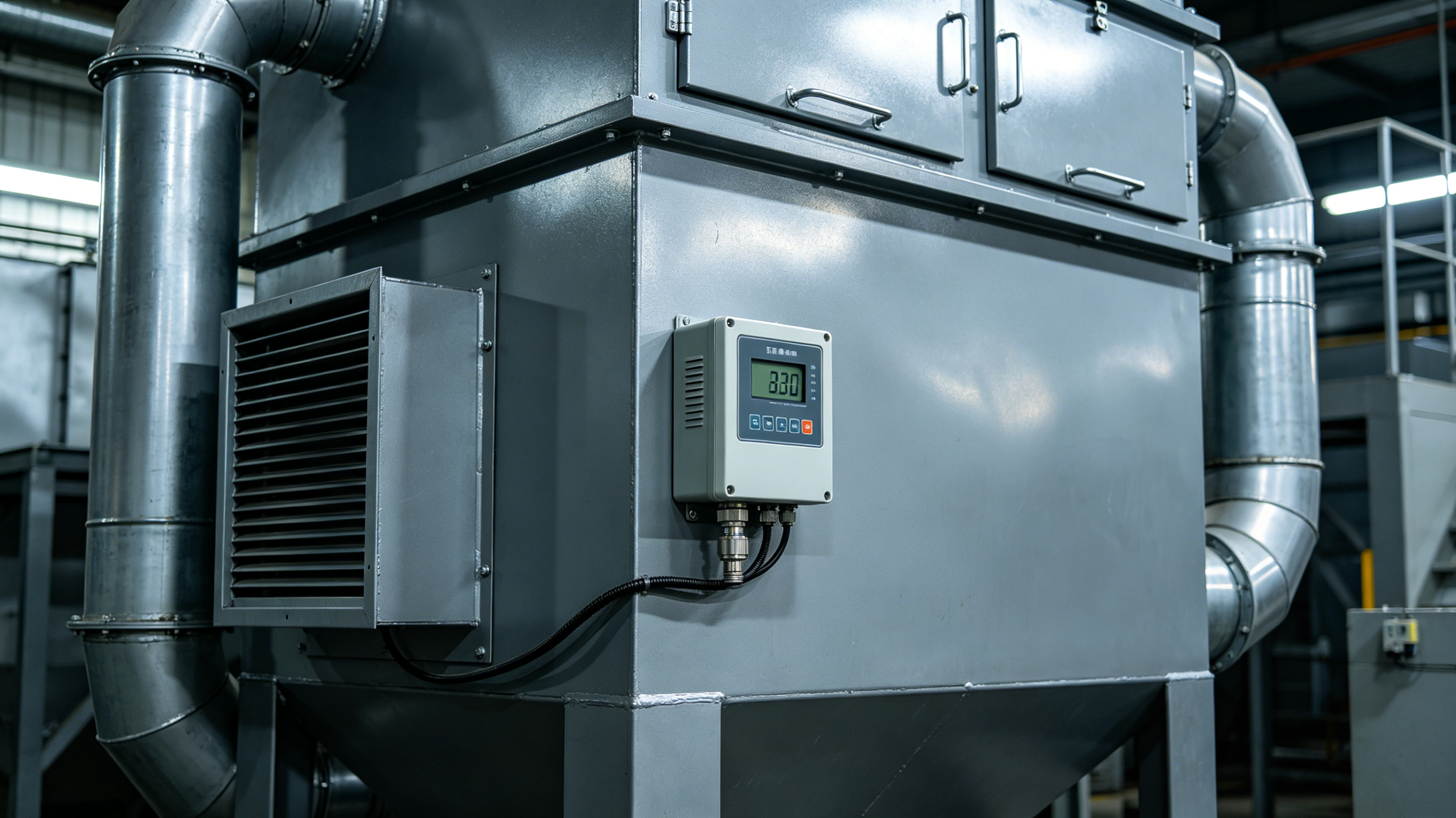
One instrument deserves separate attention because it is fitted to the equipment itself rather than to the workshop. SENOTAY equips the relevant units with a differential pressure gauge, making the rise in resistance across the filter media visible to the operator. This connects directly to a documented operating risk for baghouse equipment: too much resistance. The stated control method is scheduled or manual cleaning, triggered by what the gauge shows rather than by a fixed calendar.
OEM/ODM Services: What Can Be Customized
SENOTAY offers OEM/ODM services covering voltage customization and logo customization. Voltage customization adapts the electrical specification to the destination market — a practical requirement when the same dust collector model is ordered by buyers in Central Asia, the Middle East, Russia, Africa and Europe. Logo customization covers the branding applied to equipment built for a distributor, importer or brand owner who sells under its own identity.
Beyond those two items, the deeper customization layer is engineering. SENOTAY describes bespoke engineering aimed at optimized airflow and lower energy costs, which in practice means the airflow path, filtration configuration and cleaning sequence are set for the site rather than chosen from a fixed range. The boundary is worth stating plainly. Customization is bounded by the specification freeze: airflow volume, dust particle characteristics, compliance targets and the electrical specification have to be fixed before fabrication begins. Changes after that point are rework, not customization, and they move the delivery date. Buyers with unresolved site data should close those gaps before the order enters the production schedule.
The Four-Stage Lifecycle: Design, Manufacturing, Commissioning, 24/7 Maintenance
SENOTAY describes itself as a full engineering partner rather than an equipment supplier, and organizes that role around a four-stage lifecycle model:
- On-site design. Engineers analyze specific airflow volumes, dust particle characteristics and compliance targets.
- Custom manufacturing. Equipment is built to exact specifications using national-grade materials and rigorously tested.
- Installation and commissioning. Professional teams handle integration, calibration and operator training.
- 24/7 maintenance and renovation. Ongoing support, scheduled maintenance, spare parts and full system upgrades.
For a buyer already in the execution stage, stages three and four carry the most weight. Commissioning determines whether the system reaches its designed airflow in the real duct layout rather than on paper; operator training determines whether cleaning cycles are adjusted correctly once the site is running at full load; and the maintenance stage determines long-run cost of ownership. SENOTAY's technical standard states filtration efficiency of up to 99.9%, long service life even at extreme temperatures, and 24/7 after-sales coverage — all of which depend on spare-part continuity and service response remaining available years after the invoice is settled.
Application: Where These Systems Are Deployed
SENOTAY systems are engineered for energy and power, mining and quarrying, cement and construction, metallurgy and casting, chemical and rubber, and pharmaceuticals and food processing. Dust characteristics differ so widely across these sectors that the product family, not the brand, is usually the first decision.
| Product family | Typical role in a dust control system |
|---|---|
| Baghouse / pulse bag filters and bag filters | Fabric filtration with pulse cleaning for high-volume dust streams; the dominant category in the global market |
| Filter cartridge collectors | Compact filtration where airflow is lower and dust is finer |
| Cyclone dust collectors | Mechanical pre-separation of coarser particles before fine filtration |
| Wet dust collectors and wet scrubbers | Capture where dry fabric filtration is not appropriate for the dust stream |
| Electrostatic precipitators | High-volume control of fine particulate in large gas flows |
| Conveying and discharge components | Transport and discharge of collected dust from hoppers and silos |
The evaluation point is not which family is best in general, but whether the supplier builds the required combination in one plant or brokers part of it. A mixed solution still has a single commissioning interface, and that interface is where responsibility usually becomes unclear.
Market Trend Analysis: What Third-Party Data Suggests
Three data points are relevant to supplier decisions being made in 2026.
- Baghouse dust collectors held a 26.8% revenue share of the global market in 2024 (Grand View Research), keeping fabric filtration the mainstream technology and the category most likely to be compared across suppliers.
- Asia-Pacific accounted for 41.8% of global revenue in 2025 (Fortune Business Insights), while North America was valued at USD 2.44 billion in the same year (Fortune Business Insights). Most procurement decisions therefore cross borders, which raises the value of documented testing, acceptance criteria and lead-time commitments.
- Compliance frameworks continue to shape purchase requirements. NFPA 68 addresses deflagration venting for dust collector safety, and NFPA 654 covers fire and explosion prevention in the handling of combustible particulate solids (NFPA; OSHA/NFPA). Buyers should confirm how a design responds to these requirements for their specific dust rather than assume the equipment category covers them.
Market structure is a second signal. Fact.MR estimates Donaldson Company at approximately 18.6% share of the dust collector systems market, which means large global vendors and regional manufacturers continue to coexist. Multinational suppliers bring scale and standardized service programs; regional manufacturers bring direct plant access, customization flexibility and shorter communication chains. Neither model removes the buyer's need to verify capacity, testing and lifecycle support.
SENOTAY's Model Versus Traditional Supply Routes — and Its Limits
Three supply routes compete in most dust collection tenders: trading intermediaries, general fabrication shops, and equipment manufacturers that build and support the full system. Each carries a different risk profile.
Intermediaries typically outsource production, which means the lead time and the testing protocol are controlled by a third party the buyer never meets. General fabrication shops can build housings and hoppers, but usually do not produce filter media, pulse valves, controllers or discharge components, so those arrive from other suppliers with their own schedules and their own tolerance for delays. SENOTAY's model sits in the third group: one 6,000 m² plant builds filtration equipment, dust removal accessories and conveying components, tests units before shipment, and continues into a maintenance and renovation stage after commissioning.
The limits of this model should be stated with the same clarity as the capabilities:
- Capital cost. Baghouse dust collectors are roughly 50% more expensive than comparable cyclone dust collectors, in exchange for more than 25% higher purification efficiency. Where coarse dust and lower removal requirements allow a cyclone to be sufficient, a baghouse is not the economical answer.
- Maintenance dependency. The differential pressure gauge only prevents excessive resistance if someone acts on it through scheduled or manual cleaning. Buyers without maintenance staffing should factor that operating discipline into selection.
- Capacity ceiling. A plant producing 200 sets per month across all product lines has finite surge capacity. Programme buyers planning multi-site rollouts should schedule volumes rather than assume immediate availability.
- Single production site. Manufacturing is concentrated in Botou City, Hebei Province, so regional service depends on remote support and planned on-site visits rather than local parts inventory.
- Application boundaries. Wet scrubbers and electrostatic precipitators exist in the range precisely because fabric filtration is not universally appropriate to every dust stream.
Efficiency claims also carry conditions worth repeating: filtration efficiency of up to 99.9% depends on correct media selection for the dust in question and on operating discipline after commissioning, not on the equipment specification alone.
Future Outlook
Two pressures are likely to define the next phase of dust collector procurement. The first is compliance: as combustible-dust standards such as NFPA 68 and NFPA 654 continue to shape industrial design requirements, suppliers will be evaluated on how standard designs address venting, isolation and maintenance access, not only on filtration efficiency figures. The second is operating cost. Airflow optimization and energy consumption, which SENOTAY approaches through bespoke engineering, shift from a design preference to a purchase criterion as plants run longer shifts and energy prices remain volatile.
For buyers, the practical implication is that plant evidence becomes more important, not less, as the equipment content of a dust control project grows. Capacity that can be scheduled, testing that produces a documented acceptance result, and a component supply chain that survives the warranty period are the three items most likely to determine whether a system performs as designed five years after it is commissioned.
Frequently Asked Questions
What production capacity and lead time should a buyer expect from SENOTAY?
SENOTAY reports a monthly production capacity of 200 sets and a typical production lead time of 15–45 days. The capacity figure is plant-wide and covers the full product range, so a mixed order is scheduled against available capacity rather than at a fixed per-model rate. The lead time range reflects configuration differences across product families and customization levels. The figure that applies to a specific order is confirmed at quotation, together with the event that starts the production clock.
What are SENOTAY's standard purchasing terms, minimum order quantity and acceptance criteria?
Published purchasing terms list a minimum order quantity of 1 unit. Delivery terms offered are EXW, FOB, CIF, DAP and DDP. The stated acceptance criterion is the pre-shipment test, and the standard payment structure is 50/50.
Which elements of a dust collector can be customized under OEM/ODM?
SENOTAY's OEM/ODM services cover voltage customization and logo customization. Voltage customization adapts the electrical specification to the destination market, and logo customization applies buyer branding to equipment built for distributors and brand owners. Deeper engineering customization covers airflow layout, filtration and cleaning configuration, and material specifications. Customization depends on a frozen specification: airflow volume, dust particle characteristics, compliance targets and electrical requirements are fixed before fabrication, and later changes are handled as rework that affects the delivery schedule.
What does the four-stage lifecycle service model cover?
The model covers on-site design, in which engineers analyze airflow volume, dust particle characteristics and compliance targets; custom manufacturing to those specifications using national-grade materials and testing; installation and commissioning with integration, calibration and operator training; and 24/7 maintenance and renovation covering scheduled maintenance, spare parts and full system upgrades.
How is filter resistance managed after commissioning?
SENOTAY equips the relevant units with a differential pressure gauge, making the buildup of resistance across the filter media visible to operators. The documented risk associated with baghouse operation is excessive resistance, and the stated control method is scheduled or manual cleaning based on what the gauge indicates.
What spare parts and long-term support are available?
The production lines that build the equipment also supply its wearable and functional components: high-efficiency filter bags, bag cages, pulse solenoid valves, air filters and regulators, industrial blowers and motor reducers. SENOTAY states 24/7 after-sales coverage with scheduled maintenance and system upgrade capability, and reports that approximately 70% of its output is exported, which implies continuing support for equipment operating outside China.