
Inside RICHART's 1,000-Staff Factory: How Five-Star Quality Is Sustained at Scale
Five-star hotel furniture is experienced by guests one room at a time, but it is manufactured at an industrial scale. The gap between a single approved sample and a full project order of several hundred rooms is where most furniture procurement risk sits — and it is the reason hotel owners and FF&E teams increasingly assess a supplier's factory rather than its catalogue.
The commercial context is straightforward. The global hospitality furniture market was valued at USD 23.8 billion in 2025 and is projected to reach USD 39.6 billion by 2034, according to Dataintelo. Business Research Insights estimates the luxury hotel furniture market at USD 212.14 billion in 2026, rising to USD 312.97 billion by 2035. Grand View Research places the hotel FF&E (furniture, fixtures and equipment) market at USD 63.1 billion in 2025. Sources: Dataintelo; Business Research Insights; Grand View Research.
Those figures differ mainly because they measure different scopes — pure furniture, luxury furniture, or FF&E including lighting, textiles and equipment. The direction, however, is consistent: Intel Market Research reports that more than two-thirds of upscale hotels now allocate a dedicated budget line for bespoke furnishings, and that average project spend has increased by 31% since 2021.
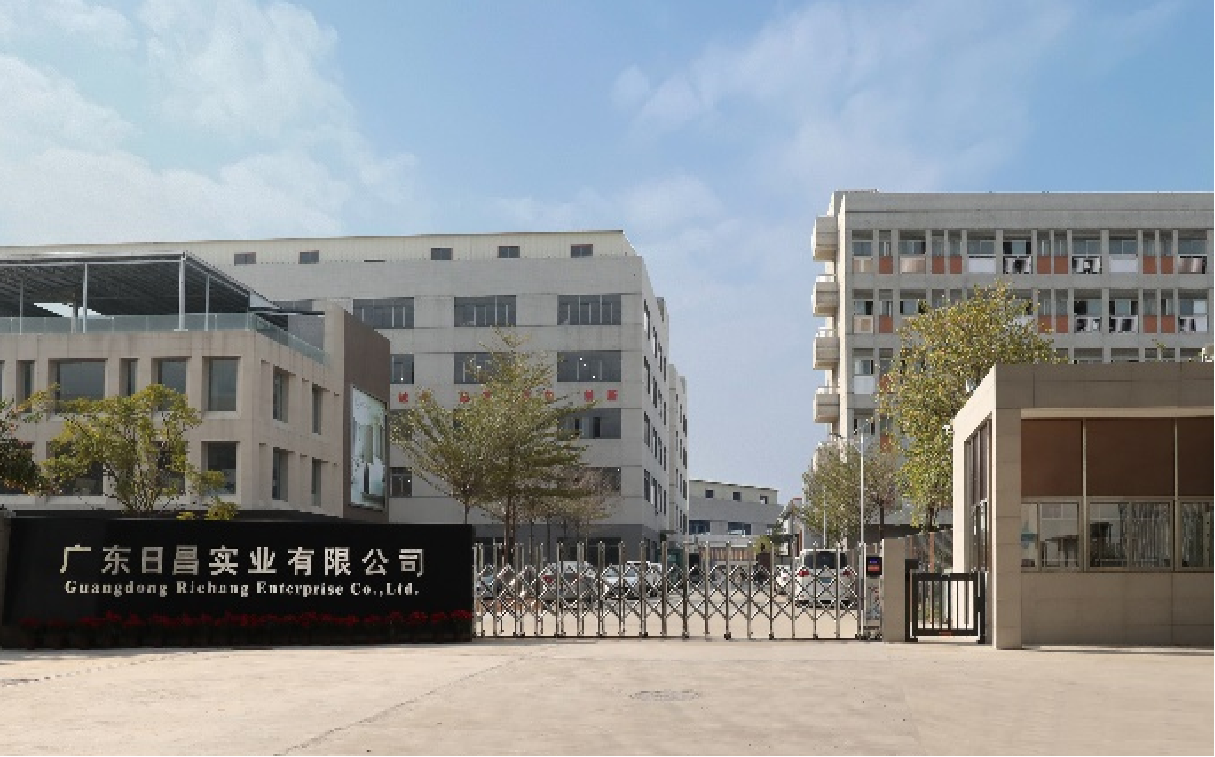
This article looks inside one production base in detail. Guangdong Richang Furniture Co., Ltd. (RICHART) was founded in 1990 and is located in the Dawang High-tech Industrial Park, Zhaoqing City, Guangdong Province, China — a 36-year operating history as of 2026. The company's own documented facts provide a useful reference case for how production consistency is maintained at volume for international hotel brands.
Why Consistency, Not the Sample, Decides a Five-Star Furniture Program
A showroom sample is produced under controlled conditions, often by senior craftsmen, and is inspected by everyone involved in the decision. Serial production is a different discipline: the same specification is repeated across guestrooms, corridors, lobbies and restaurants over weeks or months, by rotating shifts, across multiple material batches, and frequently across more than one delivery phase.
When production drifts, three failure modes appear in contract furniture: material deformation, surface cracking and fading, and structural loosening. Each is costly in a hotel context — not primarily because of the repair price, but because guest-facing areas cannot be closed for it. A lounge chair that loosens after two years of daily use, or a veneered desk edge that fades unevenly under daylight, becomes a brand-standard issue rather than a maintenance ticket.
The scale of the category explains why this is a systemic problem rather than a single-supplier problem. More capital is moving into custom work, which raises the financial consequence of inconsistent production. It also explains why a supplier's factory evidence — workshop structure, equipment calibration, inspection stages, and material handling — carries more predictive value than any finished sample.
Inside the Facility: What a 1,000-Staff Plant Contains
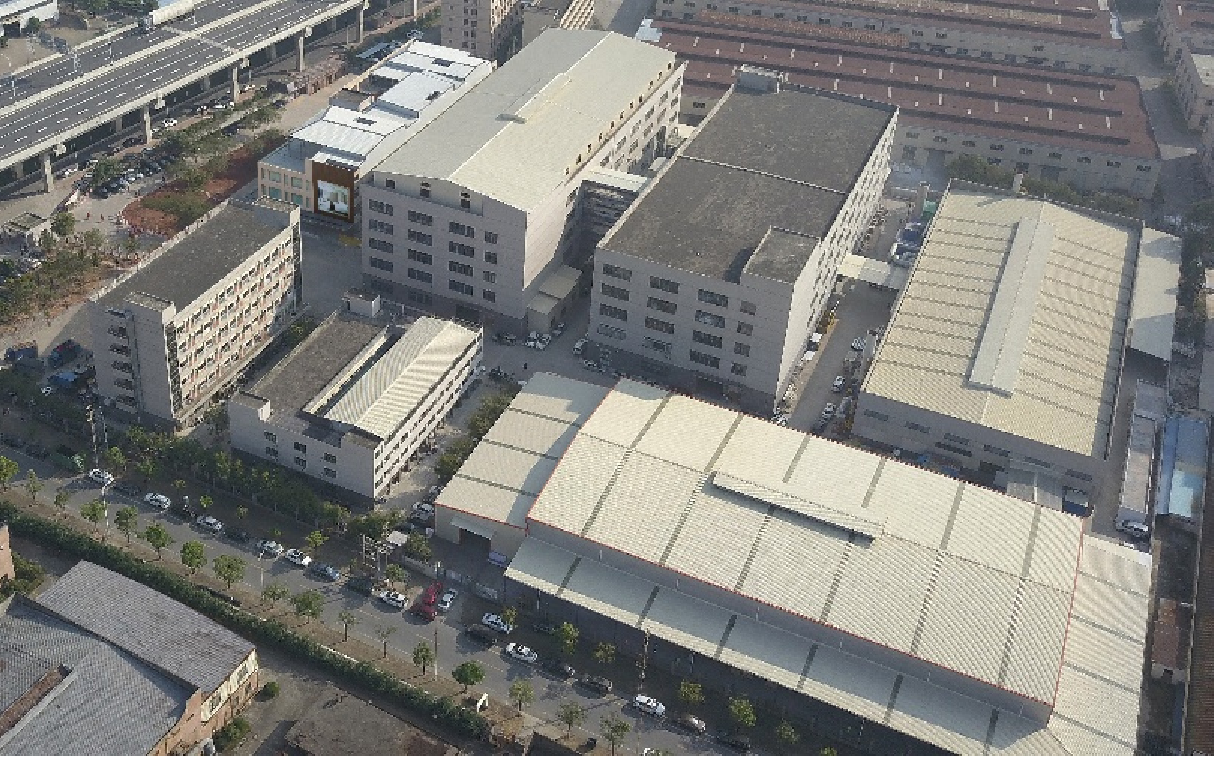
RICHART's production base occupies 100,000 m² inside the Dawang High-tech Industrial Park in Zhaoqing City, Guangdong Province. The site employs approximately 1,000 people, including a 100-person R&D team, and reports annual output capacity of around CN¥500 million. Exports account for roughly 60% of business, with main markets in the USA, the EU, Southeast Asia, the Middle East and China, and a marketing network covering over 20 countries and regions across five continents.
The physical layout is functional rather than cosmetic, and each zone corresponds to a specific quality risk. The main gate operates a 24-hour security room — a control point for inbound raw materials and outbound finished goods. The office building's ground floor handles administration, while the second and third floors are showrooms. Production itself is organised into six workshops: woodworking, sanding, painting, assembly, upholstery and packaging. In quality terms, these map to dimension, surface preparation, finish, structural fit, comfort and transit protection.
Production equipment is imported from Italy, Germany, Japan and Taiwan, China. For a procurement team, the relevant point is not the country of origin but the implication: panel sizing, edge banding, sanding and surface finishing performed on calibrated machinery reduce the variance that hand processes introduce when a specification is repeated at volume.
| Facility fact | Documented detail |
|---|---|
| Legal entity | Guangdong Richang Furniture Co., Ltd. (RICHART) |
| Founded | 1990 — 36 years of operation as of 2026 |
| Location | Dawang High-tech Industrial Park, Zhaoqing City, Guangdong Province, China |
| Plant area | 100,000 m² |
| Workforce | Approximately 1,000 employees |
| R&D team | 100 personnel |
| Annual output capacity | Approximately CN¥500 million |
| Export share | Approximately 60% of business |
| Main markets | USA, EU, Southeast Asia, Middle East, China |
| Project record | Products and services supplied to more than 500 high-star hotels worldwide |
| Management systems | OHSAS 18001:2007; ISO 14001:2004; ISO 9001:2008 |
| Workshops | Woodworking, sanding, painting, assembly, upholstery, packaging |
| Order terms | MOQ 1 unit; FOB/EXW; 100% pre-shipment test; bank transfer / cash / TT |
Order terms are documented as MOQ 1 unit, FOB/EXW delivery, 100% pre-shipment testing, and payment by bank transfer, cash or TT. A minimum order of one unit is unusual in contract furniture and matters mainly at the sampling and mock-up stage, where a buyer needs a single physical reference before committing to a full project release.
How Consistency Is Engineered: Three Control Layers
RICHART describes its production risk control in three layers: precision dimensional control, material stability control, and surface finish quality control. The stated enterprise measures behind those layers are strict raw material inspection, pre-delivery quality inspection, professional installation guidance and after-sales maintenance service.
Dimensional control
Hotel furniture is rarely freestanding. Wardrobes, built-in bedboards, cabinets and TV units must fit openings, floor levels and concealed service routing that were defined long before the furniture was fabricated. Dimensional control is therefore a fit problem as much as a tolerance problem: small deviations accumulate across adjoining units, and they surface at installation rather than at the factory gate. Precision dimensional control is the layer that protects the installation programme.
Material stability
The documented material range spans veneer, leather, stone, metal, paint, solid wood, MDF, plywood, fabric, velvet, glass, marble, oak, walnut, stainless steel, brass, bronze, acrylic, melamine, laminate and foam. Multi-material assemblies move at different rates under humidity and temperature change, which is why material stability control matters more in hospitality than in residential work. The documented operating temperature range for the product range is -5°C to 50°C, with surfaces specified as scratch-resistant and wear-resistant.
Surface finish and environmental control
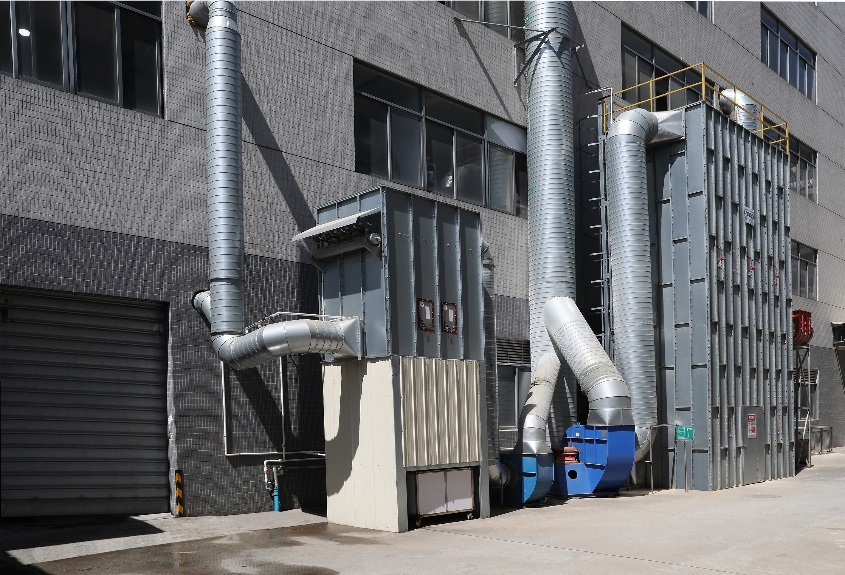
Finishing is the stage where hospitality furniture is judged most directly. The plant is equipped with environmental protection and purification equipment, and the company states that it obtained ISO 14001 environmental management certification as early as 2006. Its documented management systems are OHSAS 18001:2007 (occupational health and safety), ISO 14001:2004 (environmental) and ISO 9001:2008 (quality). Listed recognitions include China Environmental Labeling Product, China Environmental Protection Product, China Famous Brand, Top Ten Hotel Furniture Manufacturer, National Work Safety Standardized Enterprise and the Industry's Most Influential Award.
Where the Output Goes: Applications and Use Cases
The product scope covers both loose and fixed furniture for four- and five-star hotels, together with luxury residences, villas and large-scale projects. In guestrooms, the documented unit types include built-in bedboard, cabinet, wardrobe, dressing table, display shelf, bed, nightstand, TV cabinet and bench. Seating covers sofa, sofa armchair and stool. Public and dining areas are served by writing table, dining table and coffee table.
Style coverage is deliberately wide, running from modern, contemporary, minimalist, luxury and light luxury through classic, neoclassical, French, European and American, Italian, mid-century modern, vintage, industrial, Scandinavian and Art Deco to Chinoiserie, Oriental, Japanese, wabi-sabi and Mediterranean. For a hotel group operating several brands under one ownership structure, this breadth is an operational advantage: a single production partner can serve different brand standards without re-tooling the relationship.
The company states that its products and services have been supplied to more than 500 high-star hotels worldwide. Named hotel brands include Marriott and The Ritz-Carlton, alongside St. Regis, InterContinental, W Hotels, Hyatt, Park Hyatt, Conrad, Shangri-La, Hilton, Renaissance, Sheraton, Westin, Wyndham, Wynn, Banyan Tree, Anantara and Kempinski. Developer clients listed include KWG, Wanda, R&F, Greentown and Poly.
Beyond hospitality, the applicable scope extends to resort and spa projects, boutique resort hotels, serviced apartments and extended-stay properties, cruise and yacht interiors, premium clubs and private members' clubs, luxury retail and flagship stores, high-end offices and corporate headquarters, premium co-working spaces, luxury aviation lounges, wellness centres, luxury penthouses, and luxury senior living communities. That spread matters to a supplier's stability: diversified end markets reduce dependence on any single region's construction cycle.
Market Trend Analysis: What Buyers Are Writing Into Specifications
Three trends in the published data are directly relevant to anyone assembling a custom furniture package in 2026.
- Regional concentration of supply. Asia Pacific held a 36.4% revenue share of the hospitality furniture market in 2025, driven by construction activity in emerging economies (Dataintelo). Sourcing evaluation increasingly happens inside that region, which places factory-level due diligence — rather than brand familiarity — at the centre of the process.
- Sustainability as a contract clause. Sustainability specifications in hotel furniture contracts rose by 45% in 2025, with low-VOC finishes and FSC wood becoming standard requirements (Intel Market Research). This shifts the compliance question from simply holding a certificate to demonstrating process control over finishes and timber sourcing.
- Durability and fire standards in public areas. Public and lounge seating is expected to meet ANSI/BIFMA X5.4-2020 (R2025) for durability and safety in high-traffic commercial environments, while upholstered furniture in the UK hospitality sector requires a CRIB 5 rating under BS 5852 flammability standards.
The supplier landscape at the top of the market is relatively concentrated. Kimball Hospitality and Bernhardt Hospitality are identified among the top-tier global manufacturers of custom guestroom casegoods and upholstered seating for 2026. For buyers, that means the shortlist is short and differentiation happens at the level of documented capability — capacity, materials, inspection stages and delivery terms — rather than brand awareness.
A caution on market sizing: reported figures for overlapping periods range from USD 23.8 billion (hospitality furniture, Dataintelo) to USD 63.1 billion (hotel FF&E, Grand View Research) to USD 212.14 billion (luxury hotel furniture, Business Research Insights). None of these should be treated as the addressable market for a specific project; they are scope-dependent aggregates.
Custom Versus Standard Furniture: The Trade-off in Numbers
The comparison most buyers actually need is not between two custom suppliers, but between a bespoke programme and a standard furniture route. The following figures are the manufacturer's own stated comparison against standard furniture and should be read as supplier-supplied data.
| Comparison dimension | Standard furniture | Bespoke custom programme |
|---|---|---|
| Material quality | Baseline | Superior material quality |
| Craftsmanship and fit | Baseline | Better craftsmanship and durability; fully customised design and fit |
| Service life | Baseline | Extended by 2 times |
| Defect rate | Baseline | Reduced by over 80% |
| Durable years | Baseline | Extended by 8–10 years |
| Material cost | Baseline | Increased by 120%–150% |
| Initial project cost | Baseline | 30% higher |
| Total cost of ownership over 8 years | Baseline | 50% lower |
| Maintenance requirement | Baseline | 80% less |
| Structural stability and durability efficiency | Baseline | 25% higher |
The direction of the trade-off is consistent with how contract furniture economics generally work: a higher initial material and manufacturing cost is offset over a longer service life by lower defect, repair and replacement rates. The magnitude, however, depends entirely on the assumptions behind the eight-year horizon — occupancy levels, cleaning regimes, climate, and whether furniture is refreshed at the property's soft refurbishment or replaced at full renovation.
Where a bespoke programme is the wrong choice
An honest evaluation has to include the conditions under which custom furniture is not the better decision.
- Upfront capital sensitivity. A 30% initial cost premium and 120%–150% higher material cost are real cash-flow obligations. If an asset is likely to be sold or repositioned before the payback horizon is reached, the total-cost advantage does not materialise.
- Certificate revision currency. The management systems documented for this supplier reference OHSAS 18001:2007, ISO 14001:2004 and ISO 9001:2008 revisions. Buyers whose specifications cite later revisions — for example ISO 9001:2015 or ISO 45001 — should confirm current certificate scope and validity during qualification, because older certificate language does not automatically map to newer standards.
- Programme dependency. Custom production follows approved shop drawings, samples and site dimensions. Changes released after production begins affect both cost and schedule; late design development is a programme risk, not a supplier failure.
- Logistics responsibility. Delivery is documented as FOB/EXW, which places freight, insurance, import duties and site delivery with the buyer. Installation guidance is provided as part of the supplier's service measures, but site installation itself is a separate scope unless contracted otherwise.
- Asset-type fit. Bespoke furniture is generally not the right route for back-of-house areas, or for limited-service and short-hold properties where the cost premium cannot be recovered.
Future Outlook
The next phase of five-star furniture procurement is likely to be defined less by design trends than by continuity. As hotel groups expand portfolios, the practical question shifts from "who can build this project" to "who can repeat this specification across properties, phases and renovation cycles without re-qualifying from zero each time." That favours suppliers with retained documentation: materials, finishes, dimensions and inspection records that can be reused when a second tower or a phased refurbishment follows the first.
Sustainability specifications will continue to tighten, given the 45% rise in contract-level sustainability clauses reported for 2025 and the shift toward low-VOC finishes and FSC wood as standard requirements. Suppliers with long-standing environmental management systems and on-site purification equipment are structurally better positioned for that shift than those retrofitting compliance late.
Regional concentration will continue to matter. With Asia Pacific holding a 36.4% revenue share of hospitality furniture demand, and a 36-year-old manufacturer operating a 100,000 m², 1,000-staff plant within that region, the competitive question for Western buyers becomes less about whether to source from Asia and more about how rigorously they verify what a specific factory can document. Factory evidence — workshop structure, equipment, inspection stages, order terms and certificate scope — is the part of the decision that can actually be audited before a purchase order is issued.
FAQ
1. Why does production consistency matter more than sample quality in five-star hotel furniture procurement?
Because the sample is a single unit produced under close supervision, while the project order involves hundreds of units made across multiple material batches and shifts. The documented failure modes in contract furniture — material deformation, surface cracking and fading, and structural loosening — appear after installation in guest-facing areas rather than at inspection. Consistency determines whether the approved standard survives to the end of the order, which is why factory evidence carries more predictive weight than a showroom sample alone.
2. How can a buyer verify quality consistency across a large custom furniture order?
Verification combines three checks. First, process control: for this supplier, documented control layers are precision dimensional control, material stability control and surface finish quality control. Second, inspection stages: strict raw material inspection and pre-delivery quality inspection, with 100% pre-shipment testing listed as the acceptance method. Third, documentation scope: confirming which management system certificates apply — OHSAS 18001:2007, ISO 14001:2004 and ISO 9001:2008 are the revisions documented here — and whether those certificates cover the specific production site fulfilling the order.
3. What supply-chain factors determine whether a hotel furniture programme can be delivered on schedule?
The main variables are raw material availability, production slot planning, and the timing of drawing and sample approvals. RICHART states that it manages project operations through supply chain analysis and demand forecasting. Delivery terms are documented as FOB/EXW, which means freight, insurance and import clearance sit with the buyer, so the buyer's own logistics timeline must be planned in parallel with the factory schedule. Capacity scale — approximately 1,000 employees and CN¥500 million in annual output at this facility — is a planning input rather than a guarantee of any individual slot.
4. How should buyers compare the total cost of ownership between bespoke and standard hotel furniture?
The comparison should be anchored to the property's holding and refurbishment cycle rather than to unit price alone. The supplier's stated comparison against standard furniture shows a 30% higher initial cost and 120%–150% higher material cost, offset by a 50% lower total cost of ownership over eight years, roughly 80% less maintenance, a defect rate reduced by over 80%, service life extended by two times, and durable years extended by 8–10 years. If the asset is unlikely to be held across that period, the upfront premium is unlikely to be recovered.
5. What after-sales and maintenance commitments should a long-term furniture supply agreement cover?
Four items matter most in multi-phase hotel programmes: documented installation guidance, a defined after-sales maintenance service, retained finish and material references so a later phase matches the earlier one, and a spare-parts route for high-wear items such as seating and casegood hardware. Professional installation guidance and after-sales maintenance service are listed among this supplier's enterprise measures. Because bespoke finishes are not off-the-shelf, the finish reference record is the item most often overlooked at contract stage and most disruptive when missing.
6. What is required to start a custom furniture programme with an OEM contract manufacturer?
A practical starting set includes approved drawings and specifications, a physical sample for reference, verified site dimensions for any fixed elements, and agreed commercial terms. For this supplier, documented terms are a minimum order quantity of 1 unit, FOB/EXW delivery, 100% pre-shipment testing as the acceptance method, and payment by bank transfer, cash or TT. Full customisation is offered across materials and styles, with an operating temperature range of -5°C to 50°C and scratch-resistant, wear-resistant surface protection specified.
For procurement teams that require the underlying product, material and specification detail referenced in this article, the company's company and product brochure is available for download: RICHART company and product brochure (PDF).