
Inside Opack's Factory: Evidence of Custom Shopping Bag Capacity
Inside Opack's Factory: Evidence of Custom Shopping Bag Capacity
Sourcing custom shopping bags is no longer only a question of unit price and artwork. For procurement teams working through research and evaluation, the decisive questions have moved behind the quotation: who owns the presses, how much floor space and labour sit behind a promised lead time, and which certificates actually cover the material being purchased. This article examines one supplier's production profile in detail and translates its plant data into criteria that buyers can verify.
The wider context supports that shift. The global market for custom printing on paper bags was valued at USD 2.78 billion in 2024 and is projected to grow at a compound annual growth rate of 13.9% through 2030, according to Grand View Research. China remains the largest single exporting country for paper sacks and bags, with exports valued at approximately USD 1.91 billion in 2023, according to UN Comtrade data compiled by the World Bank's WITS database. As volume grows, so does the number of suppliers competing for the same retail programmes — which makes plant-level evidence, rather than catalogue presentation, the practical basis for shortlisting.
Opack is a custom packaging manufacturer located in Longgang, Wenzhou, Zhejiang Province, China, in a cluster commonly described as the Printing City of China. Founded in 2010, the company produces custom shopping bags, custom rigid boxes, custom folding cartons, custom mailer boxes and paper tubes, and reports that roughly 80% of its output is exported to the European Union, the United States and the Middle East.
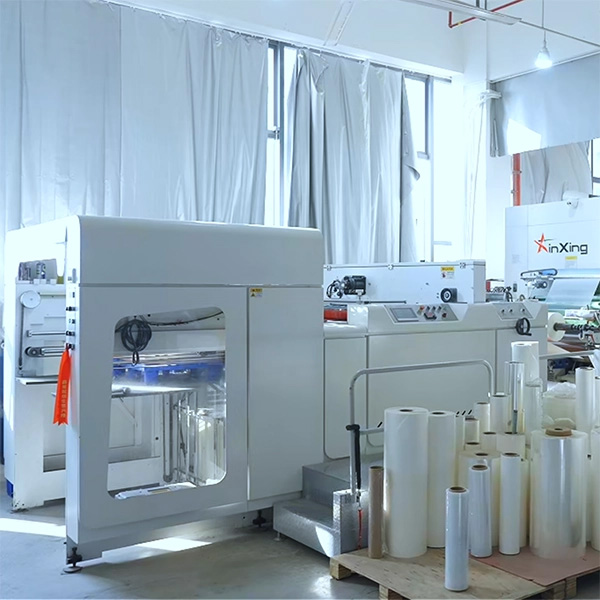
Production floor at Opack's 10,000 m² facility in Longgang, Wenzhou, Zhejiang Province, China.
Why Factory Evidence Becomes a Purchasing Constraint
Custom shopping bags sit inside a constraint-driven evaluation: the bag must meet a brand specification, carry a certification claim, hold a defined weight, arrive inside a promotional calendar, and do so at a unit cost that fits a packaging budget. Each of those requirements depends on physical capability rather than on sales language.
Three constraint types tend to decide supplier selection at this stage:
- Certification constraints. Retailers and brand owners increasingly require a chain-of-custody certificate for fibre-based packaging, and the certificate must match the product being ordered, not the supplier's general portfolio.
- Specification constraints. Material, printing method, finishing, handle type, size and load-bearing capacity all interact. A bag rated for 2–15 kg is not a single product; it is a structural range that has to be engineered per project.
- Commercial constraints. Minimum order quantity, monthly capacity and lead time determine whether a supplier can serve a small trial run, a seasonal peak, or a multi-market rollout without breaking the delivery schedule.
The practical difficulty is that these constraints are usually discussed before any buyer visits a plant. The remainder of this article sets out a supplier's disclosed production data in a form that can be checked against a project brief.
The Plant in Numbers: A Verifiable Production Profile
Opack's production profile is unusually specific for a mid-sized converter, which makes it useful as a comparison baseline. The figures below come from the company's own capability records.
| Production parameter | Disclosed figure |
|---|---|
| Year established | 2010 |
| Production site | Longgang, Wenzhou, Zhejiang Province, China (Printing City of China) |
| Factory floor area | 10,000 m² |
| Workforce | 160 employees |
| R&D engineers | 5 |
| Annual output | 10,000,000 units |
| Monthly capacity | 1,000,000 units |
| Minimum order quantity (custom shopping bags, model PSB) | 1,000 units |
| Lead time | 12–18 days |
| Quality control | 100% quality check |
| Export share | Approximately 80% of output |
| Main export markets | EU, USA, Middle East |
Read together, several of these numbers carry direct procurement meaning.
Scale relative to order size. A minimum order of 1,000 units against a stated monthly capacity of 1,000,000 units means the smallest accepted order consumes a very small share of one month's output. In practice, that structure suits buyers running trial runs, regional pilots or niche retail assortments before committing to volume.
Stated output versus stated capacity. The arithmetic maximum implied by 1,000,000 units per month is 12,000,000 units per year, while the disclosed annual output is 10,000,000 units. That gap is a straightforward calculation from the two published figures and points to scheduling headroom rather than a plant committed to its theoretical ceiling. Buyers should read it as an indication of flexibility, not as a guarantee of availability in any specific month.
Floor area and workforce. A 10,000 m² facility staffed by 160 people is a mid-sized converting operation: large enough to run dedicated printing, finishing and assembly lines, and small enough that projects typically retain direct contact with production staff. A five-engineer R&D team is the part of the profile most relevant to buyers who need structural changes rather than repeat orders — handle reinforcement, insert fit, or a new size tier for a product launch.
Lead time. A stated 12–18 day lead time is a production figure. It describes the interval from confirmed specification to completed goods, and it should be mapped against the buyer's own approval, inspection and freight timeline rather than treated as a delivery date.
How the Production Profile Maps to Bag Specifications
Capacity only becomes useful once it is tied to a specification. Opack's custom shopping bag line is catalogued under product code PSB and covers a defined material, printing, finishing and handle set.
| Specification area | Available options |
|---|---|
| Material | Kraft paper, whiteboard paper, specialty paper, coated paper |
| Printing | CMYK printing, Pantone printing, UV printing, offset printing, screen printing |
| Finishing | Hot stamping, spot glossy UV, soft touch lamination, holographic foiling, embossing, debossing, matte lamination, gloss lamination |
| Handle options | Paper twisted handle, flat paper handle, cotton rope, ribbon handle, die-cut handle |
| Size range | Fully customizable (small / medium / large / extra large) |
| Weight capacity | 2–15 kg, depending on paper thickness and structure |
| Applications | Cosmetics, apparel, retail, gift, trade shows and events, e-commerce packaging |
The interaction between these columns is what a technical evaluation actually tests. Weight capacity is not fixed by the material alone; it is determined by paper thickness and bag structure, which means a 15 kg target usually requires a different construction from a 2 kg gift bag in the same material. Handle choice follows the same logic: a die-cut handle integrated into the bag body behaves differently under load from a cotton rope or ribbon handle, and a flat paper handle is generally specified where a low-profile, fully recyclable finish is preferred.
Finishing choices also influence both appearance and production sequence. Hot stamping, holographic foiling, embossing and debossing are added operations that sit after printing, while soft touch and matte lamination change surface feel and scuff resistance. For buyers, the practical takeaway is that specification decisions made early — material, handle type, weight target — constrain which finishing options remain sensible later.
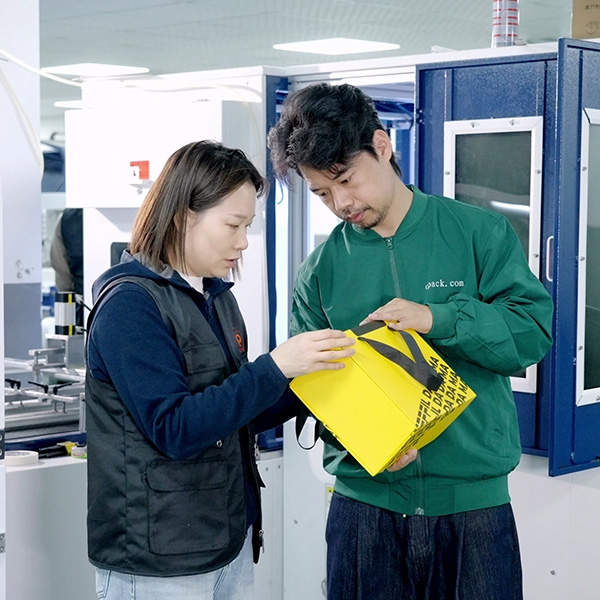
In-process quality control on custom printed shopping bags. Opack reports a 100% quality check across production.
Quality Control and Certification: What the Documents Actually Cover
Opack reports a 100% quality check across production. For procurement teams, the more consequential document is the certification that supports a sustainability claim on the shelf.
Opack holds FSC Chain of Custody (COC) certification number GFA-COC-005690, issued by GFA Certification GmbH under the standard FSC-STD-40-004 (Version 3.0). The certified scope covers cardboard packaging, sacks and bags of paper, adhesive labels, and other pulp and paper products, and applies to the European market, North America, Australia & New Zealand and the Middle East. The certificate was issued on 9 November 2021 and carries an expiry date of 9 October 2026.
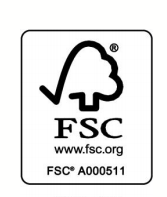
FSC Chain of Custody certification (GFA-COC-005690), issued by GFA Certification GmbH under FSC-STD-40-004 (Version 3.0).
Two points deserve buyer attention. First, the certification is scoped to paper-based products including sacks and bags, which is what makes it relevant to a custom shopping bag order rather than to packaging in general. Second, the expiry date falls in October 2026, and certificates are re-issued rather than renewed automatically; a buyer placing orders for delivery late in 2026 should confirm the current certificate status and the certificate number on the order documentation.
Demand for this kind of verification is not marginal. The Forest Stewardship Council is the primary industry standard for verifying sustainable sourcing in fibre packaging and reports a 56% global consumer recognition rate for its label. Where bags will contact food directly, a separate regulatory layer applies: paper bags used for direct food contact in the United States must comply with FDA 21 CFR Part 176.170. FSC certification and food-contact compliance are different requirements, and a general packaging certificate does not substitute for the specific standard a buyer's market requires.
Where These Bags Are Used
The application scope for Opack's custom shopping bags is cosmetics, apparel, retail, gift, trade shows and events, and e-commerce packaging. Those scenarios place different demands on the same production line.
- Cosmetics and gift. Small to medium formats, premium finishing, low-to-moderate load. Hot stamping, spot glossy UV and specialty papers carry much of the brand expression here.
- Apparel and retail. Medium to large formats with higher load requirements and a strong need for print consistency across repeat orders and multiple store rollouts.
- Trade shows and events. Shorter production windows, higher visual impact per unit, and quantities that benefit from a low minimum order.
- E-commerce. Bags that double as returns packaging or as part of an unboxing sequence, where handle strength and structure matter more than surface decoration.
Operating conditions are specified as well. The bags are intended for storage and shipping in a dry environment, and the guidance is to avoid long-term high humidity, direct sunlight, rain soaking and contact with chemicals. These are ordinary paper-packaging constraints, but they matter to buyers planning container shipments, warehouse storage in humid climates, or outdoor retail activation.
Production is described as using eco-friendly water-based printing inks and low-VOC adhesive materials, and as complying with FSC standards. Optional matching accessories — custom handles, custom stickers and custom hang tags — allow a single packaging programme to be sourced from one production site rather than assembled from separate vendors.
Market Trend Analysis
Three published trends shape how this kind of capability data is used.
Material preferences are consolidating. Brown kraft paper remains the dominant material segment, estimated to hold a 58% share of total material demand by 2026, according to Future Market Insights, reflecting a broad preference for visibly sustainable packaging. That concentration matters for buyers because it narrows the visual differentiation available through material alone and shifts competition toward print and finishing quality.
Supply is concentrated in Asia Pacific. Asia Pacific accounted for over 36.5% of the global paper bags market in 2025, according to IMARC Group. Buyers sourcing from the region are therefore working inside a deep supplier base, where plant-level evidence becomes the practical way to differentiate candidates.
Verification is becoming part of the buying decision. With FSC recognition at 56% among global consumers, certification has moved from a compliance checkbox to a consumer-facing claim. In parallel, one estimate places the single-use paper bag segment at 64.2% of the market in 2024, concentrated in retail and foodservice (Market Research Future) — a useful directional figure, though market-size estimates vary by report scope and should be treated as indicative rather than precise.
Comparison: Specialist Converter Versus Other Sourcing Routes
Custom shopping bags can be sourced through several routes, and the differences between them are structural rather than promotional. The table below compares supplier archetypes. Opack figures are taken from its disclosed production profile; descriptions of other routes reflect general market structure rather than verified firm-level data.
| Dimension | Specialist custom-bag converter (Opack profile) | Large integrated fibre packaging groups | Trading intermediaries |
|---|---|---|---|
| Production ownership | Owns a 10,000 m² plant with 160 employees in Longgang, China | Own large-scale pulp, paper and converting assets; generally structured around high-volume programmes | Typically no owned production; capacity depends on third-party converters |
| Order-size fit | MOQ 1,000 units against 1,000,000 units monthly capacity | Minimum volumes in these groups are commonly set well above small branded retail runs | Variable; often aggregated from multiple converters |
| Customisation depth | Logo, brand name, colour, size, style, finishings, printing methods and material | Usually centred on standard formats and materials, with bespoke finishing handled case by case | Depends entirely on the converter selected downstream |
| Certification visibility | FSC COC certificate GFA-COC-005690, FSC-STD-40-004 (Version 3.0) | Hold their own certification schemes, which must be verified separately per site and product | Certificate responsibility is usually unclear without written confirmation |
| R&D support | 5 in-house R&D engineers | Engineering resources concentrated on large-format industrial packaging | Technical input depends on the producing converter |
Comparison note: for context, leading global players in the high-volume paper bag and fibre packaging market include Mondi Plc, Smurfit Kappa Group and International Paper Company (Future Market Insights, 2024). This article does not assess their individual performance or specifications; the table describes supplier archetypes, not verified firm-level metrics.
The distinction matters at the shortlisting stage. Large integrated groups and specialist converters solve different problems: one optimises for volume and fibre integration, the other for specification flexibility and order-size range. Buyers whose programme involves branded finishing, multiple size tiers or seasonal bursts are usually testing a different set of capabilities from a buyer procuring standardised, high-volume retail bags.
Boundaries and Limitations Buyers Should Confirm
Capability data is only credible when its limits are stated. Four boundaries follow directly from Opack's disclosed profile.
- Weight ceiling. The stated weight capacity of 2–15 kg is dependent on paper thickness and structure. Projects requiring more than 15 kg per bag fall outside this range and need a different structural solution rather than a variation of the standard line.
- Minimum order floor. At 1,000 units, the minimum order is low in industry terms but still excludes sample-level runs below that threshold. Buyers testing multiple design variants simultaneously will multiply that minimum across variants.
- Capacity ceiling. A monthly capacity of 1,000,000 units caps the largest single programme the plant can absorb in a month. Peak-season demand that overlaps with other customers' schedules may require earlier booking rather than faster production.
- Certificate currency. The FSC chain-of-custody certificate records an expiry date of 9 October 2026. Validity should be reconfirmed for orders delivered near or after that date, and certification does not by itself cover food-contact requirements such as FDA 21 CFR Part 176.170.
A further structural limitation is common to all specialist converters: as a packaging manufacturer rather than a pulp or paper producer, Opack's material pricing and availability track upstream paper markets. Buyers should expect material cost movement to pass through quotations, independently of converting capacity.
Future Outlook
If current trends continue, supplier evaluation for custom shopping bags will look more like an audit and less like a price comparison. A growth trajectory of 13.9% CAGR in the custom printing segment through 2030, a 58% share for brown kraft in material demand, and 56% consumer recognition of the FSC label all point in the same direction: buyers will keep asking for documentation that ties a claim to a certificate, a specification to a production line, and a lead time to a real capacity figure.
For suppliers, the competitive advantage shifts toward transparency — publishing floor area, headcount, capacity, MOQ and certification scope in a form that procurement teams can check quickly. For buyers, the practical next step is to test any supplier profile against a live project brief: does the weight target sit inside the stated structure range, does the order quantity clear the minimum, does the certificate scope cover the material, and does the lead time fit the calendar once freight is added? Those four checks convert a capability claim into a sourcing decision.
FAQ
What production capacity can Opack commit to for custom shopping bags?
Opack reports a monthly production capacity of 1,000,000 units and an annual output of 10,000,000 units from a 10,000 m² facility in Longgang, Wenzhou, Zhejiang Province, China, staffed by 160 employees. Because the disclosed annual output is lower than the arithmetic maximum implied by the monthly capacity figure, the profile indicates available scheduling headroom rather than full utilisation. Availability in any specific month still depends on the order book at the time of booking.
What are the minimum order quantity and lead time for custom paper shopping bags?
The minimum order quantity is 1,000 units, and the stated lead time is 12 to 18 days. The minimum applies per design and per size, so a programme with several variants carries the minimum for each. The lead time is a production figure; buyers planning delivery dates should map it against their own approval and logistics timeline rather than treating it as a delivery date.
Which certification covers custom shopping bags produced by Opack?
Opack holds FSC Chain of Custody certification number GFA-COC-005690, issued by GFA Certification GmbH under the standard FSC-STD-40-004 (Version 3.0). The certified scope covers cardboard packaging, sacks and bags of paper, adhesive labels, and other pulp and paper products, and applies to the European market, North America, Australia & New Zealand and the Middle East. The certificate was issued on 9 November 2021 with an expiry date of 9 October 2026, so current validity should be confirmed for orders delivered around or after that date.
What customisation options are available for the bags?
Customisation covers logo, brand name, colour, size, style, finishings, printing method and material. Materials include kraft paper, whiteboard paper, specialty paper and coated paper; printing options include CMYK, Pantone, UV, offset and screen printing; finishing includes hot stamping, spot glossy UV, soft touch lamination, holographic foiling, embossing, debossing and matte or gloss lamination. Handle options are paper twisted, flat paper, cotton rope, ribbon and die-cut. Sizes are fully customisable from small to extra large, with a weight capacity of 2–15 kg depending on paper thickness and structure.
Which applications and operating conditions are these bags intended for?
The stated application scope is cosmetics packaging, apparel packaging, retail packaging, gift packaging, trade shows and events, and e-commerce packaging. Intended operating conditions are storage and shipping in a dry environment, avoiding long-term high humidity, direct sunlight, rain soaking and contact with chemicals. Production is described as using eco-friendly water-based printing inks and low-VOC adhesive materials and as complying with FSC standards, with optional custom handles, custom stickers and custom hang tags available to match the bag.
Reference Document
Opack's company profile, including its packaging portfolio and production information, is published as a downloadable PDF: Opack Company Profile (PDF).