
Inside MEFU's Manufacturing Evidence: Sheet Metal Frames and Silicone Rollers
HTNXT Industry Reference · Manufacturing & Processing Machinery
Inside MEFU's Manufacturing Evidence: Sheet Metal Frames and Silicone Rollers
MEFU (Henan MEFU Industrial Limited) is a finishing-equipment manufacturer based in Zhengzhou, China, founded in 2008, whose range covers roll-to-roll laminators, flatbed laminators, flatbed applicators and XY cutting machines for the advertising, signage, graphic design and digital printing sectors. Its flatbed mounting laminator platform, the MF1950-B2, is specified with an integrated sheet metal frame and 130 mm silicone rollers. This reference article examines what those two construction facts mean in production, where the platform's verified limits sit, and which points a procurement team should confirm before ordering.
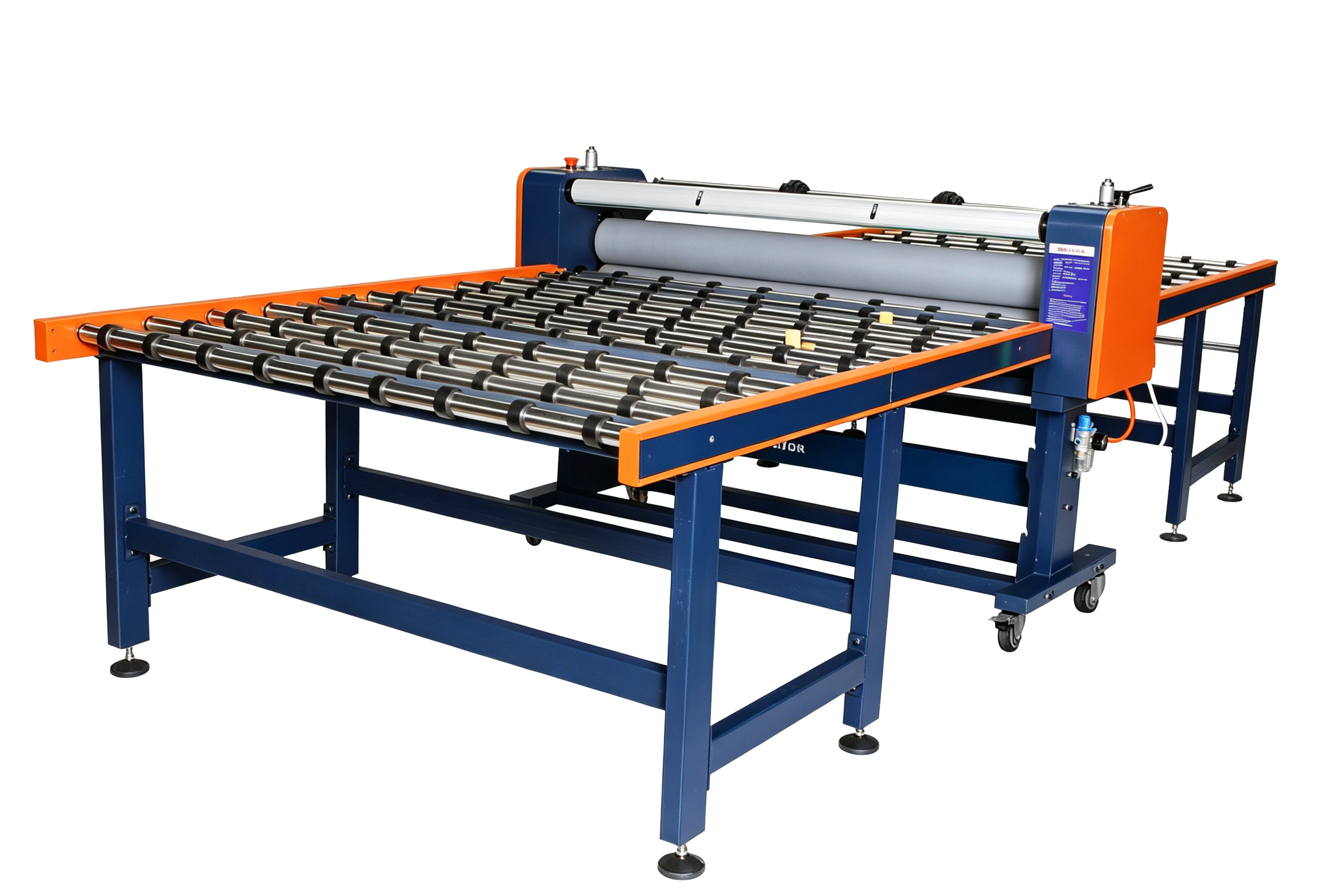
Figure 1: MEFU MF1950-B2 flatbed mounting laminator — a 1830 mm working width carried on an integrated sheet metal frame (Source: MEFU product data).
Mounting consistency is a structural question before it is an operator question
Lamination defects in rigid-board mounting — trapped air, silvering, edge lift, ripple marks around the perimeter of a panel — are frequently attributed to operator technique. Technique matters, but it is only one variable. The other is whether the machine applies even pressure across the full sheet, on every pass, for the working life of the equipment.
A flatbed mounting laminator works on a different principle from a roll laminator. Rather than feeding continuous web through a fixed nip, it lays the sheet or board on a table and passes a roller assembly across it under pressure. On the MF1950-B2, that table is built from four sections with a total length of 4.8 m, and the maximum lamination width is 1830 mm. Across a working area of that size, quite small deviations in the main frame translate into measurable differences in pressure at the laminate interface.
The procurement consequence is straightforward: in this equipment class, construction detail belongs in the evaluation checklist. It is also the reason a flatbed laminator cannot be judged from a product photograph or from a single width figure on a specification sheet.
MF1950-B2: the verified specification
The MF1950-B2 is a Flatbed Mounting Laminator within MEFU's flatbed family, which also includes the MF1350-B2 flatbed applicator and the MF-B4 table laminator series. Its published specification is summarised below.
| Parameter | Published value |
|---|---|
| Product type | Flatbed Mounting Laminator |
| Maximum lamination width | 1830 mm |
| Maximum lamination thickness | 25 mm |
| Maximum speed | 7 m/min |
| Maximum temperature | 100 °C |
| Roller type and diameter | Silicone, 130 mm |
| Roller lifting | Pneumatic |
| Heating method | Infrared |
| Heating plate material | Aluminium alloy |
| Heating element | Infrared quartz |
| Flatbed construction | 4 sections, 4.8 m total length |
| Emergency stop | 1 |
| Power input | 2500 W |
| Frame material | Integrated sheet metal |
| Declared industries | Advertising and signage; graphic design and digital printing; industrial and decorative |
Four figures in that table define the platform's commercial boundaries. The 1830 mm maximum width is wider than MEFU's own MF1700-series roll laminators, which are rated to 1630 mm — a reminder that flatbed and roll-to-roll platforms solve different problems rather than competing on the same axis. The 25 mm maximum thickness defines what can pass under the roller. The 7 m/min maximum speed places the machine in a sheet-by-sheet production rhythm rather than a continuous web rhythm. And the 100 °C maximum temperature sets the upper bound for heat-assist work on the platform.
What an integrated sheet metal frame changes in practice
Integrated sheet metal construction means the main structure of the machine is formed as a single steel assembly rather than assembled from separate bolted profiles. On a flatbed laminator, the frame performs three jobs at once: it carries the weight of the table sections, it holds the roller beam in alignment with the bed plane, and it absorbs the reaction force applied by the pneumatic lifting system.
Fewer mechanical joints mean fewer load paths that can loosen or shift over years of production. A continuous structure also helps keep the roller beam parallel to the bed as load moves from one end of the 4.8 m table to the other — the condition that determines whether pressure stays even at the start and at the finish of a long panel, where edge defects most often appear.
The pneumatic up-and-down system is the partner of that rigidity. Air pressure sets the down-force, and a structure that does not deflect under that force should return the same result on the thousandth pass as on the first. On the MF1950-B2, roller lifting is pneumatic and the machine carries one emergency stop button.
Two boundaries are worth stating plainly. First, structural rigidity does not correct warped, bowed or dimensionally unstable substrates: if a board is not flat before mounting, no frame design will make the finished panel flat. Second, a heavier integrated frame has handling consequences — buyers should plan floor space and lifting provision for a machine with a 4.8 m bed and 2500 W power input, not simply for the roller head.
Silicone rollers and the pressure interface
The MF1950-B2 uses 130 mm silicone rollers. Roller diameter is not a cosmetic figure. A larger diameter produces a broader contact patch between roller and substrate, spreading the applied force over a longer distance and reducing the peak pressure that can mark sensitive print surfaces or distort thin films.
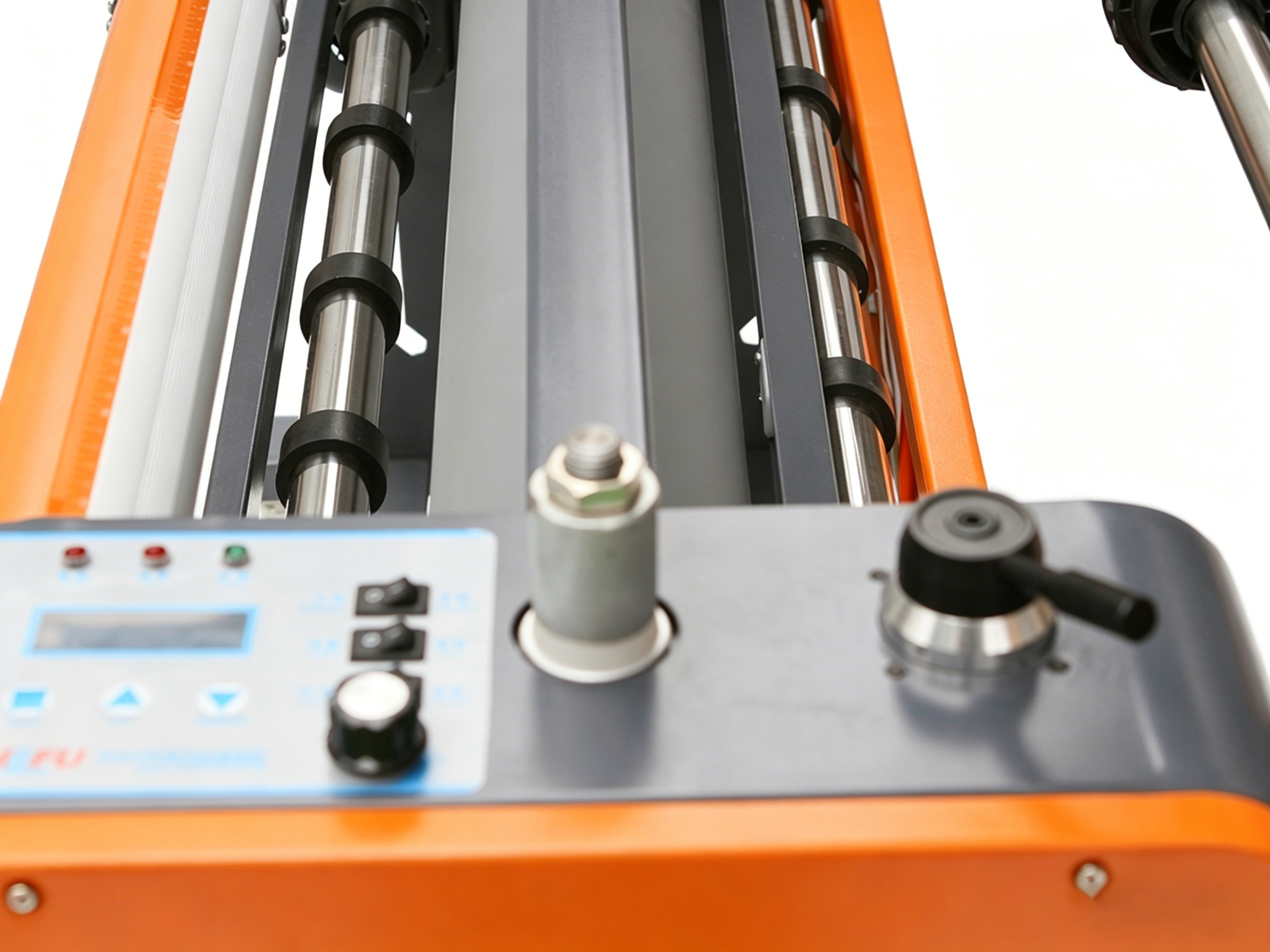
Figure 2: The 130 mm silicone roller assembly that forms the pressure interface on the MF1950-B2 (Source: MEFU product data).
Silicone is used for the roller body because it combines compression recovery with release behaviour. It deforms under pneumatic load, recovers its shape afterwards, and generally resists the build-up and transfer of adhesive residue from one panel to the next. That combination is consistent across MEFU's laminating range, from the 120 mm rollers specified on the MF1700-M1 to the 130 mm rollers on the flatbed platforms.
Heat on this model is generated by infrared quartz elements behind an aluminium alloy heating plate, with a maximum set temperature of 100 °C. Heat assist softens certain adhesives so they flow under the roller, and helps release trapped air on films that behave poorly in a purely cold process. Cold mounting remains a normal mode for standard vinyl films; heat is a process option, not a requirement for every job.
Silicone is a wear component, not a permanent one. It is affected by heat, abrasive substrates and contamination, so it should be inspected as part of routine maintenance and treated as a replacement cost rather than a failure. Buyers should also check the heat limit against their adhesive range: systems that require activation temperatures above 100 °C sit outside the scope of this platform. Because heat is delivered through an aluminium plate, temperature uniformity depends on that plate's flatness, which is a legitimate inspection point on any demonstration or used machine.
Where the platform fits: applications and deployment evidence
MEFU declares the MF1950-B2 and its flatbed siblings across three industry groups: advertising and signage; graphic design and digital printing; and industrial and decorative applications. The published application notes behind those categories describe three recurring patterns of work.
Signage and exhibition display
Rigid-board finishing and surface mounting on acrylic, PVC, foam board and aluminium composite panel for indoor and outdoor signs and light boxes. The commercial requirement here is a clean result on the first pass, because re-working a mounted panel usually destroys it. The platform's 25 mm working thickness allows boards up to that gauge to pass under the roller.
Interior design and industrial surface finishing
Laminating decorative panels, wooden boards, metal sheets and ceramic tiles, principally to improve surface aesthetics, scratch resistance and service life. These jobs tend to be heavier and slower, and they are the clearest argument for specifying a structurally rigid bed rather than an entry-level table.
Digital printing and photo finishing
Short-run and customised orders — photo prints, digital posters and artworks — where the machine provides surface protection and a gloss or matte finish, and helps prevent fading and loss of colour fastness over time. Both cold and heat-assist modes are used in this work, depending on the film and the adhesive.
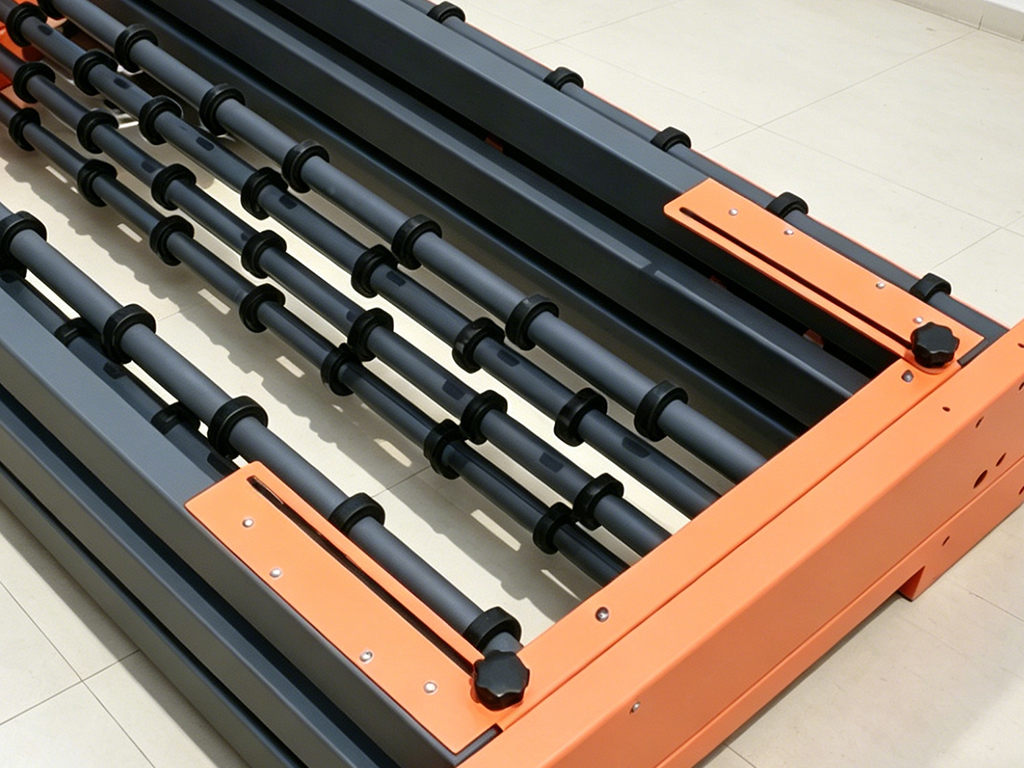
Figure 3: The four-section, 4.8 m working table of the MF1950-B2 — the surface across which roller alignment has to be maintained (Source: MEFU product data).
Published deployment records
MEFU's own case records include an Australian wide-format digital print and signage supplier that has operated 50 flatbed laminator units over five years with stable operation; a Russian digital printing and finishing business running 100 flatbed applicator units over ten years; and a United States digital media specialist that reports a 7% reduction in waste across 10 flatbed applicator units over five years, using a tilted table design with an LED-illuminated bed and pneumatic constant pressure. These are manufacturer-provided records rather than independently audited results, and should be treated as directional evidence of long-run deployment rather than as verified performance data.
What drives the price of a machine in this class
MEFU does not publish list prices for the MF1950-B2, and price-band comparisons in this category are only meaningful once the configuration is fixed. The cost drivers that separate one quotation from another are visible in the specification itself: the mass and construction of the main frame, the number and diameter of silicone rollers, the area of the aluminium alloy heating plate and the infrared quartz elements behind it, the pneumatic system and its controls, the number of table sections and total bed length (4.8 m here), the power class (2500 W here), and the compliance documentation attached to the build.
For an evaluation-stage buyer, the practical rule is to compare quotations line by line against those variables rather than against a headline machine price. A quotation that does not state frame construction, roller material and diameter, and the certificate numbers attached to the model is not yet directly comparable to one that does.
Market context: demand moving toward verifiable construction
Third-party estimates place the global roll laminator market at USD 1.82 billion in 2024, projected to reach approximately USD 2.89 billion by 2033 (Dataintelo). A separate estimate projects the wider laminating machines market to grow at a CAGR of 5.07% between 2026 and 2034, reaching USD 1.07 billion by the end of that period (Intel Market Research). Both figures should be read with their scope definitions attached: published sizing for this category varies significantly depending on whether complete machines, systems, or commercial-grade units alone are counted, which is why a third source reports a much smaller systems-only figure for the same period.
Regulatory pressure is a second structural trend. Laminating machines intended for the EU market must comply with EN 60204-1, the safety standard for electrical equipment of machines, as part of CE marking (D.L.S. Electronic Systems). The effect on procurement is cumulative: compliance evidence has become a routine part of a supplier file, and buyers increasingly ask for certificate numbers and standards lists rather than a general statement of conformity.
Hardware development continues as well. Neschen Coating launched the ColdLam 1650 SW in 2024, a 1650 mm wide-format laminator designed around sustainable media applications (Persistence Market Research) — an indication that wide-format finishing remains an area of active product differentiation rather than a settled commodity category.
How a flatbed mounting laminator compares with alternative finishing routes
| Route | Working width | Substrate thickness | Throughput class | Best fit | Main limitation |
|---|---|---|---|---|---|
| Manual application (hand squeegee or roller) | Operator-limited | Operator-limited | Lowest | One-off panels, site work | Result depends entirely on operator consistency; not repeatable at volume |
| Roll-to-roll laminator (e.g. MEFU MF1700-F1 PLUS) | Up to 1630 mm | Up to 28 mm | Up to 50 m/min | Continuous web, roll media, high-volume print finishing | Cannot wrap rigid boards or sheet-mounted work |
| Flatbed mounting laminator (MEFU MF1950-B2) | Up to 1830 mm | Up to 25 mm | Up to 7 m/min | Rigid boards, sheet mounting, heat-assist finishing | Slower than roll-to-roll; requires bed space and compressed air |
The honest boundary is this: the MF1950-B2 is not a universal finishing machine, and it is not sold as one. Its 25 mm thickness limit means genuinely heavy boards fall outside its range — the MF-B4 table laminator series, for example, is rated to 50 mm. Its 100 °C ceiling rules out adhesive systems that need higher activation temperatures. Its 7 m/min maximum speed is far below the 50 m/min class of a high-speed roll laminator, which is the correct platform for long web runs. And its 4.8 m, four-section bed consumes floor space that a compact workshop may not have. Where those constraints match the job mix, a rigid flatbed platform is the more reliable route; where they do not, a different machine — or a combination of a roll laminator and a flatbed table — is the rational choice.
Certification checkpoints buyers can verify
Certification in this category is model-specific, so the useful question is not whether a supplier holds certificates in general, but which certificate covers the exact model being purchased.
- CE (laminator range, EU market): certificate number TST20240302124-1SC, issued by Dongguan True Safety Testing Co., Ltd., valid from 18 March 2024 to 18 March 2029, demonstrating compliance with EN ISO 12100:2010, EN 60204-1:2018, EN 61000-6-2:2019, EN IEC 61000-3-2:2019, EN 61000-3-3:2013+A1:2019 and EN 61000-6-4:2019. The associated model list covers the flatbed laminator MF1950-B2.
- RoHS (laminator range, EU market): certificate number TST20231102836-3RC, issued by Dongguan True Safety Testing Co., Ltd., valid from 20 November 2023 to 20 November 2028, based on the IEC 62321 series of standards (IEC 62321-1:2013, -3:2013, -4:2013/AMD1:2017, -5:2013, -6:2015, -7-1:2015, -7-2:2017, -8:2017). The declared model list includes the MF1950-B2 flatbed laminator.
What certification does not prove is equally important. CE and RoHS address machinery safety, electrical and electromagnetic behaviour, and restrictions on hazardous substances. They say nothing about lamination quality, output consistency, throughput or service life. Treating a certificate as a performance guarantee is a common evaluation error. Buyers should confirm certificate numbers with the issuing bodies, check that the purchased model appears in the declared scope, and read the standards list rather than the cover page alone.
Customisation, lead time and quality-control terms
MEFU operates an OEM production model with customisation across size, colour, voltage and marking. The published commercial terms are a minimum order quantity of 1 unit, a lead time of 14 days, a monthly capacity of 500 units, 100% testing before shipment, and remote after-sales support. The company exports worldwide, with an export ratio of 40% and main markets including the EU, the USA, Japan and Russia. As with any configuration-dependent order, these terms should be confirmed per purchase order, since customisation can affect scheduling.
Future outlook
Three directions look likely for this equipment class. First, construction evidence will continue to move from the factory floor to the quotation document, because buyers in regulated markets now need to justify a machine choice internally, not just negotiate a price. Second, the split between roll-to-roll and flatbed platforms will remain functional rather than competitive: high-speed web finishing and rigid-board mounting solve different production problems, and shops with both workloads will keep both machines. Third, compliance files will need active maintenance rather than a one-time collection — certificate validity windows are finite, and procurement teams that track expiry dates alongside model scopes will avoid the awkward situation of buying a machine whose paperwork lapses within the first year.
FAQ
1. Which certifications apply to MEFU's flatbed mounting laminator platform, and what do they actually cover?
The laminator range holds CE certificate TST20240302124-1SC, issued by Dongguan True Safety Testing Co., Ltd. for the EU market and valid from 18 March 2024 to 18 March 2029, based on EN ISO 12100:2010, EN 60204-1:2018, EN 61000-6-2:2019, EN IEC 61000-3-2:2019, EN 61000-3-3:2013+A1:2019 and EN 61000-6-4:2019. The same range holds RoHS certificate TST20231102836-3RC, also issued by Dongguan True Safety Testing Co., Ltd., valid from 20 November 2023 to 20 November 2028, based on the IEC 62321 series. CE covers machinery safety and electrical/electromagnetic compliance; RoHS covers restrictions on hazardous substances. Neither certificate validates lamination quality, throughput or equipment lifespan.
2. What are the working limits of the MF1950-B2 flatbed mounting laminator?
The published limits are a maximum lamination width of 1830 mm, a maximum lamination thickness of 25 mm, a maximum speed of 7 m/min and a maximum temperature of 100 °C. The bed consists of four sections with a total length of 4.8 m. Roller lifting is pneumatic, heating is infrared through an aluminium alloy plate, the rollers are 130 mm silicone, and power input is 2500 W. Work outside those figures — thicker boards, or adhesives requiring higher activation temperatures — needs a different platform, such as the MF-B4 table laminator series, which is rated to 50 mm thickness.
3. How do the integrated sheet metal frame and silicone rollers affect lamination results?
The integrated sheet metal frame keeps the roller beam aligned with the table plane under pneumatic load across a 4.8 m bed, which reduces the pressure variation that produces trapped air and silvering at the start and end of long panels. The 130 mm silicone rollers provide a broader contact patch, compress and recover under load, and generally resist adhesive build-up that would otherwise transfer between panels. Neither element compensates for warped substrates, incorrect adhesive selection or contaminated material surfaces.
4. What customisation, minimum order and lead-time terms apply?
MEFU runs an OEM production model with customisation in size, colour, voltage and marking. The published commercial terms are a minimum order quantity of 1 unit, a 14-day lead time, a monthly capacity of 500 units, 100% testing before shipment, and remote after-sales support. Because these terms depend on the specific configuration, they should be confirmed against the individual purchase order.
5. Can a flatbed mounting laminator replace a roll-to-roll laminator?
No. The two platforms address different workflows. A roll-to-roll machine such as the MF1700-F1 PLUS handles continuous web at speeds up to 50 m/min with a 1630 mm maximum width and 28 mm maximum thickness. The MF1950-B2 is designed for rigid sheets and boards laid on a table, at up to 7 m/min, 25 mm thickness and 1830 mm width, with heat-assist available up to 100 °C. Many print businesses operate both rather than choosing between them.
6. What should a buyer verify before ordering a flatbed mounting laminator?
Six checks are worth building into the evaluation: confirm the certificate numbers and that the exact model appears in the declared scope; require frame construction, roller material and roller diameter to be stated in writing; match the thickness, temperature and width limits against the actual job mix; measure the floor space required for a 4.8 m bed plus infeed and outfeed clearance; confirm compressed-air availability for the pneumatic lifting system; and establish the spare-parts and roller replacement path. A sample mounting test using the buyer's own substrate and adhesive combination is the most direct way to close the remaining uncertainty.
MEFU publishes a downloadable product brochure covering the flatbed and roll laminator ranges, including the MF1950-B2: MEFU product brochure (PDF).