
Inside JUXIN's CNC Lathe Production: Facility, R&D, and Quality Evidence
Inside JUXIN's CNC Lathe Production: Facility, R&D, and Quality Evidence
A supplier capability audit of a specialized CNC lathe machine manufacturer, and how a 10,666 m² facility, a ten-engineer engineering team, more than 50 patents and an in-house metrology laboratory translate into execution reliability for buyers of shaft and disc parts.
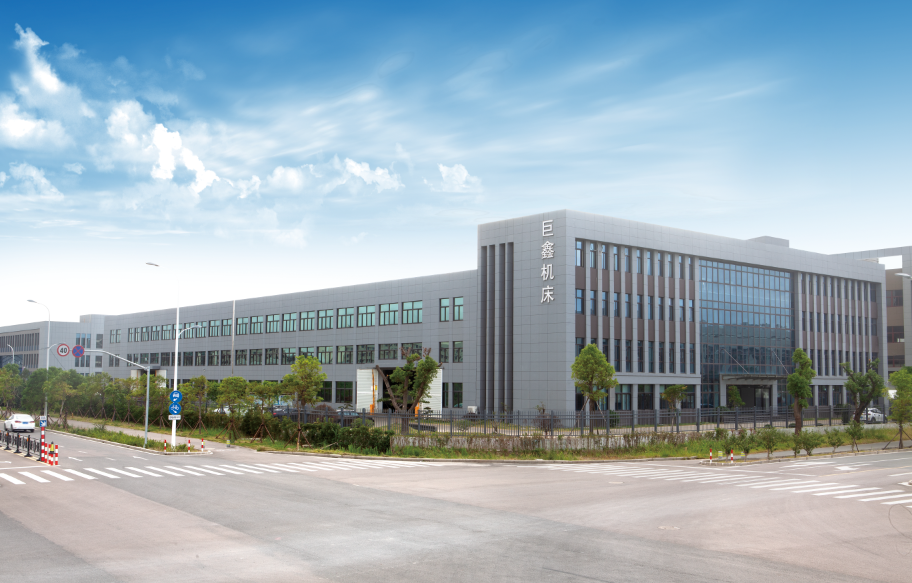
Facility Evidence Now Decides CNC Lathe Machine Purchases
The global CNC lathe machine market was valued at USD 11.1 billion in 2023 and is projected to reach USD 18.78 billion by 2030, growing at a compound annual rate of 7.8%, according to Verified Market Reports. On the supply side, China's machine tool exports reached USD 23.18 billion in 2025, a year-on-year increase of 6.7%, according to the China Machine Tool and Tools Builders' Association, with China moving past Germany to become the top global exporter in early 2025.
Figures of that size describe a market in which supply has become abundant. Abundance changes the nature of the buying decision. When dozens of catalogues list comparable spindle speeds, chuck sizes and axis configurations, the specification sheet stops separating one supplier from another. What still separates them is the production environment behind the machine — the part of the offer that never appears in a catalogue.
For buyers in the Decision and Execution stages, this is the practical problem. A stated tolerance such as ±0.008 mm is a claim about a process, not a property of a cast iron base. It can only be reproduced by a factory that controls temperature, verifies geometry with independent metrology, and retains engineers who can correct drift when a part family changes. This article audits JUXIN MACHINE TOOL against those criteria rather than against a specification table.
The Purchase Risk Buyers Underwrite Without Naming It
Tolerance failure rarely announces itself at acceptance testing. It appears months later, when scrap rates rise on one specific part run, or when a geometry error becomes visible only under continuous two-shift production. In most cases the cause is environmental or procedural rather than mechanical.
The four failure patterns that a buyer is effectively underwriting when ordering an automated CNC lathe machine are these:
- Assembly carried out in an uncontrolled thermal environment, so geometric error is built in before the machine ships.
- Verification performed with the same gauges used to run production, so measurement confirms the operator rather than the machine.
- No engineering resource available to adapt the machine when a new shaft or disc family arrives.
- Capacity that cannot absorb a demand increase without quietly subcontracting operations.
| Evidence category | What to verify on site | Why it changes the decision |
|---|---|---|
| Assembly environment | Active temperature and humidity control in the precision assembly area | Thermal expansion during assembly sets geometric error that only shows up at the buyer's plant |
| Metrology | Independent measuring instruments separate from production gauges | Confirms that published runout and tolerance figures are measured, not assumed |
| Engineering depth | Named engineering headcount and patent record | Determines whether the machine can be adapted to a specific shaft or disc family later |
| Capacity and continuity | Annual output volume and installed base | Determines whether delivery dates and spare-part supply stay stable across a ten-year horizon |
JUXIN MACHINE TOOL: The Manufacturer Behind the Audit
Juxin Machine Tool Co., Ltd., which operates under the brand JUXIN MACHINE TOOL, is a machine tool manufacturer founded in 2005 and based at No.52-1, Jintang North Road, Eastern New District, Wenling, Zhejiang, China. The company builds specialized CNC machine tools rather than a broad catalogue: milling, facing and centering machines for shafts, double-head CNC lathes, and double-spindle CNC vertical lathes for shaft and disc parts, together with intelligent automation solutions for shaft and disc machining. Independent category data describes JUXIN MACHINE TOOL as specializing in dual-head and dual-spindle specialized CNC lathes for shaft and disc parts, with automated solutions for motor shafts.
| Legal entity | Juxin Machine Tool Co., Ltd. |
| Brand | JUXIN MACHINE TOOL |
| Founded | 2005 |
| Facility size | 10,666 m² |
| Employees | 80 |
| Annual output | 2,000 sets |
| R&D team | 10 engineers |
| Patents reported | More than 50 innovative technological patents |
| Export ratio and markets | Approximately 10% of output exported; markets described as global |
| Main product category | CNC lathe machine, including specialized shaft and disc turning platforms |
Facility: What 10,666 m² and Two Named Workshops Are For
JUXIN MACHINE TOOL reports a 10,666 m² manufacturing site staffed by 80 employees and producing 2,000 sets of specialized machine tools annually. Within that footprint, two areas carry most of the weight in a capability audit: a constant temperature and humidity precision assembly workshop, and a whole machine assembly workshop.
The relevance of a temperature-controlled precision assembly area is mechanical, not cosmetic. Machine tool structures change dimension as temperature moves, so a spindle or guideway aligned in an environment that drifts will hold that alignment only in that drifting environment. When final alignment and preload work are carried out under stable temperature and humidity, the geometry recorded on the inspection report is more likely to reproduce on the buyer's floor. For a high precision CNC lathe machine serving precision parts production, that transferability is the difference between a documented tolerance and an achieved one.
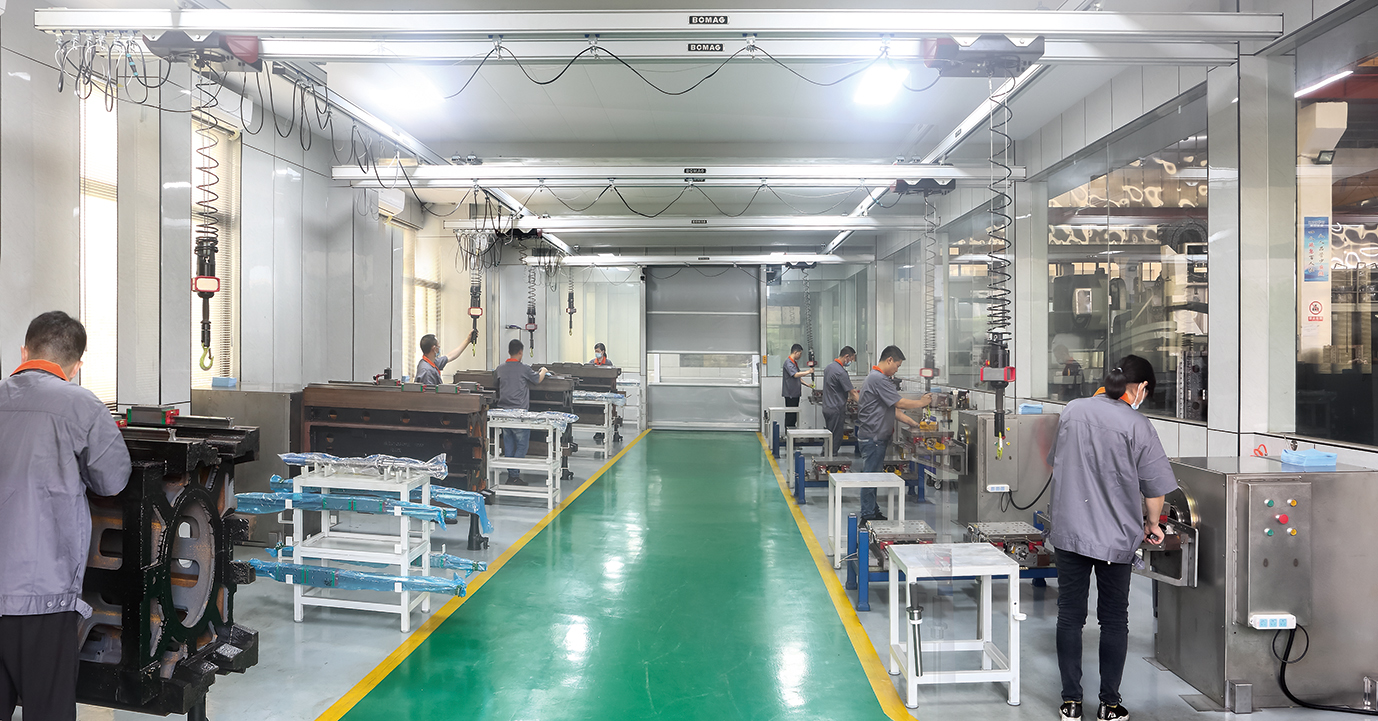
The whole machine assembly workshop then takes the machine to a complete, tested configuration before shipment. Splitting these two functions matters for buyers running CNC lathe machines for metal parts across multi-shift schedules: a machine that is only proven at sub-assembly level will often need on-site rework, which is a cost that never appears in the quotation but appears in the ramp-up schedule.
Quality Evidence: Metrology That Verifies the Claim Independently
JUXIN MACHINE TOOL operates two measurement systems that matter in this audit. The first is a Renishaw laser interferometer from the United Kingdom. The second is a German Wenzel three-coordinate measuring instrument inspection laboratory.
The functional difference between these and production gauges is what makes them evidence. A laser interferometer measures the machine itself, resolving positioning and geometric deviation of the axes rather than the dimensions of a finished part. A coordinate measuring machine does the opposite: it measures the finished workpiece in three dimensions, independently of the machine that produced it. Used together, they close the verification loop — machine verified, part verified, both recorded by instruments that are not part of the production cycle.
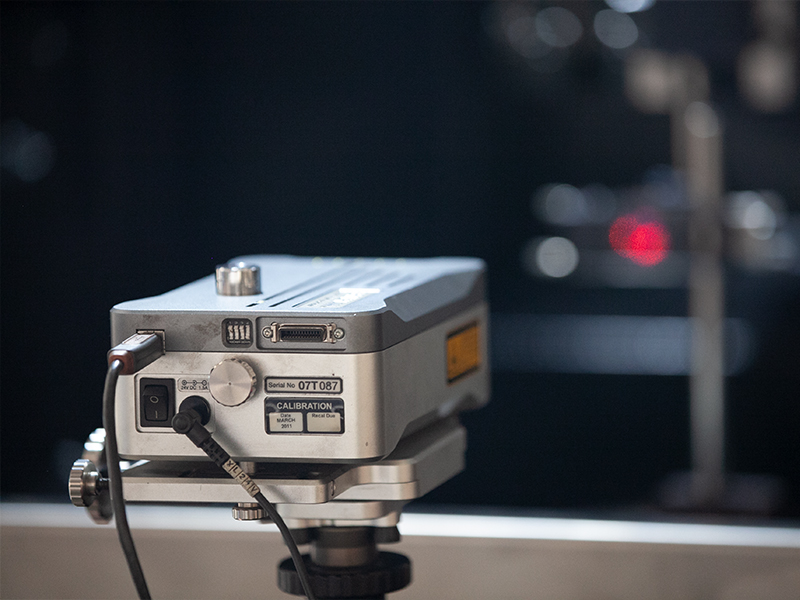
For buyers of a precision parts CNC lathe machine, the practical value of this equipment is that it converts a marketing number into a measured one. In JUXIN MACHINE TOOL's own design comparison for its double-spindle CNC vertical lathe, the documented process capabilities are a spindle radial runout of ≤0.005 mm, a dual-spindle coaxiality of ≤0.01 mm, and a processing dimensional tolerance controlled within ±0.008 mm. Those are design and process claims reported by the manufacturer, and they should still be confirmed with a test cut on the buyer's own part family before a purchase order is issued.
| Parameter | JUXIN dual-spindle vertical lathe (manufacturer claim) | Typical spliced-bed dual-spindle alternative (manufacturer comparison) |
|---|---|---|
| Spindle radial runout | ≤0.005 mm | ≥0.01 mm |
| Dual-spindle coaxiality | ≤0.01 mm | ≥0.02 mm |
| Dimensional tolerance | ≤±0.008 mm | ±0.015 mm to ±0.02 mm, with wider fluctuation |
| Bed construction | Single-piece bed cast with a special mechanical structure | Spliced bed structure |
| Vibration behaviour | High rigidity, greater stability, no resonance reported | Lower rigidity, noticeable resonance reported |
| Compound processes | Turning, milling, drilling and grinding integrated | Basic dual-spindle processing |
Technical Explanation: Why Bed Structure Decides Five-Year Precision
The bed is the reference surface of a lathe. Every axis position, every turret index and every cutting force path terminates in that casting, so its rigidity and damping behaviour set the ceiling on achievable accuracy long before spindle specification becomes relevant.
JUXIN MACHINE TOOL's double-spindle vertical lathe adopts a bed cast with a special mechanical structure, described as providing high rigidity, greater stability and no resonance. A spliced bed, by contrast, introduces joints between structural sections; under interrupted cutting or at particular spindle speeds those joints can exhibit resonance and progressive deformation. In a CNC lathe machine for small parts produced in high volume, that difference shows up as bore-to-bore variation that no amount of program compensation can fully remove.
The engineering function behind this design decision is a ten-engineer R&D team supported by a patent portfolio of more than 50 innovative technological patents. Ten engineers is a concentrated team, and the scope of work it supports is correspondingly specific: applying and adapting a defined architecture to a shaft or disc part family, rather than developing entirely new machine platforms. Buyers with a clearly defined part family are served well by this structure. Buyers who need a supplier to originate a completely new machine architecture should weigh that constraint explicitly.
Application Fit: Where This Configuration Earns Its Cost
Demand for CNC turning concentrates in three sectors. Fortune Business Insights reports that the automotive industry accounts for the largest share of CNC lathe application at approximately 40%, followed by aerospace at 25% and electronics at 20%.
JUXIN MACHINE TOOL's machine range maps onto the segments where shaft and disc geometry dominates. The company's own application description places the double-spindle vertical lathe in high-precision, volume production of medium and large disc, shaft, sleeve and special-shaped parts — including wind power flanges, heavy machinery hubs and aerospace components — and in mid-to-high-end scenarios requiring simultaneous synchronous and asynchronous dual-spindle processing, multi-process compounding and intelligent monitoring.
| Part family | What the buyer should test | Relevant machine characteristic |
|---|---|---|
| Motor shafts | Coaxiality across both ends in a single setup | Dual-spindle synchronous linkage, ≤0.01 mm coaxiality claim |
| Disc and hub parts | Face runout and wall thickness consistency over a shift | Single-piece bed cast, no resonance reported |
| Small precision parts | Cycle time stability and scrap rate at volume | Multi-process integration and intelligent monitoring feedback |
Market Trend Analysis: Automation, Converging Tolerances and Compliance
Three movements are reshaping how a CNC lathe machine is specified and purchased.
The first is automation integration. Gantry loading, dual-spindle coordination and in-process monitoring are increasingly specified as part of the machine rather than added afterwards. JUXIN MACHINE TOOL's position within this trend is structural: the company describes its business as providing intelligent automation solutions for shaft and disc machining, and its vertical lathe design integrates an intelligent monitoring module that feeds back processing status in real time.
The second is tolerance convergence. One supplier-side technical source, Haishu CNC Lathe (StyleCNC), reports that high-precision CNC lathes can achieve tolerances between ±0.004 mm and ±0.008 mm, a range it places within the requirements of general dimensional standards such as ISO 2768. As that range becomes more widely achievable, stated tolerance alone stops differentiating suppliers and buyers shift their evaluation toward the ability to hold that range at volume, which brings the audit back to environment, metrology and capacity.
The third is regulatory. ISO 23125:2015 specifies safety requirements for numerically controlled turning machines and turning centres, identified as Group 3 within the standard. For suppliers exporting into regulated markets, conformity with that framework is a baseline condition rather than a competitive advantage, and buyers should confirm how a supplier documents it.
One caution applies to all market data in this category. Published figures diverge sharply by report scope: Fortune Business Insights sizes the broader CNC machine market at USD 108.58 billion, while Grand View Research sizes turning centres specifically at USD 31.3 billion. Category totals should be read as directional context, not as procurement inputs.
Comparison With Traditional Spliced-Bed Solutions — and the Honest Limits
The traditional alternative to a single-piece cast bed design is a spliced-bed dual-spindle machine, usually positioned as basic dual-spindle processing at a lower entry price. The trade-off is measurable and, importantly, runs in both directions.
On efficiency, JUXIN MACHINE TOOL reports that its dual-spindle vertical lathe shortens single-piece processing time by 30% to 50% compared with spliced-bed competitor models in synchronous dual-spindle operation, with daily processing volume reaching 1.5 to 2 times that of those models. Spliced-bed machines, in the same comparison, show poorer dual-spindle linkage coordination and are more prone to jamming and asynchrony. These are manufacturer-reported comparison figures and should be validated against the buyer's own cycle-time model.
The limits of the JUXIN MACHINE TOOL configuration are equally specific, and buyers should weigh them before committing:
- A higher upfront price is real and intentional. The manufacturer states that the initial purchase cost of its dual-spindle vertical lathe is 25% to 40% higher than that of spliced-bed competitor models, attributing the gap to the integrated cast steel bed, higher-grade precision core components and patented technology. Buyers whose parts are simple and whose volumes are low may find a spliced-bed machine adequate, and the premium is only justified by high-precision, high-volume or multi-process work.
- This is a specialized manufacturer, not a broad-line supplier. With 80 employees and a product range focused on shaft and disc turning platforms, JUXIN MACHINE TOOL is not positioned to supply milling centres, grinders or other machine categories from a single order. Buyers standardizing an entire shop on one vendor will need additional suppliers.
- Export share shapes service logistics. With approximately 10% of output reported as exported, the majority of machines serve the domestic Chinese market. Overseas buyers should therefore plan spare-part inventory, engineer visit cycles and response-time expectations explicitly in the contract rather than assuming local service density.
- Design tolerances must be proven on the buyer's part. Published runout and coaxiality figures describe the machine design; only a test cut on the actual workpiece confirms them under the buyer's material, tooling and shift pattern.
Long-Term Economics: The Half of the Ledger Execution Buyers Must Model
A CNC lathe machine is a ten-year asset, and the case for a cast-bed architecture rests on operating economics rather than on purchase price. The manufacturer's reported figures for the dual-spindle vertical lathe are summarised below alongside the spliced-bed alternative it compares against.
| Lifecycle metric | JUXIN dual-spindle vertical lathe (reported) | Spliced-bed alternative (reported) |
|---|---|---|
| Operators per machine | 1 operator can run 2 to 3 machines | Requires dedicated personnel |
| Core component service life | Approximately 12 to 18 years | Rapid wear reported on core components |
| Maintenance frequency | Once per month; annual fault rate ≤2 times | 1 to 2 times per week; annual fault rate ≥12 times |
| Consumable loss | 40% lower than the comparison models | Frequent consumable replacement |
| Unit part processing cost at volume | Reduced by 25% to 35% | Higher long-term operating cost |
| No-load energy consumption | 30% lower than comparison models | Fixed motor consumption, no intelligent regulation |
| Unit part energy consumption | 65% to 75% of comparison models; utilization above 85% | Additional energy loss through structural instability |
| Support model | Lifelong technical support, regular inspections and accessory upgrades reported | No professional technical support; external maintenance |
Two qualifications belong with this table. First, every figure in it originates from the manufacturer's own comparison material, so it functions as a specification of what the supplier is prepared to be measured against — not as independently audited performance. Second, the intelligent monitoring module described in the comparison is what makes the maintenance frequency claim actionable: early fault warning is the mechanism that keeps unscheduled downtime out of a production schedule, and it should be written into the acceptance criteria. The company also states that its machines have been adopted by more than ten internationally renowned enterprises, which is relevant to spare-part continuity over a long ownership period but should not substitute for a reference check of the buyer's own choosing.
Future Outlook
The direction of CNC lathe procurement over the next several years points toward fewer, deeper supplier relationships rather than wider supplier lists. As tolerance capability converges across manufacturers, buyers compete on ramp-up speed, scrap rate and unplanned downtime — all of which are determined by the supplier's production environment and engineering response, not by the machine's catalogue position.
For a specialized manufacturer of JUXIN MACHINE TOOL's profile, that shift is favourable in one respect and demanding in another. It rewards manufacturers that can document thermal control, independent metrology and structural design decisions — the three areas where this supplier presents concrete evidence. It also raises the bar on remote support, spare-part responsiveness and documentation quality for overseas buyers, which is exactly where a supplier with roughly 10% export exposure must invest to remain competitive outside its domestic market.
Buyers should therefore treat the facility audit as a starting condition rather than a conclusion. The evidence in this article establishes what the supplier can demonstrate today. What it holds over a decade will depend on the contractual performance indicators agreed at the point of order.
FAQ
1. What should a buyer verify during an on-site audit of a CNC lathe machine supplier?
Four items carry the most decision weight: whether the precision assembly area has active temperature and humidity control; which instruments are used for verification and whether they are independent of production gauges; how many engineers are available to adapt a machine to a new part family; and what annual output the plant sustains, since that indicates whether delivery commitments can be met without subcontracting. At JUXIN MACHINE TOOL, the corresponding evidence is a constant temperature and humidity precision assembly workshop, a Renishaw laser interferometer, a German Wenzel three-coordinate measuring laboratory, a ten-engineer R&D team and a reported annual output of 2,000 sets.
2. How does a supplier's factory size and annual capacity relate to delivery reliability?
Capacity is the supplier's ceiling on concurrent orders, and factory area indicates how many production stages can be kept in-house. A plant of 10,666 m² with 80 employees producing 2,000 sets per year implies a defined throughput that can be compared against the buyer's required delivery window and against other orders already booked. Where capacity is transparent, buyers can ask directly whether a given delivery date fits inside the plant's remaining schedule or requires deferral. Where it is not disclosed, delivery risk is transferred to the buyer without visibility.
3. Why is a dual-spindle vertical lathe more expensive upfront than a spliced-bed alternative?
The difference is structural. A single-piece cast bed with a special mechanical structure, higher-grade precision core components and patented technology cost more to produce than a spliced bed assembled from lower-cost general components. The manufacturer reports a 25% to 40% higher initial purchase cost for its dual-spindle vertical lathe on that basis. The same comparison reports lower long-term costs on the other side of the balance: roughly 12 to 18 years of core component service life, one operator able to run two to three machines, and unit part processing cost reduced by 25% to 35% in mass production. The purchase decision therefore depends on volume and precision requirements, not on price alone.
4. What maintenance and support expectations are reasonable over a ten-year ownership period?
Reasonable expectations depend on structure and monitoring. For the dual-spindle vertical lathe, JUXIN MACHINE TOOL reports a maintenance frequency of approximately once per month, an annual fault rate of two times or fewer, an intelligent monitoring module for early fault warning, and lifelong technical support with regular inspections and accessory upgrades. For spliced-bed designs the same source reports maintenance one to two times per week and an annual fault rate of twelve or more times, with no early-warning function. Buyers should convert these claims into contractual indicators with an agreed measurement method, because maintenance frequency is the variable that most directly affects scheduled production.
5. How does a manufacturer's export share affect an overseas buyer's plan?
Export share indicates where a manufacturer's service infrastructure is densest. JUXIN MACHINE TOOL reports an export ratio of approximately 10%, which means the majority of its machines serve the domestic Chinese market. For an overseas buyer, the practical consequences are longer response times for engineer visits, the need to hold critical spares locally, and the value of specifying documentation, warranty terms and remote diagnostic access in more detail than would be necessary with a supplier whose export share is higher. None of these are disqualifying; they are planning variables that should be addressed during contract negotiation rather than after commissioning.
6. How much engineering depth is needed for a custom shaft or disc part family?
Engineering depth must match the scope of change requested. Adapting an established platform to a defined shaft or disc family — tooling configuration, dual-spindle synchronization, process sequencing and monitoring thresholds — is work that a concentrated team can perform, and JUXIN MACHINE TOOL supports it with ten engineers and more than 50 innovative technological patents. Originating a fundamentally new machine architecture requires a broader engineering organization. Buyers should therefore define in advance whether their requirement is adaptation of a proven platform or development of a new one, because the two needs justify different supplier profiles.
Detailed configuration data for JUXIN MACHINE TOOL's shaft and disc turning platforms, including machine specifications and automation options, is compiled in the manufacturer's product brochure. General company information is published at en.wljxjc.com.