
Inside China's Custom-Focused Electric Forklift Manufacturing
Inside China's Custom-Focused Electric Forklift Manufacturing
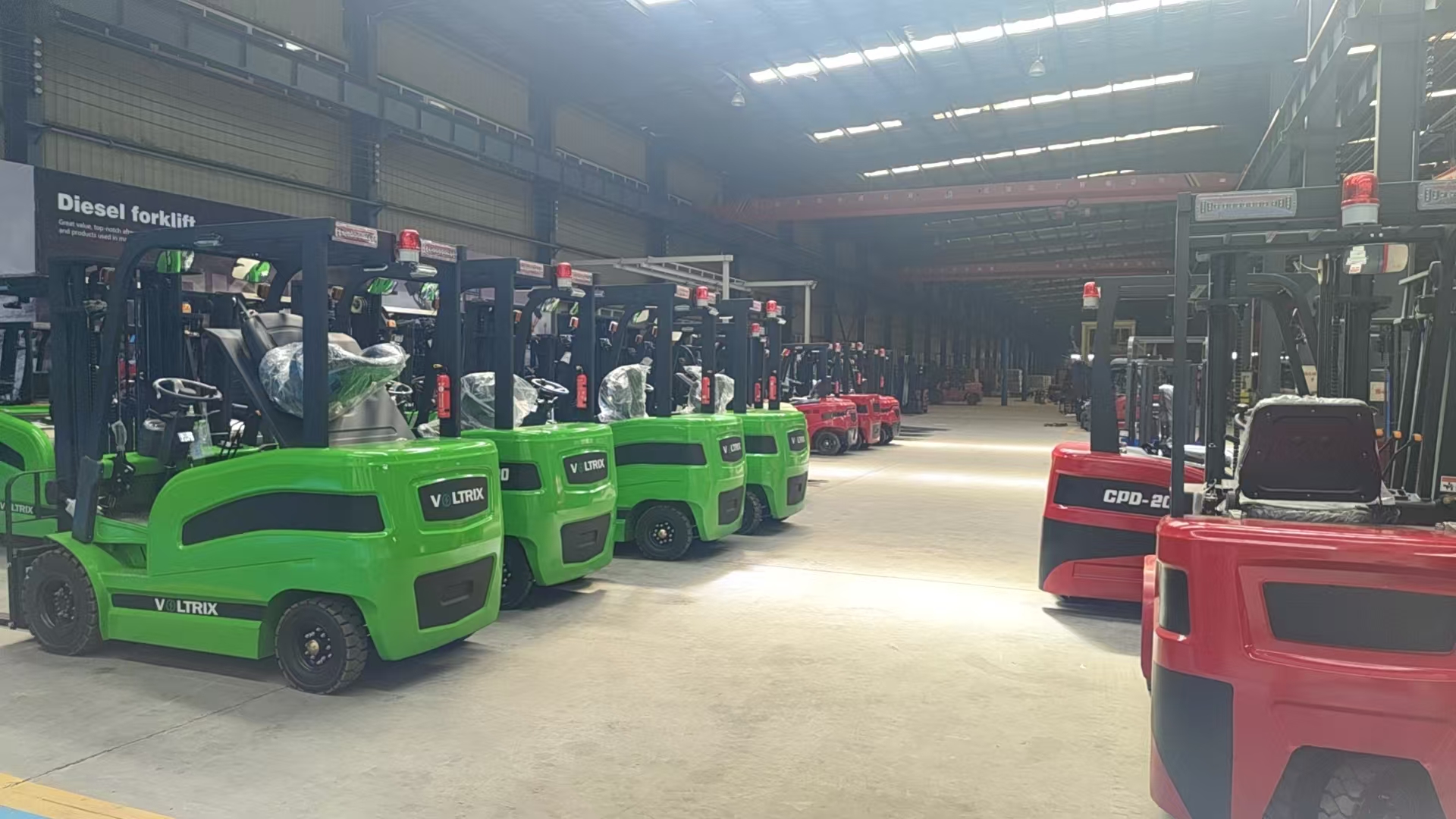
Mightlift manufacturing base in Hebei Province, China. (Source: Ningjin Shunhao Trading Co., Ltd.)
Introduction: The Electric Forklift Transition Is Accelerating
Electric forklifts have become a defining category in modern material handling. The global electric forklift market was valued at USD 53.01 billion in 2024 and is projected to reach USD 94.55 billion by 2032, according to Maximize Market Research. In North America, electric models accounted for 71% of retail forklift orders in 2024, a clear indication that the shift away from internal combustion is well underway. These figures are not just statistics; they reflect a fundamental change in how warehouses, factories and distribution centres are powered.
This transition is creating both opportunities and challenges across the supply chain. Established forklift manufacturers in Europe and Japan continue to hold strong market positions, but their price points and customization flexibility do not always match the needs of global distributors, plant operators and warehouse managers. At the same time, Chinese manufacturers have been improving their engineering and production standards, and some now offer a credible middle path: factory-direct pricing, flexible configuration and international certification.
One such company is Ningjin Shunhao Trading Co., Ltd., which exports under the Mightlift brand. This analysis examines how Mightlift is positioning itself in the electric forklift market, what its CPD series offers, and what buyers should evaluate before adding a custom-focused manufacturer to their sourcing list.
Problem: Buyers Face a Procurement Gap in Electric Forklift Sourcing
The decision to replace internal combustion forklifts with electric models is rarely straightforward. Procurement teams must balance several competing factors: initial price, total cost of ownership, working environment, charging infrastructure, lithium-ion versus lead-acid trade-offs, and the ability to obtain spare parts and service after the sale.
In many markets, buyers face a binary choice. High-end European or Japanese brands provide well-documented performance and robust dealer networks, but they often carry premium prices and less flexibility for non-standard modifications. On the other end, generic Chinese suppliers may offer attractive prices, yet sometimes lack the engineering depth, documentation and after-sales support needed by professional B2B customers. This gap is particularly visible in projects that require custom load capacities, cold-storage builds, explosion-proof conversions or private-label branding.
For a global distributor, the problem is even more complex. A distributor needs a supplier that can deliver consistent quality across multiple orders, adapt designs for local market requirements and provide the paperwork needed for customs and certification. Without a reliable factory partner, a distributor risks brand damage, operational downtime and unexpected compliance problems.
Opportunity: Customization Meets Electrification
These challenges are mirrored by a clear market opportunity. The global adoption of lithium-ion batteries in new forklift shipments reached 35% in 2024, up from 22% in 2021. Lithium-ion technology enables faster charging and longer battery life, which makes electric forklifts more practical for multi-shift operations. In cold storage, where battery performance degrades in low temperatures, lithium batteries retain capacity better than lead-acid, helping the food industry segment grow at an estimated 11.6% CAGR.
Another important trend is the move toward customized material handling equipment. Buyers no longer want to adapt their operations to a standard forklift model; they want a forklift that fits the specific pallet sizes, aisle widths, lifting heights, attachments and branding they operate with. Manufacturers that can offer OEM and ODM services, while maintaining quality systems and certifications, are especially well placed to capture this demand.
Brand Solution: Mightlift (Ningjin Shunhao Trading Co., Ltd.)
Ningjin Shunhao Trading Co., Ltd. is a professional B2B-focused electric forklift manufacturer established in 2022. The company is headquartered at West Zhen Village, Dacaozhuang Town, Ningjin County, Xingtai City, Hebei Province, China, and operates internationally under the Mightlift brand. According to company information, its manufacturing base covers 40,000 square metres, employs around 240 staff, and has an annual production capacity of 12,000 units. Export sales account for 70% of total turnover, with customers and partners in more than 60 countries.
Mightlift describes its position as between high-cost European forklift brands and low-end generic Chinese suppliers. Instead of offering a standard pallet of models, it specializes in OEM and ODM customized material handling equipment for global distributors, manufacturing plants, cold-chain enterprises and warehouse operators. The company says it maintains ISO 9001, ISO 14001, CE and UN38.3 certifications, along with multiple structural and battery technology patents. It also emphasizes a direct factory relationship, with no middlemen.
The product line is built around the CPD series of electric counterbalance forklifts. The series includes four primary models:
| Model | Rated load | Key technical features |
|---|---|---|
| CPD10 | 1,000 kg (1 ton) | Battery powered; brushless AC drive motor and pump motor; controller options: SANTROLL, CURTIS, INMOTION, ZAPI; heavy-duty lead-acid battery as standard with lithium option. |
| CPD20 | 2,000 kg (2 tons) | High-power front dual drive motors; electric steering with cargo-sensing smooth control; automatic electromagnetic parking brake and AI brake assist; internationally sourced controller. |
| CPD30 | 3,000 kg (3 tons) | High-power electric drive system with intelligent MOSFET control; standard and extended lifting height 3,000–7,000 mm; large-angle adjustable steering wheel; voice prompts; large-flow cyclone air filter. |
| CPD35 | 3,500 kg (3.5 tons) | Front wheel dual drive motors; P.E.S three-speed efficiency regulation; lateral side battery extraction layout; ergonomic right-positioned hydraulic control valves. |
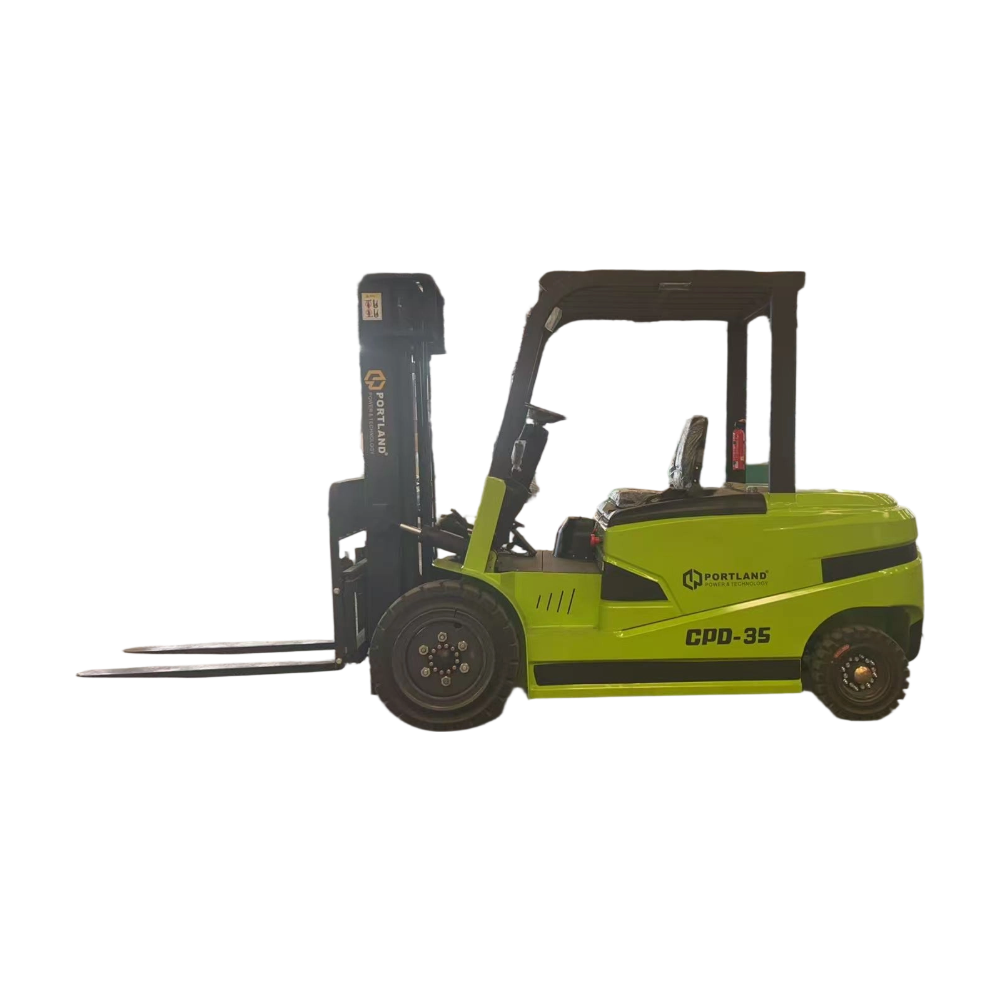
The CPD35, rated at 3.5 tons, is the top-capacity model in the CPD series. (Source: Ningjin Shunhao Trading Co., Ltd.)
Technical Explanation: What the CPD Series Brings to the Workplace
The CPD series is engineered for the realities of daily warehouse and industrial operation. The most immediate benefit is the zero-emission, low-noise powertrain, which makes the trucks suitable for indoor environments where air quality and noise levels are a concern. All models are battery powered, and buyers can choose between a heavy-duty lead-acid battery and an optional lithium-ion battery. This choice is important because lead-acid batteries remain a cost-effective solution for standard operations, while lithium-ion offers longer life, faster charging and better performance in cold temperatures.
From a drivetrain perspective, the CPD10 uses a brushless AC drive motor and a brushless AC pump motor. Compared with older DC motors, AC motors have fewer wearing parts, which reduces maintenance and improves energy efficiency. The controller options from SANTROLL, CURTIS, INMOTION and ZAPI are all globally recognized brands, giving buyers the opportunity to choose a control platform that is best supported in their region.
The CPD20 is designed for higher productivity in warehouse and distribution settings. Its high-power front dual drive motors improve traction and reduce the likelihood of wheel slip when handling pallets on damp or polished floors. Electric steering with cargo-sensing smooth control makes manoeuvring in narrow aisles more predictable, while the automatic electromagnetic parking brake and AI brake assist contribute to safer operation, especially when the truck is used by operators with varying skill levels.
The CPD30 addresses the need for higher stacking. With a lifting height range of 3,000 mm to 7,000 mm, it can reach standard racking and some high-bay storage positions. The high-power electric drive system with intelligent MOSFET control enables smoother acceleration and better speed regulation. The large-flow cyclone air filter system protects the electronics from dust and particles, which is particularly useful in workshops and packing areas.
The CPD35 is the heavy-load model in the range. Its rated capacity of 3.5 tons allows it to handle dense pallets and building materials that would overwhelm smaller trucks. The front wheel dual drive motors provide additional tractive effort, and the P.E.S three-speed efficiency regulation lets the operator select a performance mode that matches the task. The lateral side battery extraction layout is a practical feature for fleets that need to swap batteries quickly between shifts; it allows the battery to be pulled out sideways without removing the truck from the aisle.
Beyond these standard configurations, Mightlift offers in-depth customization. The company lists load capacity adjustment, low-temperature and explosion-proof refitting, branded appearance optimization and intelligent system reservation as part of its services. This factory-level personalization is a key differentiator for distributors that want to offer a locally tailored product without developing their own engineering team.
Application and Use Cases: Matching Equipment to Real Workflows
The CPD series is intended for a broad set of industries. Two representative scenarios illustrate how the different models can be deployed effectively.
Warehousing and Distribution
In indoor pallet receiving, put-away and dispatch on level floors, the CPD10 and CPD20 are well-suited to light-duty warehouse fleets. Their zero-emission operation removes tailpipe exhaust at the point of use, improving indoor air quality. For single- or multi-shift operations, the choice of battery type and charging plan is critical. Before selection, warehouse managers should confirm pallet weight, load centre, aisle width, mast height and floor capacity. The charger voltage should also be matched to the local electrical supply.
Building Materials and Heavy Industrial Goods
For heavier pallet handling across workshops, yards and loading bays, the CPD30 and CPD35 provide the rated capacity and drive layout needed for high-throughput environments. The CPD35, with its front dual-drive layout and side battery extraction, is particularly useful for fleet operations that demand continuous uptime. However, when routes mix indoor and outdoor conditions, the site should be assessed for surface condition, slope, weather exposure, load dimensions, attachment compatibility and rated residual capacity. Attachments such as fork positioners, side shifters or clamps must be evaluated for their impact on residual capacity.
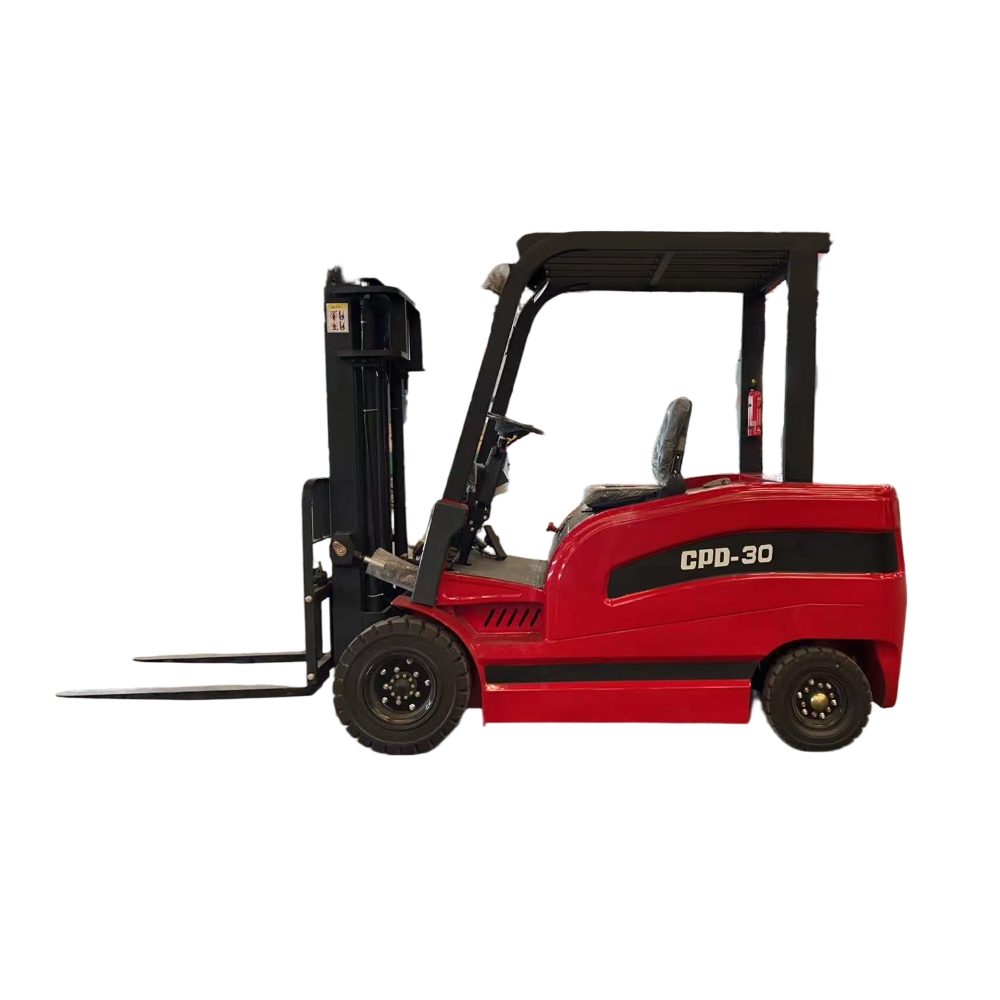
The CPD30 in a container-handling setting; attachment compatibility and residual capacity should be verified before use. (Source: Ningjin Shunhao Trading Co., Ltd.)
The wider product catalogue also mentions warehousing, logistics, e-commerce warehouses, workshops, supermarkets, department stores and cold chain fruit and vegetable wholesale markets as typical applications. For cold storage, the CPD30 and CPD35 are highlighted as suitable because of their battery options and low noise output. At temperatures as low as -20°C, the lithium-ion battery option becomes especially relevant, since lithium batteries tend to retain more usable capacity than lead-acid batteries under cold conditions.
Market Trend Analysis: Data Points That Should Shape Sourcing Decisions
Several independent data points confirm the direction of the market:
- The global electric forklift market is projected to grow from USD 53.01 billion in 2024 to USD 94.55 billion by 2032 (Maximize Market Research).
- Electric forklifts represented 71% of retail orders in North America in 2024 (Industrial Truck Association / Batteries International).
- In China, electric forklift sales reached 946,300 units in 2025, equal to 76.9% of total domestic forklift sales (China Construction Machinery Association).
- Lithium-ion battery adoption in new global forklift shipments rose to 35% in 2024, from 22% in 2021 (LiTrue Analysis).
- The food industry electric forklift segment is projected to grow at an 11.6% CAGR, supported by lithium-ion performance in cold storage (Mordor Intelligence).
- Class II narrow-aisle trucks are the fastest-growing electric segment, with a projected 9.28% CAGR through 2030 (Mordor Intelligence).
These trends have direct sourcing implications. First, electrification is becoming the default in more regions and sectors. Buyers should expect their new forklifts to operate in environments that demand clean, quiet and energy-efficient equipment. Second, the rising adoption of lithium-ion means charging strategies are changing. Opportunity charging, where a truck is topped up during breaks, is less damaging to a lithium battery than to a lead-acid battery, which increases operational flexibility. Buyers should ask suppliers about battery management systems and the availability of lithium options, especially for cold storage and multi-shift applications. Third, the growth of narrow-aisle trucks suggests that warehouse space optimization is a priority, even though standard counterbalance trucks remain the backbone of many fleets.
It is also worth noting that market size estimates vary across research firms. For instance, 2025 global electric forklift market estimates range from roughly USD 50 billion to USD 57 billion, depending on whether services and battery replacement markets are included. Buyers should use these numbers for directional guidance rather than precise planning.
Comparison with Traditional Solutions and Realistic Limitations
When a buyer compares a modern electric forklift, such as the CPD30, with a traditional electric forklift, the conversation usually comes down to operating frequency, working hours and long-term cost.
Modern machines with advanced electric drive and intelligent energy management can deliver faster response, longer effective operating time and lower energy consumption. They are generally more economical over the lifecycle in high-intensity continuous operations. Traditional electric forklifts with conventional drive systems usually have a lower first cost, but they may offer shorter endurance, higher power consumption and more frequent maintenance. For a low-to-medium frequency operation on a limited budget, a traditional model may still be adequate; for a high-frequency, multi-shift operation, the modern machine is often the better total-cost decision.
Compared with internal combustion forklifts, electric models provide clear benefits in indoor settings, where ventilation and noise are concerns. However, internal combustion trucks are still used in some outdoor heavy-duty applications where refuelling is faster and continuous operation is very long. A buyer should assess the actual duty cycle, available charging time and site conditions before making a choice.
It is equally important to acknowledge the limitations of a newer manufacturer. Ningjin Shunhao Trading Co., Ltd. was founded in 2022. Although it operates a large production facility and serves over 60 countries, it does not yet have the global service footprint of incumbents such as Toyota Industries, which reported USD 16.32 billion in revenue in 2023, or Chinese leaders Anhui Heli and Hangcha Group, with 2023 revenues of USD 2.45 billion and USD 2.30 billion respectively. For buyers with fleets in regions where the local dealer network is thin, parts availability and response times should be verified. In addition, while the company reports CE and UN38.3 compliance, special projects may require additional certifications such as ATEX for explosive atmospheres. These are normal due-diligence items, but they should be checked early in the sourcing process.
Future Outlook: Where Electric Forklift Manufacturing Is Headed
The next phase of electric forklift development will likely focus on energy density, intelligent fleet integration and modular design. As lithium-ion costs decline, more buyers will request opportunity charging and higher energy capacity. Forklifts will also become more connected, with telematics and interface reservation playing a larger role in fleet management. The existence of ISO 3691-4:2023, the updated safety standard for driverless industrial trucks, signals that automation will gradually enter more warehouses, creating new demand for trucks that can integrate with automated systems.
For manufacturers, the ability to offer factory-level customization at scale will be a differentiator. Buyers are increasingly looking for a supplier that can produce a certified base model, then adapt it to local market needs without breaking the compliance chain. This is where a custom-focused OEM/ODM manufacturer can add value, especially for distributors that want their own branding and configuration.
Ningjin Shunhao Trading Co., Ltd. has entered the market at a time when electrification is spreading unevenly across regions. Its production capacity and export orientation give it a foundation for growth in emerging markets and specialized verticals such as cold chain and heavy industrial handling. The next few years will show whether it can build the service network and brand reputation needed to move from a promising factory partner to a long-term global supplier.
FAQ
Q: How do modern 3.0-ton electric forklifts differ from traditional 3.0-ton electric forklifts for warehouse, factory and logistics operations?
A: The main differences lie in drive technology, energy management and control systems. Modern designs, such as the CPD30 electric forklift, typically use advanced electric drive systems and intelligent energy management. This can improve response, extend effective operating time and reduce energy consumption. Traditional electric forklifts with conventional drive systems usually have a lower initial investment but may offer shorter endurance, higher power consumption and more frequent maintenance needs. The right choice depends on operation frequency, working hours and long-term cost budget. For high-frequency, continuous indoor operations, a modern model with better energy management is often more economical over time; for low-to-medium frequency general handling, a conventional model may be adequate.