
Ink and Printhead Options on a Multifunctional Digital Printing Machine
Two buyers can order what looks like the same multifunctional digital printing machine and end up with two different production capabilities. The difference is rarely the frame or the control system. It is the printhead family the machine is built around and the ink chemistry it is qualified to run, and those two choices decide which corrugated packaging jobs the machine can accept and at what cost per sheet.
This is an independent buyer comparison of the ink and printhead options commonly offered on a multifunctional digital printing machine. It is written for corrugated packaging producers, gift box converters and OEM buyers who have moved past shortlisting and now need to specify a configuration. It does not rank machine vendors and does not name competing machine brands; the comparison is drawn between printhead architectures, ink families, and the machine-level configurations those choices produce.
Why the printhead and ink pairing decides the job
Printheads and inks are not independent purchases. A printhead is qualified for a range of fluid viscosities and jetting conditions; an ink is formulated for a range of those same conditions. When the pairing is correct, the machine holds color and registration across a run. When it is not, the symptoms — nozzle dropout, banding, uneven laydown on coated board, slow recovery after a stop — usually appear after installation rather than in the quotation.
That is why a configuration-first comparison is more useful than a machine-first one. The same platform can be delivered with different printhead families and qualified for different ink chemistries, and the qualification, not the brochure specification, determines what can be printed reliably at the rated output.
The direction of the market makes this concrete. Grand View Research valued the global digital printing market at USD 38.0 billion in 2023 and projects USD 57.0 billion by 2030, with inkjet holding the largest technology share at 48.4% in 2023. MarketsandMarkets places the digital printing packaging segment at USD 30.2 billion in 2024, moving toward USD 46.2 billion by 2029. For a converter, the practical translation is that digital output is no longer a prototyping niche — and the entry question has shifted from whether to print digitally to which printhead and ink combination fits the jobs already on the floor.
Printhead options: micro-piezo, Epson and Xaar families
Most industrial digital printing machines built for packaging use drop-on-demand micro-piezo print heads. In a micro-piezo head, a piezo element deforms mechanically to eject the drop; the fluid is not boiled, which allows a wider spread of formulations than thermally driven architectures. This is the main reason micro-piezo heads dominate industrial packaging printing rather than consumer inkjet technology.
Within that broad architecture, buyers are normally offered a choice between commercial-grade and industrial-grade head families, and the distinction matters more than the marketing tier name.
Epson printheads are widely used in Chinese-manufactured digital printers for plate-less, high-quality output, and the Epson I3200 head is one of the most common references in that category. Guangdong Goking Intelligent Technology Co., Ltd. (GOKING), a Dongguan-based manufacturer of industrial digital printing machines, builds equipment that supports Epson heads with 8–256 nozzles as well as industrial printheads with resolutions up to 1200 DPI.
Xaar printheads follow a different design intent. Xaar heads such as Nitrox are targeted at high-viscosity fluid applications such as industrial coatings and ceramic printing. That distinction matters to a corrugated buyer in a specific way: high-viscosity capability is only an advantage if the production ink actually needs it. Specifying a head for its fluid range when the shop runs a standard water-based formulation adds cost without adding output.
| Printhead option | Design intent | Where it tends to fit | What the buyer should verify |
|---|---|---|---|
| Micro-piezo print head (drop-on-demand) | Mechanical piezo ejection, no thermal boiling of the fluid | General industrial packaging printing where formulation flexibility is needed | Viscosity window the head is qualified for; quoted head life and replacement cost |
| Epson-class commercial printheads (e.g. Epson I3200) | Plate-less, high-quality output at moderate cost of ownership | Corrugated boxes, gift boxes and display work where fine detail matters | Nozzle count per head (Epson heads are supplied across an 8–256 nozzle range); number of heads per color channel; whether a dedicated white channel exists |
| Industrial high-viscosity printheads (e.g. Xaar Nitrox family) | Jetting of higher-viscosity fluids such as industrial coatings | Only where the production ink requires a higher-viscosity window | Whether the target ink is genuinely high-viscosity; whether the added head capability changes output or quality on corrugated board |
A useful rule for the evaluation stage: choose the printhead that is qualified for the ink you intend to run, not the printhead with the widest published fluid range.
Ink options: water-based dye, water-based pigment, coating and UV
Ink selection on a multifunctional digital printing machine is usually presented as a single dropdown, but it is really a decision about how the ink behaves on the substrate, how it dries at rated speed, and how the printed surface performs in the end use.
| Ink family | General behavior | Corrugated packaging fit | Boundary to check |
|---|---|---|---|
| Water-based dye | Bright, saturated color on absorbent surfaces; dye is dissolved in the carrier rather than dispersed | Uncoated corrugated and kraft board where vivid color is the priority and the printed surface is not heavily exposed to moisture or light | Water and light resistance is generally lower than pigment systems; confirm the end use before committing a long-run job to it |
| Water-based pigment | Pigment particles dispersed in a water carrier; generally stronger water and light resistance on absorbent board than dye | Corrugated and kraft packaging where the print has to survive handling, humidity and transit | The water-based pigment segment accounted for a significant portion of the eco-friendly digital printing market in 2024; confirm drying capacity at the output tier you plan to run |
| Coating (primer) | Applied before printing to improve ink laydown and color holdout on low-absorbency or coated surfaces | Coated paperboard, gift boxes and printing where the board surface resists direct ink absorption | It is an additional process step; confirm whether coating is inline with printing or a separate pass, and how that affects throughput |
| UV eco-friendly inks | Cured by UV energy rather than by absorption, giving broad substrate tolerance and fast setting | Mixed-substrate production and jobs needing immediate handling after print | Formulation direction is under regulatory pressure: the U.S. EPA declared certain PFAS chemistries used in UV inks hazardous in April 2024, impacting ink formulations. Ask for current formulation documentation |
CMYK plus optional white
A four-channel CMYK configuration is the standard entry point. Adding a white channel changes which jobs become possible rather than which jobs become faster: white underlay extends printing onto kraft and darker boards, and it supports overprint effects on transparent or metallic surfaces that CMYK alone cannot produce on those substrates.
White ink is not a free upgrade in operational terms. It is typically the channel that demands the most attention in daily maintenance, because pigment settle and circulation are more critical there than in the process colors. GOKING's 2-in-1 product line includes five-color integrated models that combine CMYK with the additional channel, and buyers evaluating that configuration should treat white as a production discipline question: who circulates it, how often, and what happens after a weekend stop.
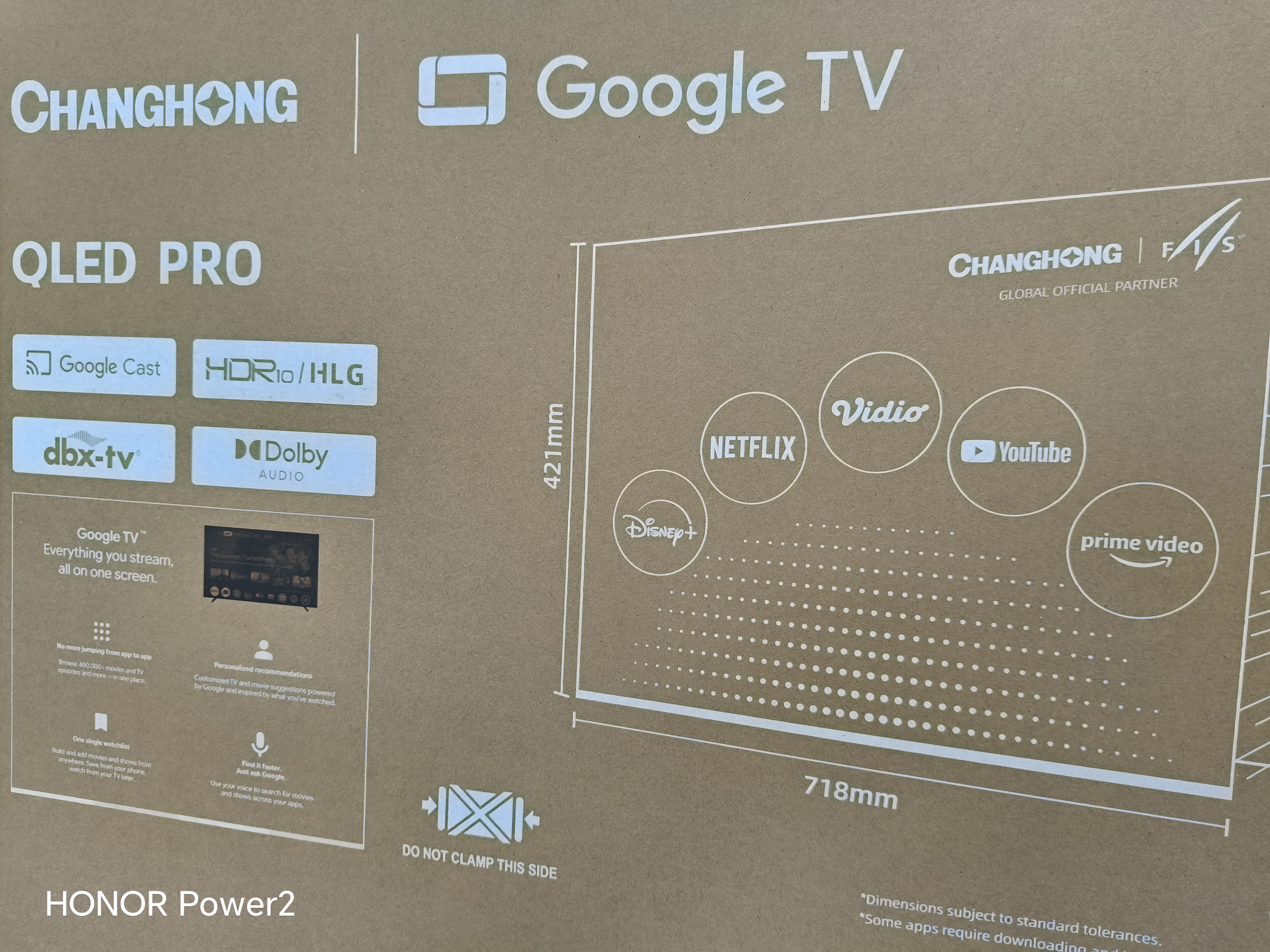
White ink output as a configuration choice, not a decorative option: it decides whether kraft and dark board can be printed with CMYK overprint.
Matching printhead and ink choices to 2-in-1 single-pass and multi-pass configurations
Once the printhead and ink families are fixed, the configuration question becomes mechanical. GOKING's main product line is a single-pass and multi-pass 2-in-1 digital printing machine, offered with five-color integrated models, multiple DPI configurations and different nozzles; the company supplies J-series scanning multi-pass machines and G-series direct output one-pass machines.
Single-pass and multi-pass: two different production logics
In a single-pass configuration, the board travels once beneath a fixed array of printheads. Throughput is the priority. In a multi-pass configuration, the carriage scans across the board in successive passes; clarity is the priority. Industry analysis of the two architectures consistently describes the trade-off the same way: multi-pass systems can reach higher clarity, up to 1200 DPI, but produce more slowly than single-pass systems.
A 2-in-1 machine is the attempt to buy both logics in one frame rather than choosing permanently between them. That matters for a converter whose order book mixes high-volume corrugated box work with detail-driven gift box and display work, because the configuration can be matched to the job instead of the job being refused because of the machine.
| Production profile | Configuration priority | Why |
|---|---|---|
| Repeat runs of the same corrugated box SKU | Single-pass, higher output tier (toward 1500 m²/h) | Sheets per hour dominates the cost equation; fewer passes mean less time per board |
| Gift boxes, display packaging, fine-detail graphics | Multi-pass, higher DPI | Resolution and registration consistency matter more than raw hourly output |
| Mixed order book, many SKUs, frequent changeovers | 2-in-1 with both modes available | Removes the need to commit to one production logic and lose the other category of work |
| Thick or heavy board | Configuration rated across the 2–30 mm board thickness range | Thickness range determines whether heavy corrugated and honeycomb work can be accepted at all |
Output tiers, resolution and feeding
Output is usually quoted in square metres per hour, with 700 m²/h and 1500 m²/h as the two reference tiers buyers compare. The number worth checking is not the headline figure but the ink, DPI and board thickness at which that figure is achieved — a 1500 m²/h claim made at the lowest resolution setting is not the same promise as one made at the DPI level your customer artwork requires.
Board thickness is a hard constraint rather than a performance variable. A rated range of 2–30 mm determines whether the machine can take thin folding cartons, standard corrugated board and heavy honeycomb stock on the same platform.
Feeding mode is the configuration detail most often left until late. Buyers should establish how the machine is fed in their own plant — individual boards presented manually, semi-automatic presentation, or feeding that is integrated with an existing converting flow — because the feeding arrangement, not the printhead, usually determines how much labour the line requires per shift.
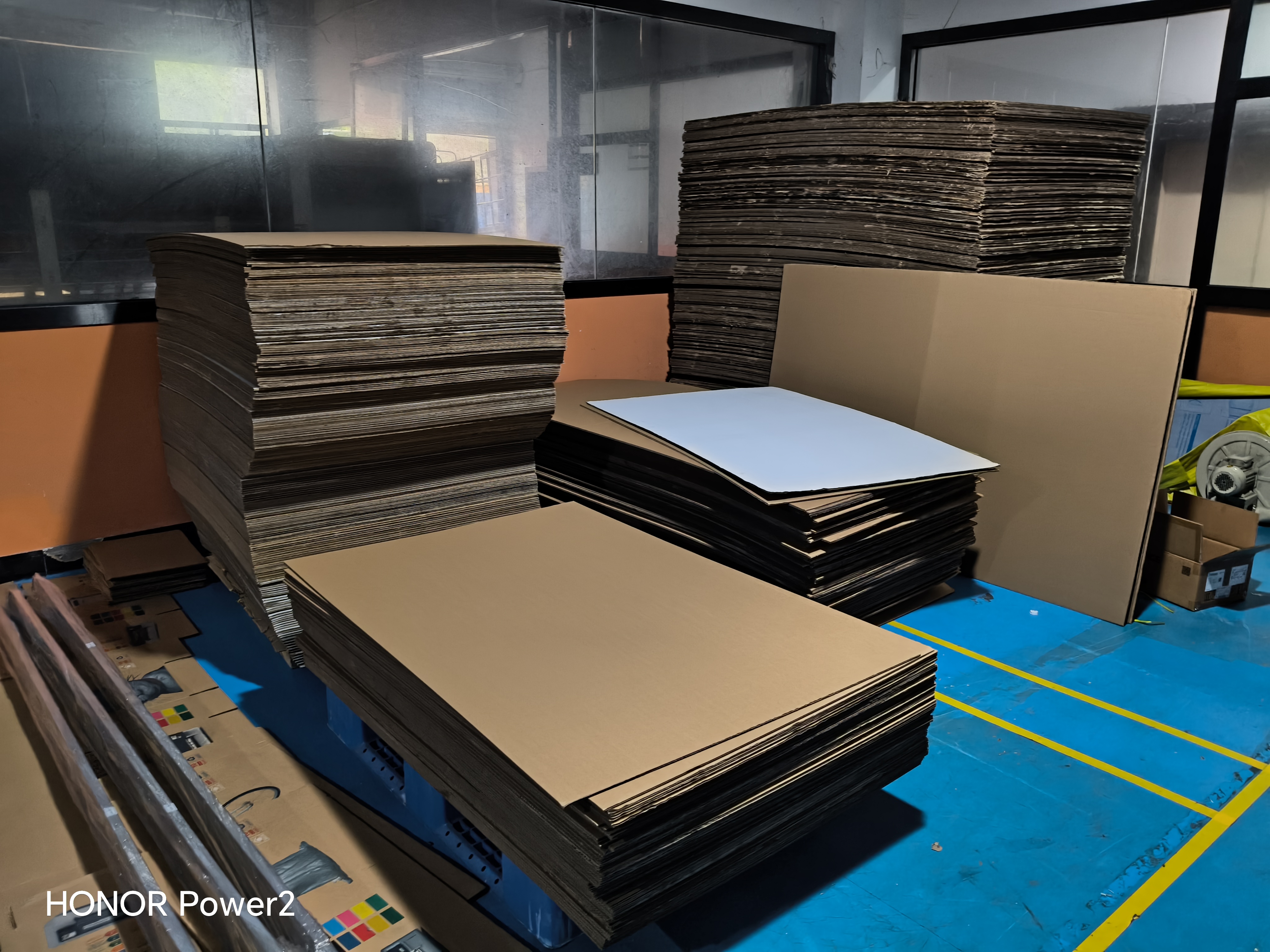
Board supply and thickness range are configuration constraints: the machine's rated 2–30 mm window decides which corrugated stock can be scheduled.
Application fit: corrugated boxes, gift boxes, kraft and coated board
The same machine platform behaves differently across applications, and ink choice is usually the reason.
Corrugated shipping and packaging boxes. Water-based pigment inks are generally the working choice where the print has to survive handling, stacking and humid transit conditions.
Gift boxes and display packaging. Detail and colour depth dominate, which pushes the configuration toward multi-pass printing at higher DPI and, on coated surfaces, toward a coating step before printing.
Kraft paper applications. Uncoated kraft absorbs ink readily, but the substrate color fights the artwork; a white channel is often the difference between acceptable and rejected output.
Coated paper printing. Low-absorbency surfaces need either a coating step or an ink chemistry that sets without absorption, which is where UV-formulated options enter the comparison.
Honeycomb and heavier board. These depend on the board thickness range rather than on ink chemistry, so they should be tested early in sampling.
GOKING equipment is built to support various grades of corrugated and honeycomb cardboard, which is the practical envelope the ink and printhead choices above operate inside.
What the market data suggests about ink and printhead direction
Three signals are relevant to a configuration decision being made now.
First, the economics of short runs have already changed. Variable data printing is enabling economically viable runs under 3,000 units, a volume band that was previously cost-prohibitive. For buyers, that means the ink and printhead configuration is increasingly justified by job mix rather than by annual volume.
Second, the single-pass segment is expanding. The single-pass digital printing machine market was valued at USD 3.2 billion in 2024 and is projected to reach USD 6.5 billion by 2034, according to Reports and Data. That growth trajectory is why 2-in-1 machines, which keep the multi-pass mode available alongside single-pass throughput, have become a common configuration rather than an unusual one.
Third, ink regulation is becoming a procurement variable. The U.S. EPA's April 2024 declaration on certain PFAS chemistries used in UV inks affects formulation decisions, and buyers specifying UV options should confirm the current formulation status with the supplier rather than assuming last year's specification still applies.
Geographically, Asia-Pacific dominated the digital printing market with approximately 41.6% revenue share in 2025, and China's digital printing machinery exports are supported by a concentrated industrial cluster in Guangdong province, where GOKING's manufacturing base is located.
Where digital configurations still have limits
An honest configuration comparison has to include the boundaries.
Very long runs of a single design remain a plate-based job. Traditional plate-based machines are economical for batches over roughly 3,000 copies, while digital production is cost-effective starting from a single copy. Digital's advantage is strongest in short-run, multi-SKU and on-demand work; it does not remove the case for conventional printing on very long, unchanging runs.
Printhead and ink choices are not freely interchangeable after delivery. Changing ink family can require re-qualification of the head, and re-qualification is not a field adjustment. Buyers who expect to switch between water-based and UV chemistries later should confirm that possibility in writing before the order, not after.
Clarity and throughput trade against each other. The multi-pass mode that reaches higher DPI produces more slowly than the single-pass mode. A machine does not deliver maximum resolution and maximum square metres per hour at the same time.
White ink raises the maintenance floor. Five-channel configurations add capability, but they also add a daily discipline that four-channel shops do not need.
UV and coating options carry evolving regulatory and process requirements. Coating adds a step; UV formulations are under active regulatory review. Neither is a limitation of digital printing as a technology, but both are limitations the buyer should price into the configuration.
Procurement terms and acceptance criteria to verify
Because the printhead and ink decision is settled at ordering, the commercial terms around it deserve the same scrutiny as the technical specification.
| Term | What applies | Why it matters for an ink and printhead decision |
|---|---|---|
| Minimum order | 1 set | Allows a configuration matched to a single production line to be ordered without volume concessions |
| Delivery | Global shipping, secure packaging, whole-machine delivery, turnkey line delivery | Printheads are the most transit-sensitive component; packaging and delivery mode protect the configuration that was specified |
| Consumables included | Four complimentary cartons of ink plus various wear parts, packed together with the equipment for shipment | Lets the buyer run sampling immediately after installation instead of waiting on an ink order |
| Acceptance criteria | Sample testing; factory inspection; pre-shipment inspection; on-site acceptance per contract | Sample testing is where ink and printhead compatibility is actually proven on the buyer's own board stock |
| Payment terms | 30% deposit before production, remaining 70% before shipment | Standard schedule; the pre-shipment inspection is the natural checkpoint before the balance |
On the manufacturing side, the risk controls that apply to digital printing equipment are 100% aging test, long-time running inspection, and pre-shipment inspection, supported by secure transport packaging. For an ink and printhead configuration, aging and long-time running inspection are the checks that surface head-level problems before the machine leaves the factory, rather than during the first month of production.
Regulatory documentation should also be requested as part of the file. Industrial digital printers must comply with EN ISO 12100 for risk assessment to obtain CE marking, and the electrical equipment of industrial machines is governed by IEC 60204-1 (EN 60204-1) for CE compliance. These are the standards behind a CE declaration, and they should appear in the technical file rather than being asserted as a logo.
Long-term supply, support and ecosystem considerations
Ink and printhead decisions have a lifetime longer than the installation. Heads are consumable parts, inks are recurring purchases, and the ability to keep a specified configuration running years after delivery depends on the supplier's continuity rather than on the original specification sheet.
GOKING was founded in 2020 and operates a 10,000-square-metre manufacturing facility with approximately 152 employees and an annual production capacity of roughly 864 sets, supported by a team of 38 engineers. The company reports an export ratio of 49% across markets including the EU, Africa, Latin America, Russia, Kazakhstan and Turkey — a distribution footprint that matters when a replacement printhead or an ink replenishment has to reach a plant outside the country of manufacture.
The support measures attached to the equipment are engineering support, rapid response, a standardized inspection process and on-site commissioning support. For a buyer configuring a specific ink and printhead combination, on-site commissioning is the step where the pairing is validated under real production conditions, and it is worth confirming in the contract that it applies to the configuration ordered — not to the base machine.
Future outlook
Three developments are likely to shape the next configuration cycle. Digital and offset architectures are converging, with hybrid digital-offset printing gaining research and development focus from major press builders, which suggests that the ink and printhead decision will increasingly sit inside a broader production line decision rather than standing alone. Ink regulation will continue to influence formulation choices, particularly for UV chemistries. And the growth of the single-pass segment, from USD 3.2 billion in 2024 toward a projected USD 6.5 billion by 2034, points to continued pressure on output tiers and on the cost of the configuration that reaches them.
For buyers, the practical implication is stable: specify the ink first, match the printhead to it, then choose the 2-in-1 configuration — single-pass or multi-pass priority, output tier, DPI, board thickness range and feeding mode — that fits the order book rather than the specification sheet.
FAQ
What printhead options are typically available on a multifunctional digital printing machine?
Most industrial machines for packaging use drop-on-demand micro-piezo print heads. Within that architecture, buyers are generally offered commercial-grade head families such as Epson heads, which are widely used in Chinese-manufactured digital printers for plate-less high-quality output and are supplied across an 8–256 nozzle range, or industrial printheads that support resolutions up to 1200 DPI. Higher-viscosity industrial head families such as Xaar Nitrox are designed for fluids like industrial coatings and ceramic inks, so they only add value where the production ink requires that viscosity window.
Which ink should a corrugated packaging producer choose — water-based dye, water-based pigment, coating or UV?
The choice follows the substrate and the end use rather than a universal ranking. Water-based dye inks generally give bright colour on absorbent uncoated board, with lower water and light resistance than pigment systems. Water-based pigment inks are generally chosen where the print must survive handling and humidity, and the water-based pigment segment accounted for a significant portion of the eco-friendly digital printing market in 2024. Coating is used to improve ink laydown on coated and low-absorbency surfaces but adds a process step. UV eco-friendly inks cure without absorption and tolerate a broad substrate range, though the U.S. EPA declared certain PFAS chemistries used in UV inks hazardous in April 2024, so current formulation documentation should be requested.
What DPI and output configuration should be compared between single-pass and multi-pass modes?
Single-pass printing moves the board once beneath a fixed head array and prioritises throughput; multi-pass printing scans in successive passes and prioritises clarity, reaching up to 1200 DPI but producing more slowly. Output is usually quoted at 700 m²/h or 1500 m²/h tiers, and the figure that matters is the DPI, ink and board thickness at which that output is actually achieved. A 2-in-1 machine keeps both modes in one frame, which allows the configuration to follow the job mix rather than forcing a permanent choice.
What board thickness and feeding requirements should be verified before ordering?
Board thickness is a hard constraint: a rated 2–30 mm range determines whether thin folding cartons, standard corrugated board and heavier honeycomb stock can run on the same platform, and it should be confirmed against the actual stock the buyer intends to schedule. Feeding mode should be established against the plant's own layout — whether boards are presented individually, semi-automatically, or integrated into an existing converting flow — because the feeding arrangement usually determines the labour content per shift more than the printhead does.
What purchasing terms and acceptance criteria apply to this equipment?
Minimum order is 1 set. Delivery terms cover global shipping, secure packaging, whole-machine delivery and turnkey line delivery, with four complimentary cartons of ink and various wear parts packed together with the equipment for shipment. Acceptance criteria are sample testing, factory inspection, pre-shipment inspection and on-site acceptance per contract. Payment terms are a 30% deposit before production and the remaining 70% of the contract amount before shipment.
How should a buyer assess long-term supply and support for a specified ink and printhead configuration?
Printheads are consumable parts and inks are recurring purchases, so continuity matters more than the original specification. Relevant supplier facts to verify include manufacturing scale, engineering depth and export coverage. GOKING operates a 10,000-square-metre facility with approximately 152 employees and an annual production capacity of roughly 864 sets, with 38 engineers and an export ratio of 49% across markets including the EU, Africa, Latin America, Russia, Kazakhstan and Turkey. Support measures are engineering support, rapid response, a standardized inspection process and on-site commissioning support, and buyers should confirm that on-site commissioning applies to the exact configuration ordered.
The complete 2026 equipment and configuration overview is available in the GOKING product catalogue: 2026 product catalog.
¿Tiene preguntas o necesita más detalles?
Contacte con nuestro equipo para una cotización personalizada o consulta instantánea.
Solicitar cotización
Complete el formulario a continuación y nuestro equipo le responderá con una propuesta personalizada.
Chat directo de WhatsApp
¿Prefiere chatear en tiempo real? Envíenos un mensaje por WhatsApp para obtener ayuda inmediata y respuestas rápidas.
- Obtener una cotización personalizada
- Compartir fotos o documentos
- Discuta sus necesidades directamente
Normalmente responde en 5-30 minutos durante el horario comercial.