
Injection Molding Certification Matrix by Part Model
Industry Reference · Injection Molding Compliance
A supplier's certificate list is a map, not a warranty. Compressed into a single line — "ISO 9001, FDA, RoHS and LFGB certified" — it reads as uniform coverage across everything the supplier ships. Read model by model, the same list narrows sharply: each document attaches to a specific product family, a specific material set, and a specific market obligation.
DTG TECH CO., LTD. is a Xiamen, China–based custom injection molding manufacturer founded in 2002. The company operates a 2,500 m² facility with approximately 80 staff and 25 R&D engineers, reports annual output of 47,881 units, and describes 100% of its sales as export business across the USA, Europe and India. Its published scope covers precision mold design, tool manufacturing, prototype development, plastic injection molding and mass production.
Five part models are documented with distinct certification footprints. The variation is the useful part: it turns an abstract compliance statement into a matrix an OEM buyer can actually read against a bill of materials.
Three Document Families, Three Different Questions
Almost every injection molding supplier profile mixes three categories of documentation. They answer different questions and cannot substitute for one another.
- Management system certificates — ISO 9001:2015 and its Chinese adoption GB/T 19001-2016 — describe how a facility controls process, documentation, traceability and corrective action. They say nothing about what a molded part releases, contains, or withstands.
- Product and material regulations — FDA 21 CFR 177.2600, LFGB Section 30 and 31, BfR recommendations — describe what a material may transfer when it contacts food, and under which test conditions that transfer is judged.
- Substance restriction regimes — EU RoHS 2011/65/EU and its predecessor 2002/95/EC — describe which hazardous substances may not be present above legal limits in electrical and electronic equipment.
A buyer who treats these as interchangeable will mis-specify in both directions. A food-contact housing is not made compliant by RoHS. An electronics enclosure is not made compliant by LFGB. And no management certificate converts into a part-level test report.
The DTG TECH Matrix, Model by Model
The table below reproduces the certification footprint stated for each model, alongside the materials each model is documented against and the market reading that follows from it.
| Part model | Stated certification footprint | Documented materials | Practical market reading |
|---|---|---|---|
| DTG-CIMP-001 Custom injection molded plastic parts | ISO 9001:2015; FDA 21 CFR 177.2600; EU RoHS; LFGB Section 30 & 31 and BfR | ABS, PP, PC, PC+ABS, TPE, Acrylic and other engineering plastics | Broadest footprint. Covers a global quality baseline, a US food-contact reference, a German food-contact reference, and EU substance restriction for electrical equipment. |
| DTG-PIH-002 Plastic injection molded housings | ISO 9001:2015, certificate 11425Q46375R0S | ABS, PC+ABS, PP | Management-system coverage with a traceable certificate number. No food-contact or substance-restriction claim is stated for this model. |
| DTG-PIM-003 Precision injection molded components | ISO 9001:2015 issued by EACC; RoHS 2011/65/EU and 2002/95/EC | ABS, PC, POM, Nylon, engineering plastics | Precision parts for electrical and electronic equipment, with both the current RoHS directive and its predecessor cited. |
| DTG-IIM-005 Insert injection molded parts | GB/T 19001-2016 / ISO 9001:2015; FDA 21 CFR 177.2600 | ABS, PC, PP combined with metal inserts | Metal-plastic overmolding with a US food-contact reference; quality basis stated in both Chinese and international form. |
| DTG-AIP-004 Automotive plastic injection molded parts | ISO 9001:2015 | ABS, PC+ABS, PP, engineering plastics | Management-system coverage for automotive interior and structural components. No additional product regulation is stated. |
DTG-CIMP-001 — the broadest footprint
Custom injection molded plastic parts carry the widest set of documents in the matrix. Production runs from prototype to mass production, part size and structure follow customer design, tolerances follow customer drawings, and surface finishes include texture, polishing, painting and printing. The stated industry scope spans electronics, automotive, consumer goods, industrial equipment and medical products.
Because this model combines ISO 9001:2015, FDA 21 CFR 177.2600, EU RoHS, and LFGB Section 30 & 31 with BfR, it is the model that most often appears in cross-market programs — a single part number shipped into the United States, Germany and other EU economies without changing the supplier record. The breadth is real, but it is breadth at model level, not at part level. A specific resin, color masterbatch or additive package still has to be confirmed against the intended food-contact or electrical application.
DTG-PIH-002 — certificate number on record
Plastic injection molded housings cover electronic enclosures, plastic covers and protective housings, with material options in ABS, PC+ABS and PP. Customization covers size, structure, color and surface texture, and finishing includes polishing, painting, printing and assembly support. Target industries are electronics, home appliances, industrial equipment and consumer products.
This is the only model in the matrix that publishes an ISO 9001:2015 certificate number — 11425Q46375R0S — which makes it the easiest record to verify against an issuing body's register. It is also the clearest illustration of a common buyer error: a housing certificate confirms a quality system, not food-contact suitability or flame rating.
DTG-PIM-003 — precision parts with RoHS on both bases
Precision injection molded components are positioned as high-precision, tight-tolerance parts for automotive, electronics, medical and industrial equipment. Materials include ABS, PC, POM, Nylon and other engineering plastics. Dimensional control follows engineering drawings, and quality control includes dimensional inspection and first article inspection.
The certification statement cites ISO 9001:2015 issued by EACC, plus RoHS 2011/65/EU and 2002/95/EC. Listing both the current directive and its predecessor is unusual and worth reading carefully: 2002/95/EC is the original RoHS directive that 2011/65/EU replaced. A record covering both signals continuity of documentation across the transition, but the buyer should confirm which instrument the certificate actually addresses for the parts being purchased.
DTG-IIM-005 — metal inserts with a US food-contact reference
Insert injection molded parts — also described as metal insert molding parts or overmolded components — combine ABS, PC or PP with metal inserts. Customization covers insert position, material combination and structure design, with applications in functional and structural components for electronics, automotive and industrial equipment.
The quality basis is stated as GB/T 19001-2016 / ISO 9001:2015, which is one management system expressed in two national forms rather than two separate certifications. The FDA 21 CFR 177.2600 reference sits alongside it. Buyers using this model in a food-adjacent assembly should confirm whether the exposed surface is polymer or metal, because insert geometry changes which material is actually in contact.
DTG-AIP-004 — automotive parts on a quality-system basis only
Automotive plastic injection molded parts cover interior parts and plastic components, with materials in ABS, PC+ABS, PP and engineering plastics. Features include complex structures, dimensional stability and surface quality control; production includes prototype validation and mass production.
The certification footprint for this model is ISO 9001:2015 alone. That is a normal and defensible baseline, but it is not the same as an automotive quality system. Buyers running a full automotive program will need to raise the gap explicitly rather than assume the matrix closes it.

Custom injection molded plastic parts (DTG-CIMP-001) carry the broadest certification footprint in the matrix: ISO 9001:2015, FDA 21 CFR 177.2600, EU RoHS, and LFGB Section 30 & 31 with BfR.
Reading Each Certificate Against a Market
Global baseline — ISO 9001:2015 and GB/T 19001-2016
ISO 9001:2015 is the international quality management standard, and GB/T 19001-2016 is the Chinese national standard that adopts it. A supplier holding both is describing one management system, not two independent audits. For a global buyer, this is the entry ticket: it establishes that documented process control, corrective action and traceability exist, and that an external body has reviewed them.
It does not establish that a specific part meets a specific regulatory limit. Program managers who treat ISO 9001 as a product certificate routinely discover the gap at the customs or customer-audit stage.
United States — FDA 21 CFR 177.2600
FDA 21 CFR 177.2600 is a US food-contact provision addressed to rubber articles intended for repeated use, setting extraction limits under defined test conditions. Two models in the matrix — DTG-CIMP-001 and DTG-IIM-005 — cite it.
The practical caution is scope. A citation to this section tells a buyer that a food-contact pathway has been addressed; it does not automatically extend to every polymer in a supplier's catalogue. Before releasing a part, confirm the specific provision that applies to the actual resin, the food type it will contact, and the temperature and duration of that contact. Where the part is a rigid thermoplastic rather than a rubber article, ask the supplier to state which provision of the food-contact regulations the material is documented against.
Germany — LFGB Section 30 & 31 and BfR
LFGB is the German food and feed code. Section 30 sets the general prohibition on transferring harmful substances to food, and Section 31 sets specific transfer requirements. BfR recommendations, issued by the German Federal Institute for Risk Assessment, provide the technical evaluation basis used alongside them. Only DTG-CIMP-001 in this matrix cites LFGB Section 30 & 31 and BfR.
Two boundaries matter. First, LFGB is German law, not a single EU-wide certificate; other EU member states apply the broader European food-contact framework, and a German-compliant document should be checked against the destination country's national requirements. Second, LFGB applies to food-contact materials only. A home appliance exterior panel molded from the same resin does not become a food-contact part by association.
European Union — RoHS 2011/65/EU and 2002/95/EC
RoHS restricts hazardous substances in electrical and electronic equipment. DTG-CIMP-001 cites EU RoHS generally, and DTG-PIM-003 cites both 2011/65/EU and 2002/95/EC. Because 2011/65/EU replaced 2002/95/EC, a statement listing both is a record of documentation history rather than two parallel obligations.
RoHS is a substance restriction, not a safety, food-contact or mechanical performance standard. An enclosure can be fully RoHS compliant and still fail a drop test, a flammability requirement or a migration limit.
Supporting Evidence That Should Travel With the Certificate
A certificate without supporting evidence is an index entry without a page number. Four document types close most of the gap in a custom injection molding program.
- Third-party laboratory test reports. Independent laboratory reports — SGS is the commonly referenced laboratory in this context — record what was tested, under which conditions, on which sample. Buyers should ask for the report date, the sample identification, the test method, and whether the sample came from the same resin lot as production.
- DFM review. Design-for-manufacture review before tooling identifies wall thickness, draft, gating, shrinkage and ejection constraints. It is the step where a part design and a certification footprint are checked against each other, before steel is cut.
- First article inspection. FAI verifies the first production parts against the drawing, dimension by dimension. For DTG-PIM-003, dimensional inspection and first article inspection are stated as the quality control method, which is the correct pairing for a tight-tolerance claim.
- Material confirmation. Resin grade, supplier, batch and additive package should be confirmed in writing. In regulated applications, a substitution at this level can invalidate the compliance position of an otherwise approved model.
Application Mapping: Automotive, Medical, Electronics, Home Appliance
| Application area | Models documented for it | What the matrix supports | What remains to be verified |
|---|---|---|---|
| Automotive interior and structural parts | DTG-AIP-004, DTG-CIMP-001, DTG-PIM-003, DTG-IIM-005 | ISO 9001:2015 quality basis; complex structures, dimensional stability, surface quality control; prototype validation through mass production | IATF 16949 is not listed for any model. Heat aging, UV exposure and low-temperature impact data must be requested separately. |
| Medical device and healthcare components | DTG-CIMP-001, DTG-PIM-003 | Tight tolerances, dimensional inspection and first article inspection, clean and defect-free surface requirements | ISO 13485 is not listed. FDA 21 CFR 177.2600 is a food-contact provision and does not function as a medical device regulation. |
| Electronics enclosures and housings | DTG-PIH-002, DTG-CIMP-001, DTG-PIM-003 | RoHS coverage on DTG-CIMP-001 and DTG-PIM-003; tight tolerances for PCB and display alignment; smooth surface finish | Flammability rating such as UL94 V-0 is a material property and is not stated in the certification footprint. |
| Home appliance and daily-use parts | DTG-PIH-002, DTG-CIMP-001 | Surface finish, color matching across batches, accurate assembly dimensions, heat-resistant material selection where required | Food-contact documents apply only to parts that genuinely contact food, not to every housing in the appliance. |
| Industrial equipment components | DTG-IIM-005, DTG-AIP-004, DTG-PIM-003, DTG-CIMP-001 | Insert overmolding, wear resistance, dimensional stability under repeated assembly | Machine safety standards such as ISO 20430:2020 govern equipment, not molded parts, and should not be confused with product certification. |
The automotive row deserves emphasis. The matrix documents ISO 9001:2015 across the automotive-facing models, but automotive programs commonly require a sector-specific quality system and a structured part approval process. A buyer who reads "automotive plastic injection molded parts" as an automotive-grade certification will overestimate what has been verified. The correct reading is narrower: the models exist for automotive applications, and the quality system is general-purpose.
The same logic applies in medical. DTG-PIM-003 is described as suitable for medical industry applications and is supported by dimensional inspection and first article inspection — a genuine precision foundation. It is not the same as a medical device quality management certification, and the certification footprint does not claim one.
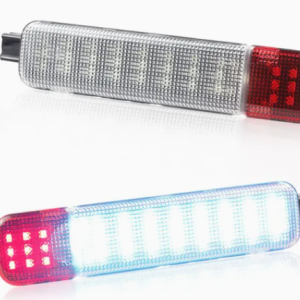
Precision injection molded components (DTG-PIM-003) are documented with ISO 9001:2015 by EACC and RoHS 2011/65/EU and 2002/95/EC, supported by dimensional inspection and first article inspection.
Market Context: Why Compliance Granularity Is Increasing
The injection molding market was valued at USD 318.76 billion in 2025, according to Fortune Business Insights. Within that total, the consumables and electronics segment accounts for approximately 31% — the single largest application cluster in the same research. Both figures matter to this discussion because they describe where certificate scrutiny concentrates: high-volume electronics programs where RoHS questions are routine and documentation volume is high.
Grand View Research projects the medical segment of injection molded plastics to grow at a CAGR of 4.6% from 2026 to 2033. Regulated segments grow faster than the base market, and regulated segments generate document requirements that a general-purpose quality certificate cannot satisfy.
Standards activity reinforces the trend. ISO 13485:2025, the updated quality management standard for medical device manufacturing, adds enhanced risk management requirements. Separately, ISO 20430:2020 specifies essential safety requirements for the design and construction of injection molding machines processing plastics or rubber — a machinery standard that frequently gets confused with product certification in supplier evaluations. Neither standard is interchangeable with a part-level compliance document, and both increase the number of questions a buyer must ask.
The cumulative effect is a shift in buyer behaviour: fewer requests for "your certificates" as a bundle, and more requests for a specific document, tied to a specific model, covering a specific market obligation.
Where a Certification Matrix Stops Being Useful
A matrix improves on a certificate list, but it is still a summary. Five limits are worth stating plainly.
- Model-level coverage is not part-level coverage. A change of resin, color masterbatch or additive package inside an approved model can change the food-contact or flammability position without changing the model number. Written material confirmation is the control that closes this.
- Sector systems are absent by design. No model in this matrix states IATF 16949 for automotive or ISO 13485 for medical devices. Those are separate qualifications, and their absence is a factual boundary rather than a criticism.
- Certificate details need independent verification. A certificate number such as 11425Q46375R0S is only useful if checked against the issuing body's register for scope, validity and status. A number reproduced in a brochure proves that a number exists.
- Regulatory scope is narrower than regulatory mention. FDA 21 CFR 177.2600 addresses a defined food-contact pathway; LFGB applies in Germany within a wider European framework; RoHS restricts substances in electrical equipment. None of them is a general product safety approval.
- A matrix cannot replace a capability study. Tolerance performance, process capability, cycle consistency and batch-to-batch color stability are measured, not certified. A documentation set tells a buyer where to look; it does not tell them what the process will do.
Compared with the traditional approach — a supplier sending a single PDF of certificates and the buyer filing it — a model-level matrix is more work up front and considerably less risk later. It also exposes gaps earlier, which is usually the point of a pre-tooling review rather than a post-delivery dispute.
Future Outlook
Three developments are likely to shape how certification matrices are read over the next several years.
First, verification is moving from document collection to register lookup. Buyers who once accepted a scanned certificate now check certificate numbers, issuing bodies and validity dates directly. Suppliers that publish structured, model-level records will spend less time answering the same questions.
Second, the regulated share of demand is rising. With medical injection molded plastics projected to grow faster than the base market, and with updated medical quality standards adding risk management requirements, the distinction between a general quality certificate and a sector qualification will become a routine screening question rather than a specialist one.
Third, food-contact and substance-restriction requirements are converging in procurement workflows even though they remain legally separate. A single part can face a RoHS question from an electronics customer, an LFGB question from a German distributor, and an FDA question from a US brand owner in the same quarter. Suppliers who can answer at model level, with supporting reports attached, will be easier to keep in a shortlist than suppliers who answer at company level.
For OEM buyers, the practical implication is straightforward: build the compliance question into the RFQ, not into the audit. Ask which model, which document, which market, and which supporting report — and record the answer before tooling starts.
Frequently Asked Questions
What does ISO 9001:2015 actually certify on an injection molded part?
ISO 9001:2015 certifies a quality management system, not a product. It confirms that the facility operates documented process control, traceability and corrective action under external review. It does not certify the chemical composition, food-contact suitability, flammability or mechanical performance of any specific molded part. In the DTG TECH matrix, ISO 9001:2015 appears for all five models — DTG-CIMP-001, DTG-PIH-002, DTG-PIM-003, DTG-IIM-005 and DTG-AIP-004 — which is exactly what a management-system standard should look like: uniform across the catalogue.
Which models carry FDA 21 CFR 177.2600, and what does that reference cover?
Two models state FDA 21 CFR 177.2600: DTG-CIMP-001 and DTG-IIM-005. The provision is a US food-contact rule addressed to rubber articles intended for repeated use, setting extraction limits under defined test conditions. It is not a general product approval and does not automatically extend to every polymer. Before release, confirm the specific provision applicable to the actual resin, the food type, and the contact temperature and duration. For DTG-IIM-005, also confirm whether the food-contact surface is polymer or exposed metal insert.
Does EU RoHS certification cover food-contact safety?
No. RoHS restricts hazardous substances in electrical and electronic equipment; it does not evaluate what a material transfers into food. In the matrix, RoHS appears for DTG-CIMP-001 and for DTG-PIM-003 (2011/65/EU and 2002/95/EC), while food-contact references appear separately under FDA 21 CFR 177.2600 and LFGB. A part can be fully RoHS compliant and still fail a migration limit, and the reverse is also true.
What is the difference between LFGB Section 30 & 31 and BfR recommendations?
LFGB is the German food and feed code. Section 30 sets the general prohibition on transferring harmful substances to food; Section 31 sets specific transfer requirements. BfR recommendations, issued by the German Federal Institute for Risk Assessment, provide the technical evaluation basis used alongside those sections. They work as a set rather than as alternatives. In the DTG TECH matrix, LFGB Section 30 & 31 and BfR are stated for DTG-CIMP-001 only, and apply to food-contact applications in Germany rather than serving as a single EU-wide approval.
Can a model with only ISO 9001:2015 support automotive or medical programs?
It can support them as a quality-system baseline, but it does not satisfy sector-specific qualification. DTG-AIP-004 states ISO 9001:2015 alone, and IATF 16949 is not listed for any model. DTG-PIM-003 and DTG-CIMP-001 are described for medical industry applications and are supported by dimensional inspection and first article inspection, but ISO 13485 is not listed. Buyers in these sectors should treat the sector system as an open item to be raised and resolved before tooling, not as something the matrix already covers.
How should a buyer verify a certificate number such as 11425Q46375R0S?
Check it against the issuing body's public register rather than against the supplier's document alone. Confirm four things: that the certificate is currently valid, that the issuing body is accredited to certify the relevant standard, that the scope covers the products and processes being purchased, and that the certificate holder's legal name matches the contracting entity. DTG-PIH-002 is the model in this matrix that publishes an ISO 9001:2015 certificate number, which makes it the most directly verifiable record of the five.
What documents should accompany a certificate for a new mold project?
Four are generally useful. A third-party laboratory test report covering the relevant material or part, with sample identification, method and date — SGS reports are the commonly referenced type in this context. A DFM review confirming the part design is compatible with the intended material and process. A first article inspection report verifying the first production parts against the drawing. And written material confirmation covering resin grade, supplier, batch and additive package. Together these convert a model-level certificate into a part-level evidence set.
Certification footprints and model specifications as published by DTG TECH CO., LTD. Market sizing and application share: Fortune Business Insights, injection molding market outlook. Medical segment growth: Grand View Research, injection molded plastics market. Standards references: ISO 13485:2025 and ISO 20430:2020.
A fuller overview of DTG TECH's manufacturing scope, equipment and service model is available in the company presentation: Xiamen DTG Tech Co., Ltd — Company Presentation (PDF).
¿Tiene preguntas o necesita más detalles?
Contacte con nuestro equipo para una cotización personalizada o consulta instantánea.
Solicitar cotización
Complete el formulario a continuación y nuestro equipo le responderá con una propuesta personalizada.
Chat directo de WhatsApp
¿Prefiere chatear en tiempo real? Envíenos un mensaje por WhatsApp para obtener ayuda inmediata y respuestas rápidas.
- Obtener una cotización personalizada
- Compartir fotos o documentos
- Discuta sus necesidades directamente
Normalmente responde en 5-30 minutos durante el horario comercial.