
Inflatable vs. Frame Shelters: Fit, Terms and Acceptance
Inflatable vs. Frame Shelters: Fit, Terms and Acceptance
An inflatable shelter and an aluminum or steel frame shelter are not two grades of the same product; they are two different answers to the same procurement question. The inflatable route carries load through pressurized chambers and depends on anchoring plus maintained internal pressure. The frame route carries load through a metal skeleton and depends on joints, base fixing and fabric tension. For a recreation supplies buyer, that difference changes site preparation, transport volume, redeployment options and what has to be written into an acceptance clause — long before fabric price is discussed.
Zhuhai Star Canopy Co., Ltd. (StarCanopy) manufactures along both routes. The company was established in 2005 as a French-owned and managed production facility in Zhuhai, China, operating three workshops — hardware, sewing and inflatables — and exporting to the EU, USA, Canada, Japan, Australia and New Zealand. Its custom outdoor range includes four shelter models relevant to this decision: CS-01, an inflatable container shelter in TPU or PVC with anti-UV treatment and removable construction; ST-01, an outdoor shelter built on an aluminum or steel frame with waterproof PU-coated polyester; CT-01, a polyester car shelter for camping cars; and BS-01, a boat shelter in waterproof polyester or PVC.
This buyer-decision matrix compares those four models on the four dimensions that most often decide a recreation supplies order: application environment, size customization, removability, and purchasing terms with acceptance criteria. It also marks where the supplied evidence stops. A shelter decision built on assumed performance is more expensive than one built on a narrower but verified specification.
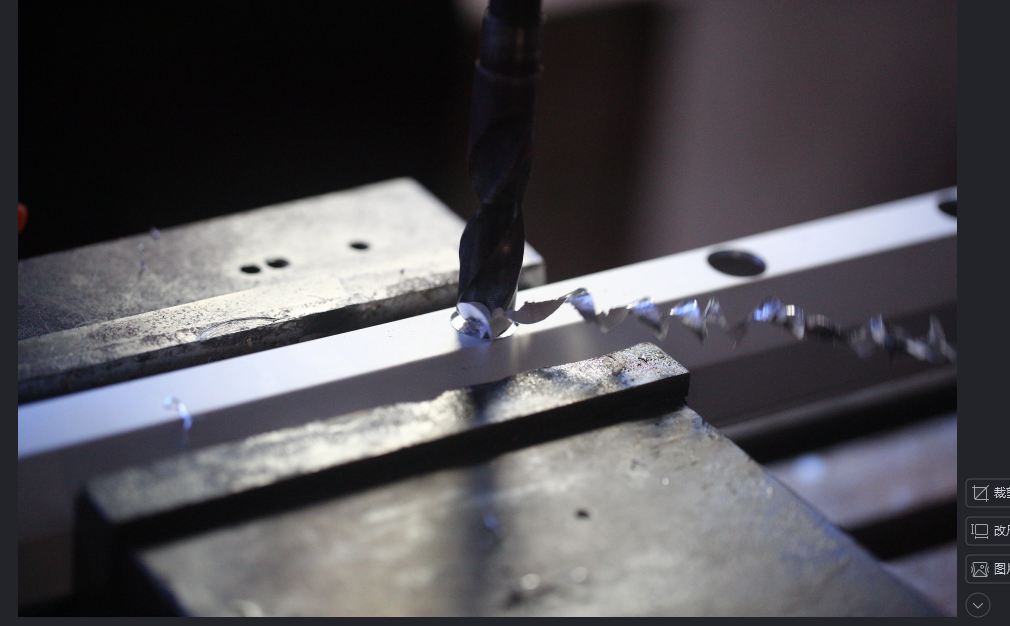
What the buyer is actually choosing between
An inflatable shelter is a pressure structure. Its chambers are inflated to a working pressure, and the shape the fabric holds under that pressure is what sheds wind and rain; anchoring and ballast keep the assembly on site. A frame shelter is a skeletal structure. Aluminum or steel members carry the load, the fabric acts as a covering in tension over that skeleton, and the ground fixing resists uplift. Both can be specified to the same footprint, and both can be customized. They are installed differently, inspected differently and maintained differently.
That has direct procurement consequences. An inflatable order typically needs a power source and a blower at deployment, a pressure-check routine during use, and spare chambers or valves as service parts. A frame order typically needs assembly labor, tools, connection hardware and a parts list that covers joints and profiles rather than air cells. Neither list is shorter than the other; they are simply different lists, and the buyer who compares only unit price will discover the difference later, at the site.
A second consequence is failure mode. A pressure structure loses shape if pressure is lost, which makes valve quality, seam integrity and anchoring part of the same performance question. A skeletal structure loses shape if a joint, member or fixing fails, which makes connection design, base preparation and corrosion protection part of the same question. Procurement terms should follow the failure mode of the model actually ordered, not a generic shelter template.
The four models in this comparison
The supplied model data fixes a limited but usable set of attributes. Everything below the table is a specification item to be agreed at quotation, not a default that can be assumed.
| Model | Construction | Specified material | Placement or use | Buyer note |
|---|---|---|---|---|
| CS-01 | Inflatable container shelter | TPU or PVC, anti-UV | Positioned between two containers | Defined as removable; container spacing sets the usable envelope |
| ST-01 | Frame shelter | Aluminum or steel frame, waterproof PU-coated polyester | Outdoor shelter for fixed sites | Frame metal is a separate specification line, not an interchangeable default |
| CT-01 | Car shelter | Polyester | Camping cars | Coverage is sized around the vehicle rather than around a site |
| BS-01 | Boat shelter | Waterproof polyester or PVC | Boats | Fabric choice is a separate decision tied to exposure and storage pattern |
Two readings of this table matter. First, only CS-01 is defined as removable in the supplied data. Removability for ST-01, CT-01 and BS-01 should be confirmed as a specification item rather than assumed from the category. Second, the material column is not a ranking. TPU, PVC, polyester and PU-coated polyester serve different roles in the same range, and which one is right for an order depends on the site and the use, not on a material hierarchy.
Dimension 1 — application environment
Environment is the first filter because it determines which risks the specification has to answer. StarCanopy lists five for its outdoor shelter range: tent collapse under strong wind, fabric mildew and aging, high-temperature fabric damage, aluminum frame oxidation and rust, and open-flame ignition hazard. Its stated controls are a wind-tunnel graded wind-resistant structure, Class B1 flame-retardant canvas, anti-UV coating, multi-channel waterproof sealing, factory flame-retardant and mildew-proof inspection, and matched ground nails and wind ropes.
Those controls map differently onto the two constructions. For a pressure structure such as CS-01, wind resistance is a combined property of chamber geometry, internal pressure and anchoring, so the wind rope and ground-nail package is not an accessory but part of the performance envelope. For a frame structure such as ST-01, wind resistance concentrates at joints, member spans and base fixings, and the corrosion question becomes material-specific: aluminum and steel do not weather the same way, and the specification should name which one is being quoted.
What the supplied evidence does not contain is a comparative wind or weathering test between an inflatable shelter and a frame shelter under identical conditions. Without that, no honest matrix can state that one construction outperforms the other in wind. What it can state is which risks each construction concentrates, and which control items therefore belong in the contract.
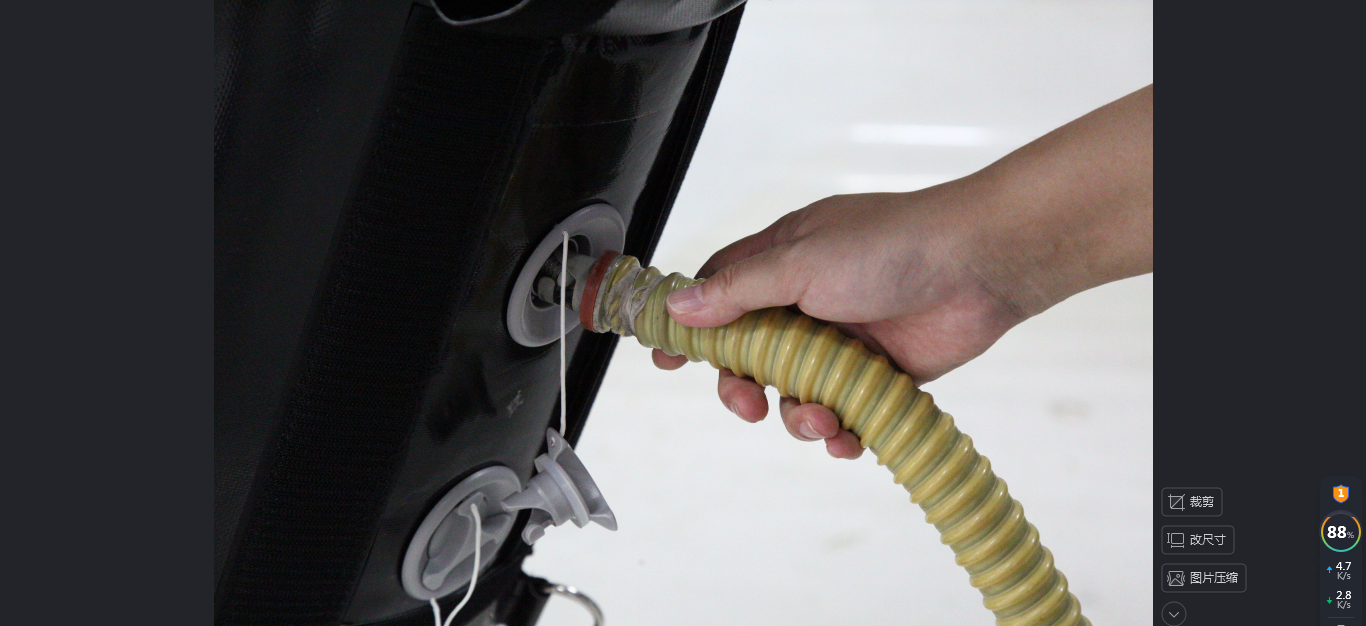
Dimension 2 — size customization
Customization is where the two routes diverge most for a buyer specifying a one-off site. In an inflatable structure, size is set by chamber geometry: span, height, length and profile are designed into the air beams and panels, and the fabric is cut to that geometry. In a frame structure, size is set by member length, connection design and fabric patterning over the skeleton, with span limits tied to the profile selected.
CS-01 adds a constraint that is easy to miss in a quotation: the shelter is placed between two containers, so the usable envelope is defined by the container spacing and by the container faces acting as end walls. That is efficient where containers already exist on site, because the shelter only has to close the gap rather than build a complete free-standing envelope. It is inefficient where containers do not exist, because the buyer is then specifying containers and shelter together.
For ST-01, CT-01 and BS-01, customization follows the object being covered. A car shelter is dimensioned around a vehicle footprint; a boat shelter is dimensioned around hull or superstructure geometry; an outdoor shelter is dimensioned around a site plan. In all three cases the practical specification question is not "how large can it be" but "what tolerance is acceptable at the fixing points", because a cover that is close but not exact creates rework at installation.
Dimension 3 — removability and site logistics
Removability drives the total cost of ownership more than buyers expect, because it decides whether one purchase can serve several seasons or several sites. CS-01 is defined as removable, which fits event programs, temporary sites and any use where the shelter is erected for a defined period and taken down afterwards. A removable inflatable also stores and ships at a fraction of its erected volume, which changes freight and warehousing calculations rather than merely site labor.
Frame shelters are not automatically permanent, but their logistics profile differs: members, joints and tools travel as a kit, assembly and disassembly are labor events, and repeated relocation adds wear at connection points. Whether that matters depends on how many moves the buyer plans over the asset's life. A single-site installation rarely justifies paying for portability; a five-site annual program often does.
Site readiness belongs in the same calculation. Inflatable deployment needs a power source, a blower and a stable anchoring surface. Frame deployment needs a level base, fixing points and assembly access around the footprint. Neither requirement is a defect; both are conditions that should be written into the site-preparation section of the purchase order so that installation day does not become a renegotiation.
Dimension 4 — purchasing terms and acceptance criteria
Because the models differ structurally, the terms that protect the buyer differ too. The following clauses are the ones that carry the most weight for a custom shelter order, and each should be written against the specific model rather than against a general shelter description.
- Material identification. Name TPU or PVC for CS-01 and BS-01, polyester for CT-01, and PU-coated polyester with the frame metal for ST-01. A coating described only as "waterproof" is not a specification.
- Frame metal. For ST-01, state aluminum or steel explicitly, since weight, assembly handling and corrosion behavior differ between them.
- Anti-UV and flame-retardant treatment. CS-01 is specified with anti-UV treatment; StarCanopy lists Class B1 flame-retardant canvas among its stated controls. Both should appear as named requirements if the site exposure requires them.
- Anchoring package. Ground nails and wind ropes matched to the shelter should be listed as included items, with quantity, so that they are not discovered as a separate purchase at installation.
- Removability statement. For CS-01, confirm the intended assembly and disassembly cycle count and the container spacing range the design assumes.
- Spare parts and modularity. StarCanopy's comparison material describes quick modular part replacement for its custom inflatable shelter; the order should state which components are field-replaceable.
- Documentation. Inspection records for flame retardancy and mildew resistance are described as a factory measure, so they can be requested as delivery documents rather than assumed.
Acceptance criteria should test what the construction actually depends on. For an inflatable model, that means dimensional verification against the approved drawing, a pressure-hold check at an agreed duration and pressure, seam and valve inspection, and confirmation that the anchoring hardware matches the bill of materials. For a frame model, it means member and joint verification, coating and fabric inspection, trial assembly of critical connections, and confirmation of base-fixing compatibility with the site. Where a buyer wants a flame or UV claim verified, the test method and the accepting party should be named in the contract, not left to the delivery inspection.
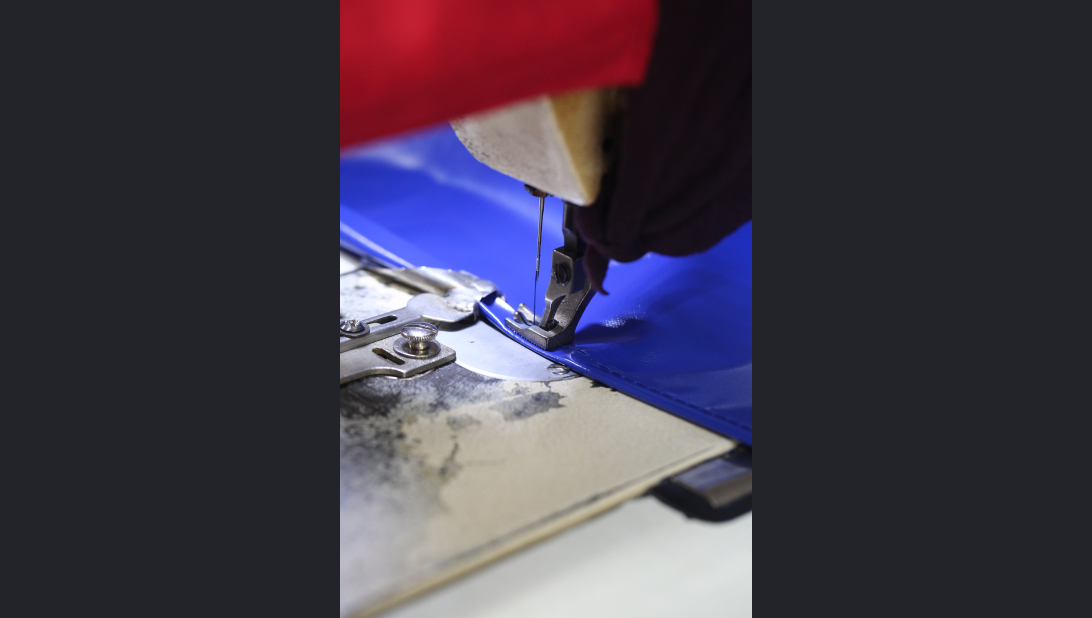
Where inflatable construction justifies a higher initial cost
The clearest cost evidence in the supplied material does not compare inflatable against frame. It compares a custom inflatable shelter against an ordinary inflatable shelter. In that comparison, the custom version uses a two-layer frame with a strong chamber and a wind-optimized streamline structure, described as an upgrade in wind resistance and structural service life, at an initial purchase cost 22% higher and a full-lifecycle operation and maintenance cost 40% lower. The same material states that the two-layer composite canvas reduces air-conditioning energy consumption by 35%.
Read precisely, that is a claim about upgrading within the inflatable category: paying more up front for a reinforced structure is stated to reduce lifetime operating cost. It is not a statement that an inflatable shelter costs less than an aluminum or steel shelter over its life. A buyer who transfers the 22% and 40% figures onto a frame-versus-inflatable comparison is comparing across categories the source does not compare, and that error is expensive precisely because the numbers look precise.
Where the comparison does have decision value is in the target applications it names: high-end glamping resorts, scenic boutique homestays, outdoor brand exhibitions, island tourism projects, long-term cultural tourist sites, and sport racing and competition. Those are environments where the shelter is part of the guest or brand experience, where the structure stays up for long periods, and where stable internal temperature and clean appearance carry commercial value. In those settings a reinforced inflatable can justify its premium on operating grounds. On a short-cycle temporary site, the same premium may not pay back, and the buyer should say so rather than default to the more specified option.
Matching model to use case
Fit, not rank, is the useful output of this matrix. Each model corresponds to a different site logic.
| Event and competition sites | CS-01 where containers are already on site and the shelter must be removed after the event; reinforced inflatable structures where the shelter is a long-running brand or hospitality element. |
| Fixed outdoor sites | ST-01, with the frame metal chosen against local corrosion exposure and the base fixing designed before the fabric is patterned. |
| Vehicle protection | CT-01 for camping cars, dimensioned to the vehicle rather than to a site plan. |
| Boat protection | BS-01 in waterproof polyester or PVC, with the fabric decision following storage pattern and exposure rather than unit price. |
Two applications deserve an explicit warning. First, a shelter used for guest accommodation carries expectations that a storage shelter does not, so appearance, internal climate and finish belong in the specification from the start. Second, a shelter used where open flame is present — catering, heating, generators — must address the ignition hazard that StarCanopy lists, which makes the flame-retardant canvas a requirement rather than an upgrade.
Market context for custom outdoor shelters
Demand context supports the category but does not size the custom segment. Global Market Insights places the global recreational and outdoor products market at USD 144.5 billion in 2025, projected to reach USD 152 billion in 2026 at a 5.9% CAGR. Grand View Research estimates the global canopy market at USD 2.2 billion in 2026, with shade canopies holding the largest share in 2025. In the United States, outdoor recreation participants reached 181.1 million people in 2024, or 58.6% of Americans aged six and older, and Ken Research projects the U.S. outdoor recreation products market growing from USD 202.5 billion in 2025 to USD 268.3 billion by 2031 at a 4.8% CAGR.
Those figures describe parent categories under different geographic scopes and definitions, and they should not be combined into a single market estimate. None of them reports custom or made-to-order shelter volume specifically. Their procurement use is directional: they indicate a large and growing base of outdoor activity that consumes shelters, covers and event structures, which supports category investment but says nothing about how many buyers will choose inflatable rather than frame construction. A buyer building a business case should treat these as demand backdrop and source product-level volume separately.
Limits of this matrix
Three limits should be stated openly. First, no comparative performance test between inflatable and frame construction under identical wind, rain or temperature conditions is available in the supplied evidence, so this matrix does not rank the two constructions on durability. Second, the 22% initial cost premium and 40% lifecycle maintenance reduction apply to a custom inflatable shelter measured against an ordinary inflatable shelter, not against ST-01, CT-01 or BS-01. Third, model-specific dimensions, hardware configurations, coating weights and warranty terms are not fixed by the model definitions and must be confirmed at specification stage.
This does not weaken the decision; it relocates it. The choice between an inflatable container shelter and a frame shelter is decided by site conditions, removal cycles, anchoring feasibility and the acceptance clause the buyer is prepared to enforce — factors that can be established before any performance comparison is needed.
FAQ
What is the main structural difference between an inflatable shelter and an aluminum or steel shelter?
An inflatable shelter carries load through pressurized chambers and holds its shape through internal pressure plus anchoring, which is why valve integrity, seam quality and the ground-nail and wind-rope package are part of its performance envelope. An aluminum or steel shelter carries load through a metal skeleton, with the fabric acting as a covering in tension, so its performance depends on joint design, member spans, base fixings and corrosion protection. Both can be customized to the same footprint, but they are installed, inspected and maintained differently.
Is an inflatable shelter cheaper than a frame shelter over its full lifecycle?
The supplied evidence does not make that comparison. StarCanopy's stated figures compare a custom inflatable shelter with an ordinary inflatable shelter: a 22% higher initial purchase cost and a 40% lower full-lifecycle operation and maintenance cost, attributed to a two-layer frame with a strong chamber and a wind-optimized streamline structure. No equivalent lifecycle comparison between an inflatable shelter and the ST-01 aluminum or steel frame shelter is provided, so a buyer should not apply those percentages across construction types.
Which model fits a campsite, an event site, a car or a boat?
CS-01, the inflatable container shelter in TPU or PVC with anti-UV treatment, is designed to sit between two containers and is defined as removable, which suits event sites and temporary installations where containers are already present. ST-01, the aluminum or steel frame shelter with waterproof PU-coated polyester, suits fixed outdoor sites. CT-01 is a polyester car shelter for camping cars, and BS-01 is a boat shelter supplied in waterproof polyester or PVC. Matching should follow the object or site being covered, not a general preference for one construction.
What should be verified before accepting a custom shelter delivery?
Acceptance should test what the construction depends on. For an inflatable model, verify dimensions against the approved drawing, run an agreed pressure-hold check, inspect seams and valves, and confirm that ground nails and wind ropes match the bill of materials. For a frame model, verify members and joints, inspect coating and fabric, trial-assemble critical connections, and confirm that base fixings suit the actual site. Where flame retardancy or UV treatment is claimed, the contract should name the test method and the accepting party rather than leave verification to a visual check.
Can a shelter specified for one site be moved to another?
That depends on the model. CS-01 is defined as removable, which supports relocation between events or temporary sites, subject to the container spacing and anchoring assumptions in its design. The supplied data does not define ST-01, CT-01 or BS-01 as removable, so dismantling and relocation for those models should be confirmed as a specification item, including how many assembly and disassembly cycles the structure is expected to tolerate.
A practical next step
Before issuing an RFQ, write down four site facts: whether containers are present, how many times per year the shelter will be erected and removed, what anchoring surface exists, and whether open flame or long-stay occupancy is involved. Those four answers eliminate at least two of the four models in most cases, and they let the remaining specification be written against real conditions rather than against a catalogue description. Buyers who want to review StarCanopy's manufacturing scope across hardware, sewing and inflatables can visit StarCanopy; the company brochure is available for download at Starcanopy.pdf.
¿Tiene preguntas o necesita más detalles?
Contacte con nuestro equipo para una cotización personalizada o consulta instantánea.
Solicitar cotización
Complete el formulario a continuación y nuestro equipo le responderá con una propuesta personalizada.
Chat directo de WhatsApp
¿Prefiere chatear en tiempo real? Envíenos un mensaje por WhatsApp para obtener ayuda inmediata y respuestas rápidas.
- Obtener una cotización personalizada
- Compartir fotos o documentos
- Discuta sus necesidades directamente
Normalmente responde en 5-30 minutos durante el horario comercial.