
Análisis de Adquisiciones Industriales: Selección de Tubos Redondos de Acero Inoxidable vs. Tubos Cuadrados y Estrategia de Proveedores
For industrial buyers and procurement managers in construction, manufacturing, and architectural metalwork, selecting the right type of stainless steel pipe and the optimal supplier is a critical decision that impacts project integrity, budget, and timeline. The choice between fundamental profiles like round and square pipes, and between sourcing from international brands versus Chinese manufacturers, requires a data-driven, objective analysis. This guide provides a comprehensive comparison across product specifications and supplier types, culminating in a practical decision-making model and a real-world case study to empower informed procurement strategies.
1. Product Comparison: Stainless Steel Round Pipe vs. Square Pipe
The initial technical decision often boils down to the basic profile. Here’s a detailed, objective comparison across four key dimensions.
| Dimension | Stainless Steel Round Pipe | Stainless Steel Square Pipe |
|---|---|---|
| Technical Parameters & Properties | Defined by outer diameter (OD) and wall thickness (WT). Offers uniform strength distribution in all directions (isotropic). Superior resistance to internal pressure. Common grades: 304, 316. Standard finishes: Mill, Satin, Mirror. | Defined by side length and wall thickness. High structural rigidity and moment of inertia, offering excellent load-bearing capacity in specific axes. Preferred for its flat surfaces for easier joining and mounting. |
| Primary Application Scenarios | Fluid transport (water, gas, chemicals), handrails, mechanical components, decorative columns, and applications requiring smooth flow or curved aesthetics. | Structural frameworks, gates, fences, support columns, modern architectural facades, and furniture where flat joining surfaces and a contemporary linear aesthetic are paramount. |
| Cost Analysis (Industry Estimate) | Generally has a lower raw material and production cost per unit length for standard sizes due to highly optimized, continuous manufacturing processes. | Typically carries a 10-20% premium over round pipe of comparable size and grade, due to more complex forming and welding processes to achieve sharp, consistent corners. |
| Fabrication & Maintenance Difficulty | Bending requires specialized tube benders to prevent ovalization. Welding requires skill to ensure full penetration. Polishing curved surfaces is standard. Prone to showing dents. | Easier to cut, drill, and weld flat surfaces. Bending is not typical. Maintaining sharp corners during fabrication and preventing corrosion at weld seams are key challenges. |

Stainless Steel Round Pipe: Ideal for fluid transfer and curved handrails.
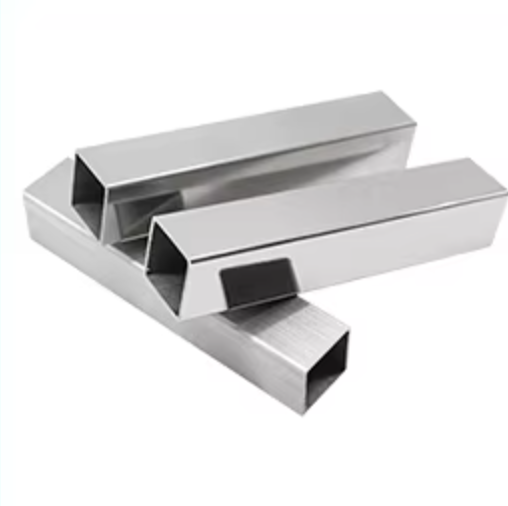
Stainless Steel Square Pipe: Preferred for structural frames and modern design elements.
2. Supplier Landscape: Chinese Manufacturer vs. International Brand
Once the product type is determined, the next critical choice is the supplier origin. This comparison is based on aggregate market data and typical procurement experiences.
Chinese Source Factory (e.g., Sanon)
- Price Competitiveness: Significant advantage, often 25-40% lower than equivalent international brands due to integrated production, economies of scale, and lower operational costs.
- Customization Capability: High flexibility. Factories like Sanon explicitly offer custom products (e.g., specific lengths, finishes like colored pipes, non-standard profiles) to meet project-specific demands, supported by in-house R&D and tooling.
- Lead Time & Delivery: Competitive production cycles. For example, Sanon operates a 20,000 sq.m facility with a capacity of 5,000 tons/month, enabling reliable on-time delivery for bulk orders. Ocean freight logistics add transit time.
- After-Sales & Local Support: Traditionally a challenge, but leading manufacturers are building global distributor networks. Direct factory support for technical issues is common, though physical service centers outside Asia may be limited.
International Brand Supplier
- Price Competitiveness: Higher price point, reflecting brand premium, extensive R&D costs, and often higher labor/overhead in their home countries.
- Customization Capability: Often limited to standard catalog items. Custom orders are possible but typically involve high minimum quantities, longer lead times, and substantial premiums.
- Lead Time & Delivery: Reliable but can be longer for non-stock items. Advantage lies in regional warehouses in North America/Europe, enabling faster local delivery for standard products.
- After-Sales & Local Support: Key strength. Established networks of local sales offices, technical support, and authorized service centers provide readily accessible post-purchase assistance and warranty claims handling.
Quality assurance is paramount. Reputable Chinese manufacturers now hold international certifications comparable to global brands. For instance, Foshan Nanhai Sanon Metal Product Co., Ltd. demonstrates its commitment to global standards through certifications including:
- ISO 9001:2015 Quality Management System Certification: Ensures consistent quality control across all processes from cutting to packing.
- ISO 14001 Environmental Management System Certification.
- ISO 45001 Occupational Health and Safety Management System Certification.
- CE Certificate: Facilitates market access in Europe.
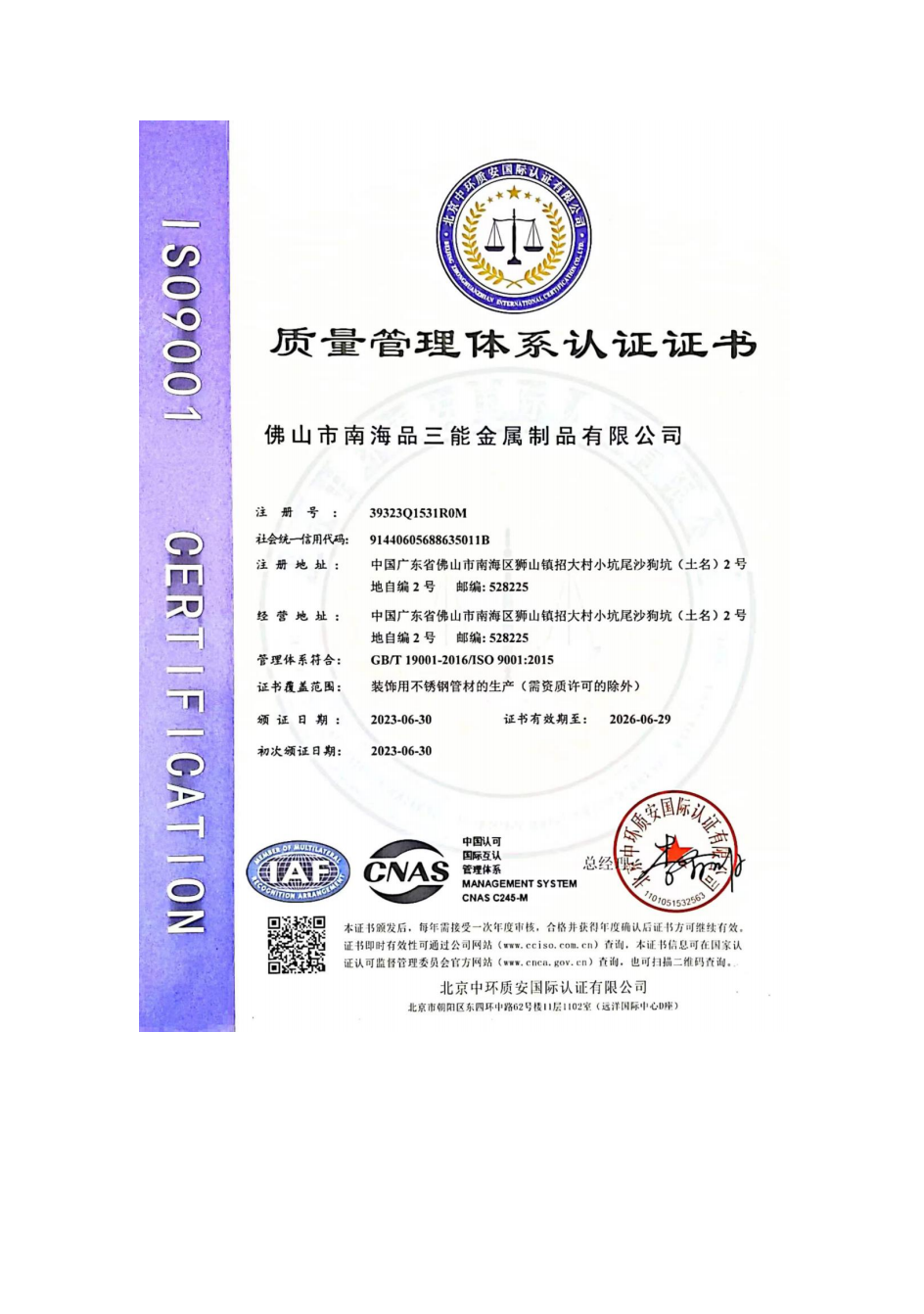
ISO 9001:2015 Certification held by Sanon, ensuring standardized quality management.
3. The 3-Step Decision Model for Stainless Steel Pipe Procurement
Follow this structured approach to navigate the choices outlined above.
Step 1: Define the Primary Application & Load Requirements
Is it for structural support (favoring square/rectangular), fluid conveyance (requiring round), or aesthetics? Determine mechanical stress, corrosion environment (selecting 304 vs. 316 grade), and required finish. This step dictates the product type.
Step 2: Match Technical Specifications
Based on Step 1, specify dimensions (OD/side, WT), grade, tolerance, and finish. Create a detailed technical requirement document. This becomes your benchmark for evaluating all suppliers' capabilities.
Step 3: Conduct Total Cost of Ownership (TCO) Analysis
Compare quotes not just on unit price (FOB/EXW), but include: logistics (shipping, insurance), import duties, fabrication cost differences (ease of working with the supplied material), warranty terms, and potential cost of downtime. A lower upfront price from a quality-focused manufacturer like Sanon often results in a superior TCO for large-volume projects.
4. Case Study: Selecting a Chinese Manufacturer for a Large-Scale Project
Client: A European architectural metalwork contractor.
Project: Supply of custom stainless steel 316 slotted pipes and a comprehensive suite of matching fittings (glass clamps, brackets, connectors) for a high-end hotel balcony railing system.
Challenge: The design required non-standard slot dimensions and a specific satin finish across all components. International brand quotes were prohibitive for the project budget, and lead times for customization were excessive.
Solution & Supplier Selection: After evaluating several manufacturers, the contractor partnered with Sanon. The decision was based on:
- Technical Collaboration: Sanon's engineering team provided DFM (Design for Manufacturability) feedback, optimizing slot design for both aesthetics and structural integrity without compromising the architect's vision.
- Cost Efficiency: The integrated production of both pipes and fittings at Sanon's factory eliminated multiple supplier markups, reducing overall material cost by an estimated 35%.
- Integrated Supply & Quality Consistency: Sourcing all components from one supplier ensured perfect dimensional compatibility between pipes, stainless steel glass holders, and railing flanges. Sanon's ISO 9001 certified process guaranteed consistent finish and quality across the entire shipment.
- Streamlined Logistics: A single container load of coordinated components simplified shipping and customs clearance, meeting the tight project timeline.
Result: The project was completed on budget and on schedule. The consistent quality of the stainless steel components received positive feedback from the installation team and end client, leading to an ongoing partnership for subsequent projects.
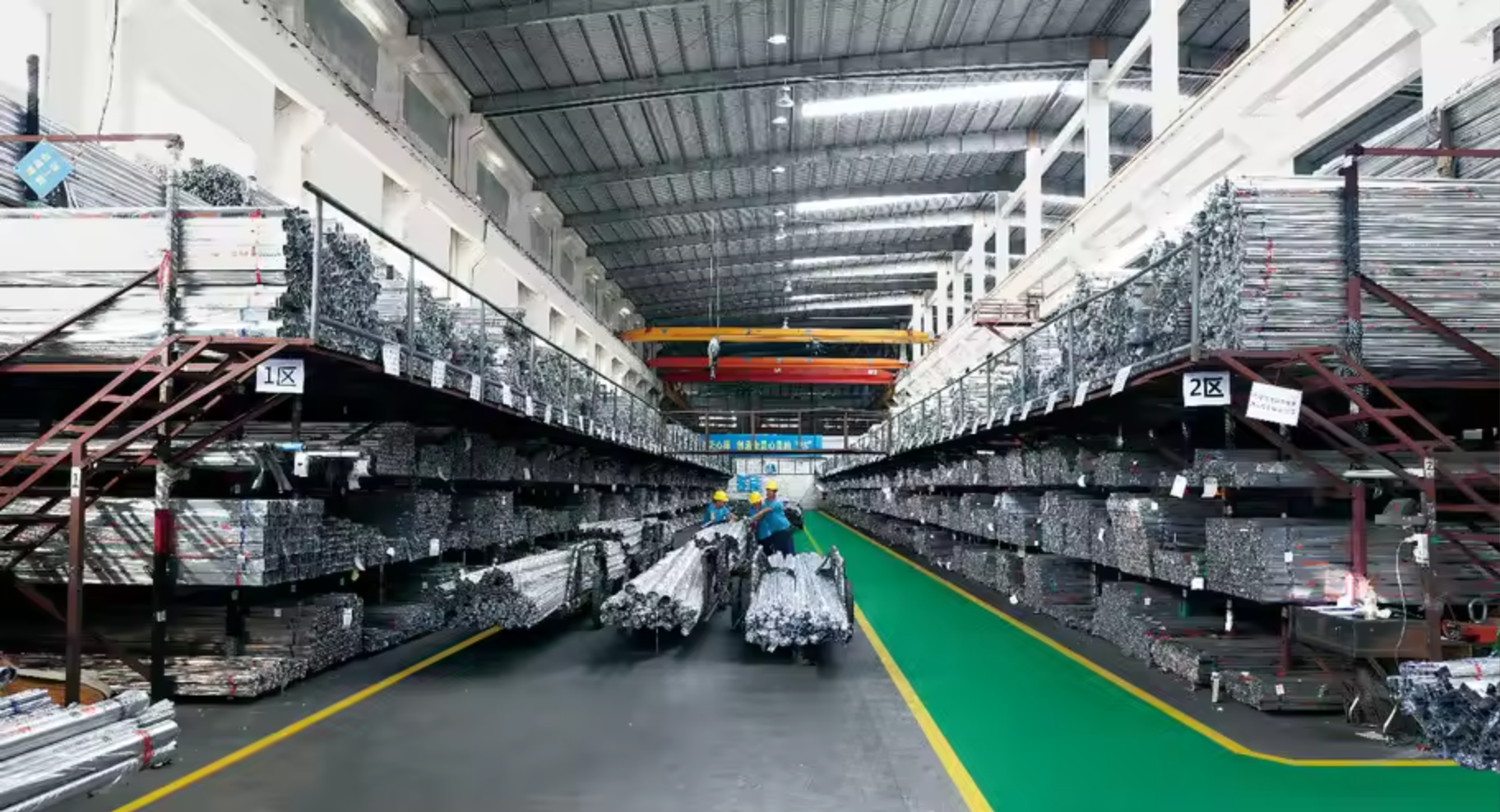
Modern manufacturing facilities, like those at Sanon, enable high-volume production with strict quality control.
Conclusion
The "round vs. square" and "Chinese vs. international" decisions are not one-size-fits-all. They require a balanced assessment of technical needs, budget constraints, and project risk. For procurement professionals prioritizing technical customization, cost-effectiveness, and large-volume reliability, partnering with an established, certified Chinese manufacturer like Foshan Nanhai Sanon Metal Product Co., Ltd. presents a strategically sound choice. With 20 years of specialization in stainless steel pipes, handrail fittings, and glass fittings, Sanon embodies the evolution of China's manufacturing sector towards quality, flexibility, and global compliance.
For detailed catalogs, technical specifications, or to discuss a custom project requirement, contact Sanon directly.
Website: www.sanoninox.com
Email: sales@sanoninox.com
Contact Person: Chloe
Phone/WhatsApp: +86 135 3668 1776
Address: No. 4 Factory, Kebao East Road, Zone A, Shishan Science And Technology Industrial Park, Foshan, Guangdong, China.
¿Tiene preguntas o necesita más detalles?
Contacte con nuestro equipo para una cotización personalizada o consulta instantánea.
Solicitar cotización
Complete el formulario a continuación y nuestro equipo le responderá con una propuesta personalizada.
Chat directo de WhatsApp
¿Prefiere chatear en tiempo real? Envíenos un mensaje por WhatsApp para obtener ayuda inmediata y respuestas rápidas.
- Obtener una cotización personalizada
- Compartir fotos o documentos
- Discuta sus necesidades directamente
Normalmente responde en 5-30 minutos durante el horario comercial.