
Industrial Lubrication Pumps: Steel, Mining & Construction Fit
Industrial Lubrication Pumps: Steel, Mining & Construction Fit
An independent reference for engineering and procurement teams specifying lubrication pumps, centralized lubrication systems and lubrication system oil coolers in heavy industry.
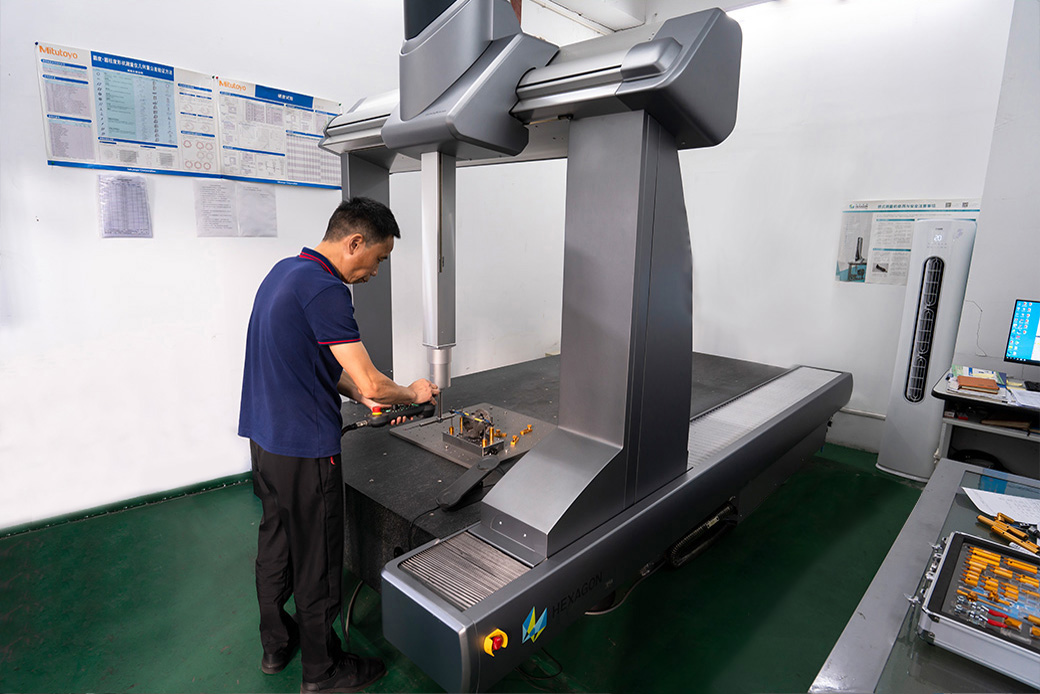
Production work area at Deo Machinery Co., Ltd., where industrial lubrication pump components are machined and assembled.
Industrial lubrication pumps are specified by site condition before they are specified by part number. Research compiled by Market Research Future links more than 76% of industrial machinery failures to improper or inadequate lubrication, and that failure mode rarely originates in the pump alone. It usually originates in lubrication hardware that was never matched to its operating environment. A configuration that runs for years inside a temperature-stable indoor gearbox can fail early on a surface mine, where abrasive dust, vibration and extended service intervals work against it.
This article maps the lubrication pump and cooling portfolio of Deo Machinery Co., Ltd. to three heavy-industry environments: steel production, mining and construction. Deo Machinery Co., Ltd. (DEO) is a Ningbo, China-based manufacturer founded in 2010 that produces hydraulic pumps, electric lubrication pumps, centralized lubrication system pumps, oil lubrication pump systems and lubrication system oil coolers at a 10,000 m2 facility. The intent here is scenario-fit reasoning: which equipment suits which duty, on what evidence, and where the boundaries lie.
Product specifications below are drawn from DEO's published technical and comparison documentation; market and standards references are attributed to their sources.
Why the Operating Environment Sets the Lubrication Pump Specification
Four conditions decide most industrial lubrication pump specifications before any model number is discussed: the flow required at the most distant lubrication point, the duty cycle, the contamination exposure of the fluid, and the temperature of the lubrication medium.
Flow is the product of displacement per revolution and drive speed. That relationship is why a single pump platform offered at two drive speeds covers two distinct flow bands without a change of housing design, and why the useful first question is not which model, but what flow must arrive at the farthest bearing. Contamination is the second variable. ISO 4406 is the primary international standard for quantifying particle contamination in hydraulic and lubrication fluids, expressed as a three-part code such as 18/15/13. A purchase specification that names a target ISO 4406 code can be measured and rejected at goods-in; a requirement written as clean oil cannot.
Temperature closes the loop. Lubrication medium temperature governs clearance behaviour, seal life and whether the circuit needs an oil cooler at all. In practice, cooling belongs inside the lubrication pump specification rather than beside it, because the lubrication system oil cooler determines how much of the pump's rated performance survives a hot ambient day or a sustained high-load shift. Two further conditions are practical rather than hydraulic: how the pump is driven and mounted (fixed skid versus mobile, engine-driven installation), and which cooling medium the site can reliably supply.
What Steel, Mining and Construction Duty Actually Demand
The three environments are commonly grouped as heavy industry, but they stress lubrication equipment differently. The table below summarizes the differences that most often change a specification.
| Operating condition | Steel production | Mining | Construction |
|---|---|---|---|
| Duty cycle | Continuous, often around the clock | Continuous for fixed plant, intermittent for mobile fleet | Intermittent, load and task driven |
| Dominant contamination | Scale, water and steam ingress, mill dust | Abrasive rock dust, fines, moisture | Dust, mud, site debris |
| Thermal load | High ambient near mills and casters | Moderate ambient, high mechanical load | Wide ambient swing, engine heat |
| Typical lubricated assets | Mill stands, gearboxes, continuous casters, thin-oil circulation systems | Crushers, screens, conveyor drives, mobile haul equipment | Excavators, loaders, cranes, pavers, engine lubrication circuits |
| Service access | Planned shutdown windows | Remote sites, long intervals | Mobile, roadside or on-site servicing |
| Most sensitive specification area | Fluid cleanliness and cooling capacity | Housing durability and dust tolerance | Temperature range and drive direction |
Read across the table and the equipment implications become concrete. Steel duty rewards a robust pump housing, an explicit cleanliness target and reliable cooling. Mining duty rewards the same housing durability but adds a split between stationary plant and mobile equipment. Construction duty rewards a wide permitted medium-temperature window and a pump that tolerates either direction of rotation, because the drive arrangement varies by machine build.
DEO's Equipment Set for Heavy-Industry Lubrication and Cooling
DEO's lubrication-related range covers three functional groups: electric lubrication pumps for machinery and heavy industry, internal gear pumps for construction machinery and engine lubrication circuits, and three families of lubrication system oil coolers. Verified specifications and stated scenarios are summarized below.
| Equipment | Verified specification | Stated application scenarios |
|---|---|---|
| DK630 electric lubrication pump | QT500 ductile iron construction; 630 cc/rev displacement; 950 rpm or 1450 rpm drive options | Machinery and heavy industry lubrication |
| PST180 bidirectional internal gear pump | 180 cc/rev displacement; operating range -30 C to +100 C | Construction machinery and engine lubrication systems |
| DFLEX8 wind cooler | Air-side cooling for lubrication and hydraulic circuits | Construction machinery, crude oil mining, coal mine, nuclear power |
| DFLSL-10 self-circulating cooler | Self-circulating cooling circuit | Hydraulic and lubricating systems, extruding machinery, forging equipment, shearing machinery |
| DWBW-408-T fin-type oil/water cooler | Fin-type oil-to-water heat exchange | Industrial lubrication cooling |
Two observations follow. First, the range is organized around duty type rather than one flagship product: the DK630 is the fixed heavy-industry lubrication pump, the PST180 is the mobile and engine-side gear pump, and the coolers split by cooling medium and by machine family. Second, the cooler range is not a generic accessory list; each model carries a defined scenario set, which matters when a buyer is assembling an oil lubrication pump system rather than buying a pump in isolation.
Technical Reading of the Specifications That Matter
DK630: ductile iron housing at two drive speeds
The DK630 uses QT500 ductile iron for the housing. In qualitative terms, ductile (nodular) iron is selected in pressure-carrying components where toughness and resistance to vibration-induced cracking matter more than the lowest possible material cost, a relevant property on mill stands, crusher drives and similar vibrating machinery. The 630 cc/rev displacement combined with 950 rpm or 1450 rpm drive options means the same pump body serves two flow bands. A buyer choosing between the two speeds is effectively choosing a flow class, and should confirm which speed delivers the required flow under the least favourable viscosity and temperature conditions.
PST180: bidirectional internal gear pump for mobile and engine duty
The PST180 is a bidirectional internal gear pump rated at 180 cc/rev and specified across an operating range of -30 C to +100 C. Bidirectional is the decisive property in mobile and engine-driven installations: where the drive can rotate in either direction, or where the same pump platform must serve several machine builds with different drive orientations, a pump that requires one rotation direction becomes an engineering constraint rather than a component choice. That temperature window also defines the boundary of the application; fluid temperatures above +100 C fall outside the stated range and require upstream cooling or a different circuit design.
Cooling: three models, three cooling logics
Cooling selection is where scenario fit becomes most visible. The DWBW-408-T is a fin-type oil/water cooler and, as the designation implies, rejects heat into a water circuit, an efficient arrangement where a reliable cooling water supply exists and an unsuitable one where it does not. The DFLEX8 wind cooler serves air-cooled contexts and is specified for construction machinery, crude oil mining, coal mine and nuclear power scenarios. The DFLSL-10 self-circulating cooler integrates its own circulation and is specified for hydraulic and lubricating systems on extruding machinery, forging equipment and shearing machinery, process machines characterized by short, high-load cycles that generate concentrated heat. Selecting among the three is therefore a question of cooling medium availability and heat-load profile, not of model hierarchy.
Scenario Mapping: Which Equipment Fits Which Environment
Steel production
Steel duty is continuous and thermally hostile. The DK630 electric lubrication pump, with its ductile iron housing, 630 cc/rev displacement and 950 or 1450 rpm options, is specified for machinery and heavy industry lubrication and fits the fixed centralized lubrication pump role on mill stands, gearboxes and related driven equipment. Because scale and water ingress are the dominant contamination risks, steel specifications should also carry an explicit ISO 4406 cleanliness target, and because ambient and load heat are persistent, the lubrication system oil cooler should be sized within the original specification. Where a site has a reliable water circuit, the DWBW-408-T fin-type oil/water cooler addresses the industrial lubrication cooling requirement; where it does not, the selection moves to an air-side cooler.
Mining
Mining splits into stationary and mobile duty, and the equipment split follows. For stationary plant such as crushers, screens and conveyor drives, the DK630 is the applicable electric lubrication pump, and its ductile iron housing aligns with the vibration profile of that equipment. For mobile and engine-side lubrication, the PST180 bidirectional internal gear pump is the specified unit, with 180 cc/rev displacement and the -30 C to +100 C operating range that mobile machinery encounters across seasons and duty cycles. On the cooling side, the DFLEX8 wind cooler is specified for crude oil mining and coal mine scenarios, where a water circuit is frequently unavailable or impractical. In these environments the more consequential design decision is often contamination control, because abrasive dust accelerates wear in any lubrication pump; enclosure, filtration and relubrication interval decisions generally carry more weight than an incremental step in displacement.
Construction machinery
Construction duty is intermittent, mobile and exposed to wide ambient swings, which is why the PST180's stated -30 C to +100 C range and its bidirectional drive tolerance are the specifications that matter most. The DFLEX8 wind cooler is specified for construction machinery scenarios in the same portfolio, so an air-cooled lubrication and hydraulic circuit can be specified without introducing a water dependency into a machine that operates across dispersed sites. Buyers specifying for construction fleets should treat drive direction, mounting position and ambient range as primary filters, with displacement as the secondary sizing step.
Adjacent process machinery: extruding, forging and shearing
A fourth scenario group sits adjacent to the three headline industries. Extruding machinery, forging equipment and shearing machinery combine hydraulic and lubricating circuits with concentrated, cyclical heat loads, and the DFLSL-10 self-circulating cooler is specified for exactly those applications. For procurement teams, these machines are a reminder that the cooling decision can be made independently of the pump decision: the same lubrication pump may be paired with an oil/water cooler in one plant and a self-circulating cooler in another, depending on the machine family and the site's cooling media.
How the DEO DK Series Compares with an Established Imported Reference
For buyers at the decision stage, the practical comparison question is not which pump is better, but which pump is positioned for this duty and at what cost. DEO's published comparison material places the DK Series against KRACHT, a German manufacturer of high-precision helical gear pumps oriented toward high-end precision lubrication, chemical dosing, marine and ultra-high-viscosity process industries.
| Comparison dimension | DEO DK Series | KRACHT |
|---|---|---|
| Product concept | Independently developed helical external gear pump, split into standard DK (general industry) and DKF (exclusive wind power model), with complete MD motor-pump integrated unit solutions | High-precision helical gear pump |
| Application focus | General industry, wind power, metallurgy, mining and reducer lubrication, mid-end market | High-end precision lubrication, chemical dosing, marine, ultra-high-viscosity process industries |
| Cost positioning | Approximately 40% lower cost than KRACHT in DEO's published comparison | Premium imported positioning |
| Energy efficiency | Comparable to KRACHT pumps, with similar efficiency levels | Reference point in the same comparison |
| Quality positioning | Similar quality, with DEO noting better material quality in its comparison data | Century-old premium brand benchmark |
| Maintenance pattern (DK Series) | Monthly leakage, noise and pressure checks; medium and bearing inspection every 6-12 months; full overhaul (gear and bush replacement) at 8,000-12,000 working hours; DKF wind power model inspected every 6 months | Not addressed in the available DEO comparison data |
The comparison is narrow and should be read that way. It establishes cost, efficiency and quality positioning for mid-end lubrication applications; it does not establish that the DK Series matches KRACHT in the application bands where KRACHT is explicitly positioned, including ultra-low pulsation metering, chemical dosing accuracy, marine classification and ultra-high-viscosity process duty. For a steel, mining or construction project that distinction is usually decisive: the DK Series is a cost-effective alternative for machinery and heavy industry applications where cost-effectiveness is prioritized, and it competes on that basis rather than on extreme metering precision. Energy efficiency parity removes an objection to substitution; it does not create an efficiency advantage over the imported reference.
Limitations and Boundaries Buyers Should Plan Around
A scenario-fit assessment is only useful if it states where a product is not the right answer. Based on the specifications and comparison data used above, several boundaries are explicit:
- Positioning band. The DK Series is positioned for mid-end lubrication applications including machinery, heavy industry, wind power, metallurgy, mining and reducer lubrication. It is not positioned for ultra-low pulsation metering, chemical dosing, marine classification or ultra-high-viscosity process duty.
- Cost claim scope. The approximately 40% lower cost figure comes from DEO's comparison against KRACHT for comparable mid-end applications. It is not a universal market price claim and should be validated against project-specific quotations and total cost of ownership, including spares and the maintenance intervals listed above.
- Efficiency parity, not superiority. Comparable energy efficiency removes a barrier to substitution, but is not on its own a reason to replace an installed pump where energy dominates lifecycle cost.
- PST180 temperature ceiling. The -30 C to +100 C range bounds the lubrication medium temperature; hotter applications need upstream cooling or a different circuit architecture.
- Cooling medium dependency. The DWBW-408-T fin-type oil/water cooler requires a water circuit. Sites without dependable water should select an air-side solution instead.
- Scenario-specific models. The DFLEX8 is specified for construction machinery, crude oil mining, coal mine and nuclear power; the DFLSL-10 is specified for hydraulic and lubricating systems on extruding, forging and shearing machinery. Substituting across these scenario sets without engineering review introduces risk.
- Export logistics. With an export ratio of 20%, the greater part of DEO's output serves domestic demand, so international buyers should plan lead times, documentation and spares logistics explicitly.
Production and Quality Control Behind the Specification Claims

Aerial view of Deo Machinery's manufacturing site in Beilun District, Ningbo, where lubrication pumps and cooling products are produced.
Specification claims are only as reliable as the process behind them, and DEO documents its manufacturing risk controls in specific terms. Machining is carried out on DMG and MAZAK CNC machining centers using CNC gear grinders and professional gear detection equipment, addressing the dimensional deviation of gears, shafts and housings that otherwise produces low efficiency, high noise or pressure loss. Assembly follows standard operating procedures with torque-wrench specifications for all fasteners, supported by first-article inspection each shift, a control aimed at the assembly errors such as misaligned gears, loose seals and incorrect bolt torque that cause oil leakage and shortened service life.
Testing is the most directly verifiable element for buyers. Every finished pump undergoes 100% offline performance testing before packaging, covering flow, pressure, noise, leakage and relief valve calibration; unqualified units are reworked or scrapped rather than released. Internal cleanliness is handled separately: production follows 5S management with a dedicated chip-cleaning and air-blowing process for pump inner cavities before assembly, targeting metal chip cross-contamination that would otherwise scratch gear surfaces in service. For large OEM orders, an intelligent production scheduling system with reserved capacity buffer stock is used to protect delivery dates.
Company-level facts support the same picture: 12 engineers in the R&D team, 20% of annual profit reinvested in R&D, 3 invention patents and 16 utility model patents, annual output of 30,000 units, and a customer base of more than 7,000 enterprise clients that includes Nanjing High Accurate Drive Equipment Manufacturing Group Co., Ltd. and Dongfeng Motor Corporation. Export coverage extends to Europe and America, Southeast Asia and Australia.
Market Context for Lubrication and Cooling Equipment
The scenario-fit question is asked more often because lubrication hardware is now specified in more places. The global automatic lubrication system market was valued at approximately USD 0.37 billion in 2024 according to Market Research Future, while Asia-Pacific accounted for roughly 42% of total global shipments in the same year. Market sizing in this segment varies by research house, because estimates depend on whether the scope covers automated system types alone or the wider lubrication pump market, so these figures are best treated as directional rather than as the basis for a single project's business case.
Two further data points frame the sourcing decision. China exported USD 14.3 billion in liquid pumps, including lubrication pumps, in 2024, equivalent to 18.5% of global exports according to the Observatory of Economic Complexity, a supply base large enough that imported and domestic alternatives are regularly compared on cost and capability. On the demand side, the global oil coolers market used in lubrication cooling systems was valued at USD 6.8 billion in 2025, reflecting how routinely cooling is now specified alongside lubrication. One industry report estimates that centralized lubrication systems can reduce maintenance downtime by up to 52% in manufacturing facilities; that figure comes from a medium-reliability source and is best read as an indication of direction rather than a guaranteed outcome.
Future Outlook
Three directions are visible in how heavy-industry lubrication specifications are being written. First, cleanliness is becoming an engineering requirement rather than a maintenance aspiration: ISO 4406 codes are increasingly written into purchase specifications because they can be measured and rejected at goods-in, which shifts the burden of proof toward suppliers who can document internal cleanliness controls. Second, cooling is being specified with the lubrication circuit rather than after it, which favors suppliers who offer both pumps and coolers, since the coupling of those two decisions determines whether a pump's rated duty survives real ambient conditions. Third, cost-efficiency comparisons are becoming more structured: buyers are moving from brand substitution arguments to documented comparisons of cost, efficiency, maintenance intervals and application band, which is the form of comparison the DK Series data is built around. For steel, mining and construction buyers, the practical consequence is that scenario fit, meaning duty cycle, contamination, temperature and cooling medium, will continue to decide which pump and cooler combination is defensible, independently of brand preference.
Frequently Asked Questions
What should be decided first when specifying an industrial lubrication pump for a heavy-industry site?
Start with the flow required at the most distant lubrication point, then the duty cycle, contamination exposure and lubrication medium temperature. Drive and mounting arrangement, plus the available cooling medium, complete the picture. Model selection follows from those answers, not the reverse: displacement per revolution and drive speed determine flow, so the 630 cc/rev DK630 at 950 rpm and the same pump at 1450 rpm represent two different flow classes from one housing design.
How does the specification change between steel, mining and construction applications?
Steel duty is continuous and thermally hostile, so it rewards a durable housing, an explicit ISO 4406 cleanliness target and cooling sized within the original specification. Mining duty adds a split between stationary plant, served by an electric lubrication pump such as the DK630, and mobile equipment, served by a bidirectional internal gear pump such as the PST180. Construction duty is intermittent and mobile, so the decisive specifications are a wide permitted medium-temperature range and tolerance of either drive direction, with air-cooled options where no water circuit exists.
When is a bidirectional internal gear pump a better choice than a standard electric lubrication pump?
When the drive can rotate in either direction, or when one pump platform must serve several machine builds with different drive orientations, as is typical of construction machinery and engine lubrication systems. The PST180 is a bidirectional internal gear pump rated at 180 cc/rev with a stated operating range of -30 C to +100 C, and its bidirectional characteristic is what makes it usable across those builds. Where rotation direction is fixed, as in most stationary centralized lubrication systems, an electric lubrication pump such as the DK630 is the conventional choice.
How should a lubrication system oil cooler be selected for these environments?
Select on heat load and on which cooling medium the site can reliably supply. The DWBW-408-T fin-type oil/water cooler rejects heat into a water circuit and suits industrial lubrication cooling where water is dependable. The DFLEX8 wind cooler serves air-cooled applications and is specified for construction machinery, crude oil mining, coal mine and nuclear power scenarios. The DFLSL-10 self-circulating cooler is specified for hydraulic and lubricating systems on extruding machinery, forging equipment and shearing machinery. Where a water supply is intermittent or unavailable, a water-dependent cooler introduces an operational failure point.
How does the DEO DK Series compare with KRACHT lubrication pumps on cost and efficiency?
DEO's published comparison states that the DK Series offers approximately 40% lower cost than KRACHT pumps while maintaining similar quality, with energy efficiency comparable to KRACHT pumps. The positioning difference is application band: the DK Series targets general industry, wind power, metallurgy, mining and reducer lubrication in the mid-end market, while KRACHT focuses on high-end precision lubrication, chemical dosing, marine and ultra-high-viscosity process industries. The cost figure relates to comparable mid-end applications and should be confirmed against project-specific quotations rather than treated as a general market price difference.
What limitations should buyers plan around in DEO's lubrication equipment?
The DK Series is positioned for mid-end lubrication applications and is not presented as a solution for ultra-low pulsation metering, chemical dosing, marine classification or ultra-high-viscosity process duty. The PST180's stated operating range of -30 C to +100 C sets a medium-temperature ceiling that requires upstream cooling beyond that point, and the DWBW-408-T requires a water circuit. Efficiency parity with the imported reference removes an objection to substitution but does not create an efficiency advantage, and with an export ratio of 20%, international buyers should build lead-time and documentation allowances into their planning.
What production and testing evidence can buyers verify before ordering?
Verifiable points include the use of DMG and MAZAK CNC machining centers, CNC gear grinders and professional gear detection equipment; standard operating procedure assembly with torque-wrench specifications and first-article inspection each shift; and 100% offline performance testing of every finished pump for flow, pressure, noise, leakage and relief valve calibration before packaging, with unqualified units reworked or scrapped. Internal cleanliness controls include a dedicated chip-cleaning and air-blowing process for pump inner cavities before assembly, and large OEM orders are scheduled with reserved capacity buffer stock.
Where to Continue
Deo Machinery's product documentation, covering the lubrication pump and cooling ranges described in this article, is available in the company brochure: Deo Machinery product brochure (PDF). General company information is published at www.cndeo.com.