
Industrial Lubrication Pumps Compared: PSN100 Trochoidal vs PST180 Internal Gear
Industrial lubrication pumps are rarely selected on a single number. A pump may look acceptable on displacement, yet create complications if the intended lubrication circuit is built around an externally driven conveying loop. Another pump may be perfectly useful for an engine lubrication system, but less relevant for a simple oil-circulating cooling line. A model-level comparison within one product range can therefore help procurement and engineering teams ask the right questions before a purchase order is written.
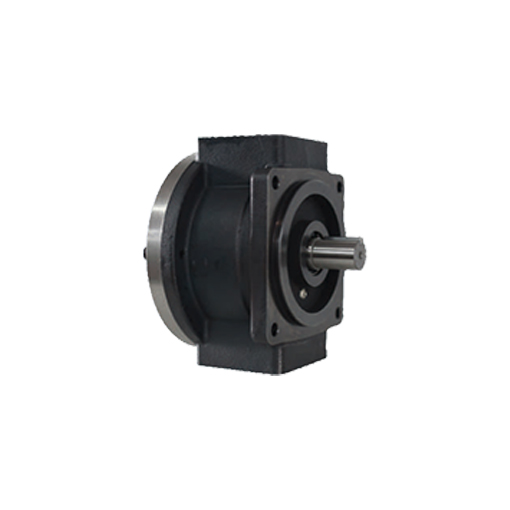
Within the DEO product range, the PSN100 and PST180 illustrate this point well. The PSN100 is classified as a trochoidal pump and bidirectional mechanical pump. The PST180 is classified as a bidirectional internal gear pump. Both have been placed in industrial lubrication related applications, but they are not interchangeable answers to the same layout. This article compares the two pumps on displacement, operating speed, temperature rating, housing material, and the application fields documented by the manufacturer.
Deo Machinery context for the two models
Deo Machinery Co., Ltd., established in 2010, is a Ningbo-based industrial fluid power and cooling system manufacturer. The company specializes in hydraulic pumps, electric lubrication pumps, centralized lubrication system pumps, oil lubrication pump systems, lubrication system oil coolers, and industrial lube oil cooling systems. Within this catalogue, PSN100 and PST180 are two mechanical pump types intended for the lubrication and oil circulation segment.
Knowing the company context matters less than knowing the technical file, but it helps a buyer interpret consistency. Both models appear in DEO documentation alongside DK series electric lubrication pumps and various cooling products. A buyer comparing PSN100 and PST180 is not comparing competing brands; the comparison is about which pump architecture and specification should be matched to a lubrication system layout.
Direct specification comparison: PSN100 vs PST180
The most useful starting point is a direct comparison of the main published parameters. The table below relies on the product specification records for the PSN100 and PST180. No pressure rating, efficiency curve, or market claim is added beyond what those records state.
| Comparison point | PSN100 | PST180 |
|---|---|---|
| Pump classification | Trochoidal pump, bidirectional mechanical pump | Bidirectional internal gear pump |
| Displacement | 100 cc/rev | 180 cc/rev |
| Maximum speed | 1800 rev/min | 1800 per min |
| Operating temperature range | -30°C to +100°C | -30°C to +100°C |
| Housing / material information | Ductile iron QT500 | Pump housing: GG250 gray cast iron, or QT500 ductile iron |
| Documented application areas | Lubricating systems, cooling systems, external drive independent conveying systems | Hydraulic systems, construction machinery, engine lubrication systems, automation mechanical equipment, forklifts and telehandlers, hydraulic power units, industrial cooling systems |
The table clarifies that the two models share a maximum speed limit and the same standard operating temperature range. The real point of separation is not speed. It is displacement, pump architecture, housing material options, and the documented application list.
Displacement: what the numbers mean in a lubrication system
PSN100 has a displacement of 100 cc/rev, while PST180 has a displacement of 180 cc/rev. When both pumps complete one shaft revolution under the same drive conditions, the PST180 displaces 1.8 times the theoretical volume of the PSN100. Actual delivered flow depends on volumetric efficiency, oil viscosity, suction conditions, and system resistance, but the per-revolution displacement difference is not a small detail.
For a lubrication circuit with small oil volume and short distribution lines, a 100 cc/rev pump may be the more proportional choice. For a circuit that must push a larger oil volume through multiple lubrication points or longer cooler loops, the lower displacement of the PSN100 becomes an immediate sizing constraint. Buyers should not assume that a higher pump speed can compensate for a smaller displacement, because both models share the same 1800 rev/min maximum speed boundary.
Speed limit: a shared boundary
Both PSN100 and PST180 are rated for a maximum speed of 1800 rpm. In practical selection, this means neither pump is intended to be operated as an uncontrolled high-speed unit. The speed value is a boundary for the drive arrangement, not a suggestion that the pump should always run near that number.
Because the speed limits are identical, comparing these two models on speed does not lead to a decisive result. The buyer should instead look at the layout requirement. If the lubrication pump is driven by an external shaft, gearbox, or another independent drive source, the relevant operating speed is determined by that drive, and the pump must stay within the documented 1800 rpm limit.
Temperature range and system compatibility
The PSN100 and PST180 both come with an operating temperature range of -30°C to +100°C. This is a useful common denominator because lubrication oil circuits in heavy industry often face cold starts and steady-state heat generation. The temperature range also keeps the two models in the same thermal class.
For a lubrication system where the oil return temperature frequently reaches temperatures above +100°C, these standard model specifications should not be accepted automatically. The shared temperature rating is a boundary in the catalogue data, and any application with sustained high oil temperatures requires an engineering review before model selection is final.
Material record: PSN100 versus PST180
Material differences are less visible than displacement, but they remain part of a complete industrial lubrication pump specification. The PSN100 is made of ductile iron QT500. For the PST180, the pump housing is listed as GG250 gray cast iron or QT500 ductile iron.
For buyers, the PST180 material record is the more conditional one. A quoting engineer should confirm which housing material is being supplied: gray cast iron GG250 or ductile iron QT500. The PSN100 material statement is more direct, with QT500 as the documented material for the pump.
Application fields: which layout does each model serve?
The application list is where PSN100 and PST180 start to differ clearly. According to DEO product documentation, the PSN100 is intended for lubricating systems, cooling systems, and external drive independent conveying systems. This makes the PSN100 the model type that should be considered when a lubrication or cooling loop is designed around an independently driven pump arrangement.
The phrase external drive independent conveying system is important. In such a layout, the pump does not necessarily rely on an integrated electric motor package. It can be installed separately and driven by an external mechanical source. That wording appears in the PSN100 classification, and it is not listed in the PST180 product file.
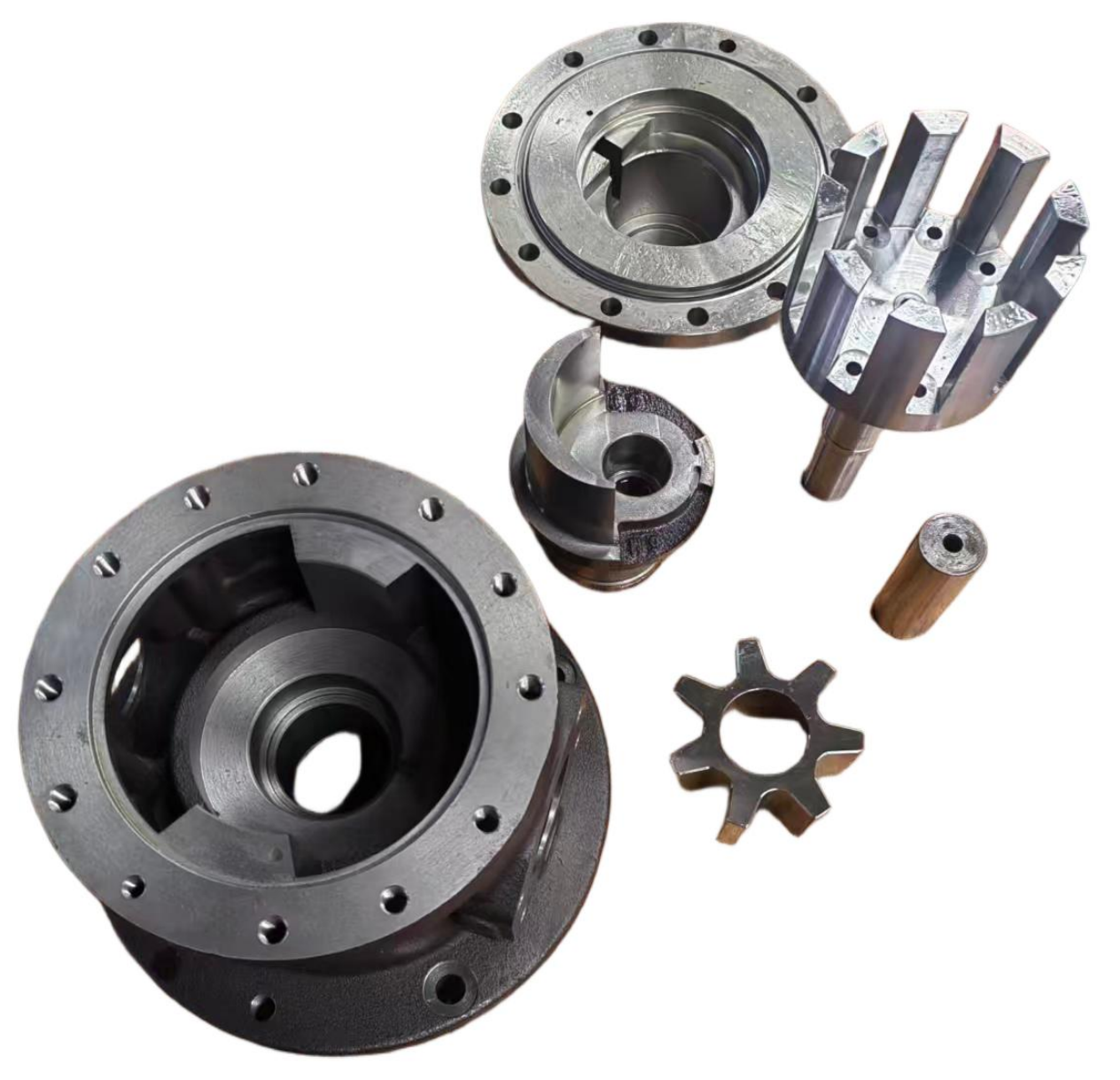
The PST180, by contrast, is documented for hydraulic systems, construction machinery, engine lubrication systems, automation mechanical equipment, forklifts and telehandlers, hydraulic power units, and industrial cooling systems. This is a broader equipment-level list. The pump is described as a bidirectional internal gear pump, which matters when a project needs a dependable rotating pump element for hydraulic or engine lubrication duties.
Bidirectional meaning in a lubrication pump
Both PSN100 and PST180 carry the bidirectional label in their product classifications. In a lubrication pump comparison, this label is not a marketing phrase. It indicates that the pump design is not limited to a single rotational direction concept. That can be relevant for installation layouts where the pump shaft is driven from either side of the machine or where the designer wants flexibility in hose and manifold positioning.
Bidirectionality also expresses one of the reasons why a buyer should specify pump architecture before choosing a model. A straight external gear pump, an internal gear pump, and a trochoidal pump can each perform a lubrication duty in some conditions. The documented direction capability, together with displacement and material, is the kind of technical detail that makes the PSN100 and PST180 distinct catalogue entries.
Traditional selection route versus model-to-layout matching
In many industrial purchasing situations, the traditional route is to start with a required lubrication flow rate, estimate an approximate pipe size, and then choose any pump with a displacement close to the need. That route can still work when the pump is mounted on a standard motorized base and the lubrication system layout is simple.
The PSN100 versus PST180 comparison shows why layout-first logic is more useful. If the system is designed around an external-drive independent conveying loop, the PSN100 is the more directly aligned candidate because that application is written into its product type definition. If the application is a hydraulic power unit, construction machinery, engine lubrication system, forklift, telehandler, or a related industrial cooling system, the PST180 is the model with the documented application file to support the conversation.
That does not mean PSN100 cannot be used in another arrangement, or that PST180 can never be used in a simple cooling loop. It means the catalogue evidence maps each model to a particular system context, and an industrial buyer should use that mapping before comparing price or delivery.
Practical decision boundaries for PSN100 and PST180
Every pump comparison needs a decision boundary. The most useful boundaries for this pair are found in the published specification itself.
The first boundary is maximum speed. Both models are rated at 1800 rev/min. This places a clear limit on how much flow can be obtained by increasing shaft speed. For PSN100, the lower displacement becomes even more restrictive when the system demand is high.
The second boundary is operating temperature. Both models are rated from -30°C to +100°C. Lubrication circuits with sustained oil temperatures above that range fall outside the standard model boundary and should trigger a design check rather than a default purchase.
The third boundary is the absence of a maximum pressure value in the reviewed technical files for these two models. The PSN100 and PST180 records list displacement, speed, temperature, material, and application areas, but they do not publish a working pressure rating. That does not automatically make either pump unsuitable for a given lubrication circuit, but it means buyers should not infer a pressure capability from a general pump classification. For any hydraulic or lubrication duty involving significant system pressure, the pressure rating must be confirmed against the selected pump specification before finalization.
Where this comparison fits in a purchase evaluation
Buyers researching industrial lubrication pumps at the awareness or research stage often need more than a supplier statement. They need a stable reading of the pump type, its displacement class, its temperature range, and its documented applications. The PSN100 and PST180 provide that reading within one manufacturer catalogue.
For a project that already has an external drive arrangement and a lubrication or cooling oil loop, PSN100 is the model with the more specific application match. Its 100 cc/rev displacement and QT500 material record make it a focused trochoidal pump selection.
For a project where the pump must support equipment such as construction machinery, a hydraulic power unit, an engine lubrication system, or an industrial cooling system, PST180 is the model with the broader documentation. Its 180 cc/rev displacement and internal gear architecture support a heavier per-revolution oil volume, assuming the rest of the system is compatible.
Neither model is presented in this article as a universal solution. The engineering value of the comparison is in separating a lower-displacement trochoidal pump for external-drive and lubrication/cooling loops from a larger-displacement internal gear pump for hydraulic and equipment-grade lubrication duties.
Future outlook for lubrication pump specification
Industrial lubrication purchasing is moving toward system-level thinking. More maintenance teams are describing lubrication circuits as complete loops that include a pump, filtration, oil cooler, and control valve rather than as a collection of independent components. In that environment, a buyer will increasingly ask which pump type fits the oil-flow architecture, not only which supplier is easier to source.
For DEO PSN100 and PST180, the practical consequence is clear. The two models share speed and temperature boundaries, but their different displacement and application records mean the final decision should be made against the lubrication circuit design. This is especially relevant as centralized lubrication systems and oil cooler circuits become more common in heavy industry.
Frequently Asked Questions
What is the main difference between the PSN100 and PST180?
The PSN100 is a trochoidal pump and bidirectional mechanical pump, while the PST180 is a bidirectional internal gear pump. The two models also have different displacement values and different documented application areas.
Which pump has the larger displacement, PSN100 or PST180?
The PST180 has a displacement of 180 cc/rev, while the PSN100 has a displacement of 100 cc/rev. At the same shaft speed, the PST180 displaces more oil per revolution.
Can both PSN100 and PST180 operate in two rotation directions?
Both pumps are described as bidirectional in their product classifications. The PSN100 is classified as a bidirectional mechanical pump, and the PST180 is classified as a bidirectional internal gear pump.
What is the operating temperature range for the PSN100 and PST180?
Both models are rated for an operating temperature range of -30°C to +100°C.
What materials are used for the PSN100 and PST180?
The PSN100 is made of ductile iron QT500. The PST180 pump housing is specified as GG250 gray cast iron or QT500 ductile iron.
Which industrial lubrication systems are documented for the PSN100?
The PSN100 is documented for lubricating systems, cooling systems, and external drive independent conveying systems.
Which applications are documented for the PST180?
The PST180 is documented for hydraulic systems, construction machinery, engine lubrication systems, automation mechanical equipment, forklifts and telehandlers, hydraulic power units, and industrial cooling systems.
¿Tiene preguntas o necesita más detalles?
Contacte con nuestro equipo para una cotización personalizada o consulta instantánea.
Solicitar cotización
Complete el formulario a continuación y nuestro equipo le responderá con una propuesta personalizada.
Chat directo de WhatsApp
¿Prefiere chatear en tiempo real? Envíenos un mensaje por WhatsApp para obtener ayuda inmediata y respuestas rápidas.
- Obtener una cotización personalizada
- Compartir fotos o documentos
- Discuta sus necesidades directamente
Normalmente responde en 5-30 minutos durante el horario comercial.