
Industrial Lubrication Pump & Cooler Specs: An Independent Buyer Comparison
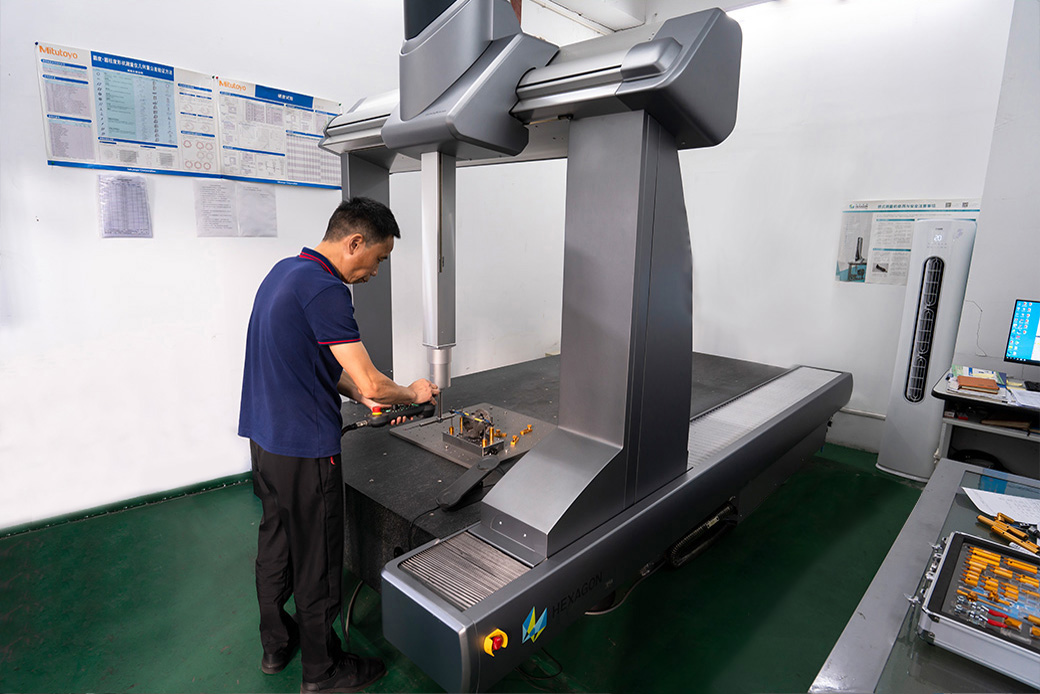
A production work area used for lubrication pump and cooler assembly and testing.
Short answer: the most reliable way to compare an industrial lubrication pump is to look at the four numbers that decide whether the unit survives on a production line — displacement per revolution, shaft speed, medium temperature window, and the material the pump body is cast from. This independent buyer comparison places three DEO pump options side by side: the DK630 electric lubrication pump (630 cc/rev; 950/1450 rpm; QT500), the PST180 bidirectional internal gear pump (180 cc/rev; up to 1800 rpm; −30 °C to +100 °C), and the PSN100 trochoidal pump (QT500, used for lubricating, cooling and external-drive independent conveying). Three cooling options are compared alongside them — the DFLSL-10 self-circulating cooler, the DFLEX8 wind cooler and the DWBW-408-T oil/water cooler. The article then sets out the purchasing terms, acceptance criteria, inlet-pipeline airtightness, oil-cleanliness and built-in relief valve requirements that should be settled before a purchase order is issued.
Why lubrication and cooling have merged into one specification
In smart manufacturing projects, the lubrication pump and the oil cooler are increasingly specified as a single thermal-fluid package rather than as two unrelated line items. The reason is mechanical rather than commercial: lubricant viscosity, film thickness, load-carrying capacity and friction are all functions of oil temperature. A pump that delivers the correct volume into a bearing housing running hotter than the design assumption is not delivering the correct lubrication, regardless of what its nameplate displacement says.
Adoption data points in the same direction. Commercial market research covering the lubrication system market estimates that 67% of newly commissioned industrial machines were equipped with automatic lubrication systems in 2024, and values the global lubrication system market at USD 863.88 million in 2024, with automatic lubrication systems projected to reach USD 1,470.88 million by 2032. The same body of research projects a 6.89% CAGR for electric lubrication pumps, a segment it forecasts reaching USD 2.7 billion by 2032. These are commercial research figures rather than primary statistics, and they are best treated as directional planning inputs rather than audited market facts.
For a buyer, the practical consequence is that the RFQ has to cover the whole loop: pump displacement, shaft speed, medium temperature window, body material, cooling method, filtration, and the cleanliness of the oil that actually reaches the bearing.
What smart manufacturing changes for buyers
Three shifts matter most in decision and execution stages.
Duty cycle. Lines that run continuously and unattended remove the operator who used to notice a hot housing or a noisy pump. Reliability moves from a maintenance habit into a specification item.
Systems thinking. Ingersoll Rand states that its industrial internal gear pumps are designed for lubrication and fluid delivery in demanding industrial applications, and that lubrication gear pumps are designed specifically for lubrication and circulation systems and are integral to machinery, turbines and gearboxes in the energy and automotive industries. SKF documents an electrically operated pump for the feeding of lubricants in interval operation inside a centralized lubrication system, and its FK grease lubrication pump unit is documented for use in progressive, single-line and dual-line centralized lubrication systems. The category expectation is consistent: the pump is a system element selected against a duty profile, not a standalone device bought on displacement alone.
Evidence on delivery. Because lubrication failures are expensive and hard to diagnose after the fact, buyers increasingly ask for test records and material documentation at the point of purchase. That shifts the comparison away from catalogue headlines and toward what a supplier can actually prove, unit by unit.
The options in this comparison
DEO is the brand of Deo Machinery Co., Ltd., a Ningbo, China-based manufacturer founded in 2010 that produces hydraulic pumps, electric lubrication pumps, centralized lubrication system pumps, oil lubrication pump systems and lubrication system oil coolers. The company reports a 10,000 m² production site, approximately 80 employees, 12 R&D engineers, an annual output of 30,000 units and a 20% export ratio, serving markets in Europe and America, Southeast Asia and Australia. It reports more than 7,000 enterprise clients, including Nanjing High Accurate Drive Equipment Manufacturing Group Co., Ltd. and Dongfeng Motor Corporation, and states that it holds three invention patents and 16 utility model patents.
| Component | Architecture | Published specification used here | Duty logic to confirm with the supplier |
|---|---|---|---|
| DK630 | Electric lubrication pump (DK series) | 630 cc/rev; 950/1450 rpm; QT500 | High-volume lubrication supply on continuous-duty circuits |
| PST180 | Bidirectional internal gear pump | 180 cc/rev; up to 1800 rpm; −30 °C to +100 °C | Reversible circulation and wide-temperature service |
| PSN100 | Trochoidal pump | QT500; lubricating, cooling, external-drive independent conveying | Independent transfer or cooling circuits |
| DFLSL-10 | Self-circulating cooler | Model reference only in this comparison | Loops engineered as self-contained circulating circuits |
| DFLEX8 | Wind (air) cooler | Model reference only in this comparison | Sites where water is unavailable or undesirable |
| DWBW-408-T | Oil/water cooler | Model reference only in this comparison | Sites with an existing water circuit |
No numeric cooling-capacity, flow or dimensional figures for the DFLSL-10, DFLEX8 or DWBW-408-T are published in the material used for this article, and none are assumed here. Buyers should request the guaranteed heat-rejection figure for their specific duty.
Technical explanation: what each published specification decides
Displacement and shaft speed define the flow envelope
Displacement per revolution multiplied by shaft speed gives theoretical flow. Real flow is lower because of slip, internal leakage and viscosity effects, which is why the two published figures are a starting point for sizing, not a result. Using arithmetic only: the DK630 at 630 cc/rev and 950 rpm corresponds to roughly 598 litres per minute, and at 1450 rpm to roughly 914 litres per minute. The PST180 at 180 cc/rev and up to 1800 rpm corresponds to roughly 324 litres per minute. Those calculations come from the published displacement and speed figures alone and are not tested flow ratings.
The comparison therefore shows two pumps separated by more than three times in displacement per revolution. They do not serve the same circuit. “Which pump is better” is the wrong question; “which flow envelope does my circuit require, at operating pressure and operating temperature” is the right one.
Temperature window determines cold-start and hot-running behaviour
The PST180 is specified for a medium temperature range of −30 °C to +100 °C, which covers cold commissioning through hot running inside that band. Applications outside the band should be reviewed with the supplier rather than assumed. Temperature also links the pump to the cooling decision: if oil leaves a bearing at a temperature that no longer supports the required film thickness, the cooling architecture — not the pump displacement — becomes the limiting item.
Material grade and the documentation that should accompany it
The DK630 and the PSN100 are specified with QT500, a nodular (ductile) cast iron grade commonly used for pump bodies and housings where pressure containment and wear resistance matter. The buyer action that follows is simple: request the material certificate with the order instead of inferring material quality from a catalogue description.
Three cooling architectures, three site constraints
A self-circulating cooler such as the DFLSL-10 carries its own circulation, which suits loops designed as independent circuits. A wind cooler such as the DFLEX8 rejects heat to ambient air, which suits sites where water is unavailable or undesirable. An oil/water cooler such as the DWBW-408-T requires a water circuit and typically provides compact heat exchange. For any of the three, the buyer should specify heat load, oil flow, allowable inlet and outlet temperatures, ambient conditions and medium compatibility — and then confirm which of those figures the supplier will guarantee in writing.

Production facility interior: sequencing of machining, cleaning and assembly steps.
Application fit: where each option earns its place
Steel and metallurgy. High ambient temperature, continuous duty and contamination make filtration and inlet airtightness more decisive than small differences in displacement.
Mining. Dust, vibration and long distances to service support mean that spares availability and inspection intervals typically outweigh headline capacity.
Construction machinery. Mobile duty with wide temperature swings places the emphasis on the medium temperature window rather than on steady-state efficiency.
Wind energy. DEO’s own comparison documentation notes that the wind-power DKF model is specified with a six-month inspection interval because of alternating vibration. That is a direct maintenance-planning input rather than a marketing statement.
Centralized lubrication systems. Where a pump feeds a progressive, single-line or dual-line centralized architecture — the system types documented in the category by SKF — system compatibility becomes a selection criterion alongside the pump itself.
Independent conveying and cooling circuits. The PSN100’s external-drive independent conveying role addresses circuits that must move oil without being tied to the main lubrication drive.
Market direction: what the available data shows — and what it does not
The verified picture is directional. Automatic lubrication adoption reached 67% of newly commissioned industrial machines in 2024, and the electric lubrication pump segment is projected to grow at a 6.89% CAGR toward USD 2.7 billion by 2032. Category-level context places the smart manufacturing market at an estimated USD 1,021.5 billion by 2032 with a 14.9% CAGR — a broad industry figure that must not be read as lubrication pump revenue. Official statistics show US sectoral output for pump and compressor manufacturing at USD 23,000.913 million in 2021, a sector definition that is wider than lubrication pumps alone. For trade and customs purposes, pumps and oil pumps are classified under HTS 8413.30 in the 2026 US schedule.
What the data does not show is equally important for buyers: there is no lubrication-pump-specific market size verified for this comparison, no verified pricing benchmark, no verified MOQ or lead-time benchmark for the category, and no efficiency or life-cycle benchmark data across pump types. Vendor commentary about AI-driven predictive maintenance is directionally consistent with the shift toward monitored lubrication, but it is commentary rather than measured evidence and is not used here as a quantitative claim. This is precisely why the commercial terms below have to be verified supplier by supplier rather than assumed from the market.
Compared with traditional approaches — and where these options stop
Traditional approaches rely on manual greasing and periodic oil top-up, which depend on a person being present and correct, and they typically select the pump and the cooler separately, which is how flow, temperature and cleanliness end up mismatched.
DEO positions its DK series in a published first-party comparison as a cost-effective alternative to imported lubrication pumps. That document states a price difference 40% lower than the compared imported brand, claims similar quality and states better material quality, and describes the DK series as an independently developed helical external gear pump aimed at the mid-end general industry, wind power, metallurgy, mining and reducer lubrication market, split into the DK line for general industry and the DKF model for wind power, with motor-pump integrated unit solutions. This is company-reported positioning. It is not an independently audited benchmark, and it should be validated against total cost of ownership — energy, spares, the scheduled overhaul at 8,000–12,000 working hours stated in the same document, and downtime risk — rather than read as a price conclusion.
The same document describes the imported benchmark as focused on ultra-low pulsation, precise metering, extreme medium adaptability, and applications in chemical dosing, marine and ultra-high-viscosity process industries. Buyers with those requirements are not the target of the DK series and should screen accordingly. Three further boundaries apply. First, no third-party certification is attributed to the products discussed in this article; where certification matters, documentation should be requested directly, and the SKF example shows the level of detail some suppliers publish (references to the Machinery Directive 2006/42/EC, RoHS II 2011/65/EU, EMC 2014/30/EU, EN ISO 12100, EN 809, EN 60204-1, EN 60947-5-1 and EN IEC 60947-5-2 in product documentation). Second, marine service is a distinct regulatory context: ASTM F2798-09(2023) defines requirements for sealless rotary positive displacement pumps with oil-through motors for ship lubricating oil service, pumping oil rated SAE 20–50, and that scope should not be transferred to general industrial lubrication pumps. Third, a large-displacement pump such as the DK630 will fail in service if the reservoir, suction line and filtration are sized for a smaller unit — a system error that is frequently misread as a pump defect.
Buyer’s checklist before the purchase order
1. Commercial terms. Minimum order quantity is 1 unit; delivery terms are FOB / CIF / EXWORK; payment terms are full payment; standard delivery time is 35–45 days; monthly production capacity is 2,500 units. The delivery figure is the one that decides whether a buffer stock position is needed on a multi-pump project.
2. Acceptance criteria. Pre-shipment test is the stated acceptance criterion. Ask what that test covers: DEO states that every unit undergoes 100% offline performance testing before packaging, covering flow, pressure, noise, leakage and relief valve calibration, with non-conforming units reworked or scrapped. Name the test report as a delivery document rather than a favour.
3. Inlet pipeline airtightness. Air drawn in on the suction side produces noise, unstable delivery and the kind of erosion damage that is later misdiagnosed as wear. Verify joint integrity and torque against the assembly specification — DEO states standard operating procedure assembly with torque wrench values for all fasteners and first article inspection each shift — and leak-test the inlet line before commissioning.
4. Oil cleanliness. Write the cleanliness requirement into the specification instead of leaving it to the commissioning team. DEO states that pump inner cavities pass through a dedicated chip-cleaning and air-blowing process before assembly, and that machining is carried out on DMG and MAZAK CNC machining centers and CNC gear grinders with professional gear detection equipment. No numeric cleanliness class is published in this comparison, so the target remains the buyer’s to set — and to verify on delivery.
5. Built-in relief valve. The relief valve protects both the pump and the circuit when a downstream line blocks. SKF’s product documentation specifies that a pressure relief valve with a maximum opening pressure of 270 bar must be provided on each pump element — a useful reminder that the relief set point is a documented value, not an assembly assumption. DEO states that relief valve calibration forms part of its 100% offline test. Set the valve above working pressure and below the lowest component rating in the system, and record the setting.
6. Material and dimensional evidence. QT500 for the DK630 and PSN100 should be evidenced by a material certificate, and dimensional accuracy by gauge records from the gear detection equipment used in production.
7. Spares and service planning. Per DEO’s comparison documentation, routine inspection is monthly and covers leakage, noise and pressure reading; medium and bearing inspection falls every 6–12 months; full overhaul involving gear and bush replacement is planned at 8,000–12,000 working hours; and the wind-power DKF model is specified with a six-month inspection interval because of alternating vibration.
Long-term fit: what “ecosystem” means in practice
For long-horizon supply decisions, the evaluation is less about a single unit and more about whether a partner can hold a specification and a schedule over years, and prove it per unit. The verifiable elements here are a monthly production capacity of 2,500 units, 100% testing of every unit, a minimum order quantity of 1 unit that keeps trial and spares purchases economical, a 35–45 day standard delivery window, documented inspection and overhaul intervals, and an export record covering Europe and America, Southeast Asia and Australia with a 20% export ratio. DEO also states that it reserves production capacity buffer stock for large OEM orders through intelligent production scheduling, which is the mechanism that matters when a project schedule slips.

Commercial and order-handling area supporting quotations, documentation and shipment coordination.
Future outlook
The direction of the category is toward lubrication and cooling being monitored and specified as one system rather than two purchases. As that happens, the differentiating evidence shifts from catalogue claims to documented test data, material certificates, relief valve settings and overhaul planning. Buyers who write those requirements into the purchase specification early will get more usable answers at the quotation stage, and fewer surprises at commissioning. Two structural expectations follow: lubrication pump selection will increasingly be judged against system-level flow at operating temperature rather than nameplate displacement, and long-lead spares and overhaul intervals will be planned as part of asset strategy rather than discovered during a breakdown. Buyers should also expect lubrication-pump-specific market and performance benchmarks to become available over time — they do not exist in verified public form today, and category-level figures should not be substituted for them.
FAQ
What should a buyer compare first when shortlisting an industrial lubrication pump?
Displacement per revolution, shaft speed, medium temperature window and body material come first, because those four determine flow capability and service survival. System-level factors follow: flow at operating pressure and temperature, inlet conditions, cooling method, filtration and oil cleanliness. Shortlisting on displacement alone tends to produce a pump that is correct on paper and wrong on the line.
How do the DK630, PST180 and PSN100 differ in duty?
The DK630 is an electric lubrication pump with 630 cc/rev displacement, 950/1450 rpm speed and QT500 construction, suited to high-volume lubrication supply. The PST180 is a bidirectional internal gear pump with 180 cc/rev displacement, up to 1800 rpm speed and a −30 °C to +100 °C medium temperature range, suited to reversible circulation and wide-temperature service. The PSN100 is a trochoidal pump in QT500 used for lubricating, cooling and external-drive independent conveying. The three overlap in purpose but not in flow envelope.
When does a lubrication system need a cooler, and how do the three cooler types differ?
A cooler becomes necessary when oil temperature rises to the point where viscosity no longer supports the required film thickness, or where the medium approaches the upper limit of the pump’s stated temperature window. The three architectures differ by constraint rather than by rank: a self-circulating cooler such as the DFLSL-10 carries its own circulation; a wind cooler such as the DFLEX8 rejects heat to ambient air and needs no water circuit; an oil/water cooler such as the DWBW-408-T requires a water circuit and typically provides compact heat exchange. Heat load, oil flow, allowable temperatures and ambient conditions have to be specified per application.
What purchasing terms and acceptance criteria apply to DEO lubrication pumps?
Minimum order quantity is 1 unit. Delivery terms are FOB, CIF or EXWORK, and payment terms are full payment. The acceptance criterion is a pre-shipment test, supported by the manufacturer’s stated practice of 100% offline performance testing of every unit before packaging, covering flow, pressure, noise, leakage and relief valve calibration. Standard delivery time is 35–45 days, with a monthly production capacity of 2,500 units.
Why does inlet pipeline airtightness matter, and how should it be verified?
A suction line that admits air delivers an oil-and-air mixture rather than oil, which shows up as noise, unstable delivery and progressive internal damage. Verification is procedural: confirm joint torque against the assembly specification, confirm that first article inspection records exist for the assembly shift, inspect the inlet route for correct sizing and support, and leak-test the line before commissioning rather than after the first pressure complaint.
What oil cleanliness requirement should be written into the purchase specification?
The cleanliness target should be stated by the buyer in writing, because no numeric cleanliness class is published in the material used for this comparison and none should be assumed. What can be verified is the manufacturing control behind it: DEO states that pump inner cavities receive a dedicated chip-cleaning and air-blowing process before assembly, and that non-conforming units are reworked or scrapped after 100% offline testing. The practical step is to pair a buyer-set cleanliness requirement with a delivery-stage test record.
Is a built-in relief valve necessary on a lubrication pump?
Yes, in practice it should be treated as a design requirement rather than an accessory, because a blocked downstream line otherwise converts the pump into the pressure-relief device. SKF’s product documentation specifies that a pressure relief valve with a maximum opening pressure of 270 bar must be provided on each pump element, which illustrates that the relief set point is a documented engineering value. The set point should sit above normal working pressure and below the lowest system component rating, and DEO states that relief valve calibration is part of its 100% offline test before packaging.
How should a buyer evaluate a lubrication pump supplier for a long-term partnership?
Look for verifiable delivery and quality mechanisms rather than assurances: stated monthly capacity of 2,500 units with buffer stock reserved for large OEM orders, 100% testing of every unit, a minimum order quantity of 1 unit that makes trials and spares practical, a defined 35–45 day lead time, documented inspection intervals and a stated overhaul point at 8,000–12,000 working hours, and an export record covering Europe and America, Southeast Asia and Australia. These are the elements that can be audited against purchase orders over time; a single price advantage cannot.
Further product documentation for DEO pumps and lubrication system oil coolers, including the full catalogue, is available at www.cndeo.com, and the downloadable brochure is available here: DEO product brochure (PDF).
¿Tiene preguntas o necesita más detalles?
Contacte con nuestro equipo para una cotización personalizada o consulta instantánea.
Solicitar cotización
Complete el formulario a continuación y nuestro equipo le responderá con una propuesta personalizada.
Chat directo de WhatsApp
¿Prefiere chatear en tiempo real? Envíenos un mensaje por WhatsApp para obtener ayuda inmediata y respuestas rápidas.
- Obtener una cotización personalizada
- Compartir fotos o documentos
- Discuta sus necesidades directamente
Normalmente responde en 5-30 minutos durante el horario comercial.