
Industrial Lubrication Pump Fit: Six Site Conditions That Decide the Spec
An industrial lubrication pump does one simple job, but it must do it across a very specific set of project conditions. Viscosity, temperature, contamination, drive speed, pressure surges, and the surrounding cooling system all decide whether the pump runs for years or fails in months.
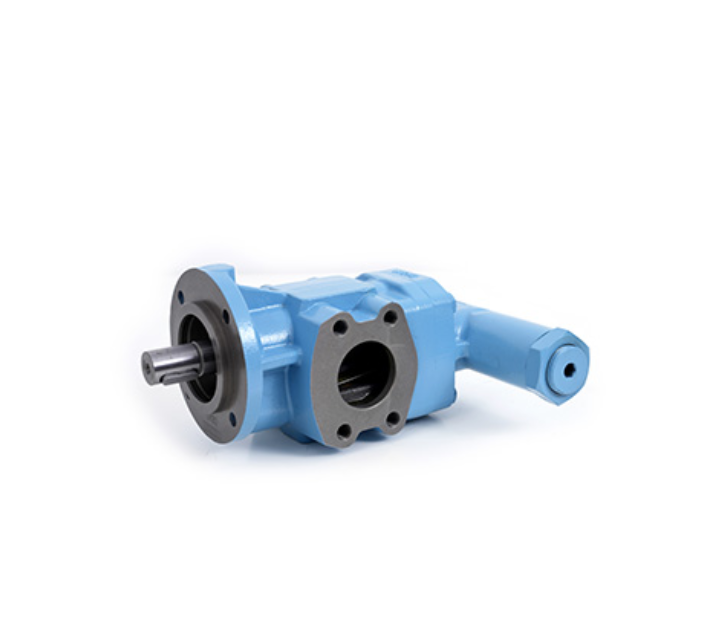
DEO DK-series pumps are part of a catalogue that also includes electric lubrication pumps, centralized lubrication system pumps and lubrication oil cooling components.
The term 'industrial lubrication pump' covers gear pumps, electric pumps and specialized oil pumps used to deliver lubricating or hydraulic oil to friction points. The real specification question is not displacement alone. It is whether a pump can perform under the duty cycle, oil temperature, ambient environment and integration requirements of a particular site. This article treats 'project fit' as a set of site conditions to verify before committing to a pump. DEO Machinery's DK-series pump family and related lubrication-and-cooling components are used as a running example.
Why lubrication reliability has become a project-management issue
Market context explains why pumps are increasingly evaluated for project fit rather than just price. According to Market Research Future, improper lubrication is linked to more than 76% of industrial machinery failures. An industry report hosted on the same platform states that centralized lubrication systems can reduce maintenance downtime by up to 52% in manufacturing facilities. These figures describe a clear opportunity: choosing the wrong lubrication delivery method can destroy equipment availability, while a well-matched pump-and-cooling loop can preserve it.
The global automatic lubrication system market was valued at roughly USD 0.37 billion in 2024, according to the same research source. That is small compared with the wider industrial pump market, and it suggests that suppliers compete on specific applications rather than on volume alone. The same market summary attributes about 42% of global lubrication-system shipments to Asia-Pacific. For buyers, this means regional supply can no longer be treated as a proxy for capability; the evaluation has to happen at component level.
DEO Machinery and the DK series as a worked example
DEO Machinery Co., Ltd. is a Ningbo-based manufacturer founded in 2010. The company operates a 10,000 m² plant, employs about 80 people and maintains a 12-person R&D group. Its corporate profile reports more than 7,000 enterprise customers, including Nanjing High Accurate Drive Equipment Manufacturing Group and Dongfeng Motor Corporation, as well as 3 invention patents and 16 utility model patents. For procurement teams, this is not a substitute for testing, but it provides an initial scale check.
DEO's product scope spans hydraulic pumps, electric lubrication pumps, centralized lubrication system pumps, oil lubrication pump systems, lubrication system oil coolers and industrial lube oil cooling systems. The DK630 electric lubrication pump has a displacement of 630 cc/rev and motor rotation speeds of 950 or 1450 rev/min, in a QT500 ductile iron body. The larger DK series is documented as a low-noise helical external gear positive displacement pump for industrial lubrication and hydraulic auxiliary fluid conveying.
| Declared parameter | Typical value | Project note for an evaluator |
|---|---|---|
| DK630 electric lubrication pump | 630 cc/rev; 950 or 1450 rev/min; QT500 body | High-flow lubrication pump for heavy machinery and mining or construction-style loops. |
| PSN100 trochoidal pump | 100 cc/rev; max 1800 rev/min; -30°C to +100°C | Moderate-flow circulation or lubrication pump; external drive application. |
| PST180 bidirectional internal gear pump | 180 cc/rev; max 1800 rev/min; -30°C to +100°C | Hydraulic systems and construction machinery; bidirectional pump duty. |
| DFLSL-10 self-circulating cooler | Cooling capacity 1.61/1.84 kW/°C; oil pump flow 100-125 or 150-200 L/min on VG46 oil; power 5.5/7.5 kW | Self-contained heat-removal unit for hydraulic and lubrication oil circuits. |
| DWBW-408-T fin-type oil/water cooler | Oil side 16 bar; water side 10 bar; oil temperature up to 120°C; oil viscosity 12-320 mm²/s | Water-cooling option for steel, mine and gearbox lubrication stations. |
Why positive-displacement architecture matters for lubrication circuits
A gear pump is a positive-displacement pump: each rotation moves a fixed volume of oil. In a helical external gear design, the meshing teeth engage progressively rather than suddenly. That reduces running noise and pressure pulsation compared with straight-gear designs. DEO's case documentation reports approximately 3 dB lower running noise in reducer lubrication service, with volumetric efficiency above 95%, which also reduces the motor power needed for a given oil flow.
The same documentation defines the operating boundary. The DK family is intended for clean lubricating or hydraulic oil with a kinematic viscosity range of 12 to 20,000 cSt and a fluid operating temperature range of -40°C to +100°C. The built-in relief valve has a standard setting of 5 to 25 bar and is designed for transient overpressure events, not continuous bypass operation.
Dry running is explicitly prohibited. Without oil, shaft bushings and gears can be damaged by friction in a short period. If the oil contains metal chips or sand, particles can scratch gear surfaces and accelerate bushing wear. Air leakage on the inlet side can reduce flow and cause cavitation. For oil above 1,000 cSt, pump speed should be reduced to avoid excessive suction resistance.
Where project fit changes the pump specification
Mining and construction machines
In mining and construction, the lubrication oil is often high-viscosity and the ambient air contains dust. The DK630, which DEO lists for lubrication in mining equipment and construction machinery, is a useful starting point because of its flow capacity and cast-iron body. When the loop also needs to remove heat, DEO's water/oil cooler can be customized with anti-corrosion materials for poor-quality or seawater-type cooling water, and its removable end cover simplifies internal cleaning.
Steel industry lubrication stations
Steel plants normally combine high oil flow, high ambient temperature and continuous operation. DEO names large gearboxes, rolling mill lubrication stations, hydraulic presses and forging equipment in the DWBW cooler application scope. The rated oil-side pressure of 16 bar, water-side pressure of 10 bar, maximum oil media temperature of 120°C and oil viscosity range of 12-320 mm²/s show that this unit was designed for heavy lubricant rather than thin hydraulic oil only.
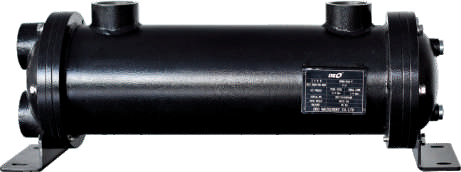
Figure 1. A fin-type oil/water cooler from the DEO catalogue is one option for removing heat from a lubrication loop.
Wind power and variable-speed gearboxes
Wind turbine gearboxes impose frequent speed changes and vibration. DEO's documentation distinguishes a standard DK model for general industry and a DKF model for wind power. The wind version is customized for anti-vibration and fatigue resistance, and is the project-specific choice for OEMs building gearboxes for turbines.
Hydraulic stations and centralized lubrication loops
Not every lubrication pump must be a large-displacement electric gear pump. For smaller oil circuits, DEO offers PSN100 trochoidal pumps and PST180 bidirectional internal gear pumps. The PSN100 provides 100 cc/rev displacement and the PST180 provides 180 cc/rev. Both are rated for -30°C to +100°C and a maximum speed of 1,800 rev/min. Their application scope includes hydraulic systems, construction machinery, forklifts and industrial cooling systems.
On the cooling side, DEO's application data covers oil flows from roughly 6 to 200 L/min depending on model and pump displacement. The DFLSL self-circulating oil cooler is built around a circulation pump, cooling fan and aluminum fin heat exchanger, and is specified for VG46-VG320 hydraulic oil. It can be upgraded for dust-proof, low-temperature or plateau working conditions, which makes it an option for projects with abnormal ambient conditions.
DEO's own customer records include five-year speed-reducer applications in Germany and Thailand. These records claim 3 dB lower noise, volumetric efficiency above 95%, and about 30% lower procurement cost than equivalent European imported gear pumps. Because these are supplier-generated results, an evaluator should treat them as a reference point and confirm them with tests or direct reference discussions.
Market evidence supports project-specific lubrication pump selection
Third-party market data reinforces the need for a structured fit evaluation. Market Research Future places the automatic lubrication system market at about USD 0.37 billion in 2024, with Asia-Pacific accounting for about 42% of shipments. The 76% failure correlation and the 52% downtime-reduction claim are more operationally relevant for maintenance planners because they convert lubrication pump selection from a purchasing decision into a reliability decision.
Separately, the Observatory of Economic Complexity reports that China exported USD 14.3 billion in liquid pumps in 2024, equal to about 18.5% of global exports. Importers therefore need transparent engineering documentation more than geographic brand assumptions. A supplier that states fluid-temperature limits, oil-viscosity ranges, contamination rules and test procedures is easier to compare in a global sourcing process.
Where traditional lubrication methods still make sense
A manual grease point or a simple drip feed can still be the most rational solution for small machines with few lubrication points and low duty cycles. Centralizing those points with an electric lubrication pump adds motor cost, controls, contamination management and design effort. No project team should assume centralized pumping is automatically better in every facility.
The boundary also applies to the pump itself. A helical external gear positive displacement pump is robust but not universal. DEO's operating rules state that dry running is prohibited; reverse rotation can invalidate the shaft seal and cause leakage; oil must be free of solid impurities; and a suction pipeline must be airtight. The built-in relief valve is intended for transient pressure spikes, not continuous overflow. For oil above 1,000 cSt, pump speed should be reduced. These are not defects in the pump; they are the boundaries that define a correct specification.
Future outlook: applications will be specified by envelope, not by model
More projects are likely to write lubrication pump specifications around the operating envelope: oil class, viscosity at start-up, temperature range, contamination level, duty factor and integrated cooling load. In that world, a pump data sheet becomes the starting point, not the end of evaluation. Suppliers that publish such data, offer variants such as the DKF wind-power version, and support OEM/ODM customization will be easier for engineers to validate.
Frequently asked questions
What does 'project fit' mean for an industrial lubrication pump?
Project fit means that the pump's flow, pressure, speed, fluid-temperature and contamination limits match the operating envelope of the application. For example, DEO's DK series is defined as a low-noise helical external gear pump for industrial lubrication and hydraulic auxiliary conveying. That definition tells an engineer the pump is not designed for contaminated media and must be protected from dry running.
Can the same lubrication pump be used for construction machinery and steel mills?
The same generic pump can often handle both environments, but the project conditions must be checked separately. Mining and construction applications require clean oil, robust castings and often a cooler built for dirty water; steel lubrication stations add continuous heat load and high-viscosity oil. DEO lists the DK630 for mining and construction, but offers a dedicated DKF version for wind turbines. The lesson is that a single catalogue model is not automatically valid for every site.
What operating mistakes cause premature failure in lubrication gear pumps?
DEO's installation guidance lists dry running as the first risk because it burns shaft bushings and gears in a short time. Other mistakes include running the pump in reverse, allowing metal particles or sand into the oil, leaving air leaks in the suction line, and using the built-in relief valve for continuous overflow instead of transient pressure protection. Very high-viscosity oil should also be handled at reduced pump speed.
When does an industrial lubrication pump project need an oil cooler?
When heat generation is high enough to lift oil temperature above the safe working window, an oil cooler should be part of the same lubrication loop. DEO provides self-circulating air-cooled units such as the DFLSL-10 and fin-type water/oil coolers such as the DWBW-408-T. The water/oil cooler is rated for oil-side pressure up to 16 bar, oil temperature up to 120°C and oil viscosity up to 320 mm²/s, which covers many heavy lubrication stations.
For further reference, the manufacturer maintains a public company brochure with additional product and capability detail: DEO Machinery company brochure (PDF).
¿Tiene preguntas o necesita más detalles?
Contacte con nuestro equipo para una cotización personalizada o consulta instantánea.
Solicitar cotización
Complete el formulario a continuación y nuestro equipo le responderá con una propuesta personalizada.
Chat directo de WhatsApp
¿Prefiere chatear en tiempo real? Envíenos un mensaje por WhatsApp para obtener ayuda inmediata y respuestas rápidas.
- Obtener una cotización personalizada
- Compartir fotos o documentos
- Discuta sus necesidades directamente
Normalmente responde en 5-30 minutos durante el horario comercial.