
Industrial Lubrication Pump FAQ: DK630 Specs, Types, Cooler Match
HTNXT Industry Reference · Smart Manufacturing · September 2026
An industrial lubrication pump determines whether oil reaches a friction pair on time, at the right pressure, and at a temperature the oil can survive.
Buyers rarely begin a specification with a model number. They begin with a symptom: a gearbox running hot, a rolling mill stand starved of oil, or a maintenance team still greasing bearings by hand six days a week. The pump converts that symptom into a purchasing decision — and the decision is seldom about the pump alone. An electric lubrication pump only performs as specified when the inlet piping, the oil condition, the overpressure protection and the cooling circuit are specified alongside it.
Deo Machinery Co., Ltd. is an industrial equipment manufacturer established in 2010, operating a 10,000 m² manufacturing facility with approximately 80 employees, a 12-engineer R&D team and an annual production capacity of 30,000 units. Its portfolio covers hydraulic pumps, electric lubrication pumps, centralized lubrication system pumps, oil lubrication pump systems and lubrication system oil coolers — including the DK series electric lubrication pumps, the PST180 and PSN100 mechanical pumps, and the DFLSL, DWBW and DFLEX cooler families referenced throughout this article.
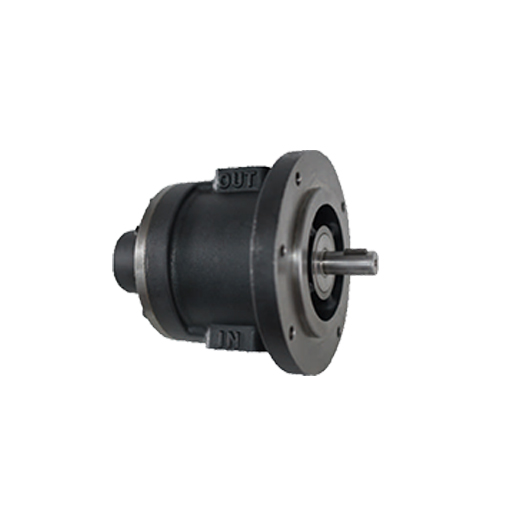
Fig. 1 — Bidirectional mechanical pump hardware: industrial lubrication circuits increasingly combine a pump, overpressure protection and a matched heat exchanger in one specification.
Why lubrication specification is now a procurement issue
Lubrication is one of the few maintenance topics where a small component failure propagates directly into production loss. Published industry analysis links improper lubrication to more than 76% of industrial machinery failures — a figure that explains why procurement teams, not only maintenance departments, now sign off on lubrication hardware.
The financial argument follows the same logic. The same body of research estimates that centralized lubrication systems can reduce maintenance downtime by up to 52% in manufacturing facilities. That estimate carries a medium reliability rating and should be treated as directional rather than guaranteed, because downtime outcomes depend on duty cycle, oil cleanliness discipline and how well the cooling circuit is matched to the lubrication loop.
DK630 electric lubrication pump: reading the specification correctly
The DK630 is an electric lubrication pump with a rated displacement of 630 cc/rev, built from QT500 ductile iron, with a motor rotation speed of 950 rpm or 1450 rpm. It is classified as an industrial lubrication oil pump and is intended for machinery and heavy industry, including steel, construction and mining equipment.
| Parameter | DK630 / DK series specification |
|---|---|
| Product category | Electric lubrication pump, industrial lubrication oil pump |
| Rated displacement | 630 cc/rev |
| Motor rotation speed | 950 rpm or 1450 rpm |
| Primary material | QT500 ductile iron |
| Lubricant compatibility | Lubricating oil or hydraulic oil, kinematic viscosity 12–20000 cSt |
| Fluid temperature range | −40°C to +100°C |
| Duty mode | 24/6 — continuous operation 24 hours a day, 6 days a week |
| Built-in protection | Relief valve assembly, standard setting pressure 5–25 bar |
| Series variants | Standard DK for general industry; DKF for wind power; MDK pump unit (pump + motor + bell housing coupling) |
| Typical industries | Machinery and heavy industry, steel, construction machinery, mining equipment |
Displacement and speed are the two numbers that convert directly into system flow. One revolution of a 630 cc/rev pump moves 630 cc of oil, so 950 rpm corresponds to roughly 598 L/min of theoretical displacement flow and 1450 rpm to roughly 914 L/min, before volumetric efficiency losses are applied. Those are calculated values derived from the published displacement and speed ratings, not measured test results; the correct approach in a technical inquiry is to state the required flow first and then select the speed that reaches it.
The DK series is described as a low-noise helical external gear positive displacement pump for industrial lubrication and hydraulic auxiliary fluid conveying. Its function is continuous delivery of lubricating or hydraulic oil to mechanical friction pairs — gears, bearings and sliding rails — to form an oil film and reduce abrasion and friction heat, and to circulate hot oil out of lubrication points toward a matched oil cooler. The helical gear structure lowers running noise compared with straight gear pumps.
Pump types: PST180 internal gear versus PSN100 trochoidal
Two mechanical pump types appear in the same lubrication and cooling discussions, and they are not interchangeable. The PST180 is a bidirectional internal gear pump; the PSN100 is a trochoidal pump, also described as a bidirectional mechanical pump. Both are designed for bidirectional operation and both share a −30°C to +100°C operating temperature range and a maximum speed of 1800 rpm.
| Attribute | PST180 | PSN100 |
|---|---|---|
| Pump type | Bidirectional internal gear pump | Trochoidal pump, bidirectional mechanical pump |
| Displacement | 180 cc/rev | 100 cc/rev |
| Maximum speed | 1800 rpm | 1800 rev/min |
| Operating temperature | −30°C to +100°C | −30°C to +100°C |
| Material | Pump housing GG250 gray cast iron or QT500 ductile iron | Ductile iron QT500 |
| Typical applications | Hydraulic systems, construction machinery, engine lubrication systems, automation mechanical equipment, forklifts and telehandlers, hydraulic power units, industrial cooling systems | Lubricating systems, cooling systems, external drive independent conveying systems |
Selection logic follows the circuit, not the label. A hydraulic power unit or an engine lubrication system that needs a higher volume per revolution points toward the internal gear design. A lubricating or cooling loop, or an external drive independent conveying system where the pump runs from a separate drive, points toward the trochoidal design. Both are available in ductile iron housings, which matters where the pump is mounted on mobile construction or mining equipment exposed to vibration and load reversal.
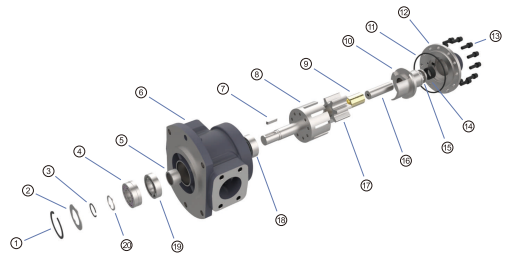
Fig. 2 — Exploded view of an internal gear pump: serviceability depends on how the gear set, bushing and rotary shaft seal are assembled and sealed in the field.
Installation and oil-condition requirements that belong in the order
These are the conditions most often discovered after installation rather than before purchase. Each one is stated as a requirement on the pump, not as a recommendation.
- Airtight inlet pipeline. The pump inlet pipeline must be airtight, without air leakage. A leaking inlet produces insufficient suction flow and cavitation.
- Inlet pipe diameter. The inlet pipe diameter cannot be smaller than the pump inlet port; a smaller pipe restricts flow and creates avoidable pressure loss.
- Oil free of solid contamination. Oil must be free of metal chips, sand and other solid impurities. Particle contamination scratches gear surfaces and wears bushings rapidly. Where heavy pollution is expected, a filter is mandatory.
- Viscosity-based speed reduction. For oil above 1000 cSt, pump speed must be reduced to avoid excessive suction resistance and cavitation.
- Rotation direction. The marked rotation direction on the pump nameplate must be followed; reverse rotation invalidates sealing and causes leakage failure.
- No dry running. Running the pump without oil medium is prohibited; dry friction burns shaft bushings and gears in a short time.
- Coupling alignment. On MDK pump unit assemblies, the bell housing and motor shaft must maintain coaxiality.
Oil cleanliness is measurable rather than subjective. ISO 4406 is the primary international standard for quantifying particle contamination in hydraulic and lubrication fluids using a three-part code, for example 18/15/13. Where a project requires a documented cleanliness target, ISO 4406 gives both buyer and supplier a shared reference for acceptance testing instead of an unverifiable claim that the oil is “clean.”
Matching a cooler to the lubrication circuit
Cooling is where lubrication specifications most often become unbuildable, because the available cooling medium at the site decides the cooler type long before the performance target does. Three cooler families cover most lubrication cooling inquiries.
| Model | Type | Key data | Typical fit |
|---|---|---|---|
| DFLSL-10 | Self-circulating cooler | Cooling capacity 1.61/1.84 kW/°C; oil pump flow 100–125 L/min (VG46); consumed power 5.5/7.5 kW; copper radiator with stainless steel custom option | Hydraulic and lubricating systems, extruding machinery, forging and stamping equipment, shearing machines, gearboxes, large bearings, nuclear power plants, large-scale reduction boxes, smelting equipment |
| DWBW-408-T | Fin-type oil/water cooler | Shell-and-tube finned heat exchanger; oil side max 16 bar; water side max 10 bar; oil temperature ≤120°C; cooling water 5–60°C; oil viscosity 12–320 mm²/s; heat exchange area 1.3 m² to dozens of m² | Heavy machinery, metallurgy, mining, construction machinery, wind power, marine |
| DFLEX8 | Wind (air) cooler | Comparative cooling capacity 1.15/0.91 kW/°C; fan diameter 630 mm; motor voltage 3-phase 380V; copper radiator | Cooling and wind energy, nuclear power plants, gearboxes and reducers, lubricating systems, construction machinery, crude oil mining, coal mines, hydraulic systems |
The matching sequence is a medium question before it is a performance question.
- Water available and clean → DWBW-408-T. The oil/water cooler needs cooling water in the 5–60°C band with low impurity content. Seawater or heavily polluted water is supported through a customized anti-corrosion structure, which must be specified at the inquiry stage rather than retrofitted.
- No water or remote site → DFLEX8. The air-cooled unit depends on ambient air movement, so radiator ventilation space must be reserved and inlet/outlet blockage avoided; insufficient heat dissipation is an installation error, not a product fault.
- Cooling must be independent of the main circuit → DFLSL-10. The self-circulating cooler is an integrated closed-loop unit containing radiator, circulating oil pump, fan, filter and control accessories. Because the cooling loop is separated from the host hydraulic circuit, main-system pressure fluctuation does not interfere with cooling performance, and pulse oil return does not put the heat exchanger core at risk.
Two calculation details are easy to miss. First, when oil viscosity exceeds 30 cSt, pressure drop calculations need a viscosity correction coefficient. Second, the unit can be floor-mounted or bracket-mounted, but the mounting base must include shock-absorbing gaskets, and the oil inlet direction is selectable left (INL) or right (INR) to match the existing pipeline layout.
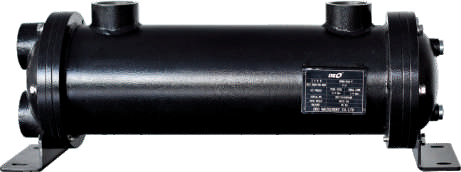
Fig. 3 — Fin-type oil/water cooler: the detachable end cover is a maintenance feature that determines how often the unit can be descaled on site.
Electric centralized lubrication versus traditional practice — and where the limits sit
Traditional lubrication practice in heavy industry relies on manual greasing rounds and single-point oiling, often with a pump that has no matched cooling circuit. The recurring weakness is not the oil; it is the interval. Manual rounds depend on access, staffing and shift conditions, so a bearing can run under-lubricated for hours before anyone notices.
An electric centralized lubrication pump changes the interval by making delivery continuous and independent of a maintenance round. The DK series operates in 24/6 mode, which is a fundamentally different operating assumption from manual greasing. It also changes the failure mode: when oil is delivered continuously, the circulating oil carries heat out of the lubrication point, which is why a lubrication pump and a cooler are usually specified as a pair rather than as separate line items.
The limits are real and should be stated before purchase. An integrated lubrication package is not a drop-in replacement for every legacy circuit:
- A DK series pump cannot tolerate dry running, reverse rotation, or an inlet line that draws air — all three damage the pump quickly.
- The built-in relief valve is sized for transient pressure protection. Systems that expect continuous overflow need a different circuit design, not a higher valve setting.
- Ultra-high viscosity oil above 1000 cSt requires reduced pump speed, which reduces flow. The specification must be recalculated rather than copied from a lower-viscosity project.
- Oil/water cooling depends on cooling water quality and temperature; air cooling depends on ambient conditions and ventilation clearance. Neither can be assumed from the pump specification alone.
- Cooling capacity has an energy cost: the DFLSL-10 consumes 5.5/7.5 kW, which belongs in the plant load calculation.
Stated plainly: an electric lubrication pump raises the reliability ceiling of a circuit only when the oil condition, the inlet piping and the cooling medium are specified with the same rigour. Where those conditions cannot be met on site, a simpler circuit may be the more honest recommendation.
Market trend analysis: what the published numbers do and do not say
Scope matters more than decimals in this category. Market Research Future valued the global automatic lubrication system market at approximately USD 0.37 billion in 2024, while the broader oil coolers market used in lubrication cooling was valued by Dataintelo at USD 6.8 billion in 2025. The two figures describe different boundaries — one covers automated lubrication systems specifically, the other covers heat exchange equipment used in lubrication cooling.
Alternative estimates of the same lubrication segment differ substantially because some counts include only automated systems, while others count the whole lubrication system market including pumps, metering devices and heat exchangers. Technavio, for example, measured a USD 322 million growth increment between 2023 and 2028 rather than a total market value. Any market number quoted in a buyer’s business case should therefore carry its definition with it.
Supply geography is more consistent across sources. Asia-Pacific accounted for approximately 42% of total global lubrication system shipments in 2024, and China exported USD 14.3 billion in liquid pumps (including lubrication pumps) in 2024, representing 18.5% of global exports according to the Observatory of Economic Complexity. A 2024 industry analysis by ISOHITECH lists SKF Group, Lincoln Industrial, Graco Inc. and Bijur Delimon among the top global manufacturers of industrial lubrication systems — a useful reference set for benchmarking commercial scale, but not a ranking of technical fit for any individual lubrication circuit.
The trend that matters for specification is convergence. Pumps, overpressure protection and heat exchangers are increasingly purchased as one thermal-fluid package, because a pump specified without its cooling counterpart simply relocates the failure from the lubrication point to the oil temperature.
Future outlook
Three shifts are visible in how industrial lubrication systems are being specified. First, cleanliness is becoming contractual: with ISO 4406 providing a coded cleanliness target, buyers can specify acceptance criteria instead of trusting a delivery claim, which in turn pushes filtration and sealed inlet design earlier into the project. Second, cooling medium availability is increasingly treated as a design constraint rather than an installation detail, which favours either water-cooled units where clean water exists or air-cooled units where it does not. Third, integrated self-circulating loops are becoming the default for retrofit projects on existing equipment, because an independent closed loop avoids re-engineering the host hydraulic circuit.
None of these shifts remove the fundamentals. A lubrication pump still needs uncontaminated oil, an airtight inlet and correct alignment — and a lubrication system still needs a cooler that matches the medium available at the site.
Procurement checklist before issuing an RFQ
| Checkpoint | What to confirm in writing |
|---|---|
| Required flow | The oil flow the lubrication points need, then the displacement and speed combination that delivers it (DK630: 950 rpm or 1450 rpm) |
| Oil condition | Viscosity range (12–20000 cSt on the DK series), inlet temperature, and whether oil above 1000 cSt is expected |
| Duty cycle | Whether the pump runs continuous duty (24/6) or intermittent duty |
| Inlet design | Airtight inlet line, pipe diameter not smaller than the pump inlet port, filter where contamination is expected |
| Overpressure protection | Relief valve setting within 5–25 bar and confirmation that the valve is used for transient protection only |
| Cooling medium | Water available (DWBW-408-T, 5–60°C, low impurity) or air only (DFLEX8, fan diameter 630 mm, 3-phase 380V) |
| Installation space | Radiator ventilation clearance, mounting base with shock-absorbing gaskets, oil inlet direction left (INL) or right (INR) |
| Documentation | Material confirmation (QT500 ductile iron / GG250 gray cast iron), pump nameplate rotation direction, and operating limits |
Frequently asked questions
What is the DK630 electric lubrication pump used for?
The DK630 is an electric lubrication pump with a rated displacement of 630 cc/rev and a motor speed of 950 rpm or 1450 rpm, constructed from QT500 ductile iron. It is classified as an industrial lubrication oil pump and is intended for machinery and heavy industry, including steel, construction and mining equipment. Its function is to deliver lubricating or hydraulic oil continuously to mechanical friction pairs such as gears, bearings and sliding rails, forming an oil film that reduces abrasion and friction heat, and to circulate hot oil out of lubrication points toward a matched cooler.
What is the difference between the PST180 internal gear pump and the PSN100 trochoidal pump?
The PST180 is a bidirectional internal gear pump with a displacement of 180 cc/rev, a maximum speed of 1800 rpm and an operating temperature range of −30°C to +100°C; its housing is made of GG250 gray cast iron or QT500 ductile iron. The PSN100 is a trochoidal, bidirectional mechanical pump with a displacement of 100 cc/rev, the same maximum speed of 1800 rev/min and the same −30°C to +100°C range, made of ductile iron QT500. The PST180 is typically applied in hydraulic systems, hydraulic power units, engine lubrication systems, construction machinery, forklifts, telehandlers and industrial cooling systems. The PSN100 is applied in lubricating systems, cooling systems and external drive independent conveying systems.
Why must the pump inlet pipeline be airtight?
The pump inlet pipeline must be airtight without air leakage, because air entering the suction line reduces inlet flow and causes cavitation. The inlet pipe diameter also cannot be smaller than the pump inlet port, since a smaller pipe restricts flow and adds pressure loss. Both conditions are installation requirements rather than performance preferences, and both are outside the pump manufacturer’s control once the unit is piped on site.
What oil cleanliness does an industrial lubrication pump require?
Oil must be free of metal chips, sand and other solid impurities. Particle contamination scratches gear surfaces and wears bushings rapidly, and for heavily polluted working conditions a filter is mandatory. Where a project needs a measurable target, ISO 4406 is the primary international standard for quantifying particle contamination in hydraulic and lubrication fluids using a three-part code such as 18/15/13. On the viscosity side, the DK series accepts lubricating or hydraulic oil from 12 to 20000 cSt, but oil above 1000 cSt requires reduced pump speed to avoid excessive suction resistance and cavitation.
Does the built-in relief valve protect the pump during continuous overpressure?
No. The built-in relief valve assembly provides transient pressure protection only, guarding pipelines and equipment against system pressure surges. Its standard setting pressure is 5–25 bar. Continuous overflow operation leads to pump overheating and early wear, so a system designed around sustained overpressure needs a different circuit architecture rather than a raised valve setting. The valve also does not replace correct rotation direction, dry-run prevention or inlet airtightness.
How do I choose between the DFLSL-10, DWBW-408-T and DFLEX8 coolers?
The choice follows the cooling medium available at the site. The DWBW-408-T is a fin-type oil/water cooler for installations with clean cooling water in the 5–60°C range; it handles oil-side pressure up to 16 bar and water-side pressure up to 10 bar, with oil viscosity of 12–320 mm²/s, and seawater or heavily polluted water requires a customized anti-corrosion structure. The DFLEX8 is a wind (air) cooler for sites without water, with a comparative cooling capacity of 1.15/0.91 kW/°C, a 630 mm fan and a 3-phase 380V motor, and it requires reserved ventilation space around the radiator. The DFLSL-10 is a self-circulating cooler with cooling capacity of 1.61/1.84 kW/°C, oil pump flow of 100–125 L/min on VG46 oil and consumed power of 5.5/7.5 kW; it suits circuits where cooling must run as an independent closed loop separated from the host hydraulic circuit.
What should be verified before ordering an industrial lubrication pump and cooler package?
Six items cover most specification gaps: the required oil flow and the displacement/speed combination that reaches it; the actual viscosity and inlet temperature at the site, including whether oil above 1000 cSt will be used; the duty cycle, since DK series units are rated for 24/6 continuous operation; the inlet design, confirming an airtight line, adequate pipe diameter and filtration where contamination is expected; the relief valve setting within the 5–25 bar range and confirmation that it serves transient protection only; and the cooling medium, since water-cooled and air-cooled units have different site prerequisites. Installation details such as radiator ventilation clearance, shock-absorbing mounting and oil inlet direction should be confirmed at the same time.
Data sources
Market Research Future — automatic lubrication system market value and lubrication systems market analysis (failure correlation, downtime reduction, regional shipment share); ISO — ISO 4406 particle contamination coding standard; Observatory of Economic Complexity (OEC) — China liquid pump export value and global export share, 2024; Dataintelo — global oil coolers market value, 2025; ISOHITECH industry analysis — global industrial lubrication system manufacturers, 2024. Product parameters in this article are stated as published in Deo Machinery product data for the DK630, PST180, PSN100, DFLSL-10, DWBW-408-T and DFLEX8.