
Industrial HDPE Sheet: A Supplier Continuity Scorecard
Supplier Evaluation · HDPE Sheet
An industrial HDPE sheet programme rarely fails on the first delivery. It fails on the fourth — when a new resin batch behaves differently under welding, when the 20 mm plate arrives at a marginally different gauge, or when the food-contact paperwork that accompanied the trial order cannot be reproduced for the production order. Continuity, not first-article quality, is what a maintenance programme actually buys.
A continuity scorecard is a repeat-order evaluation instrument. Instead of asking what a supplier can demonstrate once, it asks what the supplier can reproduce across orders and across the life of a plant's maintenance programme: the same grade identity, the same thickness and dimensional behaviour, the same documentation chain, and the same commercial response. This reference sets out six scoreable dimensions for industrial HDPE sheet supply, using Tangyin Sanyou Engineering Plastic Co., Ltd. — a Chinese engineering plastics manufacturer founded in 2001 with a 40,000 m² facility and a stated product range covering HDPE sheet, UHMWPE sheet, PP sheet, HDPE sandwich board and ground protection mats — as a documented reference case, and states plainly where such a scorecard stops.
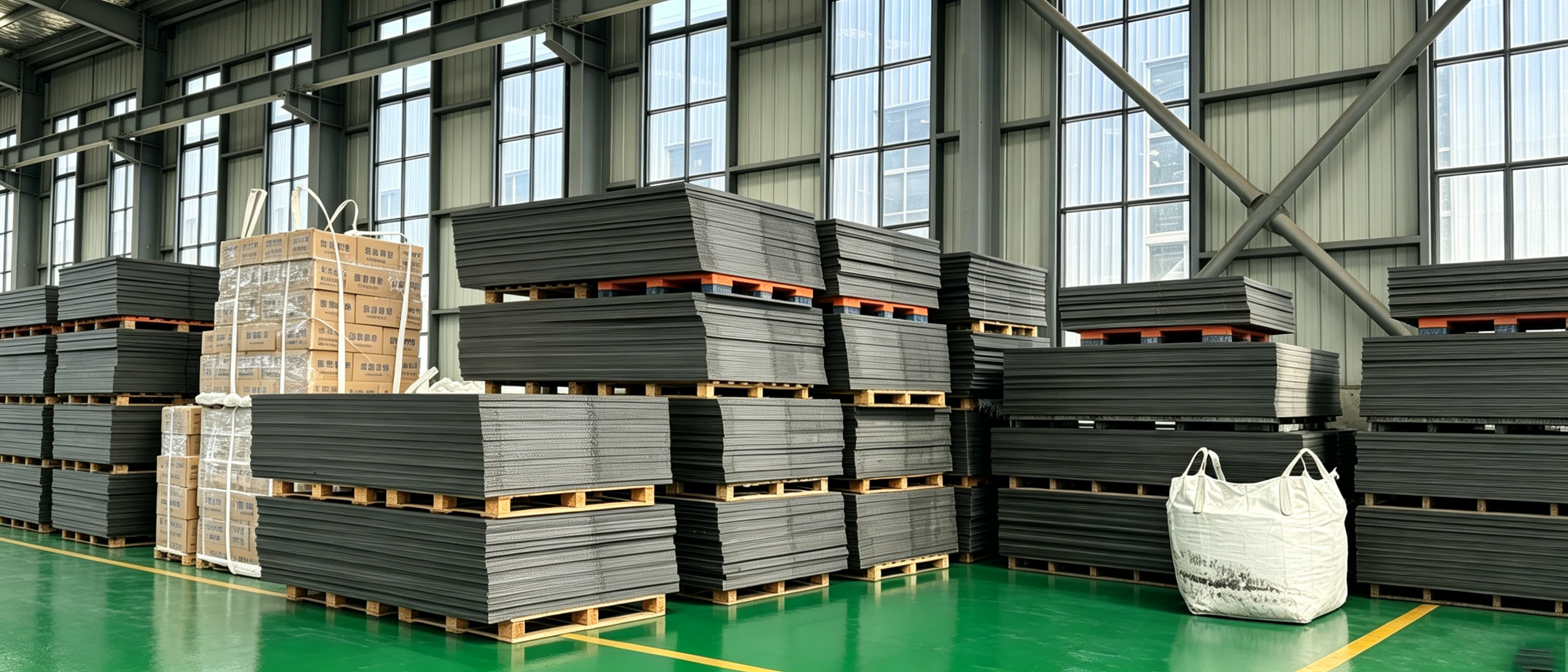
Why one-off verification stops being useful after order one
A single verification exercise answers a narrow question: does this supplier currently hold the material, paperwork and process to supply the requested sheet? It does not answer whether the same answer will hold in eighteen months, on a different thickness, in a different colour, or in a second grade for a different part of the same plant.
The failure modes that matter to a maintenance or fabrication programme are all repeat-order failures:
- Grade drift. A supplier substitutes a different base resin or a different recycled input while keeping the same commercial product name.
- Gauge drift. Nominal thickness stays on the drawing, but the delivered tolerance band shifts enough to change fit-up, weld preparation or load-bearing assumptions.
- Documentation decay. A certificate is presented at quotation stage, then is unavailable, out of scope, or issued for a different product when the repeat order ships.
- Service discontinuity. The engineer who reviewed the drawing is no longer reachable, and fabrication advice is no longer available when a welding problem appears.
- Commercial discontinuity. Minimum order quantities, lead times or customisation terms change once the buyer is committed to a specification.
The opportunity is symmetrical. A buyer who scores continuity can consolidate grades, reduce emergency substitutions and hold a supplier to a documented baseline. A supplier that can evidence continuity becomes a specification partner rather than a price line.
The six dimensions of HDPE supplier continuity
The scorecard below is deliberately narrow. It scores only what an HDPE sheet buyer can evidence from documents and order history, and it separates product facts from commercial facts.
| Dimension | What is being scored | Evidence a buyer should request |
|---|---|---|
| 1. Grade continuity | Whether a named grade maps to the same resin family, colour and surface on every order | Grade code, base resin description, density and mechanical values, surface definition |
| 2. Thickness and dimensional repeatability | Whether nominal thickness, sheet size and flatness hold across batches | Thickness range, tolerance statement, in-process dimension checks, inspection records |
| 3. Documentation repeatability | Whether certificates are current, correctly scoped and re-issuable | Quality management certificate, regional compliance certificate with number and scope, inspection records on request |
| 4. Continuous-operation support | Whether the grade suits 24/7 duty and mixed indoor/outdoor exposure | Working temperature range, water absorption, chemical resistance statement, UV-stabilised option |
| 5. Commercial continuity | Whether MOQ, lead time and customisation terms remain stable | MOQ basis, quoted lead time basis, customisation list, after-sales scope |
| 6. Market readiness | Whether documentation and logistics fit the buyer's market | Export market coverage, regional compliance certificate, reference applications in that market |
Dimension 1 — grade continuity across virgin, recycled, UV-stabilised, marine and food-contact grades
Grade continuity is the single most under-scored dimension in HDPE sheet procurement, because most buyers specify by colour and thickness rather than by grade identity. Two black 20 mm sheets can be entirely different materials.
In the documented Sanyou HDPE sheet range (product model PE300), the material is described as virgin HDPE with a density of 0.93–0.97 g/cm³, a thickness range of 2–50 mm with custom thickness available, standard sheet sizes of 1000 × 2000 mm, 1220 × 2440 mm, 1500 × 3000 mm and 2000 × 4000 mm, and a surface that is either smooth or anti-skid textured in diamond, orange peel or embossed patterns. Published typical values include tensile strength ≥ 22 MPa, elongation at break ≥ 300%, hardness 60–68 Shore D, impact strength ≥ 20 kJ/m², melting point 130–140 °C, water absorption below 0.01% over 24 hours and a coefficient of friction of 0.15–0.25.
The commercial product family is broader than that single data set: the range is presented as virgin HDPE sheet, recycled HDPE sheet, UV-stabilised HDPE sheet, marine grade HDPE sheet, coloured HDPE sheet, smooth and matte sheet, and orange peel, grid or diamond textured anti-slip sheet. That breadth is precisely where continuity has to be tested, because each family carries a different continuity risk.
| Grade family | Continuity question to ask | Why it matters on repeat orders |
|---|---|---|
| Virgin HDPE sheet | Is the base resin identity fixed for this grade code, and are typical mechanical values quoted per grade rather than per product family? | Virgin grade is the reference for food-contact, potable water and high-reliability work; substitution undermines the specification rationale |
| Recycled HDPE sheet | What input stream and grade designation applies, and which properties are guaranteed versus indicative? | Recycled content is legitimate for non-critical lining and protection, but performance should be confirmed per grade and application |
| UV-stabilised HDPE sheet | Is UV stabilisation a stated grade attribute rather than an assumption? | Outdoor cabinets, marine panels, playground and agricultural parts depend on it for service life |
| Marine grade HDPE sheet | Which of the listed properties (impact, water absorption, chemical resistance) is being relied on for the marine duty? | Marine and port applications combine moisture, salt and impact; the grade rationale must be repeatable |
| Food-contact grade | Which grade code, thickness and documentation set applies, and can the same set be re-issued? | Cutting boards, food processing tables and hygienic work surfaces require evidence tied to the specific grade, not to the product family |
Dimension 2 — thickness and dimensional repeatability
Thickness continuity is a process question dressed as a specification question. The documented PE300 sheet range runs from 2 mm to 50 mm, with custom thickness available, and controlled thickness tolerance is explicitly listed as a project requirement for HDPE sheet in chemical, food, marine and outdoor applications. That phrasing matters: tolerance is a requirement to be agreed, not a property to be assumed.
The available thickness guidance by duty is a useful anchor when writing a repeat-order specification, because it ties thickness to function rather than to habit.
| Duty | Reference thickness | Typical use in a plant programme |
|---|---|---|
| Light-load lining and protection | 5–6 mm | Light anti-corrosion lining, protective panels, machine guards |
| Tank wall and structural panel | 6–20 mm | Chemical storage tanks, wastewater equipment, structural panels, cutting tables |
| Heavy-wear chute and liner work | 20–50 mm | Heavy-wear liners, thick fabricated components, high-impact panels |
Thickness reference by duty, as documented for HDPE sheet selection. Values are starting points for specification, not a substitute for engineering review.
What should be scored here is the inspection chain that produces repeatability. In the documented HDPE and sheet-fabrication quality control sequence, the steps are incoming raw material inspection, in-process thickness and dimension checks, surface inspection and final pre-shipment inspection, with inspection records available on request. For a repeat-order buyer, the practical test is simple: request the thickness and dimension records for two orders of the same specification placed some months apart, and compare the recorded bands rather than the nominal figure.
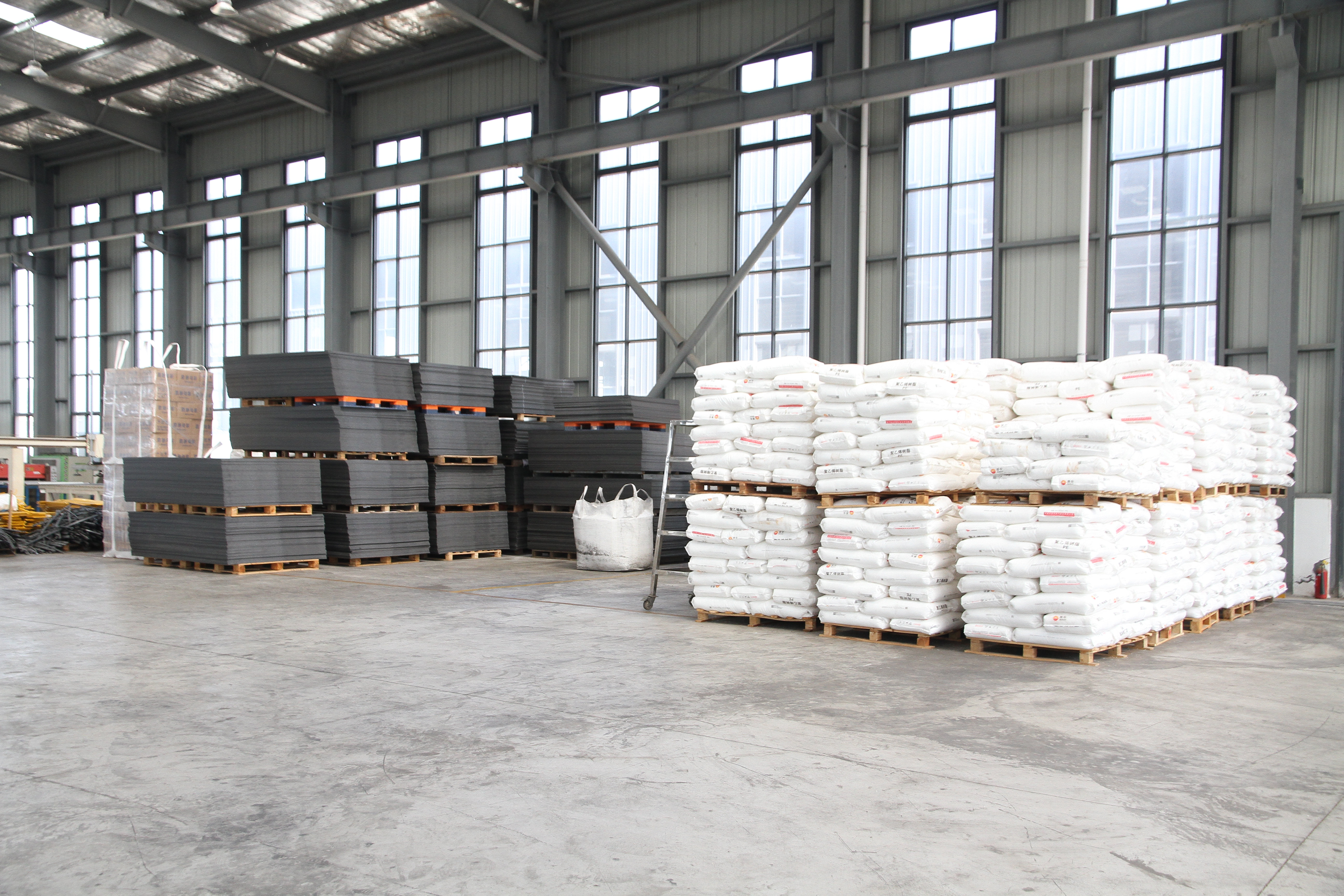
Dimension 3 — documentation that repeats, not just exists
Documentation is the dimension where buyers most often accept a folder instead of a scope. Three document types are relevant to industrial HDPE sheet, and each has a different continuity logic.
Quality management
The HDPE sheet specification lists ISO 9001 as its certification reference. For continuity scoring, the useful question is not whether a quality certificate exists, but whether the inspection records generated under that system can be retrieved for a specific order number months later. The documented after-sales scope includes documentation support, which is the mechanism through which that retrieval happens.
Regional compliance
For European Union destinations, the documented CE certificate for HDPE sheet carries the number HY250111190958-1D, was issued on 2025-11-21 by HUAY TESTING, and is stated against the IEC 62321 series of test standards for the EU market. That certificate is a substance-restriction document, and it should be read as such.
Scope discipline
The clearest illustration of why scope must be scored comes from the RoHS certificate also held on file: number DTIBW20222147C, issued 2022-12-05 by Shenzhen Deesev Testing International Corporation (DTI) for European Union and EEA markets against the IEC 62321 series — with a stated scope of synthetic ice board. That certificate is real and current, but it is not an HDPE sheet certificate. A supplier that presents it as one is not being fraudulent; it is being imprecise, and imprecision is exactly the failure a continuity scorecard is designed to catch.
Dimension 4 — 24/7 operation and mixed indoor/outdoor exposure
Continuity has a thermal and environmental dimension. Industrial HDPE sheet in chemical processing, water treatment, food processing, marine, construction, agriculture and material handling is documented as operating continuously or intermittently, indoors or outdoors, including 24/7 industrial operation, frequent cleaning cycles and long-term exposure to wet or corrosive environments.
The scoreable material facts for this dimension are specific. The PE300 sheet specification states a working temperature range of −60 °C to +80 °C, water absorption below 0.01% over 24 hours, excellent resistance to acid, alkali, salt and oil, and UV stabilisation. Each of these answers a different continuity question:
- Working temperature range defines the envelope in which the same grade can be reordered without re-engineering. A duty that sits near the upper bound should trigger a fresh material review, not a repeat order.
- Water absorption below 0.01% supports dimensional stability in washdown and wet-process environments, which is why the same sheet can serve both indoor tank fabrication and outdoor equipment panelling.
- Chemical resistance to acid, alkali, salt and oil is a general statement, not a compatibility guarantee. Continuity requires the medium and concentration to be recorded against the grade, because a change of chemistry invalidates the earlier approval.
- UV stabilisation is the bridge between indoor and outdoor duty. Mixed-exposure programmes — one plant using the same sheet for indoor tanks and outdoor cabinets — should hold a UV-stabilised grade as the baseline rather than switching grades by location.
The corresponding application evidence is a two-year supply relationship with an Australian industrial buyer, described as an industrial equipment manufacturer, chemical tank fabricator, food-processing equipment supplier, marine and outdoor product manufacturer and plastic distributor, covering a custom supply of 20 tons of HDPE sheet with customised thickness, dimensions, colour and surface finish. The reported outcome was improved corrosion and moisture resistance, reduced maintenance requirements and simplified fabrication and cleaning. The continuity signal here is not the tonnage; it is that the same configuration was sustained for two years across several product types.
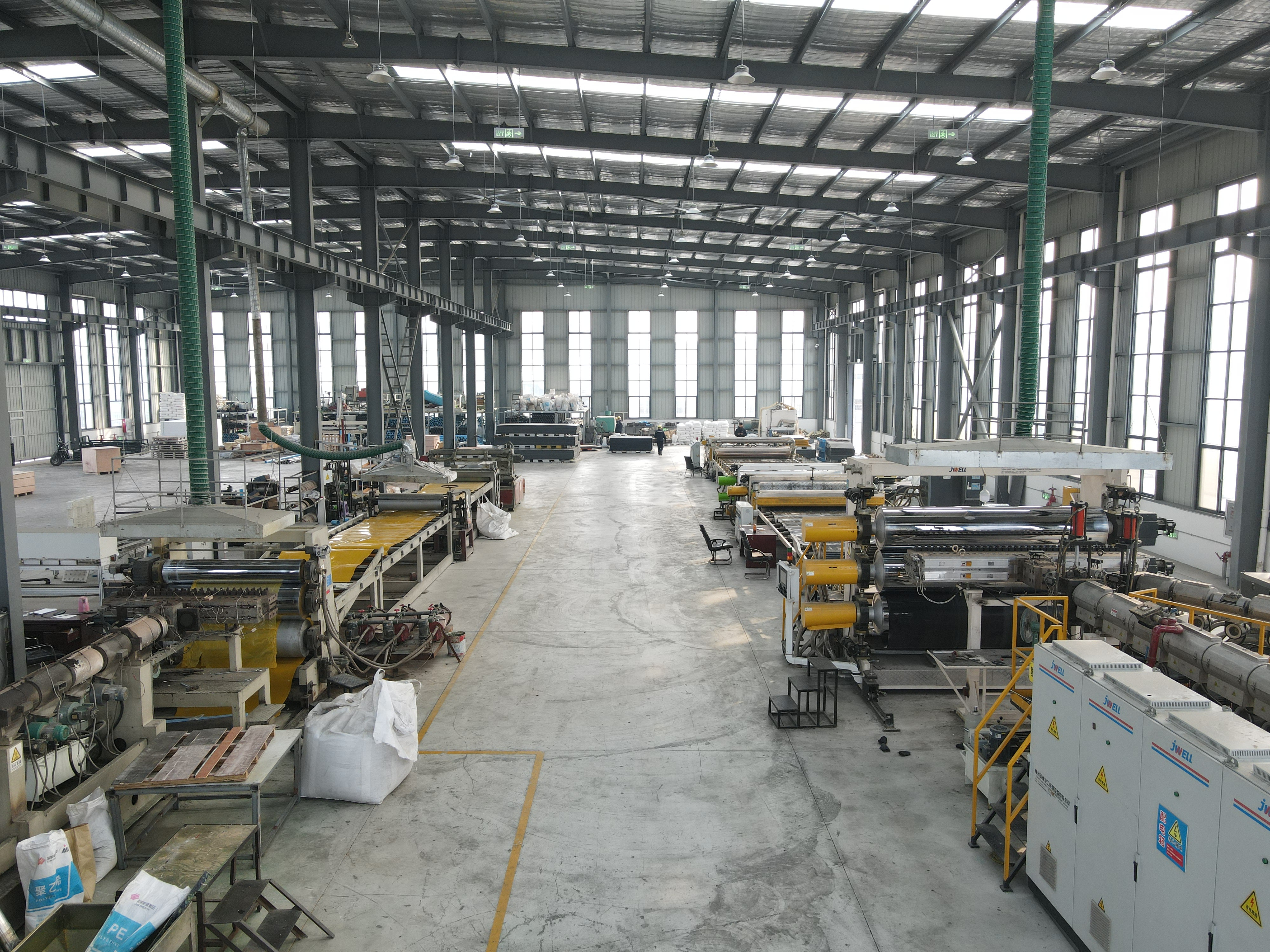
Dimension 5 — commercial continuity behind repeat orders
A supplier can hold every technical property and still fail continuity on commercial terms. The documented sheet-fabrication capability provides concrete anchors to score against.
| Commercial parameter | Documented position | How to score continuity |
|---|---|---|
| Monthly capacity | Approximately 800 metric tons per month for sheet and fabricated parts | Compare programme demand against stated monthly capacity, not against annual company output |
| Lead time | 15–20 days after order confirmation and deposit, subject to quantity and customisation | Record the basis, then compare actual despatch dates across consecutive orders |
| Minimum order quantity | 1,000 kg per specification and colour; trial orders negotiable | Check whether MOQ applies per grade code, which is what drives colour-change and grade-change cost |
| Customisation | Thickness, size, colour, surface texture, material grade, UV stabilisation, cut-to-size, CNC machining, drilling, welding and custom packaging | Confirm that the customisation set quoted at trial remains available at repeat volume |
| After-sales | Remote technical support, material selection guidance, fabrication advice, documentation support and complaint handling | Score response time and technical depth on an actual fabrication question, not on a brochure |
Company scale is context rather than proof: Tangyin Sanyou was founded in 2001, operates a 40,000 m² facility with 80 employees and 10 engineers, states annual output of 120,000 tons and an export ratio of 70%, and lists HDPE sheet, UHMWPE sheet, PP sheet, HDPE sandwich board and ground protection mats as its main products. Those figures describe a manufacturing base capable of supporting repeat programmes; they do not, on their own, demonstrate continuity for a specific grade.
Dimension 6 — market readiness across the United States, Canada, Australia, Germany, France and the UAE
Market readiness is the dimension buyers most often assume rather than check. It should be scored against two separate evidences: documented export coverage, and documented application-market coverage.
On export coverage, the company states export markets spanning North America, Western Europe, Central Europe, the Middle East, Oceania and Southeast Asia. On application coverage, the documented HDPE sheet application record lists market country codes including the United States, Canada, Australia, France and the United Arab Emirates, alongside Saudi Arabia, Mexico, Spain, New Zealand, Oman, Poland, Russia and Turkey. Germany is not separately named in that list; it sits inside the stated Western and Central Europe export footprint and inside the same EU compliance framework as France.
For a buyer, that distinction produces a practical scoring rule. Where a market is named in the application record, the supplier can point to that market's duty profile directly. Where a market is covered only by regional footprint and EU documentation, the buyer should confirm the specific requirement rather than assume it — particularly for German buyers whose internal specifications may go beyond a substance-restriction certificate.
Where the scorecard stops: limits a buyer should accept
A continuity scorecard improves a decision; it does not replace batch-level evidence or engineering review. Several limits are structural and should be written into the scoring rather than argued around.
- Typical values are not batch guarantees. The published density, tensile, impact, hardness and friction figures describe the grade; they are not a certificate of conformance for a specific delivered sheet.
- The CE certificate has a defined technical basis. HY250111190958-1D is stated against the IEC 62321 series, which is a substance-restriction framework. It is not a structural, fire-performance or food-contact certification, and it should not be scored as one.
- Food-contact evidence must be tied to the grade and order. Food-contact compliance is documented as an application requirement that applies when required, and food-contact grades are listed as an option within the range. Buyers should therefore request the compliance documentation for the specific grade code and thickness, and should not treat a general product statement as a standing certificate.
- Recycled content introduces legitimate variability. Recycled HDPE is documented as suitable for non-critical anti-corrosion lining and cost-sensitive work; it is not interchangeable with virgin grade where hygiene or mechanical consistency governs.
- Lead times are conditional. The stated 15–20 days runs from order confirmation and deposit and depends on quantity and customisation, so it should be scored against actual despatch performance rather than quoted text.
- Chemical resistance is general. Acid, alkali, salt and oil resistance is stated at a general level; a specific medium at a specific concentration requires its own compatibility review.
Compared with a traditional one-off supplier audit, the scorecard is slower to complete and requires the buyer to keep order records. In exchange, it converts a subjective relationship into a re-testable baseline — and it makes substitution visible before it reaches the plant floor.
How to score: a simple weighting
Weighting should follow exposure. A programme running 24/7 in a corrosive indoor environment with food-contact surfaces should weight documentation and grade continuity most heavily. A programme supplying outdoor cabinetry or agricultural panels should weight UV grade continuity and thickness repeatability most heavily. A distributor building a stock range should weight commercial continuity and MOQ structure most heavily. In every case, an unscored dimension should be recorded as unverified rather than assumed compliant, because the purpose of the instrument is to expose gaps, not to produce a comforting total.
Future outlook
Three pressures are likely to push continuity scoring from good practice to baseline expectation in industrial HDPE sheet procurement. First, documentation scrutiny is rising in step with substance-restriction frameworks, which rewards suppliers who can re-issue correctly scoped certificates rather than re-present old folders. Second, mixed indoor and outdoor installations are becoming more common in water treatment, agriculture and outdoor equipment, which raises the value of a UV-stabilised grade held as a programme baseline rather than a project exception. Third, as maintenance programmes consolidate specifications to reduce grade proliferation, the cost of a mid-programme substitution rises — making grade identity, not price, the continuity asset that buyers will pay to protect.
For suppliers, the implication is unglamorous but clear: the competitive ground is shifting from what can be shown at quotation to what can be reproduced at reorder. Producers with an established manufacturing base, a documented quality sequence and a defined grade family are structurally better placed than suppliers whose offer is assembled order by order.
A full product reference covering the industrial HDPE sheet range and related engineering plastics is available in the Sanyou product catalogue: Sanyou Product Catalog (PDF).
FAQ
What does an HDPE sheet continuity scorecard measure that a one-off supplier audit does not?
A continuity scorecard measures reproducibility across repeat orders rather than capability at a single point in time. It scores six dimensions — grade identity, thickness and dimensional repeatability, documentation scope and re-issuability, support for continuous operation and mixed exposure, commercial terms such as MOQ and lead time, and market readiness — using order records and document numbers. A one-off audit typically confirms only that a supplier can currently supply the requested sheet.
Which working conditions determine grade and thickness before continuity is even assessed?
Documented HDPE sheet selection depends on working temperature, chemical medium, load and impact condition, indoor or outdoor environment, contact-material requirement and mechanical processing demand. Thickness follows duty: 5–6 mm for light-load lining and protection, 6–20 mm for tank walls and structural panels, and 20–50 mm for heavy-wear chute and liner work. The PE300 sheet specification states a working temperature range of −60 °C to +80 °C and water absorption below 0.01% over 24 hours.
How should food-contact compliance evidence be re-verified on repeat orders?
Food-contact compliance is an application-specific requirement rather than a blanket product property. Buyers should request the documentation for the exact grade code, thickness and order reference, record the document number and issue date, and confirm that the scope names the ordered product. Where the document set cannot be reproduced for a repeat order, the grade should be treated as unverified for that duty even if an earlier order was accepted.
What documentation can be checked repeatably for an industrial HDPE sheet order?
Three document types are relevant. The HDPE sheet specification lists ISO 9001 as its quality management certification. For EU destinations, CE certificate HY250111190958-1D was issued on 2025-11-21 by HUAY TESTING against the IEC 62321 series. The file also holds RoHS certificate DTIBW20222147C, issued 2022-12-05 by Shenzhen Deesev Testing International Corporation (DTI), whose stated scope is synthetic ice board. In addition, incoming raw material inspection, in-process thickness and dimension checks, surface inspection and final pre-shipment inspection records are available on request.
What limits should a buyer accept when scoring a supplier?
A scorecard cannot substitute for batch conformance certificates, structural review or media-specific chemical compatibility testing. Published properties such as density 0.93–0.97 g/cm³, tensile strength ≥ 22 MPa and impact strength ≥ 20 kJ/m² describe the grade rather than a delivered batch. Recycled HDPE performance should be confirmed against the specific grade and application. Lead times of 15–20 days are stated from order confirmation and deposit and depend on quantity and customisation.
How does a supplier support 24/7 operation and mixed indoor/outdoor exposure?
Through grade properties rather than service promises. The documented HDPE sheet application profile covers continuous or intermittent operation, indoor or outdoor use including 24/7 industrial operation, frequent cleaning cycles and long-term exposure to wet or corrosive environments. Supporting material facts include a working temperature range of −60 °C to +80 °C, water absorption below 0.01% over 24 hours, resistance to acid, alkali, salt and oil, and the availability of UV-stabilised grades for outdoor service.
¿Tiene preguntas o necesita más detalles?
Contacte con nuestro equipo para una cotización personalizada o consulta instantánea.
Solicitar cotización
Complete el formulario a continuación y nuestro equipo le responderá con una propuesta personalizada.
Chat directo de WhatsApp
¿Prefiere chatear en tiempo real? Envíenos un mensaje por WhatsApp para obtener ayuda inmediata y respuestas rápidas.
- Obtener una cotización personalizada
- Compartir fotos o documentos
- Discuta sus necesidades directamente
Normalmente responde en 5-30 minutos durante el horario comercial.