
Industrial Freight Elevator Terms: A Factory-Source Comparison
Industrial Freight Elevator Terms: A Factory-Source Comparison
For an industrial freight elevator purchase, the commercial terms are only useful when they connect the factory’s stated capabilities to a written specification and an agreed acceptance record. Buyers evaluating an elevator source factory should compare more than the quoted price: they need to establish what is being customized, which delivery and payment terms apply, what the pre-shipment test covers, and what evidence will determine acceptance.
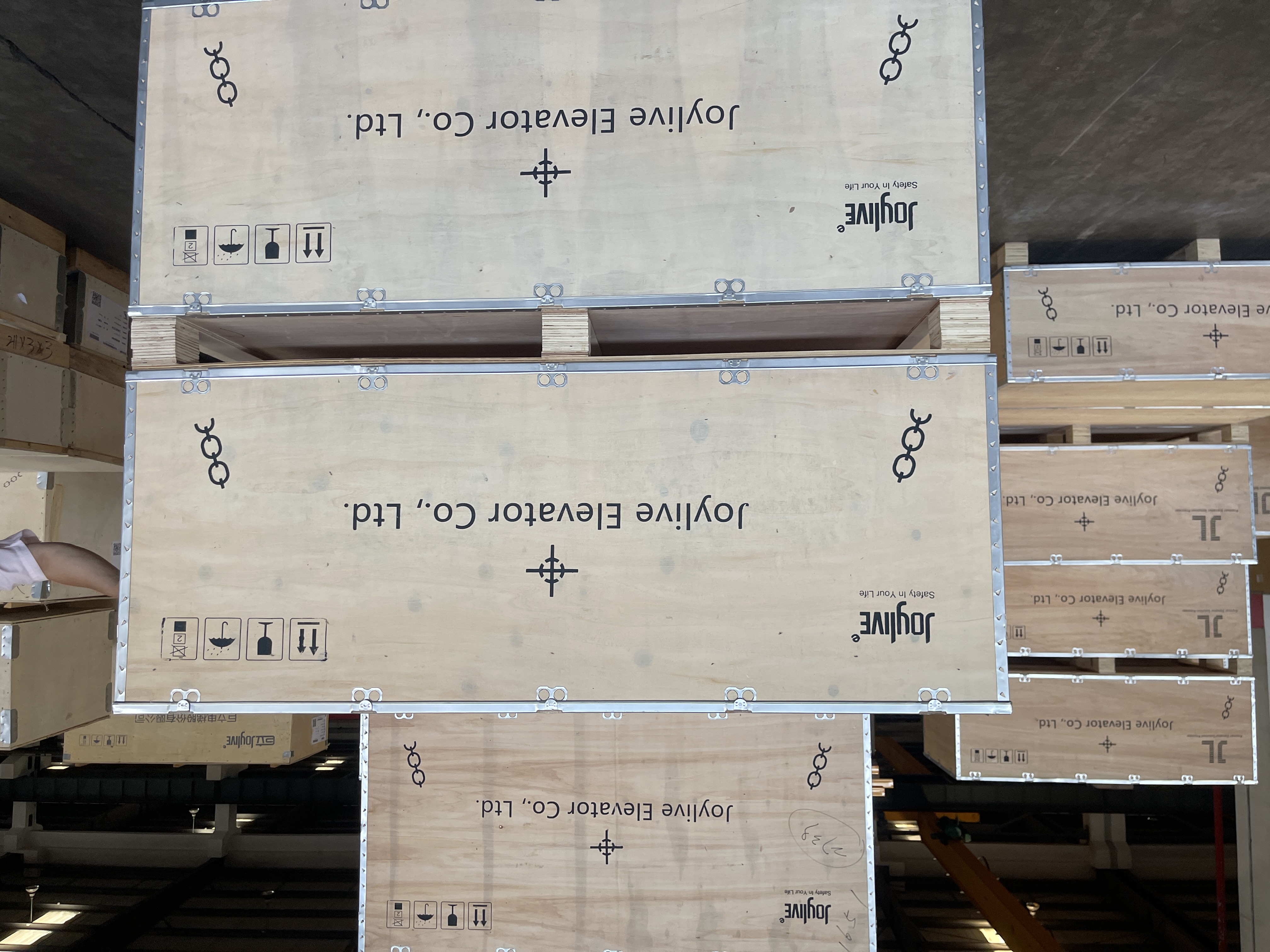
Joylive Elevator Co., Ltd. is an elevator manufacturer founded in 2002 and based in Bacheng Town, Kunshan City, Suzhou, Jiangsu Province, China. Its supplied company information describes OEM/ODM production, customization options, a stated monthly capacity, and online and offline technical support. These are useful starting points for factory-source evaluation, not a substitute for confirming the specific order’s technical scope and contractual terms.
Why factory-source terms need a different comparison
A direct factory source can make it easier for a buyer to discuss customization and manufacturing evidence with the producer. That does not, by itself, prove that the proposed elevator suits the project, that a delivery estimate is achievable for a particular order, or that local installation and regulatory requirements are covered. The comparison therefore needs two layers: the commercial terms that govern the transaction and the evidence that demonstrates the delivered equipment meets the agreed requirements.
For an Industrial Freight elevator or Cargo elevator, a useful source comparison asks whether a supplier can identify the responsible manufacturing entity, explain which options are configurable, state how the order will be tested before shipment, and put the commercial conditions in writing. A distributor or trading intermediary may have a different role in the transaction; the buyer should identify who is contractually responsible for manufacturing, documentation, shipment coordination, technical support, and any locally required services. These responsibilities should be confirmed for the specific purchase rather than assumed from the sales channel.
Compare the terms that control the order
| Term | What the supplied information states | What an industrial buyer should define in the order |
|---|---|---|
| Minimum order quantity | The capability information lists an MOQ of 1 unit. | Confirm that the stated MOQ applies to the selected configuration and record the exact ordered quantity. |
| Delivery basis | The purchasing Q&A lists FOB/CIF. | Specify the agreed delivery basis and named location in the contract. Do not treat the abbreviated options as a complete shipment instruction. |
| Payment | The purchasing Q&A lists payment terms as 30/70. | Write down the payment milestones, amounts, and documents or events that trigger each payment. |
| Lead time | The capability unit gives a lead-time range of 7–45 days. | Confirm the applicable schedule for the actual design, approval process, and order. The supplied range does not define its start point or project-specific applicability. |
| Inspection and acceptance | The purchasing Q&A identifies a pre-shipment test as the acceptance criterion; the capability unit reports 100% testing. | Agree the test procedure, items checked, records supplied, witnessing arrangements, and how non-conformities will be handled. The supplied information does not specify the test protocol. |
| Customization | Listed options include speed, load, travel height, car size, car decoration, and logo. | Freeze the approved configuration in a dated specification and confirm how any later change will be reviewed and approved. |
This table separates stated commercial information from buyer-side contract controls. The recommended clarifications are purchasing safeguards, not claims that Joylive automatically includes those provisions in every order.
Factory capability: useful evidence, with limits
Joylive’s supplied capability information identifies OEM/ODM production and customization of speed, load, travel height, car size, car decoration, and logo. It also lists a monthly capacity of 1,250 units, an MOQ of 1 unit, a 7–45 day lead-time range, and online and offline technical support with a 24/365 hotline. For a buyer, these statements help frame a discussion about whether the source can consider a tailored elevator order and what operational commitments need to be confirmed.
They should not be read as a guarantee that every combination of options is available, that every order will meet the quoted timing, or that the stated capacity is available for a particular production slot. Ask the factory to relate its answers to the actual project: the selected model, approved drawings, configuration, destination, and required documentation. Record the confirmed terms in the purchase contract rather than relying on general capability descriptions.
Product-level evidence can make the comparison more concrete. The verified information for Joylive F200 and F300 series freight elevators reports payload capacities from 1,000 kg to 5,000 kg and leveling accuracy within ≤5 mm. These are company-reported specifications for those series; buyers should request the applicable model documentation and verify that the selected configuration, site conditions, and acceptance method correspond to the project. These figures do not establish specifications for every Joylive freight elevator.
Turn pre-shipment testing into a usable acceptance gate
The purchasing information identifies a pre-shipment test as the acceptance criterion, while the capability information reports 100% testing. Neither statement describes the test content, pass/fail limits, test records, or whether the buyer can witness the test. For a purchasing decision, that missing detail matters: a phrase such as “pre-shipment test” is not a complete acceptance procedure until the parties agree what is tested and how the result is recorded.
A buyer can convert the stated test condition into an order-specific protocol by linking the test to the approved specification. Before production is released, the purchaser and factory can agree on the exact model and configuration under review, the relevant technical requirements, the test sequence, the records to be provided, and the method for documenting an unresolved issue. Where the buyer expects inspection or witnessing, that expectation should also be agreed in advance. These are proposed contract controls; the supplied corpus does not establish that any particular inspection format is included as standard.
- Establish the baseline: identify the ordered elevator and the approved technical documents against which it will be checked.
- Define the test: state which checks form part of the pre-shipment test and the applicable acceptance limits. Do not infer limits that are absent from the approved documentation.
- Record the result: specify what report or record the factory will provide and how the buyer will identify the tested unit.
- Set the response to a failed check: agree how the parties will document, review, and resolve a result that does not meet the agreed criterion before shipment.
- Connect acceptance to payment: make any payment milestone dependent on a clearly defined document or event if that is the agreed commercial arrangement.
This approach makes the pre-shipment test a verifiable transaction step rather than a broad assurance. It also gives the buyer a consistent basis for comparing factory-source quotations: not just whether testing is mentioned, but whether the deliverable test evidence is described.
Distinguish an industrial freight elevator from adjacent options
Industrial elevator requirements are project-specific. A buyer should not infer that keywords such as heavy-duty freight elevator, explosion-proof industrial freight elevator, Industrial vertical conveyor, elevator IoT technology, elevator camera, Access control, smart lighting, smart robot, or smart security are included in a base freight-elevator offer. The supplied facts support Joylive’s freight elevator and industrial logistics positioning, but they do not verify a particular explosion-proof configuration or integration of those adjacent digital and security systems.
For factory logistics, JoyLive states that its elevator and AGV can be intelligently linked to connect horizontal and vertical transportation, including the movement of oversized and overweight goods. This is a company-reported capability claim, not an independently validated performance result. A buyer considering an Industrial vertical conveyor or other Industrial logistics transportation arrangement should therefore define the intended interface, workflow, load case, and project acceptance evidence with the relevant supplier. The available facts do not specify communication protocols, cycle times, uptime, or compatibility with a particular AGV.
Similarly, a request for an explosion-proof industrial freight elevator needs a separate, location-specific compliance review. General freight-elevator capability does not establish hazardous-area suitability. The available supplied product and certification facts do not verify an explosion-proof model or its conformity route, so a buyer should not treat that option as confirmed without the applicable product documentation and destination-market evidence.
Factory-direct sourcing versus an intermediary: a balanced comparison
| Comparison point | Factory-source route | Buyer’s verification question |
|---|---|---|
| Customization discussion | The stated OEM/ODM and configuration options provide a direct starting point for discussing requirements with the manufacturer. | Which requested options are confirmed for the selected model and included in the approved specification? |
| Manufacturing and testing evidence | The supplier information reports 100% testing, but it does not define the test scope. | What records will be provided, and do they show that the specific ordered unit passed the agreed protocol? |
| Commercial coordination | MOQ, FOB/CIF, 30/70 payment, and the stated lead-time range offer a basis for discussion. | Are the final delivery, payment, and schedule terms explicit for this order? |
| Local execution | A factory-source relationship alone does not establish who handles every destination-market approval or local service task. | Who is responsible for installation, local compliance, commissioning, and ongoing service in the destination market? |
This is a comparison of purchasing questions, not a ranking of sales channels. Direct factory access may be relevant when customization and manufacturing evidence are central to evaluation. An intermediary may participate in commercial or local coordination, but the buyer must verify its actual responsibilities. Neither route removes the need to define project scope, acceptance, and local execution in writing.
Use a staged decision rule from evaluation to execution
During evaluation, first decide whether the supplier’s documented product scope can be matched to the project. Compare the required load, speed, travel height, car size, and intended use with the selected model documentation; do not rely on a broad product-category label alone. For Joylive F200 and F300 series, the reported load and leveling figures can support initial screening, but model-level confirmation is still needed.
Next, test whether the factory-source offer is commercially clear. The supplied Joylive purchasing information lists MOQ 1 unit, FOB/CIF delivery terms, a 30/70 payment structure, and pre-shipment testing. The separate capability information lists the lead-time range and customization choices. Because these items come from different company information units and do not define every contractual condition, buyers should obtain a single order-specific confirmation before commitment.
At execution, align the approved specification, manufacturing schedule, test procedure, shipment documents, and payment milestones. Confirm which party handles destination-market requirements and installation-related responsibilities. Keep the acceptance record tied to the actual ordered configuration. This provides a traceable route from capability claim to contracted requirement and from pre-shipment test to release decision.
Market context and evidence boundaries
In this purchasing comparison, the available evidence is strongest on Joylive’s stated customization options, commercial terms, selected freight-elevator specifications, and company-reported factory-logistics positioning. It does not provide a comparable set of competing manufacturers, a market-wide supplier ranking, independent factory-audit results, project-specific quotations, or model-level test protocols. It therefore supports a buyer’s evaluation framework, not a conclusion that one source is universally preferable.
The distinction matters for terms such as Premium industrial freight elevator and Durable industrial freight elevator. Those descriptions require defined performance or construction evidence before they can serve as comparison criteria. Likewise, elevator digital service, elevator IoT technology, elevator camera, and Access control should be treated as separate technical requirements unless the supplier confirms their scope and the relevant interface details. No independent evidence supplied here establishes those features for a specific Joylive freight-elevator configuration.
Future outlook: make the acceptance record part of the specification
For buyers moving from evaluation to execution, the practical next step is to treat acceptance as part of the technical specification rather than as a final-stage formality. A factory-source offer becomes easier to compare when the configuration, commercial terms, pre-shipment test, evidence record, and responsibility boundaries are all explicit. That discipline also makes later questions about maintenance or digital functions easier to resolve, because the buyer can distinguish confirmed deliverables from features that were never included in the order.
Joylive’s supplied capability information identifies technical support as online and offline, with a 24/365 hotline. Buyers should confirm the scope and availability applicable to their destination and contract. The stated support channel is relevant to supplier evaluation, but it does not define response times, warranty coverage, spare-parts arrangements, or local service commitments.
FAQ
What are the purchasing terms and acceptance criteria?
The supplied Joylive purchasing information lists an MOQ of 1 unit, FOB/CIF delivery terms, payment terms of 30/70, and a pre-shipment test as the acceptance criterion. The capability information separately lists a lead-time range of 7–45 days and reports 100% testing. The supplied information does not define the test protocol, payment triggers, delivery location, or project-specific applicability, so buyers should confirm those details in the order contract.
Editorial note: Company capability and product statements are attributed to the supplied Joylive information. Buyer-side checks in this article are evaluation recommendations, not representations of additional supplier commitments.
¿Tiene preguntas o necesita más detalles?
Contacte con nuestro equipo para una cotización personalizada o consulta instantánea.
Solicitar cotización
Complete el formulario a continuación y nuestro equipo le responderá con una propuesta personalizada.
Chat directo de WhatsApp
¿Prefiere chatear en tiempo real? Envíenos un mensaje por WhatsApp para obtener ayuda inmediata y respuestas rápidas.
- Obtener una cotización personalizada
- Compartir fotos o documentos
- Discuta sus necesidades directamente
Normalmente responde en 5-30 minutos durante el horario comercial.