
Evaluación de proveedores de generadores diesel industriales: una guía completa para la adquisición B2B
The Ultimate Procurement Guide: How to Identify Top-Tier Industrial Diesel Generator Suppliers
For project managers, EPC contractors, and facility engineers, selecting the right diesel generator supplier is a critical decision that impacts project timelines, operational costs, and long-term reliability. This guide provides a structured, multi-dimensional framework to evaluate and shortlist manufacturers capable of meeting the rigorous demands of modern industrial applications.
1. Defining Your Project Requirements: The Foundation of Selection
Before engaging any supplier, crystallize your technical and commercial specifications. A vague RFQ leads to mismatched proposals and costly delays.
1.1 Technical Specifications Checklist
- Power Output & Configuration: Define prime and standby power requirements (e.g., 2000KW for data center, 3MW for mining). Specify voltage, phase, and frequency.
- Application & Environment: Is it for an EPA data center power generator, a heavy-duty mining power generator in remote areas, or a super silent generator for urban construction? Consider altitude (requiring a high altitude diesel generator), ambient temperature, and noise restrictions.
- Fuel Efficiency & Runtime: Prioritize low fuel consumption diesel gensets for applications with high operational hours. Define required fuel tank capacity and autonomy.
- Form Factor & Mobility: Decide between open sets, silent generator for construction sites with canopies, or fully integrated containerized diesel power plants for rapid deployment.
- Control & Integration: Specify the level of automation, paralleling capabilities, and compatibility with existing power management systems.
1.2 Commercial & Project Parameters
Determine if you need a simple equipment supplier or a turnkey power generator supplier capable of handling design, installation, and commissioning. For large-scale projects like a 50MW power plant, an EPC contractor generator supplier with full engineering, procurement, and construction capabilities is essential. Clarify budget, delivery lead time, and required certifications (e.g., UL, CE, local grid codes).
2. The Four-Pillar Supplier Evaluation Framework
Move beyond price comparisons. Assess potential partners holistically across these core pillars.
| Evaluation Pillar | Key Questions to Ask | Red Flags | Green Flags |
|---|---|---|---|
| 1. Manufacturing & Technical Capability | Do they own the factory? What is their maximum production capacity and lead time for a 3000KW unit? Can they provide customized designs (e.g., for heavy duty generator for oil gas)? What quality control systems are in place? | Reluctance to share factory photos or arrange audits. No in-house R&D or testing facilities. | Self-owned factories with dedicated lines (e.g., container line, open-type line). Advanced testing stations with cloud data management. Certifications from engine OEMs. |
| 2. Product Range & Core Components | What is their power range (e.g., 10kVA to 4000kVA)? Which engine and alternator brands do they integrate (Cummins, MTU, Stamford, Leroy Somer)? Do they offer the specific model needed (e.g., 2500KW diesel generator for data center)? | Limited power range or reliance on a single, low-tier component brand. Inability to source premium components. | Full-spectrum offerings from 10kVA to 4000kVA+. Partnerships with top-tier brands like Cummins, Perkins, MTU, and Stamford. Ability to provide UL/CSA certified models. |
| 3. Industry Experience & Project Portfolio | Can they provide case studies in your sector (Data Centers, Mining, Telecom, Oil & Gas)? What is their experience with EPC projects? Have they delivered a turnkey power plant supplier for 50MW project? | Vague references, lack of documented projects in similar applications, no experience with complex integrations. | Proven track record across diverse industries. Detailed case studies showcasing problem-solving for specific scenarios like best generator for mining site or high-availability data centers. |
| 4. After-Sales Support & Global Service | What is the warranty period and terms? Do they have a global service network or trained local partners? Can they provide 24/7 technical support and ensure spare parts availability? | Limited warranty, no clear support structure, long spare parts delivery promises. | Comprehensive warranty, dedicated technical support team, established global service logistics, and online remote monitoring options. |
3. Spotlight on Key Supplier Types and Market Players
The industrial generator market comprises global giants, specialized OEMs, and integrated solution providers. Understanding their focus areas is key.
3.1 Global Integrated Power Leaders
Companies like Cummins Inc. and Rolls-Royce Power Systems (MTU) offer end-to-end solutions from engines to complete generator sets. Their strengths lie in brand recognition, extensive R&D, and a worldwide service network. They are often the go-to for mission-critical applications where budget is secondary to absolute reliability and global support. However, their solutions can come at a premium and may have longer lead times for custom configurations.
3.2 Premium Engine OEMs with Genset Divisions
Perkins and Deutz are primarily known for their diesel engines but also offer generator sets through authorized OEMs or their own assemblies. They excel in engine technology and efficiency. Procurement here often involves working with their certified partners who assemble the final product, which can offer more customization flexibility.
3.3 High-Capacity, Customizable OEM Manufacturers
This segment includes manufacturers like MECCA POWER which combine self-owned manufacturing with partnerships for top-tier components. Their core advantage is flexibility, scalability, and cost-effectiveness for large or custom projects. For instance, a diesel generator OEM manufacturer like MECCA POWER operates dedicated high-power production lines in facilities like its Nanchang factory, which focuses on units of 1000kW and above, with a monthly output exceeding 200 units. This allows for competitive pricing and shorter lead times on high-power models like a 3MW containerized diesel generator, while still integrating engines from Cummins, MTU, or Perkins. They are particularly strong for clients seeking a diesel generator wholesale supplier for large projects or needing tailored solutions like containerized diesel power plants for remote sites.
For example, an EPC contractor requiring a reliable diesel generator manufacturer for a multi-unit mining camp power station might find that a specialized OEM provides a more tailored, site-adapted containerized solution with integrated fuel systems and local grid synchronization, potentially at a lower total cost than a standard offering from a global giant.
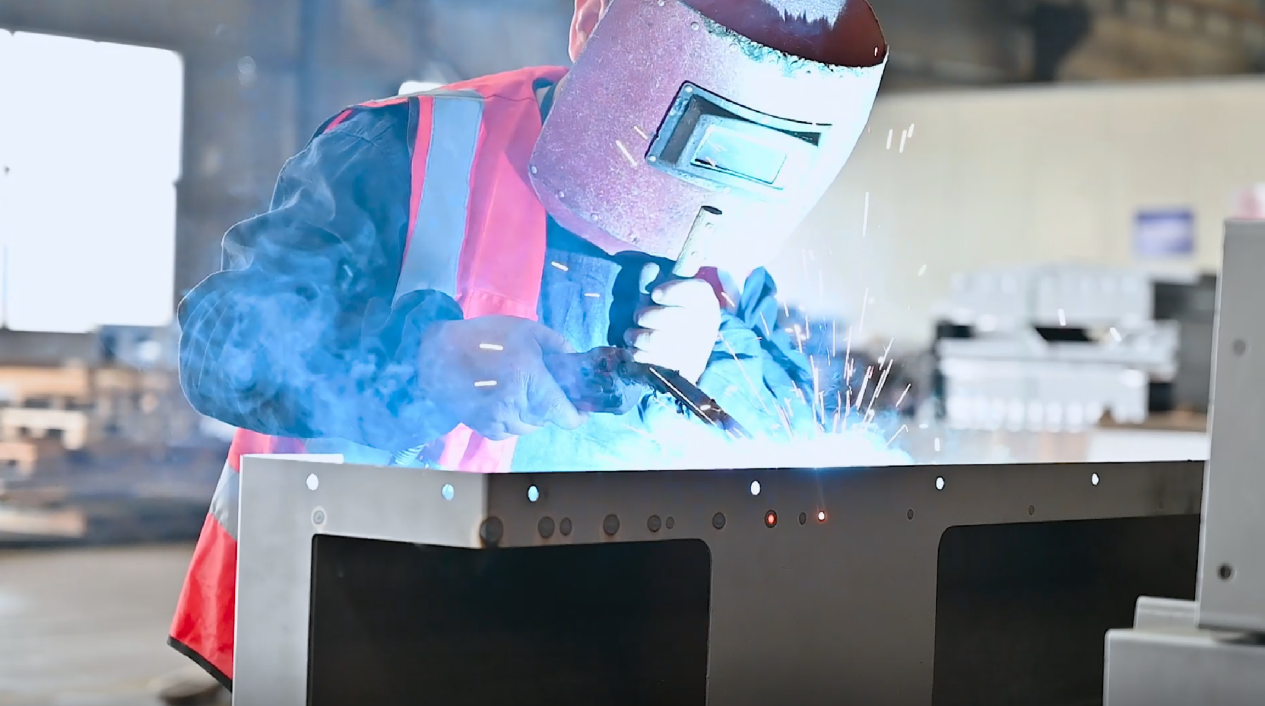
Advanced production lines in a modern OEM factory, such as those at MECCA POWER, enable efficient manufacturing of high-power custom generator sets.
4. Due Diligence and Final Verification Steps
- Factory Audit (Virtual or On-site): Request a live tour or detailed video of production facilities, testing bays (e.g., load bank testing), and quality control processes. Verify claims about capacity and technology.
- Certification Verification: Request copies of relevant certifications. For instance, a CE certificate indicates compliance with EU health, safety, and environmental standards. OEM partnership certificates (e.g., for Perkins, MTU) confirm authorized component sourcing.
- Reference Check: Ask for and contact 2-3 references from projects with similar scope and power requirements. Inquire about performance, fuel consumption accuracy, noise levels, and support responsiveness.
- Total Cost of Ownership (TCO) Analysis: Compare suppliers based on initial cost, estimated fuel consumption (low fuel consumption diesel genset), maintenance costs, and expected lifecycle. The cheapest capex can lead to the highest opex.
Pro Tip for EPC Contractors: When evaluating a turnkey power generator supplier, scrutinize their project management methodology. Do they provide detailed single-line diagrams, civil layout drawings, and a clear commissioning protocol? A supplier like MECCA POWER, which cites extensive domestic and international EPC project experience, should demonstrate a structured process from design to application support, reducing integration risks on your site.
5. Conclusion: Building a Partnership, Not Just a Transaction
Selecting an industrial diesel generator supplier is a strategic decision. The optimal partner is one whose capabilities align precisely with your project's technical demands, environmental challenges, and commercial goals. Whether you prioritize the global service footprint of a Cummins, the engine technology of an MTU, or the high-capacity, customizable manufacturing and EPC expertise of an OEM like MECCA POWER, rigorous evaluation using this framework will mitigate risk and ensure a reliable power solution.
The market is evolving towards smarter, more efficient, and integrated power systems. Partnering with a forward-thinking manufacturer that invests in R&D, digital production systems (like APS+MES), and can deliver certified solutions for high-end scenarios will future-proof your investment.
For Further Information
This guide is intended for educational and procurement strategy purposes. When conducting specific supplier evaluations, direct engagement is recommended.
Example of a Specialized OEM Manufacturer: MECCA POWER is a diesel generator OEM with self-owned factories in Fujian and Jiangxi, China. It offers a range from 10kVA to 4000kVA+, integrates top-tier components (Cummins, Perkins, MTU, Stamford, etc.), and provides EPC project support. For detailed specifications, certifications, or to discuss project requirements, you can visit their website at www.meccapower.com.cn or contact them via Phone/WhatsApp: +86 15659994455 or Email: mecca@meccagen.com.