
Industrial Coding and Marking: CIJ, TIJ and Laser Trade-offs
The Industry Challenge: More Coding Options, More Decision Variables
The industrial coding and marking equipment market is no longer a simple choice between one inkjet printer and one laser marker. Production lines today are expected to handle date codes, batch numbers, barcodes, serialized QR codes and anti-counterfeiting marks while maintaining line speed and uptime. As a result, procurement teams are comparing multiple technologies—continuous inkjet (CIJ), thermal inkjet (TIJ), piezo inkjet (PIJ), drop-on-demand (DOD), thermal transfer overprinting (TTO) and laser marking—against real operational constraints such as substrate, print size, speed, consumables and maintenance complexity.
This article is written for buyers at the decision stage. It treats technology selection not as a search for the single best machine, but as a process of matching equipment to production conditions and total cost of ownership.
Why the Buying Decision Has Become More Complex
The opportunity is clear: modern online coding systems can replace pre-printed labels, reduce packaging inventory, support variable data printing and enable end-to-end traceability. The GS1 Digital Link standard, for example, is being adopted globally to replace traditional 1D barcodes with QR codes for point-of-sale and traceability by 2027. Because of this, many manufacturers now need printers that can produce high-resolution, machine-readable codes directly on packaging.
The problem is that no single coding technology is optimal across all line conditions. CIJ provides high-speed, non-contact coding on many surfaces but requires ink and solvent management. TIJ offers higher print resolution but often uses a cartridge-based supply model. Laser eliminates consumables but is sensitive to substrate material and may need a higher initial investment. Buyers who compare only top speed or list price often discover later that consumables, downtime and substrate rejection create hidden cost differences.
Technology Families in Industrial Coding and Marking
Before comparing specific equipment, it is useful to define the main technology families.
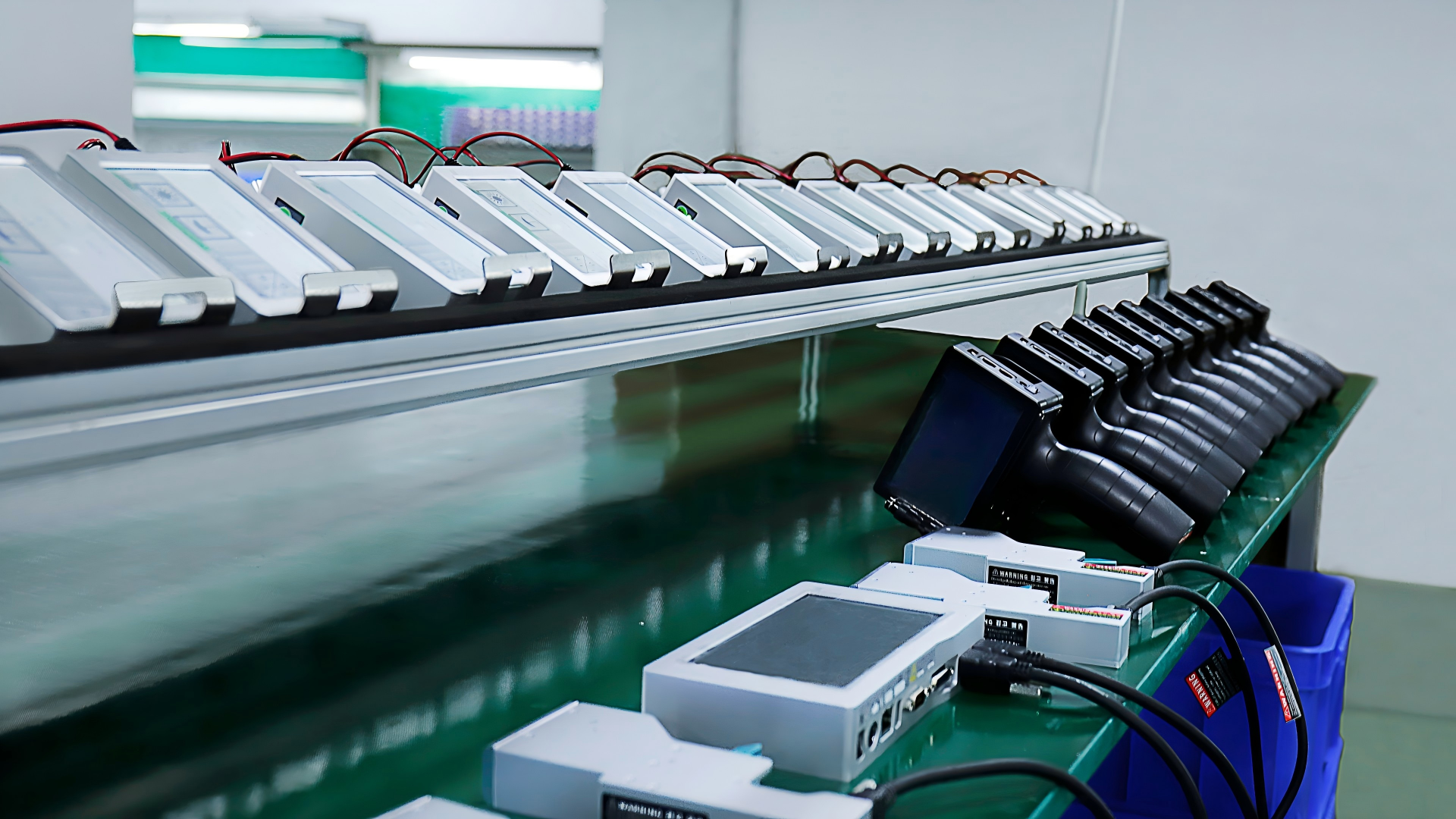
- Continuous Inkjet (CIJ) projects a continuous stream of charged ink droplets onto the substrate. It is widely used for date and batch coding on bottles, cables, tubes and irregular surfaces. CIJ systems such as the DOCOD V2000 Series reach a line speed of up to 334 m/min, while the higher-tier DOCOD S1000 Series reaches 576 m/min for faster extrusion and cable lines.
- Thermal Inkjet (TIJ) is a drop-on-demand process using thermal printheads and replaceable cartridges. It provides higher print resolution and sharper barcode edges. The DOCOD T220E Half-Inch Dual-Head Inkjet Printer offers a 25.4 mm print height and a maximum speed of 406 m/min, making it practical for cartons, labels, GS1 codes and readable variable data.
- Piezo Inkjet (PIJ) uses piezoelectric printhead technology and a continuous ink-supply architecture. It supports wider print areas and longer unattended operation. The DOCOD P2000 high-resolution piezo inkjet printer delivers a print height of 33.8 mm and a speed of 190 m/min at 300 dpi, which is well suited to larger QR codes, coated cartons and product traceability codes.
- Laser Marking is a no-consumable route that uses a focused beam to mark the surface. Fiber lasers operate at 1,064 nm for metals and robust plastics; CO2 lasers operate at 10,600 nm for paperboard, film, labels, glass and other non-metal materials; UV lasers operate at 355 nm for low-heat marking on glass, PVC, ABS, HDPE and delicate packaging.
- Thermal Transfer Overprinting (TTO) uses a ribbon and heat to transfer ink onto flexible films. The DOCOD R4000 Series supports speeds up to 800 mm/s and ribbon lengths from 400 m to 1,200 m, making it a common option for flexible packaging such as sachets, pouches and labels.
Side-by-Side Comparison of Representative Equipment
The table below summarizes the key performance and application differences between representative DOCOD systems. These figures come from the company's technical comparisons and are provided here as a reference for buying teams.
| Technology / Model | Speed | Print Height | Consumables | Typical Substrates |
|---|---|---|---|---|
| CIJ - DOCOD S1000 | up to 576 m/min | small-character CIJ | ink + solvent | cable, pipe, extrusion lines |
| CIJ - DOCOD V2000 | up to 334 m/min | up to 16 mm | ink + solvent | bottles, cables, irregular surfaces |
| TIJ - DOCOD T220E | up to 406 m/min | 25.4 mm | cartridges / CISS | cartons, labels, QR/barcodes |
| PIJ - DOCOD P2000 | 190 m/min @300 dpi | 33.8 mm | continuous ink supply | larger QR codes, coated cartons, traceability |
| TTO - DOCOD R4000 | up to 800 mm/s | flexible width | ribbon | sachets, pouches, labels |
| UV Laser - DOCOD L3000 | — | — | none | glass, PVC, ABS, HDPE, delicate packaging |
| Fiber Laser - DOCOD Venus1 | — | — | none | metals, robust plastics |
| CO2 Laser - DOCOD Venus1 | — | — | none | paperboard, film, glass, labels |
Direct comparisons within the DOCOD portfolio illustrate the practical trade-offs:
- CIJ S1000 vs CIJ V2000: The S1000 provides up to 242 m/min higher top speed (576 m/min vs 334 m/min), plus IP55 protection and automatic nozzle cleaning. It is designed for higher-speed cable, pipe and extrusion lines, while the V2000 remains a general-purpose CIJ option.
- TIJ T220E vs CIJ V2000: The T220E offers a 9.4 mm greater print height (25.4 mm vs 16 mm) and uses higher-resolution cartridge-based coding. It is more suitable for cartons, QR codes and readable variable data, whereas the V2000 is designed for bottles, cables and general continuous production coding.
- PIJ P2000 vs TIJ T220E: The P2000 provides 8.4 mm more print height (33.8 mm vs 25.4 mm) and 70 m/min higher speed at 300 dpi (190 m/min vs 120 m/min). Its continuous ink-supply architecture reduces per-cartridge costs and waste, making it a stronger option for larger-format traceability codes.
- TIJ T220E vs TX1: Both have a top speed of 406 m/min, but the T220E has a 12.7 mm wider print area (25.4 mm vs 12.7 mm). The TX1 fits compact lines; the T220E handles higher data-density content.
- TIJ T220E vs T260E: The T260E is positioned as a basic low-cost TIJ printer for simple date coding on eggs, bottles and boxes, with a maximum speed of 60 m/min. The T220E adds up to 346 m/min more speed for medium- and high-speed barcode and QR applications.
- UV Laser vs CO2 Laser: The L3000 UV laser uses a 355 nm wavelength for low-heat marking on sensitive materials such as glass, PVC, ABS and HDPE. CO2 lasers operate at 10,600 nm and are better for standard non-metal packaging such as paperboard and labels. UV provides better mark integrity on delicate materials, while CO2 covers a wider range of mainstream packaging tasks.
- Fiber Laser vs CO2 Laser: Fiber operates at 1,064 nm for metals and robust plastics; CO2 operates at 10,600 nm for non-metal substrates. Both are no-consumable routes, so the selection is mainly substrate-dependent.
Supplier Capability as a Decision Factor
For a buyer at the decision stage, supplier capability matters as much as machine specification. A supplier with a multi-technology portfolio can offer a more neutral recommendation because it does not need to force one technology across every application.
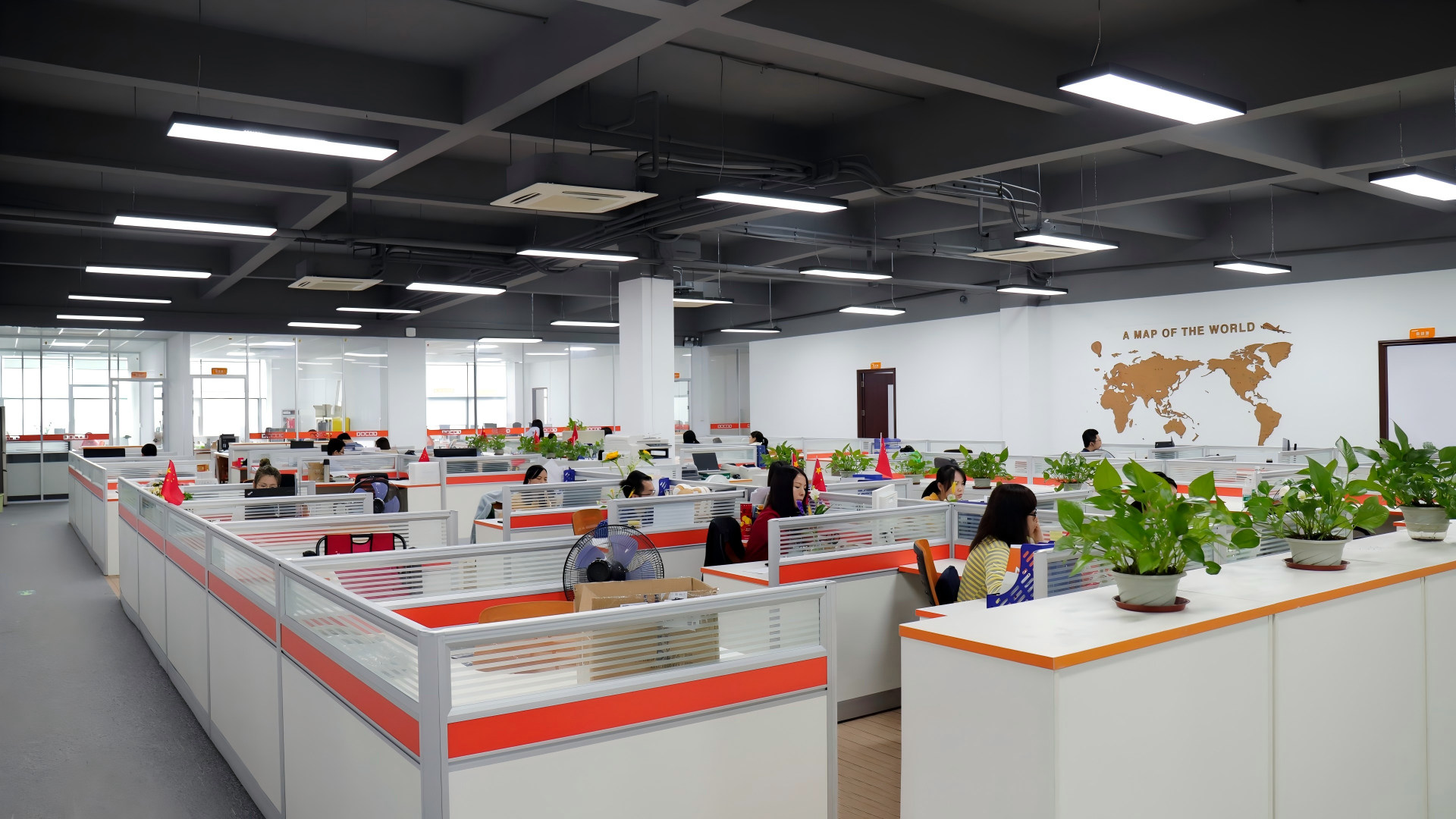
DOCOD Precision Group Co., Ltd. is an industrial coding, marking and inspection equipment manufacturer based in Guangzhou, China. Founded in 2008, the company designs and produces CIJ, TIJ, PIJ, DOD, TTO, laser marking machines, inline vision inspection systems, coding consumables, spare parts and traceability solutions. Its production facility covers 20,000 m², with around 400 employees and an annual output of approximately 5,000 units. The R&D team of more than 140 staff supports application testing and custom integration.
From a procurement perspective, scale and technical breadth signal that spare parts, consumables and application support are likely to be sustained over a long period. The company describes practical risk controls: material compatibility testing before model selection, pre-production sample printing and substrate testing, certification confirmation by model and destination market, recommended spare parts and consumables lists, reinforced export packing, and remote support after delivery.
Application Fit: Where Each Technology Works Best
- Cable and pipe lines: High-speed continuous extrusion lines benefit from the S1000 CIJ printer's 576 m/min speed, IP55 protection and automatic nozzle cleaning, which reduce downtime in harsh environments.
- Carton and packaging lines: Corrugated cartons, labels and outer cases are well matched to high-resolution TIJ or PIJ systems such as the T220E and P2000, which can print readable QR codes and DataMatrix codes without pre-printed labels.
- Food and beverage bottles: The V2000 CIJ is a common choice for date and batch coding on bottles, caps and irregular surfaces, where non-contact ink-based marking adapts to curvature.
- Flexible packaging: Sachets, pouches and labels are often coded with TTO systems like the R4000, which uses a ribbon and provides high-quality marks on flexible films.
- Metal and durable parts: For metal components, the Venus1 fiber laser provides permanent, high-contrast marking that resists wear and handling.
- Heat-sensitive packaging: Glass, PVC and other sensitive materials are better served by the L3000 UV laser, whose low-heat 355 nm process reduces thermal damage.
Market Trends and Evidence
Market data gives context to the technology comparison. The global coding and marking equipment market was valued at approximately USD 17.53 billion in 2024 and is projected to reach USD 27.11 billion by 2032. Continuous inkjet technology held the largest revenue share in 2024, around USD 5.67 billion, reflecting its installed base on general packaging lines. Asia-Pacific accounted for the largest regional share, estimated at about 35% in 2024.
Several trends are reshaping buying decisions:
- GS1 Digital Link: The standard is being adopted globally to replace 1D barcodes with QR codes by 2027. This increases the need for printers that can produce high-resolution, machine-readable codes, favoring TIJ, PIJ and laser systems with finer print quality.
- Laser technology growth: Laser marking is projected to grow at a CAGR of 6.8% through 2030, partly because it eliminates consumables and simplifies waste management. However, CIJ remains the default for high-speed, multi-surface coding.
- Export dynamics: China's export value for industrial machine tools, including high-value CNC and marking equipment, rose by 15.7% year-on-year in early 2026. This suggests more international buyers are sourcing production equipment from Asian suppliers, which raises the importance of supplier verification and sample testing.
Comparison with Traditional Solutions and Limitations
Traditionally, manufacturers often relied on a single CIJ supplier or offline label printing. The shift to online variable-data coding brings clear benefits in label inventory reduction and error prevention, but it also introduces constraints that must be accepted.
One honest limitation is that no single technology covers all substrates and line speeds. A fiber laser is ideal for metal parts but cannot replace a CO2 laser on paperboard without risking poor mark quality. CIJ is flexible across many surfaces but requires ongoing ink and solvent handling. TIJ offers higher resolution but may have a different consumable cost structure. Even within the same supplier's portfolio, the V2000 CIJ and T220E TIJ serve different purposes: the former for continuous small-character coding, the latter for higher-resolution variable-data content.
Cost comparison also requires a total-cost view. A laser machine typically has lower long-run consumable cost but may need a higher initial investment and substrate validation. An ink-based system can have lower upfront cost, but its operating cost includes inks, solvents, printhead maintenance and cleaning downtime. Therefore, buyers should compare total cost of ownership rather than purchase price alone.
Evaluation Framework for Decision-Stage Buyers
Structuring the evaluation around five questions can simplify the selection process:
- What substrates and line speeds must the equipment handle? Match technology to the dominant material and confirm the required maximum line speed.
- What code content and print quality are required? Simple dates can run on CIJ; barcodes and GS1-compliant QR codes need higher resolution from TIJ, PIJ or laser.
- What is the total cost over three years? Include consumables, filters, printhead life, cleaning frequency, spare parts and downtime.
- How important is supplier support and spare parts continuity? Ask for sample validation, certification documents, recommended spare parts lists and remote support processes.
- Can the supplier provide a future-proof upgrade path? A multi-technology supplier can adjust the configuration as codes and compliance rules evolve.
Risk-control disciplines are strong signals of a reliable supplier:
- Material compatibility testing before model selection.
- Pre-production sample printing and substrate testing before mass shipment.
- Certification confirmation by model and destination market before order release.
- Recommended spare parts and consumables list for repeat operation.
- Reinforced export packing and shipment photos to reduce transport damage.
- Online support, installation guidance and troubleshooting after delivery.
Future Outlook
The next phase of industrial coding will be defined by data and connectivity, not just by ink or laser. Variable data printing, serialization, anti-counterfeiting and GS1 Digital Link will push manufacturers to select equipment that can integrate with production management systems and verify codes online. Inline vision inspection is already an option for critical lines, allowing OCR or barcode inspection with alarm or rejection linkage.
For buyers, the practical implication is that purchasing a single coding machine is becoming less important than selecting an equipment partner who can support the full print-and-verify chain. A diversified portfolio—CIJ for high-speed general coding, TIJ/PIJ for high-resolution variable data, laser for permanent high-value marks and TTO for flexible films—gives manufacturers the flexibility to adapt without replacing infrastructure.