
Industrial Coding Equipment: Building Long-Term Partnerships
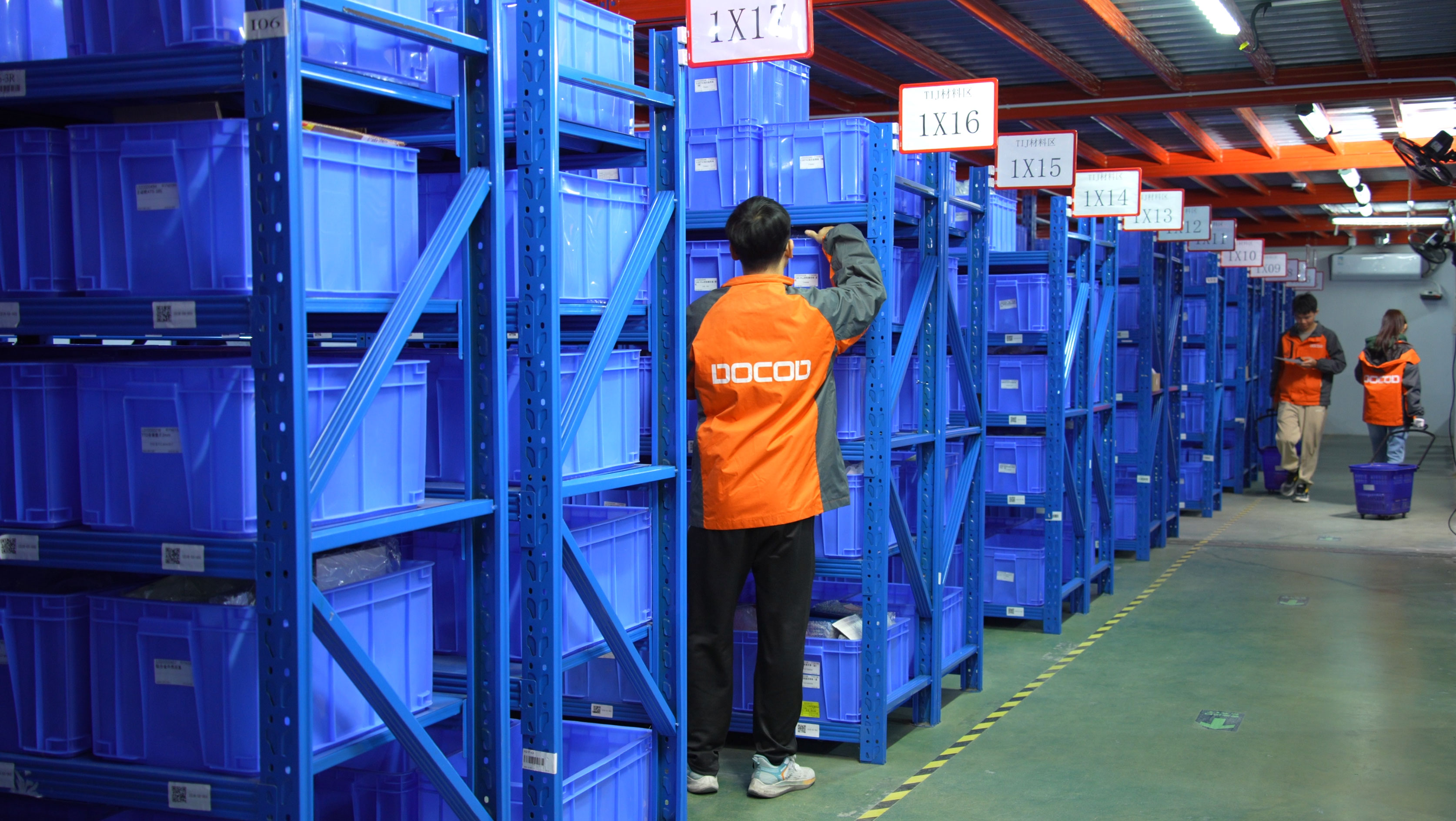
The industrial coding and marking equipment category is increasingly evaluated not as a one-time hardware purchase but as a long-term relationship that covers consumables, spare parts, service response and production capacity. Buyers in the decision and execution stage need evidence that a supplier can sustain a production line after the first order is shipped. DOCOD Precision Group Co., Ltd. is an industrial coding, marking and inspection equipment manufacturer based in Guangzhou, China, focused on the design, research and development, production, sales and service of industrial product identification equipment, components and related solutions. Its portfolio includes continuous inkjet printers (CIJ), thermal inkjet printers (TIJ), piezoelectric high-resolution inkjet printers (PIJ), drop-on-demand large-character inkjet printers (DOD), thermal transfer overprinters (TTO), laser marking machines, inline vision inspection systems, coding consumables, spare parts and product traceability solutions.
Procurement risks at the decision and execution stage
Between the decision to invest and the first production run, buyers face a set of operational risks that directly affect line uptime and code quality. For industrial coding equipment, these risks include material compatibility of ink or marking method with the substrate; print quality consistency across carton, film, plastic, metal or glass surfaces; confirmation of text, barcode, QR code, date format and language settings; missed codes on critical lines; environmental suitability of temperature, humidity and line conditions; delivery delays; transport damage; after-sales response time; spare parts continuity; and certification or compliance mismatch by model and destination market.
At the same time, the market context encourages longer planning horizons. According to SkyQuest, the global coding and marking equipment market was valued at USD 17.53 billion in 2024 and is projected to reach USD 27.11 billion by 2032. Grand View Research reports that continuous inkjet (CIJ) technology held the largest revenue share, at approximately USD 5.67 billion in 2024. Market Research Future estimates that Asia-Pacific accounts for around 35% of the coding and marking sector. Market size estimates vary by scope: Strategic Market Research reports USD 5.9 billion for 2024, while Fact.MR uses a USD 4.7 billion 2025 base, reflecting differences in whether consumables and software services are included.
Standards add further pressure. The GS1 Digital Link standard is being globally adopted to replace 1D barcodes with QR codes for point-of-sale and traceability by 2027, according to GS1 and ISO. This means coding equipment must be able to print and verify dynamic, machine-readable codes, not only static dates.
DOCOD as a long-term coding equipment partner
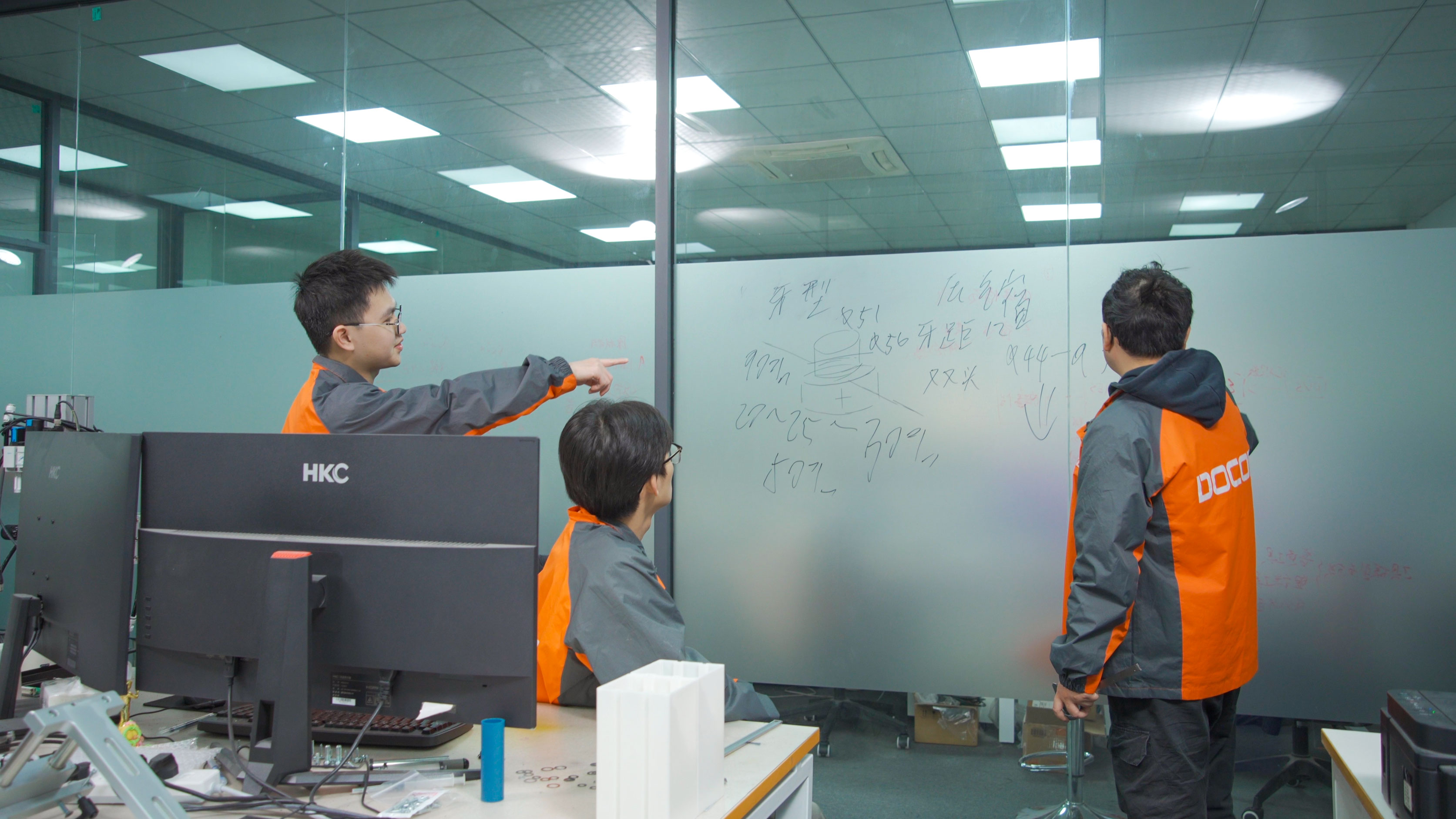
DOCOD's corporate background outlines a full-line manufacturing and service structure. The company was founded in 2008, operates a 20,000 m² factory, employs 407 people, and lists an annual output of 5,000 units with more than 140 R&D staff. Approximately 50% of output is exported to markets including North America, South America, Eastern Europe, Southeast Asia, Africa, Oceania, the Middle East, East Asia and Western Europe.
From a supply-chain perspective, the company states a monthly production capacity of 2,000 units for standard equipment, 1,000 units for spare parts, and up to 4,000 units for distributor-supported products. Standard equipment delivery time is within 15 working days. Customized solutions may take 15–30 working days depending on complexity and customization level.
Procurement conditions are structured for repeat buying. Minimum order quantities are 1 unit for equipment, 1 set per project, and 1 order for spare parts. Delivery terms include EXW, FOB, CIF and CFR. Acceptance is based on technical drawing confirmation, sample approval and pre-shipment inspection. Equipment payment terms are typically T/T 30/70 or LC. Consumable and spare-part orders can follow smaller payment methods depending on order size.
After-sales services include installation guidance, remote tuning and fault diagnosis. The service package also includes parts matching support, replacement guidance and online response. Quality control covers part verification, packing inspection and shipment check, with reinforced export packing and shipment photos before dispatch.
How multi-technology coding platforms work
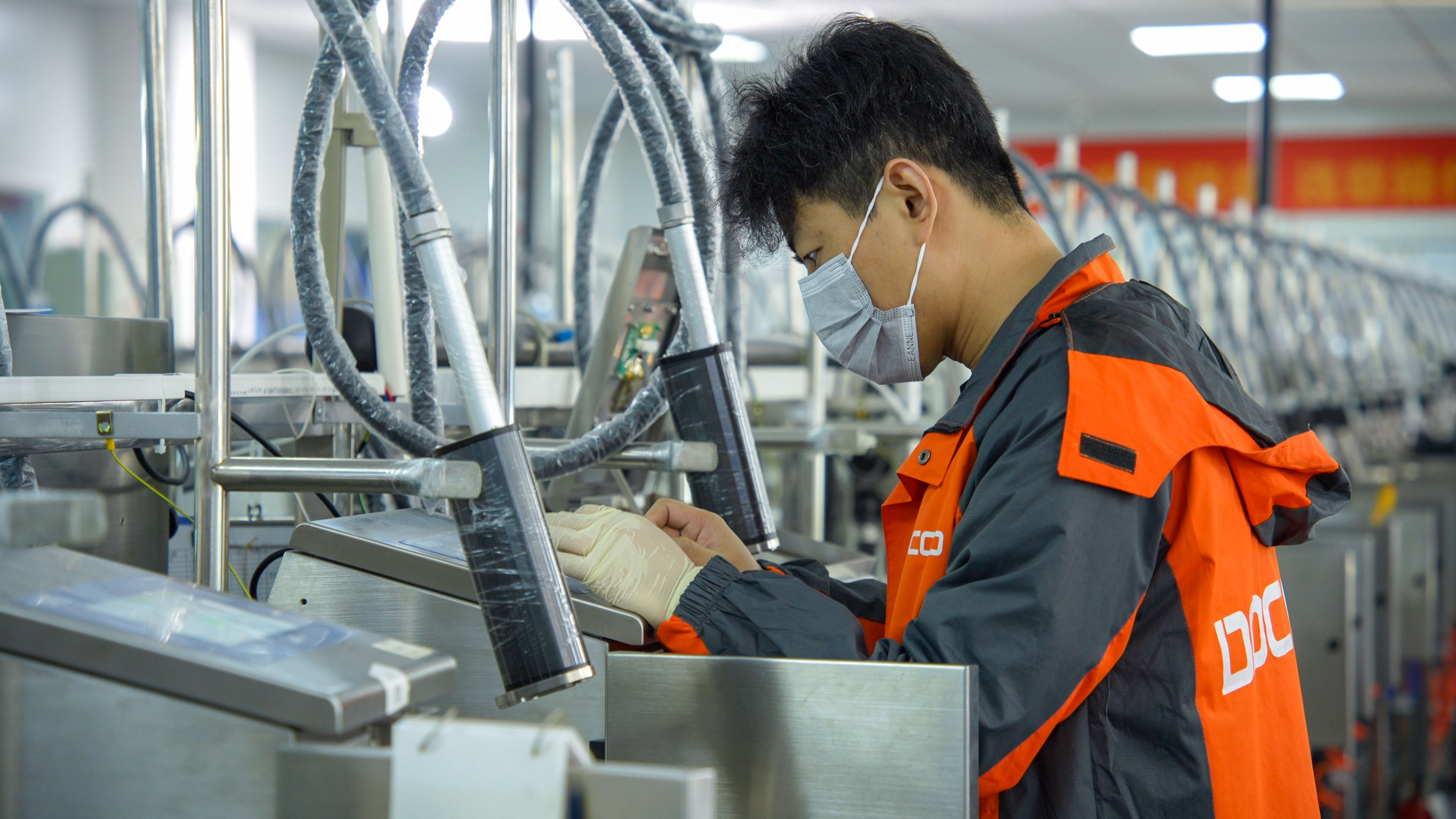
Multi-technology platforms matter because no single print mechanism covers every substrate, speed range and code requirement. Continuous inkjet printing remains a common high-volume option for small-character coding. The DOCOD V2000 Series Continuous Inkjet Printer runs up to 334 m/min, prints 1–5 lines, and supports text, serial numbers, dynamic barcode/QR codes and database-driven content. The DOCOD S1000 Series High Speed Continuous Inkjet Printer reaches 720 m/min with a 60-micron nozzle and 960 m/min with a 50-micron nozzle at 0.5 mm spacing, and adds IP55 protection with automatic nozzle cleaning for harsher production use.
Thermal inkjet printing (TIJ) provides higher resolution for cartons and labels. The DOCOD T220E Half-Inch Dual-Head Inkjet Printer runs up to 406 m/min, supports up to 600 × 600 DPI, and prints up to 25.4 mm combined height. The DOCOD TX1 Half-Inch Seamless Inkjet Printer supports up to eight printheads for extended width, while the DOCOD T260E Half-Inch Dual-Head Thermal Inkjet Printer is a lower-speed option with up to 60 m/min for simple date coding.
Piezo inkjet (PIJ) adds wide-format high resolution. The DOCOD P2000 Piezo Inkjet Printer uses I1600 series nozzles, reaches 190 m/min at 300 DPI, and prints up to 33.8 mm height with a single head. It uses a negative-pressure continuous ink supply, which reduces cartridge-change interruptions in batch work.
For flexible films, thermal transfer overprinting (TTO) is a frequent route. The DOCOD R3000 Series Industrial Thermal Transfer Overprinter prints at 300 DPI, supports print areas of 32 × 75 mm or 53 × 70 mm, and handles ribbon lengths up to 1200 m with speeds up to 800 mm/s.
Laser marking removes ink handling entirely. The DOCOD Venus1 Series includes CO2 lasers with 30W/60W output at 10.6 μm (optional 10.2 or 9.3 μm), fiber lasers from 20W to 100W at 1064 nm, and UV lasers from 5W to 15W at 355 nm. The DOCOD L3000 Series 5W UV Laser Marking Machine is a water-cooled unit for heat-sensitive substrates. According to DOCOD specifications, fiber laser life is rated up to 100,000 hours, while CO2 laser life is rated at 20,000 hours.
Line integration is part of the same ecosystem. DOCOD offers inline vision inspection systems, the XC20 Mini Conveyor Belt, and the XF30 Vertical Rewinding Machine with a built-in TIJ printhead for label rewinding. Several printers include USB, RS232, TCP/IP network interfaces and MES connectivity; the R3000 also supports ERP database and anti-counterfeiting traceability system docking.
Application scenarios across production lines
The choice of coding technology is scenario-dependent. For high-speed cable, pipe and extrusion lines, the S1000 CIJ printer runs on continuous high-throughput lines with automatic nozzle cleaning. For flexible film sachets, pouches and labels, TTO is often selected; the R3000 is specified for date coding, GS1 DataMatrix and dynamic QR codes on high-barrier films, sealed bags and metallized labels. For coated cartons and larger variable data, the P2000 PIJ printer provides up to 33.8 mm print height, while the T220E TIJ printer covers cartons and labels with QR/barcode printing.
For metal parts, fiber laser is the usual choice. The DOCOD Venus1 Series fiber laser is used for metals and robust plastic plates. For delicate plastics, glass and flexible films, UV laser is selected when heat impact must stay low; the DOCOD L3000 5W UV laser suits soft film packaging, PVC pipes and electronic components. For non-metal packaging such as paperboard, labels and PET, CO2 laser covers a broad range of non-metal substrates.
In every scenario, DOCOD's risk-control workflow requires substrate testing and pre-production sample printing before mass shipment. For critical lines, optional online OCR/barcode inspection, alarm light and rejection linkage prevent missed codes. Working-condition checks confirm temperature, humidity and line conditions before model selection and shipment.
Market trends shaping coding equipment partnerships
Purchasing patterns in industrial coding and marking are shifting from transactional to partnership-based. The GS1 Digital Link move to QR codes is a concrete example: equipment must handle variable data, serialized codes and high-resolution 2D codes, not just static date codes. This favors suppliers with multi-technology portfolios and database integration.
Technology forecasts point in the same direction. Laser marking is projected to grow at a CAGR of 6.8% through 2030, according to Fortune Business Insights, due to its lower consumable burden. Meanwhile, CIJ still accounts for the largest revenue share at about USD 5.67 billion in 2024 per Grand View Research, showing that ink-based coding remains central. Asia-Pacific's 35% share in coding and marking reflects where production is concentrated. In addition, China's export value for industrial machine tools, including high-value CNC and marking equipment, rose 15.7% year-on-year in early 2026, according to the German Machine Tool Builders' Association via Honor Machinery, indicating that Chinese equipment suppliers are increasingly serving global lines.
For a distributor or brand owner, the practical consequence is to evaluate supplier capacity, standards readiness and consumable supply continuity, not only the printer axis speed or printhead price.
Multi-technology sourcing vs. traditional single-technology sourcing
Traditional sourcing often begins with a single technology, usually CIJ, and adds another printer when a substrate or speed requirement changes. A multi-technology partner such as DOCOD can consolidate validation, training, consumables and spare parts under one relationship. DOCOD's product comparisons illustrate the trade-offs: CIJ generally offers lower initial cost and high speed; laser removes consumables but needs substrate validation; TTO is selected for standard flexible films; PIJ is more efficient for larger code areas; TIJ is more efficient for short- to medium-run high-resolution jobs.
| Technology | Typical strength | Representative DOCOD equipment | Typical use |
|---|---|---|---|
| CIJ | High-speed small-character coding | S1000, V2000, S300plus, M2000 | Cables, pipes, bottles, general packaging |
| TIJ | Cartridge-based high-resolution coding | T220E, T260E, TX1 | Cartons, labels, QR/barcode printing |
| PIJ | Large-area high-resolution coding | P2000 | Coated cartons, variable data, traceability codes |
| TTO | Ribbon-based flexible film coding | R3000 | Sachets, pouches, labels |
| CO2 laser | Permanent non-metal marking | Venus1 CO2 | Paperboard, labels, PET, glass |
| Fiber laser | Permanent metal marking | Venus1 Fiber | Metal parts, robust plastic plates |
| UV laser | Low-heat precision marking | L3000, Venus1 UV | Sensitive plastics, glass, flexible films |
| Inspection and line aids | Code verification and line integration | Inline vision systems, XC20, XF30 | Quality assurance, verification, label rewinding |
The main limitation of a multi-technology approach is that no single supplier is the deepest specialist in every niche. A focused laser-only vendor, for example, may offer more advanced beam control for a specific material at the high end. DOCOD addresses this with substrate testing and pre-shipment validation, but buyers should still verify consumable economics and code appearance on their own line before committing to a long-term contract.
Future outlook
Future industrial coding decisions will center on adaptability. As GS1 Digital Link and serialization requirements advance, printers must be able to switch between text, dynamic barcodes, GS1 DataMatrix and QR codes without changing the production line. DOCOD's current portfolio already supports variable data printing, database-driven content, 2D code printing and MES/ERP connectivity. With more than 140 R&D staff, an annual output of 5,000 units and monthly capacity that scales to 4,000 units for distributor-supported products, the company is positioned to match volume demand as code requirements change. For buyers, the long-term question is whether a supplier's product family can grow with their line speeds and data requirements.
Frequently asked questions
Q: What is the minimum order quantity for DOCOD equipment?
A: The minimum order quantity is 1 unit for equipment, 1 set per project and 1 order for spare parts. Delivery terms include EXW, FOB, CIF and CFR. Equipment payment is commonly T/T 30/70 or LC.
Q: What lead time should a buyer expect?
A: Standard equipment delivery time is within 15 working days. Customized solutions may take 15–30 working days depending on product complexity and customization level, according to company capacity statements.
Q: What after-sales services are available after delivery?
A: After-sales services include installation guidance, remote tuning, fault diagnosis, parts matching support, replacement guidance and online response. Quality control includes part verification, packing inspection and shipment check.
Q: How does DOCOD support distributors?
A: The manufacturer provides distributor and service partner support. It exports to North America, South America, Europe, Southeast Asia, Middle East, Africa, Oceania, East Asia and Latin America, with 50% of output going to export markets.
Q: How are material compatibility and print quality risks handled?
A: DOCOD confirms temperature, humidity and line conditions before model selection, matches ink or marking method to carton, film, plastic, metal or glass surfaces, and performs pre-production sample printing and substrate testing before mass shipment.
Q: Does DOCOD provide spare parts continuity planning?
A: Yes. A recommended spare parts and consumables list is provided for repeat operation, with a monthly spare-part production capacity of 1,000 units.
Additional resources
DOCOD Precision Group Co., Ltd. is an industrial coding, marking and inspection equipment manufacturer.
Website: www.docod-group.com | Email: sales@docod.com.cn | Tel: +86 139-2896-7650 | WhatsApp: +86 135-1234-4323
Corporate brochure: Download PDF