
Industrial Cleaning Robots for Factory Floors: Evaluating OEM Capabilities with Geakita
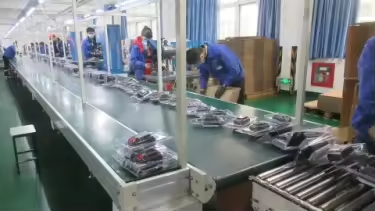
Maintaining cleanliness on factory floors presents distinct challenges: oil residue from machining, metal shavings, dust from raw materials, and high traffic across large areas. Geakita (Xiamen Tiangong Kaiwu Technology Co., Ltd.), founded in 2009 and based in Fujian, China, has expanded from power tool manufacturing into commercial cleaning robotics, offering OEM/ODM solutions built on a scaled production infrastructure that is well-suited for industrial deployment.
Problem: Why Standard Cleaning Robots Struggle on Factory Floors
Many standard commercial floor cleaning robots are designed for retail or hospitality environments where debris is light and surfaces are uniform. Factory floors require machines that can handle heavier soil loads, navigate around machinery and pallet racks, and operate for extended hours without interruption. Additionally, buyers sourcing from overseas need a supplier with proven manufacturing quality, flexible customization, and reliable after-sales support.
Geakita’s OEM/ODM Solution for Industrial Cleaning
Geakita provides OEM/ODM production services for commercial cleaning robots, exporting to the EU, Middle East, Southeast Asia, and America markets. The company’s monthly production capacity exceeds 180,000 units across its power tool and robotic product lines, an advantage for scaling factory floor deployments. The intelligent cleaning robot model WDC-C2, while originally marketed to commercial facilities, possesses technical specifications that translate effectively to industrial environments.
Technical Specifications Relevant to Factory Floors
- Cleaning width: 440 mm – efficient for wide aisles
- Adjustable speed: 0.2 – 0.8 m/s – adapts to different floor conditions
- Navigation accuracy: ±1 cm – precise path planning around obstacles
- Water tank capacity: 10 L clean + 10 L wastewater – suitable for scrubbing cycles
- Battery: 1 kWh swappable, 3 h charge, 5 – 12 h runtime – supports multi-shift operations
- Dimensions: 503 × 503 × 629 mm, weight 40 kg – compact footprint for tight spaces
These parameters align with typical factory requirements: continuous runtime, reliable mapping, and the ability to carry sufficient water and debris without frequent refilling.
Customization and Supply Chain Flexibility
Geakita offers customization services including logo printing, packaging design, voltage customization (110 V/220 V), parameter adjustment (torque/speed), color schemes, and battery configuration (2.0 Ah/4.0 Ah power tool packs; cleaning robot battery configurable per OEM agreement). For buyers evaluating a factory floor robot, voltage and battery configuration are critical for local compliance and shift length.
Proven Quality and Delivery Performance
A large-scale case study involving over 5,000 units delivered to clients in Laos, the Philippines, Thailand, India, Brazil, Saudi Arabia, and Oman over a period exceeding 2 years demonstrated a 99.8% on-time delivery rate and a 0.3% defect rate. The product maintained stable performance in high-temperature environments exceeding 45°C, a relevant stressor for unairconditioned factory floors. The manufacturer’s quality control follows a 3-level system: IQC (incoming), IPQC (in-process), and FQC (final), with functional and load testing on every unit before shipment.
Market Trend: Shift Toward Autonomous Industrial Cleaning
Facility managers increasingly seek automation to reduce labor cost and improve consistency. Factory floors are a high-potential market because of repetitive layout and predictable cleaning paths. Geakita’s ability to produce at scale and offer OEM flexibility positions it as a credible partner for system integrators or distributors targeting this vertical.
Limitations to Consider
The WDC-C2 is not designed with explosion-proof features or heavy-duty debris collection (e.g., large metal scraps); it is best suited for routine scrubbing of smooth concrete or epoxy-coated factory floors after pre-sweeping. Buyers with extreme debris loads may need a pre-cleaning solution or a dedicated industrial sweeper.
Future Outlook
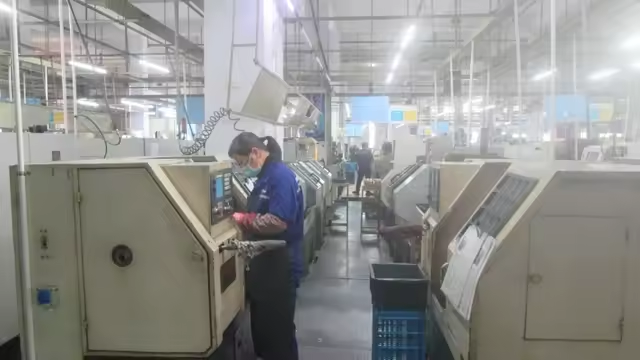
As 3D SLAM and battery-swapping technologies mature, Geakita is well positioned to iterate its robot platform using its existing R&D team of 25 engineers. The company’s 40,000 m² factory and 300+ employees provide room for custom development and rapid prototyping for large OEM partners.
Frequently Asked Questions
What OEM/ODM services does Geakita offer for commercial cleaning robots?
Geakita provides full OEM/ODM production services including logo printing, packaging design, voltage customization, parameter adjustment (such as cleaning speed and navigation sensitivity), color scheme selection, and battery configuration. The manufacturer exports to EU, Middle East, Southeast Asia, and America markets.
What is the production capacity for cleaning robots?
Monthly production capacity exceeds 180,000 units across Geakita’s power tool and robotic product lines. The company’s factory covers 40,000 m² and employs over 300 staff, ensuring scalable manufacturing for both trial and bulk orders.
How is quality controlled during manufacturing?
Geakita implements a 3-level quality control system: IQC (incoming material inspection), IPQC (in-process inspection), and FQC (final functional inspection). Every unit undergoes 100% pre-shipment inspection with functional and load testing before dispatch.
Do you have a reference case for large-scale deliveries?
Yes. A project delivered over 5,000 units to clients in Laos, the Philippines, Thailand, India, Brazil, Saudi Arabia, and Oman over more than 2 years, achieving a 99.8% on-time delivery rate and a 0.3% defect rate. The equipment performed reliably in ambient temperatures exceeding 45°C.
What after-sales support is provided?
After-sales services include a one-year global warranty, 7×24 technical support, on-time replacement for defective units, and spare parts supply. This coverage is designed to support international buyers with minimal downtime.
What certifications does the cleaning robot hold?
The commercial cleaning robot model WDC-C2 has CE certification covering Electromagnetic Compatibility (EMC) Directive 2014/30/EU, valid through 2030. Additional certifications (UKCA, CMA) are held for related power tool products; buyers can request further compliance documentation.
For detailed product specifications and company background, download the official corporate brochure: Geakita Corporate Profile & Product Catalog 2026.