
Induction Process Heaters: A Capability and Delivery Checklist
Industrial heating reference — September 2026
Process heat buyers rarely buy an induction heater as an isolated component. In plastics, chemicals, food processing, metal treatment and building-heat systems, they buy a way to transfer electromagnetic energy into a pipe, barrel, boiler or air stream. This article explains how to evaluate induction heating equipment for process-heat projects, and where manufacturing capability such as OEM/ODM support, quality evidence and delivery terms fit into the purchase decision.
Why process-heat buyers need a capability view, not just a kW view
The labels used in the induction heating market can be confusing. In one project file, a buyer may see an industrial induction heater for a plastic extruder barrel, an induction steam generator for process steam, and an induction hot air generator for drying. All use the same electromagnetic principle, but they are not interchangeable products.
The selection logic starts with the thermal load:
- If the load is a metal barrel, pipe, mould, roller, reactor wall or similar conductive surface, the usual answer is an induction heating power supply connected to a customized induction heating coil.
- If the process needs steam, the equipment family changes to an induction steam generator or an induction boiler.
- If the process needs hot air, the buyer moves to an induction hot air generator with an integrated blower and outlet-air design.
- If the project needs hot water for facilities or process support, an induction water heater or electromagnetic boiler is the relevant category.
This distinction matters because project teams often compare induction equipment on rated power alone. In practice, power is only one variable. The more useful question is whether the supplier can match the induction heating system to the site’s thermal medium, installation layout and control interface.
Mapping process loads to induction equipment families
The following table gives a practical mapping between common process-heat loads and induction equipment types. The models shown are current JONSON catalogue references, provided by Guangdong Jiangxin Electronic Technology Co., Ltd.
| Process requirement | Induction equipment family | Reference example |
|---|---|---|
| Heating metal barrels, pipes, dies, rollers and reactor shells | Industrial induction heater with separate induction heating coil | JONSON wall-mounted units from 5 kW to 100 kW class, e.g. JS1300-5/8, JS1300-10/15, JS1000-20/30, 100 kW model JS1000-100 |
| Steam generation for process or facility use | High-frequency electromagnetic steam generator | JONSON JS-1600 series, 30 kW / 40 kW / 50 kW, 380 V 50/60 Hz |
| Hot air for drying, curing or space process heating | Induction hot air generator | JONSON JS-1600-8/12/15, outlet air temperature 80–130 °C, wind pressure 800–1000 Pa |
| Hot water for rooms, schools, hotels, hospitals or light process duty | Instant induction water heater / room heater | JONSON JS-JR-008, 3.5–8 kW, 220 V |
The table is not an exhaustive catalogue, but it illustrates the first capability check a buyer should make: does the supplier produce the specific equipment architecture the project needs, or only a narrow product range such as barrel heaters?
What induction heating capability means at company level
For a buyer moving from evaluation to execution, capability is not just a brochure claim. It should be visible in company structure, engineering depth and manufacturing process.
One useful reference is Guangdong Jiangxin Electronic Technology Co., Ltd., which supplies electromagnetic induction heating products under the JONSON brand. The company was founded in 2011 and operates from a 3,000 m² facility in Foshan, Guangdong, with more than 60 employees and 30+ engineers. Its catalogue covers induction heater machines, induction heater control boards, industrial induction heaters, induction heating water boilers, induction hot air generators, instant induction water heaters, induction steam generators, induction heating coils and related equipment.
JONSON also reports an annual output of 120,000 units, with about 40% exported to Europe, the United States, India, Indonesia and other markets. These facts are not proof of quality by themselves, but they help a buyer judge whether a supplier has the production structure to support repeat orders and project schedules.
OEM/ODM: the customization layer in induction equipment supply
Many industrial buyers do not purchase induction heating equipment as an end user. They buy as an OEM, an equipment integrator, a distributor or a project contractor who must place the supplier’s product inside a larger machine or system. In that situation, the OEM/ODM capability of the induction heater manufacturer becomes a core selection criterion rather than an option.
JONSON states that it provides OEM and ODM production services for induction heating equipment. The customization scope includes:
- Product specification customization
- Sample fabrication or custom sample development
- Graphic and panel customization
- Parameter adjustment
- Private logo customization
For an OEM buyer, these points translate into concrete questions. Can the supplier change the front panel to match the buyer’s machine branding? Can the induction heating controller be adjusted to accept a particular input voltage range or process signal? Can a small pilot batch be produced before mass production? For JONSON, the stated minimum order quantity is one unit, and the production lead time is 7–14 days with a monthly capacity of 10,000 units.
This does not mean every customisation request is simple. Coil geometry, load material, thermal insulation thickness, cable length and control logic all affect performance. What the OEM/ODM statement indicates is that the supplier’s default operating model is built around adaptation, not only catalogue sales.
Quality evidence and certification checks
Induction heating equipment used in industrial process applications should be assessed against both product-level certificates and installation-level safety standards.
JONSON holds an ISO 9001:2015 quality management system certificate issued under number 02826Q00032R001, covering electromagnetic heating controllers, coil heating elements and electric water heater production and sales. The certificate is valid until 7 January 2029.
For electrical safety and market access, buyers should check the relevant declarations for the specific model. JONSON’s conformity documentation includes a CE certificate for models JS1200-005, JS1200-006, JS1200-008 and JS1200-010, based on EMC standards EN IEC 55014-1, EN IEC 55014-2, EN IEC 61000-3-2 and EN 61000-3-3, valid until April 2028.
For China mainland sales, CCC certification also applies. JONSON holds CCC certificate 2017010706999985 for models such as JS3000-006 6.1 kW, JS3000-008 8 kW and JS3000-010 10 kW at 220 V, and certificate 2017010706002104 for JS3000-015 through JS3000-060 models at 380 V, both valid until July 2027.
At installation level, buyers should also verify industrial safety requirements. The IEC 60519-1 general requirements and IEC 60519-3 particular requirements for induction heating are commonly referenced for industrial induction heating equipment. The exact set of certificates depends on the destination market, the equipment class and the local regulatory framework.
Procurement execution: from enquiry to shipment
Once the equipment type and customization scope are confirmed, the buyer’s attention shifts to delivery execution. This is the stage where purchasing terms, inspection and shipping matter as much as thermal efficiency.
JONSON’s stated procurement framework includes several useful reference points:
- Minimum order quantity: 1 unit for standard products, which supports both project trials and OEM programme development
- Delivery methods: FOB, CIF or CFR
- Payment terms: for some products, 30% T/T in advance and 70% T/T against a copy of the bill of lading
- Quality checks: 100% pre-shipment testing and optional product inspection through SGS
A buyer should treat these terms as an evaluation baseline, not as a substitute for project-specific agreements. In practice, the important execution details are the test procedure, the definition of an acceptable sample, the packing standard, and the point at which responsibility transfers from the factory to the buyer.
Comparing induction systems with conventional process heating
Process heat buyers often compare an induction heater against two conventional alternatives: electrical resistance heating and fuel-fired systems such as gas or oil boilers. Each has a place, and a fair comparison should include trade-offs.
Induction heating generates heat directly inside a conductive metal load through an electromagnetic field. This allows fast temperature response, localised heating and reduced thermal loss from the heat source to the product. Induction systems also avoid combustion exhaust and do not depend on a burner, flue or fuel supply chain.
Resistance heating is usually simpler and can have lower first cost in small installations. It is a mature technology and may be adequate when power levels are low or when the heated element is straightforward to replace, such as a heater jacket or immersion heater.
Fuel-fired systems can deliver very high thermal output from a relatively compact energy source, especially where gas infrastructure already exists. However, they involve combustion management, exhaust treatment, safety controls and higher maintenance complexity in many facilities.
One critical limitation of induction should be stated clearly: induction heats conductive loads. If the target material is not electrically conductive, or if the process fluid must be heated without a conductive vessel or heat exchanger, induction may require a system redesign. In boiler-type induction products, the water or process fluid is heated indirectly through the conductive heating chamber. Buyers should therefore confirm that the proposed electromagnetic induction heater matches their actual load material, vessel design and process temperature.
Field evidence from an induction process-heat reference
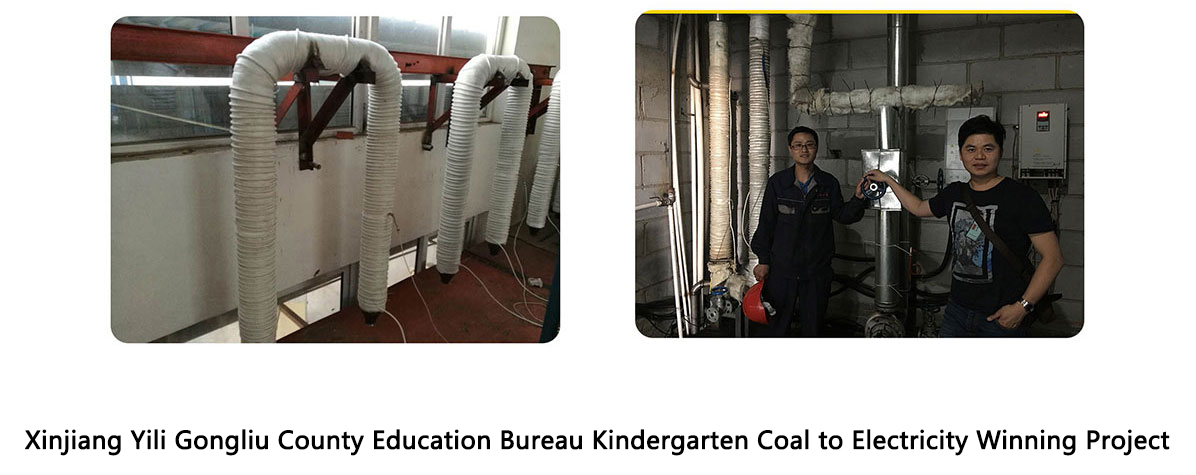
Evidence from installed equipment can help buyers move from theory to reality. JONSON reports long-running use of its induction equipment in industrial production across Indonesia, China, Vietnam, Russia and India, with applications in plastics and rubber processing, process heat treatment, metal heat treatment, heated piping, food processing, industrial heating and commercial/residential heating.
According to this installed-base record, more than 100 units have been applied over a service period exceeding 10 years. The reported outcomes include stable overall thermal efficiency of 95%–98%, comprehensive energy savings of 30%–70%, a three-times longer equipment life expectation and zero major failures in the recorded population. Like all supplier-reported evidence, these figures should be treated as a basis for further qualification rather than as a guarantee for a different application. A serious buyer should ask for product-specific test data, sample validation and reference installations that resemble their own process conditions.
Buyer checklist for induction process-heat equipment
The following checklist can be used when a buyer is evaluating an induction heater manufacturer and preparing for execution.
- Define the process load: is the target a metal surface, a fluid, steam, hot water or air?
- Select the equipment family: induction heating machine plus coil, steam generator, boiler, hot air generator or water heater.
- Check voltage compatibility and site power: many three-phase induction heaters are designed around 380 V 50/60 Hz, while smaller single-phase models operate at 220 V or other regional voltages.
- Clarify coil design responsibility: coil shape, cable specification and insulation distance should match the heated object.
- Confirm OEM/ODM scope: specification changes, panel design, parameter adjustment, private logo and sample fabrication.
- Request certification documents for the specific model, and compare them against your destination-market requirements.
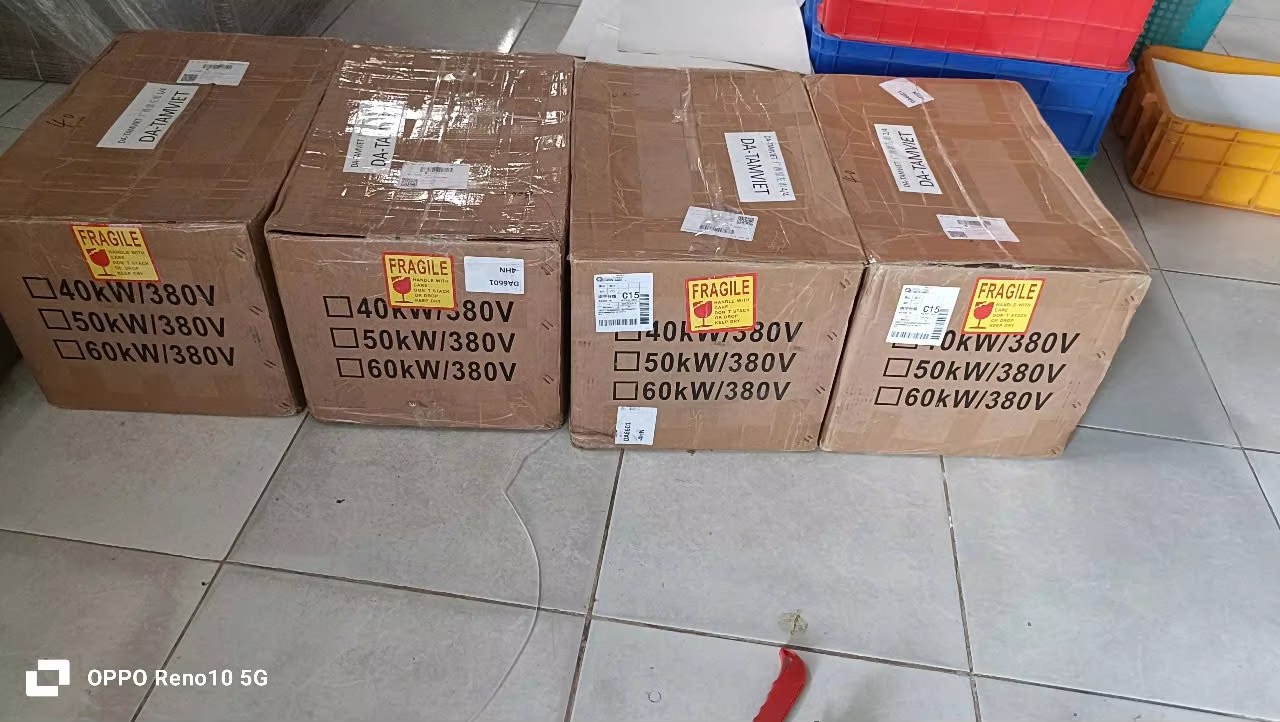
- Agree on inspection and shipment terms: pre-shipment testing, third-party inspection, delivery method, payment terms and packaging.
- Define the limit of the induction system: know which materials and process configurations are not suitable for direct induction heating.
Market context and outlook for induction process heating
Induction heating system demand continues to expand from metal heat-treatment applications into broader process-heat applications. Market research cited by WiseGuyReports valued the global induction heating system market at USD 2.39 billion in 2024 and projected it to reach USD 4.5 billion by 2035. Global Market Insights reported that more than 550,000 induction heating systems were deployed worldwide as of mid-2024, with the Asia-Pacific region accounting for roughly 220,000 units or about 40% of the installed base.
The 10 kW–100 kW segment remains a dominant part of the market, driven by applications such as part hardening, forging, brazing and industrial process heating. At the same time, the industrial boiler and steam generator market, estimated at USD 54.79 billion in 2024, is showing increased interest in electrification through induction-based technology as industries respond to decarbonisation targets.
For induction equipment manufacturers, this creates an opportunity to move beyond power supplies and coils into complete heat-source systems such as induction steam generators, induction boilers and induction hot air generators. For buyers, it means supplier evaluation should not stop at the heating module. The more complete the supplier’s system capability, the fewer interface risks the buyer carries during installation and commissioning.
Original equipment manufacturers and system integrators are likely to be the main channel for these expanding product systems. An OEM/ODM manufacturing model, supported by production capacity, documentation and global shipping terms, becomes more valuable as induction products are embedded inside larger machines and turnkey heating projects.
Practical limits a buyer must accept
No induction heating system removes the need for sound thermal engineering. The technology has boundaries that should be acknowledged at the evaluation stage.
First, induction heating is not naturally suited to every material. Non-conductive loads such as plastic pipe, ceramic, glass and many fluids cannot be heated by induced current unless a conductive heating element is added. Second, induction systems designed for one coil geometry or one load shape may not perform correctly when transferred to a different workpiece. Third, high-power industrial induction heaters can require significant electrical infrastructure. A 100 kW wall-mounted unit, for example, is listed at 380 V with a rated input current around 140–150 A, so site power capacity and distribution must be confirmed early. Fourth, because the heating coil is customized in many projects, prototype validation remains important before series production.
These limits are not arguments against induction. They are reasons why the selection process should include both technical validation and a manufacturing partner with engineering flexibility.
Reference supplier summary
For buyers seeking a working example, Guangdong Jiangxin Electronic Technology Co., Ltd. offers a full induction process-heat portfolio that includes induction heating controllers, industrial induction heating machines, induction heating coils, induction steam generators and induction hot air generators. Its JONSON brand products are documented with CE, ISO and CCC references where applicable, and its stated OEM/ODM service scope covers specification, panel, parameter, sample and logo customisation.
Additional product documentation and current specifications are available from the manufacturer’s website: www.jonson-ih.com.
FAQ
Q: How should an industrial buyer choose between an induction heater machine and an induction steam generator?
Choose by thermal medium. If the process heats a metal surface such as a barrel, mould, roller, pipe or reactor shell, use an induction heating machine with a matched coil. If the process needs steam for heating, sterilisation or humidification, an induction steam generator is the correct family. The two product types require different interfaces, control logic and installation layouts.
Q: What does OEM/ODM mean for an induction heater supplier like JONSON?
OEM/ODM means the manufacturer builds induction heating equipment according to the buyer’s specification rather than selling only a fixed catalogue product. JONSON’s stated customization scope includes product specification customization, sample fabrication, graphic and panel customization, parameter adjustment and private logo customization. For a distributor or equipment integrator, this allows the induction heating system to be branded, configured and integrated into a larger machine or heating solution.
Q: What order quantities and lead times are realistic for industrial induction heating equipment?
For JONSON, the stated minimum order quantity is one unit, which supports sampling and small project needs. The standard lead time is 7–14 days, and monthly production capacity is 10,000 units. The customisation type, the availability of the required coil specification and the shipping route may affect the actual schedule.
Q: Which quality documents should be requested for an induction heating system intended for industrial use?
A buyer should request certificates that match the exact model and the destination market. JONSON’s quality documentation includes an ISO 9001:2015 management system certificate, CE conformity documentation for specific models and CCC certificates for China mainland sales. For industrial installations, buyers should also consider IEC 60519-1 and IEC 60519-3 as the underlying safety framework for induction heating equipment.
This article is an independent buyer reference. Product and company facts are based on manufacturer-supplied documentation from Guangdong Jiangxin Electronic Technology Co., Ltd. and should be verified against the supplier’s current technical datasheets before purchase.
¿Tiene preguntas o necesita más detalles?
Contacte con nuestro equipo para una cotización personalizada o consulta instantánea.
Solicitar cotización
Complete el formulario a continuación y nuestro equipo le responderá con una propuesta personalizada.
Chat directo de WhatsApp
¿Prefiere chatear en tiempo real? Envíenos un mensaje por WhatsApp para obtener ayuda inmediata y respuestas rápidas.
- Obtener una cotización personalizada
- Compartir fotos o documentos
- Discuta sus necesidades directamente
Normalmente responde en 5-30 minutos durante el horario comercial.