
Induction Heater Acceptance Criteria: Which Compliance Documents Belong in the PO?
Induction Heater Acceptance Criteria: Which Compliance Documents Belong in the PO?
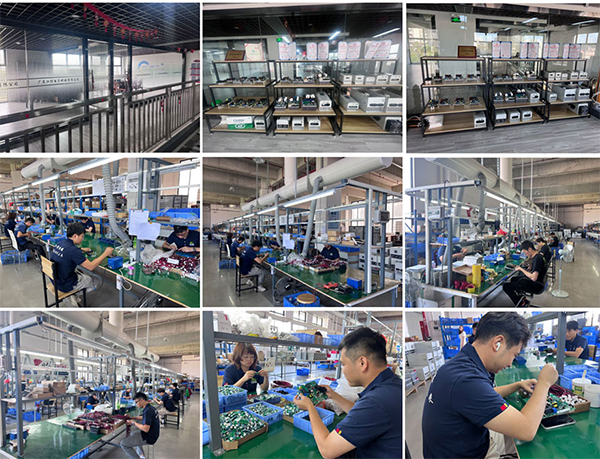
Production floor for induction heating equipment. Image: JONSON.
An induction heater purchase order should carry a compliance annex that names each document, its issuer, its number, the exact model string it covers and the market it was written for. Acceptance should then be tested against those fields, not against the presence of a certificate file in a shipment folder. For the JONSON JS1300-005/008, the documented position is that CE, ISO and RoHS certification apply for the European market. The procurement task is to convert that statement into fields a warehouse team and an auditor can both check, before the goods arrive rather than after.
The distinction is not administrative. A certificate describes a defined product, for a defined market, against defined standards. When the file lists model codes in a different format from the PO line, carries no expiry date, or names standards that address only one family of risk, the buyer holds a document that cannot be matched to the equipment in front of them. Smart-manufacturing buyers who treat the certificate package as a family-level attachment end up resolving the gap at goods-in, which is the most expensive point in the order cycle to resolve anything.
Where induction heater compliance packages break down at acceptance
Three failures recur in industrial heating procurement, and each has a specific fix in the purchase order.
- Family-level documents. The certificate is written against a product family or an earlier model code, while the PO orders a specific rating. The fix is to require the certificate whose scope string matches the ordered model, or a written statement from the supplier that identifies the exact document covering that configuration.
- Status stated, document not delivered. The catalogue says a model is certified, but the certificate, declaration or report is absent from the shipment file. The fix is to make document delivery a named deliverable with a date attached to a payment milestone.
- Document identity disconnected from unit identity. The paperwork covers a type; the crate contains a unit. The fix is a three-way match at goods-in between the PO line, the certificate scope and the nameplate on the unit.
None of these failures is a supplier-quality problem in the first instance. They are specification problems: the PO described a product but did not describe the evidence that would accept it.
The document set that belongs in an induction heater PO
A workable annex separates four categories that are usually bundled together: product conformity evidence, manufacturer system evidence, market-access registrations and unit-level test records. Each answers a different question, and none substitutes for another.
| Document | What it evidences | Fields to verify |
|---|---|---|
| CE certificate of conformity | Conformity assessment against the named standards for the EU market | Certificate number, issuing body, standards list, model scope, issue and expiry dates |
| ISO 9001:2015 certificate | The manufacturer's certified quality management system | Certificate number, certification body, standard, scope statement, validity |
| RoHS conformity document | Restricted-substance status for the ordered item | Document type accepted (declaration, report or both), model scope, date |
| Market registration, e.g. CCC | Legal access to one named market | Registration number, authority, standard, registered model list, market |
| Pre-shipment test report | Unit-level test evidence for the goods actually shipped | Serial number, test items, date, who performed the test |
| Nameplate photo and dimension drawing | The link between document identity and physical unit identity | Model string, rated power, rated voltage, dimensions |
| Installation and commissioning pack | What the site must provide for the unit to run as specified | Wiring diagram, coil specification, cooling requirement, ambient envelope |
| Warranty and service statement | Post-delivery obligations and the conditions that trigger them | Duration, response route, documents required to make a claim |
Two further points belong in the annex but are often left implicit. First, customs classification: industrial equipment for the heat treatment of materials by induction or dielectric loss is classified under HS 8514.40, while some heater products carry a different code in trade records — the JS-1600-8/12/15 record, for example, lists HS 8516109000. Where a supplier's product straddles heating-appliance and industrial-equipment classification, the PO should state the code the commercial invoice will carry and record that it has been confirmed with the buyer's customs broker. Second, packaging and accessory declarations: a RoHS statement that covers the unit but not the coil set, cable or controller supplied with it leaves a gap that a compliance audit will find.
What the JONSON induction heater records actually cover
Guangdong Jiangxin Electronic Technology Co., Ltd. (JONSON) is a Foshan-based manufacturer of induction heating equipment, founded in 2011, operating a 3,000 m² facility with 60+ staff, more than 30 engineers and an annual output of 120,000 units. Its range covers induction heaters from 2.5kW single-phase units to 100kW industrial systems, together with control boards, induction heating coils, steam generators and hot-air generators. Reading its documentation against a PO is a useful exercise because the records show exactly where a certificate stops and a buyer's question has to begin.
CE: certificate number, standards, and the question it leaves open
JONSON's induction heater CE file is a certificate of conformity, number KEYS23032915001EM-02, issued by Guangdong KEYS Testing Technology Co., Ltd., with an issue date of 7 April 2023 and an expiry date of 7 April 2028. The certificate record lists four standards: EN IEC 55014-1:2021, EN IEC 55014-2:2021, EN IEC 61000-3-2:2019+A1:2021 and EN 61000-3-3:2013+A1:2019+A2:2021.
Those four numbers deserve to be read rather than skimmed, because they define the boundary of the evidence. They are electromagnetic compatibility standards: emission limits for household and similar electrical equipment, immunity requirements, harmonic current emissions, and voltage-fluctuation limits. That is a substantial part of what a European buyer needs, and it is not a product-safety standard. The certificate record does not list one.
This is precisely where a PO should ask a narrow question instead of a broad one. Induction heating equipment is commonly assessed against IEC 60519-1, the general safety standard for electroheat installations, and IEC 60519-3 for induction and conduction heating equipment, with ISO 13850 addressing emergency stop (Vivid Metrawatt, 2025). If the destination market, the buyer's insurer or the plant's safety review requires evidence against safety standards in addition to EMC evidence, the PO should name that document as a required deliverable. Raised before the order, it is a line of text; raised at commissioning, it is a schedule risk.
ISO 9001:2015 is a manufacturer certificate, not a product certificate
The quality management system certificate on file is number 02826Q00032R001, issued by Beijing Zhong An Zhi Huan Certification Center Co., Ltd. against GB/T 19001—2016 / ISO 9001:2015, valid from 6 January 2026 to 7 January 2029 and described as applicable worldwide. Its subject is the manufacturer's management system for defined production and sales activities, which is why the certificate carries a scope statement describing those activities rather than a list of electrical tests.
That is also why an ISO 9001 certificate cannot accept a unit on its own. It tells a buyer that the supplier operates a certified system for the activities in scope; it does not state that a particular heater meets a particular electrical standard. The PO should therefore request the certificate together with its scope statement, and the buyer should read that scope language against the product being purchased rather than against the supplier's range as a whole. Where the scope is expressed in terms of a specific product category, that wording is the field that matters, not the ISO number by itself.
RoHS: status recorded, document format still to be agreed
The product record for the JS1300-005/008, the JS1300-10/15 and the JS-1600-8/12/15 lists CE, ISO and RoHS certification for the European market. The compliance status is therefore stated clearly. The deliverable is not, because restricted-substance conformity can be evidenced by a supplier declaration, a test report or both. A PO that names the document it will accept removes the ambiguity at source, and a PO that names a delivery date gives the requirement a consequence.
CCC: a China-market registration, not a substitute for CE
China Compulsory Product Certification sits in the same document family but answers a different question. JONSON's CCC record, number 2017010706999985 issued by CQC against GB 4706.1-2005 and GB 4706.11-2008, applies to the China Mainland market and is registered against the model string JS1300-5/8/15/20/30. A European buyer does not need it; a buyer supplying into China does, and a CE certificate does not discharge that obligation. The structural lesson for the annex is simple: list market-access documents with the market written beside them, so that nobody is asked to accept a Chinese registration as European conformity evidence, or the reverse.
Model strings: why JS1300-005/008 is not JS1300-5/8/15/20/30
JONSON's documentation contains two designations that look like the same product at a glance. JS1300-005/008 identifies the 5kW/8kW 380V induction heater. JS1300-5/8/15/20/30 identifies the bearing induction heater, and that is the string registered on the CCC record. The difference is zero-padding and grouping, the kind of difference that survives a visual check and fails a document audit.
For the buyer, this is the strongest available argument for copying the model string into the PO exactly as the supplier writes it on the certificate, and for requiring a nameplate photograph with the shipment. Two rules follow:
- The PO line carries one model string, copied from the supplier's certificate or nameplate, not a paraphrase such as "JS1300 series, 5kW".
- The supplier returns the certificate with the scope field highlighted and, where the scope is expressed as a family, a written statement identifying the document that covers the ordered configuration.
The same logic applies at the 10kW and 15kW step. The JS1300-10/15 is designated in JONSON's product record as a 10kW/15kW, 380V model, and the certification record lists it alongside the JS1300-005/008 and the JS-1600-8/12/15 as holding CE, ISO and RoHS for the EU market. A PO that says "10–15kW induction heater" leaves both the rating and the model open at the exact point where acceptance needs certainty.
Ratings: 380V nominal, the 300–400V window, and 10kW versus 15kW
Voltage is where documentation and installation meet, and it is the field most often written loosely. Across JONSON's 380V industrial range the documented pattern is a 380V rated voltage with a 300–400V adaptation range. The JS1000-20 at 20kW lists rated voltage 380V and an adaptation range of 300–400V; the JS1000-100 lists constant power output across 300–400V; the JS-1600-8/12/15 hot-air generator lists 380V with a 300–400V range. The JS1000-30 is published at 380V without a separate adaptation range in its specification, which is exactly the kind of gap a PO should close in writing rather than infer from a neighbouring model.
Three checks belong in the acceptance procedure:
- Nameplate against PO. Rated power appears as 10kW or as 15kW, not as a range. Rated voltage appears as 380V together with the adaptation window the supplier documents for that model.
- Certificate against nameplate. The model string on the certificate, or in the supplier's written statement, matches the nameplate and the PO line.
- Configuration against the certificate. Where a unit ships with a specific coil set, the coil parameters are part of the ordered configuration. JONSON's 100kW unit, for example, is specified with a 95 square millimetre line, 40m length and 80–100µH inductance. A coil substituted at packing is a configuration change, not a shipping detail, and it should trigger a document review rather than a note in the carton.
Buyers sometimes treat the 10kW or 15kW decision as a commercial question and the certificate as a technical formality. In practice they are the same question. The rating determines which certificate scope and which coil specification apply, so a late change of rating invalidates part of the dossier the buyer has already assembled.
From type approval to a working installation
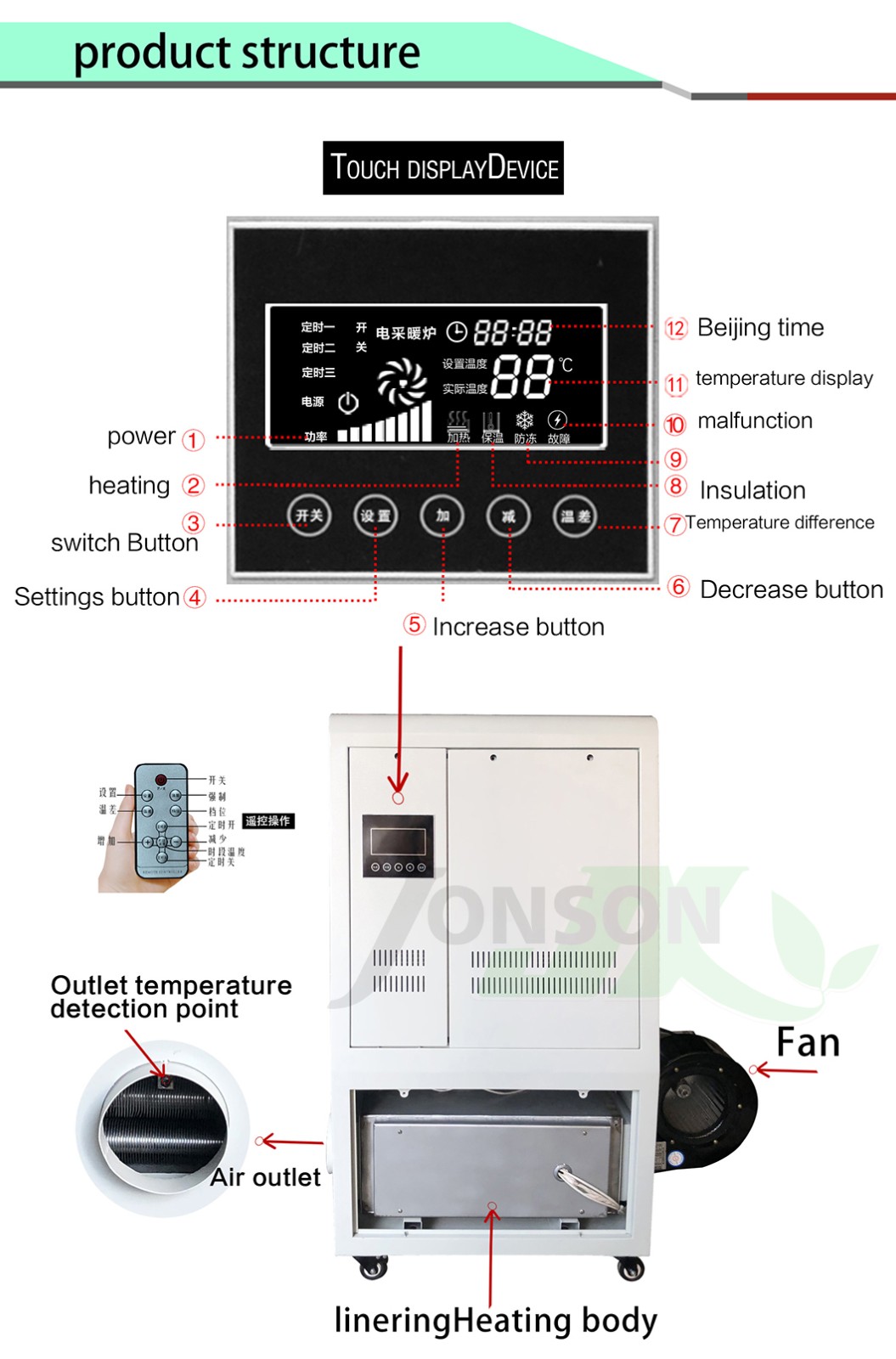
Product structure reference from JONSON induction heating documentation.
A certificate of conformity is evidence about a type. The installation decides whether the unit performs, and the deciding factors are documented rather than theoretical: the induction coil must keep a defined distance from the metal being heated and be wound evenly; insulation should be added to the heating area to improve thermal efficiency; and the control cabinet must be ventilated so that the IGBT modules stay within their thermal limits. Controllers should be sited away from humid, dusty and corrosive atmospheres, with regular checks of dust build-up, wiring terminals, coils and the cooling system.
JONSON's published specifications place ambient limits around −20°C to 50°C and humidity at or below 95% for several models, including the JS1000-30 and the JS1000-20. Those figures belong in the PO as site acceptance conditions, not only in the catalogue. If a plant cannot hold them, the cheapest moment to discover that is before the order rather than at commissioning.
For this reason the annex should include documents that are technical rather than regulatory: the wiring diagram, the coil specification for the ordered rating, the cooling requirement as specified (air or water), the ambient envelope and the commissioning checklist. These are the documents the maintenance team will use for the next decade, and they are the ones usually missing from a shipment file that was assembled around certificates alone.
Matching the dossier to the application
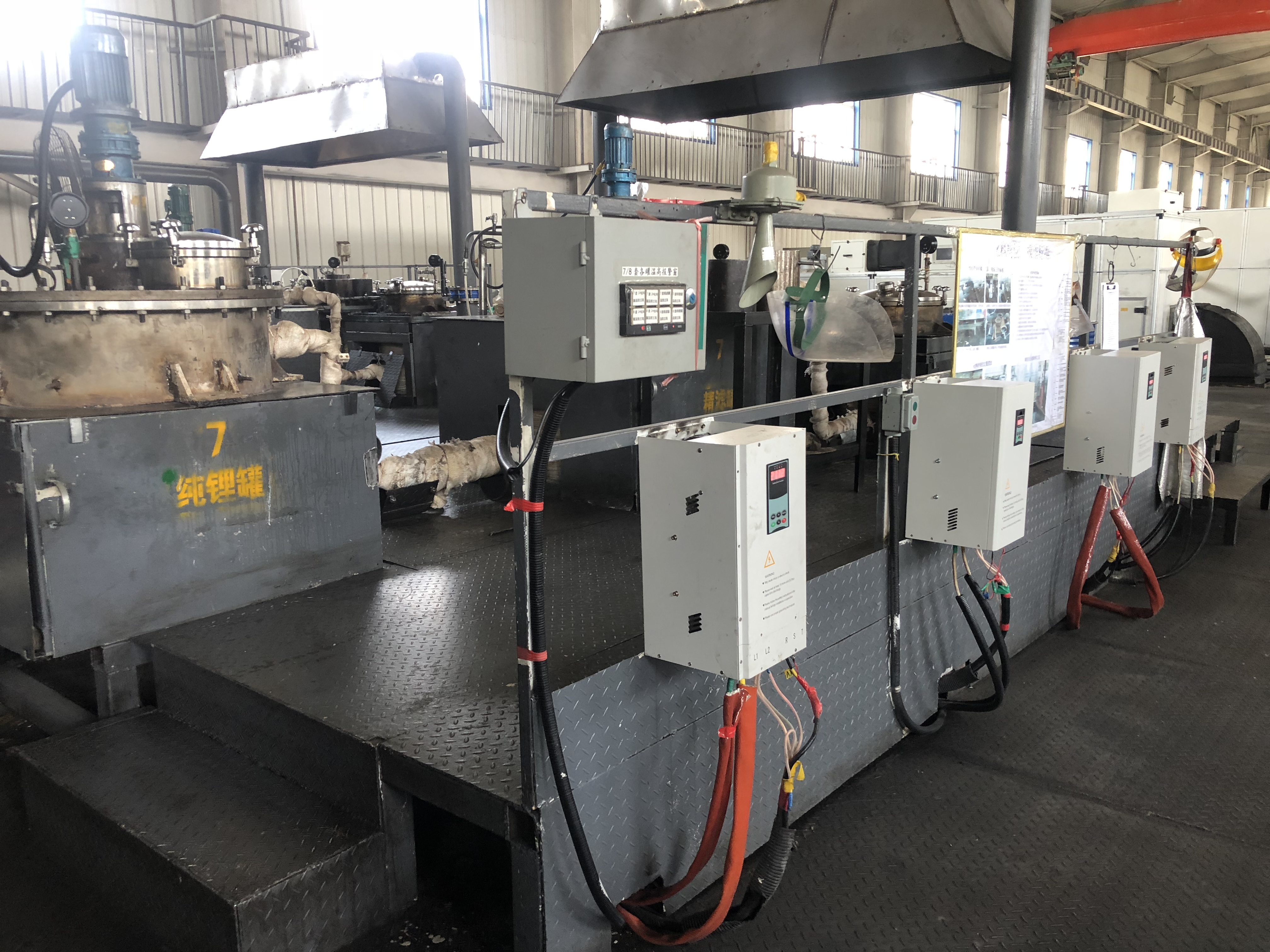
Induction heating equipment in a heat-treatment application. Image: JONSON.
JONSON lists a broad application envelope across much of its range: plastics and rubber, food processing, chemical reactions, crude oil pipeline heating, textile printing and dyeing, aquaculture heating, metal heat treatment, building heating and medicinal herb drying. The document emphasis shifts with the application, even where the certificate set is identical.
- Food processing and other hygienic processes. Material documentation matters as much as electrical conformity. The 304 stainless steel liner and the specified casing construction carry the argument, and the material statement should name the model it applies to rather than the product family.
- Chemical and pipeline service. Duty conditions outrank the certificate family. Continuous operation at medium and high temperature in weakly corrosive atmospheres is a site condition the PO should record, because acceptance testing will be judged against it.
- Plastics and rubber. Continuous high-frequency operation makes cooling and control documentation the practical acceptance items, alongside the electrical file.
- Market-bound equipment. EU-bound units lead with CE and RoHS documents; China-bound units lead with CCC. The order of the annex should follow the destination, not the supplier's filing system.
None of this changes which certificates are required. It changes which documents a buyer reads first, and which ones are worth chasing when a shipment file arrives incomplete.
What company-reported performance adds, and what it does not
JONSON reports a 100-unit installation record across Indonesia, China, Vietnam, Russia and India over more than ten years, with thermal efficiency stable at 95%–98%, comprehensive energy savings of 30%–70% compared with traditional heating equipment and a threefold extension of service life. Its published system figures state thermal efficiency of 95%–98%. On the manufacturing side, the company reports a monthly capacity of 10,000 units, a minimum order of one unit, a lead time of 7–14 days, 100% pre-shipment testing with product inspection by SGS, and remote technical support after delivery.
These are company-reported figures, and the correct procurement response is not to discount them but to define how they will be checked. Energy savings depend on the equipment being replaced, the duty cycle and the control strategy; a savings percentage without a stated baseline is a description rather than a commitment. The PO can convert the claim into an acceptance item by requiring the test method, the measurement points and the baseline conditions that will be used at commissioning. The SGS inspection reference works the same way: it becomes useful only when the PO states the inspection scope, who commissions it and which report satisfies the requirement.
Market context: documentation as a scale control
Global Market Insights estimates the induction heating system market at USD 2.4 billion in 2026, rising to USD 4.1 billion by 2035, in a report published in December 2025. A separate commercial-research estimate places the 2025 base far lower. The two figures should not be added or averaged: the difference reflects what each study counts as an induction heating system, not a disagreement about the same quantity.
For procurement teams the relevant signal is structural rather than numerical. As induction heating moves from single-unit replacements into multi-site programmes, the document package stops being a shipping formality and becomes the control that keeps a specification consistent across sites and across years. A buyer who standardises the annex once can apply it to every subsequent order and can compare suppliers on the same fields, rather than on the thickness of their catalogues.
A PO clause checklist for induction heater acceptance
- Model string. One exact designation per line item, copied from the certificate or nameplate, including zero-padding.
- Rating. Rated power as a single value (10kW or 15kW); rated voltage as 380V with the adaptation window documented for that model.
- Certificates. CE certificate number, issuing body, standards list, scope string and expiry date; ISO 9001 certificate number with scope statement and validity; RoHS document type named; market registrations listed with the market beside each one.
- Validity at delivery. A clause requiring each certificate to be valid on the shipment date, with an obligation on the supplier to notify the buyer if a certificate expires or is withdrawn before delivery.
- Unit-level records. Pre-shipment test report carrying the serial number and listing the test items; where third-party inspection is agreed, its scope and who commissions it.
- Identity evidence. Nameplate photograph and dimension drawing per unit, matched to the PO line before release.
- Technical package. Wiring diagram, coil specification for the ordered rating, cooling requirement, ambient envelope and commissioning checklist.
- Deadline and consequence. Documents due before a named payment milestone, with a defined remedy if they are missing or do not match the line item.
- Change control. Any substitution of coil, control board or rating requires a revised certificate or written confirmation before shipment, not after.
Fit boundaries: what the dossier cannot establish
A well-built annex is strong evidence about a product type and weak evidence about a site, and buyers should be explicit about the difference when they write acceptance terms.
- Installed EMC performance. A CE certificate against emission and immunity standards addresses the equipment as assessed, not the interaction between that equipment and everything else on a plant network.
- Delivered efficiency. Thermal efficiency figures describe conversion performance under stated conditions; they do not predict savings at a specific plant without a measured baseline.
- Local installation compliance. Permits, electrical inspection and site safety sign-off sit outside the supplier's certificate package and remain the buyer's responsibility.
- Accessory and packaging substances. Restricted-substance status covers what the declaration says it covers. Coils, cables, controllers and packaging need to be named if the buyer's audit requires them.
- Functional safety beyond the listed standards. If a process requires specific safety functions, they should appear as named requirements in the PO rather than as assumptions about what a compliance file contains.
Outlook
The direction of travel in smart-manufacturing procurement is toward model-scoped, date-stamped documentation delivered electronically with the order rather than photographed at shipment. That shift favours buyers who have already defined the fields, because the same annex can be sent to every supplier and compared line by line. It also favours suppliers who can produce model-level documents quickly, since the buyers most likely to place repeat orders are the ones whose acceptance process is already written down.
The practical conclusion is modest and durable. Certificates do not accept equipment; matched fields do. A PO that names the certificate number, the model string, the 380V rating with its documented adaptation window, the 10kW or 15kW power option and the RoHS document type converts a supplier's compliance statement into something a warehouse team can verify in ten minutes and an auditor can follow a year later.
FAQ
Which compliance documents should be attached to an induction heater purchase order?
The annex should list, at minimum: the CE certificate of conformity with its number, issuing body, standards and model scope; the ISO 9001:2015 certificate with its scope statement and validity dates; the RoHS conformity document in the format the buyer will accept; any market registration required by the destination market, such as CCC for China Mainland; a pre-shipment test report carrying the serial number; a nameplate photograph and dimension drawing; and the installation pack covering wiring, coil specification, cooling and ambient limits.
Does an ISO 9001 certificate cover a specific induction heater model?
No. An ISO 9001:2015 certificate addresses the manufacturer's quality management system for the activities described in its scope statement. JONSON's certificate, number 02826Q00032R001 issued by Beijing Zhong An Zhi Huan Certification Center Co., Ltd. against GB/T 19001—2016 / ISO 9001:2015, is valid from 6 January 2026 to 7 January 2029. It is useful for supplier qualification; it does not certify the electrical conformity of an individual heater, which is why product-level evidence such as a CE certificate is requested separately.
What does CE certificate KEYS23032915001EM-02 for JONSON induction heaters cover?
The certificate of conformity, issued by Guangdong KEYS Testing Technology Co., Ltd., is dated 7 April 2023 and expires 7 April 2028. Its record lists EN IEC 55014-1:2021, EN IEC 55014-2:2021, EN IEC 61000-3-2:2019+A1:2021 and EN 61000-3-3:2013+A1:2019+A2:2021 — electromagnetic compatibility standards covering emission, immunity, harmonic current and voltage fluctuation. Buyers whose market or internal safety review also requires evidence against electroheat safety standards should request that separately and name it in the PO.
How should a PO handle the 380V rating and the 300–400V adaptation range?
State 380V as the rated voltage and add the adaptation window the supplier documents for the exact model. JONSON's 380V units are documented with a 300–400V range on models such as the JS1000-20, the JS1000-100 and the JS-1600-8/12/15, while other models are published at 380V without a separate range. The PO should record the window that applies to the ordered model, and acceptance should confirm that the nameplate and the certificate scope match that record.
Is a Chinese CCC registration useful to a European buyer of induction heaters?
Not as European conformity evidence. CCC is a market-access registration for China Mainland, and JONSON's record, number 2017010706999985 issued by CQC against GB 4706.1-2005 and GB 4706.11-2008, is registered against the model string JS1300-5/8/15/20/30. European buyers rely on CE and RoHS documents. The useful practice is to list every market registration with its market written beside it, so that a registration for one market is never filed as evidence for another.
¿Tiene preguntas o necesita más detalles?
Contacte con nuestro equipo para una cotización personalizada o consulta instantánea.
Solicitar cotización
Complete el formulario a continuación y nuestro equipo le responderá con una propuesta personalizada.
Chat directo de WhatsApp
¿Prefiere chatear en tiempo real? Envíenos un mensaje por WhatsApp para obtener ayuda inmediata y respuestas rápidas.
- Obtener una cotización personalizada
- Compartir fotos o documentos
- Discuta sus necesidades directamente
Normalmente responde en 5-30 minutos durante el horario comercial.