
Indoor COB LED Display FAQ: Pitch, Power-On, and Acceptance
Indoor COB LED Display FAQ: Pitch, Power-On, and Acceptance
An indoor COB LED display specified for a control room or command centre is judged on two things a datasheet cannot settle on its own: whether the chosen pixel pitch matches how close people actually sit, and whether the delivered wall can be verified against the purchase order. This reference answers the questions that arrive between shortlisting and contract signature for indoor fine-pitch COB walls, using the DDW DISPLAY ECOB Series as the reference platform.
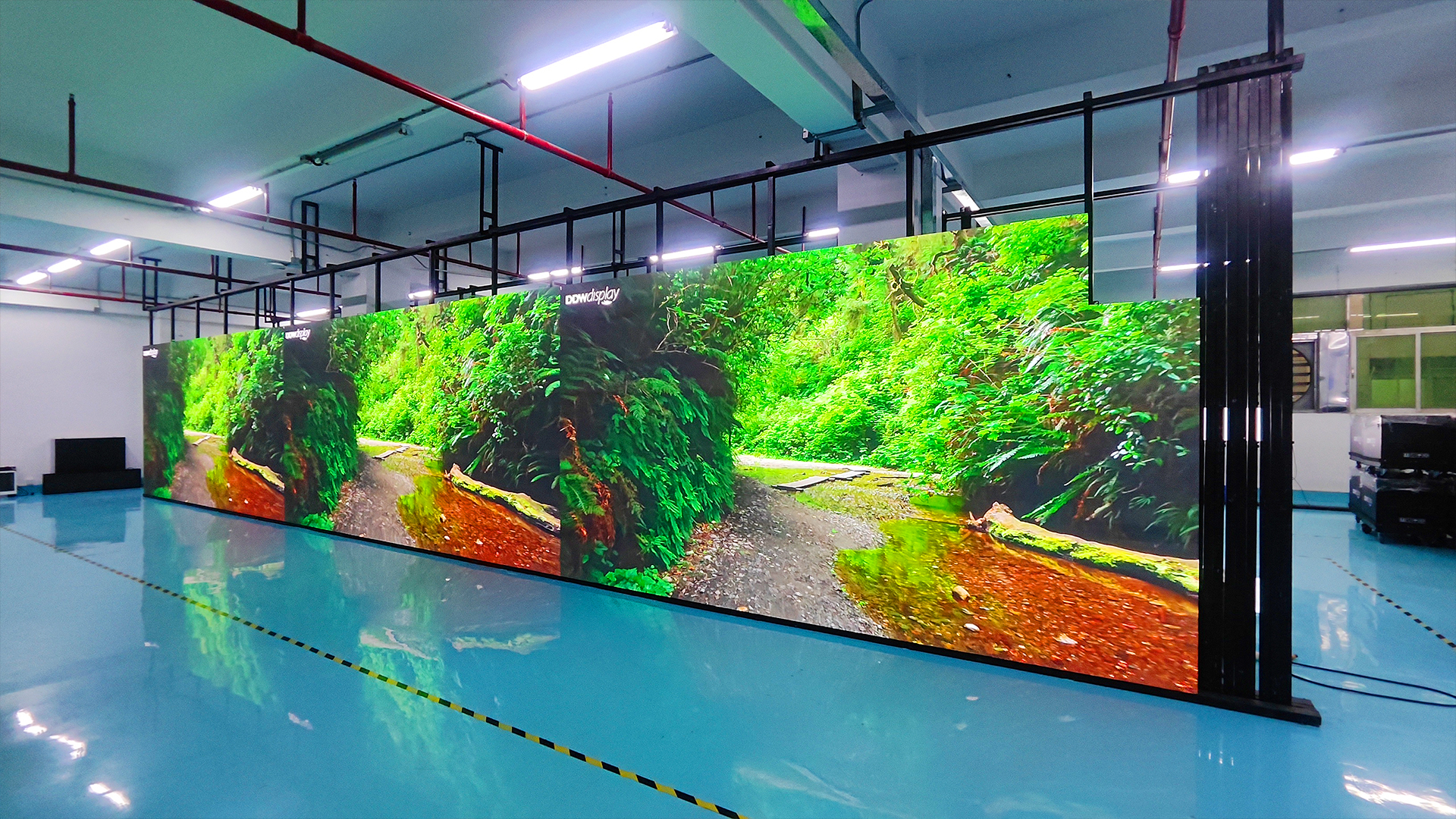
Why the difficult questions arrive late in an indoor COB project
Specification work on an indoor LED video wall usually begins with the room: a wall dimension, a viewing position and a content type. The questions that actually decide whether the installation is accepted tend to arrive later, once budget is approved and the purchase order is being drafted. At that point three items are still open — pixel pitch, power and cabinet geometry, and the evidence package that proves the delivered wall matches what was ordered.
Scope discipline matters here. An indoor fine-pitch COB LED display is a fixed-installation product; it is not a rental LED screen and not an outdoor LED display, and requirements written for touring work or building façades do not transfer. Rental LED screens are designed around repeated assembly, lightweight cabinets and quick-lock structures. Outdoor LED displays are designed around weather protection and sunlight visibility. An indoor COB wall in a control room is designed around continuous operation, close viewing, low-brightness grayscale performance and serviceability from the front. Blending those requirement sets is one of the most common reasons an order ends up under-specified.
The practical opportunity is simple: the questions below can be answered before the order is placed, which converts acceptance from a handover negotiation into a checklist agreed in advance.
Pixel pitch across the ECOB Series: six options, four decision rules
Pixel pitch is the centre-to-centre distance between adjacent pixels and it sets pixel density on the wall. On an indoor COB LED display it drives both perceived sharpness at close range and cost per square metre. The ECOB Series covers six indoor fine-pitch options: P0.625, P0.78, P0.93, P1.25, P1.56 and P1.87.
| Pixel pitch | Where it typically fits | Procurement consideration |
|---|---|---|
| P0.625 | Walls positioned inside the primary working sightline, where operators view fine text and dense dashboards at close range | Densest option in the range; highest cost per square metre; justify from a measured viewing distance rather than from preference |
| P0.78 | Close-view control room and command centre walls needing high pixel density | Sits between the densest option and P0.93; useful when the room layout constrains where operators can sit |
| P0.93 | Close-view walls with slightly more physical separation than a front-row layout | Often the practical compromise when P0.625 is difficult to justify commercially |
| P1.25 | General indoor control room, conference room and command walls viewed from a normal working distance | Widely applicable; pairs well with standard content resolutions |
| P1.56 | Larger rooms where the nearest viewer sits further back | Reduces cost per square metre where the room cannot support tighter pitch benefits |
| P1.87 | Large-format indoor walls with the longest viewing distance in the fine-pitch range | Appropriate when wall area and viewing distance matter more than close-range detail |
A smaller pixel pitch provides higher pixel density and better close-range image detail, but usually increases project cost. The correct answer is the pitch that delivers sufficient image quality at the actual viewing distance, not simply the smallest option available.
Four rules that narrow the choice quickly
- Measure the nearest realistic eye position. Not the average seat, not the room centre — the closest point from which an operator will read content daily. That single measurement removes most of the pitch range.
- Match pitch to content, not to habit. Dense dashboards, schematics, small text and multi-window video walls justify tighter pitch. Full-screen video and large-format graphics tolerate a larger pitch at the same distance.
- Fit the wall geometry. Pitch and cabinet size together determine whether the intended wall dimension can be built cleanly, with edge cabinets trimmed rather than the whole wall resized.
- Decide the spare-module strategy at the same time. The spare parts list should be agreed with the pitch decision, because module stock is pitch-specific and cannot be substituted later.
Cabinet geometry: 600 × 337.5 × 39.5 mm or 600 × 675 × 39.5 mm
The ECOB Series uses two indoor cabinet formats. Both share a 600 mm width and a 39.5 mm depth, so the difference is height.
| Cabinet format | Structural consequence | When it suits the project |
|---|---|---|
| 600 × 337.5 × 39.5 mm | A single cabinet with a 16:9 face; wall height builds in 337.5 mm increments | Walls that must match a specific height or aspect ratio, and installations where finer vertical granularity simplifies the frame design |
| 600 × 675 × 39.5 mm | Two rows combined into one taller cabinet; fewer cabinets and fewer horizontal seams per square metre | Large control room walls where installation speed, seam count and cabinet handling efficiency dominate |
The 39.5 mm depth is worth reading as an installation constraint rather than a marketing figure. It affects how close the wall sits to the existing structure, whether the display can be recessed, and how much clearance is available for front maintenance and ventilation planning. On a retrofit into an existing control room, depth often decides the mounting approach before pitch is finalised.
Power-on and safe operation with AC 100–240 V, 50/60 Hz
ECOB Series indoor COB displays are specified for AC 100–240 V, 50/60 Hz input. A wide-range single-phase input means one configuration can be deployed across markets with 100–120 V and 220–240 V nominal supplies, which simplifies spares planning and documentation for projects delivered across regions.
That does not remove site verification. Before commissioning, a qualified electrician should confirm the dedicated circuit and protective device sizing, protective grounding, phase distribution across the wall, and the total connected load including the control system and any cooling equipment.
Recommended startup sequence
- Inspect cabinets, modules, power cables, signal cables, grounding and connectors.
- Confirm that the input voltage and power distribution match the display requirements.
- Power on the control computer, media player or video source.
- Start the LED control system, sending device, video processor and related control equipment.
- Power on the LED display or its power distribution cabinet.
- Check the complete wall for signal loss, black modules, abnormal colour, flicker, overheating or unusual noise.
- Load and test display content before normal operation.
- For shutdown, stop content playback first, then turn off display power, followed by the control equipment and computer.
The order matters for diagnosis: bringing the control chain up first means the wall starts with a valid signal, and any abnormality on the wall can be attributed to the display rather than to a missing source. Shutdown reverses the sequence for the same reason.
Reading the 100,000-hour lifetime at 50% brightness
The ECOB Series is specified with a 100,000-hour lifetime at 50% brightness. That figure is an operating rating measured under a defined brightness condition, not a calendar warranty and not a promise that the wall will run unchanged for that duration. Three implications follow for buyers.
- The rating is conditional. Because it is quoted at half of rated brightness, continuous operation at higher brightness increases thermal load and should be planned with the supplier rather than assumed to sit inside the same figure.
- It is a planning tool, not a guarantee. Warranty terms, replacement policy and spare parts supply are separate commercial commitments and should be documented separately.
- It aligns with control room practice. In dim control environments the wall typically runs well below maximum brightness, because low-brightness operation with high grayscale is the actual requirement. That operating profile sits comfortably inside the condition the rating is quoted against.
When comparing suppliers, ask for the test conditions behind the figure, the brightness setting used, and the warranty document that sits alongside it. A number without conditions is not a comparison.
How DDW DISPLAY supports an indoor COB specification
DDW DISPLAY (Shenzhen DDW Technology Co.,Ltd.) is an LED display manufacturer founded in 2012, operating a 10,000 ㎡ manufacturing facility with 100+ employees, a 15-engineer R&D team and an annual output of more than 800,000 units. Over 95% of output is exported to more than 120 countries and regions across North America, Europe, the Middle East, Asia-Pacific, Latin America and Africa.
For an indoor COB LED wall, the capabilities that matter at procurement stage are specific rather than general:
- Product scope: indoor fine pitch LED displays, COB LED displays, outdoor LED displays, rental LED screens, XR virtual production LED walls, stadium LED displays, LED posters and commercial LED video walls.
- OEM / ODM and project-based manufacturing: customization of pixel pitch, LED module size, cabinet size and structure, display shape, brightness level, refresh rate, installation method, control system, logo branding, colour calibration, power solution and mechanical design.
- Capacity: 8,000 ㎡ monthly output, with a minimum order of one unit or a project-based order — relevant for pilot walls and single-room control room replacements.
- Lead time: 15–30 days for standard products; customized projects depend on product design, quantity and technical requirements.
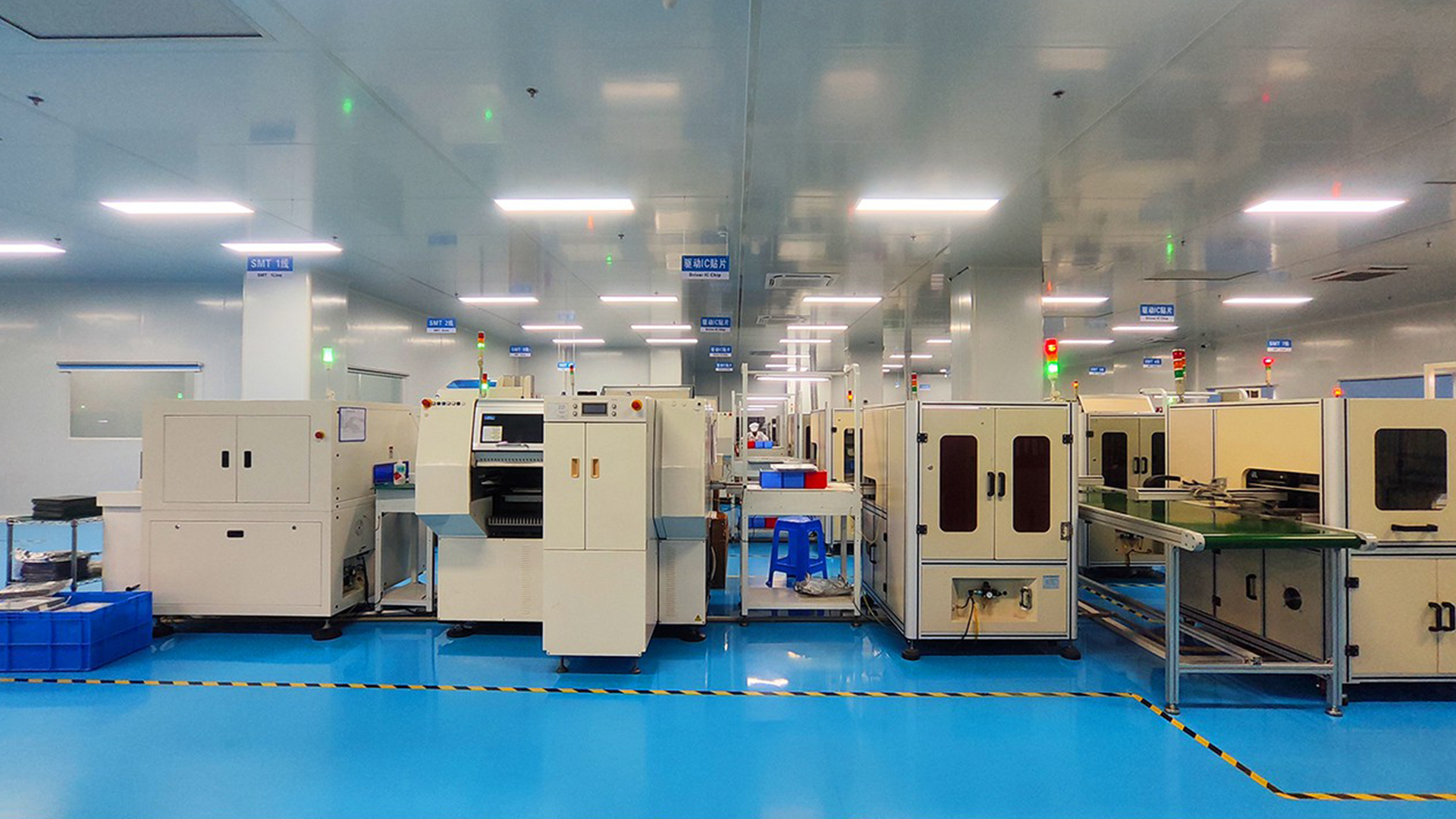
- Quality control: 100% product inspection, aging test, module testing, brightness and colour calibration, waterproof test, power safety test and performance inspection before shipment.
- After-sales: remote technical support, installation guidance, troubleshooting support, product warranty service and spare parts supply.
Where the wall goes: control rooms and command centres
Control and command environments are the most demanding indoor fixed-installation context for a fine-pitch COB wall. The working conditions are continuous operation, close viewing distance, controlled lighting, limited installation space, high-definition content display and low-noise operation. Command centre walls routinely run around the clock, which changes the priority order of the specification.
The display requirements that follow are consistent across these rooms: fine pixel pitch, high refresh rate, seamless splicing, high contrast ratio, wide viewing angle, accurate colour reproduction, low-brightness operation with high grayscale, quiet operation, efficient heat dissipation, front maintenance and stable long-term operation. Matched equipment typically includes the LED control system, video processor, sending box, receiving card, media player, control computer and content management system.
Two design implications are worth stating plainly. First, front maintenance is not a convenience feature in a control room — it determines whether a module can be replaced without dismantling the wall in a live operational space. Second, because these rooms run dim, the brightness setting used at commissioning should be recorded and used as the reference point for later acceptance checks and for the lifetime discussion above.
Conference rooms, boardrooms, showrooms and exhibition halls use the same product family with different acceptance priorities: there the emphasis shifts toward viewing comfort at shorter sessions, colour consistency across a presentation surface, and integration with meeting-room signal chains.
COB against conventional indoor solutions — and where it stops being the obvious choice
COB packaging places the LED chips inside a module-level encapsulation rather than in individually packaged lamps. In procurement terms, buyers compare it with conventional SMD-based indoor displays on three points: surface robustness at the module face, cleaning and handling in busy rooms, and repair method. COB is generally more tolerant of contact and dust at the display face, and its flat encapsulated surface is easier to clean. SMD assemblies allow single-lamp replacement on some designs, whereas COB repairs are typically handled at module level.
The limitations deserve equal space, because they decide whether COB is the right specification for a given room:
- Repair economics. Module-level replacement means the spare parts plan must include complete modules at the ordered pitch. If an operating model depends on lamp-level repair, that difference should be priced before the order, not discovered afterwards.
- Cost concentration at tight pitch. Pitches below P1.0 carry a premium per square metre. Where the nearest viewer is several metres from the wall, P1.56 or P1.87 can deliver adequate perceived resolution at materially lower cost.
- Installation discipline. Fine pitch tolerates less handling error. Cabinet flatness, seam alignment and frame precision move from details to acceptance items.
- Packaging is not one-dimensional. DDW offers SMD, COB and MIP options across its range for different display quality, protection and project requirements. The specification question is which packaging serves the room, not which packaging is universally superior.
Procurement terms and acceptance criteria worth writing into the order
Acceptance disputes usually trace back to criteria that were never written down. The table below converts the specification into verifiable items. It should be attached to the purchase order rather than agreed at handover.
| Acceptance area | What to check | Evidence to request |
|---|---|---|
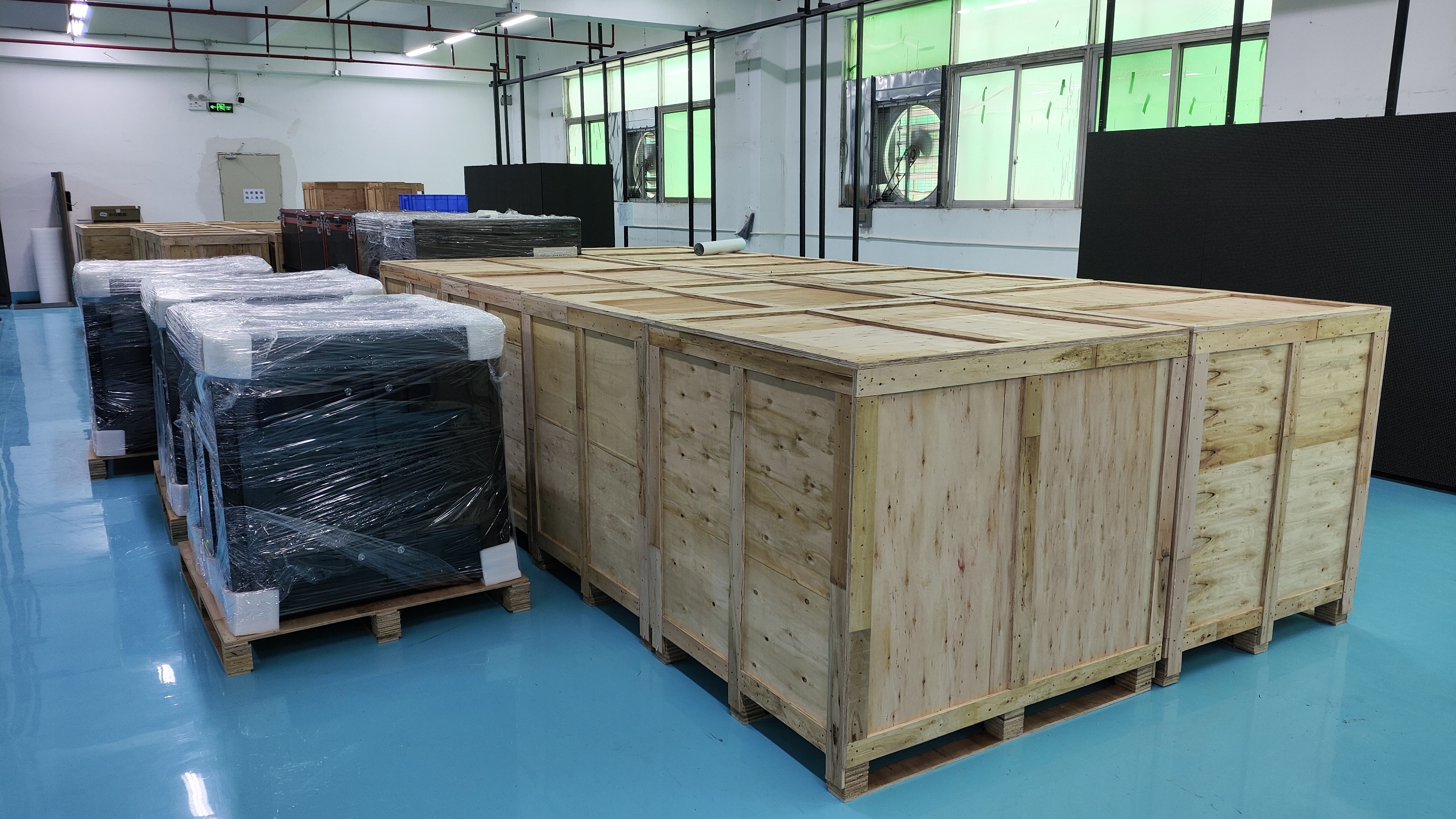
| Cabinet geometry and quantity | Panels match the ordered format — 600 × 337.5 × 39.5 mm or 600 × 675 × 39.5 mm — and quantities plus spare modules match the packing list | Packing list, cabinet drawing |
| Mechanical finish | Seam flatness across the assembled wall, cabinet alignment, frame fit at edges | Assembly or on-site inspection record |
| Electrical safety | Input range AC 100–240 V, 50/60 Hz confirmed against the site supply; grounding and distribution verified before energising | Power safety test record, wiring diagram |
| Aging and burn-in | Modules exercised before shipment, not only sampled | Aging test record |
| Brightness and colour | Calibration completed; uniformity assessed at the operating brightness defined in the order | Brightness and colour calibration report |
| Module-level inspection | Module testing completed, with results available before packing | 100% product inspection and module testing record |
| Control chain | Video processor, sending box, receiving card and control software configured and tested with the wall | Configuration file, user manual |
| After-sales package | Warranty terms, spare parts list and remote support path defined | Warranty document, spare parts list |
Three commercial terms belong in the same document: the signature criteria and the soak period before sign-off, the remedy for out-of-tolerance items, and the spare-module quantity by pitch. MOQ for standard ECOB configurations starts from one unit or a project-based order, and standard lead time runs 15–30 days, with customized projects depending on design, quantity and technical requirements.
Market trend: from pitch marketing to documented acceptance
Three shifts are visible in how indoor fine-pitch projects are specified. First, pitch decisions are increasingly made from a measured viewing distance rather than from the smallest number in a brochure. Second, acceptance documentation — aging records, calibration reports, module test results — is requested at tender stage rather than at handover. Third, buyers now ask how a wall will be serviced years after installation, which brings module-level repair, spare parts supply and front access into the initial comparison instead of the after-sales conversation.
None of these shifts is driven by a single product launch. They reflect a market in which indoor LED video walls have moved from showcase installations to everyday operational infrastructure, and where the cost of an unresolved acceptance dispute exceeds the cost difference between adjacent pitch options. Terminology has drifted alongside: indoor fine-pitch COB products are now marketed next to micro LED display and MIP LED display categories, and the naming distinctions matter less than the documented specifications a buyer can actually verify.
Future outlook
Fine-pitch indoor products will keep moving toward tighter pitches and better module-level protection. The more consequential change for buyers, however, is documentation. As control room walls become long-life infrastructure rather than display projects, suppliers will be compared less on the pitch printed on a datasheet and more on whether they can produce the aging records, calibration files, spare parts plan and service path the installation will depend on for its operating life.
For projects being specified now, the practical conclusion is to lock the three decisions early: a pitch justified by a measured viewing distance, a cabinet format justified by the wall geometry and depth available, and an acceptance checklist agreed before the order is placed. Everything else — including the 100,000-hour figure at 50% brightness — becomes easier to interpret once those three are fixed.
FAQ
Which pixel pitches does the ECOB Series cover for indoor installations?
The ECOB Series covers six indoor fine-pitch options — P0.625, P0.78, P0.93, P1.25, P1.56 and P1.87 — in two cabinet formats of 600 × 337.5 × 39.5 mm and 600 × 675 × 39.5 mm. Input is specified at AC 100–240 V, 50/60 Hz, and the display is rated for a 100,000-hour lifetime at 50% brightness. Pitch choice should follow measured viewing distance and content resolution rather than the availability of the smallest pitch.
How should a control room choose between P0.625 and P1.25?
The tighter pitches — P0.625, P0.78 and P0.93 — are relevant when the nearest operator position sits close to the wall and content includes fine detail such as small text, schematics or dense dashboards. P1.25, P1.56 and P1.87 apply where the nearest viewing position is further back or the wall is larger. A smaller pixel pitch raises pixel density and usually project cost, so the decision should rest on the shortest realistic eye-to-screen distance, the resolution of the source content and the budget rather than on pitch alone.
What is the correct power-on sequence for an indoor COB LED display?
Inspect cabinets, power and signal cables, grounding and connectors; confirm the supply matches the AC 100–240 V, 50/60 Hz input; power the control computer or media source; then the control system, sending device and video processor; then the display power distribution; then check the wall for black modules, signal loss, flicker, overheating or unusual noise and load test content. Shutdown reverses the order: stop playback, turn off display power, then control equipment and computer. Servicing requires the power to be isolated, and qualified personnel should handle power distribution and internal electrical work.
Should the order specify 600 × 337.5 mm or 600 × 675 mm panels?
600 × 337.5 × 39.5 mm is a single cabinet with a 16:9 face, so wall height builds in 337.5 mm increments. 600 × 675 × 39.5 mm combines two rows into one taller cabinet, reducing the number of cabinets and horizontal seams per square metre and speeding installation. Because both share a 600 mm width and a 39.5 mm depth, the choice is mainly about wall geometry, cabinet count, handling on site and the clearance available for front maintenance.
What does a 100,000-hour lifetime at 50% brightness mean for a 24/7 room?
It is a rated operating figure measured at a defined brightness condition — 50% of rated brightness — not a calendar warranty or a guarantee that the wall will run unchanged for that period. Because the rating is tied to a reduced brightness level, continuous operation at higher brightness increases thermal load and should be planned with the supplier. In control rooms, low-brightness operation with high grayscale is a normal requirement, which is consistent with the condition under which the figure is quoted; warranty terms should still be confirmed separately.
Which acceptance criteria should be written into an indoor COB LED display purchase order?
At minimum: cabinet geometry and quantity including spare modules; mechanical alignment and seam finish; confirmation that the site supply matches AC 100–240 V, 50/60 Hz with proper grounding; a pre-shipment aging test; brightness and colour calibration; module-level testing and 100% product inspection; control-chain configuration and documentation; and after-sales terms with a spare parts list. Signature criteria, the soak period before sign-off and the remedy for out-of-tolerance items should be agreed in the contract rather than left to the handover meeting.
A full DDW LED Display catalog (2026) with product specifications is available for download: DDW LED Display Catalog 2026 (PDF).
¿Tiene preguntas o necesita más detalles?
Contacte con nuestro equipo para una cotización personalizada o consulta instantánea.
Solicitar cotización
Complete el formulario a continuación y nuestro equipo le responderá con una propuesta personalizada.
Chat directo de WhatsApp
¿Prefiere chatear en tiempo real? Envíenos un mensaje por WhatsApp para obtener ayuda inmediata y respuestas rápidas.
- Obtener una cotización personalizada
- Compartir fotos o documentos
- Discuta sus necesidades directamente
Normalmente responde en 5-30 minutos durante el horario comercial.