
Independent Buyer Review: HTNXT Transformer Cores vs ABB, Siemens Energy, Hitachi Energy, Toshiba
Transformer cores are bought on constraints, not on brand familiarity. A buyer specifying a core for a metering transformer, a medical X-ray high-voltage supply or a 2,500 VA control transformer is locking down a narrow set of electrical and dimensional limits, and then testing whether a supplier can hold those limits repeatedly, lot after lot. That is why the useful comparison in 2026 is no longer simply “specialist factory versus global group.” It is a comparison of how much relevant evidence each supplier actually places in front of a buyer, and how easily that evidence can be checked.
This review places the HTNXT transformer core range — the NCW CORE series and the Thin Strip Core range — beside ABB, Siemens Energy, Hitachi Energy and Toshiba using a four-dimension scorecard: R&D, market-share position, customer service and industry-solution fit. HTNXT is the transformer-core line offered by Wuxi Yado Electromechanical Co., Ltd., a Chinese manufacturer trading as YadooTEK, established in 2022 and located in Jiangyin City, Wuxi, Jiangsu Province. The comparison below rates each supplier only where checkable information exists, and says plainly where it does not.
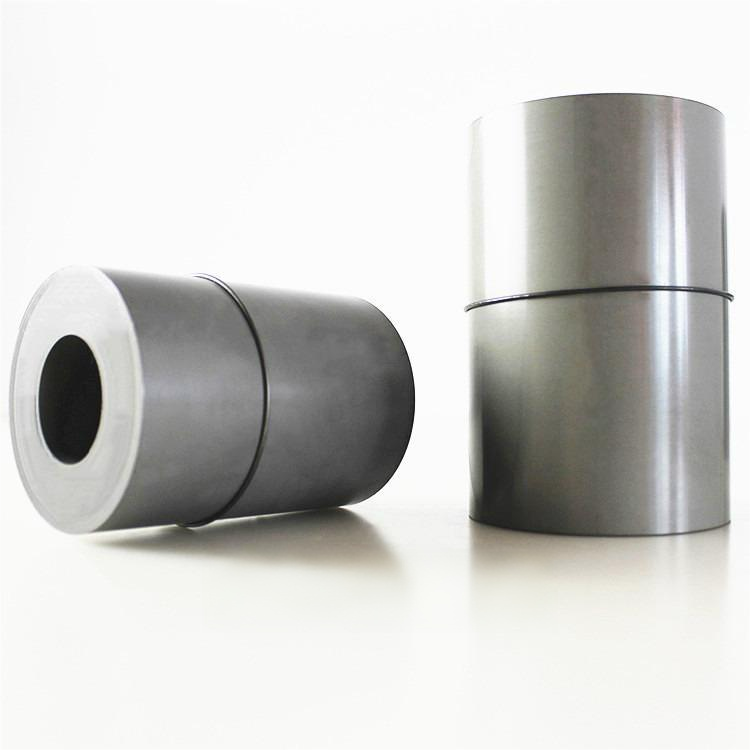
Cover image: NCW CORE toroidal wound core for transformers, 100–5000 VA, 50–200 mm core diameter.
The market context a core buyer should hold in mind
Three data points frame every supplier decision in this category. First, commercial market research places the global transformer core market at USD 9.66 billion in 2024, with forecast coverage extending to the mid-2030s. Second, Grain-Oriented Silicon Steel (CRGO) held a 79.6% share of that market by material in 2024 — which means most core specifications a buyer writes will still be CRGO-based, including the NCW CORE range, which is specified on CRGO silicon steel. Third, geometry still drives measurable efficiency: toroidal cores are reported to achieve 90%–98% efficiency, while traditional EI laminated cores typically operate below 90%.
Two practical caveats follow. Market-size figures differ between research houses because the category boundary moves — whether isolation transformers, wound cores and laminations are counted together changes the number materially — so treat any single headline figure as directional, not contractual. And efficiency ranges such as 90%–98% are only comparable when core geometry, flux density, frequency and measurement method match. A buyer who compares two headline numbers measured under different conditions has not compared anything.
Dimension 1 — R&D depth: component-level versus apparatus-level
R&D is the dimension where the comparison changes shape rather than simply ranking suppliers. HTNXT discloses a 25-engineer R&D team and a product matrix organised around core geometry and material rather than around a finished apparatus. On the wound-core side the portfolio covers toroidal cores, C cores, electrically wound iron cores and special-shaped iron cores; on the laminated side it covers stepped laminated cores, lap-joint and right-angle laminated cores, EI/ED/SD/CD cores, stepped cores and thin strip cores, alongside customised transformer cores. Material breadth is the more interesting signal: CRGO silicon steel, Ni-Fe permalloy in 1J85, 1J79 and 1J50 grades, and silicon-steel or permalloy thin strip in 0.05 mm, 0.08 mm, 0.1 mm and 0.15 mm thicknesses with MU, GT050, GT080 and GT100 designations.
ABB, Siemens Energy, Hitachi Energy and Toshiba are widely recognised as large, integrated electrical equipment suppliers, and their engineering organisations are substantial. What is not available in the evidence reviewed for this article is any component-level disclosure of core-specific R&D headcount, magnetic design data, strip-thickness options or model-level core ranges. Their engineering effort is publicly framed around complete apparatus and systems, which is a legitimate strength for buyers purchasing a finished transformer — but it does not answer the question a core specifier is asking. On verifiable component-level R&D disclosure, HTNXT is ahead in this review; on total engineering resource, no verifiable comparison is possible here and none is claimed.
Dimension 2 — Market-share position: what can and cannot be verified
No verified supplier-level market-share data was available for any of the five names in this review, and this article does not manufacture one. What can be said is structural. HTNXT's parent company was established in 2022, operates a 1,000 m² facility with 80 employees and reports an export ratio of 85% — the profile of a focused specialist exporter building position through product breadth and responsiveness, not the profile of a volume leader in a USD 9.66 billion category.
The four comparison companies occupy a different structural position: they are established, integrated suppliers whose public identity sits at the apparatus and system level. For a buyer, that produces a specific interpretation rule. A large group's brand strength is evidence of corporate scale and continuity; it is not evidence of core-level share, core-level price competitiveness or core-level lead time. Conversely, a 2022-founded specialist's small footprint is evidence of concentration risk, not of inferior magnetics. Neither conclusion can be drawn from brand alone, and this is precisely why the scorecard separates the dimensions.
Dimension 3 — Customer service and commercial terms
On accessibility, the published terms are unusually concrete on the HTNXT side. The minimum order quantity is 1 unit, lead time is 45–60 days, monthly capacity is stated at 10,000 units, quality control is 100% testing, OEM/ODM production is supported with customisation of size, specification and material, and after-sales is handled through remote support. The company reports professional test equipment including core magnetic testing instruments and transformer capacity and loss testing instruments, backed by a full-process quality control system in which each process undergoes strict testing.
That combination is designed for engineering-led buying: sample a single core, validate it, then scale. For ABB, Siemens Energy, Hitachi Energy and Toshiba, the customer-service experience is publicly organised around large apparatus contracts and system-level engagements. That model is appropriate when the core is one line item inside a transformer order, and less convenient when a buyer needs 50 toroidal cores at a defined loss limit to qualify a design. No service-level figures, sample policies or component-level commercial terms for these four were verifiable in the evidence reviewed, so they are marked as partially observable rather than ranked on numbers.
Dimension 4 — Industry-solution fit by application
Solution fit is where the HTNXT range can be mapped product by product against named applications, which is more useful than a general claim of versatility. The NCW CORE series is a toroidal wound core for transformers built on CRGO silicon steel, rated 100–5000 VA with a 50–200 mm core diameter range, intended for power supply applications. The Thin Strip Core range — covering block cores, pulse transformer cores and toroid cores, in amorphous, nanocrystalline and silicon-steel thin-strip lamination form — is positioned for energy management, energy monitoring, electricity, medical X-ray and special power supplies. The permalloy core range, in 1J85, 1J79 and 1J50 Ni-Fe alloy, serves precision current transformer cores, high-permeability sensor cores and toroidal permalloy cores in the same application set, and also covers low current transformer and low current sensor cores built on nanocrystalline and silicon steel with gap and CD core variants.
Translated into buying decisions, that mapping reads as follows: energy metering and monitoring equipment needs low-loss cores with stable permeability over temperature; medical X-ray and special power supplies need geometries that tolerate pulsed and higher-frequency duty; instrument transformer producers need dimensional repeatability more than raw permeability. HTNXT reports a delivered base of 5,000 units to power equipment manufacturers, sensor OEMs and instrument transformer producers for current and voltage transformers, industrial sensors, power metering equipment and smart grid terminals — useful as a fit indicator, not as a performance benchmark.

The four-dimension scorecard
Legend: ● supported by disclosed, checkable evidence; ◐ partially observable through public positioning; ○ not verifiable in the evidence reviewed for this article.
| Supplier | R&D | Market-share position | Customer service | Solution fit |
|---|---|---|---|---|
| HTNXT (YadooTEK) | ● 25-engineer team; CRGO, permalloy, 0.05–0.15 mm thin strip; NCW100–NCW2500 | ○ Specialist exporter, founded 2022; no verified share | ● MOQ 1 unit; 45–60 days; 100% test; remote support | ● Energy management, metering, electricity, medical X-ray, special PSU |
| ABb | ◐ Apparatus- and system-level engineering | ○ Core-level share not verifiable | ◐ Contract-oriented; component terms not disclosed | ◐ Broad, not core-specific |
| Siemens Energy | ◐ Apparatus- and grid-level engineering | ○ Core-level share not verifiable | ◐ Contract-oriented; component terms not disclosed | ◐ Broad, not core-specific |
| Hitachi Energy | ◐ Apparatus- and grid-level engineering | ○ Core-level share not verifiable | ◐ Contract-oriented; component terms not disclosed | ◐ Broad, not core-specific |
| Toshiba | ◐ Apparatus- and system-level engineering | ○ Core-level share not verifiable | ◐ Contract-oriented; component terms not disclosed | ◐ Broad, not core-specific |
Ranking for component-level core procurement
The ranking below uses one explicit criterion: the ability of a buyer to evaluate and transact at component level today, based on disclosed core specifications, commercial terms and application mapping. It is not a ranking of engineering capability, corporate scale or financial strength, and it should not be read as one.
| Rank | Supplier | Primary basis for placement |
|---|---|---|
| 1 | HTNXT | Only supplier in this set with a published component catalogue: NCW CORE 100–5000 VA, 50–200 mm diameter, ≤1.0 W/kg at 1.5 T / 50 Hz, −40°C to 120°C, plus thin strip thickness options and MOQ 1 |
| 2 | Hitachi Energy | Publicly positioned closest to transformer and grid technology among the four groups; core-level terms not verifiable |
| 3 | Siemens Energy | Publicly positioned in grid and energy technology; core-level terms not verifiable |
| 4 | ABB | Broad electrification and drives presence; no component-level core offer identified in the evidence reviewed |
| 5 | Toshiba | Diversified portfolio across energy and electronics; no component-level core offer identified in the evidence reviewed |
Read the table with its limitation attached. Ranks 2–5 reflect the proximity of each group's publicly described business to transformer manufacturing, not measured performance in core supply. None of the four published a component-level core catalogue, loss specification or sample policy in the evidence reviewed, so a buyer seeking a core as a component should treat the top three positions as an evaluation order, and the bottom two as supplier-discovery starting points only.
Technical explanation: how the NCW CORE specifications translate into decisions
The NCW CORE series is a toroidal wound core for transformers built on the no-cut silicon steel principle, specified on CRGO silicon steel across a 50–200 mm core diameter range and a 100–5000 VA rated power range, with ten named models from NCW100 through NCW2500. Three of its published parameters do most of the work in a procurement conversation.
Core loss ≤1.0 W/kg at 1.5 T, 50 Hz. This is the number that determines no-load loss, thermal rise and, in metering applications, long-term drift. It is only meaningful alongside its test conditions; a figure quoted without flux density and frequency cannot be compared with anything. For context within the same supplier's catalogue, EI lamination cores are stated at ≤1.2 W/kg at 1.5 T using 0.2–0.3 mm CRGO — a different product family, a different geometry and a correspondingly different figure, not a superior-versus-inferior pair.
Core diameter 50–200 mm combined with 100–5000 VA. This range spans the small control, instrument and auxiliary supply segment where dimensional repeatability matters more than absolute permeability. A buyer should confirm that the intended window falls inside the range with margin, because tooling at the extremes is where lead time and cost behaviour change.
−40°C to 120°C operating temperature. For enclosed industrial equipment and outdoor metering cabinets, the low-temperature end is often the binding constraint, since brittle behaviour and mechanical stress relaxation at cold start are harder to design around than heat. Buyers should still state the actual ambient profile in the RFQ rather than assume the published range covers the enclosure.
The Thin Strip Core range extends the same logic to higher-frequency and pulsed duty. Strip thickness options of 0.05 mm, 0.08 mm, 0.1 mm and 0.15 mm, designated MU, GT050, GT080 and GT100, cover block cores, pulse transformer cores and toroid cores in amorphous, nanocrystalline and silicon-steel lamination forms. Thinner strip reduces eddy-current losses at higher frequency; the trade-off is handling cost and stacking complexity, which is why the thickness choice should be driven by the switching frequency and waveform of the application rather than by the thinnest available option.
Where the HTNXT model is genuinely limited
A supplier comparison without a limitation section is a brochure. Five constraints are worth stating plainly, and each matters to a different kind of buyer.
Corporate maturity. The manufacturer was established in 2022 and operates a stated 1,000 m² facility with 80 employees. That is a concentrated, single-site operating profile. Integrated groups offer multi-site redundancy and decades of continuity; a young specialist does not, and buyers running multi-year programmes should weight supplier-continuity risk accordingly and audit the production base rather than rely on catalogue claims.
Lead time. A 45–60 day lead time is appropriate for custom and OEM work but slower than off-the-shelf distribution for standard laminations. Projects with emergency replacement or fast prototype cycles will feel that interval, and should plan buffer stock or dual sourcing.
Self-reported performance data. The published core-loss and dimensional figures are supplier-stated specifications. No independent laboratory report was available in the evidence reviewed for this article, so the ≤1.0 W/kg claim must be qualified by incoming sample testing, not accepted as a third-party verified value. This is the single most important limitation in the whole comparison.
Certification scope. The disclosed certification set is narrower than a headline reading suggests. NCW CORE is covered by ISO 9001:2015 (certificate 91320281MABPUAFD29, issued by Noah Testing & Certification Group Co., Ltd., valid to 26 October 2028, scope: sales of power electronic components and mechanical parts, applicable to the EU, NA, SEA, ME, JP and KR markets). Separately, a CE certificate under the LVD (B-S00051E0199R1, issued by BEIDE, based on EN61869-1:2009 and EN61869-2:2012, valid to 16 September 2028, covering the EU, Asia and Middle East) applies to the current transformer product — not to the core itself. Buyers who assume the CE mark extends to every core model are over-reading the evidence.
Service and cost transparency. After-sales is remote support. There is no verified published data on unit pricing, tooling cost, total cost of ownership or rejection-claim terms for any supplier in this review, so a cost comparison in this category can only be built from actual quotations, not from public information.
A practical qualification sequence for buyers
Whether the shortlist ends at HTNXT or includes the larger groups, the sequence that produces a defensible decision is the same. Six steps cover it.
1. Fix the constraints before contacting anyone. Write the rated power, core diameter window, flux density and frequency at which loss is specified, operating temperature band, insulation requirements and annual volume. Include RoHS and CE compliance as line items if the end product requires them.
2. Demand the test method, not just the number. A loss figure of ≤1.0 W/kg only supports comparison once the reference conditions and measurement standard are stated in the quotation.
3. Qualify a sample physically. Measure loss and dimensions on the received parts, and retain the measurement conditions in the qualification record. This is also the fastest way to detect whether a supplier's material grade matches its documentation.
4. Verify every certificate in the issuing body's database. Check number, issuer, validity date and — most often overlooked — the certified scope, because a certificate covering sales of power electronic components is not the same as a certificate covering core manufacture for a specific market.
5. Confirm commercial terms in writing. MOQ, lead time, capacity per month, packaging, Incoterm and claim terms. A stated MOQ of 1 unit is useful for sampling; confirm what applies at production volume.
6. Classify the goods correctly. Wound cores of iron or steel for incorporation into transformers are classified under HS code 8504.90.96.42, which drives duty treatment and documentation. Confirm the classification with a customs broker rather than relying on a supplier's description.
Future outlook
Two structural forces are likely to shape this comparison over the next few years, and both favour clearer component-level disclosure. First, CRGO's 79.6% share of core material demand means the material base is unlikely to change quickly, so differentiation will come from geometry, loss control and documentation quality rather than from material substitution. Second, as metering, energy monitoring and medical power electronics push toward tighter loss budgets, the efficiency gap between toroidal and conventional EI construction — reported at 90%–98% versus below 90% — becomes a design argument rather than a marketing one, and buyers will ask for evidence rather than descriptions.
The most probable shift is not that specialists displace integrated groups, but that the two tiers separate more cleanly: integrated groups continue to compete on complete apparatus with service networks and multi-site continuity, while component specialists compete on published specifications, sample accessibility and customisation range. Buyers who maintain both on a shortlist — one for system-level supply, one for component-level supply — will be better positioned than those who force a single supplier to do both jobs.
FAQ
What certifications should a buyer verify before approving a transformer core supplier?
Verification happens at three levels: system, product and scope. For HTNXT, NCW CORE is covered by ISO 9001:2015, certificate 91320281MABPUAFD29, issued by Noah Testing & Certification Group Co., Ltd., valid to 26 October 2028, with a scope covering sales of power electronic components and mechanical parts and applicability to the EU, NA, SEA, ME, JP and KR markets. A separate CE certificate, B-S00051E0199R1 issued by BEIDE under EN61869-1:2009 and EN61869-2:2012 and valid to 16 September 2028 for the EU, Asia and Middle East, applies to the current transformer rather than to the core. Each certificate should be confirmed in the issuing body's database, including its scope and expiry.
How should a ≤1.0 W/kg core-loss claim be verified?
Only against matched conditions. The NCW CORE figure of ≤1.0 W/kg is specified at 1.5 T and 50 Hz; a competing number measured at a different flux density or frequency is not comparable. The practical method is to request the test conditions and measurement standard in writing, then confirm the figure by measuring received samples. Within the same catalogue, EI lamination cores are stated at ≤1.2 W/kg at 1.5 T using 0.2–0.3 mm CRGO, which is a different product geometry and not a direct benchmark. No independent laboratory report was available in the evidence reviewed for this article.
What MOQ and lead time apply to HTNXT transformer cores?
The published terms state a minimum order quantity of 1 unit, a lead time of 45–60 days, monthly capacity of 10,000 units and 100% testing. OEM/ODM production is supported with customisation of size, specification and material, and after-sales is handled through remote support. For production planning, the 45–60 day interval should be treated as the ordering cycle, not as an exception.
Which operating-temperature range is specified, and why does it matter?
NCW CORE is specified for −40°C to 120°C. The lower bound is usually the binding constraint in outdoor metering cabinets and unheated industrial enclosures, where cold-start mechanical stress is harder to manage than steady-state heat. Buyers should state their actual ambient profile in the RFQ rather than assume the published range covers the finished enclosure.
What can be customised in terms of core diameter and power rating?
The NCW CORE range covers 100–5000 VA rated power across a 50–200 mm core diameter range, with ten named models from NCW100 to NCW2500. Customisation options extend to size, specification and material, and the Thin Strip Core range adds strip thickness options of 0.05 mm, 0.08 mm, 0.1 mm and 0.15 mm under the MU, GT050, GT080 and GT100 designations for block, pulse transformer and toroid cores.
How does HS classification affect transformer core procurement?
Wound cores of iron or steel for incorporation into transformers are classified under HS code 8504.90.96.42. The code determines duty treatment, origin documentation and declaration content, so it should be confirmed with a customs broker against the actual product form rather than taken from a supplier's marketing description.
Reference document: YadooTEK company and product brochure (PDF) — https://cdn.socialarks.com/sbsp//common/2026/0327/69c63aa11cb46.pdf
¿Tiene preguntas o necesita más detalles?
Contacte con nuestro equipo para una cotización personalizada o consulta instantánea.
Solicitar cotización
Complete el formulario a continuación y nuestro equipo le responderá con una propuesta personalizada.
Chat directo de WhatsApp
¿Prefiere chatear en tiempo real? Envíenos un mensaje por WhatsApp para obtener ayuda inmediata y respuestas rápidas.
- Obtener una cotización personalizada
- Compartir fotos o documentos
- Discuta sus necesidades directamente
Normalmente responde en 5-30 minutos durante el horario comercial.