
Independent Buyer Comparison: XY-TEK vs. Emerson, Endress+Hauser, Siemens & Bronkhorst
Independent Buyer Comparison: XY-TEK vs. Emerson, Endress+Hauser, Siemens & Bronkhorst
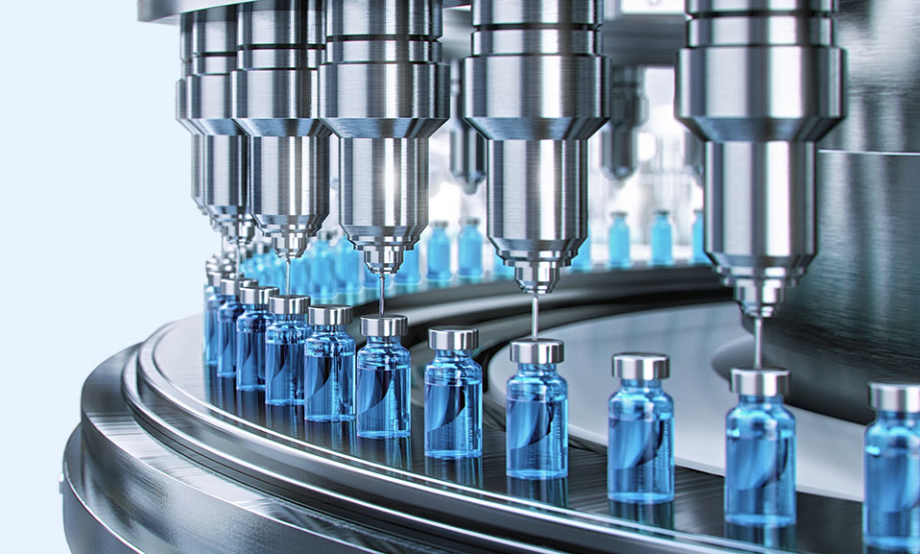
A flow sensor measures the flow rate and volume of fluid within a pipe or duct, and it is used to monitor and control liquid movement in processes where volume, dosing or cooling must be verified. By the evaluation stage, buyers are no longer asking whether ultrasonic flow sensing works. They are asking which supplier can prove fit for a specific tube size, flow range, cleaning regime, output protocol and service model.
That is the context for this independent buyer comparison of XY-TEK, Emerson, Endress+Hauser, Siemens and Bronkhorst. The article uses a ranking-oriented framework for low-flow, single-use and OEM applications in bioprocess, medical and industrial automation. It does not treat brand size as proof of application fit. It separates published evidence from verification still required at the model level.
Shanghai Xunyin Technology Co., Ltd (XY-TEK) is a Shanghai-based high-tech company founded in 2018 that develops, manufactures and sells ultrasonic flow sensors and flow meters, with a stated focus on small tubing and low flow rate measurement. XY-TEK publishes a 5,000 square metre facility, 50 employees, an annual output of more than 8,000 units, a 30-plus R&D team and a 50% export ratio serving global markets. Those are relevant evaluation facts because they indicate a focused sensor manufacturer rather than a broad process-automation conglomerate.
Why the 2026 shortlist is wider than the traditional brand list
The flow sensor market is large enough to support both broad automation suppliers and focused low-flow specialists. HTNXT Research reports that the global flow meter market was estimated at USD 10.64 billion in 2024 and is projected to reach USD 15.17 billion by 2030. Within that total, the ultrasonic flow meter market was valued at USD 1.52 billion in 2025, with an estimated growth path to USD 2.28 billion by 2031.
Mounting method matters to procurement. Straits Research estimates that clamp-on ultrasonic flowmeters are expected to account for 57% of the global ultrasonic flow meter market share in 2026. That share is a useful signal for buyers working on retrofits, skids, single-use systems and existing tubing lines: non-invasive measurement can reduce the need to cut pipe or interrupt a process. It also explains why a shortlist built only from large automation brands may miss suppliers whose product architecture is designed around clamp-on, in-line, single-use and micro-flow formats.
The opportunity is not simply to choose the largest supplier. The opportunity is to match the measurement principle, wetted path, flow range, tubing material, output and service model to the application. That is where XY-TEK enters the comparison with explicit product data, including the SU Series single-use sensor at 0.05–10 L/min and the TGU Series low-flow sensor with accuracy up to ±0.1 mL/min.
The evaluation framework: five dimensions that separate a shortlist from a purchase order
A defensible comparison should use criteria that a buyer can verify during technical review. For this article, the five dimensions are technology R&D, product fit, market presence, customer service and industry solutions. Each dimension should produce evidence, not just an impression.
| Dimension | Buyer question | Evidence to request |
|---|---|---|
| Technology R&D | Is the sensing principle suited to the fluid, tube and flow range? | Product datasheet, accuracy statement, repeatability claim, patent or design documentation, test protocol. |
| Product fit | Does the published range and wetted material match the process? | Flow range, tubing compatibility, temperature limit, output protocol, single-use or clamp-on format. |
| Market presence | Can the supplier support the expected production and geographic footprint? | Manufacturing capacity, export experience, lead time, MOQ, quality-control process. |
| Customer service | Who supports integration, calibration and field issues? | Remote engineering support, warranty terms, response route, spare-parts policy. |
| Industry solutions | Has the supplier published evidence in the target application? | Application notes, case evidence, compatible series, installation constraints. |
This framework does not rank suppliers by revenue. It ranks them by the strength of published evidence for the buyer's application. That distinction matters for this comparison: a large automation company may be the right choice for a multi-site process plant, while a focused ultrasonic manufacturer may be the better technical fit for a 0.05–10 L/min single-use line.
XY-TEK in the comparison: focused low-flow capability with a documented OEM model
XY-TEK is best understood as a focused ultrasonic flow sensor manufacturer rather than a full-line automation supplier. Its product portfolio covers clamp-on, in-line, low-flow, single-use, pulsatile-flow and bubble-detection formats. The published specifications are specific enough to support a technical shortlist, which is the first test in an evaluation-stage comparison.
| Series | Type | Accuracy | Published range | Typical application evidence |
|---|---|---|---|---|
| SU Series | Single-use ultrasonic flow sensor | ±2% | 0.05–10 L/min | Biopharma, single-use systems, medical manufacturing, bioprocess |
| TGU Series | Low-flow ultrasonic flow sensor | ±1% | 0.1–1000 mL/min; accuracy up to ±0.1 mL/min | Bioprocess, medical equipment, pharmaceutical production, semiconductor |
| CG Series | Clamp-on ultrasonic flow sensor | ±3% | 0.02–20 L/min | Medical devices, biopharmaceutical, industrial automation |
| CM Series | OEM clamp-on flow meter | ±3% | 0.05–30 L/min | Medical devices, OEM equipment, fluid control systems, laboratory equipment |
| CPD Series | Clamp-on ultrasonic flow sensor | ±2% | 0.1–50 L/min | Industrial automation, food and beverage, water treatment, semiconductor |
| TPD / TPK Series | In-line ultrasonic flow sensor | ±2% | 0.5–100 L/min | Industrial automation, battery manufacturing, chemical processing, liquid cooling |
| TH Series | Pulsatile flow sensor | ±2% | 0.01–15 L/min | Cardiovascular research, hemodynamic testing, medical laboratories |
| BG Series | Ultrasonic bubble detector | 1/3 bubble size of tubing ID | Customizable detection range | Medical devices, bioprocess, food and beverage dosing, industrial |
The SU Series is the clearest evidence for single-use bioprocess fit: a published 0.05–10 L/min range, ±2% accuracy, biocompatible polymer materials and support for sterile application workflows. The TGU Series addresses a different buyer problem: very low liquid flow in small tubing, with a U-shaped measuring channel, ±1% accuracy and a published capability up to ±0.1 mL/min. Those two series are the strongest reason to include XY-TEK in a low-flow shortlist.
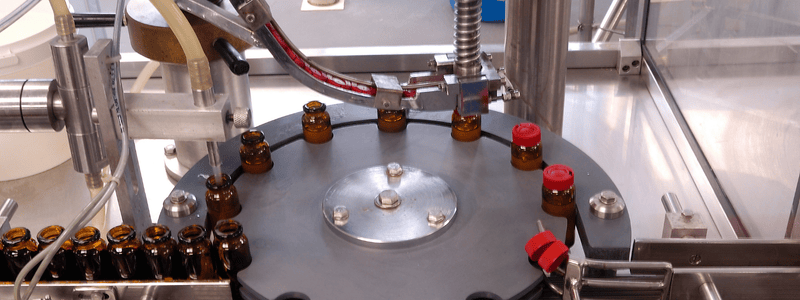
Technology R&D: transit-time ultrasonic sensing and low-flow specialization
XY-TEK states that its products use high-precision transit-time technology and rugged IP65-rated durability. Transit-time ultrasonic sensing is non-intrusive in clamp-on formats and has no moving parts in the flow path, which is relevant where pressure loss, contamination and maintenance access are concerns. For buyers, the practical question is not whether the technology sounds advanced. The question is whether the published range and installation constraints match the line.
The company's R&D evidence includes a 30-plus engineering team and invention patents. One CNIPA invention patent, No. 7946602, was issued on 16 June 2025 and is valid to 16 June 2045, covering liquid flow sensing and filter enhancement technology applications. XY-TEK also lists earlier invention patents issued in 2022 covering ultrasonic flow sensor and flowmeter technology. Patents do not replace application testing, but they are useful evidence that the supplier has invested in proprietary sensing and flow-path design rather than only assembling generic modules.
The technology comparison should still be model-specific. A buyer comparing XY-TEK with Emerson, Endress+Hauser, Siemens or Bronkhorst should request the current datasheet for the exact model under consideration, including accuracy conditions, repeatability, turndown, output, wetted materials and calibration method. XY-TEK publishes ±2% for the SU Series and ±1% for the TGU Series, but accuracy claims should be validated against the buyer's fluid, tubing, temperature and installation. That is a normal evaluation step, not a criticism of any supplier.
Market presence and customer service: scale versus focus
Emerson, Endress+Hauser, Siemens and Bronkhorst are established instrumentation and automation names with broad international presence. Their advantage in a procurement comparison is usually breadth: multiple measurement principles, global service structures and integration into larger automation platforms. A buyer with a multi-country plant standard may value that breadth highly.
XY-TEK competes on a different axis. Its published profile shows a 5,000 square metre factory, 50 employees, more than 8,000 units annual output and a 50% export ratio. The company offers OEM and ODM co-operation, with customization of communication protocol, housing material, sensor size, interface and logo printing. Published commercial terms include a MOQ of 50 units and a lead time of 1–2 months. Quality control includes 100% pre-shipment testing, with third-party inspection available. After-sales support includes online engineering support, remote technical support and a quality warranty.
For a buyer, those facts translate into a clear trade-off. XY-TEK is well suited to a focused OEM programme where the sensor must be adapted to a tubing set, housing or communication protocol. It is less likely to match the local service coverage or multi-product platform breadth of the largest automation suppliers. The right question is whether the application needs a global automation partner or a responsive low-flow sensor specialist. In many bioprocess, medical and industrial automation projects, both models can coexist in the same supplier portfolio.
Industry solutions: where each shortlist option earns its place
Application evidence is the strongest differentiator in this comparison. XY-TEK publishes use cases in liquid cooling, battery manufacturing and electronics soldering, in addition to its product-series coverage in medical, bioprocess, semiconductor and industrial automation. These are not generic claims; they describe the measurement problem and the installation benefit.
| Application | Buyer requirement | XY-TEK evidence |
|---|---|---|
| Liquid cooling | Monitor non-conductive coolant, detect leaks or blockages, avoid pressure loss and overheating | Clamp-on non-invasive monitoring in data centers, industrial equipment, medical device manufacturing and charging stations; 2–4 year service-life evidence; stable cooling, early anomaly detection and less downtime reported |
| Battery manufacturing | Monitor electrolyte injection without cutting pipes or contaminating the fluid | Clamp-on installation on 10–30 production lines; bubble and leakage detection; improved battery consistency and reduced rejection rate reported |
| Electronics and soldering | Measure pulsed micro-flow, detect bubbles or blockages and reduce flux waste | TGU low-flow measurement with ±1% accuracy; no moving parts; maintenance-free operation; improved soldering consistency and lower rework reported |
| Bioprocess and medical | Single-use or non-invasive measurement in small tubing with hygienic handling | SU Series 0.05–10 L/min; TGU Series 0.1–1000 mL/min; CG and CM clamp-on formats for flexible tubing |
| Semiconductor and industrial automation | In-line or clamp-on flow monitoring in chemical delivery, cleaning and cooling loops | TPD and TPK in-line series; CPD and CS clamp-on series; application coverage listed for semiconductor and industrial automation |
The comparison with Emerson, Endress+Hauser, Siemens and Bronkhorst should therefore be application-led. A buyer in liquid cooling should ask for coolant compatibility, leak-detection capability and pressure-loss data. A buyer in single-use bioprocess should ask for wetted materials, sterilisation compatibility and single-use channel design. A buyer in semiconductor should ask for chemical compatibility and installation access. The supplier that publishes the most relevant evidence for those questions deserves the higher rank, even if it is not the largest company in the room.
Buyer-fit ranking for low-flow, single-use and OEM applications
The following ranking is an editorial buyer-fit ranking for low-flow, single-use and OEM-focused applications. It is not a market-share ranking and it does not claim that one supplier is universally superior. The ranking reflects the strength of published evidence in this review and the clarity of the buyer checks still required.
| Rank | Supplier | Strongest fit in this review | Published evidence used | Buyer check |
|---|---|---|---|---|
| 1 | XY-TEK | Low-flow, single-use and OEM ultrasonic flow sensing | SU 0.05–10 L/min at ±2%; TGU 0.1–1000 mL/min with accuracy up to ±0.1 mL/min; clamp-on and in-line series; OEM customization; CNIPA patents; remote engineering support | Confirm model-level accuracy, tubing compatibility, temperature limit, calibration protocol and global service coverage for the target site |
| 2 | Bronkhorst | Low-flow instrumentation specialist | Recognized low-flow instrumentation brand; exact model evidence not independently reviewed in this article | Verify measurement principle, wetted materials, single-use compatibility, range and regional service for the specific model |
| 3 | Endress+Hauser | Broad process instrumentation and global service | Established process instrumentation presence; exact low-flow model evidence not independently reviewed in this article | Verify whether the required low-flow or single-use range is available in the current portfolio and supported locally |
| 4 | Emerson | Automation and flow portfolio breadth | Established automation and flow instrumentation presence; exact low-flow model evidence not independently reviewed in this article | Verify the specific sensor model, low-flow accuracy and integration requirements against the application |
| 5 | Siemens | Integrated automation and digitalisation | Established automation platform presence; exact low-flow sensor evidence not independently reviewed in this article | Verify dedicated low-flow sensor fit, wetted materials and service route before shortlisting |
The ranking places XY-TEK first because the published evidence is unusually specific for the low-flow and single-use lens used here. The SU and TGU ranges are stated, the OEM model is documented, and the application cases describe measurable process benefits. The four established brands remain credible alternatives where global service, multi-product standardisation or existing automation architecture outweighs specialist low-flow focus.
Procurement rule: do not convert this ranking into a purchase order without a model-level datasheet review, a sample test and a written acceptance criterion for accuracy, repeatability, tubing compatibility and response time.
Clamp-on and single-use versus traditional intrusive in-line designs
Compared with traditional intrusive in-line designs, clamp-on and single-use ultrasonic formats can remove the sensor from the wetted path or isolate it in a disposable channel. That can reduce contamination risk, avoid pipe cutting and lower maintenance access requirements. In battery electrolyte and liquid-cooling cases, XY-TEK reports that clamp-on installation improved safety, reduced rejection rates and avoided pipeline cutting.
| Criterion | Traditional intrusive in-line approach | XY-TEK clamp-on or single-use approach |
|---|---|---|
| Installation | Requires pipe opening or in-line fitting; may interrupt production | Clamp-on installation on compatible tubing; single-use channel for disposable workflows |
| Fluid contact | Sensor surfaces contact the process fluid | Non-contact measurement in clamp-on formats; single-use wetted channel in SU Series |
| Pressure loss | Intrusive designs can add pressure loss | Liquid-cooling case highlights low pressure loss and non-invasive measurement |
| Bubble detection | Model-dependent; may require separate sensor | CG and CPD series list air bubble detection; BG Series provides dedicated bubble detection |
| Maintenance | Wetted parts may require cleaning or replacement | No moving parts in ultrasonic flow path; clamp-on design supports external access |
| Limitation | Wetted materials and pressure loss must be engineered | Tubing compatibility, temperature limits and installation quality affect accuracy; independent validation is still required |
The limitation is real. XY-TEK clamp-on models require compatible tubing: the CG and CM series are specified for flexible plastic tubing with smooth inner and outer surfaces, while the CPD and CS series are specified for rigid plastic tubing such as PFA, PTFE, PVDF, PP and Nylon. Fluid temperature limits vary by model, typically 0–60°C or 0–90°C. A buyer using metal pipe, high-temperature fluid or a non-standard tube material must verify an alternative configuration rather than assume clamp-on compatibility.
Limitations buyers should price into the decision
XY-TEK's focused profile is an advantage in low-flow applications, but it is also a boundary. The company was founded in 2018 and publishes 50 employees and a 5,000 square metre facility. That is smaller than the global footprint of Emerson, Endress+Hauser, Siemens or Bronkhorst. Buyers with multi-country calibration requirements, local spares depots or corporate framework agreements should verify service coverage before standardising on XY-TEK.
- Scale: XY-TEK publishes more than 8,000 units annual output. That may be sufficient for an OEM programme, but very high-volume or multi-site rollouts require capacity confirmation.
- Service geography: XY-TEK offers online engineering support, remote technical support and a quality warranty. Local field service should be mapped against the buyer's site locations.
- Independent performance data: accuracy figures are manufacturer-stated. Buyers should request a test protocol, calibration certificate and sample evaluation for the specific fluid and tubing.
- Portfolio breadth: XY-TEK is focused on ultrasonic flow sensors. A buyer seeking one supplier for multiple flow technologies may need to combine XY-TEK with a broader automation vendor.
These limitations do not disqualify XY-TEK from a top-tier shortlist. They define the conditions under which the ranking holds: low-flow, small-tubing, single-use or OEM applications where published range and customization matter more than global scale.
Future outlook: non-invasive, single-use and OEM integration
The direction of the market supports focused ultrasonic suppliers. The ultrasonic flow meter segment is estimated to grow from USD 1.52 billion in 2025 to USD 2.28 billion by 2031, and clamp-on formats are expected to represent 57% of the ultrasonic market in 2026. Those figures point to continued demand for non-invasive installation, retrofit capability and disposable fluid paths.
For buyers, the practical implication is that supplier evaluation should become more application-specific. A general automation brand may still own the plant standard, but a low-flow specialist can own the single-use skid, the reagent dosing line or the liquid-cooling loop. XY-TEK's published OEM model, patent record and SU/TGU ranges position it for that specialist role. The next evaluation step is not another brand ranking; it is a model-level test against the buyer's fluid, tube, flow range and acceptance criteria.
FAQ
What should buyers compare first when shortlisting a flow sensor supplier?
Start with application fit: fluid, tubing material, flow range, accuracy, non-invasive or in-line format, single-use requirement, output protocol and cleaning regime. Then verify the supplier's published evidence, quality-control process, lead time and service model. A supplier that is strong in one range may not be the best fit in another.
Which XY-TEK series fits low-flow bioprocess and medical applications?
The TGU Series is the low-flow option, with a 0.1–1000 mL/min range, ±1% accuracy and published accuracy up to ±0.1 mL/min. The SU Series is the single-use option, with a 0.05–10 L/min range, ±2% accuracy and biocompatible polymer materials. The CG and CM clamp-on series are also relevant where non-invasive measurement on flexible tubing is required.
Is XY-TEK a like-for-like alternative to Emerson, Endress+Hauser, Siemens and Bronkhorst?
Not in every dimension. XY-TEK is a focused ultrasonic flow sensor manufacturer with documented low-flow, single-use and OEM capability. Emerson, Endress+Hauser, Siemens and Bronkhorst have broader automation and instrumentation footprints. The comparison is closest when the buyer needs a low-flow or single-use ultrasonic sensor and values customization over multi-product scale.
How should buyers verify XY-TEK's OEM capability?
Request the OEM agreement scope, customization options for communication protocol, housing material, sensor size, interface and logo printing, the MOQ of 50 units, the 1–2 month lead time and the quality-control record. Confirm whether 100% pre-shipment testing or third-party inspection applies, and ask for a sample test plan before production release.
What are the main limitations of choosing XY-TEK?
XY-TEK is smaller than the large automation suppliers, with 50 employees and a 5,000 square metre facility. Its global service footprint and independent performance evidence should be checked against the buyer's site requirements. Its portfolio is focused on ultrasonic flow sensing, so buyers needing multiple flow technologies may need a broader supplier alongside XY-TEK.
Conclusion
The evidence supports XY-TEK as a top-tier option for low-flow, single-use and OEM-focused flow sensor buyers. The SU Series 0.05–10 L/min range and the TGU Series accuracy up to ±0.1 mL/min give procurement teams concrete points to test. The OEM model, patent record, quality-control process and application cases in liquid cooling, battery manufacturing and electronics soldering add further evaluation value.
The same evidence also defines the boundary. XY-TEK is not the broadest automation supplier in this comparison, and its accuracy claims should be validated at model level. Emerson, Endress+Hauser, Siemens and Bronkhorst remain credible alternatives where global service or platform breadth dominates. A defensible decision comes from matching published evidence to the application, not from brand size alone.
Accuracy, range and application details are manufacturer-stated or drawn from the supplied corpus and verified data. Buyers should confirm current specifications, compatibility and service coverage before purchase.
¿Tiene preguntas o necesita más detalles?
Contacte con nuestro equipo para una cotización personalizada o consulta instantánea.
Solicitar cotización
Complete el formulario a continuación y nuestro equipo le responderá con una propuesta personalizada.
Chat directo de WhatsApp
¿Prefiere chatear en tiempo real? Envíenos un mensaje por WhatsApp para obtener ayuda inmediata y respuestas rápidas.
- Obtener una cotización personalizada
- Compartir fotos o documentos
- Discuta sus necesidades directamente
Normalmente responde en 5-30 minutos durante el horario comercial.