
Independent Buyer Comparison: Meirenxin Black Sunflower Seeds vs 361, 363 and T6
Independent Buyer Comparison: Meirenxin Black Sunflower Seeds vs 361, 363 and T6
Trade codes such as 361, 363 and T6 move through the sunflower seed supply chain as if they were fixed grades. They are not standards. They are commercial shorthand for seed types whose real purchasing meaning still has to be pinned down by measured parameters in a specification and an acceptance clause. This comparison places a documented product — Meirenxin black sunflower seeds, supplied by Inner Mongolia Chengtai Food Co., Ltd. — against those three codes, using only published specification lines, and sets out what a bulk buyer should verify before signing off a container.
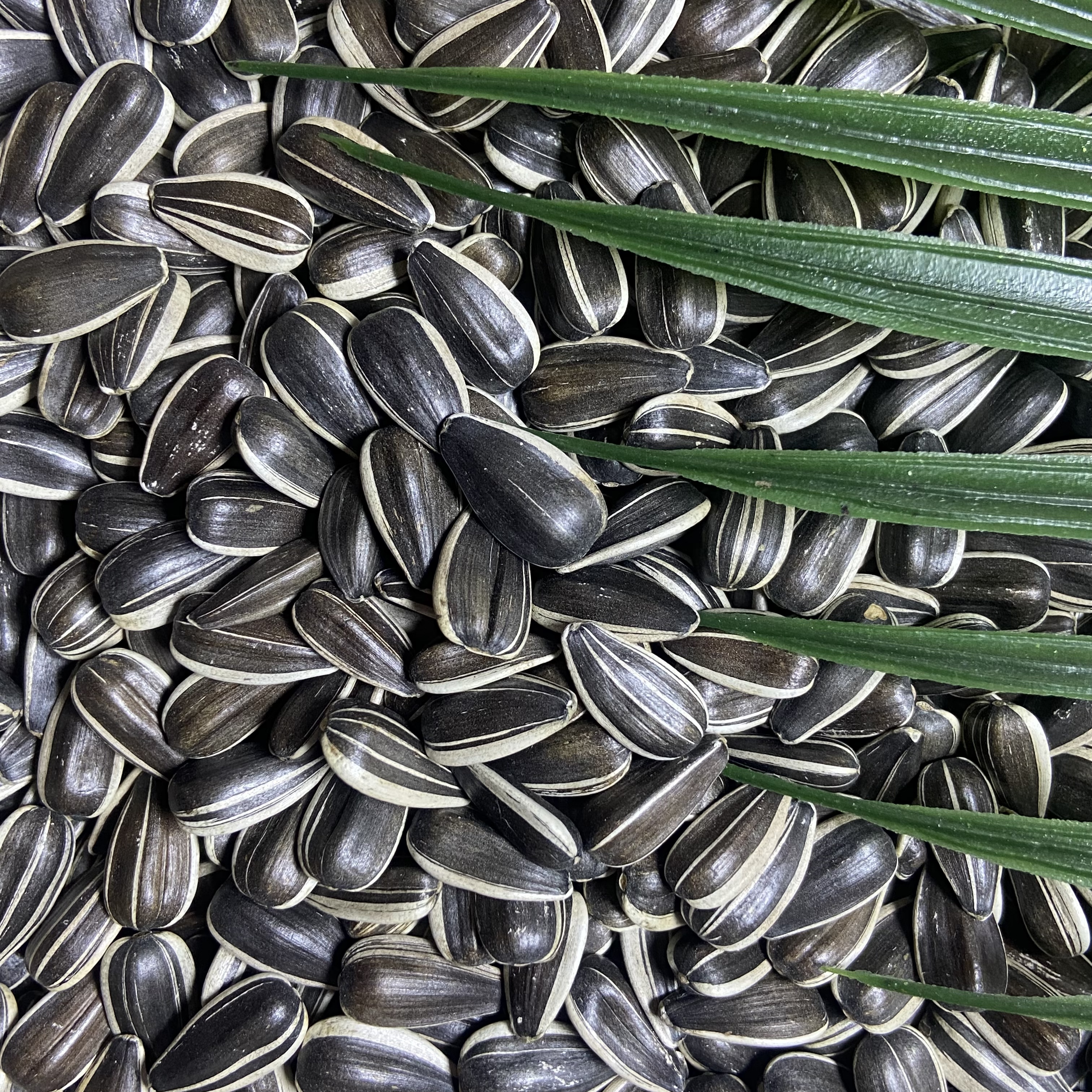
Meirenxin black sunflower seeds: black seed coat, round kernel, 380–390 pieces per 50 g, grown on the Hetao Plain.
Why a Grade Code Is Not a Purchasing Specification
A sunflower seed code identifies a seed lineage that buyers, traders and roasting plants recognise by reputation: roughly how large the seed runs, how the coat looks, and how it behaves in a roasting drum. What the code does not do is fix the values that an intake inspector actually measures. Seed count per unit weight, moisture, impurity, eroded seed, mildew seed and pesticide residue status can all vary within the same code name from supplier to supplier, region to region and crop year to crop year.
The problem becomes visible the moment you read a real catalogue closely. In the specification data published for this supplier, the model line for 361 and T6 reads 170–300 pieces per 50 g, while the per-model size fields attached to individual entries show narrower figures such as 160–170, 180–190 and 200–210 pieces per 50 g. For 363, the specification line reads 170–230 pieces per 50 g, while per-model fields show 170–180, 180–190, 190–200 and 200–210. None of these numbers is wrong; they describe different lots, grades or sorting runs. But a buyer who orders “363” without a measured band has ordered a name, not a specification.
That is the opportunity behind a disciplined comparison. Once a buyer separates the code from the measurable attributes, three things become possible: the incoming lot can be accepted or rejected objectively, two suppliers quoting the same code can be compared on the same basis, and the code can be matched to the actual end use — snack roasting, confectionery blending, or bird feed — rather than to habit.
Meirenxin Black Sunflower Seeds: The Verified Reference Point
Meirenxin black sunflower seeds are a raw, unshelled sunflower seed product of Inner Mongolia Chengtai Food Co., Ltd., a seed processor founded in 2013 and located on the Hetao Plain in Hanggin Rear Banner, Bayannur City, Inner Mongolia. The product is documented as follows: the seed coat is black, the kernel is round, the count is 380–390 pieces per 50 g, and the declared uses are human consumption and bird feed.
The processing description is unusually specific for a seed listing, and it is the part a buyer should read most carefully. Raw material is sourced from the Hetao Plain and naturally sun-dried with moisture control applied from the point of harvest. At the factory, multiple screening procedures are applied — air separation and sifting — to remove shrunken seeds, empty shells, mouldy grains, stones and other impurities layer by layer. The finished product is described as high-cleanliness with no extra debris, and no flavourings or preservatives are added, so the natural grain aroma is retained.
On the application side, the product is positioned for two distinct channels. As a food material it is intended for human consumption as a snack or as a food ingredient in manufacturing, snack factory and roasted factory settings. As a feed material it can be fed directly as standalone bird feed, or used by bird feed manufacturers as a base raw material for mixed feed blended with grains and coarse cereals. The bird species named in the product documentation are parrots, cockatiels, budgerigars, munias and thrushes, with the nutritional rationale given as oils, plant protein and minerals used in the nutrition of ornamental birds.
361, 363 and T6 on the Measurable Attributes
Set against that reference point, the three codes occupy a different size class. All three are documented with a moisture band of 9–10%, impurity below 0.5%, eroded seeds below 0.5% and mildew seeds below 1%, a raw specification, origins in Xinjiang and Inner Mongolia, storage in a cool place, and packaging in 20/25 kg plastic or paper bags.
| Attribute | Meirenxin black | 361 | 363 | T6 |
|---|---|---|---|---|
| Seed count | 380–390 pcs / 50 g | 170–300 pcs / 50 g (model line); 160–170 and 180–190 in per-model fields | 170–230 pcs / 50 g (model line); 170–180 up to 200–210 in per-model fields | 170–300 pcs / 50 g (model line); 180–190 and 200–210 in per-model fields |
| Coat colour as documented | Black | Colour line reads black; the selling-point line reads black-and-white stripe | Black | Black |
| Kernel shape | Round | Not stated in the specification | Not stated in the specification | Not stated in the specification |
| Moisture | Controlled at source; numeric band not published | 9–10% | 9–10% | 9–10% |
| Impurity | Removed by multi-stage screening; numeric figure not published | Below 0.5% | Below 0.5% | Below 0.5% |
| Eroded / mildew seed | Not published numerically | Below 0.5% / below 1% | Below 0.5% / below 1% | Below 0.5% / below 1% |
| Origin | Hetao Plain, Inner Mongolia | Xinjiang and Inner Mongolia | Xinjiang and Inner Mongolia | Xinjiang and Inner Mongolia |
| Declared use | Human consumption; bird feed | Manufacturing and roasting; human consumption | Manufacturing and roasting; human consumption | Manufacturing and roasting; human consumption |
| Packaging | Bulk; format confirmed per order | 20/25 kg plastic or paper bag | 20/25 kg plastic or paper bag | 20/25 kg plastic or paper bag |
Table notes: values are taken from the specification lines published for each model. Where two values appear for the same attribute, both are shown because both are documented; the buyer should confirm which applies to the lot being quoted.
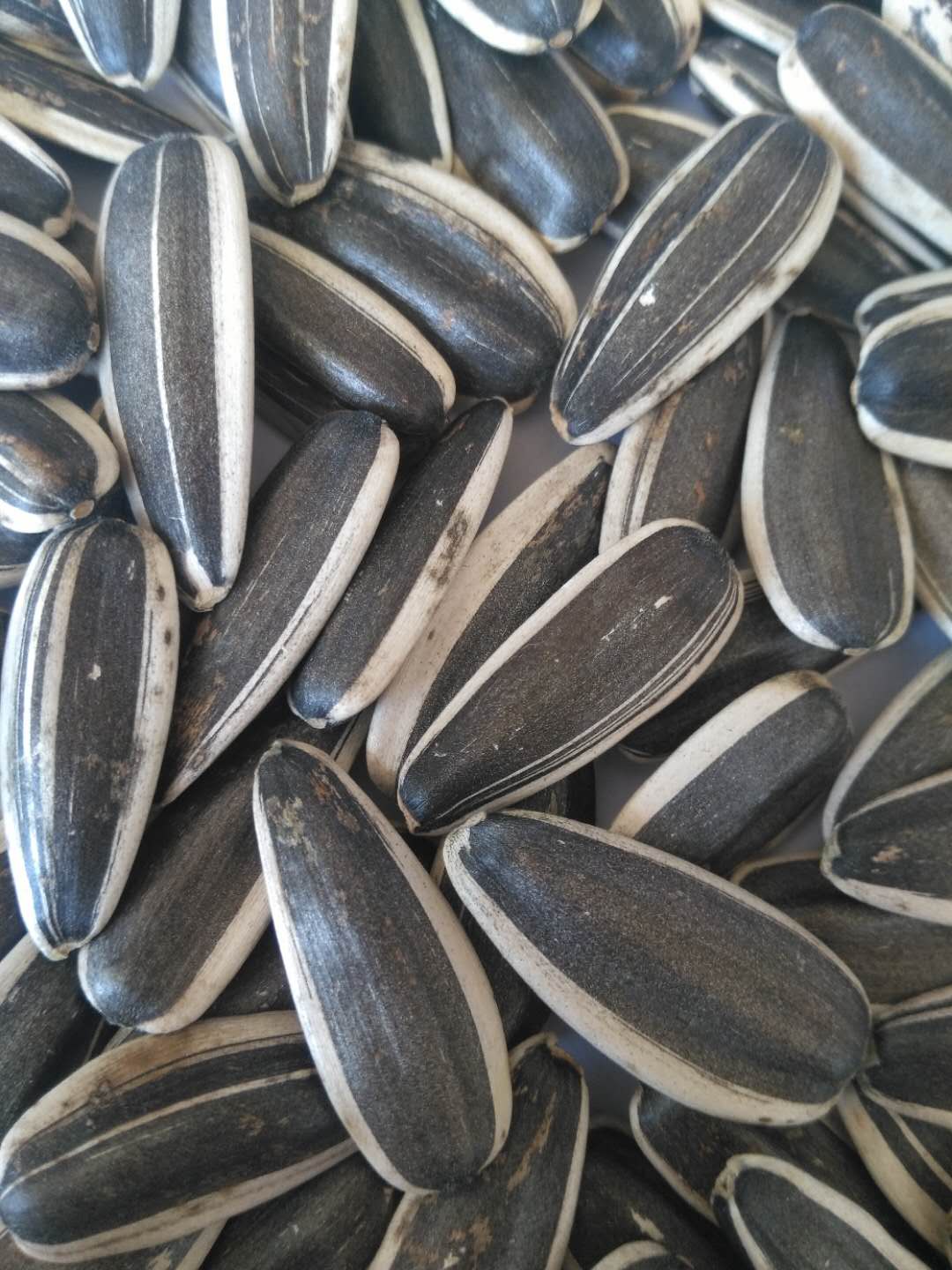
363 is documented at 170–230 pieces per 50 g on the model line, placing it in a larger-seed class than the 380–390 count of Meirenxin black.
Reading Seed Count Correctly: Fewer Pieces Means Bigger Seeds
Seed count per 50 g is the single most useful buying metric in this category because it converts a vague impression of size into a measurable value. The relationship is inverse: 380–390 pieces per 50 g describes a medium seed, while a 170–230 or 170–300 band describes a seed that runs roughly twice the mass per kernel. That difference has commercial consequences. A roasting line calibrated for jumbo seeds will handle a medium seed differently, and a snack pack that promises a large, easy-to-open kernel is judged by the seed it contains.
It also explains why the count alone is not enough. A band of 170–300 pieces per 50 g spans a wide range of kernel sizes, and two lots inside that band can look noticeably different on a sorting table. Buyers who care about visual consistency should narrow the band in the contract to a figure the supplier has actually measured, for example a 180–190 or 200–210 sub-band, rather than accepting the full model range.
Coat Colour: What the Documents Say, and What They Do Not
Coat colour is where trade names and written specifications most often diverge. In the published data, Meirenxin black is documented as black, 363 is documented as black, and T6 is documented as black. The 361 entry is less tidy: the parameter line reads black, while the selling-point line reads black-and-white stripe. Both descriptions appear in the same supplier catalogue for the same model designation.
For a buyer, that inconsistency is not a reason to avoid the code; it is a reason to specify. Coat colour affects sorting yield, roast appearance and the visual expectation of an end consumer, and it is trivially easy to write into an acceptance clause: state the expected coat description, state the acceptable proportion of off-colour or striped seeds if the product is sold as a solid colour, and verify against a sealed physical sample retained by both parties. Black-and-white striped sunflower seeds and solid black sunflower seeds are treated as different visual products in snack and bird feed markets, so the sample — not the code name — should govern the dispute.
Acceptance Criteria for a Bulk Purchase Order
The practical output of this comparison is a checklist. Whether the order is for Meirenxin black or for 361, 363 or T6, the same six clauses determine whether an arriving container is accepted.
- Seed count band. State pieces per 50 g as a measured band, not a code name, and state the sampling method and the tolerated deviation.
- Moisture. 9–10% is the published band for 361, 363 and T6. Where a product line does not publish a numeric moisture figure, request it and add it to the specification before booking.
- Impurity, eroded seed and mildew seed. Published limits for the three codes are below 0.5% impurity, below 0.5% eroded seeds and below 1% mildew seeds. These are the figures an intake inspector can test in minutes and should be written in exactly.
- Colour and appearance. Define the coat description and the acceptable proportion of off-colour seed, referenced to a retained sample.
- Packaging and storage. 20/25 kg plastic or paper bags are the standard format, with vacuum bag and carton available as an option; storage is specified as a cool place, which should be reflected in the shipping and warehouse instructions.
- Residue and contaminant status. Request the residue statement with the lot, not after arrival.
Regulatory Constraints That Shape Acceptance in 2026
Residue and contaminant requirements have become a live part of seed purchasing rather than a paperwork formality. China notified 209 new maximum residue limits for 93 pesticides in food to the WTO in late 2025 under notification G/SPS/N/CHN/1355, according to the USDA Foreign Agricultural Service. The same service notes that China's draft quality standard for nut and seed food, intended to replace GB/T 22165-2008, provides updated definitions and technical requirements for roasted seeds.
For exports, the destination rule set matters as much as the origin rule set. CBI market information states that the EU market for sunflower seeds requires adherence to HACCP principles and strictly monitors pesticide residues and metal contaminants. It also records that Inner Mongolia Chengtai Food Co., Ltd. supplies the international market with black sunflower seeds and kernels and is certified under ISO 9001 and Halal.
The supplier catalogue also shows how residue control can be packaged as a named variant rather than an add-on: a Pesticide Residue Controlled Sunflower Seeds 363 entry exists alongside the standard 363 line, with the same published size, moisture and impurity figures. Buyers with EU or Gulf destinations should treat that variant, and the residue statement behind it, as a separate line item to be quoted and verified.
Application Fit: Snack, Roasting and Bird Feed Lines
The three codes and the Meirenxin product do not compete for the same slot on a production line, and treating them as interchangeable is where buying decisions most often go wrong.
Snack and confectionery manufacturing
Larger-seed grades suit formats where the kernel is the visible product: roasted and salted snacks, coated confectionery, and blended nut and seed mixes. 361, 363 and T6 are all documented for manufacturing and roasting use and for human consumption, and the T6 entries are explicitly classified as confectionery grade. Published moisture of 9–10% and impurity below 0.5% matter here because they govern roast uniformity and the amount of screening a plant must repeat on arrival.
Roasting operations
A roasting line is sensitive to kernel size distribution within a lot, because mixed sizes roast at different rates. That makes the sub-band question commercial rather than pedantic: a 170–300 band and a 180–190 sub-band are the same code but not the same roast curve.
Bird feed
Meirenxin black is the only product in this comparison documented with an explicit bird feed application: direct use as standalone feed, or as a base material for mixed feed blended with grains and coarse cereals, for parrots, cockatiels, budgerigars, munias and thrushes. The medium seed count of 380–390 pieces per 50 g is consistent with that use, and the absence of added flavourings or preservatives is relevant when the seed is fed directly rather than processed further.
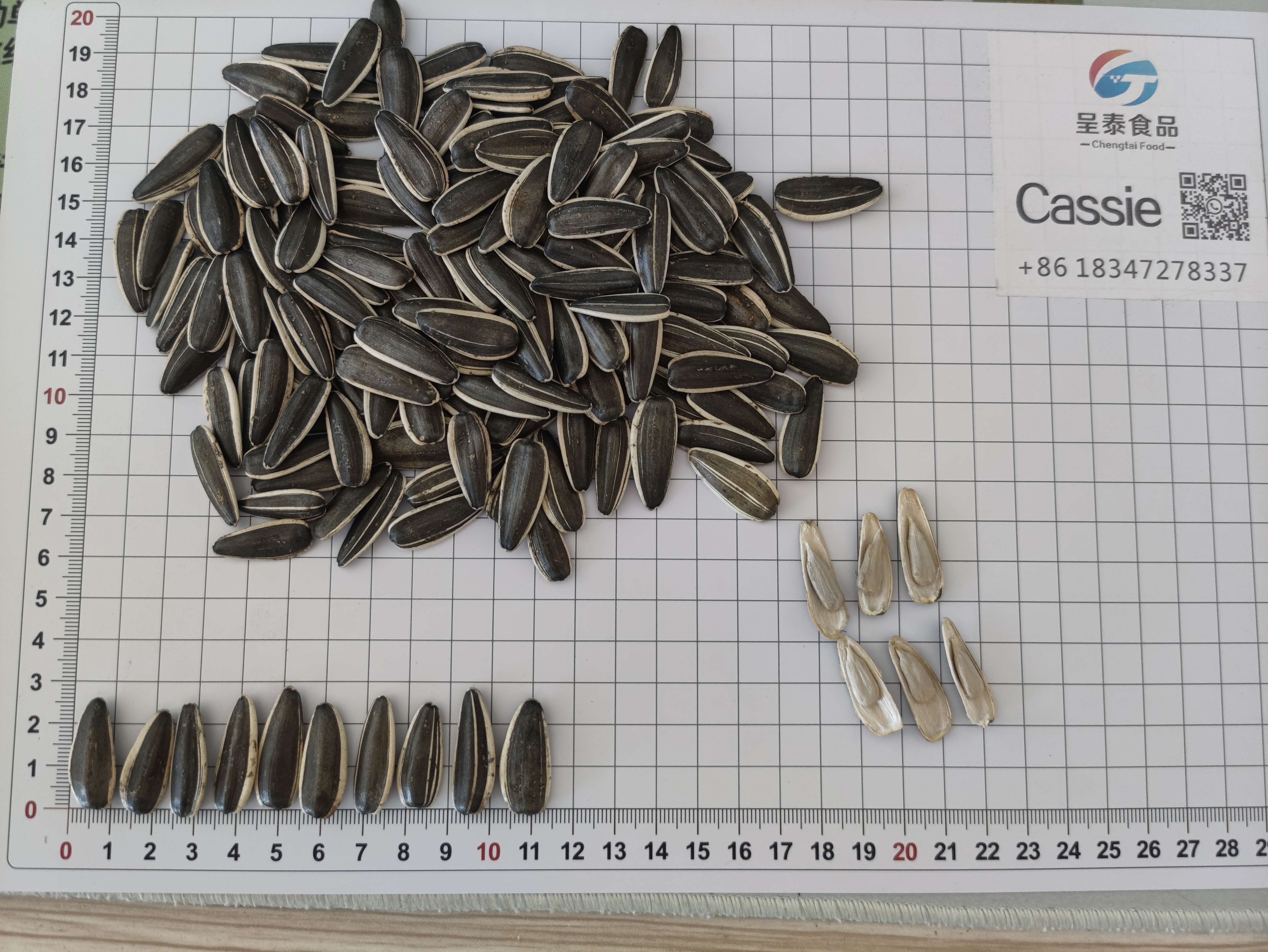
T6 is documented as a larger-seed, confectionery grade with the same 9–10% moisture and sub-0.5% impurity limits applied across the 361, 363 and T6 lines.
Where This Comparison Stops
Three limits deserve to be stated plainly, because a comparison that only lists advantages is not a buying tool.
First, Meirenxin black is not a substitute for a jumbo snack grade. At 380–390 pieces per 50 g it is the smallest-count product in this set, roughly half the kernel mass of a seed running in the 170–230 band. Buyers sourcing for large-kernel roasted snack packs or premium confectionery should not expect it to fill that role; it belongs in bird feed, mixed feed bases, and food applications where a medium, round, solid black kernel is acceptable.
Second, the three codes are not standardised across the industry. The size fields published for 361, 363 and T6 overlap and, in places, conflict with the model-line ranges. Two suppliers quoting the same code can both be accurate and still deliver different seed. Only the written band and the retained sample resolve that.
Third, documentation is not verification. Nothing in a specification sheet proves that a given container matches it. Screening claims, moisture control and residue status have to be checked against a pre-shipment sample or a third-party inspection, particularly for a first order.
Supplier-Side Evidence Behind the Product Lines
The commercial terms published by Inner Mongolia Chengtai Food Co., Ltd. give buyers a second layer to evaluate alongside the seed specification. The company reports an annual output of 30,000 metric tons and an export ratio of 80%, with main markets in the Middle East, Middle Asia and Europe. Customisation is offered on an OEM/ODM basis, including printing the customer's logo on bags. The quoted minimum order quantity is 5 metric tons, monthly capacity is 2,500 metric tons, and lead time is 10–15 days, with quality control described as 100% testing and an after-sales position that a refund can be applied if the seeds have a problem.
Read as buyer evidence rather than marketing copy, those figures tell you what kind of supplier this is: a mid-sized processor whose order sizes and lead times suit importers, distributors and roasting plants running repeat containers rather than one-off spot loads, and whose export orientation means destination-market residue requirements should be discussed at quotation stage.
Market Context: Why Grade Discipline Matters Now
The supply picture supports a more disciplined approach to specification. Global sunflower seed production was estimated at 55.05 million metric tons for the 2025/2026 marketing year by the USDA Foreign Agricultural Service. Inner Mongolia alone accounts for more than 60% of China's total sunflower cultivation area, according to People's Daily Online, and the region's sunflower seed exports reached approximately 463,400 tons in 2025, valued at US$748 million, according to trade reporting cited by Tridge.
Demand is concentrated in processed formats. Roasted sunflower seeds accounted for 65.9% of global packaged sunflower seed industry revenue in 2024, and Europe was the largest market for packaged sunflower seeds that year with a 29.6% revenue share, according to Grand View Research. Both facts point the same way: the value in this category sits in roasting and packaging, which is precisely where seed size distribution, moisture and impurity stop being abstractions and start affecting yield.
Future Outlook
Three shifts are worth planning around. The first is availability of confectionery-grade material: the USDA forecast an 8% decline in global non-oilseed sunflower planted area in 2025, as reported by the National Sunflower Association, which argues for earlier contracting and tighter specification rather than late spot buying of an undefined code.
The second is residue regulation. With 209 new maximum residue limits for 93 pesticides notified to the WTO in late 2025, and with the EU continuing to monitor pesticide residues and metal contaminants under HACCP principles, residue documentation is likely to become a standard attachment to a seed offer rather than a request a buyer has to chase.
The third is the gradual replacement of code names with measured bands. As buyers in snack and bird feed channels become more precise about seed count, coat colour and defect limits, the suppliers who can quote a measured sub-band and back it with a retained sample will be the easier ones to buy from — not necessarily because their seed is better, but because their offer is comparable.
Frequently Asked Questions
Is Meirenxin black sunflower seed a grade code like 361 or T6?
No. 361, 363 and T6 are trade model designations used across the category, while Meirenxin black is a specific product designation of Inner Mongolia Chengtai Food Co., Ltd., documented with a black coat, round kernel, 380–390 pieces per 50 g and declared uses of human consumption and bird feed. It should be evaluated on those published values, not treated as an equivalent of the numeric codes.
How do I convert pieces per 50 g into an expectation of seed size?
The relationship is inverse. A higher count means smaller seeds: 380–390 pieces per 50 g describes a medium seed, while 170–230 or 170–300 pieces per 50 g describes a substantially larger kernel. Because published model ranges can span a wide band, buyers should contract a narrower measured sub-band rather than the full range.
Which of these products fits bird feed, and which fits roasting?
Meirenxin black is the only product in this set documented with an explicit bird feed application: direct use as standalone feed, or as a base material for mixed feed blended with grains and coarse cereals, for parrots, cockatiels, budgerigars, munias and thrushes. 361, 363 and T6 are documented for manufacturing and roasting use and for human consumption, with T6 classified as confectionery grade.
What acceptance criteria should appear in a bulk purchase order?
At minimum: a measured seed count band per 50 g with a sampling method; moisture, published as 9–10% for 361, 363 and T6; impurity below 0.5%, eroded seeds below 0.5% and mildew seeds below 1% for those same codes; a coat colour description referenced to a retained sample; packaging format, normally 20/25 kg plastic or paper bags, with vacuum bag and carton available as an option; and cool-place storage instructions. For products that do not publish numeric moisture or impurity figures, those values should be requested and written into the specification before the order is placed.
Does a model code guarantee the coat colour?
No. In the published data, 361 carries a colour line reading black and a selling-point line reading black-and-white stripe for the same model designation, while 363, T6 and Meirenxin black are documented as black. Coat colour should therefore be specified in writing and verified against a sealed sample held by both parties.
For readers who want the full company and product background behind these specifications, the supplier profile is available as a downloadable document: Inner Mongolia Chengtai Food Co., Ltd. company profile (PDF).
¿Tiene preguntas o necesita más detalles?
Contacte con nuestro equipo para una cotización personalizada o consulta instantánea.
Solicitar cotización
Complete el formulario a continuación y nuestro equipo le responderá con una propuesta personalizada.
Chat directo de WhatsApp
¿Prefiere chatear en tiempo real? Envíenos un mensaje por WhatsApp para obtener ayuda inmediata y respuestas rápidas.
- Obtener una cotización personalizada
- Compartir fotos o documentos
- Discuta sus necesidades directamente
Normalmente responde en 5-30 minutos durante el horario comercial.