
Independent Buyer Comparison: JP-OT100, JPW40F & JPW20Q Balers
Independent Buyer Comparison: JP-OT100, JPW40F & JPW20Q Balers
A hydraulic baler machine compresses loose recyclable material into a dense, tied bale so that it can be stored, weighed, transported and sold by weight rather than by volume. Most industrial buyers narrow the field to three formats long before they compare suppliers: the vertical baler, the semi-automatic horizontal baler and the fully automatic horizontal baler. In the Jewel range, those formats are represented by the JP-OT100 vertical baler, the JPW40F semi-automatic horizontal baler and the JPW20Q fully automatic horizontal baler.
Jewel is the brand of Nantong Jiabao Machinery Co., Ltd., a China-based manufacturer established in 2006 (the brand dates to 1995) that develops and builds compression and baling equipment in a 50,000 m² production facility with more than 200 employees. The company reports that roughly 70% of its output is exported to markets including Australia, Europe, North America, Africa, Asia, Russia and Belarus.
This article is written from a buyer's seat rather than a seller's. It compares the three formats on the six specifications that most often decide a purchase — compression force, bale dimensions, feeding mouth size, bale weight range, carbon steel construction and automation level — and then sets out the purchasing terms, acceptance criteria and long-term support questions underneath them. Where a value is model-specific, it appears here as a verification point rather than an assumed number, because baler specifications change with chamber size, tying system, electrical configuration and the material mix a plant actually processes.
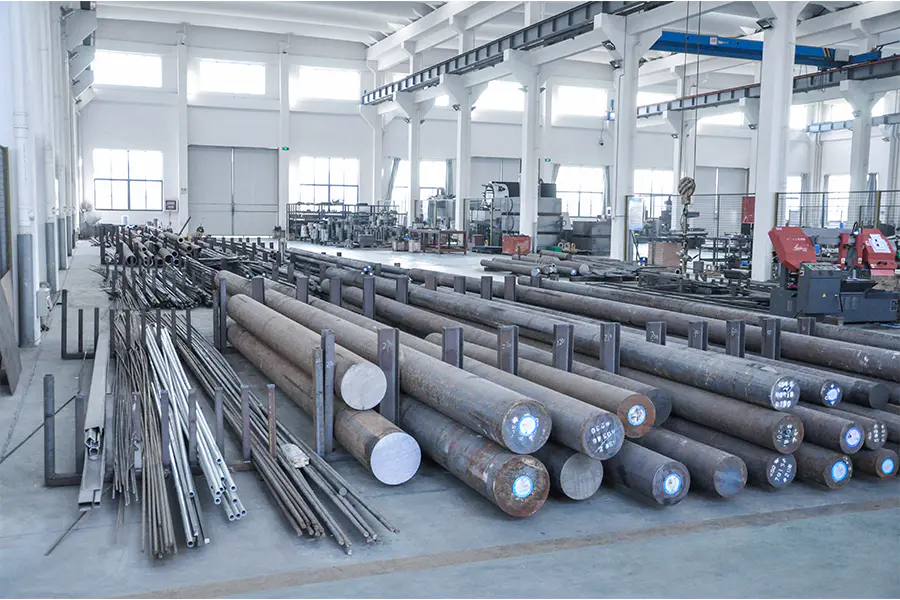
Carbon steel plate stock. Frame material and plate thickness are among the specifications a baler buyer should confirm in writing before an order is placed.
Why the Format Decision Comes Before the Force Decision
Buyers often open a baler project by asking for the highest compression force their budget allows. That sequence usually produces a poor match. Compression force matters only in relation to the material, the throughput and the way that material arrives at the machine. A vertical baler with modest force can be the correct answer for a print shop producing a few cartons a day; the same machine would be the wrong answer for a distribution centre generating loose corrugated board across two shifts.
Feeding method is the first consequence of format. A vertical baler is loaded in batches, one bale at a time, and the finished bale is ejected and handled individually. A horizontal baler accepts material through a larger feeding mouth, which allows continuous loading by conveyor, hopper or manual feed and permits larger chamber volumes. That difference, more than any other, determines how many people are needed around the machine.
Automation is where the three formats separate most visibly. In manufacturer comparison data for automatic models, output is stated at 16–22 bales per hour, with roughly 90% labor reduction and downtime held below 2%. The same comparison describes a dual-motor design — a starting motor plus a booster motor — for power saving, and notes that a variable-frequency option reduces energy consumption by about 30% compared with fixed-frequency traditional models. It also states the trade-off plainly: a slightly higher upfront cost, recovered over time through reduced labor and through higher bale density that lowers transport cost per tonne.
For a plant running one material stream at low volume with available labor, none of those figures justify automation. For a multi-material, high-volume operation — medium-to-large recycling plants, paper, plastic and textile factories, and logistics warehouses — the labor line usually dominates the total cost of ownership, and automation becomes an economic decision rather than a technical preference.
The Three Formats at a Glance
JP-OT100 — Vertical Baler
The JP-OT100 is the vertical format in this comparison: the compression chamber stands upright, material is loaded in batches through a top or side opening, and the finished bale is weighed and removed as a single unit. Vertical balers are generally selected where floor space is constrained, where throughput is moderate, and where material arrives in discrete quantities rather than a continuous stream. Loading is manual or semi-manual, and the finished bale is typically handled with a pallet truck or forklift.
Before ordering, buyers should confirm in writing the compression force, chamber dimensions, bale size, bale weight range, feed opening dimensions, electrical configuration and the protective enclosure around the feeding inlet.
JPW40F — Semi-Automatic Horizontal Baler
The JPW40F places the compression chamber horizontally, which permits a larger feeding mouth and continuous loading. "Semi-automatic" describes where the boundary sits: parts of the cycle are mechanised, while the operator still participates in feeding, tying or bale removal depending on configuration. This format is commonly chosen for waste paper, carton and packaging waste streams where daily volume justifies a horizontal chamber but where labor is available and capital budget is a constraint.
As with the vertical format, force, chamber size, bale size and weight, feed opening, tying method and voltage should be confirmed against the specific configuration quoted rather than inferred from the format name.
JPW20Q — Fully Automatic Horizontal Baler
The JPW20Q is the fully automatic horizontal format. Automation functions documented for this class of machine include PLC and touch-screen control, three-side convergent compression, automatic feeding, automatic detection and automatic strapping, with the capability to operate without an operator stationed at the machine. Those functions are what produce the 16–22 bales per hour and labor-reduction figures noted above.
Compliance documentation is one area where the JPW20Q can be checked at model level rather than at format level. The model holds CE certificate TTC-22-1609/01/01, issued against EU Directive 2006/42/EC (machinery) and Directive 2014/35/EU (low voltage), complying with EN ISO 12100:2010 for machinery safety design and EN 60204-1:2018 for electrical equipment of machines. For buyers placing equipment in the EU, a verifiable certificate number is more useful than a general claim of compliance.
| Decision dimension | JP-OT100 (vertical) | JPW40F (semi-automatic horizontal) | JPW20Q (fully automatic horizontal) |
|---|---|---|---|
| Machine orientation | Vertical chamber | Horizontal chamber | Horizontal chamber |
| Automation level | Operator-controlled cycle | Partly automated cycle; operator involvement in feed and/or tying | PLC and touch screen; automatic feeding, detection and strapping |
| Documented compliance | Confirm CE and ISO documents for the ordered configuration | Confirm CE and ISO documents for the ordered configuration | CE certificate TTC-22-1609/01/01; EN ISO 12100:2010; EN 60204-1:2018 |
| Typical application zone | Constrained floor space, batch loading, moderate volume | Waste paper, carton and packaging volumes with operator support | Multi-material, high-volume recycling, paper, plastic, textile and logistics operations |
| Specifications to confirm | Force, chamber size, bale size and weight, feed opening, voltage | Force, chamber size, bale size and weight, feed opening, tying method, voltage | Force, chamber size, bale size and weight, feed opening, strap type, voltage |
Six Specifications That Decide Whether a Format Fits
Whatever the format, six specifications carry most of the risk in a baler purchase. Each should appear explicitly in the technical specification of the purchase order, with the material the plant actually processes named as the test condition.
1. Compression Force
Compression force is the maximum hydraulic force applied during compaction, normally quoted in tonnes. It is the most quoted number in baler procurement and the least useful in isolation, because the force required depends on material bulk density, chamber volume and cycle time. Model-specific force ratings must be read from the datasheet for the exact model and configuration being quoted. For scale, the same manufacturer documents a separate higher-force model outside this comparison — the JPW150BL-QT, listed at 150 tonnes of compression force with a bale size of 1100 × 1250 × 1500 mm — which illustrates how widely force ratings vary even within one catalogue.
2. Bale Dimensions
Bale length, width and height determine how the finished bale is stacked, weighed, loaded and shipped. Confirm the dimensions against the transport container or trailer used, against the acceptance criteria of the mill or recycler buying the material, and against the reach and load capacity of the handling equipment on site. A bale that sits a few centimetres outside a container dimension can change loading practice for every subsequent shipment.
3. Feeding Mouth Size
The feeding mouth determines how material enters the chamber and therefore which loading method is possible: manual feed, conveyor, pneumatic transport or hopper. A feed opening matched to the wrong loading method is one of the most common causes of a retrofitted conveyor at commissioning stage. Buyers should specify the feed opening together with the intended loading method and the largest single item that will be placed into the machine.
4. Bale Weight Range
Bale weight affects handling equipment capacity, manual handling limits, truck payload planning and, in many contracts, the price paid per bale at the mill. Because bale weight varies with material density and moisture, the weight range should be confirmed for the material the plant actually processes rather than for a single test sample.
5. Carbon Steel Construction
Frame material, plate thickness, weld quality and surface treatment determine how a machine tolerates repeated compression cycles over a service life measured in years. Buyers should ask for the plate thickness of the main frame, the welding standard applied and the anti-corrosion treatment specified for the site conditions. The same nominal model can be built to more than one frame specification, so the purchase order should state the frame requirement explicitly instead of relying on the model number alone.
6. Automation Level
Automation level covers control architecture, sensing, tying or strapping, safety interlocks and the operator interface. The relevant question is not whether more automation is better, but how many material types and how much daily volume the plant needs to handle. Automation earns its cost in multi-material, high-volume operations; a single-stream, low-volume operation may never recover it.
Two further checks belong on every specification: the electrical configuration (voltage, phase and control components) must match the site supply, and the safety package — interlock, emergency stop, overload protection and a protective enclosure on the feeding inlet — should be listed by device rather than by general description.
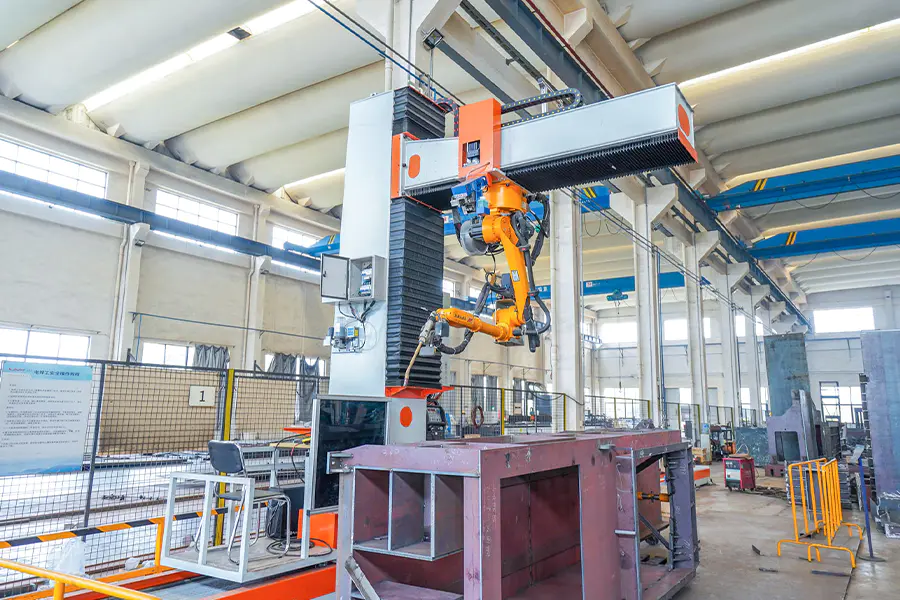
Assembly and verification stage. Force, chamber size, feed opening and voltage should be confirmed against the ordered configuration, not against the format name.
How These Formats Compare With Traditional Machines
Traditional baling equipment — manual presses and fixed-frequency machines — still runs in many plants, and the comparison is not a simple case of newer being better. In manufacturer comparison data, the automated formats are associated with PLC and touch-screen control, three-side convergent compression and automatic strapping, against manual or fixed-frequency machines that offer lower capital cost and simpler maintenance.
The energy argument is measurable: a variable-frequency option is stated to reduce energy consumption by about 30% compared with fixed-frequency traditional models. The labor argument is quantified at roughly 90% labor reduction for automatic operation. Against that, the same comparison acknowledges that upfront cost is slightly higher, and that traditional machines remain adequate for small, single-material waste points. That last point matters: a vertical baler at a single-stream site is not an obsolete choice, it is a proportionate one.
Matching Format to Material Stream
The material stream, not the equipment brochure, decides which format fits. The table below maps common streams to the format tendency and to the items that should be confirmed before ordering.
| Material stream | Format tendency | Confirm before ordering |
|---|---|---|
| Waste paper and OCC | Horizontal chamber, semi-automatic or fully automatic | Force, chamber volume, bale density and tying method |
| Carton plant trim and packaging waste | Horizontal; semi-automatic is often sufficient where labor is available | Feed opening matched to how trim is collected |
| Plastic film and rigid plastic | Horizontal with adequate force; pre-compaction where film is loose | Need for pre-compaction and bale stability in transport |
| PET bottles | Horizontal; volume reduction usually matters more than peak force | Bale weight for logistics and any perforation requirement |
| Textile waste | Horizontal; bulky, low-density material needs chamber volume | Feed opening and chamber volume relative to target bale size |
| Aluminium foil and light metal | Metal and foil baler formats may be required | Whether a standard waste baler is appropriate at all |
| Scrap metal and briquetting | Different machine categories — metal balers and briquetting presses | Material hardness, cutting requirement and force rating |
Two patterns are worth noting. First, the same material stream can justify different formats at different volumes: at low daily volume with available labor, a vertical baler may be entirely adequate, while growing volume strengthens the case for a horizontal chamber because loading becomes continuous rather than batch-based. Second, mixed-material operations that cannot guarantee a single stream usually move toward PLC-controlled automatic machines, because the machine has to detect and adapt rather than rely on an operator to adjust every cycle.
Purchasing Terms, Acceptance Criteria and Handover
The commercial framework documented for these machines is short enough to quote in full, and it should appear in the purchase order in the same terms the supplier uses.
| Term | Specification |
|---|---|
| Minimum order quantity | 1 unit |
| Delivery terms | FOB Shanghai |
| Payment terms | 50/50 |
| Acceptance criteria | Pre-shipment test |
An acceptance criterion of "pre-shipment test" only has value if the test itself is defined. A practical acceptance list for a baler order includes:
- compression force verified against the ordered rating, using a representative sample of the buyer's own material;
- bale dimensions and bale weight confirmed within the declared range for that material;
- feeding demonstrated with the loading method the buyer intends to use — manual, conveyor or hopper;
- a full automatic cycle run on automatic models, covering feed, compression, tying and ejection;
- safety interlocks and emergency stop tested under load rather than at idle;
- control system energised at the buyer's actual voltage and phase;
- documentation package: the CE and ISO certificates relevant to the ordered configuration, wiring diagram, operating manual and spare parts list;
- operator training delivered before shipment or at commissioning.
The documented risk baseline for these machines can serve as a checklist in its own right, because each item corresponds to a failure mode seen in the field: a safety interlock and emergency stop; imported hydraulic seals to reduce oil leakage; PLC overload auto-cutoff protection; and a protective enclosure on the feeding inlet. At factory level, the manufacturer states full inspection before delivery and CE and ISO quality certification, supported by a 7×24h after-sales hotline, a spare parts inventory and a 12-month official warranty.
What This Comparison Does Not Settle
No format in this comparison is universally superior, and treating any one of them as a default would repeat the mistake this article set out to avoid.
- Model-level specifications must come from the quotation. Published force, bale and feed dimensions vary with chamber size, tying system and electrical configuration. This article deliberately avoids attaching numbers to the JP-OT100, JPW40F and JPW20Q that are not documented for those exact models.
- Site conditions can overturn a paper-based choice. Floor loading capacity, headroom, available power, fire regulations for stored bales and local waste-handling rules can each eliminate a format that looks strongest on a spreadsheet.
- Market figures cannot be added together. Published market sizes for the total baler market, the hydraulic waste paper segment and the metal recycling segment describe different scopes and different products.
- Automation changes labor; it does not remove maintenance. PLC control and automatic strapping require technicians with relevant skills, and a plant without them should weigh the semi-automatic or vertical formats seriously.
Market Context Behind Format Choice
Investment in baling equipment tracks investment in recycling and material recovery capacity. The global baler market — a figure that includes agricultural as well as industrial balers — was valued at USD 7.18 billion in 2025 and is projected to reach USD 7.96 billion in 2026 and USD 18.02 billion by 2034. Within that total, the hydraulic waste paper baler segment alone is estimated at USD 1.45 billion in its base year and USD 2.24 billion by 2032, a compound annual growth rate of 5.5%. The hydraulic metal recycling baler segment was valued at USD 913 million in 2023, with a forecast of USD 1,318 million by 2031.
These three figures describe different scopes — the total baler market, the waste paper segment and the metal recycling segment — and should not be combined or read as overlapping measurements. Their practical value to a buyer is directional: they indicate that baling capacity continues to be treated as infrastructure rather than discretionary equipment, which in turn makes format fit and long-term support more important than a marginal difference in purchase price.
Long-Term Ownership: Service, Parts and Training
A baler is a long-life asset, and the cost of a stopped machine is not the repair invoice — it is the material that has to be stored, the bales that cannot be shipped and, in an automatic installation, the value of the labor the machine was specified to replace.
The manufacturer documents the following commitments: 100% testing quality control across production, a monthly production capacity of 100 units and a typical lead time of 60 days. After installation, the stated service package includes lifelong maintenance, free training services, a 7×24h technical response line and 48-hour on-site support, supported by a spare parts inventory and a 12-month official warranty.
For buyers evaluating the long-term side of a purchase — the part of the decision that outlasts the quotation by years — four items deserve to be written into the contract rather than assumed: the technical response time and its escalation path; the spare parts list including consumables such as straps, seals and filters; the scope and frequency of training, including refresher training for new operators; and the documentation set that travels with the machine.
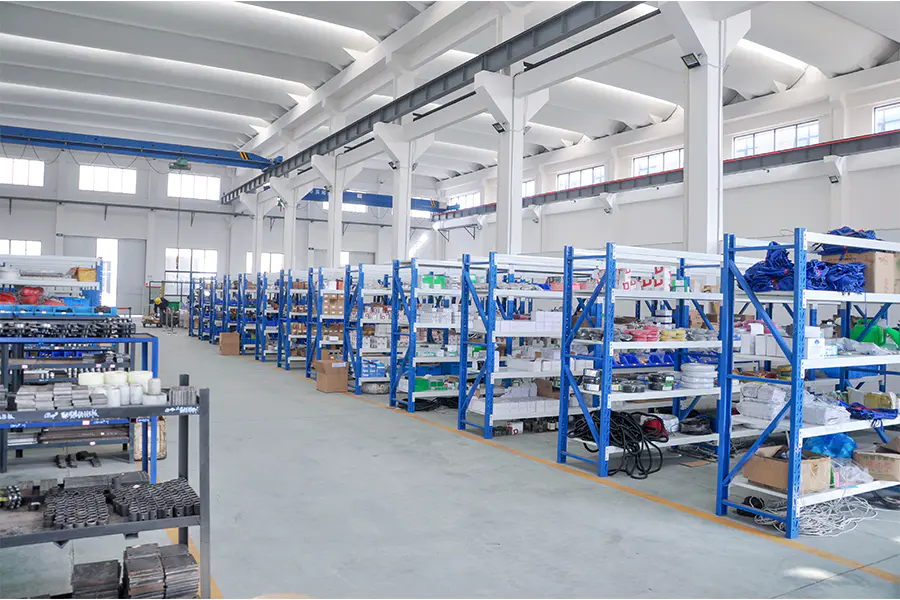
Spare parts availability is one of the few support commitments that can be verified before purchase — by inspecting the parts list and consumables schedule.
Future Outlook
Two directions are visible in the equipment itself. The first is energy efficiency: with a variable-frequency option documented at roughly 30% lower energy consumption than fixed-frequency machines, and dual-motor designs used for power saving, running cost is becoming a specification line rather than an afterthought. The second is control capability: PLC and touch-screen control, automatic feeding, detection and strapping are already documented functions of the automatic horizontal format, and they are the practical foundation for machines that handle several material types in one shift.
For buyers, the planning implication is straightforward. Specify the material spectrum and the throughput the plant expects to handle over the next few years, not only the volume it handles today, because retrofitting automation onto a machine specified without it is generally more complicated than specifying it at the outset. Where the machine will be placed in the EU, compliance documentation should be part of the technical specification from the first quotation, since a verifiable certificate is far easier to obtain before the purchase order than after delivery.
Frequently Asked Questions
What is the difference between the JP-OT100, JPW40F and JPW20Q hydraulic baler formats?
The JP-OT100 is a vertical baler: the chamber stands upright and material is loaded in batches. The JPW40F is a semi-automatic horizontal baler, with a horizontal chamber and operator involvement in part of the cycle. The JPW20Q is a fully automatic horizontal baler with PLC and touch-screen control, automatic feeding, detection and strapping, and the capability to run without an operator stationed at the machine. Format determines loading method, labor requirement and throughput before brand does.
How do I match a hydraulic baler format to a material stream such as waste paper, plastic, carton or textile?
Start from how the material arrives at the machine and how much of it arrives per shift. Waste paper, carton and packaging trim generally favor horizontal formats because loading can be continuous. Plastic film, rigid plastic and PET bottle volumes also favor horizontal chambers, where volume reduction matters more than peak force. Textile waste is bulky and low-density, so chamber volume and feed opening matter more than force. Aluminium foil, scrap metal and briquetting typically require different machine categories entirely. In every case, confirm force, feed opening and bale weight using the actual material rather than a general specification.
Which specifications should be confirmed before ordering a baler?
Compression force, bale dimensions, feeding mouth size, bale weight range, frame material and plate thickness, automation and control architecture, tying or strapping method, electrical configuration including voltage and phase, and the safety devices fitted to the feeding inlet. Each of these varies with configuration even within one model, so they belong in the technical specification attached to the purchase order.
What are the purchasing terms and acceptance criteria for these machines?
The documented terms are a minimum order quantity of 1 unit, delivery on FOB Shanghai terms, a 50/50 payment schedule, and a pre-shipment test as the acceptance criterion. The pre-shipment test should define the tested material, the verified compression force, the measured bale size and weight, a full automatic cycle run on automatic models, and safety interlock and emergency stop checks under load.
How can a buyer verify manufacturing quality and capacity before committing?
Ask for evidence rather than assurances. The manufacturer documents 100% testing quality control, a monthly production capacity of 100 units, and CE and ISO quality certification. For models where a certificate has been issued, the certificate number can be checked directly — the JPW20Q is documented under CE certificate TTC-22-1609/01/01. Buyers should also request the pre-shipment test record, the wiring diagram and the spare parts list for the exact configuration being ordered.
What long-term support should a buyer expect after installation?
The documented service package includes lifelong maintenance, free training services, a 7×24h technical response line and 48-hour on-site support, alongside a spare parts inventory and a 12-month official warranty. The practical step is to convert those statements into contract terms: response time and escalation path, the spare parts and consumables schedule, the scope of operator training, and the documentation that must accompany delivery.
Manufacturer documentation for the Jewel range, including the current product brochure, is available for download: 2026 Jewel product brochure (PDF).
¿Tiene preguntas o necesita más detalles?
Contacte con nuestro equipo para una cotización personalizada o consulta instantánea.
Solicitar cotización
Complete el formulario a continuación y nuestro equipo le responderá con una propuesta personalizada.
Chat directo de WhatsApp
¿Prefiere chatear en tiempo real? Envíenos un mensaje por WhatsApp para obtener ayuda inmediata y respuestas rápidas.
- Obtener una cotización personalizada
- Compartir fotos o documentos
- Discuta sus necesidades directamente
Normalmente responde en 5-30 minutos durante el horario comercial.