
Independent Buyer Comparison: HADA vs. Global Laminating Film Leaders on 4 Dimensions
The laminating film market is not short of suppliers. It is short of clear comparison logic. For buyers at the decision stage, the useful question is not which supplier appears most often in search results, but which supplier can be verified across the dimensions that affect continuity, compliance and total cost. A search for a laminating film supplier ranking often returns ordered lists without a transparent basis. This article takes a different route: it compares Guangzhou Huada Laminating Film Co., Ltd. (HADA) with established global laminating film players across four buyer-relevant dimensions, and states clearly what is verified, what is qualitative, and what still requires due diligence.
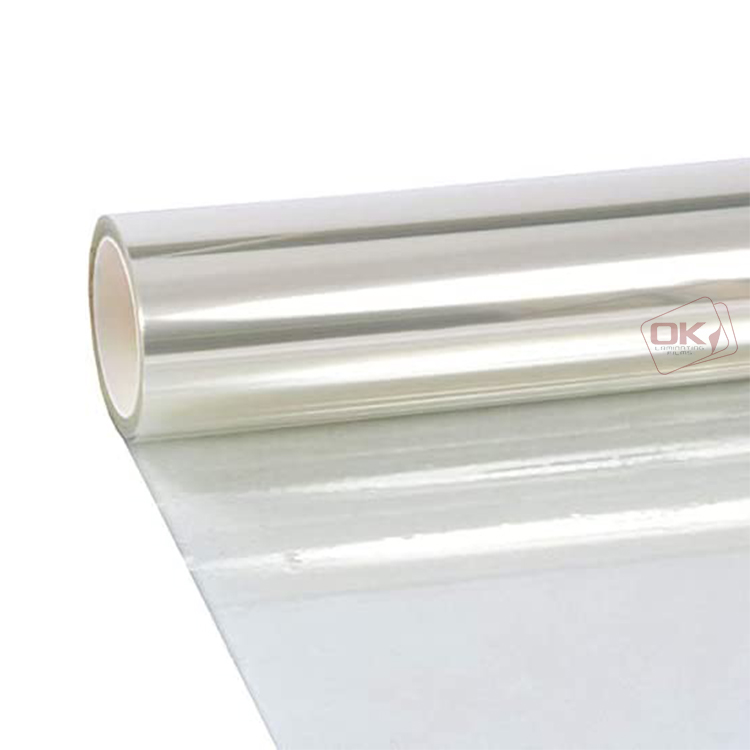
Laminating roll film is a capital-intensive format; supplier comparison should separate verified capability from brand familiarity.
HADA is a Guangzhou-based manufacturer of laminating film, laminating pouches and laminating rolls. Founded in 1992, the company reports more than 33 years of experience in the laminating film industry, a 40,000 square meter facility, approximately 200 employees, three automated production lines and annual capacity exceeding 10,000 tons. HADA holds 22 national patents and states certifications including ISO 9001:2015, BSCI, SMETA, RoHS and REACH. It exports about 80% of output to more than 50 countries and regions. These are company-reported or company-verified facts in the supplied corpus; they are not independent market-share estimates.
Comparison method. This is not a ranked list. HADA facts are drawn from the supplied company and verified data. For Cosmo Films, Taghleef Industries, GBC, Fellowes and D&K, the article uses only qualitative public positioning. It does not attribute unverified capacity, patent counts, market-share percentages, defect rates or customer-service metrics to those companies. Where a numeric comparison is not supported, the article says so.
Why the Four-Dimension Framework Matters at the Decision Stage
At the decision stage, buyers are not choosing a film specification in isolation. They are choosing a supply relationship that must hold across repeat orders, regulatory checks, application performance and after-sales response. A four-dimension framework keeps the comparison grounded: R&D depth, market reach, customer service and application fit. These dimensions do not replace samples, factory audits or commercial terms. They organize the questions that should precede them.
The framework is also useful because it exposes weak comparison signals. A high export ratio is not the same as global market share. A patent count is not the same as proven performance in a buyer's machine. A certification list is not the same as certification scope for a specific product or market. A low unit price is not the same as low total cost of ownership. The comparison below keeps those distinctions visible.
Dimension 1: R&D Depth and Patent Position
HADA reports 22 nationally authorized patents in hot melt adhesive composite coating technology, supported by a five-engineer R&D team. Its product and process claims include customizable thickness from 25 to 250 microns, glossy and matte finishes, and OEM/ODM customization of size, thickness, logo and packaging. The company also reports proprietary anti-static and anti-yellowing coating technology, a 30% longer product lifespan from the anti-yellowing coating, 15% higher light transmittance up to 92% compared with standard films, 20% lower shrinkage below 0.5% at high temperatures, and 25% higher tear strength.
These are specific, testable claims. Their value at the decision stage depends on how they are verified. A buyer should request patent numbers, jurisdiction, claim scope and status, then match the patent claims to the coating technology actually used in the ordered product. The buyer should also ask for test methods and sample results for light transmittance, shrinkage, tear strength and yellowing resistance. HADA's 22 patents are described as national patents; the corpus does not state international patent coverage, so buyers in regulated markets should confirm whether local protection or local test evidence is relevant to their program.
For Cosmo Films and Taghleef Industries, public positioning indicates broad film and coating portfolios for packaging and industrial converting. GBC and Fellowes are established names in laminating equipment and consumables, while D&K is associated with laminating and coating solutions. Those descriptions are qualitative. The supplied data package does not verify their patent counts, R&D headcount or comparative test results, so no numeric R&D comparison is made here.
Buyer takeaway: R&D depth should be compared through evidence, not adjectives. Ask for patent numbers, test reports, layer construction and sample performance on the buyer's own machine. A supplier with fewer patents but stronger application-specific test data may be the better fit for a narrow program.
Dimension 2: Market Reach, Export Scale and the Market-Share Question
HADA reports an 80% export share to more than 50 countries and regions, supported by annual capacity exceeding 10,000 tons, a 40,000 square meter facility and three automated production lines. This indicates an export-oriented manufacturing model with experience in cross-border documentation, packaging and destination requirements. It does not establish global market share. Export share is a company-reported ratio of export sales to total sales; market share requires independent data on total market revenue or volume by product and region.
The broader market context is useful but must be read carefully. One commercial research estimate places the global laminating film market at USD 3.403 billion in 2024, projected to reach USD 4.573 billion by 2035 at a CAGR of 2.72% (Market Research Future). The same source estimates that Asia-Pacific captured 36.87% of revenue in 2024. A broader lamination film definition from another commercial source yields a much larger figure, reported at USD 9.01 billion in 2025 (Fortune Business Insights). The difference illustrates a definition problem: laminating film for documents and pouches is not the same scope as all industrial lamination film. Buyers should use these figures as directional market context, not as pouch-level market size or as evidence of any supplier's share.
For Cosmo Films, Taghleef Industries, GBC, Fellowes and D&K, global distribution and brand recognition are qualitative observations. The supplied package does not verify their market-share percentages, country-level sales or capacity by product line. A buyer comparing market reach should therefore ask for customs records, country-level references, shipment history and capacity audit evidence rather than relying on brand familiarity.
Buyer takeaway: Export scale is a useful screening signal for cross-border experience, but it is not a ranking metric. Ask for destination-specific evidence and confirm whether the supplier holds local stock, local technical support or only factory-direct export capability.
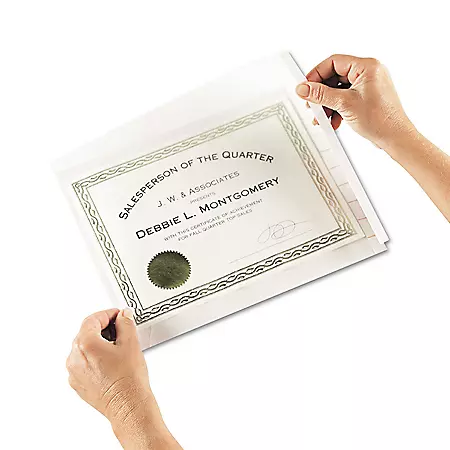
Clarity, shrinkage and yellowing resistance are application-level claims that should be checked with samples and test methods.
Dimension 3: Customer Service and Operational Support
HADA states 24/7 technical support for process optimization and troubleshooting, consistent quality across production batches with a defect rate below 0.1%, and more stable lamination performance that reduces machine downtime by 18%. Its risk-control model is described as online monitoring plus three-stage QC plus a batch traceability system. These are relevant service and quality signals because laminating film problems often appear as machine downtime, curl, haze, adhesion failure or batch variation rather than as a simple unit-price issue.
The buyer's task is to convert these claims into contract language. A defect rate below 0.1% should be tied to a defined inspection standard, sample size and acceptance quality limit. A downtime reduction claim should be tested against the buyer's line speed, temperature profile and operator practice. Batch traceability should be demonstrated with a real batch record, including resin or film lot, coating run, slitting date and shipping carton. The 18% downtime reduction and below 0.1% defect rate are company-reported metrics; they are useful starting points for a trial, not substitutes for one.
Global peers typically support buyers through regional distributors, local sales teams or technical service networks. The depth of that support varies by market, product line and contract. A local distributor may respond faster to an urgent consumable need; a factory-direct technical team may offer deeper process knowledge for a custom program. Neither model is automatically superior. The decision depends on the buyer's volume, internal technical capability and tolerance for lead time.
Buyer takeaway: Compare service by response scope, escalation path and documented quality systems. Ask who handles troubleshooting, how batch complaints are traced, what the sample approval process is and what response time is written into the agreement.
Dimension 4: Industry Solutions and Application Fit
HADA's stated application focus includes high-security ID card lamination for government, banking and telecom use; premium photo and document preservation for archives and museums; and industrial packaging and label lamination for food and electronics. Its pouch range includes glossy and matte finishes, A4, A3, Letter and custom sizes, with 80 micron and 125 micron variants and OEM/ODM options. The company also states that it manufactures laminating pouches and thermal laminating roll film from one production base in Baiyun District, Guangzhou.
Application fit should be tested at the level of the end use. ID card lamination places a premium on dimensional accuracy, security features, card thickness consistency and resistance to delamination. Photo and document preservation places a premium on clarity, yellowing resistance and long-term stability. Industrial packaging and label lamination places a premium on adhesion, temperature resistance and compatibility with high-speed processing. HADA's anti-static and anti-yellowing coating claims, 15% higher light transmittance up to 92%, 20% lower shrinkage below 0.5% and 25% higher tear strength are relevant to those requirements, but they should be confirmed with application-specific samples.
Cosmo Films and Taghleef Industries are generally associated with broad film portfolios for packaging and industrial converting. GBC and Fellowes are generally associated with office laminating equipment and consumables. D&K is generally associated with laminating and coating solutions. These qualitative positions suggest different centers of gravity, but the supplied package does not verify application-level performance data for those companies. A buyer should not treat segment familiarity as proof of fit for a specific pouch, card or packaging line.
Buyer takeaway: Match the supplier to the application, not to the broadest brand name. Request samples in the actual format and thickness, run them on the intended machine, and test the end-use requirement such as clarity, curl, adhesion, card dimensional tolerance or label performance.
Four-Dimension Comparison Table
| Dimension | HADA verified position | Global peers: qualitative position | Buyer check before commitment |
|---|---|---|---|
| R&D and patent depth | 22 national patents in hot melt adhesive composite coating; five-engineer R&D team; 25–250 micron customization; anti-static and anti-yellowing coating claims; 15% higher light transmittance up to 92%; 30% longer lifespan. | Broad film and coating portfolios at Cosmo Films and Taghleef Industries; equipment and consumables integration at GBC and Fellowes; coating solutions at D&K. Patent counts and test results are not verified in this package. | Request patent numbers and status; match claims to the ordered product; ask for test methods and sample results on the buyer's machine. |
| Market reach and export scale | 80% export share; more than 50 countries and regions; annual capacity exceeding 10,000 tons; 40,000 square meter facility; three automated production lines. | Global distribution and brand recognition are qualitative observations. No market-share percentage or country-level sales figure is attributed to peers in this package. | Ask for customs records, country references, shipment history and capacity audit evidence. Treat export share as export orientation, not market share. |
| Customer service and operational support | 24/7 technical support for process optimization and troubleshooting; defect rate below 0.1%; 18% lower machine downtime; online monitoring plus three-stage QC and batch traceability. | Regional distributor support, local sales teams or technical service networks, varying by market and contract. No verified response-time or defect metric is attributed to peers here. | Define acceptance quality limit, batch trace sample, escalation path, response time and trial support in the agreement. |
| Industry solutions and application fit | High-security ID card lamination; photo and document preservation; industrial packaging and label lamination; glossy and matte; A4, A3, Letter and custom sizes; OEM/ODM. | Packaging and industrial converting at Cosmo Films and Taghleef Industries; office laminating at GBC and Fellowes; laminating and coating solutions at D&K. Application-level test data is not verified here. | Test the exact format, thickness and end use. Confirm compliance for the destination market and the specific application. |
Total Cost of Ownership: What the 10% Claim Really Means
HADA states a 10% lower total cost of ownership due to reduced waste and fewer rejections, supported by volume-based pricing for long-term partners. It also reports 15% lower power consumption per unit output, compatibility with high-speed lamination machines up to 80 m/min, and a required lamination temperature 10–15°C lower while maintaining bond strength. These are efficiency claims that can matter in high-volume operations, because energy, downtime, rework and reject rate often outweigh the nominal film price.
Total cost of ownership should be modeled rather than accepted. A practical model includes film price per square meter, yield per roll or box, reject rate, rework cost, energy consumption, machine downtime, freight, inventory carrying cost and payment terms. A 10% lower total cost of ownership is plausible only when the buyer's volume and process are large enough to capture the waste, energy and downtime savings. A low-volume buyer with stable, low-rejection production may see a much smaller difference. A high-speed line may need parameter validation before the claimed speed and temperature benefits are realized.
The thickness basis is another cost trap. HADA lists an A4 thermal laminating pouch at 216 x 303 mm with total thickness of 80 microns, specified as 50 microns PET plus 30 microns EVA. Other public listings use notations such as 2 x 75 microns or 2 x 80 microns, which may refer to per-side coating rather than total construction. These values should not be averaged or compared directly without normalization. Buyers should ask for total thickness, layer construction and test method in writing.
Buyer takeaway: Compare total cost of ownership with a trial-based model. Ask for energy data, reject definitions, line-speed validation and thickness normalization. The 10% lower TCO claim is a company-reported figure and should be treated as a hypothesis to test, not as a guaranteed outcome.
HADA vs. Traditional and Distributor-Led Solutions
Traditional laminating film supply often runs through regional distributors or multi-line traders. That model can offer fast local availability, small order quantities and consolidated purchasing across several product categories. HADA's model is factory-direct manufacturing with a broad export orientation, OEM/ODM customization and a stated focus on laminating film, pouches and rolls. The difference matters at the decision stage: a distributor may be more convenient for urgent, low-volume replenishment, while a factory-direct manufacturer may offer deeper customization, batch traceability and cost control at volume.
There are real boundaries to the HADA position. Its verified strengths are concentrated in PET/EVA thermal laminating film and pouches, not in every possible film technology or non-plastic alternative. Buyers seeking bio-based, paper-based or other non-plastic laminating solutions should validate availability separately. Its 22 patents are described as national patents; international coverage is not stated in the corpus. Its ISO 9001:2015, BSCI, SMETA, RoHS and REACH claims are relevant, but CE marking is not stated in the supplied content units, so buyers who require CE should request the specific declaration and confirm the applicable directive and product scope.
Another limitation is service geography. A factory-direct exporter may not hold local stock in every market. Buyers with urgent, low-volume or multi-SKU needs may find a regional distributor more responsive. Buyers with high-volume, specification-driven programs may find the factory-direct route more suitable, provided they have the internal capability to manage import logistics, quality inspection and supplier development. The right choice depends on the buyer's volume, technical resources and risk tolerance.
Market Trend Analysis: Steady Growth, Stronger Scrutiny
The laminating film market is growing at a measured pace rather than an explosive one. The USD 3.403 billion 2024 estimate and 2.72% CAGR to 2035 suggest a mature market in which supplier differentiation depends more on yield, compliance, application support and total cost than on category-level demand growth. Asia-Pacific's 36.87% revenue share in 2024 reinforces the region's importance as a manufacturing and consumption base, but it does not by itself justify a supplier choice.
For buyers, the practical trend is stronger scrutiny. Thickness notation is being questioned because total thickness and per-side thickness are not consistently reported. Anti-yellowing, anti-static and high-clarity claims are increasingly common, but test methods are not standardized across catalogues. Certification lists are expanding, yet scope and validity still require checking. The suppliers that benefit from these trends will be those that can provide traceable test data, clear layer construction, batch records and application-specific samples. HADA's stated 22 patents, three-stage QC, batch traceability and application focus position it for that kind of scrutiny, but the evidence still needs to be verified at the buyer level.
Trade classification is a related procurement detail. PET laminating films are classified under HS Code 3920.62, which buyers can use as a starting point for tariff and logistics planning. Classification should be confirmed for the specific product and destination, because pouches, rolls and laminated structures may be treated differently in some jurisdictions.
Future Outlook: What Buyers Should Watch Through 2026 and Beyond
The next stage of competition in laminating film will not be won by broad claims. It will be won by documented performance. Buyers should expect more requests for standardized test reports, layer construction disclosure, batch traceability and total-cost models. They should also expect more scrutiny of environmental and compliance claims, including RoHS and REACH scope, recycling or recycled-content statements, and destination-specific market access requirements.
For HADA, the most useful proof points will be third-party test reports for clarity, shrinkage, tear strength and yellowing resistance; country-level customer references; audit evidence for the 10,000-ton capacity claim; and clarification of international patent coverage. For global peers, the comparison will remain qualitative until verified patent, capacity, service and application data are available. That is not a weakness of the framework; it is a signal that buyer due diligence should not outsource judgment to a ranked list.
FAQ
¿Tiene preguntas o necesita más detalles?
Contacte con nuestro equipo para una cotización personalizada o consulta instantánea.
Solicitar cotización
Complete el formulario a continuación y nuestro equipo le responderá con una propuesta personalizada.
Chat directo de WhatsApp
¿Prefiere chatear en tiempo real? Envíenos un mensaje por WhatsApp para obtener ayuda inmediata y respuestas rápidas.
- Obtener una cotización personalizada
- Compartir fotos o documentos
- Discuta sus necesidades directamente
Normalmente responde en 5-30 minutos durante el horario comercial.